Your Ultimate Porto Funicular and Cable Car Guide
The Guindais Funicular costs €3.00 one-way in 2026, runs daily from 8:00 AM to 10:00 PM on weekends, and connects Ribeira waterfront to the Batalha district in three minutes — cash or card only, Andante card not accepted.
The Gaia Cable Car (Teleférico de Gaia) costs €6.00 return in 2026, operates 10:00 AM to 8:00 PM in winter and until 10:00 PM in summer, and glides 573 metres over the port wine cellars of Vila Nova de Gaia with panoramic Douro River views.
Porto is a city defined by its dramatic hills and sweeping river vistas across Portugal's vibrant northern region. Navigating these steep inclines on foot can be exhausting for even the most active travellers. This Porto funicular and cable car guide helps you master the city's unique vertical transport systems and squeeze the most sightseeing into every hour.
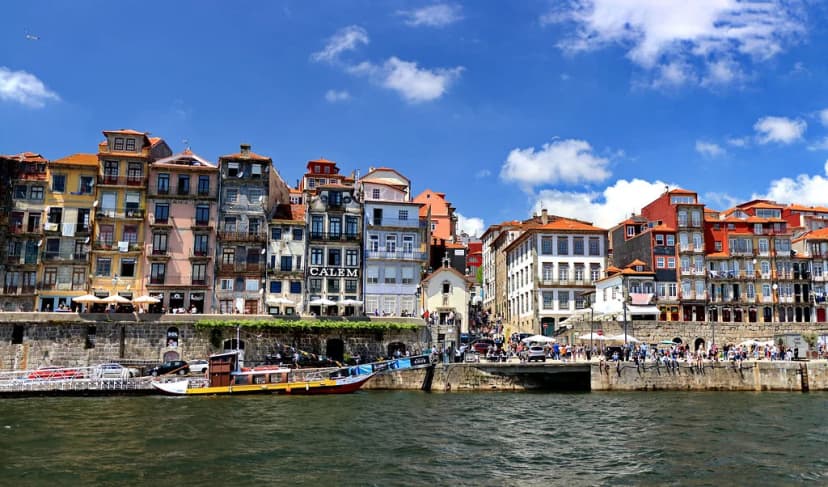
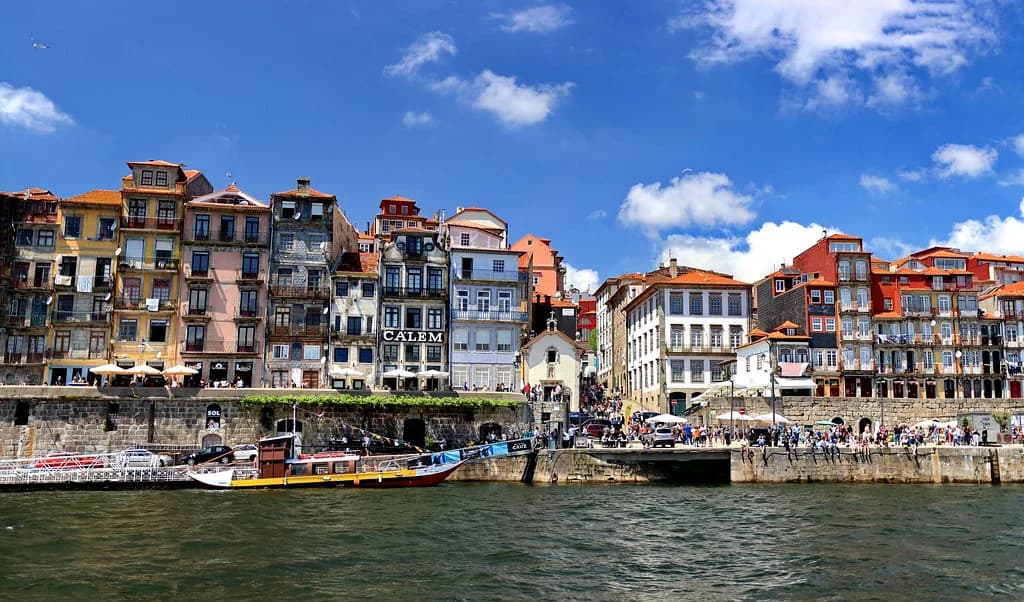
The Guindais Funicular and the Gaia Cable Car provide more than just a simple ride. They offer iconic photo opportunities of the Douro River and the historic Ribeira district. Visitors can easily connect between high and low points while enjoying a relaxing journey that doubles as a sightseeing attraction.
Using these transport options saves your legs for exploring the many attractions Porto has to offer at your own pace. Understanding the costs, schedules, and ticketing rules ensures you maximise your time in this beautiful Portuguese destination. Read on for everything you need to plan a smooth, scenic day in the city. For a broader overview of the surrounding historic area, see our Porto old town guide.
Riding the Guindais Funicular in Porto
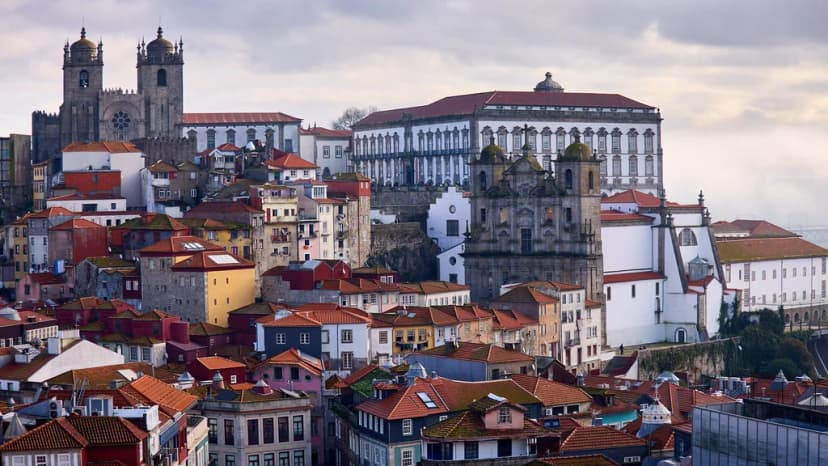
The Guindais Funicular (Funicular dos Guindais) is the beating heart of Porto's historic vertical transport network. It connects the lower Ribeira riverside district with the higher Batalha area, near the landmark Sé Cathedral. Originally opened in 1891, the line underwent a complete modern reconstruction in 2004 and today operates with sleek, air-conditioned carriages that carry up to 25 passengers at a time.

In 2026 a single one-way ticket costs €3.00 per person. There is no round-trip fare — if you want to ride both directions you simply buy a second ticket at the opposing station. Children under 4 ride free, and children aged 4 to 12 receive a 50 percent discount, paying €1.50. Note that the Andante card, which covers Porto metro and most STCP buses, is not accepted on this line. Payment is by cash or contactless card at the automated kiosks beside the turnstiles.
Operating hours in 2026 are 8:00 AM to 8:00 PM on weekdays and 8:00 AM to 10:00 PM on weekends and public holidays. During the July and August peak season the weekday schedule extends to 10:00 PM to cater for evening visitors. The journey itself takes about three minutes from bottom to top, covering a vertical rise of 61 metres along a 281-metre track at a maximum gradient of 45 percent — steep enough to feel genuinely thrilling.
You can find the lower entrance tucked away near the base of the Dom Luís I Bridge, just off the Cais da Ribeira promenade. The upper station sits conveniently next to the historic Fernandine Walls and is a two-minute walk from Porto Cathedral. This route effectively replaces a climb of roughly 120 stone steps in the afternoon heat, making it especially popular with families and older travellers.
The cars run frequently during busy periods, with departures every 10 to 15 minutes depending on demand. Even in peak summer the queue rarely exceeds a 20-minute wait, because the cars run continuously in both directions simultaneously on parallel tracks. Local commuters occasionally use the line in the early morning, but it remains primarily a tourist favourite. Staff at both stations are helpful with basic directions to nearby attractions such as the Cathedral, the São Bento train station murals, and the Torre dos Clérigos.
Photographers will appreciate that the best window seat is on the right-hand side of the carriage when ascending — this gives you a framed view straight along the ironwork of the Dom Luís I Bridge as the car climbs. Keep your ticket until you pass the turnstile at the top, as inspectors occasionally check during busy periods. For a full day plan that incorporates the Guindais Funicular, see our Porto 3-day itinerary, which maps out the best sequence of stops around both upper and lower stations.
- Guindais Funicular Essentials
- Type: Cable-hauled funicular
- Price: €3.00 one-way (2026); children 4–12 pay €1.50
- Duration: ~3 minutes
- Capacity: 25 passengers per car
- Track length: 281 metres; rise: 61 metres
- Weekday hours: 8:00 AM–8:00 PM (extends to 10:00 PM Jul–Aug)
- Weekend hours: 8:00 AM–10:00 PM
- Andante card: NOT accepted — pay by cash or card
Gaia Cable Car: Scenic Views Over the Douro
The Gaia Cable Car (Teleférico de Gaia) is an aerial gondola system that glides gracefully over the famous port wine cellars and historic lodges of Vila Nova de Gaia on the south bank of the Douro. It connects the upper hilltop station at Jardim do Morro — directly beside the upper deck of the Dom Luís I Bridge — with the vibrant Gaia riverside promenade at Cais de Gaia, covering a cable distance of approximately 573 metres in around five minutes.
In 2026 the standard adult return ticket is €6.00. A one-way single costs €3.50 if you prefer to ride down and walk back up or vice versa. Children under 4 travel free; children aged 4 to 12 pay €3.00 for a return. Seniors aged 65 and over receive a 15 percent discount on production of valid ID. The Gaia Cable Car is operated by a private concession and is therefore separate from the STCP and Andante network — there is no pass that includes this ride. Payment by card is widely accepted, and the kiosk is located steps from the upper turnstile at Jardim do Morro.
Operating hours in 2026 are 10:00 AM to 8:00 PM in winter (October to March) and 10:00 AM to 10:00 PM in summer (April to September), with last ascent approximately 30 minutes before closing. The system runs seven days a week and rarely closes for maintenance except during storm conditions. Sunset rides, which depart around 8:00–8:30 PM in summer, are the most sought-after and sell out quickly during July and August — buy tickets at least 30 minutes early during peak season.
The spacious modern cabins hold up to eight passengers and feature floor-to-ceiling glass on all sides, ensuring everyone has an unobstructed view. The ride reveals a full panorama of Porto's skyline, the two tiers of the Dom Luís I Bridge, and the Douro River winding towards the Atlantic. Many visitors use the lower riverside station as a staging point for visiting the various port wine tasting rooms at Sandeman, Graham's, or Calem — all within a five-minute walk of Cais de Gaia.
Buying a combined ticket that bundles the cable car with a port wine tasting at a Gaia cellar can save you €2.00 to €4.00 compared with purchasing separately and is available at the lower station kiosk. This added value makes the price point more appealing for most adult travellers. If you prefer to see Gaia without the cable car, the upper Jardim do Morro viewpoint is freely accessible on foot via the bridge and offers the same panoramic view at no cost — but the aerial perspective from the moving cabin is genuinely different and worth the modest fare.
For ideas on what to do once you reach the Gaia riverside, the day trips from Porto guide covers short excursions departing from nearby quay-side ferry terminals. Families with strollers will appreciate that both stations have lifts and level boarding, making the Gaia Cable Car fully accessible to travellers with buggies or mobility aids. The standard queue at the upper station peaks between noon and 3:00 PM; early morning and early evening waits average under 10 minutes.
- Gaia Cable Car Quick Facts
- Type: Aerial gondola
- Price: €6.00 return / €3.50 one-way (adults, 2026)
- Children 4–12: €3.00 return
- Cable distance: ~573 metres
- Duration: ~5 minutes
- Top station: Jardim do Morro, Vila Nova de Gaia
- Lower station: Cais de Gaia riverside promenade
- Winter hours: 10:00 AM–8:00 PM; Summer hours: 10:00 AM–10:00 PM
Gaia Cable Car vs Walking Across the Bridge: Which Is Better?
One of the most common decisions travellers face in Porto is whether to pay for the Gaia Cable Car or simply walk across the Dom Luís I Bridge to reach the Gaia side. Both options have genuine merits and the best choice depends on your priorities, fitness level, and how much you value aerial photography.
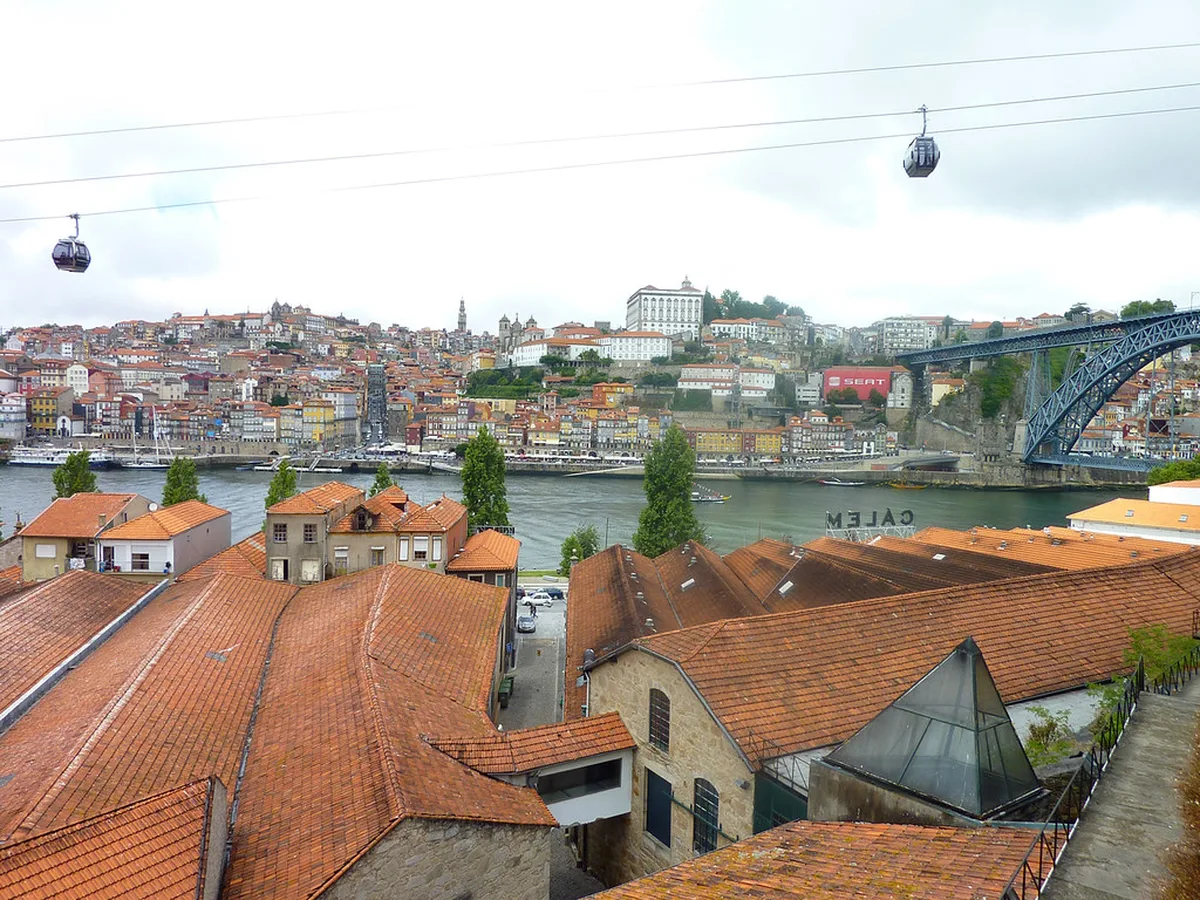
Walking the upper level of the Dom Luís I Bridge is completely free and takes about eight minutes at a leisurely pace. The pedestrian walkway sits at 45 metres above the river, delivering spectacular open-air views of the Ribeira district, the wine lodges, and the terracotta rooftops rising up both hillsides. On a clear day you can see the Clérigos Tower to the north and the mouth of the Douro to the west. The bridge walk is one of the great free experiences in Porto and should not be skipped purely because the cable car exists. However, the bridge puts you at mid-height — you still need to descend to the Gaia riverside promenade to reach the tasting rooms, which involves a steep flight of steps or a winding detour road.
The Gaia Cable Car, by contrast, connects the top of the hill directly to the riverside in a single smooth ride. If you are arriving from Jardim do Morro and want to reach the waterfront quickly without navigating steep cobbled lanes, the cable car saves roughly 15 minutes and significant knee stress. The bird's-eye perspective from the moving cabin also provides a unique photographic angle that the bridge walkway cannot replicate — looking straight down at the river boats and lodge rooftops as you glide overhead.
The practical recommendation for most visitors is to walk the bridge one way and take the cable car the other. Walk across the upper bridge level from Porto to Gaia to enjoy the open panorama and save money, then use the cable car to ascend from Cais de Gaia back up to Jardim do Morro at the end of your visit. This loop eliminates all steep climbing, delivers both experiences, and costs only €3.50 (one-way cable car up from Gaia). Alternatively, reverse the direction and take the cable car down in the golden hour for the best light over the river.
A third option for energetic walkers is the Escadas do Codeçal, a restored stone staircase connecting Jardim do Morro to the Gaia riverside through a shaded garden. The descent takes about 10 minutes and passes through a quiet residential neighbourhood rarely visited by tourists. It is steep and uneven in places, so not suitable for strollers or anyone with knee problems, but it rewards walkers with a genuine local atmosphere far removed from the main tourist circuit. Combine this descent with the cable car ascent for the most complete comparison of all three ways to navigate the Gaia hillside.
Cost summary for crossing between Porto and Gaia: walking the bridge is free; Gaia Cable Car return is €6.00; cable car one-way is €3.50; Escadas do Codeçal staircase is free. If you are travelling from Lisbon to compare both cities, the Porto vs Lisbon guide breaks down how the two cities' waterfront experiences differ — useful context if you are deciding which city to explore first.
- Crossing Summary
- Bridge walk (upper level): Free, 8 min, open-air panorama
- Gaia Cable Car return: €6.00, 5 min each way, aerial perspective
- Gaia Cable Car one-way: €3.50, 5 min, use for hill ascent only
- Escadas do Codeçal stairs: Free, 10 min descent, local atmosphere
- Best combo: Walk bridge Porto→Gaia + cable car up Gaia→Jardim do Morro (€3.50)
Ticketing and Practical Transport Tips for 2026
Understanding Porto's ticketing ecosystem before you arrive saves both money and confusion at busy station kiosks. The city uses two overlapping systems — the Andante card network for public transport and separate private ticketing for the two tourist rides — and conflating them is the most common mistake visitors make.
The Andante card is Porto's rechargeable contactless card for metro, local STCP buses, and some suburban trains. In 2026, a blank Andante card costs €0.60 to purchase and you load it with credit in Z2 or Z3 zone increments. A single Z2 journey (which covers most central Porto metro trips) costs €1.30 with the Andante card, compared with €2.00 for a paper ticket. If you are staying three or more days and plan to use public transport regularly, the card pays for itself quickly. However — and this is critical — the Guindais Funicular does not accept the Andante card for a standard single ride. Some historic transport multi-day passes sold at STCP offices may bundle funicular access, but these are separate products priced around €15.00 for 48 hours and are aimed at transport enthusiasts rather than casual visitors.
The Gaia Cable Car is privately operated and completely outside the Andante system. You buy a dedicated ticket at the Jardim do Morro upper kiosk or at the Cais de Gaia lower kiosk. In 2026, contactless card payment is available at all kiosks; cash is also accepted. The kiosk at the lower riverside station is the busiest — if queues are long, walk up the hill to the upper station where queues are typically shorter, especially in the morning.
For general city transport, buying a Porto Card bundles unlimited metro travel with free or discounted entry to 15+ museums. In 2026 the 1-day Porto Card costs €15.00, the 2-day €22.00, and the 3-day €29.00. It does not include the Gaia Cable Car free of charge, but cardholders receive a 10 percent discount at the cable car kiosk — worth €0.60 off the return ticket. Show your Porto Card before paying to activate the discount.
Consider walking down steep sections and using the transport systems specifically to go back uphill. This strategy protects your knees while still letting you explore the hidden alleys on foot. If you arrive by car, the parking in Porto guide lists several garages near the upper funicular station in Batalha, including the Garage Batalha which charges €1.50 per hour and is a four-minute walk to the funicular upper entrance.
Wait times spike significantly between 11:00 AM and 3:00 PM when coach tour groups converge on both rides simultaneously. Arriving before 10:00 AM or after 5:30 PM gives you much shorter queues and better lighting for photography. Digital tickets are not yet available via app for either system in 2026 — purchase must be at the physical kiosk. Keep a small amount of cash available in case the card reader is temporarily offline; this has been reported occasionally at the lower Ribeira funicular kiosk during busy summer evenings.
Porto Funicular and Cable Car Guide: When to Ride
Timing your rides well transforms a functional transport decision into one of the most memorable experiences of your Porto visit. The right hour determines the quality of light, the length of the queue, and whether you share your cabin with tour groups or have the space to enjoy the view in peace.
For the Guindais Funicular, the optimal windows are early morning (8:00–9:30 AM) and late afternoon (after 5:00 PM). In the morning the car is relatively empty — mostly locals heading uphill — and the low eastern light catches the ironwork of the Dom Luís I Bridge beautifully. Scheduling the funicular descent on your first morning lets you arrive in Ribeira just as the riverside cafes are setting out their tables, a perfect moment for an unhurried breakfast before the crowds arrive.
For the Gaia Cable Car, sunset timing between June and September (when the sun sets between 8:30 and 9:00 PM) delivers golden-hour light directly over the Douro from the cabin windows. Book or queue by 8:00 PM at the latest to secure a ride in the final half-hour of operation. Outside peak season, a late afternoon ride at 4:00–5:00 PM still produces warm directional light across the river without the peak-summer crowds.
Rainy weather makes the stone steps of Porto treacherously slippery, raising the practical value of both enclosed rides considerably. During autumn and winter storms, the Guindais Funicular continues to operate as long as wind speeds are below the operational threshold. The Gaia Cable Car, however, suspends service when sustained winds exceed 50 km/h — typically during Atlantic storm fronts between November and March. Check the Gaia municipality website the morning of your visit if the forecast is windy.
Local festivals, particularly the Festa de São João on 23–24 June, can cause extended operating hours but also create extremely long queues — waiting times of 45 minutes or more have been recorded at the funicular during São João night. The opposite is true in January and February, when both systems are quiet and you can often walk straight onto a car. Budget-conscious travellers might ride the funicular once to experience the mechanism and then use the metro's Estádio do Dragão–Aliados line for their other vertical journeys. After your rides, the Porto nightlife guide covers the best bars and fado venues within walking distance of both lower stations along the Ribeira waterfront.
Strategic Routes to Save Your Legs
Porto's geography rewards those who plan their movement carefully. The city's two main hills — the Batalha-Cathedral ridge on the Porto side and the Jardim do Morro ridge on the Gaia side — create a natural loop that combines both rides in a single half-day circuit without repeating any ground.
Start your morning at the Sé Cathedral around 9:00 AM, allowing 30 minutes to explore the Gothic cloisters (entry €3.00) and the hilltop views across the rooftops before they fill with tour groups. From the Cathedral square it is a 90-second walk to the upper funicular entrance on Calçada do Mártires da Liberdade. Board the Guindais Funicular for the three-minute descent (€3.00 one-way) and emerge in the Ribeira district directly beside the Dom Luís I Bridge. This puts you in a perfect position for a riverside coffee at one of the Cais da Ribeira cafes before 10:00 AM, ahead of the main tourist rush.
After breakfast, cross the lower level of the Dom Luís I Bridge on foot into Gaia — the lower level is for pedestrians and trams and gives you a close-up view of the river. Walk west along the Gaia promenade for about 800 metres to reach the Gaia Cable Car lower station at Cais de Gaia. Take the cable car up (€3.50 one-way) to Jardim do Morro, which deposits you at a magnificent viewpoint overlooking the entire Porto skyline. This loop covers both rides, minimises steep climbing to near zero, and costs just €6.50 in total transport.
From Jardim do Morro you have three options: walk back across the upper bridge level into Porto (free, 8 minutes), descend via the free Escadas do Codeçal staircase to extend your Gaia exploration, or take the metro from the nearby Dom Luís I station directly to any other part of the city. Most visitors choose the bridge walk, which completes the scenic circuit with open-air views as a reward for the day's exploration.
For a more relaxed afternoon, combine this circuit with a port wine tasting at one of the Gaia lodges near the cable car lower station. Graham's, Ferreira, and Ramos Pinto all offer 45-minute guided tours with tastings priced between €12.00 and €22.00 in 2026. Finish with the cable car ascent to catch sunset from Jardim do Morro before walking back across the bridge. The is Porto safe for tourists guide covers the security situation around the Ribeira and Gaia riverfront areas, which are well-policed and generally safe at all hours.
If your itinerary is tight, a stripped-back version of this route — funicular down, cross bridge on foot, cable car up — can be completed in 90 minutes including a brief coffee stop. This is ideal for travellers on a day trip from Lisbon who arrive by train at São Bento station, which is only a five-minute walk from the upper funicular entrance on the Cathedral side. The Porto beaches guide shows where to head further west after your funicular circuit if you want to combine the historic waterfront with a coastal afternoon.
Clérigos Tower and Batalha Viewpoints Above the Funicular
The Guindais Funicular deposits you at the Batalha district, one of the most rewarding hilltop areas in Porto for viewpoints and heritage attractions. Understanding what is within walking distance of the upper station turns a brief funicular ride into the centrepiece of a full morning's exploration.
The Torre dos Clérigos stands just 600 metres north-west of the funicular upper exit. Climbing its 225 steps costs €8.00 per adult in 2026 (combined ticket with the adjacent church: €5.00, tower only: €8.00) and the panoramic viewing gallery at 76 metres is the highest publicly accessible point in central Porto. From the top you see the Douro curving west to the Atlantic, the terracotta rooftops of Ribeira far below, and on clear days the low hills of the Atlantic coast beyond Matosinhos. The climb takes around 10 minutes at a steady pace and the gallery is narrow, so early morning visits before 10:00 AM avoid the worst queues. The tower is closed only on major public holidays.
Immediately beside the upper funicular station, the Fernandine Walls (Muralha Fernandina) offer a free elevated walkway along a preserved medieval rampart. A 400-metre section of the 14th-century wall is accessible without charge and provides direct sightlines down the funicular track towards the Douro — a unique behind-the-scenes perspective on the ride you just took. Informational plaques along the wall (in Portuguese and English) detail the history of the Guindais neighbourhood that grew up on the hillside below.
The Sé Cathedral (Catedral do Porto) is a two-minute walk from the upper station. Its Gothic and Baroque cloister costs €3.00 to enter and the cathedral nave is free. The terrace forecourt in front of the cathedral delivers a commanding free viewpoint across the Douro with the Gaia cable car visible in the distance if you look south-east — a satisfying visual confirmation of the circuit you are about to complete or have just finished.
For independent travellers who arrive by public transport rather than by funicular, Bus 207 stops directly at the Batalha square (€2.00 per journey without Andante card), and the metro's Aliados station is a 10-minute walk uphill. The combination of the Clérigos Tower, the Fernandine Walls, the Cathedral, and the Guindais Funicular descent can be completed comfortably in three hours, making it an ideal first-morning itinerary for visitors based in the lower Ribeira neighbourhood. Total cost for this morning circuit: €3.00 funicular + €8.00 Clérigos Tower + €3.00 Cathedral cloister = €14.00 per adult, one of the best-value heritage half-days in northern Portugal in 2026.
Opening hours summary for the Batalha hilltop cluster in 2026: Clérigos Tower 9:00 AM–7:00 PM daily; Cathedral nave 9:00 AM–6:30 PM (Mon–Sat) and 12:30 PM–5:00 PM (Sunday); Fernandine Walls open access at all times. If you plan to visit all three and then descend via the Guindais Funicular, start no later than 9:00 AM so you reach the lower Ribeira before the riverside fills with coach-tour groups at 11:00 AM. This hilltop-to-riverside sequence is the most efficient sequence for combining heritage sightseeing with the funicular ride in a single morning block.
Frequently Asked Questions
How much does the Guindais Funicular cost in 2026?
The Guindais Funicular (Funicular dos Guindais) costs €3.00 per person for a single one-way journey in 2026. Children aged 4 to 12 pay a reduced fare of €1.50, and children under 4 travel free. There is no return ticket — if you want to ride in both directions, purchase a separate €3.00 ticket at the opposite station. Payment is by cash or contactless card at the automated kiosks at each station entrance. The Andante card is not accepted.
Does the Andante card work on the Porto funicular?
No. The Andante card is not accepted on the Guindais Funicular for a standard single journey. You must purchase a dedicated ticket (€3.00) at the funicular station kiosk using cash or card. The Andante card covers Porto metro, STCP city buses, and some regional trains, but the funicular operates under a separate ticketing system. Some STCP multi-day tourist transport passes (around €15.00 for 48 hours) may bundle funicular access, but these must be bought at a STCP service office, not at the funicular itself.
How much is the Gaia Cable Car in 2026?
The Gaia Cable Car (Teleférico de Gaia) costs €6.00 for an adult return ticket and €3.50 for a one-way single in 2026. Children aged 4 to 12 pay €3.00 return, and children under 4 travel free. Seniors aged 65 and over receive a 15 percent discount on production of valid ID. Porto Card holders receive a 10 percent discount at the kiosk — show your card before paying. Tickets are purchased on-site at the upper kiosk (Jardim do Morro) or the lower kiosk (Cais de Gaia).
Can I take a stroller or wheelchair on the Porto cable car and funicular?
Yes, both rides are accessible. The Gaia Cable Car cabins have a flat threshold and level boarding, making them fully compatible with strollers and standard wheelchairs. Both the upper Jardim do Morro station and the lower Cais de Gaia station have lifts to the boarding platforms. The Guindais Funicular has a slightly steeper boarding step; folding strollers can be taken on board, though larger frames may require some assistance from staff. Contact the STCP helpline in advance if you have a motorised wheelchair.
What are the operating hours for the Porto funicular and Gaia cable car?
In 2026, the Guindais Funicular operates Monday to Friday from 8:00 AM to 8:00 PM, and on weekends and public holidays from 8:00 AM to 10:00 PM. During July and August, weekday hours extend to 10:00 PM. The Gaia Cable Car runs daily from 10:00 AM to 8:00 PM in winter (October to March) and from 10:00 AM to 10:00 PM in summer (April to September). The cable car suspends service during high winds, typically above 50 km/h, so check conditions before visiting in stormy weather between November and March.
Is it worth taking the cable car when the bridge walk is free?
Walking the upper level of the Dom Luís I Bridge is free and takes about 8 minutes, providing excellent open-air panoramic views at 45 metres above the river. The Gaia Cable Car (€6.00 return or €3.50 one-way) offers a different aerial perspective — looking straight down over the port wine lodges and the river from a moving cabin — that the bridge cannot replicate. The practical recommendation is to combine both: walk the bridge for free one way and take the cable car the other way (€3.50 one-way). This eliminates the steep hill climb in Gaia, delivers the best of both experiences, and adds only €3.50 to your day's budget.
Where exactly are the funicular and cable car stations in Porto?
The Guindais Funicular has two stations: the lower entrance is at Rua do Guindais, near the base of the Dom Luís I Bridge off the Cais da Ribeira promenade; the upper station is on Calçada do Mártires da Liberdade, a two-minute walk from Porto Cathedral and directly beside the Fernandine Walls. The Gaia Cable Car upper station is at Jardim do Morro in Vila Nova de Gaia, right beside the upper deck of the Dom Luís I Bridge; the lower station is at Cais de Gaia on the Gaia riverside promenade. Both systems are clearly signposted and appear on Google Maps as "Funicular dos Guindais" and "Teleférico de Gaia" respectively.
Are there any combined tickets or discount passes for Porto's funicular and cable car?
There is no single pass that covers both the Guindais Funicular and the Gaia Cable Car. The Porto Card (€15.00 for 1 day, €22.00 for 2 days, €29.00 for 3 days) includes unlimited metro travel and museum discounts, and gives a 10 percent discount on the Gaia Cable Car kiosk price — saving €0.60 on a €6.00 return. The Guindais Funicular must be paid separately (€3.00 per journey). Some Gaia lodge tour operators offer combined cable car and port wine tasting packages that bundle the €6.00 return cable car fare with a tasting, reducing the overall cost by €2.00 to €4.00 compared to booking separately.
Porto's vertical transport systems are essential tools for a comfortable and scenic visit to this wonderfully hilly city. The Guindais Funicular (€3.00 one-way) and the Gaia Cable Car (€6.00 return) each offer a distinct experience — one a historic hillside railway, the other a modern aerial gondola over wine country — and together they frame some of the most photographed views in Portugal in 2026.
Whether you want to save your knees, capture the perfect river photograph, or simply understand the city's geography from above, both rides deliver genuine value beyond their modest cost. Plan your circuit around the golden hour for the most memorable light over the Douro. For further planning, the Porto old town guide and the Porto nightlife guide cover what to do directly above and below each station. Enjoy your journey through the historic streets and scenic heights of Portugal's northern gem.