Euro City Guide logo
Euro City Guide

7 Best Day Trips from Rovinj: Top Istria Getaways 2026

Discover the 7 best day trips from Rovinj in 2026. Detailed guides to Pula, Brijuni, Porec, Motovun, Lim Fjord, truffle hunting, and a Venice ferry — with EUR prices, travel times, and logistics.

18 min readBy Alex Carter
Share this article:
7 Best Day Trips from Rovinj: Top Istria Getaways 2026
On this page

The Best Day Trips from Rovinj for Your 2026 Croatia Vacation

Pula Arena is 40 km south of Rovinj — reach it by Arriva bus for €5 one way (55 min), then pay €15 adult entry to walk inside one of the world's best-preserved Roman amphitheatres, open daily from 8 AM in 2026.

Poreč is just 30 km north of Rovinj by bus (€4, 50 min) and is home to the Euphrasian Basilica, a UNESCO World Heritage Site with stunning 6th-century Byzantine mosaics — entry to the basilica itself is free; the Venice seasonal ferry takes 3 hours and costs €70–90 return per adult.

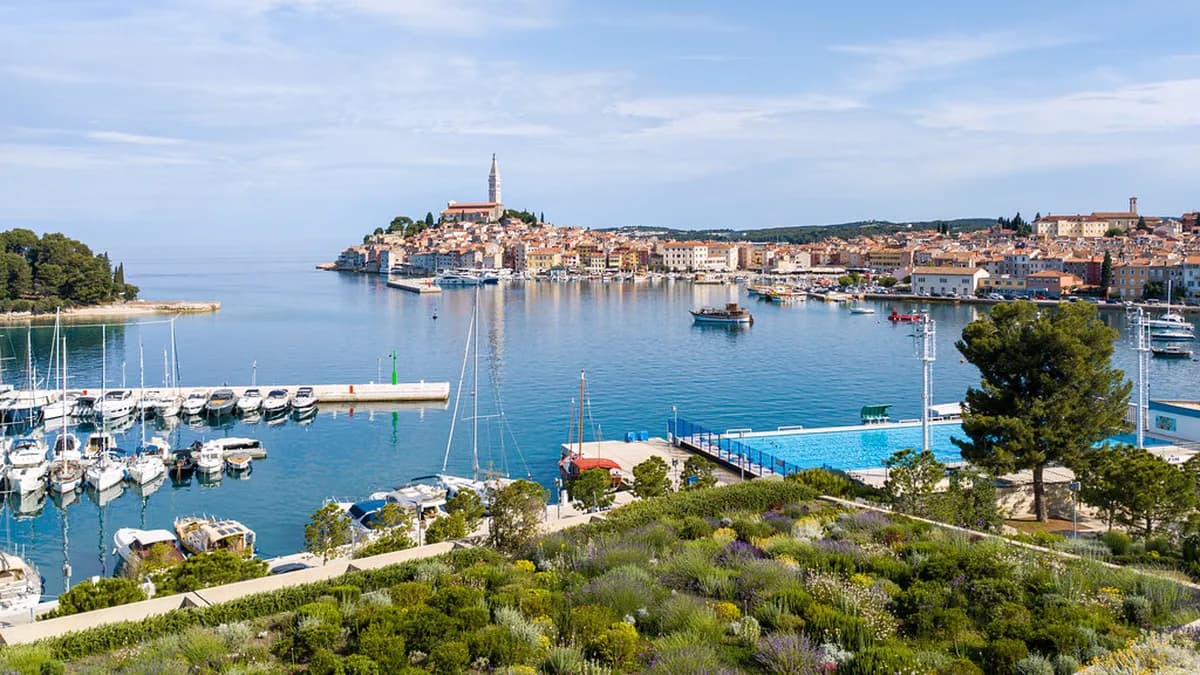
Rovinj serves as a perfect base for exploring Istria during your 2026 summer holiday. While there are many things to do in the old town itself, the surrounding region offers ancient ruins, hilltop truffle villages, pristine national park islands, and even a summer ferry to Venice. Travelers consistently find that dedicating at least two or three days to day trips transforms a short city break into a genuinely memorable Croatian adventure.

Exploring Ancient Roman History in Pula

Pula is the largest city in Istria and sits just forty kilometres south of Rovinj via the fast coastal road, a journey of 45–55 minutes by bus. Visitors flock here primarily to see the magnificent Pula Arena, one of the best-preserved Roman amphitheatres in the world. Built between 27 BC and 68 AD, the elliptical structure could once seat 23,000 spectators and today hosts summer concerts and gladiatorial exhibitions. Entry tickets in 2026 cost €15 for adults and €7 for children aged 7–17; children under 7 enter free. The admission includes access to the subterranean corridors and a small olive oil museum housed in the ancient underground chambers.

Exploring Ancient Roman History in Pula in Rovinj
Photo: WalrusTexas via Flickr (CC)

Beyond the Arena, Pula rewards slower exploration. The Temple of Augustus stands in the central Forum square — one of the best-preserved Roman temples north of Rome — and is free to admire from the outside; the interior museum costs €3. Walking south along the waterfront leads to the 1st-century Triumphal Arch of the Sergii, a photogenic gateway that frames the old town. A 30-minute walk uphill brings you to the Pula Fortress, a 17th-century Venetian star fort with panoramic views over the whole bay. Entry to the fortress and its naval history museum is €5.

Budget roughly four hours to see the major sites at a relaxed pace, then reward yourself with lunch at one of the seafood restaurants near the harbour. A grilled sea bream with a carafe of local Malvazija wine runs around €18–25 per person. Getting to Pula is straightforward even without a car: Arriva buses depart Rovinj bus station roughly every hour in summer and cost €5 one way (journey time 55 minutes). If you drive, the Karolina parking lot directly beside the Arena charges €2 per hour and accepts card payment. Pay-and-display machines also accept the Parkplus mobile app, which saves you from hunting for coins.

Once you have seen the Arena, allow time for a slow circuit of the Forum square, the mosaic-floored House of the Mosaics (free exterior viewing), and the covered market behind the main post office where local vendors sell seasonal produce, Istrian prosciutto, and small jars of black truffle paste. Pula's main beach, Valkane, is a 15-minute walk from the Arena and offers clean swimming and a waterfront cafe for an afternoon break before catching the return bus to Rovinj. The combination of Roman history, good food, and an easy beach finish makes Pula the most rewarding single-day excursion from Rovinj for first-time visitors.

Truffle Hunting and Hilltop Towns: Motovun and Groznjan

Driving forty minutes inland toward the heart of Istria leads you to the magical medieval village of Motovun, perched on a 277-metre hill above the Mirna River valley. This fortified town is famous for its well-preserved Venetian walls, its sweeping views of forested hills, and the prized white truffles found in the nearby Motovun forest between October and January. Even outside truffle season, the area rewards visitors with outstanding food and a genuinely unhurried atmosphere.

Truffle hunting tours depart from farms just below the village walls and typically last two to three hours. A guide leads you and a trained dog through oak woodland while explaining how Istrian truffles are found, graded, and sold. Prices range from €40 to €80 per person depending on the tour operator and whether a tasting meal is included. The Zigante Tartufi family estate near Livade village (10 minutes from Motovun) runs one of the best-known tours and includes a sit-down tasting of truffle products. A standard plate of fresh black truffle pasta at a local konoba in Motovun costs between €18 and €25; white truffle shavings on pasta can reach €35–50 depending on the season.

Groznjan is another essential hilltop stop, located twenty minutes northwest of Motovun on a scenic ridge road. Widely known as the City of Artists, Groznjan hosts over sixty galleries, craft studios, and summer music schools run by the Jeunesses Musicales international program. The narrow stone streets are quiet and deeply atmospheric even in high season. Spending an hour browsing local ceramics, olive wood carvings, and original paintings is one of the most pleasant ways to spend a morning in Istria.

Reaching these hilltop towns requires a car or a booked private tour since public bus schedules are infrequent and do not stop at the village gates. Parking at the base of Motovun costs €3 per hour; a shuttle bus to the top of the hill runs every 20 minutes and is included in the parking fee. Walking up the cobbled path takes about 15 minutes and earns you better photos. A logical itinerary pairs Motovun in the morning with Groznjan in the afternoon, then a stop at a roadside agritourism farm for wine tasting on the way back to Rovinj. Combined, this inland loop covers around 120 km of driving through some of the most scenic countryside in the Adriatic region.

Island Hopping in Brijuni National Park

Brijuni National Park consists of fourteen islands that sit just a short boat ride away from the small harbour village of Fazana, which is 25 minutes north of Pula and 50 minutes south of Rovinj by car. The park is one of Croatia's most unusual natural destinations, combining pristine Adriatic seascapes with Roman ruins, Austro-Hungarian villas, a working safari park, and the preserved summer residence of Yugoslav leader Josip Broz Tito. In 2026, the combined ferry and national park entry ticket costs €30–40 per adult depending on the season, with children aged 7–14 paying €15–20.

Island Hopping in Brijuni National Park in Rovinj
Photo: akk_rus via Flickr (CC)

The official national park catamaran departs from Fazana harbour and takes about 15 minutes to reach the main island of Veliki Brijun. Ferries run several times daily from April through October; advance online booking is strongly recommended during July and August when boats fill up days in advance. Once on the island, the safari park occupies the western end and houses zebras, antelopes, and Somalian sheep — animals originally gifted to Tito by foreign heads of state in the 1960s and 1970s. An electric train tour (€5 extra) circuits the island in 90 minutes with a guide explaining the historical context at each stop.

Beyond the safari, Veliki Brijun rewards walkers and cyclists. Renting a bicycle costs €10 per hour or €25 for a full day; electric bikes are available for €15 per hour. The 7 km main trail passes a 1,600-year-old olive tree, a 1st-century Roman villa by the sea, a Byzantine castrum with mosaics, and Tito's personal museum — an eccentric collection of gifts from world leaders, including a stuffed polar bear. The island is entirely car-free and the paths are well paved, making it one of the most family-friendly destinations in the region. Brijuni pairs naturally with a stop in Pula, so consider combining both in a full-day southbound itinerary.

Coastal Beauty in Porec and the UNESCO Basilica

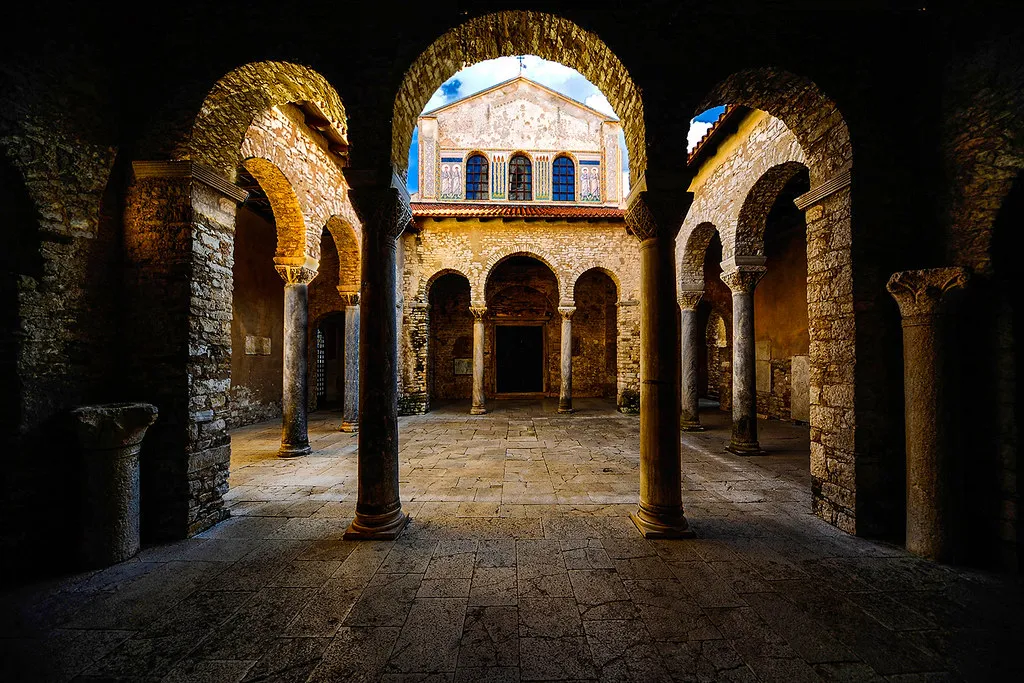
Poreč is a vibrant coastal town located just 30 kilometres north of Rovinj along the Istrian Riviera — an easy 50-minute bus ride costing €4 each way. The old town sits on a small peninsula and follows the original Roman street grid almost perfectly — the two main streets, Decumanus and Cardo Maximus, are still the central axes of town life. The primary attraction is the Euphrasian Basilica, a UNESCO World Heritage Site built in the 6th century and considered one of the finest surviving examples of early Byzantine architecture in the world. The church's interior glitters with original gold and blue mosaics depicting the life of the Virgin Mary; these mosaics have survived largely intact for nearly 1,500 years.

Entry to the basilica complex is free in 2026, though a donation is encouraged. Climbing the separate bell tower (€2) gives elevated views across the red-tiled rooftops and the harbour. Budget 60–90 minutes for a thorough visit. After the basilica, most visitors walk south along the Riva — the seafront promenade — to watch the luxury yachts moored in the marina. The town has a slightly more commercial character than Rovinj, with waterfront bars, souvenir shops, and an active nightlife scene that caters heavily to package tourism from nearby holiday villages.

Poreč is one of the easiest day trips to organize without a car. Arriva buses depart Rovinj bus station for Poreč almost every hour in summer, with the journey taking 50 minutes and costing approximately €4 each way. The bus drops you within a five-minute walk of the old town gates. If you drive, free parking is available 1 km from the old town at the Plava Laguna sports complex; paid parking closer to the centre charges €2 per hour. Always check the last return bus time at the Poreč station before you settle in for dinner — services taper after 8 PM in shoulder season.

For beach time after your cultural visit, Poreč has several good pebble beaches within walking distance of the old town. Alternatively, a water-taxi from the old town pier (€5 per person) ferries visitors to the larger resort beaches on Sveti Nikola island, just 500 metres offshore. Pair your Poreč day with a reading of the Rovinj old town guide beforehand — contrasting the two coastal towns' architecture is one of Istria's quiet pleasures.

Natural Wonders of the Lim Fjord and Vrsar

Lim Fjord (Limski Kanal) is a stunning 12-kilometre-long submerged river canyon that cuts deep into the Istrian hinterland and opens into the Adriatic south of Vrsar. The steep forested cliffs that line both sides of the channel create a landscape that looks more Norwegian than Mediterranean — a genuinely unexpected sight that surprises even seasoned Adriatic travelers. The fjord is ecologically protected and entirely free of residential development, which keeps the water clear and the atmosphere tranquil even in peak summer.

Boat tours depart daily from Rovinj harbour and from the small pier at Vrsar village. A standard three-hour excursion from Rovinj costs €15–25 per person depending on the operator and whether a meal is included. The tour typically includes a stop at the so-called Pirates Cave — a riverside grotto where you can have a drink on floating pontoons — and a tasting of freshly harvested oysters and mussels farmed in the clean fjord waters. A single fresh oyster costs around €2; a mixed shellfish platter for two runs about €18. More upmarket boat tours (€35–45 per person) add a full seafood lunch at a fjord-side restaurant.

Vrsar itself is a charming fishing village at the mouth of the fjord, reachable in 20 minutes by car from Rovinj. The hilltop old town is small but beautiful, dominated by a Romanesque bell tower that offers one of the best viewpoints for photographing the archipelago of 18 small offshore islands. Vrsar is also the birthplace of Giacomo Casanova's principal Croatian lover — a historical curiosity commemorated by a small plaque in the village. The town is much quieter than Poreč and offers a more authentic glimpse into traditional Istrian coastal life.

After your fjord excursion, the Rovinj beach guide has excellent cove recommendations for a late-afternoon swim close to town. The fjord boat operators in Rovinj also offer multi-stop cruises that combine Lim Fjord with a visit to the offshore islands visible from Rovinj's old town — a full-day option (€40–55 per person) that is particularly good value for families.

Venice Day Trip by High-Speed Ferry

One of the most unexpected day trips available from Rovinj is a catamaran crossing to Venice, Italy — a journey that takes just under three hours each way across the northern Adriatic. Venezia Lines operates this seasonal route from late May through mid-October, with departures from Rovinj harbour typically at 8:00 AM and return sailings from Venice at 5:00 PM, getting you back to Rovinj by 8:00 PM. This schedule gives you roughly seven hours in Venice — enough for St Mark's Basilica, the Doge's Palace, a gondola ride, and a proper Venetian lunch.

Venice Day Trip by High-Speed Ferry in Rovinj
Photo: Harald Felgner via Flickr (CC)

In 2026, round-trip tickets cost approximately €70–90 per adult depending on how far in advance you book; children under 12 travel for around €50. Booking online at least two weeks before your intended travel date is essential in July and August, when the route sells out quickly. The catamaran is a modern high-speed vessel with indoor seating, a small bar, and smooth conditions for most of the crossing. Passengers travelling to Italy need a valid passport or EU identity card — Croatia is now in the Schengen Area as of January 2023, so there are no border checks, but Italian authorities may request ID on arrival.

Venice entry is free for most areas of the city, though the new day-visitor fee of €5 (introduced in 2024 for peak days) may apply depending on your travel date — check the city's official entry portal before booking. The Doge's Palace charges €25 per adult for the standard ticket; the Gallerie dell'Accademia costs €15. A water taxi from the ferry terminal at Tronchetto to St Mark's Square costs €15 per person on the public vaporetto line 2 (journey 20 minutes), or considerably more on a private water taxi. Despite the cost, this is one of the most memorable day trips in the entire region and is especially worthwhile if you have already covered the main Istrian destinations.

Zadar: The Adriatic City of Sea Organs and Sunset Light

Zadar sits approximately 180 kilometres south of Rovinj along the Adriatic coast — a two-hour drive or a bus connection via Rijeka that takes around three and a half hours with transfers. While it requires an earlier start than a Pula or Poreč excursion, Zadar rewards dedicated travellers with one of the most distinctive old towns on the entire Adriatic. The city's Roman forum is larger than Pula's and still functions as the social heart of the town, ringed by outdoor cafes where locals gather from morning to midnight.

Zadar's most famous modern attraction is the Sea Organ, a 70-metre marble staircase descending into the harbour where underwater pipes convert wave energy into music. The sound — a continuous, hypnotic drone that changes with sea conditions — is entirely free to experience and is most beautiful in the early morning or at dusk. Adjacent to the Sea Organ is the Sun Salutation, a circular solar-powered light installation that pulses with colour at night, making Zadar's waterfront one of the most memorable evening scenes in Croatia. Alfred Hitchcock once called the Zadar sunset the most beautiful in the world — a claim locals are delighted to repeat.

Entry to the old town is free. The Church of St Donatus, a 9th-century pre-Romanesque rotunda (€5 entry), dominates the forum and serves as the venue for Zadar's renowned International Youth Music Festival each summer. The Cathedral of St Anastasia beside it houses relics and a Romanesque façade that rewards a close look. For lunch, the covered market on the eastern edge of the old town sells local cheeses, maraschino cherry liqueur (a Zadar specialty), and freshly caught fish from the nearby islands. A full seafood lunch at a sit-down konoba costs €20–30 per person with wine. If you are planning to extend your Croatian travels further south, the Zadar old town guide covers the full city in detail.

The drive south on the A1 motorway is smooth and well-signposted. Motorway tolls from Rovinj to Zadar total approximately €12–15 depending on your vehicle category. Parking in Zadar's old town district costs €2 per hour at attended lots near the Jazine bridge. Alternatively, private day-tour operators in Rovinj offer guided minibus runs to Zadar and back for €55–70 per person including a National Park stop at Krka or Plitvice en route — a compelling option if you want to see two destinations without driving yourself.

Practical Planning for Your Day Trips from Rovinj

Successful day trips from Rovinj require a bit of strategic planning to avoid the heavy traffic of the peak summer season. The most common mistake is trying to visit too many destinations in a single day, which leads to exhaustion and means you never fully appreciate any one place. A good rule of thumb: one coastal town or one inland village per day, combined if desired with a shorter natural attraction like Lim Fjord.

Renting a car gives you the greatest freedom to reach hilltop villages like Motovun and Groznjan, which are poorly served by public transport. Daily car rental in Rovinj in 2026 ranges from €40–70 depending on vehicle category; compact automatics are cheapest. Booking two to three weeks ahead is essential for July and August, when local rental fleets sell out entirely. If you prefer not to drive, Arriva buses cover Pula and Poreč reliably; private day-tour operators based in Rovinj offer guided minibus excursions to Brijuni, Motovun, and the Lim Fjord for €35–60 per person including entry fees.

Starting your day by 8:00 AM lets you reach attractions before the midday crowds and find parking without circling. The Pula Arena is markedly more pleasant in the early morning before four coach loads of passengers arrive simultaneously. Croatia joined the Eurozone in January 2023, so all prices are in EUR and credit cards are accepted almost universally — though a small amount of cash (€20–30) is useful for market vendors and parking machines in older towns. Always carry a refillable water bottle: summer temperatures regularly exceed 35°C, and staying hydrated is the difference between an enjoyable excursion and an exhausting one.

For those wanting to explore more of Croatia's coast during their stay, the Zadar beach guide and the Rovinj beach guide are both worth bookmarking for planning beach days around your excursion schedule. The Croatia overview page also provides a useful map of regional connections.

  • Essential items for your Istrian day trip
    • Item: Comfortable walking shoes with grip (hilltop towns have steep cobblestones)
    • Item: Refillable water bottle (1.5L minimum)
    • Item: Sunscreen SPF 50+ (coastal sun is intense from May–September)
    • Item: Valid passport or EU ID card (required for Venice ferry)
    • Item: Credit card accepted everywhere; €20–30 cash for markets and parking
    • Item: Downloaded offline maps (mobile data can be spotty in inland Istria)

Frequently Asked Questions

What are the best day trips from Rovinj for families?

Brijuni National Park is the best family day trip from Rovinj in 2026. The main island is entirely car-free, has a safari park with zebras and exotic animals, easy cycling trails, and Roman ruins to explore. The combined ferry and park entry ticket costs €30–40 per adult and €15–20 per child aged 7–14 in 2026. Children under 7 enter free. Book ferry tickets online in advance during July and August as boats fill up quickly. Bicycle rental on the island costs €10 per hour, making it a full active day for children of all ages.

Can you take a day trip from Rovinj to Venice?

Yes. Venezia Lines operates a seasonal high-speed catamaran from Rovinj to Venice between late May and mid-October. The crossing takes roughly three hours each way. The boat departs Rovinj at approximately 8:00 AM and returns from Venice around 5:00 PM, giving you seven hours in the city. Round-trip tickets in 2026 cost approximately €70–90 per adult booked in advance; children under 12 pay around €50. You need a valid passport or EU ID card for the crossing, as Italian authorities may request identification on arrival.

How much does a typical day trip from Rovinj cost?

Budget €30–80 per person for most day trips from Rovinj in 2026 depending on your destination and transport. A bus day trip to Pula costs about €10 in transport plus €15 arena entry and €15–20 for lunch — roughly €40–45 total. Brijuni with the ferry is €30–40 entry alone plus the drive to Fazana. The Venice ferry is the most expensive at €70–90 round trip plus Venice's sights. Renting a car for an inland day to Motovun and Groznjan adds €40–70 to the day's total, though you share that cost with fellow travellers.

Is it easy to visit Pula and Porec in one day?

Visiting both Pula and Poreč in one day from Rovinj is possible but leaves little time to enjoy either properly. Pula is 40 km south of Rovinj and Poreč is 30 km north, meaning a combined route adds significant driving time. Most travelers prefer to dedicate a full day to each: Pula for Roman history in the south and Poreč for the UNESCO Euphrasian Basilica in the north. If time is very limited, Poreč is the easier half-day option as buses run hourly for €4, the basilica entry is free, and the old town is compact enough to cover in three hours.

How do you get from Rovinj to Pula without a car?

Arriva buses run between Rovinj and Pula approximately every hour during summer 2026. The journey takes 55 minutes and a single ticket costs €5. Buses depart from Rovinj bus station on Trg na Lokvi square in the town centre. The Pula bus station is a 10-minute walk from the Roman Arena. Return buses run until around 9 PM in peak season. Check the Autotrans or Arriva Croatia website for the latest timetable before your visit. No advance booking is needed for the bus — just turn up at the station and purchase a ticket at the counter or onboard.

What is truffle hunting near Rovinj and how much does it cost?

Truffle hunting tours near Rovinj depart from farms in the Motovun forest area, about 40 minutes inland by car. A trained dog leads the search through oak woodland while the guide explains how truffles are identified, graded, and priced. Tours last 2–3 hours and cost €40–80 per person in 2026, with the higher end including a sit-down tasting meal featuring truffle products. The Zigante Tartufi estate near Livade village is one of the most reputable operators. White truffle season runs October–January; black truffles are available and hunted year-round, making this excursion viable on any visit.

How far is Zadar from Rovinj and is it worth the journey?

Zadar is approximately 180 km south of Rovinj, making it a longer day trip of about two hours each way by car. The drive down the A1 motorway costs around €12–15 in tolls. Despite the distance, Zadar is absolutely worth the trip: its Roman forum, the unique wave-powered Sea Organ, and the Sun Salutation light installation are unlike anything in Istria. Start early — by 7:30 AM — to maximize your time there and catch the morning calm before tour groups arrive. If you prefer not to drive, private day-tour operators in Rovinj run guided Zadar excursions for €55–70 per person.

Istria's compact geography makes Rovinj an outstanding base: within ninety minutes you can be inside a Roman amphitheatre, cycling through a car-free national park, sipping wine in a medieval hilltop village, or tasting fresh oysters on a hidden fjord. The Rovinj old town guide covers what to do on your in-town days, while the Rovinj beach guide has the best swimming spots for afternoons back in the city. Start booking ferry tickets for Brijuni and Venice early — those sell out fastest — and leave at least one unplanned day to simply wander Rovinj's cobbled backstreets.