Discover the Ultimate Lisbon Beach Guide and Nearby Shores
Praia de Carcavelos and Praia do Tamariz in Estoril are the closest beaches to central Lisbon in 2026 — reachable by Cascais line train in 22–30 minutes for €2.30 each way from Cais do Sodré.
Costa da Caparica is 30–45 minutes from Praça de Espanha by bus line 161 for €1.80 each way; the Cacilhas ferry from Cais do Sodré costs €1.35 and connects to onward buses to Sesimbra (€5 return) and Arrábida (€4 return shuttle from Setúbal).
Lisbon offers more than just historic hills and yellow trams. The nearby coastline features golden sands and Atlantic waves on Portugal's dynamic coast. Travelers often combine city sightseeing with relaxing afternoons by the sea.
Finding the right spot requires a bit of local knowledge. This comprehensive Lisbon beach guide helps you discover the best beaches near Lisbon for every taste. You can reach most shores within 40 minutes of the city center.
Easy Beach Access Along the Cascais Train Line
The Cascais train line provides the easiest and most affordable route for city visitors in 2026. Trains depart every 20 minutes from the Cais do Sodré station throughout the day. A single ticket costs €2.30 each way in 2026, making the Cascais line one of Europe's best value beach trains. If you plan multiple trips, load a rechargeable Viva Viagem card to avoid queuing at the machine each time. The full journey from Cais do Sodré to Cascais town takes 40 minutes, with stops at Belém, Cascais, Carcavelos, and Estoril along the way.
Praia de Carcavelos stands out as the most popular choice for surfers and sports enthusiasts. This wide sandy beach stretches for more than one kilometer, offering ample space even during busy summer weekends. Surf schools such as Surf Academy Carcavelos charge around €35–45 for a 90-minute group lesson in 2026, including board rental and wetsuit. You will find numerous surf schools and beachfront cafes along the promenade; a coffee and pastel de nata runs about €2.50 at the seafront kiosks. The beach is a 10-minute walk from Carcavelos train station, or you can rent a bike from the station forecourt for €5 per hour.
Further down the line, Praia do Tamariz in Estoril offers a calmer swimming experience with a very different atmosphere. The ocean here stays relatively still thanks to the rocky jetties that create a natural sheltered pool. Families often prefer this spot because it is right next to Estoril station, meaning no walking with heavy beach bags. In 2026, sun lounger sets here rent for €10–15 per pair with umbrella, and there is a well-maintained beachside cafe serving fresh grilled fish from €13. The nearby Estoril Casino, the largest in Europe, is worth a quick look even if you do not gamble — the public casino gardens are free to enter and ideal for a late-afternoon stroll before the train home.
Praia da Conceição and Praia da Rainha in Cascais town itself are ideal for those who want beach plus town exploration. Cascais market runs on Wednesday and Saturday mornings, perfect before you head to the sand. The journey from Lisbon takes 40 minutes total; trains back run until midnight, so evening swims are perfectly practical. Cascais also connects to the Cascais beach guide corridor, which includes hidden coves such as Praia do Guincho further along the coast — a spectacular Atlantic-facing dune beach just 6 km past the town.
Exploring this stretch remains one of the top activities for sun seekers visiting the Portuguese capital. Walking between the different bays along the seafront promenade takes around 30 minutes and allows you to find a quiet corner. Many local restaurants serve fresh grilled fish with Atlantic views; a full fish lunch runs €15–22 per person including a glass of house wine. Booking a table for sunset is highly recommended at any of the harbour-side restaurants in Cascais itself.
- Praia de Carcavelos for active travelers
- Type: Wide sandy beach
- Best for: Surfing and sports
- Access: Carcavelos train station (22 min from Lisbon, €2.30)
- Cost: Free public access; sun loungers €10–18/set
- Praia do Tamariz for families
- Type: Sheltered urban bay
- Best for: Calm swimming
- Access: Estoril train station (30 min from Lisbon, €2.30)
- Cost: Free public access; sun loungers €10–15/set
Exploring the Vast Sands of Costa da Caparica
Cross the Tagus River to find the expansive shores of Costa da Caparica, one of Europe's longest urban beach strips. This coastline runs for nearly 30 kilometres along the Setúbal peninsula south of Lisbon. In 2026, the most convenient route is the direct bus from Praça de Espanha (line 161), which takes around 45 minutes and costs €3.60 return on a Viva Viagem card. Buses run every 20 minutes during summer and slightly less frequently in spring and autumn. An alternative is the ferry from Cais do Sodré to Cacilhas (€1.35 each way) followed by a local bus connection that adds another 20 minutes to the journey.
The northern beaches — numbered from Praia da Caparica (#1) southward — are lively and packed with trendy beach clubs. Praia do CDS (#2) and Praia da Riviera (#3) host DJs and serve fresh seafood throughout the summer season from June through September. Expect to pay €15–22 for a sun lounger and umbrella set at these northern clubs in 2026. Many clubs now require advance online booking during July and August weekends, so plan ahead to avoid disappointment. A cold Sagres beer at the bar will cost €2.50–3.00; a seafood platter for two runs €28–35. These beach clubs are within 500 metres of the bus terminus, making them very easy to reach on arrival.
Head south beyond beach number #10 to find quieter dunes, pine trees, and more natural surroundings entirely free from beach clubs. These remote areas attract locals who bring their own umbrellas and picnics for a peaceful escape from the urban buzz. There is a charming narrow-gauge railway, the Transpraia, that runs south along the coast in summer months for €1.50 per stop, making it easy to hop between sections. Surfers flock to the southern stretches around Praia da Fonte da Telha for their consistent Atlantic swells. Multiple surf schools near the main town offer two-hour beginner lessons from €40 including equipment and wetsuit hire.
Comporta, about 50 km further south and reached by bus or car (bus €10–15 return from Setúbal), has become one of Portugal's most fashionable destinations. Its wide white sand dunes and rice paddies offer a dramatically different landscape. The area is accessible as a day trip from Caparica if you have a full day and do not mind a longer journey. The rice fields are particularly striking in late summer when the harvest begins, adding a unique agricultural backdrop to the coastal scenery.
Costa da Caparica is also excellent for families with young children because the Atlantic waves here are calmer than those on the Estoril coast. The town has a wide promenade with restaurants, ice cream parlours, and basic surf rental shacks. A day at Caparica remains one of the best value beach experiences within 30 kilometres of Lisbon in 2026. The combination of free beach access, the €3.60 return bus, and a €2.50 beer on the promenade makes it one of the most affordable seaside days in the entire Lisbon region. If you are planning multiple beach outings, Caparica and Carcavelos together cover both the Atlantic surf scene and the relaxed family day-trip market perfectly.
Hidden Coastal Gems in Arrábida Natural Park
Arrábida offers some of the most stunning scenery in all of Portugal, and access in 2026 has been well organised by the Natural Park authority. The limestone mountains drop steeply into turquoise waters that look almost Mediterranean in clarity. Parking within the park is strictly limited and regulated June–September; visitors must book a timed entry slot online via the Arrábida Natural Park portal at €5 per vehicle, which goes directly to conservation. Without a booking your car will be turned back at the checkpoint on Estrada Nacional 379.
Portinho da Arrábida is a picturesque cove with genuinely clear, calm water that remains astonishing even to repeat visitors. It is perfect for snorkelling — visibility can reach 10–15 metres on calm days — and for paddleboarding away from the Atlantic swells that pound the outer coast. Paddleboard rentals start at €15 per hour from the beach concession in 2026; snorkel kit hire is €8. Arrive before 9:00 AM to secure a parking spot, or use the park shuttle service from Setúbal town centre, which runs hourly and costs €4 return in 2026.
Galapinhos Beach, a 10-minute drive west of Portinho, often wins national and European Blue Flag awards for its incredible natural beauty and water quality. The trail down from the car park takes about 15 minutes and involves uneven rocky steps; wear sturdy shoes rather than flip-flops. There are no facilities at Galapinhos — no kiosks, no toilets, no lifeguard — so carry water, sun cream, and snacks. The lack of services keeps crowds smaller than at urban beaches; on a weekday morning you can have the cove almost to yourself. Water visibility here rivals Portinho, often exceeding 12 metres in calm conditions during July and August.
Praia de Setúbal and the town beach at Setúbal itself serve as good backup options on busy weekends when Arrábida access fills up. Setúbal is 50 km from Lisbon; the TST bus takes 1 hour 10 minutes and costs around €5.50 return. A grilled fish lunch at a Setúbal dockside restaurant runs €14–18 per person, usually with excellent local Moscatel white wine included in a set menu. The Setúbal fish market near the docks opens at 7:00 AM and gives a fascinating glimpse of the daily catch before the restaurants take delivery.
Visiting these remote shores remains one of the most rewarding day trips from Lisbon available for travelers who want something beyond city beaches. The contrast between the green serra hills and the crystal blue sea is genuinely breathtaking. Pack your own snacks as facilities are deliberately sparse in the protected park zone; this is part of what keeps the beaches beautiful. Consider combining Arrábida with an overnight stay in Setúbal to make the most of the early morning light on the limestone cliffs before the day-trippers arrive.
Sesimbra: Lisbon's Best Kept Secret Beach Town
Sesimbra sits 40 kilometres south of Lisbon, tucked into a sheltered bay beneath a Moorish castle, and remains far less visited than either Cascais or Setúbal despite offering some of the finest swimming water on the entire Portuguese coast. The direct bus from Praça de Espanha (line TST 208) runs roughly every 30 minutes during summer and costs approximately €5 return in 2026, with a journey time of around 1 hour 30 minutes. The bus drops you right on the seafront, making Sesimbra one of the easiest natural beach escapes from Lisbon without a car.
The main Praia de Sesimbra bay is remarkably sheltered by two headlands, which keeps the water calm and turquoise even when Atlantic swells are running strong further north. Water visibility here regularly reaches 12 metres or more, making it the best snorkelling destination in the greater Lisbon area. You can rent snorkel kit from the beachfront shops for €8–10 per day. The water temperature in summer averages 20–22°C, noticeably warmer than Cascais or Caparica because of the bay's protected southern aspect.
Sesimbra Castle (Castelo de Sesimbra) crowns the hill directly above the town and is free to enter in 2026. The Moorish walls date to the 8th century and the views down to the turquoise bay are spectacular — easily worth the 20-minute uphill walk. At the western end of the seafront, the Fortaleza de Santiago charges a modest €2 admission and houses a small maritime museum charting Sesimbra's fishing history. Both sights can be combined in a single morning before you head to the beach.
Seafood in Sesimbra is exceptional and far cheaper than in Cascais. Local restaurants along Rua dos Pescadores serve freshly grilled fish — sea bream (dourada), sea bass (robalo), and choco frito (fried cuttlefish) — for €12–18 per main course. A full lunch with wine for two typically runs €30–40, compared with €50–60 for equivalent quality in Cascais. Look for the family-run tascas set back one block from the waterfront for the best value.
Catamaran day trips depart from Sesimbra harbour and run April through October. In 2026, a half-day catamaran excursion including snorkelling stops costs around €25 per adult. These trips visit sea caves and hidden coves in the Arrábida park that are otherwise inaccessible by land. Dolphin sightings are not uncommon on the passage along the cape. Book at the harbour ticket booth in the morning; spaces fill quickly in July and August.
Sesimbra is best visited on a weekday if you want a quieter experience — Lisbon day-trippers arrive in numbers on summer weekends. The town is perfectly sized to explore on foot: the fishing quarter, the main beach, the fortress, and the castle hill all sit within a 30-minute walk of each other. Sun lounger sets rent for €8–12 on the main beach in 2026, slightly cheaper than Cascais equivalents. For travelers who want Arrábida's water clarity with a proper town atmosphere, Sesimbra is the single best choice on the Lisbon coast. Combine your visit with a stop along the Portuguese coast travel guide from Lisbon to Algarve if you are heading further south after your beach day.
Praia do Guincho: The Wild Atlantic Dune Beach
Praia do Guincho sits 6 kilometres northwest of Cascais town, where the Sintra-Cascais Natural Park meets the open Atlantic. It is one of the most dramatic beaches on the entire Portuguese coast in 2026: a vast crescent of windswept dunes backed by pine forest, with raw Atlantic waves that attract world-class windsurfers and kitesurfers year-round. The setting is genuinely wild compared with the sheltered bays of Estoril and Sesimbra, and the contrast is part of the appeal.
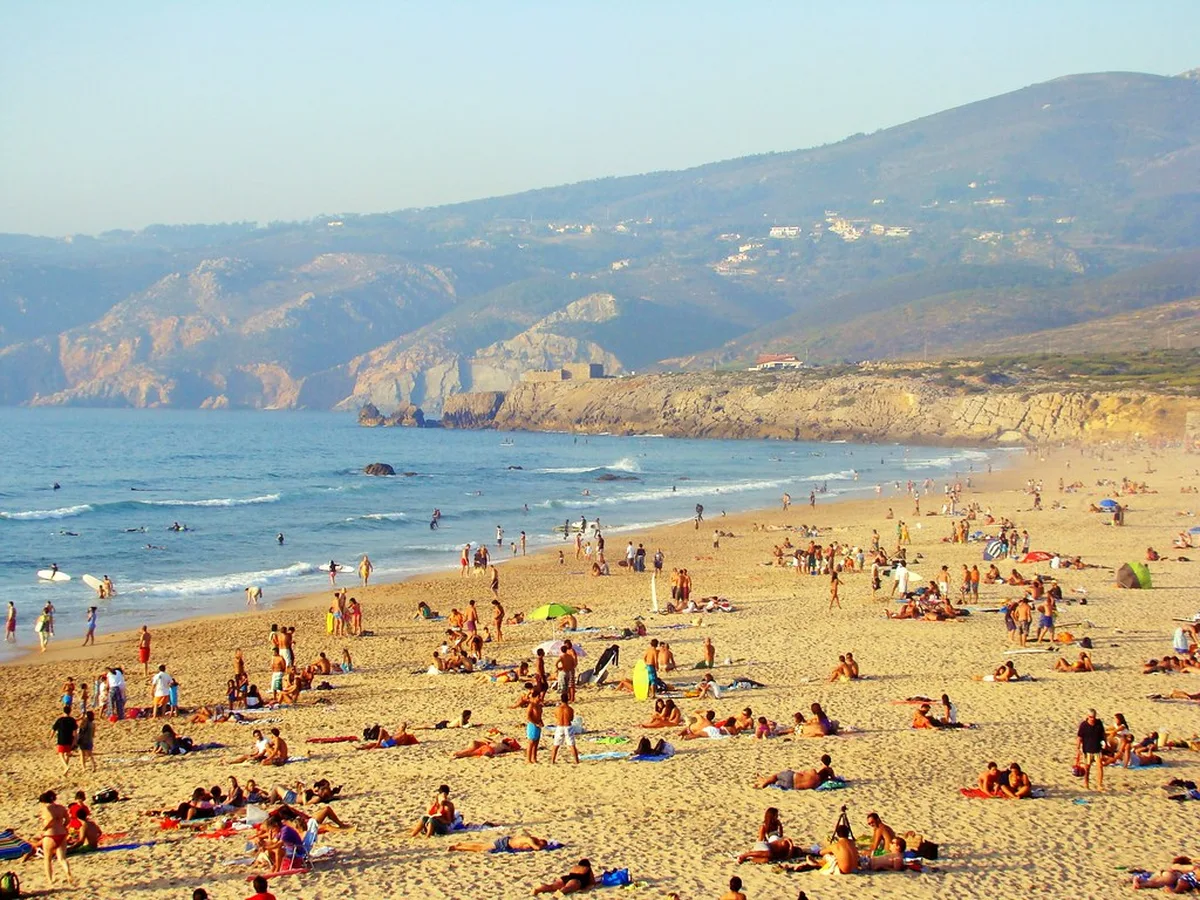
Getting to Guincho by public transport requires taking the Cascais train (€2.30 from Cais do Sodré, 40 minutes) and then transferring to the Scotturb bus 405 at Cascais station, which runs hourly and costs €2.60 each way to the Guincho stop. The total journey from central Lisbon is around 70 minutes. By car, Guincho is 35 km from Lisbon on the N247 coastal road; parking costs €2 per hour in the designated car park behind the dunes, which opens at 8:00 AM. Arriving before 10:00 AM is essential in July and August to guarantee a spot.
The beach is a kitesurf and windsurf mecca. Several operators based at the northern end of the beach offer lessons: a two-hour kitesurf introduction costs €70–80 including equipment in 2026. Wind speeds regularly exceed 30 km/h on summer afternoons, making Guincho unsuitable for casual sunbathing in the afternoons but exceptional for board sports. Morning visitors from 8:00 AM to 12:00 PM generally enjoy calmer conditions, making it a good time for a relaxed walk along the tide line.
Swimming at Guincho requires caution. The beach is exposed to Atlantic swells and strong rip currents form between the dune ridges. In 2026, lifeguards are on duty from mid-June to mid-September, 10:00 AM to 7:00 PM. Always swim between the flags and never enter the water when the red flag is flying. The powerful surf that makes Guincho dangerous for beginners is exactly what makes it extraordinary to watch — powerful sets break 200–300 metres offshore before rolling in with force.
The dunes behind the beach are part of a protected habitat. A wooden boardwalk leads from the car park to the beach access points; walking off the boardwalk through the dune vegetation is prohibited and carries a €150 fine. The Hotel Fortaleza do Guincho, a converted Napoleonic fort perched on the headland, houses a Michelin-starred restaurant where a tasting menu runs €95–120 per person — a splurge option for a special evening after a day at the beach. More affordable food is available at the beachside kiosk: sandwiches from €4.50, cold beers €2.80, and fresh fruit from €2.
Guincho pairs perfectly with a visit to the palaces of Sintra via the Sintra day trip from Lisbon guide: take the morning train to Sintra, explore the palaces, then catch an afternoon bus down to Cascais and onward to Guincho for sunset. The N247 coastal road between Cascais and Guincho is one of the most scenic drives in Portugal and worth taking slowly even by bus. This combination makes Guincho one of the most rewarding single-day adventures available in the greater Lisbon region in 2026.
Practical Planning for Your Lisbon Beach Trip
Wind conditions can significantly impact your comfort on the sand, and 2026 is no different from past years on this front. The "Nortada" wind blows strongly from the north during summer afternoons from roughly 2:00 PM onwards. Check a weather app to see if wind speeds exceed 20 kilometres per hour before heading out; if so, opt for sheltered bays like Praia do Tamariz or the Sesimbra bay rather than exposed Caparica or Guincho.
Transport costs in 2026: Cascais train is €2.30 each way (€4.60 return); Costa da Caparica bus from Praça de Espanha is €1.80 each way (€3.60 return); Cacilhas ferry is €1.35 each way; bus to Sesimbra is approximately €2.50 each way (€5 return); Setúbal bus is roughly €5.50 return; Scotturb bus 405 to Guincho from Cascais costs €2.60 each way. All Carris and Fertagus routes accept the Viva Viagem card, which costs €0.50 to issue and can be topped up at any metro station. The card saves approximately 10–15% on most journeys compared with buying individual tickets at the machine.
Sun protection is vital because the Atlantic breeze masks the heat effectively. Even on overcast days, the UV index remains high near the water; SPF 50 is recommended May through September. Most beaches have lifeguards on duty from mid-June through mid-September, typically 10:00 AM to 6:00 PM. Outside these hours, swimming in the sea is at your own risk; heed any red or yellow flag warnings. Bring at least 1.5 litres of water per person as beach kiosk prices average €2.50–3.50 for a 500 ml bottle.
Sun lounger and umbrella rental pricing in 2026 varies by beach: expect €8–10 per set at Sesimbra and Caparica, €10–15 at Estoril and Tamariz, and €15–20 at the premium beach clubs in Cascais and the northern Caparica clubs. Bringing your own umbrella (available at Decathlon Alfragide from €12) pays off if you plan multiple beach days. A beach trolley bag for carrying kit is also widely available at Decathlon for around €18.
Ocean water temperatures near Lisbon peak at 19–21°C in August, rising to 22°C in the sheltered Sesimbra bay. The Nortada wind-driven upwelling keeps the Cascais–Caparica stretch a few degrees cooler, around 16–18°C in peak summer. Wetsuits are common for surfers and long-session swimmers throughout the year. For casual swimming, most visitors adapt within minutes and find the cool water refreshing. The water at Portinho da Arrábida is typically 1–2°C warmer than Carcavelos thanks to its southerly aspect and natural rock shelter.
Consider your transport timing to avoid heavy commuter traffic. Trains back to Lisbon from Cascais get very crowded after 6:00 PM in summer. Planning your return before 5:30 PM or after 7:30 PM ensures a more comfortable seat. A final tip: beaches are generally less crowded before 10:30 AM and after 5:00 PM, so morning and late-afternoon visitors get the best of the light and the space. Carrying a small picnic from one of Lisbon's municipal markets saves significantly compared to buying lunch at beachside restaurants — a market picnic for two costs €8–12 versus €25–40 at the beach.
Coastal Itinerary for a Perfect Day Trip
Start your morning with a visit to the historic sites in Belém. This allows you to see the Tower of Belém and Jerónimos Monastery before the midday heat arrives. Both sites open at 10:00 AM; the Torre costs €8 and the Monastery €10 in 2026, or you can buy a combined Belém pass for €15. From Belém station, hop directly onto the Cascais line to continue toward the coast without returning to Cais do Sodré. This approach saves 20 minutes of backtracking and keeps your morning flowing naturally from monuments to beach.
Arrive at Cascais by 12:30 PM and walk the five-minute seafront path to Praia da Conceição. This small sheltered bay is close to local shops, ice cream parlours, and the town market. Pick up a fresh seafood lunch at one of the restaurants on Rua Frederico Arouca — a grilled fish plate with salad and wine runs €16–20 in 2026 and is excellent quality. This combination of morning sightseeing and early afternoon beach time makes for a great addition to any Lisbon 3-day itinerary. You could also extend your trip using the day trips from Cascais guide to explore Sintra, Guincho, or the Cabo da Roca headland on a second day.
Spend your afternoon at the beach, then use the Cascais line train to hop one stop to Estoril for a late swim at Praia do Tamariz, which stays calmer in the afternoon wind. Finish the day with a walk along the sea wall from Estoril toward Cascais — the 2 km promenade path is flat and easy, passing historic mansions and the famous Casino Estoril, Europe's largest, which has free entry to its public gardens and is worth a 20-minute walk-through.
Dinner in Cascais provides a wonderful end to your coastal excursion. Many restaurants on the harbour square offer outdoor seating where you can watch the sunset over the Atlantic. A dinner for two at a mid-range restaurant averages €40–55 including wine in 2026. Catching the late Cascais train at 9:00 PM or 10:00 PM back to Cais do Sodré is simple and takes 40 minutes. Trains run until around midnight, so there is no need to rush the evening.
Frequently Asked Questions
Can you reach Lisbon beaches by public transport?
Yes, most are very accessible in 2026. The Cascais line train runs from Cais do Sodré every 20 minutes and costs €2.30 each way, reaching Carcavelos in 22 minutes and Cascais in 40 minutes. Buses from Praça de Espanha reach Costa da Caparica for €1.80 each way on line 161. The Cacilhas ferry from Cais do Sodré costs €1.35. A Viva Viagem card covers all Carris, Metro, Fertagus, and most bus services across the Lisbon region.
Is the water cold at beaches near Lisbon?
The Atlantic Ocean stays quite refreshing even in summer. Temperatures usually range between 16 and 21 degrees Celsius near Cascais and Caparica, while the sheltered Sesimbra bay can reach 22°C in August. Portinho da Arrábida is typically 1–2°C warmer than Carcavelos due to its southerly aspect. Wetsuits are common for surfers who plan to stay in the water for extended periods, though most casual swimmers adapt quickly.
Are there entrance fees for beaches near Lisbon?
The beaches themselves are free and open to the public. You only pay for extras: sun lounger sets cost €8–20 depending on location, umbrella rental is typically included. Arrábida Natural Park charges €5 per vehicle for timed parking entry June–September. Guincho car parking costs €2 per hour. Comporta's beaches are free but the bus from Setúbal adds €10–15 return to your costs.
Which beach is best for families with children near Lisbon?
Praia do Tamariz in Estoril is excellent for young children in 2026. The water is calm thanks to stone breakwaters and the train station is steps away — no long walks with prams or beach bags. Sun lounger sets rent for €10–15 per pair. Costa da Caparica's northern section is also ideal — wide, flat sand, gentle waves, and plentiful beachside facilities including restaurants, showers, and children's play areas near the promenade.
How do you get to Sesimbra from Lisbon?
Take the TST bus line 208 from Praça de Espanha in Lisbon directly to Sesimbra. The journey takes approximately 1 hour 30 minutes and costs around €5 return in 2026. Buses run every 30 minutes during summer. By car, Sesimbra is 40 km south of Lisbon on the A2 motorway and takes about 35 minutes. There is free parking above the town near the castle. The beach is a 5-minute walk downhill from the bus drop-off point.
What is the best beach near Lisbon for snorkelling?
Portinho da Arrábida and Sesimbra are the top choices for snorkelling near Lisbon in 2026. Both offer water visibility up to 10–15 metres in calm conditions. Sesimbra is easier to reach by public transport (€5 return bus from Praça de Espanha) and has snorkel kit rental from €8–10 per day. Arrábida requires advance parking reservation (€5) or the shuttle from Setúbal (€4 return). Both destinations are most enjoyable on weekday mornings when crowds are thin.
How do you get to Praia do Guincho from Lisbon?
Take the Cascais line train from Cais do Sodré to Cascais (€2.30 each way, 40 minutes) then transfer to Scotturb bus 405 at Cascais station toward Guincho (€2.60 each way, 15 minutes). Total journey time from central Lisbon is around 70 minutes. By car, Guincho is 35 km from Lisbon on the N247 coastal road; parking at the beach costs €2 per hour. Arrive before 10:00 AM in July and August to guarantee a space.
Is it safe to swim at all beaches near Lisbon?
Safety varies significantly by beach. Praia do Tamariz (Estoril) and the northern section of Costa da Caparica are calm and ideal for all swimmers. Praia de Carcavelos has moderate waves suitable for confident swimmers. Praia do Guincho has strong Atlantic swells and rip currents — only strong swimmers should enter the water here, and only between the flags when lifeguards are on duty (mid-June to mid-September, 10:00 AM–7:00 PM). Always respect red and yellow flag warnings at all beaches in 2026.
Lisbon combines urban culture with incredible coastal access across a wide range of beach types and budgets in 2026. Whether you want surf at Carcavelos, calm family swimming at Tamariz, vast dunes at Caparica, wild Atlantic scenery at Guincho, crystal-clear coves in Arrábida, or the hidden charm of Sesimbra, the region delivers. Use this guide to choose the best shore for your needs and budget. For further inspiration on planning your time in the city alongside beach days, see the Lisbon city pass guide to understand which transport and attraction bundles offer the best value.
Enjoy the sun and the sea on your next Portuguese adventure. The variety of beaches — from €2.30 train rides to rewarding 40 km day trips — ensures every traveler finds their perfect spot under the Atlantic sun.