The Ultimate Sintra Pena Palace Guide for Your Portugal Trip
Pena Palace entry in 2026 costs €20 for combined palace and park access, or €14 for park-only. The palace opens daily at 9:30 am with last interior entry at 6:15 pm and closes at 7:00 pm. Book timed slots at parquesdesintra.pt at least one week ahead.
Bus 434 departs from Sintra train station directly to the palace gates every 15–20 minutes; the hop-on day ticket costs €6.90 in 2026. This single ticket also covers the Moorish Castle and Monserrate Palace stops on the same ridge.
Pena Palace sits high above the town of Sintra like a colorful fairy tale castle brought to life in Portugal's mystical hills. Many visitors find the steep hills and massive crowds quite challenging to navigate without a solid plan. This guide helps you organize a smooth 2026 visit to this iconic Portuguese landmark while saving valuable time. You will learn about ticket timing, 2026 entry prices, and transport options to ensure your trip is stress-free and memorable. Whether you are coming on a day trip from Lisbon or staying overnight in Sintra, the information below covers everything you need from the parking situation to the best photography spots inside the palace walls.
Planning Your Visit to Pena Palace
Tickets for 2026 require a specific time slot for the palace interior entry to manage daily visitor flows. The combined palace and park ticket is priced at €20 per adult, while a park-only ticket covering the gardens and terraces costs €14. Children under 6 enter free of charge, and there is a concession rate of €17 for seniors aged 65 and over and students with valid ID. All tickets must be purchased online in advance at parquesdesintra.pt, as the on-site ticket office frequently sells out during peak season. Most travelers spend about two to three hours exploring the entire site including the vast park grounds. Arriving at the main park gate at least 30 minutes before your slot is essential for success. This buffer allows time for the uphill walk or shuttle ride from the entrance to the actual palace building.
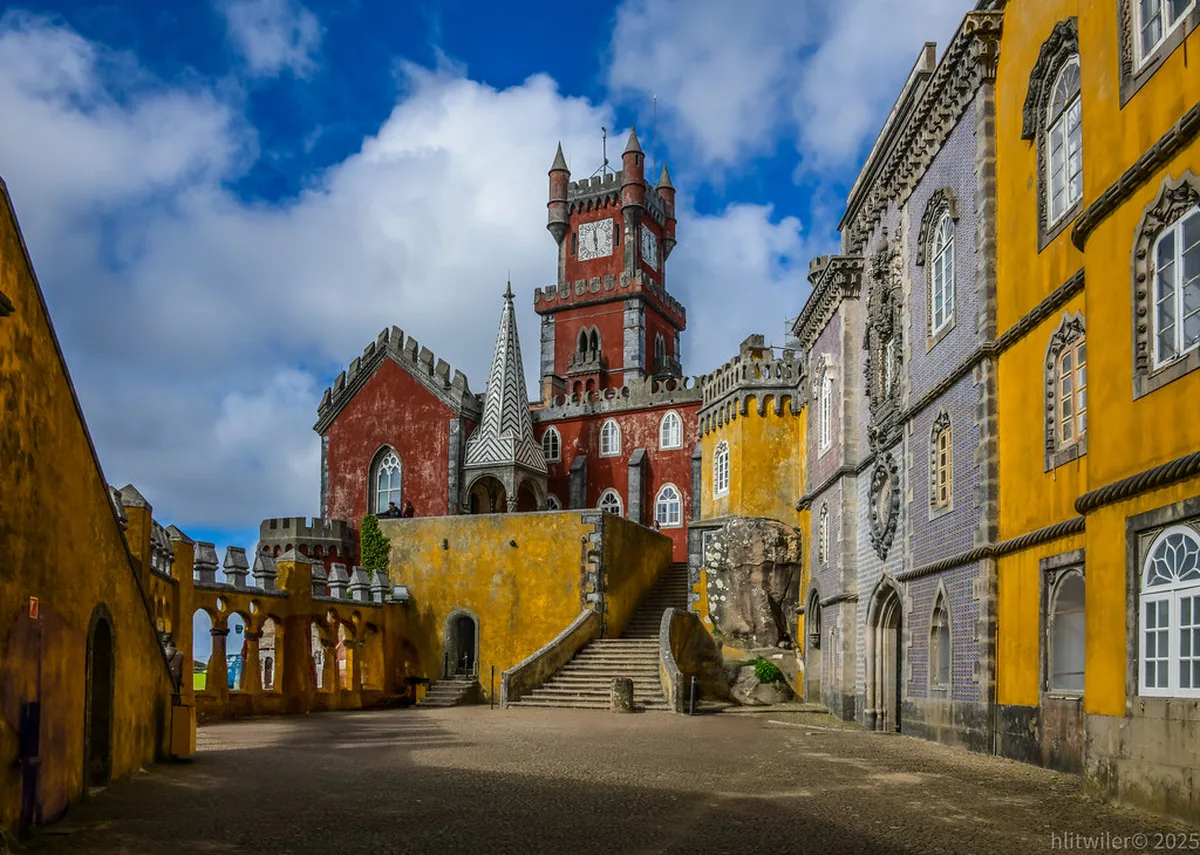
The palace interior and the surrounding park require different levels of access for modern visitors. You can choose a park-only ticket at €14 if the interior lines look too long for your personal schedule. These park tickets still provide full access to the famous yellow and red terraces, the miradouros, and the walking trails. Most visitors prefer seeing both sections during their first trip to the Sintra mountain range, making the €20 combined ticket the better value for a full experience. The €6 price difference between park-only and combined is minimal given what the interior rooms add to the overall visit.
Accessing the palace requires navigating a steep hill from the main entrance gate near the road. The official shuttle bus from the entrance gate to the palace door costs €3 per person each way and runs every few minutes throughout the day, so there is no need to pre-book. Walking takes about 15 minutes but requires a decent level of fitness to handle the incline and cobblestones. Most people find the shuttle extremely helpful during the hot summer days in central Portugal, particularly if they are traveling with young children, elderly relatives, or heavy camera equipment.
The palace operates on timed interior entry slots, which begin at 9:30 am. The last entry slot is at 6:15 pm, and the palace closes at 7:00 pm. On public holidays and summer weekends, slots routinely sell out three to seven days ahead. If your preferred date is within the next week, check availability daily around midnight Lisbon time when cancellations are often released. Read the full Sintra day trip from Lisbon guide to coordinate your palace booking with train and bus timings from the capital. First-time visitors planning a wider tour of the region should also check the Portugal travel guide for regional orientation and transport passes that can save money across multiple sites.
Transportation and Arrival Tips
Getting to Pena Palace requires careful planning due to the limited traffic access on the narrow mountain roads above Sintra town. Bus 434 is the dedicated tourist circuit that runs from Sintra train station directly to the palace gates, with departures roughly every 15 to 20 minutes during peak hours. In 2026, the 434 bus hop-on day ticket costs €6.90, which covers unlimited boardings across all stops on the route including the Moorish Castle (Castelo dos Mouros) and Monserrate Palace. This makes the day ticket excellent value if you plan to visit more than one attraction on the Sintra ridge. You can also purchase a €4.10 single ticket if you only intend to make one journey. Buying your ticket at the station before departing saves time at the top, where queues at the bus stop can be long in the afternoon. The 434 bus is the preferred transport choice for the vast majority of visitors arriving by train from Lisbon.
Walking from the historic town center to the palace takes about 45 to 60 minutes for most moderately fit hikers. This path is very steep and might be difficult for those who have mobility issues or are carrying heavy bags. Hikers often enjoy the forest views and the chance to see Sintra's lush vegetation up close, but most first-time tourists prefer the convenience of the shuttle bus inside the park or the 434 bus from the station. Wear sturdy shoes with good grip if you decide to tackle the mountain trails on foot, as the paths become slippery after rain. For a guided approach to the walking routes, the Sintra walking tour page covers the main hiking trails in detail, including estimated timings and difficulty ratings for each path.
Local taxis and ride-sharing apps also operate within the Sintra mountain area for private transport. These vehicles can be faster than the bus but often face significant traffic delays during peak hours in summer. Expect to pay between €10 and €15 for a one-way trip from the train station to the palace park gate. Confirm the price with the driver before you start your journey to avoid any unexpected costs. If you are arriving by private car, the nearest paid car parks are located in the town center. Full details on parking zones, hourly rates, and free parking areas can be found on the parking in Sintra page.
- The 434 Tourist Bus Route
- Type: Public Bus
- Cost: €4.10 single / €6.90 hop-on day ticket (2026)
- Frequency: Every 15–20 minutes
- Start: Sintra Station
- Uphill Shuttle (inside park)
- Type: Park Shuttle Bus
- Cost: €3 each way
- Frequency: Continuous during opening hours
- Start: Park entrance gate
- Hiking the Santa Maria Trail
- Type: Walking Path
- Time: 45–60 minutes from town center
- Difficulty: High incline, cobblestone surface
- Cost: Free access
Navigating the Palace Grounds and Interior
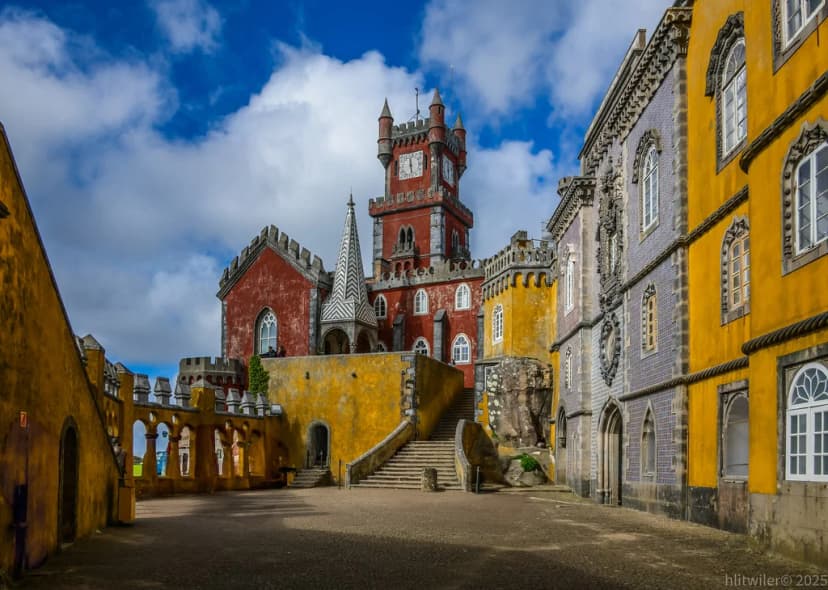
The palace terraces offer some of the most vibrant photo opportunities found anywhere in Portugal. Bright yellow and red towers stand out beautifully against the deep green mountain backdrop, and the views over the Serra de Sintra range are genuinely spectacular. The Queen's Terrace on the south side of the palace is the most photographed spot, with a panoramic sweep that reaches the Atlantic Ocean on clear days. Arriving early in the morning gives you the best chance of capturing this view without dozens of other visitors in the frame. These outdoor areas often feel much less crowded than the narrow interior hallways, and you can spend as long as you like on the terraces regardless of your ticket type.
Inside the palace, you will see perfectly preserved rooms from the 19th-century royal residence of King Ferdinand II and his family. The one-way interior route is clearly marked and takes most visitors around 35 to 45 minutes at a comfortable pace. The royal kitchen features original copper pots and a wood-burning stove that was used well into the 20th century. The Arab Room is a highlight for architecture enthusiasts, decorated with elaborate Moorish-revival tilework and an ornate painted ceiling. The royal dining room contains a long oak table set for a formal banquet, giving a vivid sense of 19th-century court life. The bedrooms and dressing rooms are surprisingly intimate in scale and filled with personal objects belonging to the royal family.
The Triton Arch is the main ceremonial gateway into the palace courtyard, framed by a giant mythological figure carved directly into the stone facade. Standing beneath it while looking up is one of the defining visual experiences of the entire visit, and it makes for a strong photograph when the light hits the stonework in the morning. Following the one-way path through the rooms helps maintain a steady flow for the many tour groups that pass through each day. Allow extra time to pause in the Great Hall, which features an eclectic mix of Gothic, Manueline, Moorish, and Renaissance architectural references that King Ferdinand II deliberately assembled as a romantic fantasy of Portuguese heritage.
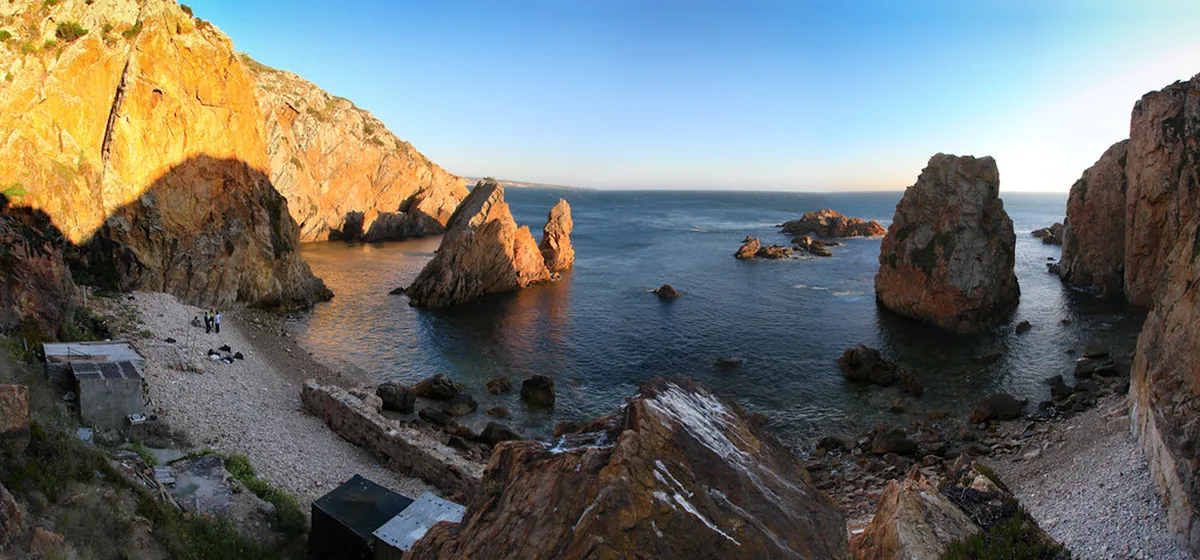
Discovering the hidden gems in the surrounding park adds significant value to your overall visit. The High Cross (Cruz Alta) marks the highest point in the Sintra mountain range with incredible panoramic views of the palace and the coastline. Walking to the Chalet of the Countess of Edla provides a quieter escape from the main crowds near the palace, and the restored romantic gardens around it are particularly beautiful in spring. The park covers over 85 hectares of woodland and formal garden, with well-marked trails connecting the key viewpoints. After finishing at Pena, many visitors continue onward to explore more of the region — see the day trips from Sintra page to plan journeys to Cabo da Roca and the Sintra coastline.
Pena Palace Interior: Room-by-Room Guide and Photography Spots
The interior tour begins at the Triton Gateway on the lower courtyard, where the imposing carved figure of a sea creature frames your first view of the palace proper. This is your first and best opportunity to photograph the full facade from below before the courtyard fills with visitors. From here the marked route leads up a staircase into the palace's main residential wing. The rooms are arranged in a rough chronological order of their original use, moving from service areas at the lower level through the private royal apartments to the formal reception rooms at the top.
The Kitchen is the first major room on the tour and one of the most visually striking, with its original copper-clad walls, hanging pots, and a massive iron stove that dominated the life of the palace's domestic staff. Photograph the copper surfaces in the morning when light enters from the courtyard-facing windows. The Arab Room next door is one of the most elaborately decorated spaces in the entire palace. Its interlocking geometric tilework, carved stucco ceiling, and Moorish horseshoe arches reflect King Ferdinand II's fascination with Romanticism and exotic architectural styles. This room photographs beautifully with a wide-angle lens because the geometry rewards a symmetrical composition.
The Great Hall (Sala Grande) is the central reception space and the largest single room in the palace. It is decorated with a mixture of Gothic vaulting, Renaissance columns, and 19th-century tapestries that Ferdinand assembled from across Europe. The hall connects the older medieval tower section to the newer Romantic-era wing, and you can see the architectural transition clearly in the stonework. The royal bedrooms on the upper floor are smaller and more personal in atmosphere, with original period furniture, embroidered textiles, and family photographs from the late 19th century. The Queen's bedroom opens directly onto the Queen's Terrace, which is the primary outdoor photography platform on the tour route. Arrive at this terrace between 9:30 am and 10:30 am for the best light and the clearest views toward Cascais and the Atlantic.
The Hunting Room near the exit is decorated with painted ceramic tiles depicting hunting scenes, a popular decorative motif in Portuguese aristocratic houses. It leads into the Great Dining Room, where a long formal table is set with period silverware and crystal, giving the strongest sense of how the royal family entertained guests in the 1880s. The entire interior route ends at the upper terrace near the highest tower, which offers a 360-degree view over the Sintra hills and is the best elevated photography spot in the complex. For the best exterior shot of the whole palace from outside the walls, walk south along the park trail toward the Cruz Alta viewpoint, where the yellow and red towers appear framed against the sky without any other buildings in sight.
Photography tips: the interior is dimly lit, so use a camera or phone that handles low light well. Tripods are not permitted inside the rooms. The Queen's Terrace is the only interior-accessible point where you can photograph the full south facade. For drone photography, note that the Sintra-Cascais Natural Park enforces a strict no-fly zone over the palace grounds. The best drone-free aerial alternative is the Cruz Alta viewpoint, reachable on foot in about 25 minutes from the palace entrance.
Avoiding Common Mistakes at Pena Palace
Many tourists underestimate the impact of Sintra's unique microclimate on their daily sightseeing plans. The Sintra mountains catch Atlantic moisture year-round, and fog can roll in from the ocean within minutes, completely obscuring the palace from view and from the main park paths. On foggy days the exterior loses much of its visual drama, though the interior experience remains excellent regardless of weather. Carrying a light waterproof jacket is wise even during the warm summer months, as the summit is typically several degrees cooler than Lisbon on any given afternoon. Check the local weather forecast the evening before you travel and consider building in a one-hour buffer in your schedule in case you need to wait for the fog to lift.
Wearing uncomfortable shoes is one of the most common errors that ruins otherwise enjoyable trips to this rocky mountain site. The cobblestone paths both inside the palace courtyard and along the park trails require footwear with excellent grip, ankle support, and enough cushioning for a full day of walking. Sandals and flat-soled canvas shoes are a poor choice for the steep descent back to the park gate, especially after rain when the stones become extremely slick. Plan comfortable, closed-toe walking shoes as non-negotiable kit for the visit. The Sintra walking tour page has more detailed terrain advice for the different trail options in the area, with specific difficulty ratings and recommended footwear for each route.
Arriving late for your timed entry slot will result in denied access to the palace interior. Staff members strictly enforce the schedule to manage the very high daily visitor volumes, which routinely exceed 6,000 people in summer. If you miss your window, you will only be allowed to explore the park and terraces on your €14 park-access portion, effectively losing the €6 premium you paid for the combined ticket. Factor in at least 20 minutes of travel time from the park entrance gate to the palace door — either walking uphill or waiting for the €3 shuttle — when calculating when to arrive at the park. Booking the 9:30 am or 10:00 am entry slot is the single most effective way to avoid slot-miss stress. For the fullest advice on timing your day across multiple Sintra sites, consult the best time to visit Sintra guide.
A less obvious mistake is skipping the park entirely and rushing straight to the palace door after arriving. The park at Pena contains some of the best viewpoints and most tranquil walking trails in the entire Sintra range, and many visitors who do not allocate time for it regret the omission. Budget at least 45 minutes for the park alone in addition to your interior visit time. Bringing a refillable water bottle is also important as the only food and drink vendors inside the park are located near the palace itself, and prices reflect the captive audience. The small café on the lower terrace sells espresso for €1.50 and sandwiches from €5, which are reasonable given the location, but queues can be long between 11:00 am and 2:00 pm.
Best Time to Visit and Ticket Strategy
Booking the earliest morning slot is the single most effective strategy for a crowd-reduced experience at Pena Palace. The palace gates open at 9:30 am, and taking the first interior entry slot of the day means you will walk the royal rooms with far fewer people than any afternoon group will encounter. Early morning light also provides the best photographic conditions for the south-facing terrace, where the yellow and red towers glow warmly in the low sun. Arriving at the park entrance at 9:00 am gives you a comfortable 30-minute window to walk or shuttle up to the palace door before your slot begins. The 434 bus from Sintra station has reliable early departures that allow this timing without any issues.
Late afternoon visits between 4:00 pm and 6:00 pm offer a different but equally beautiful atmosphere for exploring the grounds. The golden hour light makes the palace colors look even more saturated against a darkening sky, and the crowds thin noticeably as day-trippers from Lisbon begin their return journey. The park remains open until 8:00 pm in summer (check seasonal hours at parquesdesintra.pt), giving late visitors ample time to explore the trails and viewpoints after the main tourist rush. If your only available date falls on a weekend, the late afternoon slot is the best available crowd-avoidance strategy. For a full overview of seasonal patterns and school-holiday blackouts, the best time to visit Sintra page has month-by-month guidance.
Weekdays are generally noticeably less crowded than weekends for Pena Palace. Tuesdays and Wednesdays typically see the lowest visitor numbers of the week, while Saturdays in July and August see the highest. Planning your trip for a midweek date in April, May, September, or October gives the best combination of good weather, manageable crowds, and lower accommodation prices in Sintra. Avoid visiting during Portuguese national public holidays — particularly April 25th, June 10th, and the week between Christmas and New Year — when domestic visitor numbers peak significantly.
The 2026 ticket price structure from Parques de Sintra is as follows: combined palace and park €20 adult (€17 concession for seniors 65+ and students); park-only €14 adult (€11.50 concession). Family tickets covering two adults and up to three children under 14 are available at €55 for the combined option and €38 for park-only. Online booking carries no booking fee, and your ticket is valid for the date and entry slot printed on the confirmation. Refunds are not available within 24 hours of the visit, but slots can be changed up to 24 hours in advance subject to availability.
- Combined Palace and Park Ticket
- Access: Full grounds including interior rooms
- Adult cost: €20 (2026)
- Concession: €17 (seniors 65+ / students)
- Entry: Timed slot required
- Best for: First-time visitors wanting the full experience
- Park Only Ticket
- Access: Gardens, terraces, walking trails
- Adult cost: €14 (2026)
- Concession: €11.50
- Entry: Any time during opening hours
- Best for: Photographers, return visitors, budget travelers
- Family Combined Ticket
- Access: Full grounds including interior rooms
- Cost: €55 (2 adults + up to 3 children under 14)
- Entry: Timed slot required
- Best for: Families with children
Exploring Nearby Attractions in Sintra
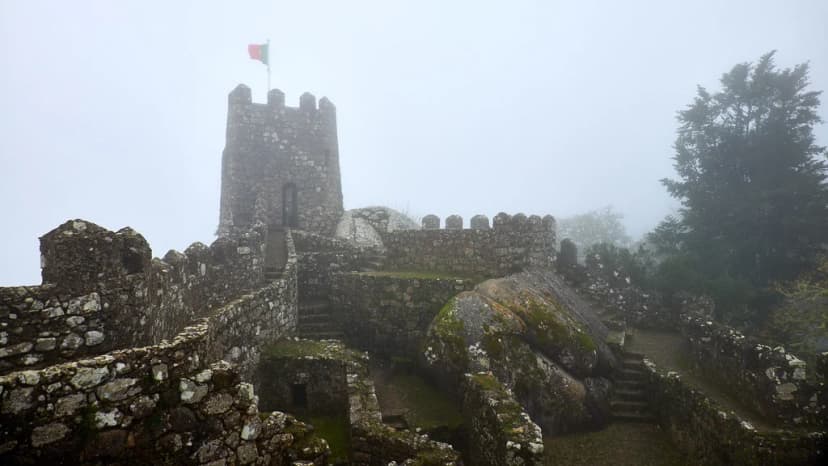
The Castle of the Moors (Castelo dos Mouros) sits just a short uphill walk from the main Pena Palace park entrance gate, and the two sites share the same forested mountain ridge. Its ancient stone battlements, built by North African settlers in the 8th and 9th centuries, offer a dramatically different and older perspective on Sintra's history than the 19th-century Romanticism of Pena. You can walk along the full length of the ramparts for a bird's eye view of the town of Sintra below, the Atlantic coastline, and the colorful turrets of Pena Palace visible across the treetops. This site requires a separate ticket (€12 adult in 2026) but is well worth the extra time for visitors interested in medieval military architecture and long-range views. The combined Pena and Moorish Castle ticket is available at €26 and saves you the effort of buying separately.
Quinta da Regaleira is another essential Sintra landmark, located about 1.5 kilometers from the historic town center in the direction of Monserrate. Its famous Initiation Well (Poço Iniciático) descends nine levels underground in a spiral staircase lined with carved stone, and the Gothic manor house above ground is one of the most atmospheric buildings in Portugal. Entry in 2026 costs €10 for adults. Many visitors combine Pena Palace in the morning with Quinta da Regaleira in the afternoon, making excellent use of a full day in Sintra. Cascais is a stylish beach town 30 minutes from Sintra by road and pairs well with a morning at Pena Palace for a longer day of exploring the greater Lisbon region — see the Cascais old town guide for what to see and where to eat there.
Staying overnight in Sintra allows you to explore the town after the enormous day-trip crowds clear out by late afternoon. Local restaurants on Rua das Padarias and in the historic center serve traditional pastries — particularly the local specialty travesseiros, which are almond-and-egg-cream pastry rolls available at the Piriquita bakery — that you absolutely must try during your visit. Walking through the quiet streets at dusk or after dinner feels like stepping back into a quieter era of Portuguese history, with the illuminated palace visible on the hilltop as a constant atmospheric backdrop. This slower pace helps you appreciate the romantic charm of the entire Sintra UNESCO World Heritage cultural landscape at a level that same-day visitors simply cannot access. If you would like to extend your trip further along the coast, the Portuguese coast travel guide from Lisbon to the Algarve maps out the most rewarding coastal itinerary south of Sintra.
Food and Refreshments at and Around Pena Palace
Planning where to eat during your Pena Palace visit is easy to overlook but genuinely affects how much you enjoy the day. Inside the palace park, the main café is located on the lower terrace near the shuttle drop-off point. It sells espresso for €1.50, pastéis de nata (custard tarts) for €1.80 each, sandwiches from €5, and light snacks. The café is convenient but predictably busy between 11:00 am and 2:00 pm when tour groups rotate through. Arriving earlier or later than this window means shorter queues and more relaxed seating on the terrace with views of the forested hillside.
A better strategy for a full meal is to descend back into Sintra historic center before or after your palace visit. Piriquita on Rua das Padarias is the most famous bakery in Sintra and sells travesseiros — flaky almond and egg-cream pastry rolls — for €2.50 each. These are worth seeking out and make an excellent pre-visit breakfast when purchased at opening time (9:00 am on weekdays). Café Saudade on Avenida Dr. Miguel Bombarda serves full Portuguese lunches, including the classic bacalhau com broa (salt cod with cornbread) for around €14, in a relaxed indoor setting a short walk from the train station. The village's main square, Praça da República, has several cafe terraces where you can sit with a galão (milky espresso) and watch the day-trip crowds pass after a morning at the palace.
Visitors planning a picnic inside the palace park should note that the designated picnic areas are outside the palace walls and within the park's lower forested section, not on the formal terraces. The park map (available at the entrance gate or downloadable from parquesdesintra.pt) marks the approved rest areas. Bringing your own water is highly recommended: the park's internal kiosk sells 500 ml bottles of water for €2.50, which is expensive for a long hot day. Stock up at the mini-markets near Sintra station before boarding the 434 bus — bottles cost around €0.70 there and the selection of snacks and sandwiches is far wider than anything available inside the park.
For a post-visit dinner in Sintra, Restaurante Monserrate on the main road between the historic center and Monserrate Palace is popular with repeat visitors for its grilled fish and views of the forested hillside. Main courses start at €16 for grilled sea bream and reach €26 for the lobster rice, which is shared between two people and must be ordered 30 minutes in advance. Reservations are recommended on weekends and during summer holidays. Alternatively, the five-minute train back to Cascais connects you to a much wider restaurant scene — the Cascais old town guide covers the best seafood restaurants along the harbor waterfront.
Frequently Asked Questions
How much does Pena Palace cost in 2026?
In 2026, a combined palace and park ticket costs €20 for adults and €17 for seniors aged 65 and over or students with valid ID. A park-only ticket covering the gardens, terraces, and walking trails without entry to the interior rooms costs €14 for adults and €11.50 for concessions. A family ticket for two adults and up to three children under 14 is €55 for the combined option. Children under 6 enter free. All tickets must be booked in advance at parquesdesintra.pt, as on-the-day availability is limited during peak season. The shuttle bus from the park entrance gate to the palace door costs an additional €3 each way and is not included in the ticket price.
What are the opening hours for Pena Palace in 2026?
Pena Palace opens at 9:30 am every day of the year, including weekends and public holidays. The last interior entry slot is at 6:15 pm and the palace closes at 7:00 pm. The surrounding park has extended hours in summer — typically opening at 9:00 am and closing at 8:00 pm from June through September. Winter hours may be shorter, so always verify current timings at parquesdesintra.pt before your visit. The palace does not close for a lunch break, and all facilities including the terrace café remain open throughout the day.
How much time do I need for a Pena Palace visit?
You should set aside at least three hours to see the palace interior and explore the surrounding park comfortably. The one-way interior tour takes most visitors 35 to 45 minutes at a relaxed pace. Walking the main park trails to the Cruz Alta viewpoint and back adds another 45 to 60 minutes. Factoring in travel time on the €3 shuttle or the 15-minute uphill walk from the park entrance, plus time at the terraces and any café stops, a full three-hour block is the realistic minimum. Many visitors spend four hours or more, especially if they combine Pena with a visit to the nearby Moorish Castle (€12 adult, or €26 for a combined Pena and Moorish Castle ticket) on the same ridge.
Can I drive my car to the Pena Palace entrance?
Driving a private car directly to the palace is not recommended and is restricted during peak visitor hours. The mountain roads above Sintra are narrow and traffic-controlled, with access for private vehicles limited by the local authority during summer weekends and public holidays. The most practical option is to park in the town center and use bus 434 from Sintra station (€4.10 single or €6.90 hop-on day ticket in 2026) to reach the palace gate. Paid parking is available in several car parks near the historic center. Full details on parking zones and rates are on the parking in Sintra page.
Is the palace interior worth the extra cost over park-only?
For most first-time visitors, the combined palace and park ticket at €20 is worth the additional €6 over the park-only option at €14. The interior rooms — including the Arab Room, the royal kitchen with its copper walls, the Great Hall, and the formal dining room — provide genuine insight into 19th-century royal life that you cannot get from the exterior alone. If you are primarily visiting for landscape photography and are comfortable with exterior-only views, the park-only ticket at €14 is excellent value and includes access to the Queen's Terrace viewing platform. History enthusiasts and first-time visitors to Sintra should always choose the combined ticket.
What should I wear for my trip to Pena Palace?
Comfortable closed-toe walking shoes with good grip are essential for the steep cobblestone paths inside the palace courtyard and the forest trails in the surrounding park. Sandals and flat canvas shoes are a poor choice, especially on wet days when the stones become slippery. Bring a light waterproof jacket regardless of season, because the Sintra mountains sit in a microclimate that catches Atlantic moisture and can produce fog and light rain even on otherwise clear days. Dress in layers so you can adjust to the temperature difference between the lower town and the hilltop. Sunscreen and a hat are important in summer, as the upper terraces offer very little shade during midday hours.
How do I get from Lisbon to Sintra for Pena Palace?
The fastest and cheapest way to get from Lisbon to Sintra is by direct train from Rossio station or Oriente station, which takes approximately 40 minutes and costs around €2.35 each way with a Viva Viagem card loaded with credit. Trains run every 20 minutes throughout the day. Once at Sintra station, board bus 434 (€4.10 single or €6.90 hop-on day ticket in 2026) for the direct 15-minute journey to the Pena Palace park gate. The entire journey from central Lisbon to the palace entrance typically takes around one hour door to door. Full step-by-step timing advice is in the Sintra day trip from Lisbon guide.
Visiting Pena Palace is a defining highlight for any traveler exploring Portugal in 2026. With combined tickets at €20, park-only access at €14, and bus 434 from Sintra station running the hop-on day ticket at €6.90, the logistics are straightforward once you plan ahead. Book your timed morning slot at parquesdesintra.pt as early as possible — slots sell out weeks ahead in summer — and arrive at the park gate by 9:00 am to give yourself a relaxed start. Carry a light jacket for the mountain microclimate, wear solid walking shoes, and budget at least three hours to see the interior rooms and explore the trails to the Cruz Alta viewpoint. The magical combination of fairy-tale architecture, Atlantic panoramas, and world-class 19th-century royal interiors makes Pena Palace one of the most rewarding half-day excursions in all of southern Europe.