Ultimate Sintra Walking Tour: Exploring Portugal's Fairytale Town in 2026
A self-guided Sintra walking tour covers 9 km and 300 m elevation gain in 6–7 hours: train station → National Palace (€10) → Quinta da Regaleira (€10, 600 m west) → Moorish Castle (€10, 2.1 km uphill, 45 min) → Pena Palace (€20).
Start at 8:30 AM from Sintra train station (€4.80 return from Lisbon, 40 min ride); reach the village in 15 minutes on foot, Quinta da Regaleira in 30 minutes, and Pena Palace summit in 70–80 minutes via the PR1 forest trail.
Walking through the mist-covered hills of Sintra in Portugal feels like stepping directly into a vibrant storybook filled with ancient legends. This UNESCO World Heritage site offers a unique blend of Romantic-era architecture and lush botanical gardens waiting for exploration. Choosing a Sintra walking tour allows you to discover hidden details that travelers on crowded buses often miss entirely. Preparing for the steep inclines and cobblestone paths ensures your journey through this Portuguese gem remains comfortable and rewarding.
The town serves as a testament to 19th-century Romanticism with its whimsical palaces and mysterious grottoes tucked away in the forest. Adventurous travelers will find that the local trails provide a peaceful escape from the bustling tourist crowds in the center. Selecting the best time to visit Sintra helps you enjoy these paths under ideal weather conditions. Proper planning transforms a simple visit into a deep immersion within the cultural landscape of the Serra de Sintra.
Walking from the Train Station to Sintra Village: Route, Distances and Key Viewpoints
The walk from Sintra train station to the historic village centre is 1.1 km and takes roughly 15 minutes on flat ground. Leave the station's main exit, turn right onto Avenida Dr. Miguel Bombarda, and follow the tiled pavement past the municipal market. After 400 m you reach the roundabout at Rua João de Deus; continue straight and the twin chimneys of the National Palace appear above the rooftops. The final 300 m climbs gently along Rua Visconde de Monserrate, passing two traditional tile shops and a small fountain where you can refill your water bottle for free.
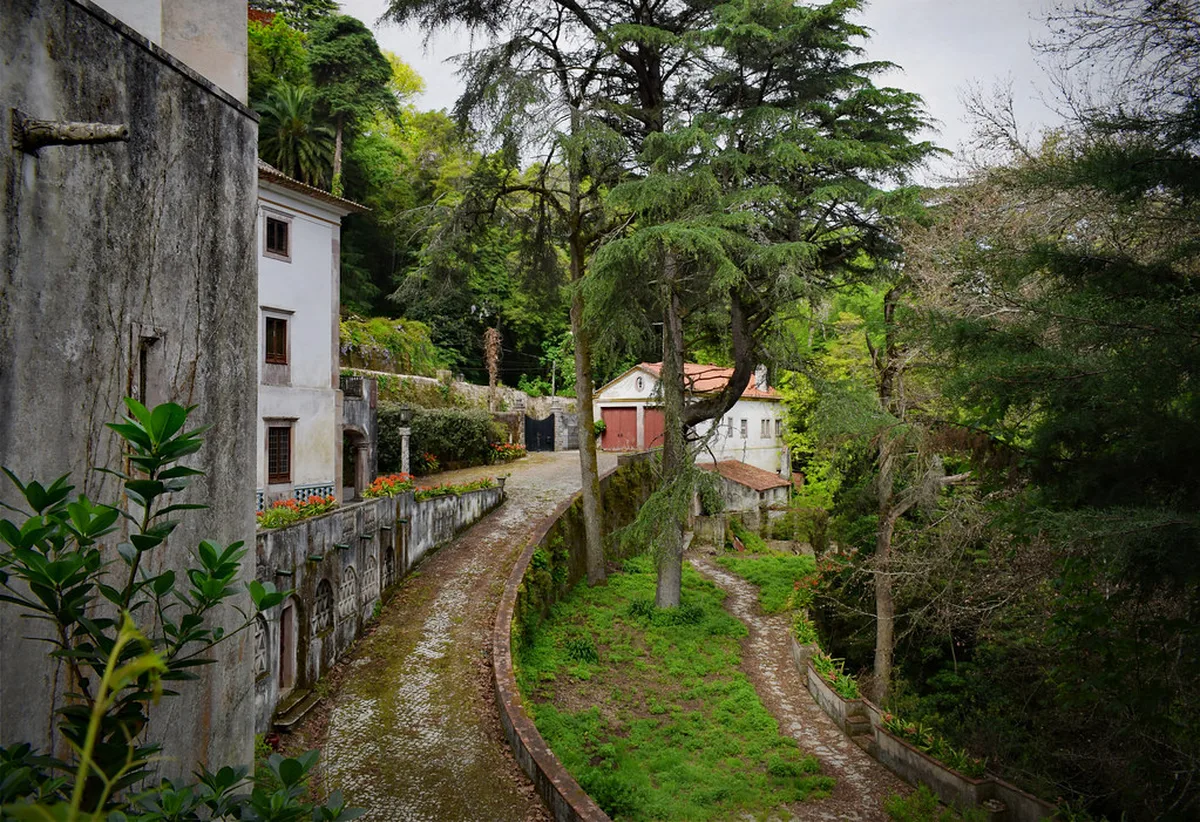
Along this opening stretch you encounter the first great viewpoint of the day: a small miradouro on Rua Consiglieri Pedroso that looks back over the Sintra railway junction and the plains stretching toward Lisbon. Pause here before the village crowds arrive, especially in the early-morning light. A second viewpoint, the Jardim da Vila park, sits 200 m further along the main road and provides benches and shade beneath century-old plane trees — ideal for a five-minute rest before the steeper climb begins.
From the park the route splits. The lower road (Rua Paço) leads directly to the National Palace square in three minutes. The upper path (Calçada dos Clérigos) winds steeply past local houses and opens onto a terrace with unobstructed views of the Serra de Sintra hills and the distant Atlantic coastline on clear days. The upper path adds roughly seven minutes but delivers one of the most photogenic angles in the whole village. Wear grip-soled shoes because the 16th-century stone steps on this lane become slippery when damp.
Budget approximately 20 minutes for the full station-to-village walk if you make both viewpoint stops. Arriving before 9:30 AM means you will reach the National Palace square before the first wave of day-trippers disembarks from the 9:20 AM Lisbon train, giving you a calm, crowd-free introduction to the centre. The shuttle bus (Route 434) covers this same distance for €3 per person if your legs need a rest, departing every 20 minutes from the station forecourt.
Planning Your Perfect Sintra Walking Tour
Success on the trails begins with an early start to beat the midday heat and the arrival of large tour groups. Most visitors arrive by mid-morning, so starting your trek at 8:30 AM provides a significant advantage for photography and personal space at each monument. The terrain features significant elevation changes that require a moderate level of physical fitness — the complete loop from the station to Pena Palace and back covers 9 km and climbs 300 m. Expect to spend six to seven hours on the full circuit, including monument visits.
Packing light but bringing essential supplies is vital for the long duration. Carry at least 1.5 litres of water; the only reliable free refill points are the village fountain near the National Palace and the drinking tap inside the Pena Park gates. High-protein snacks such as nuts or energy bars help maintain stamina during the extended uphill sections. Weather in the Serra de Sintra can change rapidly — bright sunshine can give way to thick fog and a 5°C temperature drop within a single hour, so layered clothing is essential.
Sturdy footwear with excellent grip is non-negotiable. The historic cobblestones are often uneven and become dangerously slippery after even light rain. Ankle-support trail shoes or waterproof hiking boots are ideal. Trainers with worn soles cause many avoidable falls each season, particularly on the steep descent from Pena back to the village centre.
For budget planning, here is the 2026 cost breakdown for a full self-guided day: train from Lisbon return (€4.80), Pena Palace entry (€20 adult, €16.50 under 25), Moorish Castle entry (€10 adult), Quinta da Regaleira entry (€10 adult), lunch at a village café (€12–18), pastries at Piriquita bakery (€3–5), and shuttle bus 434 if needed (€3 one-way). Total self-guided cost: approximately €50–65 per adult. Guided walking tours starting from the station run €25–35 per person and typically include Moorish Castle entry plus skip-the-line Pena access.
Digital maps are helpful, but downloading offline versions of the Sintra municipal trail network is a smart move since cell service drops in the deep valleys between the Capuchos Convent and Monserrate. Many routes are well-marked with yellow and red trail blazes that guide hikers through the dense evergreen foliage. Local tourism offices provide printed maps highlighting the five official numbered trails (PR1 through PR5) that connect all major monuments. Allowing extra time between stops lets you enjoy spontaneous discoveries: small 16th-century chapels, ancient granite water cisterns, and belvederes hidden behind dense fern groves.
- Morning Kickoff Strategy
- Time: 08:30 AM start from station
- Benefit: Avoids peak crowds and midday heat
- Location: Sintra Train Station
- Goal: Reach National Palace square before 9:30 AM
- Essential Trail Gear
- Shoes: Waterproof hiking boots or grip trail shoes
- Water: 1.5 litres minimum (free refill at village fountain)
- Apparel: Moisture-wicking base layer + windproof shell
- Navigation: Offline GPS map (Wikiloc route "Sintra PR1")
- 2026 Budget Summary
- Entry fees: €40 (Pena + Castle + Quinta)
- Train return: €4.80
- Food and café stops: €15–23
- Optional guided tour: €25–35 (replaces self-guided)
Essential Stops on a Historic Centre Loop
The historic village centre serves as the heart of any Sintra walking tour and offers a concentrated dose of architectural charm before the uphill climb begins. The Sintra National Palace dominates the main square with its extraordinary twin conical chimneys, which rise 33 m above the rooftops and are visible from almost every point in the surrounding hills. Entry to the palace costs €10 for adults in 2026, making it the most affordable of Sintra's major monuments. Allow a minimum of one hour inside: the Swan Room ceiling (72 gilded swans representing the court ladies of King João I) and the Magpie Room with its magpie-painted vault are the two most photographed interiors.

After the palace, the village streets demand at least 30 minutes of unhurried exploration. Calçada da Rainha and Rua das Padarias host a series of artisan workshops selling hand-painted azulejo tiles, cork accessories, and locally produced olive oil — a far better souvenir selection than anything found at the tourist stalls outside the train station. The architecture along these lanes mixes Gothic arches, Manueline doorways, and brightly painted 19th-century façades, making every corner a potential photograph.
No walk through the village is complete without a stop at Piriquita bakery at Rua das Padarias 1. The Queijadas de Sintra (€1.50 each, 2026 price) are crisp pastry shells filled with fresh cheese and cinnamon that have been made here since 1862. Travesseiros (€2.20 each) are flaky puff-pastry rolls packed with almond cream that melt in your mouth. Buy two or three to carry on the trail — they provide a quick energy boost and hold well for two to three hours. The queue moves quickly even in peak season; budget 10 minutes.
Beyond the main square, the Jardim da Marechal Saldanha park runs along the western edge of the village and connects to the lower trail toward Quinta da Regaleira. This park is free to enter and contains a lake, ornamental hedges, and benches ideal for a seated map review before heading uphill. Several quiet alleyways on the park's northern edge lead to small chapels and hidden gardens that most day-trippers overlook entirely. These secluded passages also serve as the fastest pedestrian shortcuts to the trailheads heading toward Pena and the Moorish Castle.
Quinta da Regaleira is 600 m west of the main square along Rua Barbosa du Bocage and is open daily from 9:30 AM to 6:00 PM in 2026. Entry is €10 adult, €7 child under 16. The headline attraction is the 27-m-deep Initiation Well, a spiral staircase descending through a stone tower that ends in a network of underground tunnels. Arrive before 10:30 AM to photograph the well without crowds; by noon the queue for the staircase often reaches 20 minutes. The estate grounds cover 4 hectares of neo-Gothic towers, grottoes, and ornamental lakes that take 90 minutes to explore thoroughly. On your way back toward the village centre, stop at the Pena Palace guide to pre-read what awaits at the summit before you begin the uphill walk.
- Sintra National Palace
- Highlight: Swan Room ceiling (72 gilded swans) and Magpie Room
- Cost: €10 adult, €8.50 youth (2026)
- Access: Village centre, flat approach
- Recommended visit time: 60–75 minutes
- Quinta da Regaleira
- Highlight: 27 m deep Initiation Well spiral staircase
- Cost: €10 adult, €7 child under 16 (2026)
- Access: 600 m west of main square, flat walk
- Recommended visit time: 90 minutes
- Local Pastry Tasting
- Treat: Queijada (€1.50) and Travesseiro (€2.20) at Piriquita
- Shop: Rua das Padarias 1
- Tip: Buy extras to carry on the trail
Hiking Trails to Pena Palace and Moorish Castle
The ascent from the village to the mountain peaks is the most physically demanding and scenically rewarding part of the entire circuit. The 2.1 km climb from the village to Pena Palace gates gains 200 m of elevation; expect 45–60 minutes of brisk walking on the woodland trail, or 20–25 minutes by the Route 434 shuttle bus (€3). The most rewarding pedestrian route follows the PR1 trail through the Vila Sassetti estate, which winds through manicured terraced gardens, past dramatic granite boulders, and under centuries-old cedar trees before emerging at the Pena lower gate.
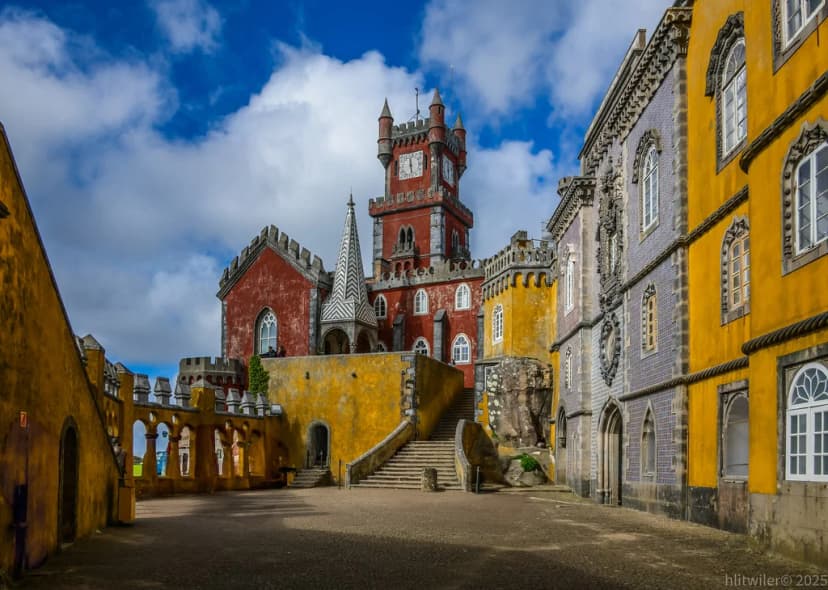
Pena Palace entry in 2026 costs €20 for adults and €16.50 for visitors under 25. This is the highest single ticket price in Sintra, but the palace itself is genuinely extraordinary: an architectural fusion of Manueline Gothic stonework, Moorish arches, Neo-Romanesque towers, and German Romantic castle design, all painted in vivid ochre and terracotta. The Triton Arch at the main entrance is the most-photographed feature — a coral-carved archway ringed with sea creatures dating to 1840. Inside, the 19th-century royal apartments are preserved intact with original furniture, wallpaper, and personal effects. Budget 90 minutes minimum.
The viewpoint terrace at the top of Pena's battlements looks north toward the Atlantic and west over the Serra de Sintra ridgeline. On exceptionally clear winter mornings you can see the Lisbon skyline 25 km to the east. This terrace is also the best spot to photograph the palace exterior with the Moorish Castle's crenellated walls visible on the adjacent ridgeline, roughly 300 m lower in elevation.
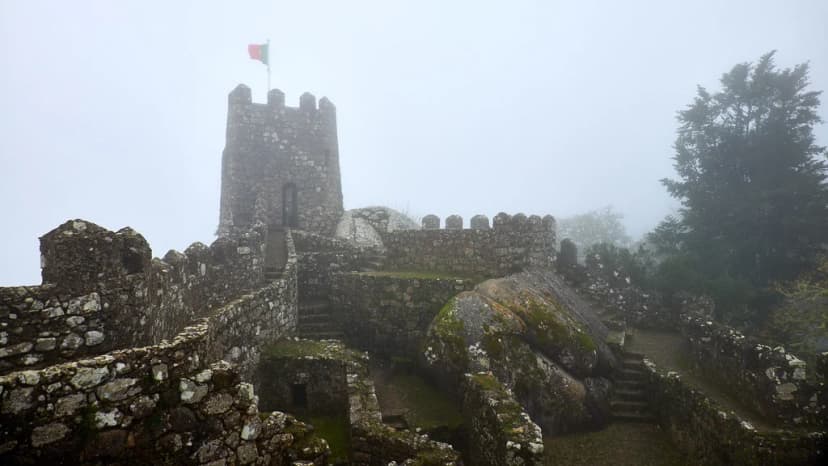
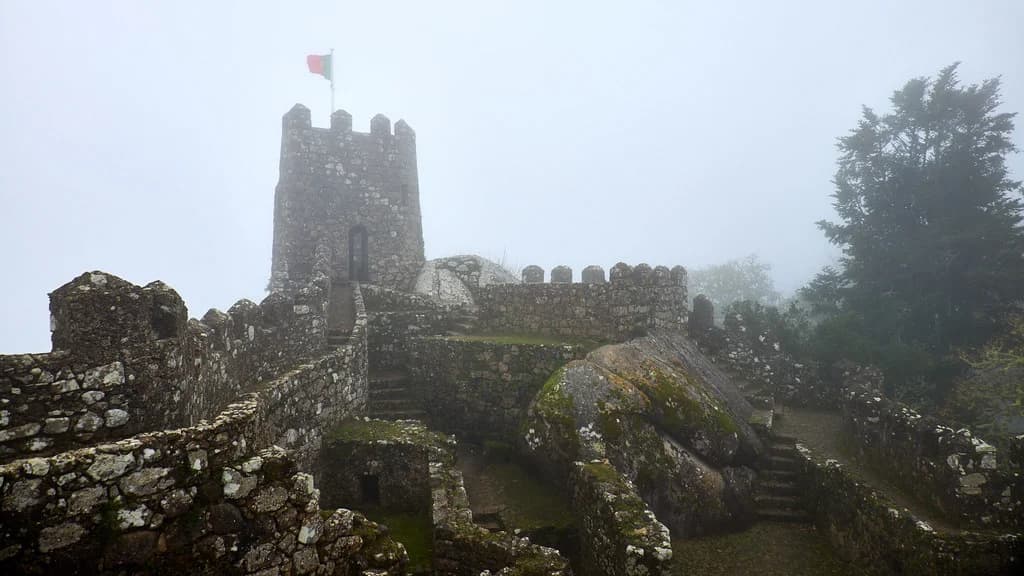
The Moorish Castle sits at 412 m elevation, slightly below Pena, and is reached via a 15-minute forest walk from the Pena lower gate. Entry costs €10 for adults in 2026. The castle dates to the 8th–10th century Arab occupation and the 2.5 km of defensive walls you can walk along offer the widest panoramic views in all of Sintra — on clear days the visible range extends 50 km to encompass the Tagus estuary, Cascais headland, and the open Atlantic. The wind at this altitude routinely exceeds 30 km/h; a windproof layer is essential. History enthusiasts will find the restored Islamic silos, the royal tower, and the Romanesque church foundations particularly compelling.
Connecting Pena Palace to the Moorish Castle on foot takes approximately 20 minutes via the well-signposted forest path through the park. The shade provided by enormous tree ferns, eucalyptus, and exotic conifers planted in the 19th century makes the traverse pleasant even in summer. Small stone trail markers indicate junctions every 100 m. The most efficient itinerary visits Moorish Castle first (opens 9:30 AM), then walks up to Pena before 11:00 AM to photograph the palace in morning light before tour buses arrive. After Pena, take the PR1 trail back down to the village for lunch — the descent takes 35 minutes and is gentler than the direct road.
Monserrate Palace and the Western Trail: Sintra's Most Underrated Walking Stop
Most visitors to Sintra walk the eastern circuit — village, Quinta da Regaleira, Moorish Castle, Pena — and miss the equally captivating western route to Monserrate Palace entirely. Monserrate sits 3.5 km from the village centre along the Rua de Monserrate, a shaded lane flanked by ancient oaks and fern-draped walls. The walk from the National Palace square takes approximately 45 minutes on relatively flat ground, making it accessible even to visitors who skipped the Pena ascent. Entry to Monserrate Palace and its botanical gardens costs €10 for adults in 2026, the same as the National Palace and Moorish Castle, and ticket queues here are dramatically shorter than at any other Sintra monument.
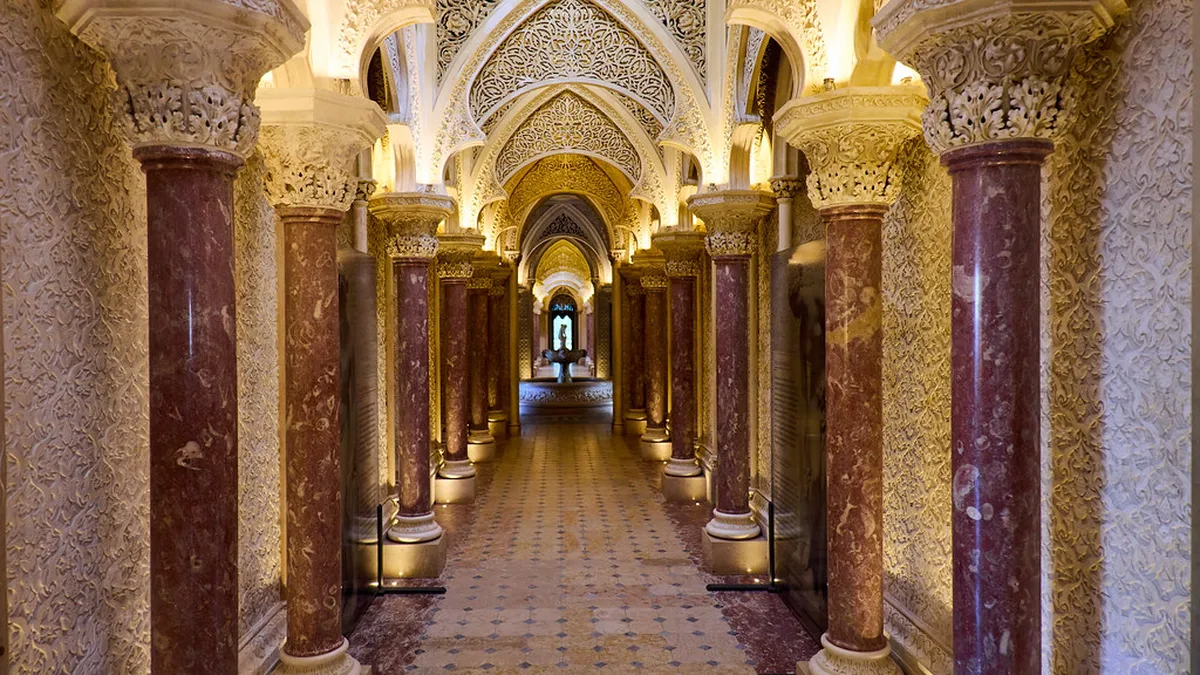
The palace itself is a masterpiece of 19th-century Romantic architecture, commissioned by English millionaire Sir Francis Cook in 1858 and designed by James Thomas Knowles. Its three distinctive Moorish domes and Indo-Saracenic carved sandstone facade are unlike anything else in Portugal. The interior — open daily from 9:30 AM to 7:00 PM in summer — preserves ornate Moorish hall ceilings, Venetian mosaic floors, and a dramatic double staircase that served as the formal reception hall for Cook's legendary garden parties. Allow at least 60 minutes inside before stepping into the grounds.
The Monserrate Botanical Garden surrounding the palace is one of the most diverse in Europe, planted during the 1860s with species collected from Mexico, Australia, India, and South Africa. The garden covers 30 hectares and features a Japanese garden, a Mexican garden, a collection of tree ferns exceeding 8 m in height, and a Roman ruin folly built to resemble an ancient temple. A free self-guided trail map is provided at the entrance; the recommended circuit through all themed sections takes 75 minutes. The garden's valley floor stays naturally cool even on hot August days, making it an ideal midday refuge when the Pena summit is stifling.
To turn Monserrate into a half-day loop, combine it with the Capuchos Convent. The convent — built by Franciscan monks in 1560 almost entirely from rock and cork — sits 4.5 km further along the Rua de Monserrate and is the most otherworldly stop in the entire Sintra park. Entry costs €8 adult in 2026. The cells, chapel, and refectory are carved directly into the granite hillside; cork insulation lines every wall and door to retain warmth during the damp Atlantic winters. The walk between Monserrate and Capuchos on the PR5 trail takes 50 minutes through dense forest. This combined western circuit — village → Monserrate → Capuchos → return — covers 12 km and suits experienced hikers who want an alternative to the Pena queue. For an even broader exploration of the wider region, read our guide to day trips from Sintra covering the Atlantic coast, Queluz Palace, and Mafra.
Practical notes for the western trail: there are no cafés between the village centre and Monserrate, so carry water and snacks before you depart. The Route 435 bus (€3 single, departures every 40 minutes from the train station) stops directly outside the Monserrate Palace gates, making it easy to take the bus one direction and walk the other. Photography at Monserrate is unrestricted, the lighting in the Moorish hall is excellent from 10:00 AM to noon, and the palace exterior photographs best in afternoon sun when the sandstone glows gold. If you have a second day in Sintra or want to maximise a single long day, the western trail to Monserrate is the most rewarding addition to the standard eastern circuit.
Avoiding Common Mistakes on Your Walking Route
Many travelers underestimate the steepness of the terrain and find themselves exhausted before reaching the primary attractions. The total elevation gain for the full circuit — station, village, Quinta da Regaleira, Moorish Castle, Pena Palace, and back — is approximately 380 m, equivalent to climbing a 38-floor building. Pacing yourself with regular five-minute rest stops on the ascent is far more efficient than pushing hard and requiring a 20-minute recovery break at the top.
Attempting to drive between the palaces is a serious tactical error. Finding parking in Sintra is notoriously difficult from May through September; the two municipal car parks fill by 9:30 AM and the nearest overflow parking is 1.5 km outside the village. The narrow, one-way mountain roads create gridlock that can trap a car for 45 minutes between Pena and the Moorish Castle. Walking — or taking the Route 434 shuttle for €3 — bypasses all of this and keeps your schedule intact.
Another frequent and costly mistake is arriving without pre-booked palace tickets. In 2026, peak-season queues at the Pena Palace ticket office routinely exceed 60–75 minutes. Booking online at sintra.pt at least 24–48 hours in advance costs the same (€20 adult) and allows you to walk directly to the timed-entry gate. Quinta da Regaleira and the Moorish Castle have shorter queues but still benefit from online booking during July and August. Carry your confirmation QR code in your phone's screenshots folder in case signal is poor at the hilltop entry points.
Wearing impractical footwear is the most painful and preventable mistake visitors make. Fashion trainers, sandals, and low-cut canvas shoes cause foot pain and increase fall risk on Sintra's historic cobblestones, which are often rounded, uneven, and slick with morning moisture. A proper trail shoe or lightweight hiking boot with a rubber sole rated at least B1 grip will protect your feet during the 4–5-hour descent and extend your overall range considerably. Blisters are the single most common reason visitors abandon the full circuit before reaching Pena Palace.
Skipping the Queijadas and Travesseiros at Piriquita is a cultural miss, not just a culinary one. These pastries have been made in Sintra to the same recipe since the 1860s and are not widely replicated elsewhere in Portugal. Budget €4–6 and 10 minutes — the queue moves fast and the reward is substantial. Carry them in your daypack for a mid-trail energy boost above the Moorish Castle, where café facilities are non-existent and the nearest vending machine is a 15-minute walk back downhill.
Finally, failing to check the weather forecast the morning of your visit is a common oversight with significant consequences. Sintra sits in a maritime microclimate where sea fog forms rapidly on the hilltops even when Lisbon is sunny. Check the Sintra-specific forecast on weather.com or the Portuguese IPMA app — not the Lisbon forecast — and bring a rain jacket regardless of what the screen says. Fog at Pena Palace is often a feature rather than a bug: the palace draped in mist is breathtaking, but wet cobblestones require extra caution on the descent.
Practical Logistics for a Smooth Experience
Most travelers arrive via the Rossio–Sintra commuter line, which departs Rossio Station in central Lisbon every 20 minutes from 6:00 AM. The train fare is €2.40 one-way (€4.80 return) using a Viva Viagem card loaded with credit, making it the cheapest transport option from Lisbon by far. Journey time is 40 minutes. The train deposits you at the edge of Sintra's historic district, 1.1 km from the village centre — see the opening section of this guide for the full walking route from the station. For a complete overview of planning your visit, read our Sintra day trip from Lisbon guide for transport schedules, return timing, and combination routes with Cascais.
Public restrooms are available at the train station (free, accessible 7:00 AM–9:00 PM), in the municipal park adjacent to the National Palace (€0.50 coin-operated), and within the grounds of Pena Palace and the Moorish Castle (free for ticket holders). Carry a small supply of €0.50 coins for the coin-operated facilities. The village has no shortage of ATMs; two are located on the main square near the National Palace entrance and are reliably stocked even during peak season. Card payment is accepted at all major palace ticket counters, most cafés, and the Piriquita bakery.
Café stops are factored into the walking circuit at two points. The first recommended stop is a village café for a Portuguese coffee (bica, €0.90–1.20) and a snack before the ascent — budget €3–6 total and aim for a table by 9:00 AM before the terraces fill. The second stop is the café inside Pena Palace park, open from 10:00 AM, where a bica costs €1.80 and a toasted sandwich (tosta mista) runs €4.50. These in-park prices are higher than the village but reasonable by tourist-site standards. Bring your own snacks from the village to keep costs down.
The return journey to the station can be made on foot (35 minutes downhill via the PR1 trail, knees permitting) or by Route 434 shuttle bus (€3, departs from Pena lower car park every 20–30 minutes). Most hikers prefer walking down as it offers different valley perspectives and passes the back of the National Palace. If your knees are sore, the shuttle is well worth the €3 fare — it is air-conditioned and deposits you directly at the station forecourt. The last shuttle from Pena departs at 7:00 PM in summer (6:00 PM October–March), so plan your descent before that cutoff. Finishing your day with a hearty Portuguese meal — try bacalhau à brás (salted cod, €14–18) at a village restaurant before catching the train back — is the perfect way to celebrate a full day on the trails.
If you plan to also visit Cascais after Sintra, note that a direct bus service (Scotturb 403) connects Sintra train station to Cascais in 45 minutes for €4.10. This eliminates the need to return to Lisbon first and makes a combined Sintra–Cascais day circuit very practical. Read our Cascais old town guide for attraction highlights and walking routes in that town, and our Cascais beach guide if you want to finish the day with a swim on the Atlantic coast. Visitors planning to extend their Portugal trip should also consult our best time to visit Sintra guide for month-by-month weather patterns, festival dates, and crowd forecasts.
Frequently Asked Questions
How long does a full Sintra walking tour take?
A comprehensive Sintra walking tour covering the village centre, Quinta da Regaleira, Moorish Castle, and Pena Palace takes six to eight hours at a comfortable pace in 2026. This includes roughly 90 minutes inside Pena Palace, 60 minutes at the Moorish Castle walls, 90 minutes at Quinta da Regaleira, and two hours of walking trail time between sites. Arrive by 8:30–9:00 AM to complete the full circuit before monument closing times at 6:00–7:00 PM.
Are the walking trails in Sintra difficult?
Sintra's walking trails are moderately difficult. The full circuit from the train station to Pena Palace and back climbs approximately 300–380 m total elevation over 9 km. The steepest section is the 2.1 km ascent from the village to Pena, which gains 200 m in elevation. Most paths are well-maintained with stone steps or compacted gravel, but the historic cobblestone sections in the village require sturdy grip footwear, especially after rain. Visitors with moderate fitness can complete the full circuit comfortably; those with mobility issues should use the Route 434 shuttle bus (€3) for the steepest uphill sections.
Can I walk to Pena Palace from the train station?
Yes. Walking from Sintra train station to Pena Palace takes 55–70 minutes covering 3.2 km and 300 m of elevation gain. The recommended pedestrian route goes through the village centre (15 min from station), then follows the Vila Sassetti PR1 trail uphill to the Pena lower gate. This trail is signposted with yellow and red trail blazes and is significantly more scenic than walking along the road. Buy Pena Palace tickets online in advance (€20 adult, 2026) to avoid queuing at the hilltop ticket office.
Is it free to walk the trails in Sintra?
Walking Sintra's public forest trails and village streets is free. However, entering the main monuments requires tickets: Pena Palace €20, Moorish Castle €10, Quinta da Regaleira €10, and Sintra National Palace €10 (2026 adult prices). The Sintra Natural Park trails — including PR1 through PR5 — are freely accessible and provide full access to viewpoints, forests, and the exterior of the Moorish Castle walls at no charge. Many hikers combine free trail access with one or two paid monument entries to balance cost and experience.
How much does a guided Sintra walking tour cost in 2026?
Guided walking tours of Sintra cost €25–35 per person in 2026 for a three-to-four-hour circuit departing from the train station. Most guided tours include a knowledgeable local guide, skip-the-line access to one major palace (typically the Moorish Castle), and a village walk with pastry tasting. They do not usually include Pena Palace entry (€20 extra). Private guided tours cost €80–120 per couple and offer flexible itineraries and transport between sites. Booking at least 48 hours ahead is recommended from May through September.
What is the shuttle bus 434 in Sintra and how much does it cost?
The Sintra Route 434 shuttle bus is a tourist circular service that runs from the train station through the village centre up to the Moorish Castle and Pena Palace, then back down. A single trip costs €3 per person in 2026; a round trip is €6. Buses depart every 20–30 minutes from the station forecourt beginning at 9:20 AM. The last bus from Pena Palace departs at 7:00 PM in summer and 6:00 PM from October to March. The shuttle is a practical option for those who want to avoid the steepest uphill walking sections or who have limited time.
Is Monserrate Palace worth visiting on a Sintra walking tour?
Yes. Monserrate Palace is 3.5 km from Sintra village centre (45 minutes on foot along Rua de Monserrate) and costs €10 adult in 2026 — the same price as the Moorish Castle but with far shorter queues. The palace's triple Moorish domes and Indo-Saracenic carved sandstone facade are unique in Portugal, and the 30-hectare botanical garden surrounding it contains rare tree ferns, a Japanese garden, and a Mexican garden. It is the best walking stop for visitors who want to avoid Pena Palace's crowds and prefer a longer, quieter trail experience. Route 435 bus (€3) also stops at the palace gate if you prefer not to walk the full 3.5 km.
What should I eat during a Sintra walking tour?
The essential food stops on a Sintra walking tour in 2026 are Piriquita bakery (Rua das Padarias 1) for Queijadas de Sintra (€1.50 each, crisp pastry with fresh cheese and cinnamon) and Travesseiros (€2.20 each, almond-cream puff pastry). Both have been made to the same recipe since 1862. For lunch, village restaurants along Rua Visconde de Monserrate serve bacalhau à brás (salted cod with egg and potato, €14–18) and caldo verde soup (€5–7). The café inside Pena Palace park offers bicas (€1.80) and tosta mista sandwiches (€4.50) for an in-park break. No food is available between the village and Monserrate Palace, so pack trail snacks before departing on the western circuit.
Embracing a walking tour is the most rewarding way to experience the magic and mystery of this Portuguese mountain retreat in 2026. The combination of physical activity and stunning architectural beauty — from the fairy-tale palette of Pena Palace to the medieval ramparts of the Moorish Castle — creates memories that last far longer than a standard bus tour. Consider exploring day trips from Sintra to discover the rugged Atlantic coastline and the historic palaces of Queluz if you have an extra day. With the right footwear, pre-booked tickets, and a 8:30 AM start, your day in the Serra de Sintra hills will be the undisputed highlight of your Portugal trip.