Top Day Trips from Granada to Explore Andalusia in 2026
Córdoba is reachable from Granada by train in just 1 hour 45 minutes with return tickets from €15–€30, while Seville takes 3 hours by bus for €15–€25 return — making both outstanding full-day historic escapes in 2026.
Sierra Nevada ski resort sits only 35 km from Granada city centre with a day ski pass costing €45, and Málaga's sunny coast is 2 hours by bus for around €15 return — two of the easiest day trips in Andalusia.
Granada sits perfectly between snowy mountain peaks and sunny Mediterranean beaches, making it one of the best bases for day trips in all of southern Spain. Taking day trips from Granada allows you to see hidden white villages, impressive historic ruins, dramatic cave landscapes, and rugged mountain peaks — often within just one hour of the city center. Whether you prefer hiking or history, there is a perfect destination nearby for every traveler and every budget in 2026.
Planning your routes ahead of time ensures you maximize your limited vacation hours. Before heading out to the countryside, consider exploring the Granada old town to get your bearings, or check the Granada nightlife guide if you are planning an evening back in the city after your day trip. Safety-conscious travelers can also review our guide on is Granada safe for tourists before their trip.
Coastal Escapes to Nerja and Almuñécar
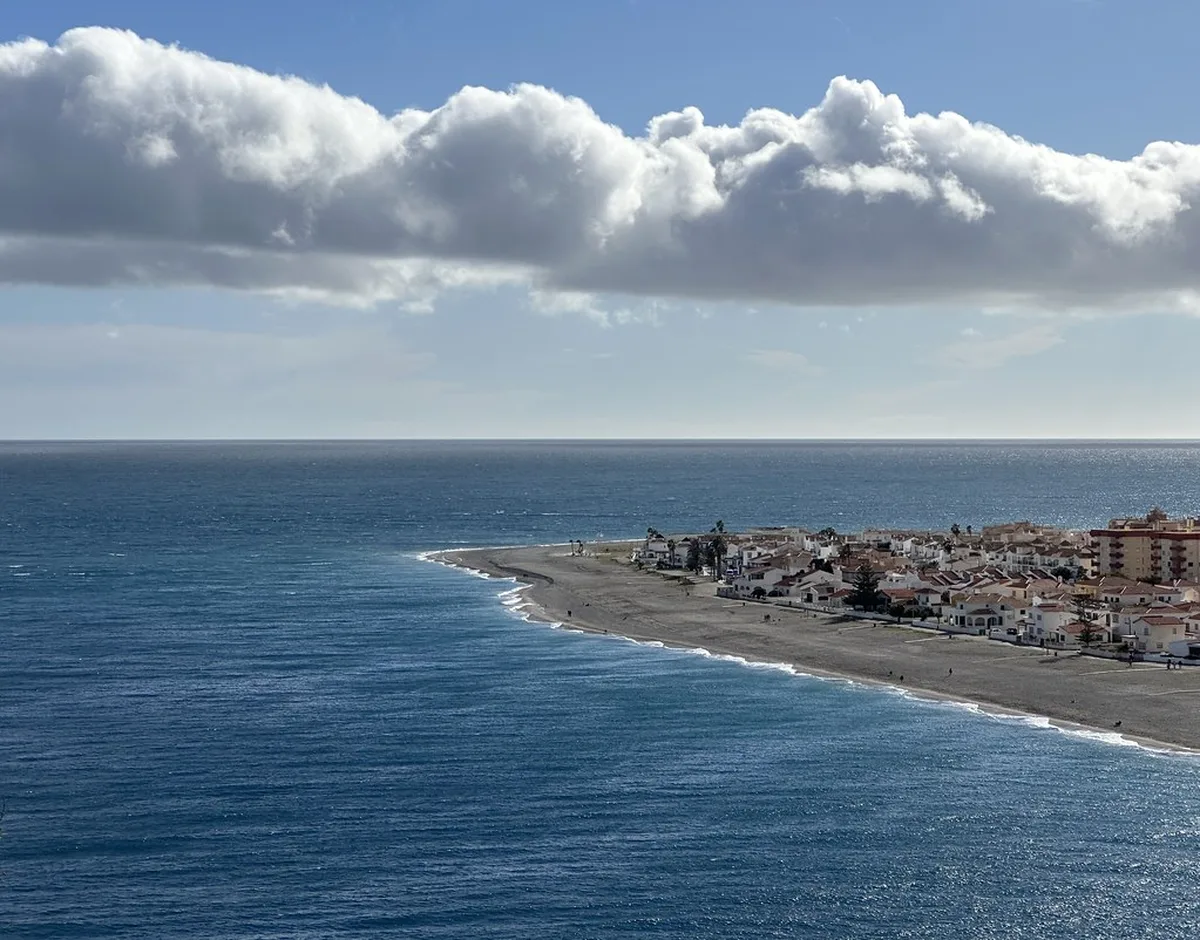
The Costa Tropical offers a refreshing break from the summer heat of Granada, and the coastline is easily one of the most rewarding day trips you can make from the city in 2026. Nerja remains a firm favourite destination for its stunning Balcón de Europa viewpoint overlooking the sea, its clear waters, and the family-friendly cave system just outside town. Driving to the coast from Granada takes about one hour via the modern A-44 highway heading south from the city center, covering roughly 65 kilometres of mostly smooth motorway.
The famous Nerja Caves (Cuevas de Nerja) are a must-visit attraction. Entry costs €16 per adult and €8 for children under 12 in 2026. These vast caverns house the world's largest stalactite, officially recorded in the Guinness World Records, and offer a cool underground experience at a constant 18°C regardless of outside temperatures — a welcome relief in summer. Booking tickets online at least 24 hours ahead is strongly recommended during July and August to avoid the long queues. The guided visit lasts approximately 45 minutes.
Back in Nerja town, the Balcón de Europa is a free clifftop promenade with panoramic Mediterranean views that draws visitors throughout the day. From there you can walk down stone steps to reach Playa Calahonda and Playa la Caleta, both sheltered coves with calm waters suitable for swimming. Sunbed rental on the main beach costs around €6 per lounger per day. Local seafood restaurants along Calle Pintada serve fresh grilled fish platters for €12–€18 per person at lunch.
Almuñécar, located 20 minutes west of Nerja along the N-340 coastal road, provides a more local feel with its Phoenician ruins and medieval castle, the Castillo de San Miguel. Entry to the castle costs €3 for adults and it offers sweeping views over the rooftops and out to sea. Seafood restaurants along the beach serve fresh sardines grilled over open charcoal pits in small boats right on the sand — a signature dish of the Costa Tropical costing around €10 per portion.
Salobreña is another coastal gem just 15 minutes further west of Almuñécar. Characterised by its white-washed houses perched on a dramatic rocky outcrop above a wide sandy beach, the village is crowned by a well-preserved Moorish castle with free entry on Sundays. The beach stretches for nearly 2 kilometres and is far less crowded than Nerja, making it an excellent choice for travelers who want a quieter coastal experience. Walking through the narrow streets of the old quarter feels like stepping back centuries before modern tourism arrived on the coast.
- Nerja Caves — €16 adult, €8 child; book online; 45-minute guided visit
- Balcón de Europa — free; best at sunrise or golden hour
- Castillo de San Miguel, Almuñécar — €3 adult; free on Sundays
- ALSA bus Granada → Nerja — approx. €5 one-way; journey 1 hour 15 min
Mountain Magic in the Alpujarras Villages
The Alpujarras region is one of the most distinctive and atmospheric day trips available from Granada in 2026. A series of white-washed Berber-style villages cling to the southern slopes of the Sierra Nevada at altitudes between 1,000 m and 1,800 m, connected by a single winding road that twists through chestnut forests and terraced orchards. The scenery is unlike anywhere else in Spain, and the cool mountain air makes these villages a particularly welcome escape during the intense heat of July and August when Granada city can exceed 38°C.
Most visitors start at Pampaneira, the lowest and most accessible of the three villages in the Poqueira valley, located 75 km from Granada (around 1 hour 20 minutes by car via A-44 and A-348). The village is famous for its hand-woven rugs (jarapas) sold in artisan shops along the main street, with prices starting around €20 for small pieces. The local cooperative also produces artisan chocolate sold from small shops near the plaza; a bar of Alpujarras chocolate costs €3–€5.
Bubión sits 2 km further up the valley and Capileira, the highest of the three at 1,436 m, is 1 km above that. Both villages offer excellent walking trails connecting them, and the signposted GR-7 long-distance trail passes directly through. The walk from Pampaneira to Capileira via the valley footpath takes approximately 2.5 hours at an easy pace and is free to access. Narrow cobblestone streets and flat-roofed terraced houses reflect the Moorish architecture that sets the Alpujarras apart from other Andalusian villages.
Local restaurants throughout the valley serve the Plato Alpujarreño, the signature mountain dish featuring fried eggs, morcilla (blood sausage), chorizo, potatoes, and serrano ham for €10–€13 per plate. This hearty meal is perfect after a morning hike and is served in virtually every village restaurant from midday onwards. Pair it with local red wine from the Contraviesa area for €2–€3 a glass.
Lanjarón, at the foot of the mountains 46 km from Granada, serves as the traditional gateway to the Alpujarras. The town is famous throughout Spain for its natural mineral water, bottled here and sold nationally. Several small spa facilities offer thermal treatments and relaxing mineral water baths starting from €20 for a 30-minute session. Lanjarón also hosts the Fiesta del Agua y del Jamón every June 24th, a famous water fight celebrating the summer solstice that draws thousands of visitors from across Spain.
Trevélez, 90 km from Granada at 1,476 m, is officially one of the highest permanently inhabited villages in Spain and is world-famous for its air-cured mountain ham (jamón de Trevélez). The altitude and cold dry air create perfect natural curing conditions. You can visit several jamón producers in the village and purchase whole legs from around €90 or thinly sliced packs from €8–€15. Booking a guided tour of a curing house costs around €5 per person and takes 30 minutes.
- Pampaneira to Capileira valley walk — free; approx. 2.5 hours one-way
- Plato Alpujarreño — €10–€13 per plate in most village restaurants
- ALSA bus Granada → Pampaneira — departs 9:00 AM daily; approx. €8 one-way
- Lanjarón spa session — from €20 for 30 minutes
- Jamón de Trevélez sliced pack — €8–€15 in village shops
Historic Wonders of Córdoba and the Mezquita
Córdoba is the most impressive historic day trip from Granada and one of the finest short journeys in all of Spain. The city is home to the Mezquita-Catedral, a UNESCO World Heritage Site and one of the most extraordinary buildings on earth, where a Christian cathedral was constructed inside a vast 10th-century mosque, creating a collision of civilisations visible in every arch and column. The journey from Granada to Córdoba is easiest by train — Renfe operates direct services in just 1 hour 45 minutes, with return tickets typically costing €15–€30 depending on how far in advance you book. Alternatively, the ALSA bus covers the 160 km via A-92 in approximately 2.5 hours with a return ticket of €16–€20, bookable at granadadirect.com or at Granada bus station. If you are self-driving, the A-92 takes around 2 hours and has no tolls.
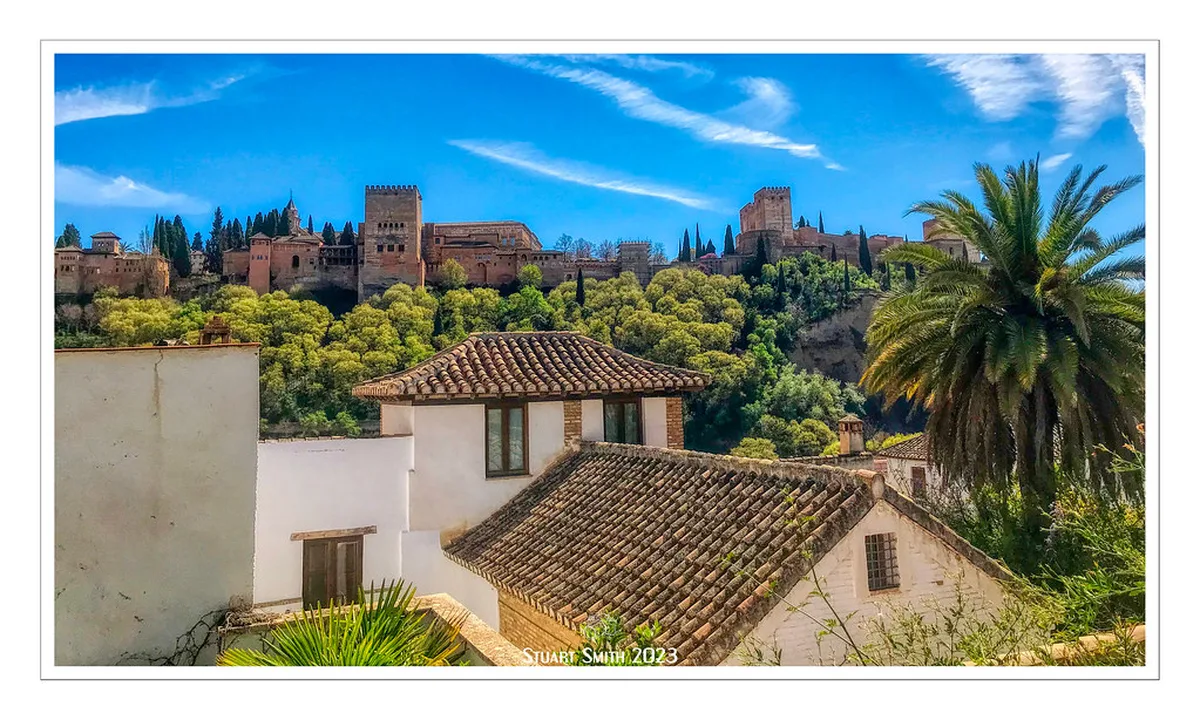
Entry to the Mezquita-Catedral costs €13 for adults and €7 for children aged 10–14 in 2026; under-10s enter free. The cathedral is open Monday to Saturday from 10:00 to 19:00 and on Sunday from 8:30 to 11:30 (morning mass) and again from 15:00 to 19:00. Pre-booking timed entry tickets online via the official website is essential during spring and summer, as slots sell out weeks in advance. Allow at least 90 minutes to explore the interior properly. The famous forest of 856 red-and-white striped Roman and Byzantine arches is even more breathtaking in person than in photographs.
Directly outside the Mezquita, the Judería (Jewish Quarter) features narrow alleys filled with flower-draped whitewashed walls and tiny artisan shops selling ceramics, silverwork, and leather goods. Walking across the Roman Bridge at sunset offers the best light for photographs of the old city walls and the Calahorra Tower across the river. The Torre de la Calahorra museum costs €4.50 for adults and traces the history of three cultures — Muslim, Jewish, and Christian — that coexisted in medieval Córdoba.
Many tourists overlook the Alcázar de los Reyes Cristianos, located a short walk from the Mezquita, but it is well worth the €5 adult entry fee. The medieval palace contains Roman mosaics, a beautiful Gothic chapel, and some of the most elaborately terraced water gardens in Andalusia. The gardens are free to enter during the evening Noches Mágicas light shows in summer (check dates on the Córdoba tourism website).
Lunch in Córdoba should include salmorejo, a thick cold tomato soup topped with diced jamón and hard-boiled egg that originated in the city. Most traditional taverns near the cathedral serve this dish for €4–€6 per bowl. A full lunch menu del día in the Jewish Quarter runs €12–€16 including a drink and dessert. The Viana Palace (Palacio de Viana) is the final highlight, featuring twelve stunning courtyards each with unique floral arrangements; entry costs €8 for adults and is perfect for photography enthusiasts.
For those planning a visit to Córdoba from Granada, the day trips from Córdoba guide offers useful onward route planning if you wish to extend your Andalusia journey. The Córdoba old town guide also covers the city's highlights in detail to help you prioritise your time on arrival.
- Mezquita-Catedral — €13 adult, €7 child (10–14); book timed entry online
- Alcázar de los Reyes Cristianos — €5 adult; gardens free in Noches Mágicas period
- Torre de la Calahorra — €4.50 adult
- Viana Palace — €8 adult; 12 courtyards
- Train Granada → Córdoba (Renfe) — €15–€30 return; 1 hour 45 minutes
- ALSA bus Granada → Córdoba — €16–€20 return; 2.5 hours
- Salmorejo in Judería taverns — €4–€6 per bowl
Hiking and Skiing in the Sierra Nevada
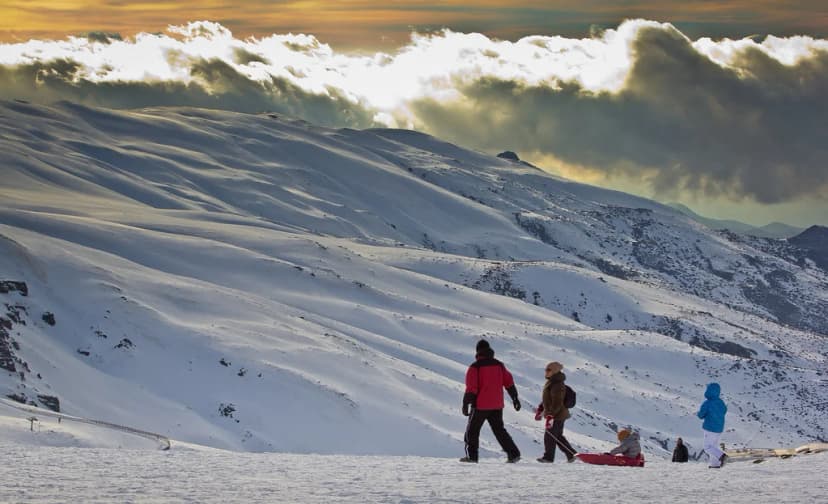
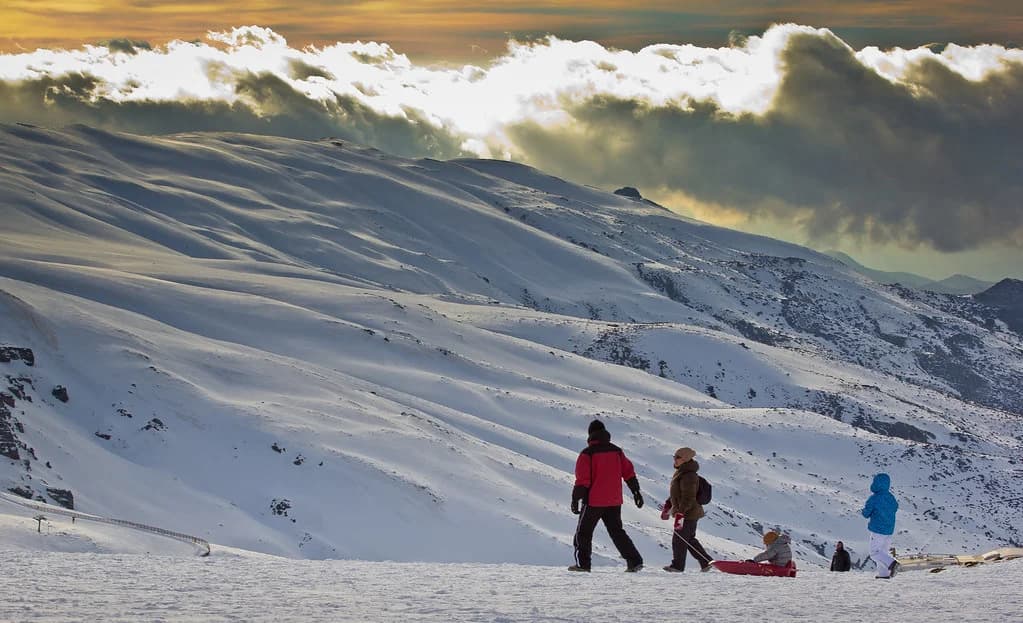
Sierra Nevada National Park is the most accessible mountain wilderness in all of southern Europe, and it begins just 40 minutes from Granada's city centre — approximately 35 km via the A-395 mountain road. At 3,479 m, Mulhacén is the highest peak in mainland Spain, but even those who prefer a gentle stroll can enjoy the park's high-altitude meadows, glacial lakes, and extraordinary panoramas without needing specialist equipment. In 2026 the park remains free to enter, though some shuttle services into the upper zone operate on a paid basis during summer months.
During winter (December to April), the Sierra Nevada Ski Resort operates at the Pradollano station, located at 2,100 m and accessible by a 45-minute drive from Granada or a dedicated ski bus service departing from the Palacio de Congresos stop (return ticket approximately €10). The resort offers 117 km of marked ski runs across 130 slopes, with a standard day lift pass costing around €45 in 2026 (book online in advance to secure the best rates and avoid queues). Ski and snowboard equipment rental at the resort base costs around €25 per day. The Sierra Nevada is the most southerly ski resort in Europe — an unusual combination of skiing in the morning and Alhambra views in the afternoon from the same base city.
For summer visitors, the transition from ski resort to hiking paradise happens rapidly. The upper road from Pradollano continues to Hoya de la Mora at 2,500 m, which is the standard trailhead for high-altitude routes. From Hoya de la Mora a clear path leads to the summit of Veleta (3,394 m), the third-highest mountain in mainland Spain, in approximately 3–4 hours one-way. The path is well-marked and does not require ropes or technical equipment between June and October, though you should carry at least 2 litres of water and dress in layers as temperatures at the summit can be 15–20°C cooler than at the trailhead.
A micro-bus shuttle service (Servicio de Acceso a Cumbres) operates from Hoya de la Mora to a point near the Veleta summit from mid-June to late September, reducing the walking distance significantly. The shuttle costs €10 per person each way and saves approximately 3 hours of uphill ascent. Pre-book via the Junta de Andalucía national park website, as seats are limited and the service is popular. The last bus down departs at 17:30, so plan your summit time accordingly.
Wildlife enthusiasts should look for the Spanish ibex (capra pyrenaica hispanica) on the rocky crags above 2,200 m. These majestic mountain goats are common in the park and can often be seen from the road between Pradollano and Hoya de la Mora. Bring binoculars for a better look at the diverse bird species, including Alpine choughs and the occasional lammergeier vulture that soars over the highest ridges. Guided wildlife walks depart from the visitor centre at Pradollano on weekend mornings from €15 per person.
- Sierra Nevada ski day pass — approx. €45; book online in advance for best rates
- Ski equipment rental — approx. €25 per day at resort base
- Ski bus from Granada — approx. €10 return from Palacio de Congresos
- Summit shuttle (Hoya de la Mora to Veleta) — €10 each way; mid-June to late September
- Guided wildlife walk — from €15 per person; weekend mornings from Pradollano
- Park entry — free; upper road access by shuttle only in peak season
The Surreal Landscapes of Guadix and Gorafe
Guadix is one of the most unusual and photogenic day trips from Granada, located just 57 km east of the city along the A-92 motorway — a journey of around 50 minutes by car. The town is famous worldwide for its unique cave dwelling neighbourhood, the Barrio de las Cuevas, where over two thousand people still live underground in whitewashed cave homes topped with distinctive white chimneys poking through the pink and terracotta-coloured earth. This centuries-old tradition of cave living began during the Moorish period and continued after the Reconquista when many inhabitants sought affordable, energy-efficient housing naturally cool in summer and warm in winter.
The Cave Museum (Museo de las Cuevas) at the Plaza de la Ermita Nueva offers the most immersive introduction to cave life, with several rooms furnished in period style showing how families lived underground across different centuries. Entry costs €3 for adults and €2 for children in 2026, and the guided visit lasts approximately 45 minutes. From the museum terrace, you have an excellent panoramic view over the Barrio de las Cuevas and the red badland hills stretching eastward toward Almería province.
The Guadix Cathedral dominates the town skyline with its remarkable blend of Gothic, Renaissance, and Baroque architecture, constructed over three centuries between the 16th and 18th centuries. The adjoining bell tower, which was never completed, still offers staircase access with views across the terracotta landscape. Entry to the cathedral complex costs €5 for adults including audio guide, and the combination ticket with the cave museum costs €7 and saves €1. The nearby Plaza de la Constitución has several traditional cafés serving regional breakfast of toast with olive oil and tomato for €2–€3.
The Gorafe Desert, located 40 km north of Guadix via the GR-4201 road, offers a dramatic landscape of red sandstone canyons, dry river gorges, and one of Spain's most significant concentrations of megalithic monuments. Exploring the Gorafe area on a rough unpaved road ideally requires a vehicle with decent ground clearance, though most tracks are accessible in a standard car during dry weather. Local guides in Guadix offer 3-hour 4WD sunset tours of the desert that include the main dolmen sites and canyon viewpoints for around €35–€45 per person.
The Megalithic Park of Gorafe (Parque Megalítico de Gorafe) contains over 240 dolmens spread across several marked walking circuits, making it one of the largest concentrations of prehistoric burial chambers in all of western Europe. These stone burial mounds date back 5,000–6,000 years and are remarkably well preserved given their age and open-air exposure. The park is free to access but requires collection of a printed trail map from the Casa de la Cultura in Gorafe village (open Monday to Friday 9:00–14:00). The main circular walking route takes around 90 minutes and passes 30 of the most impressive dolmen structures.
- Cave Museum (Guadix) — €3 adult, €2 child; 45-minute guided visit
- Cathedral complex — €5 adult; combo with cave museum €7
- Gorafe Desert 4WD tour — €35–€45 per person; approx. 3 hours
- Megalithic Park of Gorafe — free; map from Casa de la Cultura, Mon–Fri 9:00–14:00
- Drive from Granada — 57 km; approx. 50 minutes via A-92
Málaga: Art, Culture and the Birthplace of Picasso
Málaga is one of the most underrated day trips from Granada, covering 128 km via the A-92 motorway and taking approximately 1 hour 40 minutes by car or around 2 hours by ALSA bus (return ticket approximately €15, with slightly higher fares for premium times and peak season). Most day-trippers associate Málaga primarily with the airport, but the city has transformed into one of the most vibrant cultural destinations in southern Spain, home to over 40 museums, a buzzing tapas scene, and a beautifully restored historic centre that rivals Seville and Córdoba for atmosphere.
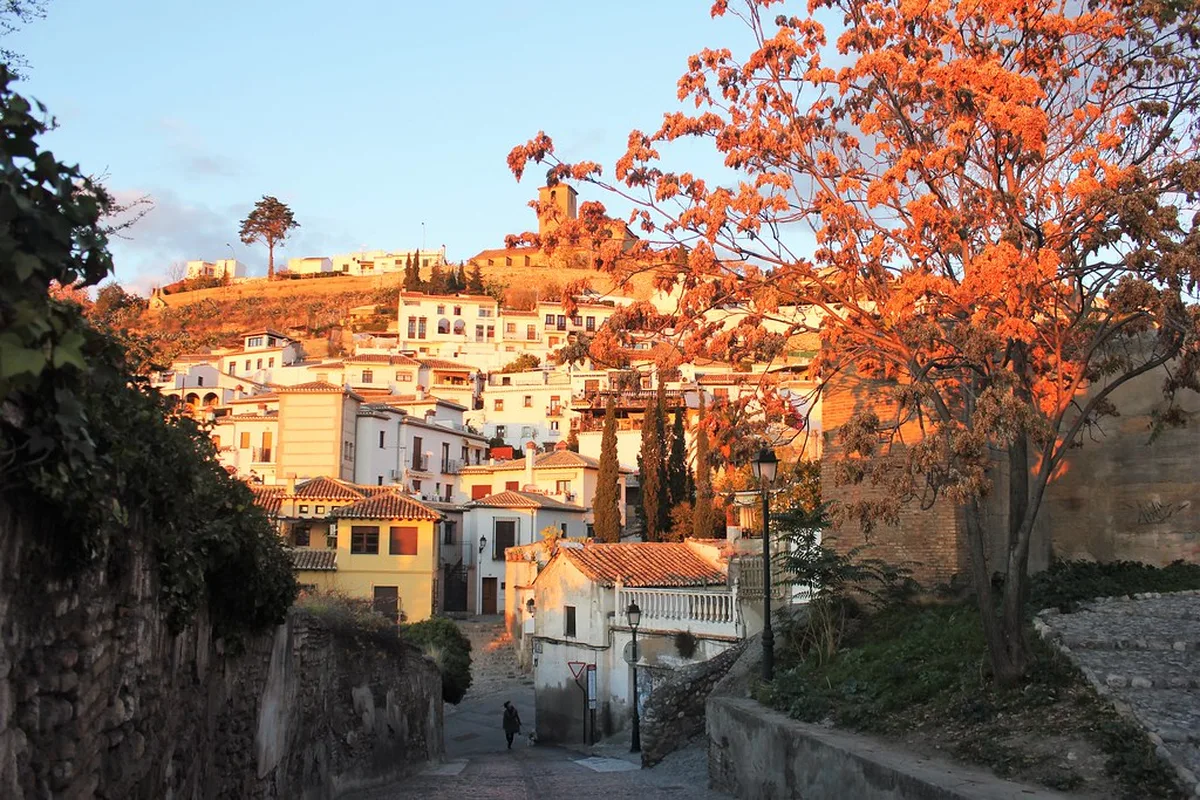
The Museo Picasso Málaga is the city's headline attraction and draws visitors from across Europe. It houses more than 200 works spanning the artist's entire career, displayed across a Renaissance palace on Calle San Agustín. Entry costs €12 for the permanent collection in 2026 (€9 concessions), with timed entry tickets available online. The museum opens Tuesday to Sunday 10:00–19:00 and is closed Monday. A short walk away, Casa Natal Picasso — the house where Pablo Picasso was born in 1881 — is free to enter and contains photographs, personal objects, and early sketches from the Picasso family archive.
The Alcazaba of Málaga, a Moorish fortress built in the 11th century, commands the hillside above the city and offers sweeping views over the port and the Mediterranean. Entry costs €3.50 for adults; the combined ticket with the Teatro Romano at its base costs €5.50. Immediately above the Alcazaba, connected by a path or elevator, sits the Castillo de Gibralfaro — the upper citadel with the finest panoramic views in the city. Entry costs €3.50 separately or is included in a combination ticket for €5.50.
Málaga's tapas culture is outstanding and widely considered the best value food scene in Andalusia. Bars in the historic centre around Calle Marqués de Larios and El Palo neighbourhood serve free tapas with every drink ordered — a tradition that has largely disappeared in other Andalusian cities. A caña (small draft beer) costs €1.50–€2 and comes with a free tapa such as boquerones en vinagre (marinated anchovies), patatas bravas, or albóndigas. A full sit-down lunch at a mid-range restaurant runs €14–€20 for two courses and a drink.
The Atarazanas Central Market (Mercado Central de Atarazanas) is a 19th-century iron market hall built inside a medieval Moorish shipyard, worth visiting for the stained-glass windows alone. The market is open Monday to Saturday 8:00–15:00 and entry is free. Inside, you can buy fresh fruit, olives, jamón, local cheeses, and ready-to-eat seafood from market stalls at prices significantly lower than any tourist restaurant. A portion of fresh Málaga anchovies (a local speciality) costs around €4 at the market counter.
- Museo Picasso Málaga — €12 adult, €9 concession; book timed entry online
- Casa Natal Picasso — free entry
- Alcazaba + Gibralfaro combo ticket — €5.50 adult
- ALSA bus Granada → Málaga — from €15 return; approx. 2 hours
- Tapas with drinks — €1.50–€2 per beer; free tapa included in most bars
- Atarazanas Market — free entry; Mon–Sat 8:00–15:00
Ronda: The Dramatic Clifftop Town from Granada (3h bus, €15)
Ronda is one of the most visually spectacular day trips from Granada in 2026, a white-washed hilltop city perched dramatically on the edge of a 120-metre gorge carved by the Río Guadalevín. The journey from Granada to Ronda takes approximately 3 hours by ALSA bus with a return ticket costing around €15, making it an affordable and highly rewarding excursion from the city. The bus typically departs once or twice daily from Granada's Estación de Autobuses, so checking current timetables on the ALSA website before you travel is strongly recommended. Driving is an alternative — the 130 km route via A-92 and A-374 takes about 2 hours by car and passes through beautiful mountain scenery in the Serrania de Ronda natural park.
The defining sight of Ronda is the Puente Nuevo (New Bridge), an 18th-century stone arch bridge spanning the El Tajo gorge and connecting the old Moorish quarter with the newer part of the city. Standing on the bridge and peering down into the 120-metre void below is an experience that never loses its dramatic impact. The interior of the Puente Nuevo bridge — accessible via a small door on the side — houses an exhibition on the history of its construction and the terrifying stories of political prisoners held inside the structure during the Spanish Civil War. Entry to the bridge exhibition costs €2 for adults in 2026.
Ronda's Old Town (La Ciudad) sprawls across the southern side of the gorge and is one of the most atmospheric historic quarters in Andalusia. The Arab Baths (Baños Árabes), dating from the 13th and 14th centuries, are among the best-preserved Moorish baths in Spain and entry costs €3.50 for adults. Just above the baths, the Casa del Rey Moro gardens descend the cliff face in a series of terraced levels down to the river, offering extraordinary views of the gorge from below the city walls — entry costs €7 and includes a leaflet guide. The Palacio de Mondragón, a stunning Renaissance palace incorporating Moorish courtyards, now houses the municipal museum and charges €3.50 for adults.
Ronda's Plaza de Toros, inaugurated in 1785, is one of the oldest and most beautiful bullrings in Spain and holds a special place in Spanish cultural history — it was here that Pedro Romero essentially invented the modern rules of bullfighting in the late 18th century. Whether or not you are interested in bullfighting history, the bullring is architecturally magnificent and the museum inside traces the full story of Ronda's taurine heritage with original costumes, portraits, and artefacts. Entry to the bullring and museum costs €8 for adults in 2026 and is generally open daily from 10:00 to 18:00.
For lunch in Ronda, the Calle Virgen de la Paz and the streets around Plaza del Socorro offer a good selection of traditional restaurants serving Ronda-style slow-cooked braised oxtail (rabo de toro rondeno) — the city's signature dish — for around €12–€16 per main course. Local wines from the Ronda denomination of origin are served by the glass for €2–€3 in most bars. A full menu del día near the bullring typically costs €11–€14 including three courses and a drink — excellent value given the quality of the mountain lamb, wild mushroom, and game dishes available in the area.
The surrounding countryside around Ronda rewards those with a car or who join a guided day tour. The white village of Setenil de las Bodegas, 18 km from Ronda, is famous for its cave bars and restaurants built directly beneath overhanging rock faces — essentially built into the cliff itself. The village is free to explore and several of its famous cave tapas bars charge standard Andalusian prices for food and drinks. Combining Ronda with Setenil de las Bodegas in a single car day trip from Granada is a natural itinerary, though it requires an early 8:00 AM departure to make the most of both destinations before heading back for dinner.
- ALSA bus Granada → Ronda — approx. €15 return; 3 hours; check timetables in advance
- Puente Nuevo bridge exhibition — €2 adult; 120-metre gorge views
- Casa del Rey Moro gardens — €7 adult; terraced gorge descent
- Arab Baths — €3.50 adult; 13th–14th century Moorish baths
- Plaza de Toros + museum — €8 adult; one of Spain's oldest and finest bullrings
- Rabo de toro (braised oxtail) lunch — €12–€16 per main course in traditional restaurants
Planning Your Day Trips from Granada
Renting a car offers the most flexibility for exploring remote villages, coastal spots, and mountain areas around Granada. Most major rental agencies — including Europcar, Hertz, and Sixt — operate near the train station (Estación de Autobuses) or at Federico García Lorca Granada–Jaén Airport. Compact car rental starts at around €35–€45 per day in 2026 including basic insurance, though booking at least one week in advance significantly reduces prices. Ensure you have a valid international driving permit if you are visiting from outside Europe, and note that the A-44 to the coast has no tolls, making it very cost-effective to self-drive.
Public buses run by the ALSA company connect Granada to most major nearby cities and towns, including Nerja, Córdoba, Málaga, Guadix, and Lanjarón. Buying tickets online via the ALSA app or website gives you the best prices and guarantees a seat during the busy summer season. All long-distance buses depart from the Estación de Autobuses on Calle Rana, which is accessible from the city centre by taxi (€7–€10) or local bus (€1.40). Bus travel is often 30–40% cheaper than driving when petrol costs are included, but limits your ability to stop at scenic viewpoints between destinations.
Parking in Granada before you head out on a day trip can be a challenge due to the narrow streets of the historic quarter and strict resident-only parking restrictions in the Albaicín neighbourhood. Consider leaving your car in a secure multi-storey parking garage near the city centre before exploring the Granada old town. Central garages such as Parking Puerta Real and Parking San Agustín charge €2.50–€3.50 per hour or €18–€25 for a full day, and are far less stressful than hunting for street parking. If you plan to return late after a day trip, check that your chosen garage has 24-hour access before you leave.
Many day trips from Granada can be combined into a single long day if you have a car and start early. For example, visiting Guadix in the morning (9:00–12:00) and continuing to the Gorafe Desert for a late-afternoon sunset tour (15:00–18:00) is a natural pairing along the same A-92 corridor. Alternatively, the coastal route via Almuñécar to Nerja allows you to stop at two or three beaches and still be back in Granada for dinner. Planning your route carefully using Google Maps offline (downloaded the night before) ensures you make the most of your time without relying on mobile data in remote mountain areas.
Weather awareness is important for mountain day trips in particular. The Sierra Nevada and Alpujarras can experience sudden afternoon thunderstorms between June and September, so aim to complete exposed ridge hikes by 13:00. Coastal trips to Nerja and Almuñécar are reliable year-round, with beach weather typically running from May to October. The Guadix and Gorafe Desert landscape is best visited in spring (March–May) or autumn (September–November) when temperatures are moderate and the light is particularly dramatic for photography.
- Car rental from Granada — from €35–€45 per day; book 1+ week ahead for best prices
- ALSA bus station — Calle Rana; taxi from centre €7–€10, local bus €1.40
- Central parking garages — €2.50–€3.50 per hour; €18–€25 full day
- Best combined route — Guadix (morning) + Gorafe (afternoon) along A-92
Frequently Asked Questions
What is the best day trip from Granada for families with children?
Nerja is widely considered the best day trip from Granada for families. The Nerja Caves offer a fascinating underground experience at a constant 18°C — perfect in summer heat — with entry costing €16 for adults and €8 for children under 12 in 2026. After the caves, the sheltered coves at Playa Calahonda and Playa la Caleta provide safe, calm swimming. The drive takes around 1 hour via A-44, and ALSA buses depart regularly from Granada bus station for approximately €5 one-way.
Can I visit the Alpujarras without a car?
Yes, you can reach the Alpujarras villages by public bus. ALSA operates a daily morning service from Granada bus station departing around 9:00 AM to Pampaneira, Bubión, and Capileira, with a one-way ticket costing approximately €8. However, buses back are infrequent — typically just one or two afternoon services — so you must check current timetables on the ALSA website before travel and plan your return carefully. Having a car gives you far more freedom to explore Trevélez and Lanjarón on the same day.
Is it possible to visit Córdoba as a day trip from Granada?
Yes, Córdoba is very manageable as a day trip from Granada and is one of the most rewarding. The city is 160 km away via A-92 — around 2 hours by car or 2.5 hours by ALSA bus (return ticket €16–€20). Book your Mezquita-Catedral timed entry ticket online (€13 adult) at least 3 days in advance during spring and summer to avoid missing out. Depart by 8:00 AM to allow 7–8 hours in Córdoba before heading back, which is enough time for the Mezquita, Jewish Quarter, Alcázar, and a proper lunch.
How far is the Sierra Nevada from Granada and is it worth visiting in summer?
The Sierra Nevada starts just 35 km from Granada city centre, a 40-minute drive via the A-395 mountain road. It is absolutely worth visiting in summer — the ski resort road stays open, and a shuttle service (€10 each way) runs from Hoya de la Mora at 2,500 m toward the Veleta summit between mid-June and late September. Temperatures at the upper trailhead are around 15–20°C cooler than in Granada, making it an ideal escape during July and August heatwaves. Wildlife including Spanish ibex is easily spotted from the road.
What is Guadix famous for and is it worth a day trip?
Guadix is famous for its Barrio de las Cuevas, a neighbourhood where over 2,000 people still live in whitewashed cave homes carved into the terracotta earth — a tradition dating back to the Moorish era. It is 57 km east of Granada (50 minutes via A-92) and is absolutely worth combining with the Gorafe Megalithic Park for a full-day eastern Granada itinerary. The Cave Museum entry costs €3 for adults, and the Guadix Cathedral complex costs €5. Best visited in spring or autumn when temperatures are comfortable for walking.
What is the easiest day trip from Granada using public transport?
Málaga is the easiest day trip from Granada by public transport in 2026. ALSA buses run frequently throughout the day between Granada bus station and Málaga city centre, with return tickets starting from around €15 and a journey time of around 2 hours. Málaga's bus station is conveniently located near the city centre and the main attractions — Museo Picasso (€12), Alcazaba (€3.50), and the Atarazanas Market (free) — are all within comfortable walking distance of each other. No car is needed and the buses are reliable year-round.
Is Ronda worth visiting as a day trip from Granada?
Yes, Ronda is absolutely worth a day trip from Granada in 2026. The city's iconic Puente Nuevo bridge spans a dramatic 120-metre gorge and is one of the most striking sights in all of Andalusia. The ALSA bus from Granada takes approximately 3 hours with a return ticket costing around €15 — affordable for such a visually spectacular destination. Key sights include the Arab Baths (€3.50), Casa del Rey Moro gardens (€7), and the 18th-century Plaza de Toros (€8). Depart on the earliest bus possible to allow a full 6–7 hours in Ronda before the return journey.
Can you visit Seville as a day trip from Granada?
Yes, Seville is feasible as a long day trip from Granada in 2026. The ALSA bus takes around 3 hours each way with return tickets typically costing €15–€25 depending on the time and season. Take the earliest morning departure to maximise your time in Seville — you will need at least 6–7 hours to visit the Cathedral and Giralda Tower (€12 adult), the Real Alcázar (€14.50 adult), and the historic Barrio Santa Cruz. Book bus tickets in advance via the ALSA app, especially during summer and holidays when seats fill quickly.
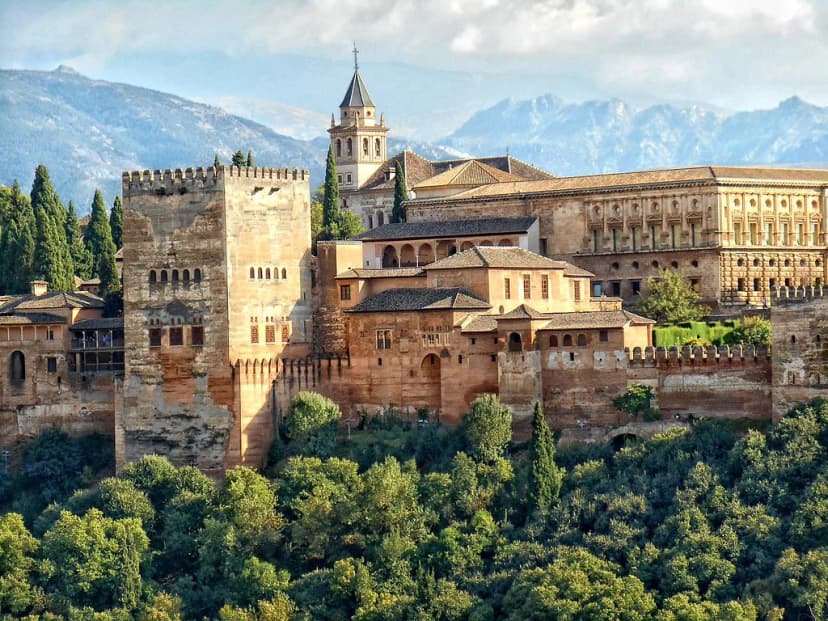
Granada is far more than just the Alhambra — it is one of the finest bases for day trips in all of southern Spain, with world-class beaches, high-altitude mountain wilderness, historic UNESCO cities, surreal cave landscapes, and vibrant cultural capitals all within two hours of the city centre. From the cool underground galleries of Nerja to the snow-capped peaks of the Sierra Nevada, from the red-and-white arches of the Mezquita in Córdoba to the Picasso birthplace in Málaga, every direction from Granada rewards exploration in 2026.
Make sure to book transport and attraction tickets well in advance, particularly for the Mezquita-Catedral in Córdoba and the Nerja Caves during July and August. A rental car unlocks the most remote and spectacular destinations — the Alpujarras villages and Gorafe Desert — that public transport cannot reach with the same flexibility. Whether you have two days or two weeks in Andalusia, these day trips from Granada will help you discover the true depth and diversity of southern Spain.
For more on exploring the city itself before or after your day trips, visit the Granada old town guide and the Granada nightlife guide for evening inspiration.