The Ultimate Cordoba Old Town Guide for Travelers
Córdoba's Mezquita-Catedral costs €13 for adults in 2026, but entry is free Monday to Saturday 8:30–9:30 AM for worship — arrive at 8:15 AM to beat the queue. The Judería (Jewish Quarter) is free to wander and the Patios de Córdoba festival in May is free to attend.
The Alcázar de los Reyes Cristianos charges €6 for adults in 2026 (free for EU citizens on Fridays, open Tue–Sun 8:15 AM–8:30 PM in summer). Budget one to two full days for the historic center, and book the Mezquita online at least 48 hours ahead to skip queues that run 45–60 minutes in spring.
Cordoba's historic center feels like a living museum with its winding stone streets. This UNESCO World Heritage site holds centuries of Roman, Islamic, and Christian history. Visitors often find themselves enchanted by the blend of white-washed walls and colorful flower pots.
Exploring the city requires a good pair of walking shoes and a sense of wonder. You might discover hidden squares or ancient ruins around any narrow corner. Many people combine this trip with exploring Cordoba's walking tour route to see the full picture in a structured way.
The Mezquita-Catedral: Heart of Córdoba's Old Town
The Mosque-Cathedral of Córdoba — known locally as La Mezquita — is the single most important monument in the city and one of the finest examples of Islamic architecture in the world. Construction began in 784 AD under Abd al-Rahman I on the site of a Visigothic church, and successive Umayyad caliphs expanded it over two centuries until the interior covered nearly 24,000 square metres. When the Christians reconquered Córdoba in 1236, King Ferdinand III converted the mosque into a cathedral, and a Renaissance nave was inserted through the centre of the prayer hall in the 16th century — a decision that drew criticism even from King Carlos I himself.
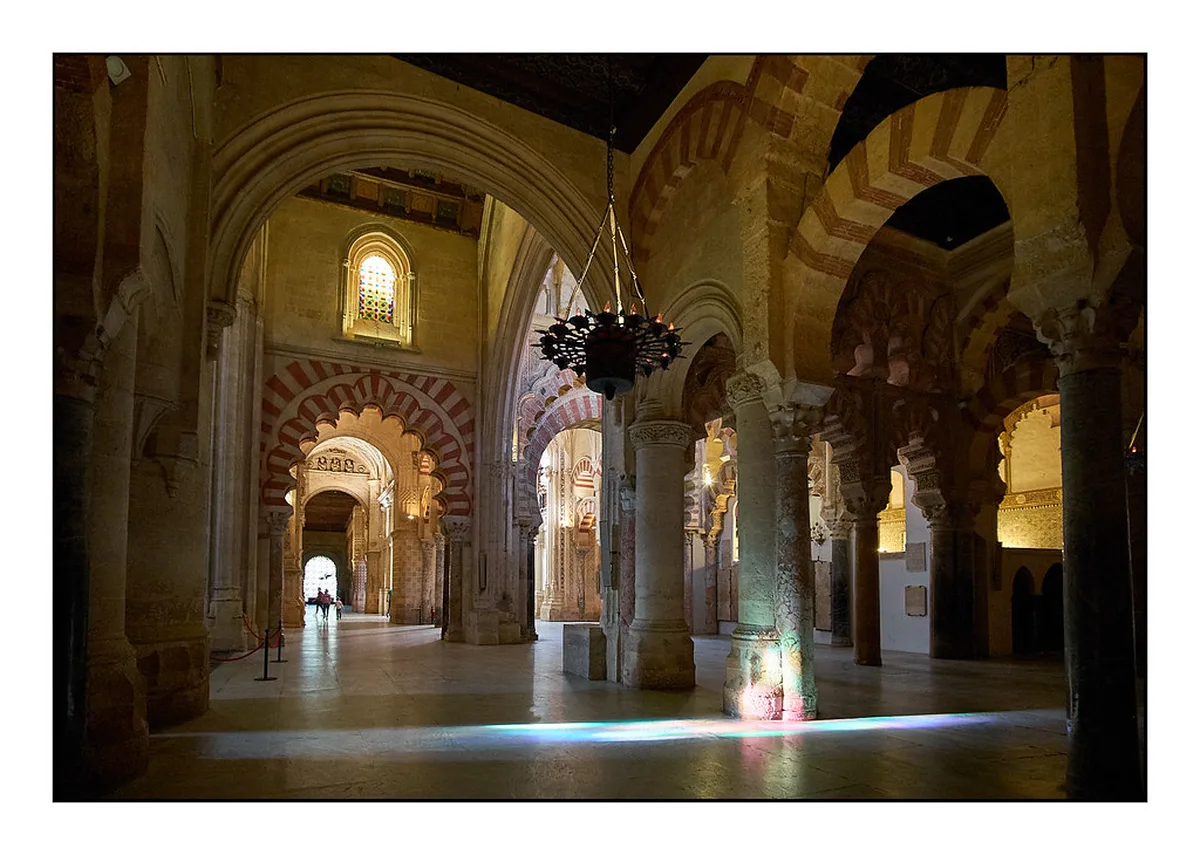
Inside, the famous forest of 856 columns in alternating red-and-white striped arches creates a hypnotic, seemingly infinite space. The Mihrab — the ornate prayer niche facing Mecca — is considered the jewel of Andalusian art, its golden Byzantine mosaics a gift from the Emperor of Constantinople. The cathedral choir stalls, carved from mahogany by Pedro Duque Cornejo in the 18th century, are equally extraordinary.
In 2026, adult entry costs €13. Visitors under 10 enter free. The Morning Visit (8:30–10:00 AM Monday–Saturday) is also free for worship, but tourist access is restricted to the nave. Full ticketed hours run Monday to Saturday 10:00 AM – 7:00 PM and Sunday 8:30 AM – 11:30 AM then 3:00–7:00 PM. Night visits (Córdoba Mágica) run Tuesday through Saturday at 9:30 PM, 10:15 PM, and 11:00 PM from March through October for €20 per adult — a worthwhile splurge that cuts the crowds entirely.
Book tickets online at least two to three days ahead at the official website (mezquita-catedraldecordoba.es) to avoid queues that routinely stretch 45 minutes in spring. The monument sits directly beside the Roman Bridge, so combine the visit with a sunset walk across the bridge immediately after your exit. Photography is permitted throughout, though tripods and flash are banned inside. Allow a minimum of 90 minutes for a meaningful visit; two hours if you plan to study the chapels.
For drivers, the nearest paid parking is at Parking Ribera (Paseo de la Ribera, roughly €2 per hour in 2026). Our detailed guide to parking in Córdoba covers all central car parks and rates.
- Mosque-Cathedral of Córdoba
- Cost: €13 adults, free under 10 (2026); Night Visit €20
- Hours: Mon–Sat 10:00–19:00, Sun 8:30–11:30 & 15:00–19:00
- Access: Calle Cardenal Herrero, s/n — adjacent to Roman Bridge
- Tip: Book online at least 48 hours in advance
- Alcázar de los Reyes Cristianos
- Cost: €6 adults, free for EU citizens on Fridays (2026)
- Hours: Tue–Sun 8:15–20:30 (summer); 8:15–18:30 (winter); closed Mondays
- Focus: Roman mosaics, terraced gardens, water channels
- Time: Allow 1.5 to 2 hours
- Roman Bridge (Puente Romano)
- Cost: Free
- Time: 30 minutes
- Best for: Sunset photography facing the Calahorra Tower
- Location: South end of the historic center, connects to Torre de la Calahorra
Exploring the Jewish Quarter and Flower Alley
The Judería — Córdoba's medieval Jewish Quarter — spreads through a labyrinth of whitewashed alleys immediately west of the Mezquita. The district was one of the most important Jewish communities in the medieval Iberian Peninsula, home to scholars, physicians, and philosophers including the great Maimonides, whose bronze statue stands in Plaza Tiberiades. The neighbourhood was declared a UNESCO World Heritage Site as part of the Historic Centre of Córdoba in 1994, and today its narrow lanes are among the most evocative spaces in Andalusia.
Calleja de las Flores (Alley of Flowers) is the single most photographed spot in Córdoba: a narrow alley of blue-trimmed whitewashed houses whose residents maintain hanging pots of brilliant geraniums, carnations, and petunias. At the end of the alley a framed view of the Mezquita tower appears — a composition that graces thousands of travel photographs each year. Arrive before 9:00 AM on any day from April through October to have the alley nearly to yourself; by 10:30 AM tour groups make photography nearly impossible. Entry is free.
The Sinagoga de Córdoba on Calle Judíos dates from around 1315 and is one of only three surviving medieval synagogues in all of Spain (the other two are in Toledo). Its Mudéjar stucco decoration — interlaced arabesques and Hebrew inscriptions — is remarkably well preserved. In 2026 admission is €0.30 for non-EU visitors; EU citizens enter free. Opening hours are Tuesday to Saturday 9:00 AM to 8:30 PM and Sunday 9:00 AM to 2:00 PM.
A few steps away, the Casa Andalusí (Calle Judíos, 12) recreates the interior of a 12th-century Andalusian house with a central patio, original water channels, and a small paper-making exhibition. Entry costs €3.50 in 2026. It opens daily from 10:00 AM to 7:30 PM and provides a quiet contrast to the busy street outside. The Zoco Municipal — a traditional artisan market behind the synagogue — is free to enter and hosts potters, leatherworkers, and jewellers Monday to Saturday 10:00 AM to 8:00 PM.
Many travelers make the mistake of only sticking to the main tourist paths in the Judería. Wander three or four blocks south of Calle Judíos toward Plaza de Maimónides to find authentic local taverns serving traditional dishes at a fraction of the price charged near the cathedral. The tiny Bar Santos on Calle Magistral González Francés is famous for its tortilla española, a thick potato omelette served for €2.50 a slice — one of the most affordable and satisfying snacks in the old town.
For those interested in exploring the wider historic center on foot, our Córdoba walking tour guide maps a logical route through the Judería, the Mezquita, and the Roman Bridge in a single three-hour loop.
Alcázar de los Reyes Cristianos and Roman Heritage
The Alcázar de los Reyes Cristianos — the Castle of the Christian Monarchs — stands on the southwestern edge of the historic center, a short five-minute walk from the Mezquita along the riverside promenade. Alfonso XI of Castile built the current castle in 1328 on foundations that include earlier Moorish and Roman structures. The site later served as the headquarters of the Spanish Inquisition for nearly three centuries, and it was here that Ferdinand and Isabella held their final audience with Christopher Columbus in 1492 before he departed for the Americas.
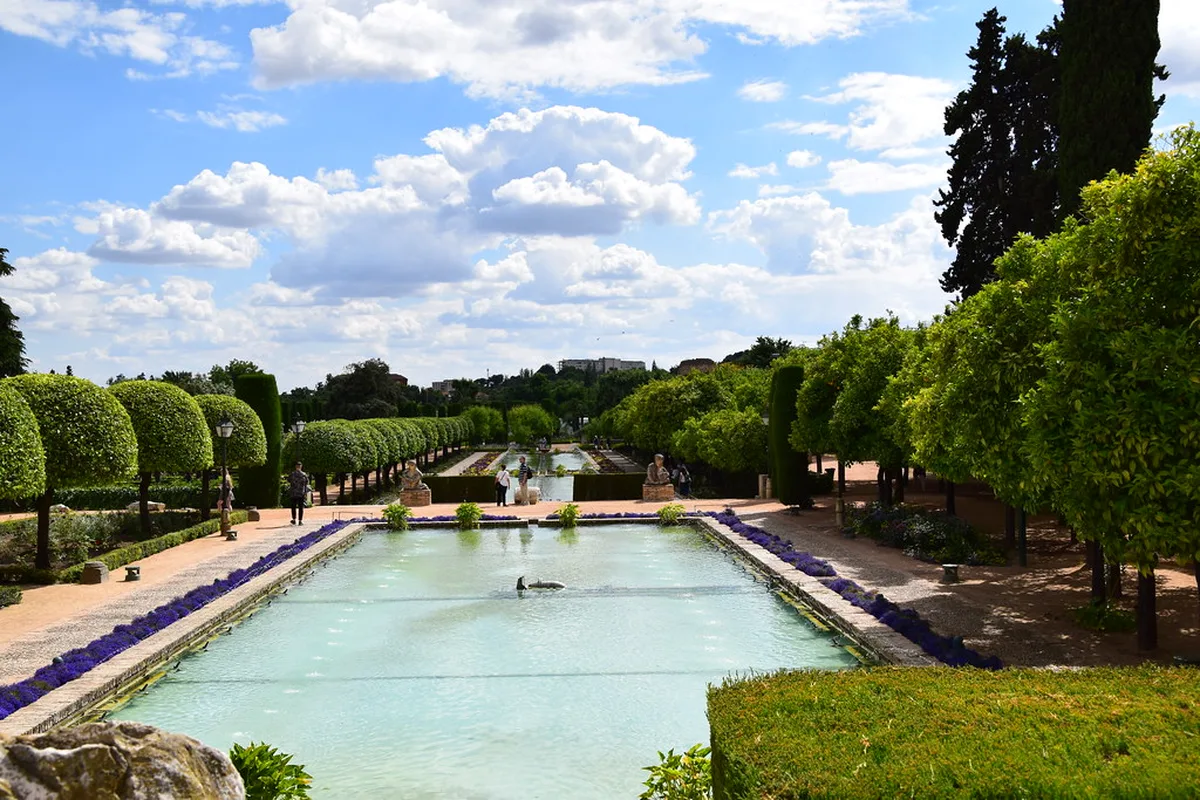
The castle's four towers — Homenaje, Inquisición, Los Leones, and Río — frame a sequence of landscaped terraced gardens that are arguably its finest feature. Water channels, rectangular pools, and sculpted hedges descend in geometric terraces toward the Guadalquivir River, evoking the Andalusian garden tradition at its finest. The Roman mosaic collection inside is equally impressive: enormous geometric floor mosaics unearthed beneath the Plaza de la Corredera in the 1950s are now displayed in the castle halls, with a stunning example measuring over 60 square metres.
In 2026 adult admission costs €6. EU citizens enter free on Fridays. The castle opens Tuesday to Sunday from 8:15 AM to 8:30 PM in summer (April through September) and 8:15 AM to 6:30 PM in winter; it remains closed on Mondays. Night visits to the illuminated gardens run from June through August, Tuesday to Sunday, at 10:00 PM for €3 — an atmospheric and affordable way to experience the space.
Immediately south of the castle, the Baños Califales (Caliphal Baths) preserve the remains of a 10th-century Islamic hammam discovered beneath a working street. Guided tours run at set times for €3 per person; check the municipal website for the current schedule as hours change seasonally.
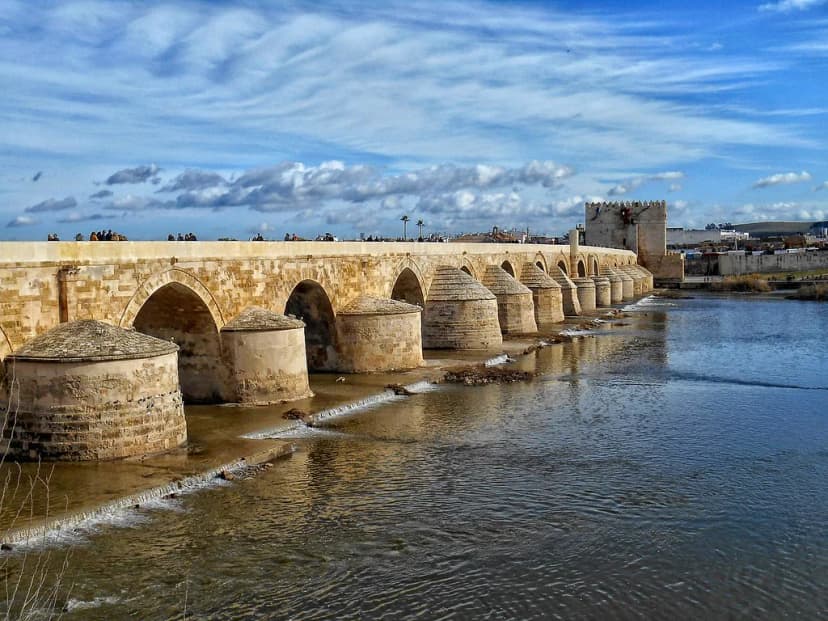
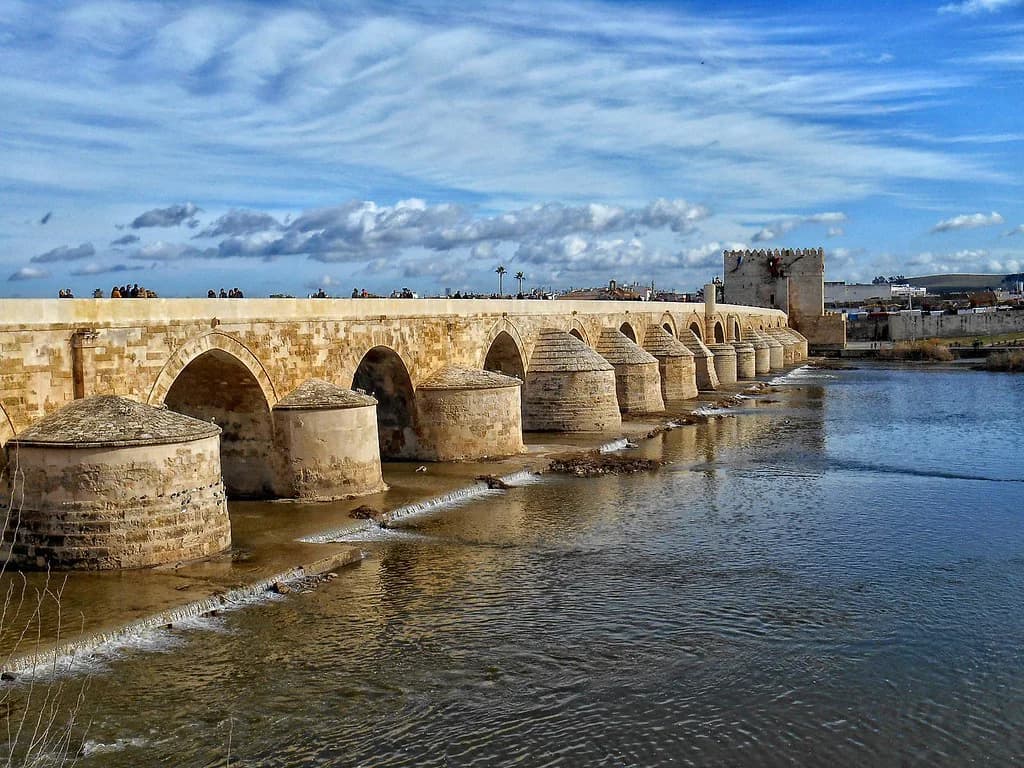
The Roman Bridge (Puente Romano) spanning the Guadalquivir River connects the historic center to the Torre de la Calahorra museum on the far bank. The bridge dates originally to the 1st century BC, reconstructed in its current form after the Moorish period. Walking it costs nothing and provides the best panoramic views of the Mezquita's bell tower and the castle walls. Sunset — typically around 8:30–9:00 PM in summer — is the prime time; arrive 20 minutes early to claim a good spot on the parapet. The Calahorra Tower on the southern end houses a multimedia historical museum; adult entry is €4.50 in 2026, open daily 10:00 AM to 6:00 PM (summer until 7:30 PM).
Córdoba's Food and Tapas Scene in the Old Town
Córdoba's culinary identity is rooted in Andalusian tradition with a strong Moorish influence — honey, almonds, cumin, and saffron appear throughout the menu in ways that distinguish local cooking from the tapas culture of Sevilla or the seafood focus of coastal Andalusia. The historic center concentrates the best traditional eating within a few blocks of the Mezquita, but the savviest visitors push two or three streets back from the main tourist drag to find dramatically better value.
Salmorejo cordobés is the dish that defines this city: a thick, silky cold tomato soup made with stale bread, garlic, olive oil, and sherry vinegar, then finished with finely diced jamón serrano and hardboiled egg. Unlike Sevilla's gazpacho it has no cucumber or pepper, and the texture is closer to a purée. A full portion at a good restaurant — try Taberna Salinas (Calle Tundidores, 3) or Restaurante El Churrasco (Calle Romero, 16) — costs €5–€7 in 2026. Both restaurants are within a five-minute walk of the Mezquita.
Flamenquín cordobés is the quintessential local main: a roll of thin pork loin wrapped around jamón serrano, breaded in panko, and deep-fried until golden. It typically arrives sliced on a wooden board with house-made alioli and a small salad. Expect to pay €10–€14 for a full serving at a traditional tavern. Taberna Pepe de la Judería (Calle Romero, 1) serves one of the best versions in the city and has outdoor seating in a shaded courtyard.
Rabo de toro (oxtail stew) is Córdoba's other signature dish, slow-cooked with red wine, bay leaf, and cloves until the meat falls from the bone. Plaza de la Corredera — a large 17th-century porticoed square a ten-minute walk north of the Mezquita — is the best place to find this dish at local prices: most of the taverns lining the arcades charge €12–€16 for a generous main.
For wine, the Montilla-Moriles DO just south of Córdoba produces fino and amontillado-style wines from Pedro Ximénez grapes at lower alcohol than sherry but with a similar nutty character. A glass in any decent bar costs €1.50–€2.50. Bodegas Campos (Calle Lineros, 32) is a famous old bodega converted into a restaurant where barrels line the corridors and the wine list favours local production; a three-course menú del día including wine costs €18–€22 at lunch.
The Mercado de la Corredera (inside Plaza de la Corredera, open Monday to Saturday 8:00 AM to 3:00 PM) sells fresh local produce, olives, cheese, and charcuterie at market prices. It is an excellent source of picnic supplies and a chance to observe daily Cordoban life away from the tourist circuit. Pick up a jar of local honey, a wedge of Manchego, and a bag of season almonds for under €10 total.
Córdoba's Courtyards (Patios): The Flower-Filled Tradition
Córdoba's patio culture is unlike anything else in Europe, and the city's UNESCO Intangible Cultural Heritage designation for it is fully deserved. For centuries, local residents have competed annually to create the most spectacular flower-filled interior courtyards — geraniums, carnations, roses, and jasmine climbing white walls and tumbling from terracotta pots stacked four and five rows high. The Concurso de Patios Cordobeses (Córdoba Patio Competition) has taken place every May since 1921, making it one of Spain's longest-running urban traditions.
During the official Fiesta de los Patios, which typically runs across two weeks in early-to-mid May, private homeowners throw open their gates and let visitors wander through their intimate courtyards completely free of charge. There is no ticket to buy, no tour to book — simply follow the signposted patio routes through the Judería and the old neighbourhoods north of the Mezquita. Each patio is numbered on the festival map (available from the Tourist Office on Calle Rey Heredia, 22, or downloadable at turismodecordoba.org). The winning patios are judged on floral density, water features, symmetry, and traditional craftsmanship.
The most awarded patios cluster in three districts. The Judería neighbourhood, just west of the Mezquita, contains some of the oldest courtyard houses in the city, with deep stone wells and ancient orange trees forming the centrepiece. The neighbourhood of San Basilio — a five-minute walk southwest of the Alcázar — is considered the heartland of the tradition: its residents have taken home the competition's top prizes more than any other street. The barrio of Santa Marina, north of the historic center around Plaza del Conde de Priego, offers a less tourist-heavy alternative with genuinely local atmosphere.
Visiting outside festival season, the tradition is still accessible. The Palacio de Viana (Calle Rejas de Don Gome, 5; open Tuesday to Sunday, 9:00 AM to 7:00 PM, €8 adults in 2026) preserves 12 distinct interior patios ranging from a Roman-influenced formal garden to a dramatic cactus courtyard — it is the single best patio experience available year-round. Several boutique hotels in the historic center have converted historic courtyard houses and welcome non-guests to view their patios by request; Hotel Palacio del Bailío and Hotel Casa de los Azulejos are two standouts.
Even during non-festival months, the public courtyards at the Alcázar, the Bishop's Palace, and the Convent of the Merced are accessible free of charge during normal opening hours. The Calleja de las Flores is, at its core, a celebration of the same patio culture — the flowering balconies and hanging pots represent the public-facing extension of what residents tend more elaborately in private. A stroll through any residential street in the Judería between April and June will reveal fragments of this tradition: a gate left slightly ajar, the scent of jasmine from a hidden courtyard, a flash of colour behind an iron grille.
For practical planning: if visiting during the Fiesta de los Patios, arrive in Córdoba by 8:00 AM on your chosen day. The most famous patios attract queues of 30–60 minutes by mid-morning. The festival map marks which patios open in the morning session (9:00 AM to 2:00 PM) and which open in the afternoon (5:00 PM to 10:00 PM); experienced visitors do the Judería patios in the morning and the San Basilio circuit in the early evening. The entire experience — festival map, patio visits, and the surrounding streets — costs nothing. Our wider guide to walking Córdoba's historic quarter includes a dedicated patio route for visitors outside May.
Planning Your Córdoba Old Town Itinerary
Timing your visit is crucial because many smaller museums and shops close for a siesta in the afternoon. Most major attractions open around 10:00 AM and either close or reduce access between 2:00 PM and 5:00 PM. Use this midday break to enjoy a long, unhurried lunch in a shaded courtyard — this is how Cordobans spend the hottest part of the day, and the rhythm suits the city perfectly.
A logical one-day itinerary begins at the Mezquita at opening time (10:00 AM, or 8:30 AM if you opt for the free morning access on a weekday). Allow 90 minutes to two hours inside, then walk the Roman Bridge and cross to the Calahorra Tower for the city panorama. Return to the Judería before noon to visit the Calleja de las Flores and the Synagogue, then take a long lunch near Plaza de la Corredera. The afternoon (post-5:00 PM) is ideal for the Alcázar gardens and a riverside stroll along Paseo de la Ribera before dinner.
If you have two days, devote the first to the monuments listed above and the second to the neighborhoods north of the historic center: the Palacio de Viana (a Renaissance mansion with 12 beautifully maintained interior patios, €8 adults in 2026, open Tuesday to Sunday 9:00 AM to 7:00 PM) and the Archaeological Museum (Plaza Jerónimo Páez, €1.50, closed Mondays). A third day allows a comfortable excursion to Medina Azahara, the ruined 10th-century Caliphate palace-city 8 km west of Córdoba. City buses (line 01) depart from Avenida del Alcázar roughly every 30 minutes; round-trip fare is €2.80 and the site entry is €1.50 for non-EU citizens (free for EU).
For travelers looking beyond the city itself, consider combining your Córdoba visit with nearby historic towns. Our guide to day trips from Córdoba covers Medina Azahara, Priego de Córdoba, and Jaén — all reachable in under 90 minutes. Alternatively, the journey to Granada by high-speed AVE train takes just 45 minutes and costs from €15 one-way, opening up Granada's Albaicín and the Alhambra as a natural complement to Córdoba's Moorish heritage.
Walking remains the best way to navigate the historic center since most streets are too narrow for cars. Local taxis can drop you at the edge of the pedestrian zones (the nearest drop-off point to the Mezquita is Calle Caballerizas Reales). Staying within the old walls — the area bounded by the Roman walls to the north and the river to the south — allows you to experience the quiet charm of the streets after 9:00 PM when day-trippers have gone and locals fill the bars and plazas.
Best Times and Seasons for Visiting
Spring brings the most famous events to the city, especially the Fiesta de los Patios in May — a UNESCO Intangible Cultural Heritage festival during which private residents open their flower-filled courtyards to the public for free. The festival typically runs for two weeks in the first half of May; exact dates shift annually, so check the Turismo de Córdoba website before booking. Hotel prices spike 30–50% during the festival and rooms sell out months in advance. If your schedule is flexible, visiting in the week before or after the Patios gives you beautiful blooming courtyards with a fraction of the crowds.
April and early June are ideal if you want pleasant weather (18–26 °C), good access to all monuments, and prices roughly 20% below the May peak. The Semana Santa (Holy Week) processions in late March or April draw large crowds to the city center each evening but add an extraordinary atmosphere to the historic streets.
Summer temperatures in Córdoba frequently exceed 40 °C in July and August — the city consistently records the highest daytime temperatures in mainland Spain. Sightseeing becomes genuinely difficult between 11:00 AM and 6:00 PM; plan monument visits for 8:30–10:30 AM and 7:00–9:00 PM. Many locals head to the coast (Málaga is 2 hours by bus) or stay indoors during the afternoon. If you must visit in summer, book a hotel with a pool and budget €3–€5 per day for bottled water and cold drinks.
Fall offers a pleasant alternative, with temperatures between 18 °C and 28 °C in October and around 14–20 °C in November. The light in September and October is warm and golden, excellent for photography of the whitewashed alleyways. Hotel rates fall back to spring levels and queues at the Mezquita are noticeably shorter.
Winter (December through February) is often overlooked by international travelers but provides a very peaceful, budget-friendly experience. Daytime temperatures sit around 12–16 °C — cool enough for a coat in the morning but comfortable for walking by noon. Lines at the Mezquita ticket desk can be non-existent. The city celebrates its own winter lights (Festival Cordoba Luminaria) in December, illuminating the historic facades with elaborate projections. Hotels drop to their lowest rates of the year, with central three-star options from €60–€80 per night in 2026.
Practical Tips for a Smooth Visit in 2026
Buying tickets online in advance is the single most important practical step for visiting Córdoba's historic center. The Mezquita-Catedral sells out online slots several days ahead in spring, and the in-person queue in April and May can exceed 60 minutes in the midday heat. Purchase tickets at mezquita-catedraldecordoba.es, select your preferred entry window, and download the QR code to your phone — the ticket gates are fully digital. Night visits (Córdoba Mágica) also sell through the same platform and often book up a week in advance for weekend slots.
The Córdoba Card (€33 in 2026) bundles entry to the Alcázar, the Synagogue, the Palacio de Viana, the Archaeological Museum, and the Calahorra Tower, plus unlimited use of the tourist train that loops through the historic center. It does not include the Mezquita, which sells its own tickets. The card pays for itself if you visit three or more of the included monuments and is available at the Tourist Information Office on Calle Rey Heredia, 22, or online at turismodecordoba.org.
Carry a refillable water bottle — public drinking fountains (fuentes) are scattered throughout the city, marked on Google Maps with the tap emoji. The most reliable ones are near the Puerta de Almodóvar (the western Roman gate, free to photograph) and on Plaza del Potro. A 500 ml bottle of water at a café costs €1–€1.50; supermarkets sell 1.5-litre bottles for €0.70.
Wear comfortable closed-toe shoes with good grip: the cobblestones in the Judería are irregular and become slippery after rain. Some streets in the Jewish Quarter have a moderate incline that can be challenging for pushchairs or wheelchair users. The Mezquita itself is fully accessible via the Puerta del Perdón entrance; inform the ticket desk of any mobility requirements and staff will direct you to the lift.
Connectivity is straightforward. Free Wi-Fi is available throughout the historic center (Red WiFi Córdoba, no password required). Most restaurants accept Visa and Mastercard contactless, but smaller cafés and the market stalls in Plaza de la Corredera prefer cash. ATMs are plentiful on Calle Cruz Conde, a five-minute walk north of the historic center.
Learning a few basic Spanish phrases makes a real difference in smaller taverns and market stalls. "Una mesa para dos, por favor" (a table for two, please) and "La cuenta, por favor" (the bill, please) cover most restaurant interactions. Most attraction staff and hotel reception staff speak English, but menus in the traditional taverns away from the main tourist drag are often Spanish-only.
For drivers arriving in the city, the historic center is largely vehicle-restricted. Our guide to parking in Córdoba covers the six central paid car parks with 2026 rates and distance to the Mezquita from each one — a useful reference before you arrive.
Frequently Asked Questions
How much time should I spend in Cordoba's Old Town?
One full day covers the main highlights: the Mezquita-Catedral (90–120 minutes), the Judería and Calleja de las Flores (60 minutes), the Alcázar gardens (90 minutes), and the Roman Bridge (30 minutes). Two days allows a more relaxed pace with the Palacio de Viana, the Archaeological Museum, an evening tapas tour of Plaza de la Corredera, and a day trip to the Medina Azahara ruins 8 km west of the city (bus fare €2.80 return in 2026, site entry €1.50 for non-EU citizens).
How much does it cost to visit the Mezquita-Catedral in 2026?
Adult daytime entry to the Mezquita-Catedral costs €13 in 2026. Children under 10 enter free. The Night Visit (Córdoba Mágica) costs €20 per adult and runs Tuesday through Saturday from March through October at 9:30 PM, 10:15 PM, and 11:00 PM. A free-access morning visit is available Monday to Saturday from 8:30 to 10:00 AM for worship, but tourist circulation is limited to the nave. Book tickets in advance at mezquita-catedraldecordoba.es to avoid queues that can run 45–60 minutes in spring.
Is Cordoba Old Town safe for solo travelers?
Córdoba is generally very safe for solo travelers, including during late evening hours. The historic center is well-lit and stays active with locals and tourists until midnight in summer. Petty theft (pickpocketing) is the most common issue, concentrated in the Calleja de las Flores and the Mezquita ticket queue where crowds are dense — keep bags zipped and in front of you. The city center is safe to walk alone at night; the areas around Plaza de la Corredera and Calle Cruz Conde remain lively with locals well into the evening.
Are the famous patios open all year round?
The private residential patios only open during the official Fiesta de los Patios, which runs for two weeks in early-to-mid May each year (exact dates vary — check turismodecordoba.org). Public patios and museum courtyards — including those at the Alcázar, the Palacio de Viana, and several hotels in the historic center — are accessible year-round. The Palacio de Viana alone features 12 distinct interior patios and is open Tuesday to Sunday, 9:00 AM to 7:00 PM, for €8 adult entry in 2026.
What is the best way to get from Córdoba station to the Old Town?
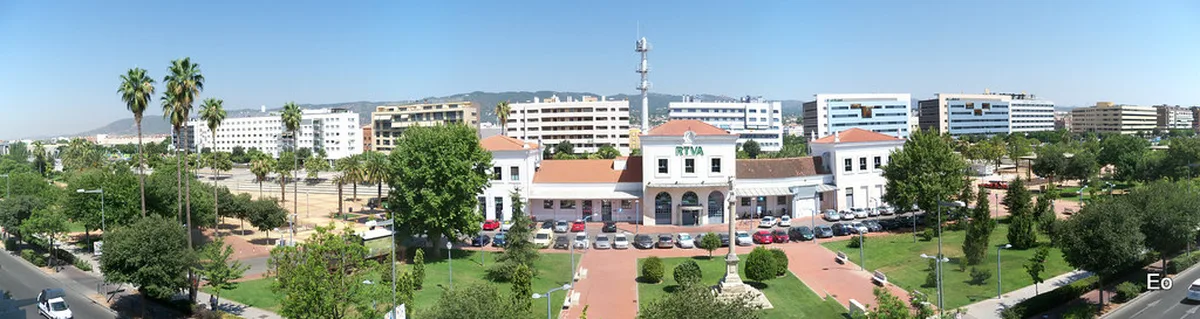
Córdoba's main railway station (Córdoba Central) is roughly 1.5 km from the Mezquita. The walk takes 20–25 minutes along Avenida de América and Paseo de la Victoria — a pleasant route with shade trees. City bus line 3 connects the station to the historic center in about 12 minutes for €1.30 per ride (2026 flat fare). Taxis queue outside the station exit and charge approximately €6–€8 for the ride to the Mezquita depending on traffic. Ride-hailing apps including Cabify and Bolt operate in Córdoba as an alternative.
What traditional foods should I try in Córdoba's Old Town?
Three dishes define the Córdoba table. Salmorejo cordobés is a thick cold tomato purée topped with jamón and hardboiled egg (€5–€7 at a good restaurant in 2026). Flamenquín is a pork and ham roll, breaded and deep-fried, served with alioli (€10–€14 per portion). Rabo de toro is slow-braised oxtail in red wine, best found at the taverns lining Plaza de la Corredera (€12–€16). Wash everything down with a glass of chilled fino from the Montilla-Moriles DO — a local alternative to sherry, available for €1.50–€2.50 a glass.
Córdoba's Old Town offers a unique journey through time that every traveler should experience. From the grand Mezquita-Catedral — one of the most extraordinary buildings in Europe — to the quiet lanes of the Judería and the flower-filled Calleja de las Flores, the city layers Roman, Islamic, and Christian history into a remarkably compact and walkable space. The food scene, centered on salmorejo, flamenquín, and local Montilla-Moriles wines, adds genuine culinary character to the visit.
Plan carefully — book the Mezquita online in advance, visit the Calleja de las Flores early in the morning, and time the Alcázar gardens for late afternoon when the light is warmest. Combine your stay with a day trip to Medina Azahara or a short AVE hop to Granada's Albaicín to extend the Moorish Andalusia theme across multiple destinations. Your trip to this UNESCO site will be a highlight of any journey through Spain.