Bosnia and Herzegovina Travel Guide 2026: Cities, Tips & Top Things to Do
Bosnia and Herzegovina is one of the Balkans' most underrated travel destinations. Base yourself in Sarajevo or Mostar — the two main cities — and explore from there. Visit May through October for the best weather. Budget travellers can get by comfortably on 80–120 KM (€40–60) per day including accommodation, meals, and entry fees.
The local currency is the Convertible Mark (KM), pegged to the Euro at roughly 2 KM = €1. Cash is essential — most small restaurants, craft shops, and guesthouses in Mostar's old town and Sarajevo's Baščaršija do not accept cards. ATMs are plentiful in both cities. A traditional Bosnian lunch costs around 10–18 KM (€5–9); a mid-range hotel room runs 80–160 KM (€40–80) per night.
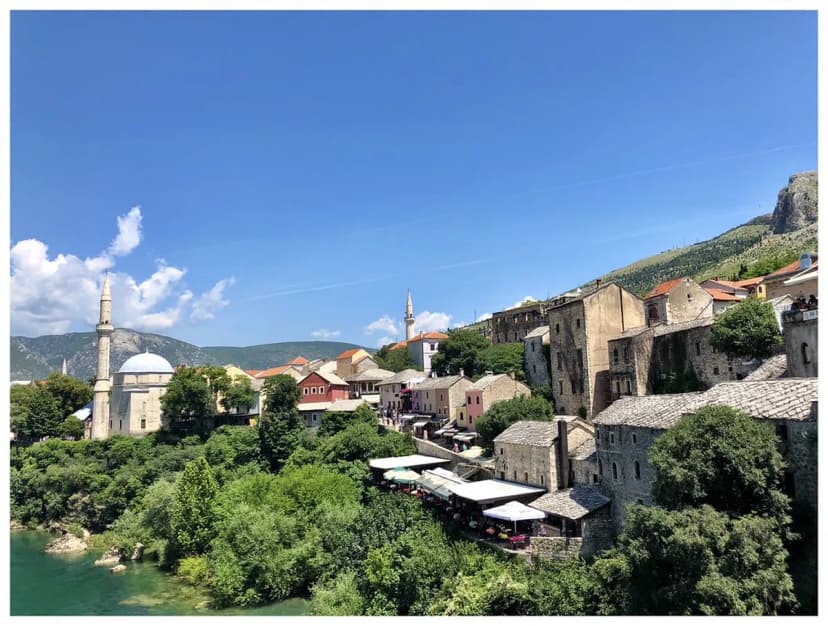
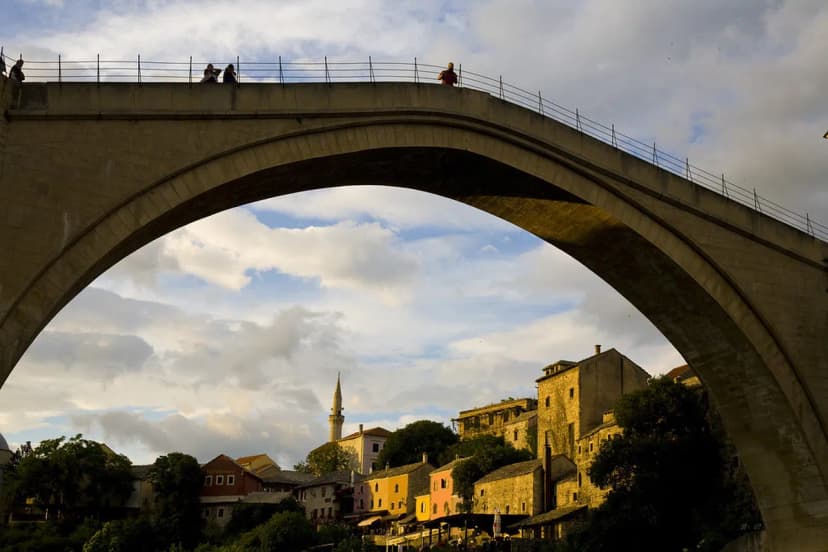
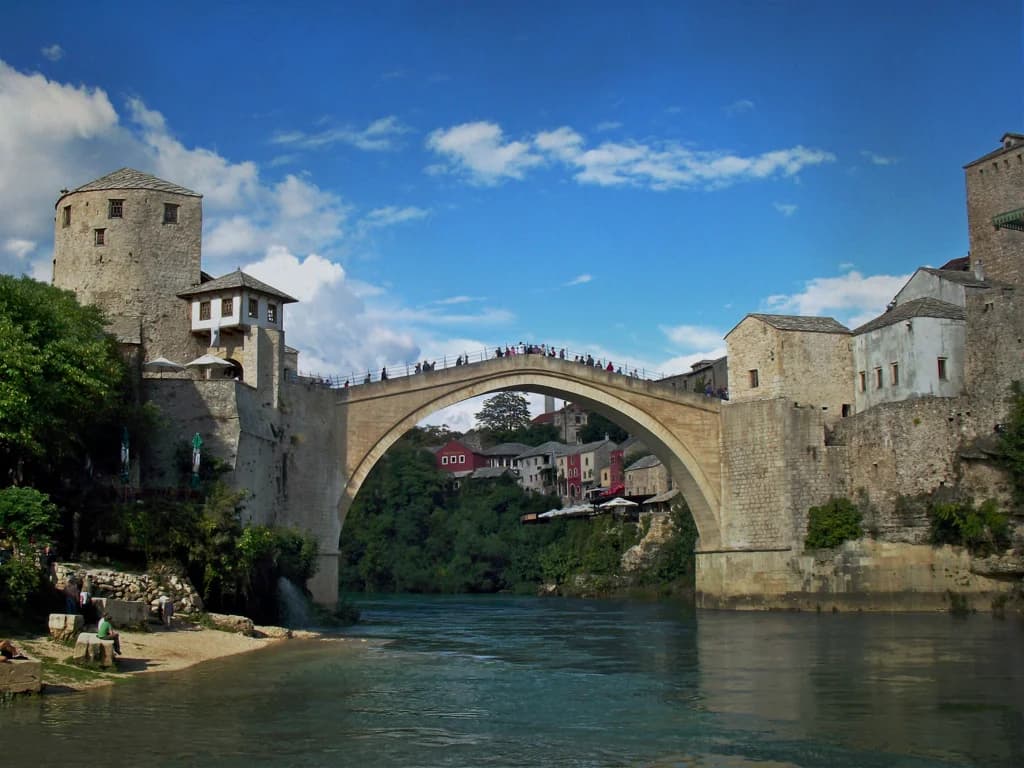
Bosnia and Herzegovina is a country where Ottoman minarets and Habsburg architecture share the skyline, where the scars of recent history sit alongside extraordinary natural beauty, and where hospitality is deeply ingrained in the culture. Sarajevo, the country's capital and the city that triggered the First World War, is a labyrinthine blend of Eastern and Western cultures. Mostar's iconic Stari Most (Old Bridge), rebuilt after its wartime destruction, is one of the most photographed scenes in all of Europe.
This guide covers the best of Bosnia and Herzegovina — including Sarajevo, Mostar, day trips, safety essentials, and a practical budget breakdown — with expert tips on old towns, cultural sites, and travel planning for 2026.
Sarajevo: East Meets West
Walk from the Ottoman Baščaršija bazaar to the Austro-Hungarian Ferhadija in a matter of minutes — the invisible line between East and West is still visible in the city's architecture, cafes, and cuisine. Sarajevo is unlike any other European capital: a place where mosques, Orthodox churches, Catholic cathedrals, and synagogues occupy the same few blocks, a legacy of centuries of coexistence and conflict.
The Baščaršija (old bazaar) is the emotional and commercial heart of the city. Coppersmith workshops line the lanes of Kazandžiluk Street — the hammering of copper into trays, cups, and jewellery has continued here for over 500 years. Entry to the bazaar is free; artisan pieces start from around 15 KM (€7.50). The centrepiece is the Sebilj fountain, the Ottoman-era landmark that serves as Sarajevo's unofficial city symbol.
History is inescapable here. The War Childhood Museum (entry 10 KM / €5) opened in 2017 and collects objects and short testimonies from people who were children during the 1992–1995 Siege of Sarajevo — the longest siege of a capital city in modern warfare. It is one of the most moving museums in Europe. The Tunnel of Hope (Tunnel Museum, entry 15 KM / €7.50) is where Sarajevo residents smuggled food, weapons, and people under the airport runway to escape the siege. Both are essential visits.
For more context on navigating the city's historic core, see our Sarajevo Old Town Guide, which covers the best sights, walking routes, and practical tips for exploring Baščaršija and the surrounding districts.
Day-to-day costs in Sarajevo are very manageable. A burek (flaky pastry with meat or cheese) from a traditional buregdžinica costs 2–4 KM (€1–2). A sit-down Bosnian lunch — Bosanski lonac (slow-cooked meat stew) or stuffed peppers — runs 10–16 KM (€5–8) at a neighbourhood restaurant. A coffee in a traditional cafe costs 2–3 KM (€1–1.50). Mid-range hotel rooms in the Baščaršija area average 120–180 KM (€60–90) per night in summer.
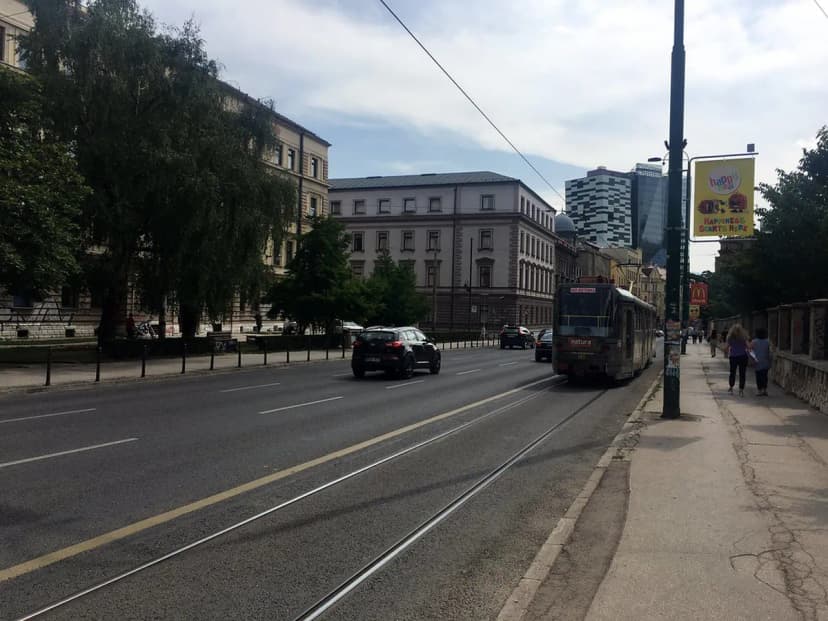
Getting between Sarajevo's key sights on foot is straightforward — the old town is compact. Tram Line 1 connects the main train station with Baščaršija for just 1.80 KM (€0.90). Taxis are metered; a cross-city ride rarely exceeds 12–15 KM (€6–7.50). Rideshare apps (Bolt) operate in Sarajevo and are typically 15–20% cheaper than hailed taxis.
Sarajevo also works well as a base for regional day trips. The historic town of Jajce, with its waterfall in the town centre and medieval fortress, is around 2.5 hours by bus. Travnik, Bosnia's old Ottoman capital, is 90 minutes away. For a curated list of the best excursions, see our Day Trips from Sarajevo guide.
Mostar & Stari Most
Mostar's 16th-century Old Bridge (Stari Most) — destroyed by artillery fire in November 1993 and painstakingly rebuilt and reopened in 2004 — is a UNESCO World Heritage symbol of reconciliation. The white limestone arch rising 21 metres above the Neretva River is one of the most photographed scenes in the Balkans, and it looks best in the early morning light before the crowds arrive, or illuminated after dark.
The bridge itself has no admission fee, but the surrounding Mostar Old Town is where you'll spend most of your time. Ottoman-era stone houses, copper workshops, and carpet dealers pack the cobbled lanes leading up to both sides of the bridge. The old town is small enough to walk end to end in 20 minutes, but it rewards slower exploration. A full visit including the bridge, the Koski Mehmed Pasha Mosque (admission 8 KM / €4, includes minaret access), and the War Photo Exhibition (8 KM / €4) takes around 3–4 hours. Mostar's proximity to Dubrovnik (just 130 km north across the border) makes it a natural stop on any Balkan coastal itinerary.
Mostar gets crowded in high summer — particularly in July and August when Dubrovnik-based day-tour buses arrive by mid-morning. If you arrive by 8:00 AM you'll have the bridge largely to yourself. The city's atmosphere transforms after 5 PM when the day-trippers leave; the riverside cafes with views of the bridge become genuinely magical in the evening. Staying overnight — even one night — makes a meaningful difference. Budget guesthouses in the old town start from 60–80 KM (€30–40) per night.
The famous bridge-diving competition (Red Bull Cliff Diving, held annually in late summer) sees trained divers leap the 21-metre drop into the Neretva — water temperatures permitting, locals dive year-round for tips from spectators. The dive school near the bridge offers jumping lessons for brave tourists: expect to pay around 30–40 KM (€15–20) for a supervised session.
For a detailed walk through the old town's streets and landmarks, our Mostar Old Town Guide covers every major sight with opening times and admission prices. We also have a dedicated Mostar Walking Tour with a self-guided route map and neighbourhood-by-neighbourhood breakdown.
Mostar also serves as an excellent base for nearby excursions. The Kravice Waterfalls — a spectacular series of travertine cascades on the Trebižat River — are just 40 minutes by car or shared taxi (around 25–30 KM / €12–15 one way). The medieval village of Počitelj, a UNESCO-listed fortified town, is 30 minutes south. Blagaj Tekke, a 16th-century Dervish monastery built into a clifface at the source of the Buna River, is just 15 minutes from Mostar and well worth the 5 KM (€2.50) entry fee. For a full list of excursions, see our Day Trips from Mostar guide.
Nature & Adventure in Bosnia
Bosnia and Herzegovina's interior hides some of the most spectacular and least-crowded natural landscapes in Europe. The country's mountainous terrain — a continuation of the Dinaric Alps — produces fast-flowing rivers, limestone gorges, dense forests, and waterfalls that rival anything found further west. Unlike Croatia or Slovenia, you're unlikely to compete for viewpoints or elbow space on trails.
The Kravice Waterfalls near Mostar are the most visited natural attraction in Herzegovina — a 25-metre crescent of travertine cascades that fans out into a turquoise pool perfect for swimming from June through September. Entry costs 10 KM (€5) in peak season. Arrive before 10 AM to avoid the worst of the crowds; weekday mornings are noticeably quieter. Facilities on-site include a cafe and kayak rental (around 20 KM / €10 per hour).
Rafting on the Neretva River near Konjic — roughly midway between Sarajevo and Mostar — is one of the most underrated adventure activities in the Balkans. The canyon section offers Class III–IV rapids through a limestone gorge with near-vertical walls. Half-day rafting trips run 60–90 KM (€30–45) per person including guide and equipment, with most operators offering pickups from Sarajevo or Mostar. The Una River in northwest Bosnia, near Bihać, offers similarly world-class rafting with the added bonus of Štrbački Buk waterfall at its head — one of the continent's most beautiful.
Bjelašnica Mountain, just 25 kilometres from Sarajevo, hosted the 1984 Winter Olympics alpine ski events. Today the ski resort operates from December through March; a day ski pass costs around 50–70 KM (€25–35) depending on the weekend. In summer, Bjelašnica is excellent hiking terrain — the summit (2,067m) offers views across Bosnia's highland plateau and is reachable in around 3 hours from the ski station. The mountain village of Umoljani below Bjelašnica, a cluster of traditional stone-roofed houses with a medieval graveyard, is one of the most atmospheric spots in the entire country.
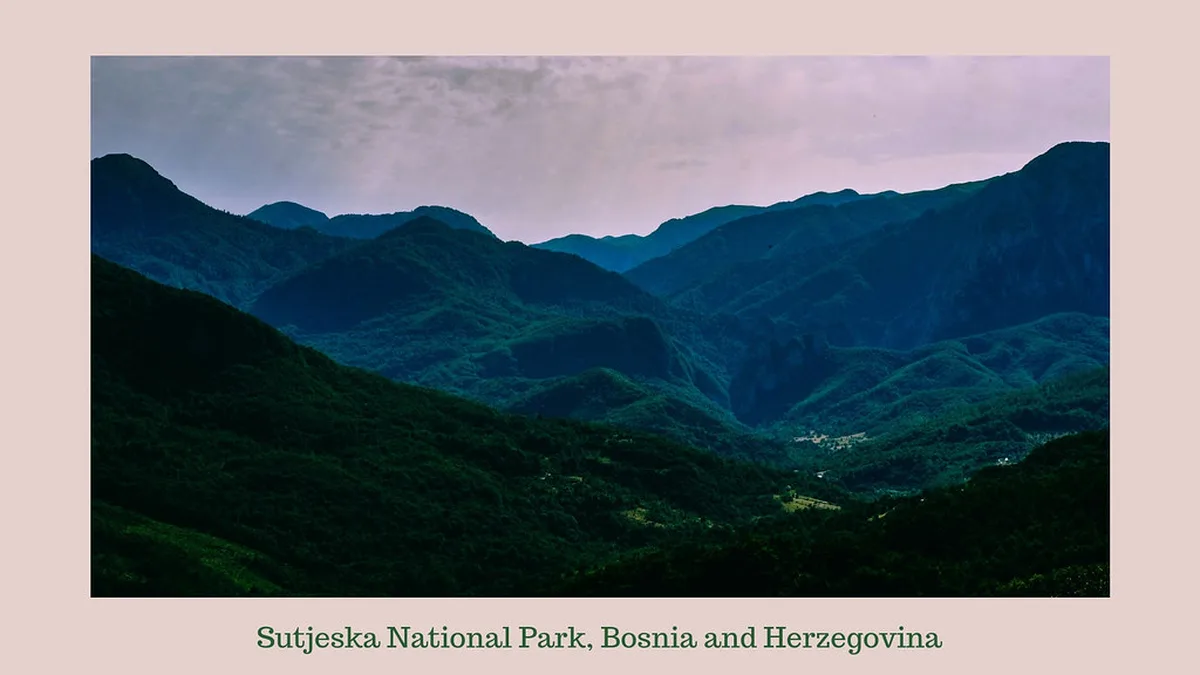
Sutjeska National Park in eastern Bosnia — home to Perućica, one of Europe's last two primeval forests — is a longer excursion from Sarajevo (3+ hours) but rewards with genuinely wild landscape: old-growth beech and fir, Skakavac waterfall (98m, the tallest in the Western Balkans), and the deep Sutjeska River canyon. Entry to the park costs 5 KM (€2.50); guided trekking day tours from Sarajevo run around 80–120 KM (€40–60) per person.
Bosnian Coffee Culture & Food
Bosnian coffee (bosanska kafa) is an experience in itself — copper cezve, sugar on the side, a small piece of rahat lokum (Turkish delight), and absolutely no rush. Coffee here is not a caffeine delivery mechanism; it is a social ritual that can stretch over an hour, and your host will be offended if you rush it. The preparation involves boiling finely ground coffee directly in the cezve — not filtered, not espresso — and pouring it slowly into a small ceramic cup called a fildžan. You sip, you talk, and you enjoy. A Bosnian coffee at a traditional cafe costs 2–3 KM (€1–1.50).
The food landscape in Bosnia is dominated by grilled meats, slow-cooked stews, and pastry. Ćevapi — small minced-meat sausages served in a soft flatbread (somun) with raw onion and kajmak (cream cheese) — are the national street food. A portion of 10 ćevapi with bread costs around 8–12 KM (€4–6) depending on the restaurant. The best ćevapi in Sarajevo are hotly debated; the neighbourhood of Baščaršija has several legendary spots that have been serving them for decades.
Burek — flaky filo pastry filled with seasoned minced meat — is the breakfast of choice across Bosnia. The distinction matters locally: burek must be meat-only; cheese filling is sirnica, potato is krompirusa, and spinach is zeljanica. A large portion costs 2–4 KM (€1–2) from a street buregdžinica and will keep you going until mid-afternoon.
For a more substantial meal, Bosanski lonac (Bosnian pot) is the signature slow-cooked dish: layers of beef, lamb, vegetables, and garlic simmered for hours in a clay pot. It's a cold-weather dish found mainly at traditional mehana (tavern-style) restaurants, usually priced at 16–22 KM (€8–11) for a main course portion. Stuffed peppers (punjene paprike) and lamb cooked under a peka (a heavy cast-iron dome buried in embers) are equally worth seeking out.
Vegetarians have reasonable but limited options outside Sarajevo. Cheese pies, salads, grilled vegetables, and bean soups (grah) are reliably available. In Sarajevo's old town, a handful of modern cafes and restaurants offer dedicated vegetarian and vegan menus; outside the capital, be prepared to navigate a meat-heavy cuisine.
Bosnian wine from Herzegovina — the Žilavka white grape and Blatina red are indigenous varieties — is underrated and worth trying. A glass at a restaurant costs 5–8 KM (€2.50–4); a bottle to take home runs 15–30 KM (€7.50–15) from a wine shop. Local craft beer has grown in recent years; Sarajevo Brewery (founded 1864) runs tours and tastings at its historic facility just east of Baščaršija.
Bosnia and Herzegovina Travel Budget 2026
Bosnia and Herzegovina is consistently one of the most affordable destinations in Europe for Western travellers. Even by Balkan standards it is inexpensive — noticeably cheaper than Croatia, Montenegro, or Slovenia — and the value for money in accommodation, food, and experiences is exceptional.
Budget travellers staying in hostel dorms (25–40 KM / €12–20 per night), eating burek and ćevapi from street stands (5–12 KM / €2.50–6 per meal), and using public transport can travel comfortably on 60–80 KM (€30–40) per day. Sarajevo has a well-established hostel scene; Mostar has several good options within walking distance of the old bridge.
Mid-range travellers should budget 120–200 KM (€60–100) per day. This covers a private room in a guesthouse or three-star hotel (80–140 KM / €40–70 per night), sit-down meals at local restaurants (15–25 KM / €7.50–12.50 per meal), museum admissions, and occasional taxis. Most visitors travelling as a couple or pair will find this budget very comfortable.
Comfortable/premium travellers will find that even boutique hotels in Sarajevo's old town rarely exceed 250–350 KM (€125–175) per night. High-end dining in Bosnia — including wine — is unlikely to break 80–100 KM (€40–50) per person. There is very little true luxury infrastructure; Bosnia's appeal is authenticity, not five-star polish.
| Category | Budget | Mid-Range | Comfortable |
|---|---|---|---|
| Accommodation (per night) | 25–40 KM (€12–20) | 80–140 KM (€40–70) | 200–350 KM (€100–175) |
| Meals (per day) | 15–25 KM (€7.50–12.50) | 40–60 KM (€20–30) | 80–120 KM (€40–60) |
| Transport (local) | 3–5 KM (€1.50–2.50) | 10–20 KM (€5–10) | 20–40 KM (€10–20) |
| Entry fees / activities | 5–10 KM (€2.50–5) | 20–40 KM (€10–20) | 40–80 KM (€20–40) |
| Daily total (approx.) | 60–80 KM (€30–40) | 150–260 KM (€75–130) | 340–590 KM (€170–295) |
Currency tips: The KM is pegged to the Euro at exactly 1.95583 KM per €1. Euros are widely accepted informally in tourist areas (especially Mostar), though you'll receive change in KM. Avoid exchanging at the airport where rates are poor; city-centre exchange offices (mjenjačnica) offer competitive rates with no commission. Withdrawing KM from a local ATM is typically the best option — most major bank cards work without foreign transaction fees on Visa/Mastercard network ATMs.
Bosnia has no tourist tax as of 2026. Tipping is not obligatory but 10% is appreciated at sit-down restaurants. Round up for taxis. Museum entry is generally very affordable — 5–15 KM (€2.50–7.50) is the standard range.
Getting Around Bosnia by Bus and Train
Bosnia's transport network is functional but requires some patience. The country has no motorway network outside the Sarajevo–Mostar corridor, and journey times by road can stretch longer than the map suggests due to mountain terrain. That said, the main tourist routes — Sarajevo to Mostar, Sarajevo to Banja Luka — are well served and comfortable.
Buses are the backbone of intercity travel. The Sarajevo–Mostar route is served by multiple operators running throughout the day; the journey takes 2–2.5 hours and costs 18–22 KM (€9–11) one way. Book at the bus station or through operator websites — advance booking is wise in July and August. The Sarajevo Main Bus Station (Autobuska stanica) is adjacent to the train station, roughly 1.5 km west of Baščaršija. International buses connect Sarajevo with Dubrovnik (around 3.5 hours, 35–45 KM / €17–22), Split (4 hours, 40–50 KM / €20–25), and Zagreb (7 hours, 55–70 KM / €27–35).
Trains are limited but scenic. The Sarajevo–Mostar train (departures twice daily each direction) takes around 2.5 hours through spectacular mountain terrain — arguably the most scenic rail journey in the Western Balkans. Tickets cost 10–14 KM (€5–7) one way. The Sarajevo–Banja Luka train takes around 5 hours and crosses the entire width of the country through continuous mountain scenery. Advance booking is not required for most routes — just show up at the station.
Renting a car unlocks Bosnia's full potential. The country's rural beauty — waterfalls, canyon roads, mountain villages — is largely inaccessible by public transport. Major rental companies operate from Sarajevo Airport; rates from local agencies start around 80–120 KM (€40–60) per day including insurance. Roads are generally in decent condition on major routes but can deteriorate quickly on mountain tracks — a standard car is fine for 90% of tourist itineraries. Driving is on the right; an EU or international driving licence is accepted.
Within Sarajevo, the tram network covers the main tourist corridor (Ilidža to Baščaršija on Line 1) for 1.80 KM (€0.90) per ride. Tickets are bought from kiosks or directly from the driver (slightly more expensive at 2 KM / €1). Mostar has no tram or bus network within the city; everything is walkable or taxi-accessible. Taxis in Mostar should be metered; a short city ride costs 5–8 KM (€2.50–4).
Frequently Asked Questions about Travelling to Bosnia and Herzegovina
Is Bosnia and Herzegovina safe for tourists in 2026?
Bosnia is generally safe for tourists. Sarajevo and Mostar are visited by hundreds of thousands of international visitors annually without significant incident. Petty crime (pickpocketing in crowded markets) is the main risk; violent crime targeting tourists is rare. Some rural areas in central and eastern Bosnia retain residual landmine risk from the 1990s war — stick strictly to marked trails and paved roads outside the main cities. For detailed safety information, see our dedicated guides: Is Sarajevo Safe for Tourists? and Is Mostar Safe for Tourists?.
What currency is used in Bosnia and Herzegovina?
The official currency is the Bosnian Convertible Mark (BAM), written locally as KM. It is pegged to the Euro at a fixed rate of 1.95583 KM per €1, making conversion easy: roughly 2 KM = €1. Euros are informally accepted in many tourist areas (especially Mostar), but you'll typically receive change in KM. Cash is essential — many smaller restaurants, guesthouses, and craft shops do not accept cards. ATMs are widely available in Sarajevo and Mostar. Avoid airport exchange desks and use city-centre exchange offices (mjenjačnica) for the best rates.
Is Mostar worth visiting as a day trip, or should I stay overnight?
Mostar is far better experienced as an overnight stay. The city is flooded with day-trippers from Dubrovnik and Split from late morning until early evening. After 5 PM, the atmosphere shifts completely — the old bridge and riverside are quieter, lit beautifully at dusk, and the city's authentic character emerges. A guesthouse room in the old town starts from 60–80 KM (€30–40) per night. If time is very tight, arrive early (before 9 AM) to see the bridge in peace before the crowds build.
What is the best time of year to visit Bosnia and Herzegovina?
May, June, and September are the best months. The weather is warm but not oppressive (20–26°C), crowds at Mostar and Sarajevo are manageable, and the countryside is lush and green. July and August are the hottest months (30–35°C in Mostar) and see the highest tourist volumes. October is beautiful for autumn colours and is increasingly popular. Winter (December–February) is cold — Sarajevo gets significant snow — but offers a quieter, atmospheric visit and access to ski resorts on Bjelašnica and Jahorina mountains.
How much does it cost to travel in Bosnia and Herzegovina?
Bosnia is one of the most affordable countries in Europe. Budget travellers can manage comfortably on 60–80 KM (€30–40) per day covering a hostel dorm, street food, and public transport. Mid-range travellers spending on guesthouses, sit-down meals, and museum admissions should budget 150–200 KM (€75–100) per day. A portion of ćevapi (10 pieces with bread) costs around 8–12 KM (€4–6); a mid-range hotel room runs 80–140 KM (€40–70) per night; entry to most museums is 8–15 KM (€4–7.50).
How do I get from Sarajevo to Mostar?
The most common option is the direct bus from Sarajevo Bus Station, with multiple departures throughout the day. The journey takes approximately 2–2.5 hours and costs 18–22 KM (€9–11) one way. The scenic train (two departures daily each direction) is slower at around 2.5 hours but passes through dramatic mountain scenery and costs only 10–14 KM (€5–7). By car the journey is around 130 km and takes 2 hours on the main M17 highway following the Neretva River valley.
Do I need a visa to visit Bosnia and Herzegovina?
Citizens of EU/EEA countries, the UK, USA, Canada, Australia, and most other Western nations can enter Bosnia visa-free for stays of up to 90 days within a 180-day period. Bosnia is not part of the EU or Schengen Area, so your Schengen entry stamp does not count toward Bosnian days. Passport holders from a small number of countries (mainly parts of Asia, Africa, and the Middle East) require a visa in advance — check the official Bosnian Ministry of Foreign Affairs list before travelling.
Bosnia and Herzegovina rewards curious, open-minded travellers with extraordinary depth: ancient Ottoman bazaars, wartime history told with remarkable honesty, mountain landscapes that belong in a geography textbook, and one of the most authentic hospitality cultures anywhere in Europe. Whether you anchor in Sarajevo's old town, lose yourself in Mostar's old bridge quarter, or push out on day trips from Sarajevo into the Bosnian highlands, you'll find the country consistently punches above its weight for the price. Our city-by-city guides below give you everything you need to plan a confident, rewarding trip in 2026.