The Ultimate Sarajevo Old Town Guide: Explore Baščaršija in 2026
Baščaršija, Sarajevo's Ottoman Old Town, is free to enter and explore. Key paid sites in 2026: Gazi Husrev-beg Mosque (5 KM/€2.50), Vijećnica City Hall (8 KM/€4), and the Museum of Sarajevo 1878–1918 (5 KM/€2.50). Plan at least half a day; a full day with the Yellow Fortress viewpoint is strongly recommended.
Getting around Baščaršija in 2026 costs very little: tram rides from the city center run 1.80 KM (€0.90) per journey, street food like ćevapi starts at 10 KM (€5) for a full portion, and a Bosnian coffee in a traditional kafana costs 2–3 KM (€1–€1.50). The entire Old Town is walkable and compact — most landmarks sit within a 15-minute walk of the central Sebilj fountain.
Stepping into the heart of Sarajevo feels like traveling back to the Ottoman Empire. The Old Town, known locally as Baščaršija, serves as the city's cultural and historical epicenter. A walking tour through these narrow cobblestone streets reveals a unique blend of East and West. Visitors often find themselves captivated by the rhythmic sounds of coppersmiths and the scent of fresh coffee.
This comprehensive Sarajevo Old Town guide helps you navigate the bustling bazaar with ease. You will discover ancient mosques, traditional eateries, and vibrant markets that define the Bosnian capital. Planning ahead ensures you see the most significant landmarks without missing the subtle local details. The district is also a natural launching point for exploring the surrounding region, with excellent day trips from Sarajevo available to places like Mostar and the Bosnian countryside.
Baščaršija is more than just a tourist attraction; it is a living museum of resilience. The area has survived centuries of change while maintaining its authentic charm and hospitality. Modern travelers will find a welcoming atmosphere that honors tradition while embracing the future. Prepare for an unforgettable journey through one of Europe's most fascinating urban landscapes.
The History of Baščaršija and Its Ottoman Roots
The origins of Baščaršija date back to the 15th century when Isa-Beg Ishaković founded the city. During this era, the district became a major trading hub for the entire Balkan region. The word itself translates to 'main market,' reflecting its historical importance as a commercial center. Merchants from across the Ottoman Empire gathered here to trade silk, spices, and precious metals.
The architecture still reflects the golden age of the city under Gazi Husrev-beg's leadership in the 16th century. He funded the construction of mosques, libraries, madrasas, and public baths that still stand today. The Gazi Husrev-beg Külliye — the complex around the great mosque — represents one of the most complete Ottoman urban ensembles surviving anywhere in the Balkans. These structures showcase the intricate stonework and domed roofs typical of classical Ottoman design from the Sinan school of architecture. Walking past these buildings offers a genuine glimpse into the sophisticated urban planning of the 1500s.
Fire and conflict have tested the resilience of the Old Town throughout the centuries. Major fires in the 19th century destroyed parts of the wooden structures once common here. Despite these challenges, the local community rebuilt the area to preserve its distinct identity. The most devastating chapter came during the 1992–1995 siege of Sarajevo — one of the longest sieges in modern history — when shells destroyed the Vijećnica National Library and damaged numerous buildings throughout the Old Town. The painstaking post-war reconstruction and restoration effort lasted over two decades.
Visitors can see the clear division where the Ottoman bazaar meets the Austro-Hungarian district on Ferhadija Street. A symbolic marker on the pavement signifies this 'Meeting of Cultures' point, where the cobblestoned Ottoman alleyways abruptly transition to the wide, paved European boulevards built during the Austro-Hungarian administration from 1878 to 1918. The transition happens in literally a few steps — you can straddle two empires. This architectural contrast highlights the extraordinarily diverse layers of influence that shaped modern Bosnia and Herzegovina, a country that has always sat at the crossroads of civilizations. Understanding this layered history makes every building and alley in Baščaršija far more meaningful.
Must-See Landmarks in the Sarajevo Old Town Guide
The Sebilj fountain stands as the most recognizable landmark in the entire Old Town. This ornate wooden fountain sits in the center of Pigeon Square, where locals and tourists gather throughout the day. Legend says that drinking its water ensures you will return to Sarajevo in the future. The current structure dates to 1891 and replaced an older version from the 18th century. Entry is completely free, and the square is open 24 hours a day — it is the natural starting point for any visit to Baščaršija.
A short walk away leads to the impressive Gazi Husrev-beg Mosque complex, the largest and most important mosque in Bosnia and one of the finest examples of Ottoman architecture in the entire Balkans. Built in 1531, it remains an active place of worship and a centerpiece of Islamic heritage in the region. In 2026, entry for tourists is 5 KM (approximately €2.50). Visitors must dress modestly — shoulders and knees covered — and remove their shoes before entering. Women are provided with headscarves at the door if needed. The mosque typically opens to tourists between 9:00 AM and sunset, excluding the five daily prayer intervals, so plan your visit for mid-morning to avoid closures.
History enthusiasts must visit the Latin Bridge, located at the edge of the Old Town on the Miljacka River. This modest stone bridge was the exact site of the assassination of Archduke Franz Ferdinand on 28 June 1914 — the event that triggered the start of World War I and reshaped global history. Crossing the bridge is completely free. The Museum of Sarajevo 1878–1918, situated on the corner at Zelenih beretki 1, provides detailed historical context about that fateful day; entry is 5 KM (€2.50) in 2026 and well worth the visit for history lovers. The museum is open Monday to Friday 10:00 AM–6:00 PM and Saturday 10:00 AM–3:00 PM.
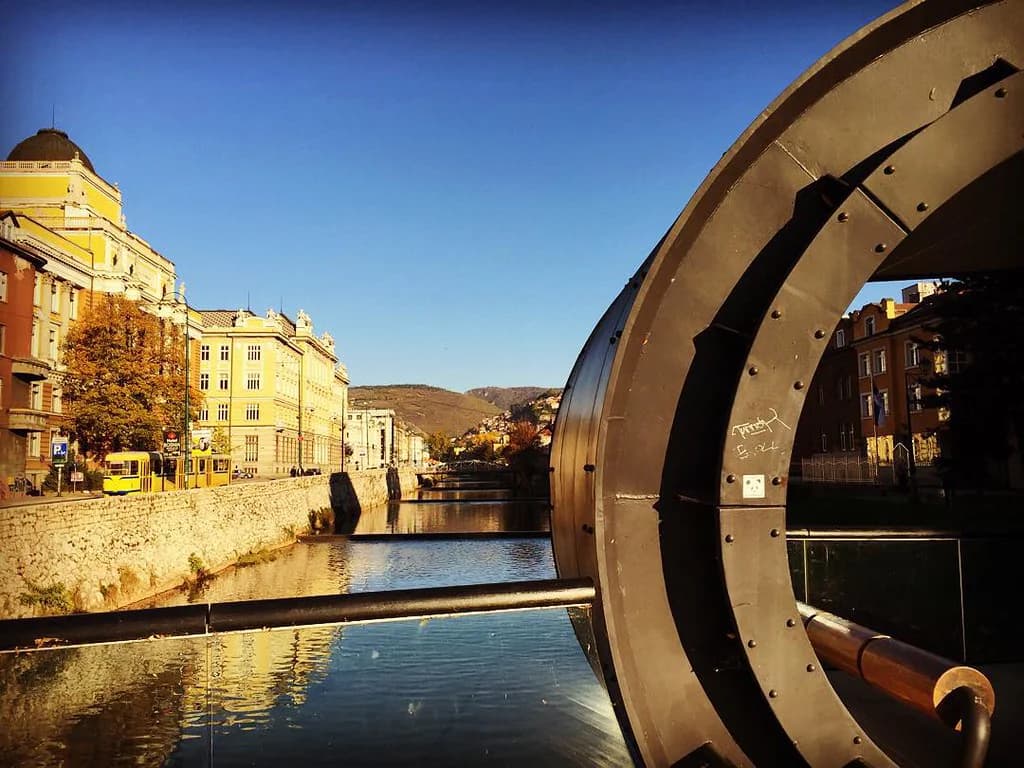
The Vijećnica — Sarajevo's magnificent City Hall — is one of the most striking buildings in the city. Originally built under Austro-Hungarian rule in 1896, it was devastated by fire during the 1992–1995 siege and painstakingly rebuilt over two decades. Today it has been fully restored to its original Moorish Revival splendour. In 2026, entry costs 8 KM (approximately €4). Inside you can see the grand atrium and rotating exhibitions on the city's history. The building also served as the National Library before the war, and the restoration is considered one of the great preservation achievements of modern Bosnia.
The Sahat Kula, or Clock Tower, is another unique feature of the city skyline. It is the only public clock in the world that keeps lunar time for prayer schedules. The clock is adjusted manually every few days to ensure accuracy for the local community. Observing the tower at sunset offers a special perspective on the city's spiritual rhythms. Entry to view the exterior is free; the tower stands near the Gazi Husrev-beg Mosque and makes a natural pairing on any sightseeing route through Baščaršija.
Baščaršija market itself is free to browse. The open-air stalls and craft shops line the cobblestoned alleys with copperware, coffee sets, hand-painted pottery, and traditional Bosnian textiles. Even if you do not intend to buy anything, walking through the market is one of the most atmospheric experiences the Old Town offers. The Bezistan covered market — a 16th-century stone building a short walk from Pigeon Square — houses dozens of small shops and stays noticeably cool even in summer heat.
- The Sebilj Fountain
- Location: Pigeon Square (Baščaršija trg)
- Built: 1891
- Cost: Free
- Access: Open 24/7
- Gazi Husrev-beg Mosque
- Entry Fee (2026): 5 KM (€2.50)
- Best Time: Mid-morning (avoid prayer times)
- Dress: Modest required — covered shoulders and knees; shoes removed at entrance
- Focus: Largest mosque in Bosnia, premier Ottoman architecture
- The Latin Bridge
- Significance: WWI assassination of Archduke Franz Ferdinand, 1914
- Location: Miljacka River, edge of Old Town
- Cost: Free
- Nearby: Museum of Sarajevo 1878–1918 (5 KM/€2.50)
- Vijećnica (City Hall)
- Entry Fee (2026): 8 KM (€4)
- History: 1896 Austro-Hungarian, rebuilt after 1992 fire
- Feature: Moorish Revival architecture, grand atrium
- Morića Han
- Type: Historic caravanserai inn
- Access: Public courtyard, free to enter
- Feature: Persian carpets, traditional coffee courtyard
- Refreshments: Coffee 2–3 KM (€1–€1.50)
Artisan Traditions and Shopping in Kazandžiluk
Kazandžiluk Street is the most famous alley for traditional coppersmithing in the city. Master craftsmen have passed down their skills through generations of the same families. You can hear the rhythmic tapping of hammers against metal as you walk through the alley. These artisans create beautiful coffee sets, plates, and decorative items by hand. The street runs parallel to the main Baščaršija square and is impossible to miss — listen for the metallic rhythm before you even see it.
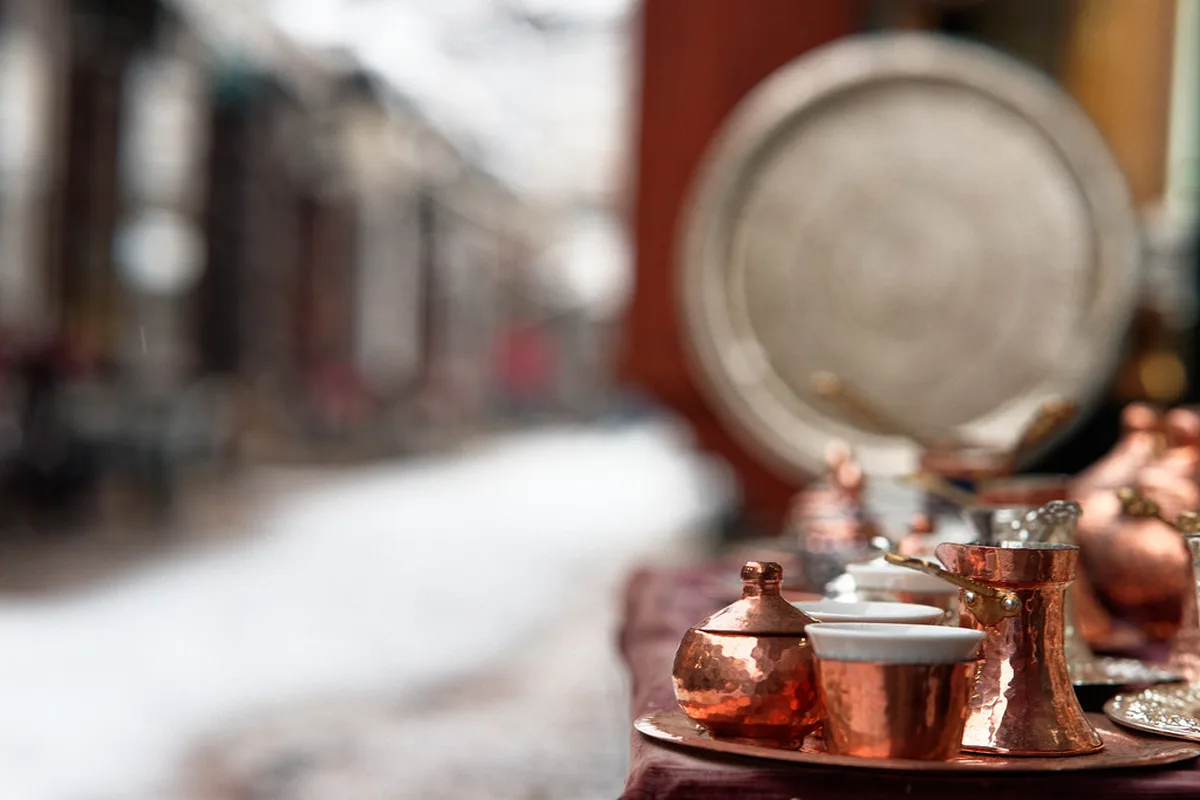
Buying a copper coffee set is a popular way to bring a piece of Sarajevo home. Authentic items are usually heavier and feature more intricate, hand-etched patterns than mass-produced alternatives. Avoid souvenirs that look overly shiny or lack detailed craftsmanship — these are usually imported factory goods. Expect to pay around 40 to 80 KM (approximately €20–€40) for a high-quality, handmade copper coffee set in 2026. Individual džezva pots start from around 15–25 KM (€7.50–€12.50) for a single-serve size.
The Bezistan covered market offers a different shopping experience nearby. This 16th-century stone building houses dozens of small shops selling textiles, jewelry, leather goods, and traditional Bosnian slippers known as opanci. The thick stone walls keep the interior cool even during the hot summer months, making it a pleasant refuge on warm afternoons. Scarves and embroidered tablecloths are popular purchases here, typically priced between 15–40 KM (€7.50–€20) depending on size and complexity.
Respectful negotiation is common in the bazaar, but avoid aggressive bargaining that may cause offense. Small discounts — typically 10–15% — are often possible if you are buying multiple items from one shop. Most artisans take great pride in their work and genuinely appreciate questions about their techniques and family history. Supporting these local masters helps preserve traditions that are slowly disappearing in an age of mass production. Many of the copper workshops have been in continuous operation since the 19th century, and their survival depends on visitors choosing handcrafted goods over cheaper imports.
Beyond Kazandžiluk, the streets radiating outward from Pigeon Square each have their own craft specialization — a legacy of the Ottoman guild system that organized tradespeople by profession into distinct streets. You can find woodworkers, leather craftsmen, and goldsmiths within a few minutes' walk of each other. Set aside at least an hour just for the shopping quarter if you are interested in authentic Bosnian handicrafts and souvenirs.
Authentic Flavors: Where to Eat in the Old Town
No visit to Baščaršija is complete without eating a plate of authentic ćevapi. These small grilled meat sausages are served in flatbread with raw onions and kajmak cream. Famous spots like Ćevabdžinica Željo on Kundurdžiluk Street or Petica are local favorites for a quick lunch. A standard portion of ten pieces typically costs about 10 to 12 KM (€5–€6) in 2026. Željo is so popular that it has operated at the same location for decades; arrive before noon or after 2:00 PM to avoid the peak queue.
Burek and other types of pita are essential staples of the Bosnian diet. Burek is strictly filled with minced meat in Sarajevo — any other filling makes it a different variety of pita. Cheese pita (sirnica), spinach pita (zeljanica), and potato pita (krompirusa) are equally delicious. Look for shops that bake their pita under a 'sač,' which is a traditional metal lid placed over the dough. This cooking method ensures a crispy, slightly smoky texture that ovens cannot replicate. A large slice of fresh pita costs around 3–5 KM (€1.50–€2.50) at traditional pekara bakeries near the bazaar.
Bosnian coffee is a ritual that requires patience and a specific serving style. The coffee arrives in a copper pot called a džezva alongside a small cube of sugar called a rahat lokum. The correct method is to pour the coffee slowly from the džezva into a small fildžan cup, letting the grounds settle before drinking. Take your time and enjoy it while watching the world go by in a traditional kafana. A coffee costs 2–3 KM (€1–€1.50) at most local spots. For evening options after exploring the Old Town, check out the Sarajevo nightlife guide for late-night spots and bars in the surrounding streets.
Sweet lovers should try traditional desserts like baklava or tufahija. Tufahija is a poached apple stuffed with walnuts and topped with whipped cream, served cold — a unique Bosnian specialty rarely found elsewhere. Many pastry shops in the Old Town have served these recipes for over a century. Baklava portions cost around 5–8 KM (€2.50–€4) per serving depending on the size and sweetness. Pairing these treats with a glass of elderberry juice or boza (a fermented millet drink) creates a perfect afternoon break between sightseeing.
Practical Logistics for Navigating Baščaršija
Comfortable walking shoes are mandatory for exploring the uneven cobblestone streets. The stones can become quite slippery when it rains, so watch your step carefully. Most of the Old Town is a pedestrian zone, making it very safe for walking at any time of day. If you are wondering is Sarajevo safe for tourists, the answer is generally a resounding yes — the Old Town has a low crime rate and a welcoming atmosphere for international visitors.
Cash is still essential in many of the smaller shops and traditional eateries. The local currency is the Convertible Mark, abbreviated as BAM or written as KM on price tags. While some larger restaurants and tourist shops accept Euros, the exchange rate will almost always be unfavorable. ATMs are widely available near the Sebilj fountain, along Ferhadija Street, and at the entrance to the Bezistan market. Withdraw KM before diving into the artisan quarter to avoid any frustration at the smaller stalls.
Visiting early in the morning allows you to see the market waking up without the midday crush. The crowds are much thinner before 10:00 AM, which is ideal for photography and unhurried browsing. Late afternoon also offers beautiful warm light as the sun sets over the surrounding hills. Plan for at least three to four hours to explore the main sites at a relaxed pace; if you intend to walk up to the Yellow Fortress for sunset, budget a full five to six hours total for the day.
Sarajevo is an excellent base for exploring the wider country. You can arrange various day trips from Sarajevo to destinations including Mostar, Jajce, and the war memorial at Srebrenica. Public trams connect the Old Town to the rest of the city for just 1.80 KM (€0.90) per journey — tickets can be purchased from the driver or at kiosks. Validate your ticket immediately upon boarding to avoid fines from inspectors, which run to 50 KM (€25) for unvalidated tickets.
Hidden Gems and Local Decision Criteria
Small courtyards hidden behind heavy wooden doors offer peaceful retreats from the crowds. Many of these spaces house tea rooms or small galleries with local artwork. Svrzo's House (Svrzina kuća) on Glođina 8 is a nearby museum that shows how a wealthy Ottoman-era family lived in the 18th century. Entry costs 4 KM (€2) and the visit takes about 45 minutes — it provides a quiet, intimate alternative to the busier landmarks in the center of the bazaar. The furnished interiors, including a distinct haremic (women's) quarter and selamlik (men's) section, are remarkably well preserved.
Avoid the common mistake of eating only in the most visible tourist restaurants lining Bravadžiluk Street. Sometimes the best food is found in the smallest shops with no English menus and plastic chairs. Look for places where locals are queuing — this almost always indicates freshness and quality. Mala Kuhinja, a tiny spot tucked down a side alley near the Sahat Kula, is worth finding for homestyle Bosnian food at local prices. Don't be afraid to ask shopkeepers or your accommodation host for personal recommendations.
Deciding what to prioritize in Baščaršija depends on your core interests. History buffs should focus on the museums near the Latin Bridge and the Vijećnica; plan two to three hours for this cluster alone. Shoppers will find more value spending unhurried time in the artisan alleys of Kazandžiluk and the Bezistan. Food travelers should plan their visit around mealtimes at Željo for ćevapi and a pekara stop for fresh pita. Balancing all three ensures a well-rounded experience of everything the Old Town has to offer in 2026. If time is tight, the compact square kilometer of Baščaršija means even a two-hour visit covers the essentials.
The Yellow Fortress: Best Panoramic View of Sarajevo
For the most spectacular bird's-eye view of Sarajevo, the Yellow Fortress (Žuta Tabija) is an absolute must. Perched on a hillside above the Old Town, this 18th-century Ottoman fortification offers an uninterrupted panorama across the entire city, from the red-tiled rooftops of Baščaršija to the modern districts stretching toward the surrounding mountains. Entry is completely free.
Getting there on foot takes approximately 30 minutes from the Sebilj fountain. Head east from Baščaršija and follow the uphill path through the historic Bistrik neighborhood. The route winds past traditional Bosnian houses and small neighborhood mosques — the walk itself is part of the experience. The path is well-signed and manageable for most fitness levels, though the final section is noticeably steep. Wear comfortable shoes and bring water, especially in summer when temperatures on the exposed hillside can feel significantly warmer than in the shaded alleys below.
Timing your visit for sunset is strongly recommended. As the sun drops behind the mountains, the city lights begin to flicker on and the call to prayer echoes across the valley — it is one of those rare travel moments that stays with you long after leaving. Locals gather here in the evenings, especially during Ramadan when a cannon fires from the fortress to signal the end of the daily fast. A small café near the top serves coffee for 2–3 KM (€1–€1.50) and cold drinks, making it easy to linger for an hour watching the light change over the city.
Quick answer: The Yellow Fortress (Žuta Tabija) is the best free viewpoint in Sarajevo. It is a 30-minute uphill walk from Baščaršija through the Bistrik neighborhood. Visit at sunset for panoramic views over the city and surrounding Dinaric Alps mountains.
Photographers should bring a wide-angle lens to capture the full sweep of the valley. The view to the west encompasses the Austro-Hungarian quarter and the modern city; to the east, the Ottoman minarets dominate the skyline. On clear days, the snow-capped peaks of the Dinaric Alps are visible in the distance. Even a brief 20-minute stop at the Yellow Fortress adds enormous depth to any visit to Sarajevo's Old Town.
Getting To and Around Sarajevo Old Town
Baščaršija sits at the eastern end of Sarajevo's city center and is straightforward to reach from almost anywhere in the city. From Sarajevo International Airport, the fastest option is a taxi, which costs approximately 25–35 KM (€12.50–€17.50) for the 20–30 minute journey depending on traffic. Use metered cabs from the official taxi stands or reputable apps like Bolt, which is widely available in Sarajevo in 2026 and typically cheaper than hailing a street cab.
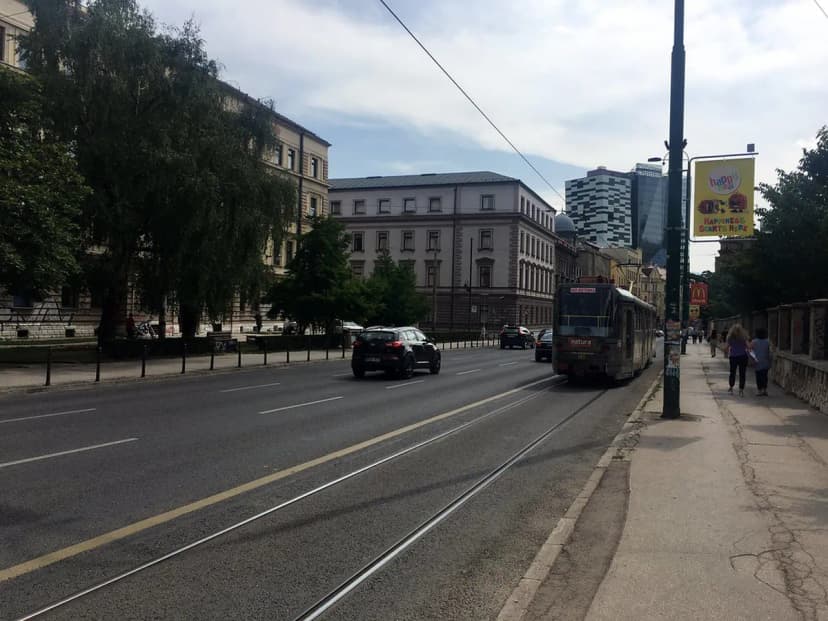
Public transport from the city center is inexpensive and reliable. Trams run regularly along the main Titova and Ferhadija corridor, stopping within easy walking distance of the Old Town's western entrance near the Eternal Flame monument. A single tram ticket costs 1.80 KM (€0.90). Trams run from approximately 5:30 AM to 11:00 PM on most routes. From the Sarajevo bus station (Istočno Sarajevo bus terminal), the Old Town is a 15-minute tram ride west.
International visitors arriving by bus from Mostar (approximately 2.5 hours, 15–18 KM/€7.50–€9 one-way) or Dubrovnik (around 5 hours, 40–50 KM/€20–€25) arrive at the main bus terminal on Kurta Schorka Street, about 15 minutes from the Old Town by tram or taxi. Travelers coming from Belgrade by bus (around 6 hours) arrive at the same terminal. Train services from Mostar and other domestic points arrive at Sarajevo train station, also reachable from Baščaršija by a short tram ride.
Within Baščaršija, everything is walkable. The core area — from the Sebilj fountain to the Latin Bridge — is less than 800 meters on foot. The district is largely car-free during daylight hours, so there is no need for taxis once you are inside the Old Town. Walking is not just practical here; it is the only way to properly absorb the atmosphere of the narrow alleys, the sound of coppersmiths, and the scent of grilled ćevapi drifting from tiny restaurants. Wear flat, grippy soles — the Ottoman cobblestones are beautiful but uneven, and can be slippery after rain.
Frequently Asked Questions
Is the Sarajevo Old Town safe for solo travelers?
Yes, Baščaršija is very safe for solo travelers in 2026. The Old Town has a low crime rate and a welcoming atmosphere for international visitors. Standard precautions apply: watch your belongings in crowded areas like Pigeon Square and avoid poorly lit side streets very late at night. For more comprehensive safety details including neighborhood-by-neighborhood advice, visit the full is Sarajevo safe for tourists guide.
How much time do I need to see the Old Town?
You can see the main highlights of Baščaršija in about three to four hours, covering the Sebilj fountain, Gazi Husrev-beg Mosque (5 KM/€2.50 entry), the Latin Bridge, and a ćevapi lunch stop. A full day allows you to explore the museums, browse the artisan alleys in Kazandžiluk, and walk up to the Yellow Fortress for sunset — the complete experience is best enjoyed over five to six hours. Many visitors return in the evening for the lively café atmosphere and dinner in the bazaar.
Can I pay with credit cards in Baščaršija?
Major restaurants and larger souvenir shops in Baščaršija usually accept credit cards. However, many small artisan workshops, traditional bakeries, and market stalls only accept cash in KM (Convertible Marks). It is always wise to carry some KM for small purchases like coffee (2–3 KM/€1–€1.50), street food, and entry fees at sites like the Gazi Husrev-beg Mosque (5 KM/€2.50) and Vijećnica City Hall (8 KM/€4). ATMs are available near the Sebilj fountain and along Ferhadija Street.
What is the best time of year to visit Sarajevo Old Town?
Spring (April–May) and early autumn (September–October) offer the most pleasant conditions for walking through the Old Town, with mild temperatures between 15–22°C and smaller crowds than the summer peak. Summer (July–August) can be hot — often exceeding 30°C — but the city is lively and evenings are perfect for the outdoor café scene. Winter brings a festive atmosphere and occasional snow on the surrounding mountains, and the Old Town looks stunning dusted with frost, though some outdoor market stalls reduce their hours in December and January.
What is the best viewpoint in Sarajevo?
The Yellow Fortress (Žuta Tabija) is widely considered the best viewpoint in Sarajevo in 2026. It is a 30-minute uphill walk from the Sebilj fountain in Baščaršija, heading east through the Bistrik neighborhood. Entry is free, and the panoramic views over the city's rooftops and surrounding Dinaric Alps are best experienced at sunset. A small café at the top serves coffee and drinks for 2–3 KM (€1–€1.50), making it easy to linger and enjoy the changing light.
What is the entry fee for Gazi Husrev-beg Mosque?
In 2026, the entry fee for Gazi Husrev-beg Mosque is 5 KM (approximately €2.50). The mosque is one of the oldest and largest in the Balkans, built in 1531. Visitors must dress modestly — shoulders and knees covered — and remove shoes at the entrance. Women can borrow a headscarf at the door at no extra charge. The mosque is closed to tourists during the five daily prayer times, so mid-morning (around 9:30–11:30 AM) is the most reliable window for a tourist visit. Plan 20–30 minutes for the interior.
How do I get from Sarajevo Airport to the Old Town?
From Sarajevo International Airport to Baščaršija, a metered taxi or Bolt ride-share costs approximately 25–35 KM (€12.50–€17.50) and takes 20–30 minutes depending on traffic. Public bus route 36 connects the airport to the city center for around 3–4 KM (€1.50–€2), though the journey takes longer and requires a short walk or tram connection to reach Baščaršija. Most travelers find a taxi or Bolt the most convenient option for the first arrival, especially with luggage.
The Sarajevo Old Town is a place where history feels tangible in every stone. From the call to prayer echoing over the Sebilj fountain to the smell of grilled ćevapi drifting from tiny restaurants, Baščaršija engages all your senses. Whether you are standing at the Latin Bridge where World War I began, looking out over the city from the Yellow Fortress at sunset, or sipping coffee in a centuries-old caravanserai courtyard, the Old Town delivers experiences that are genuinely irreplaceable.
Mostar, Bosnia's other iconic destination, is easily reached as a day trip and makes a natural companion to any Sarajevo visit — see our Mostar Old Town guide for what to expect at the Stari Most bridge and the old bazaar. Whether you are here for the history, the food, or simply the extraordinary layered culture, Baščaršija never fails to impress. Plan your 2026 trip with confidence knowing you have the essential details — entry fees in KM, dress codes, viewpoints, transport costs, and local tips — for a meaningful visit. Sarajevo is waiting to share its incredible stories and traditions with you.