Exploring Mostar Old Town: A Complete Guide for Travelers in 2026
Mostar Old Town entry is free in 2026. Key paid sites: Koski Mehmed Pasha Mosque 10 KM (€5) including minaret, Old Bridge Museum 8 KM (€4), Old Hammam 5 KM (€2.50). Bridge diver shows are tip-based — bring 20–30 KM (€10–15). Arrive before 9 AM or after 6 PM to beat day-tripper crowds.
The Stari Most (Old Bridge), rebuilt in 2004 after wartime destruction, spans 28 metres over the Neretva River and is the single most important landmark in Mostar. Walk across it for free, explore the adjacent Kujundžiluk bazaar at no cost, and budget roughly 25 KM (€12.50) for the top three paid sites in one morning visit.
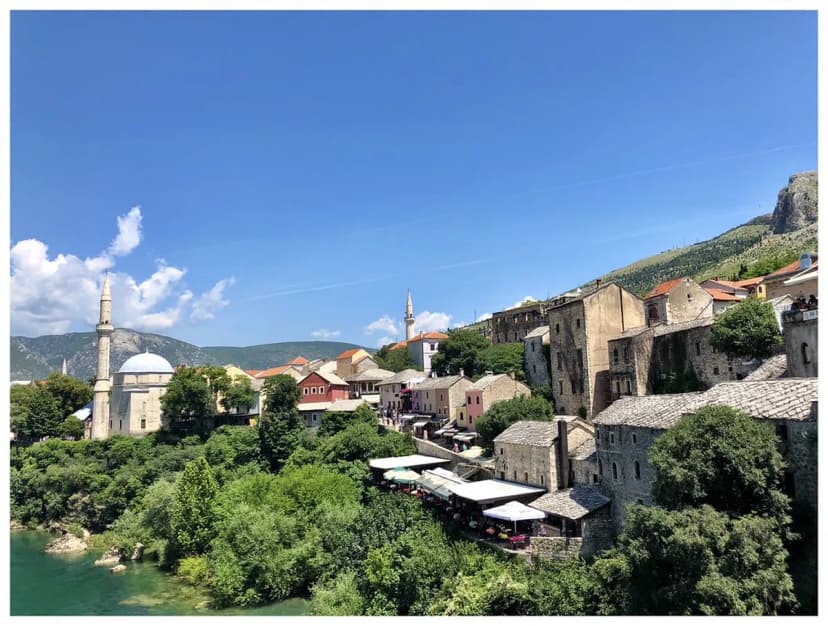
Mostar Old Town stands as a breathtaking testament to Ottoman architecture and resilient history. Walking through these ancient streets feels like stepping back into a world of stone and copper. You will find the famous bridge connecting two sides of a vibrant, diverse community.
This UNESCO World Heritage site offers more than just beautiful photo opportunities. Visitors can explore narrow alleys filled with the scent of grilled meats and strong coffee. Planning your visit carefully ensures you see the best landmarks without the midday heat or the worst of the day-tripper crowds.
Crossing the Iconic Stari Most Bridge
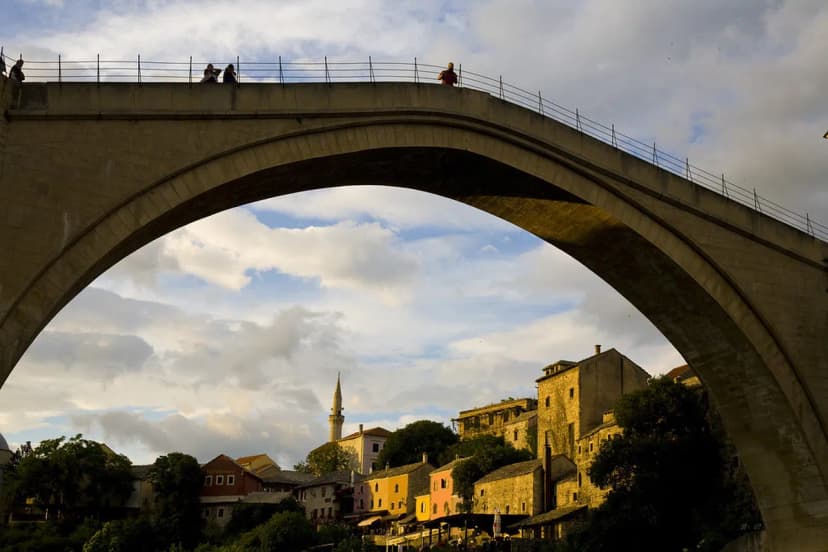
The Stari Most remains the heart of the city and a universal symbol of reconciliation after the 1990s war. The original Ottoman bridge, built in 1566 by architect Mimar Hayruddin, was destroyed in 1993 during the conflict and painstakingly rebuilt using the same local Tenelija limestone. The reconstructed bridge reopened in 2004 and was inscribed as a UNESCO World Heritage Site alongside the historic district surrounding it.
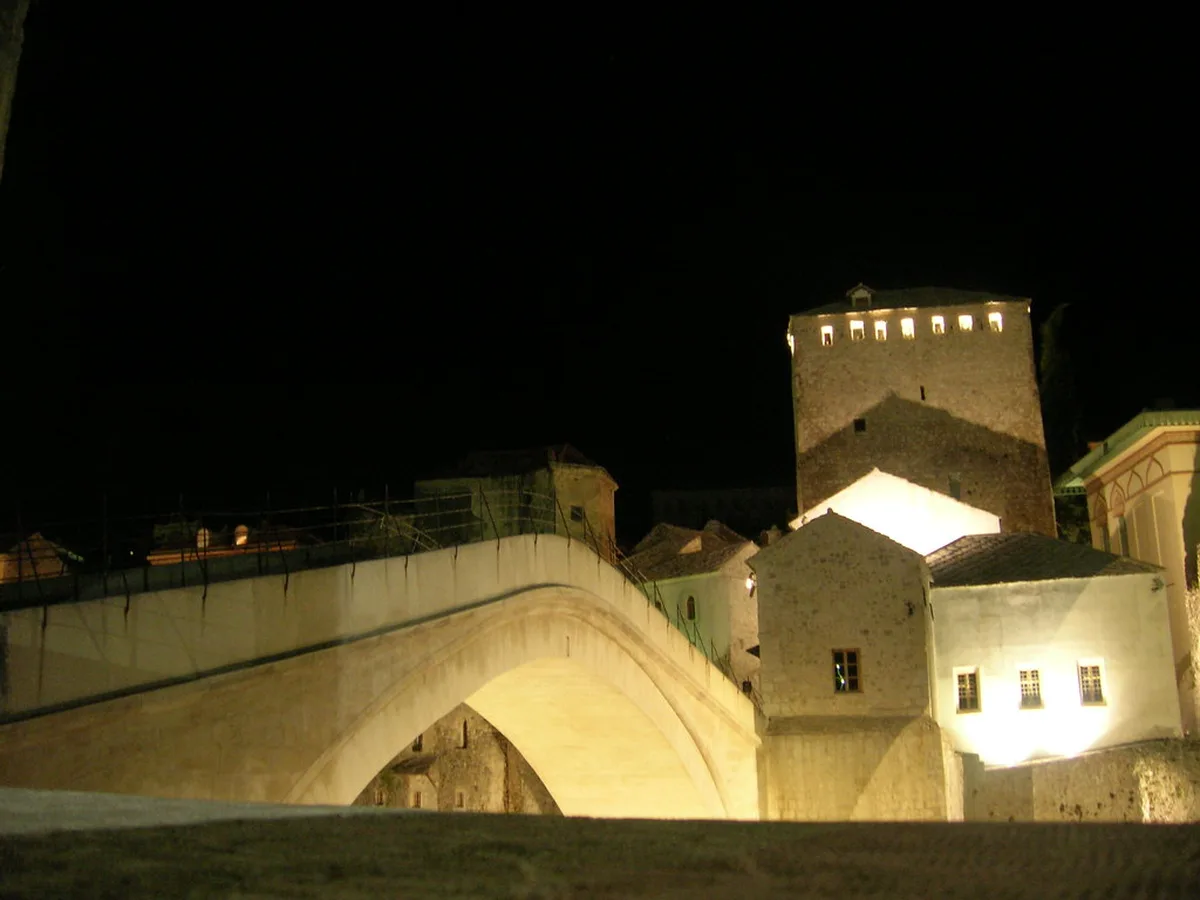
The bridge spans 28 metres across the Neretva River with its elegant, single stone arch rising 21 metres above the water at its peak. Walking across Stari Most is completely free in 2026 — there is no entry fee for the bridge itself. However, the marble surface is worn smooth by millions of footsteps and becomes extremely slippery when wet, so sturdy shoes with grip are essential. Many visitors overlook this simple precaution and discover it the hard way on the steep stone approach.
On either end of the bridge you will notice the Tara Tower (north bank) and the Halebija Tower (south bank) — both 16th-century Ottoman defence towers that once guarded the bridge's entry points. Neither charges an admission fee; you can walk right up and examine the stonework. Together with the bridge itself, they form a compact fortification complex that defines the Old Town skyline.
Look for the "Don't Forget '93" stone plaque nearby, which serves as a moving memorial to those lost during the siege. Many visitors find the best views of the bridge from the riverbanks below — both the north and south banks offer excellent vantage points for photography, especially in the golden hour before sunset or when the bridge is lit up after dark. A footpath runs along the northern bank of the Neretva and provides several clear, unobstructed angles for photos without the shoulder-to-shoulder crowds on the bridge deck itself.
For an alternative perspective, cross to the south bank terrace cafes and order a Bosnian coffee while watching pedestrians file across above you. Several of these riverside cafes have wooden decks cantilevered directly over the water at the base of the bridge arches — one of the most atmospheric spots for a morning drink in the entire Western Balkans.
The Bridge Divers of Mostar
One of the most distinctive spectacles in Mostar — and arguably in all of the Balkans — is watching local divers leap from the crown of the Stari Most into the Neretva River 21 metres below. This tradition predates the modern tourist era: competitive diving from the Old Bridge has been documented since at least 1664, just a century after the bridge was built, and an official diving competition (the Red Bull Cliff Diving World Series stop) has been held here in recent years.
The divers belong to the Mostarski Ronilački Klub (Mostar Diving Club), which was founded in 1965. Club members train year-round, and a select group of experienced divers perform tip-funded jumps throughout the summer tourist season, typically from May through September. Outside these months dives are rare, as the Neretva water temperature drops to near-freezing in winter — the impact on an improperly tensed body at that speed would be dangerous in cold water.
How the tip system works: divers stand on the bridge parapet above the river and wait. They will not jump until they have collected enough tips from the crowd watching below and above. If you want to guarantee you witness a full jump, plan to contribute around 20–30 KM (€10–15) as a group total — the divers signal to the crowd when they have collected enough to proceed. Solo travellers contributing 5–10 KM (€2.50–5) are perfectly fine if others are also contributing. The jump itself takes only seconds: a feet-first entry at roughly 65 km/h with a controlled body position to minimise impact force.
The best viewing positions are from the bridge deck itself (crowded but close), from the north-bank footpath below (great for photos looking up at the arch), or from the Tara Tower terrace. If you want to photograph the dive, position yourself on the south bank at water level where you can capture the full arc of the descent. A 200mm+ telephoto lens or a phone zoom of 5x or more will get you a frame-filling shot of the diver in flight. Dives tend to happen most frequently between 11 AM and 3 PM when crowds — and therefore tips — are at their peak.
Navigating the Kujundžiluk Old Bazaar
The Kujundžiluk Bazaar stretches along the eastern side of the river with its charming cobblestone paths. This area once housed over 500 tailor and weaver shops during the Ottoman era. Today, it remains the best place to find traditional Bosnian handicrafts and souvenirs — and browsing is entirely free.
You will hear the rhythmic sound of hammers hitting copper as artisans create intricate plates and coffee sets right in their doorway workshops. Many shops sell beautiful lanterns that illuminate the narrow streets with colourful patterns at night. This is one of the finest copper craft markets in the Balkans, preserving centuries-old metalworking techniques that are still practised by hand in 2026.
Bargaining is common here, but keep your negotiations respectful and friendly with the local shopkeepers. Most vendors accept Bosnian Marks (KM), though many also take Euros for larger purchases. Expect to pay around 20–40 KM (€10–20) for a high-quality handmade copper coffee set. Small decorative items and keyrings start from as little as 5 KM (€2.50). A hand-painted ceramic plate costs 10–20 KM (€5–10) and packs flat for travel. Take time to explore the side alleys off the main bazaar lane — the most interesting workshops are often tucked away from the primary tourist flow, and prices in those quieter spots tend to be 15–20% lower than on the main strip.
At the northern end of the bazaar you will find a cluster of traditional coffee shops where locals stop for a mid-morning break. A džezva of Bosnian coffee here costs just 2–3 KM (€1–1.50) and the pace is deliberately unhurried. The bazaar is also close to the Old Hammam Museum and the Koski Mehmed Pasha Mosque, making it easy to combine all three in a single morning circuit. Plan on at least 45–60 minutes to browse properly; rushing through misses the best workshops.
Visiting the Koski Mehmed Pasha Mosque
The Koski Mehmed Pasha Mosque offers the most famous panoramic view of the Old Bridge and is one of the defining stops on any Mostar visit. It was completed in 1618 and sits right on the edge of the Neretva River cliffs on the eastern bank. Visitors can enter the courtyard for free, but the interior and minaret require a ticket.
In 2026, the entry fee for the Koski Mehmed Pasha Mosque is 10 KM (€5) per person. This single ticket covers both the prayer hall interior and the minaret climb. The interior features striking painted stalactite decoration on the muqarnas ceiling and a beautifully carved wooden minbar (pulpit) that has been carefully restored. Take a few minutes to study the calligraphic inscriptions around the mihrab niche before heading to the minaret.
Climbing the narrow, winding stairs of the minaret — just wide enough for one person, with a rope handrail to steady yourself — provides a stunning bird's-eye view of the entire city. The view from the top is arguably the best aerial perspective of Stari Most that you can get anywhere: the full curve of the bridge with the Neretva below, the red rooftops of the old quarter spreading up the hillsides, and the minarets of the Karadjozbeg Mosque visible to the north. This vantage point is especially photogenic in the late afternoon when the warm light hits the bridge stones from the west.
Remember to dress modestly by covering your shoulders and knees before entering the sacred prayer hall. The mosque staff provides scarves for visitors who need extra coverage during their tour. Arriving early in the morning — before 9 AM — gives you the minaret almost entirely to yourself and the best unobstructed light on the bridge below. The mosque opens around 8 AM in summer and closes by 7 PM; always verify current hours at the entrance as they can shift slightly between seasons.
The Old Bridge Museum and Defence Towers
The Old Bridge Museum (Muzej Starog Mosta) is housed in the Tara Tower on the north bank of the Neretva, directly adjacent to the bridge approach. Entry costs 8 KM (€4) in 2026 and the museum provides essential historical context for understanding the bridge's significance — both its Ottoman origins and the harrowing story of its destruction and reconstruction in the 1990s. The exhibition includes original stonework fragments, archival photographs, technical drawings of the reconstruction, and audio-visual material documenting the wartime period.
The museum is compact — plan on 30–40 minutes to see everything — but it is genuinely moving and well-curated by regional standards. Many visitors who cross the bridge without first visiting the museum miss the full weight of what they are walking across. The reconstruction required divers to retrieve original stones from the river bed, and the team replicated the historic lime mortar formula using archaeological analysis. The exhibition covers all of this in enough detail to be intellectually satisfying without overwhelming casual visitors.
Adjacent to the museum, the Halebija Tower on the south bank can also be entered for a small fee and offers a different angle on the bridge from its upper level. The two towers together with the bridge formed the original Ottoman defensive gateway into the old city — the Tara Tower held the chain mechanism that could be deployed across the bridge opening to block passage. Visiting both towers alongside the museum costs around 12–15 KM (€6–7.50) total and takes approximately one hour. It is the most informative hour you can spend in Mostar if you have any interest in the city's history beyond the photogenic surface.
For a deeper guided experience, a Mostar walking tour typically combines the museum, both towers, and the key mosque stops into a structured two-hour circuit with a local guide who can add personal historical context that no exhibition panel can replicate.
Exploring the Old Hammam Museum
The Old Hammam (Stari Hamam) is one of Mostar's lesser-known but genuinely rewarding stops. Built in the 16th century during Ottoman rule, the hammam served as a communal bathhouse for the city's residents for centuries. Today it functions as a small museum preserving the architectural fabric of the original baths.
Entry to the Old Hammam Museum in 2026 costs 5 KM (€2.50). The compact space features original stone chambers, domed ceilings with star-shaped skylights, and informative panels about Ottoman bathing rituals and daily life. The star-pierced domes that once diffused light across the bathing chambers are among the best-preserved examples of hammam architecture in Herzegovina, and the low admission price makes this one of the best-value cultural stops in the Old Town. It takes around 20–30 minutes to see everything comfortably.
The Hammam sits just a few steps from the Kujundžiluk Bazaar, making it easy to combine both in the same morning walk. It is significantly quieter than the mosque or the bridge, so it is an ideal refuge if the main tourist areas feel too busy. Look for the discreet entrance on the cobblestone lane — the signage is small but the building's distinctive stone dome is recognisable once you know what you are looking for. Opening hours are typically 9 AM to 6 PM; entry closes 30 minutes before closing time.
Hidden Gems and Historic Houses
Beyond the main bridge, the Bišćević House showcases a perfectly preserved Ottoman-style residential interior. This 17th-century home features a beautiful courtyard garden and traditional wooden furniture with a direct view over the Neretva River. Entry costs 4 KM (€2) and the house is rarely crowded even at peak hours, making it one of the most peaceful stops in the Old Town. The ground-floor reception room (divanhana) displays period furnishings including low sofas, hand-woven rugs, and a carved wooden ceiling typical of the finest Bosnian domestic architecture of the era.
Another notable site is the Muslibegović House, which serves as both a museum and a boutique hotel. Entry to the museum section costs 5 KM (€2.50) and you can see authentic artifacts and learn about the lifestyle of noble Bosnian families across three beautifully maintained rooms. The property has an exceptional interior garden courtyard where you can sit with a coffee and appreciate the layered architecture around you.
The Crooked Bridge, or Kriva Ćuprija, is a smaller version of the Stari Most located just a five-minute walk upstream on the Radobolja River. Built in 1558 — eight years before the Old Bridge — it may actually be a practice structure built by Hayruddin to test the techniques he would use at Stari Most. Access is free and the spot is significantly less crowded than the main bridge, making it an ideal location for quiet photography and reflection in the late afternoon sun. The surrounding neighbourhood of small stone houses, mill ruins, and garden cafes along the Radobolja is one of the most atmospheric corners of the entire Old Town.
- Muslibegović House
- Type: Museum and Hotel
- Best for: Noble history
- Where: Near the bazaar
- Cost: 5 KM (€2.50)
- Bišćević House
- Type: Ottoman residence
- Best for: Authentic interiors
- Where: Riverbank location
- Cost: 4 KM (€2)
- Crooked Bridge (Kriva Ćuprija)
- Type: Stone bridge
- Best for: Quiet photography
- Where: Radobolja River
- Cost: Free access
Eating and Drinking in Mostar Old Town
Mostar Old Town is as much a food destination as it is a sightseeing one. The compact historic district is packed with restaurants and cafes that serve authentic Bosnian dishes at prices well below what you would pay in Western Europe. Eating here in 2026 remains excellent value even as prices across the region have risen slightly from the post-pandemic lows.
Ćevapi is the dish you absolutely must try. These small, hand-rolled cylinders of minced beef and lamb are grilled over open flame and served in lepinja — a soft, pillowy flatbread — alongside raw onion and a generous side of thick kajmak cream. A full portion of ten ćevapi costs 10–14 KM (€5–7) at most restaurants in the Old Town. Tima Irma restaurant near the Kujundžiluk Bazaar is consistently praised by visitors for its no-frills, authentic approach and its position just steps from the river. Arrive before noon to avoid queues at this popular spot.
For a cheap, filling breakfast or snack, look for a burek bakery near the bazaar entrance. Burek is a flaky, phyllo-pastry pie stuffed with minced meat (the classic), spinach, or cheese. A generous slice costs just 4–6 KM (€2–3) and will keep you going through a full morning of sightseeing. The best burek shops start selling from 7 AM.
Bosnian coffee is in a category of its own. It arrives in a small copper džezva pot alongside a cube of sugar and a piece of rahat lokum (Turkish delight). The ritual is to pour the coffee slowly, sip it unhurried, and let the grounds settle — do not rush it. A cup costs 2–3 KM (€1–1.50) at most cafes. Several cafes on the southern bank of the Neretva have terrace seating with direct views of the illuminated bridge, making them ideal for an evening drink once the day trippers have left.
For a sweet finish, try baklava at 3–5 KM (€1.50–2.50) per piece, or tufahija — a whole apple poached in sugar syrup and stuffed with walnut cream at around 5–7 KM (€2.50–3.50), one of the most distinctive desserts in Bosnian cuisine. Both reflect centuries of Ottoman influence on the region's culinary traditions and are found at most Old Town bakeries and dessert cafes.
Getting to Mostar from Sarajevo
Mostar sits approximately 130 kilometres south of Sarajevo, and the journey between the two cities is one of the most scenic routes in the Western Balkans. The road and rail both pass through the dramatic Neretva River canyon, with the train route in particular offering views that rival anything in Switzerland or Norway. Budget around 90 minutes to 2.5 hours depending on your mode of transport and the specific service you choose.
By train, the Sarajevo–Mostar service runs twice daily in each direction in 2026. The journey takes approximately 2 hours 20 minutes and costs around 16 KM (€8) one-way. Book at the station or at the counter on the day — there is no reliable online booking system for this route. Seats are unreserved, so arrive 20 minutes early to secure a window seat on the right side (westbound) for the best canyon views. The train passes through 107 tunnels and across 65 viaducts — the canyon section between Jablanica and Mostar is particularly jaw-dropping.
By bus, frequent departures run from Sarajevo's East Bus Station (Istočno Sarajevo) and the main Central Bus Station throughout the day. Journey time is approximately 2 hours and fares range from 14–20 KM (€7–10) depending on the operator. Bus Croatia, Autoprevoz, and several local operators run this corridor. The bus station in Mostar is a five-minute walk from the Old Town entrance.
By rental car or taxi, the drive takes around 1 hour 45 minutes on the M17 highway via Jablanica. A private taxi from Sarajevo costs approximately 120–160 KM (€60–80) one-way and can be shared between groups of up to four. Several Sarajevo-based tour operators also run day trips to Mostar that include pick-up from your accommodation, a guided Old Town tour, and a stop at the Kravice Waterfalls — typically 60–80 KM (€30–40) per person. Read more about what to see in our guide to day trips from Sarajevo that include Mostar as a destination.
Essential Practical Tips for Your Visit
Mostar is a very safe city for tourists with a welcoming local culture. Standard city-level awareness — keeping your bag close in crowded areas near the bridge, not leaving valuables visible at riverside cafe tables — is all that is needed. Read more in our detailed guide on whether Mostar is safe for tourists, which covers specific neighbourhoods and solo travel considerations.
Most shops and restaurants in the Old Town prefer cash payments over credit cards for small amounts. You can find several ATMs near the entrance to the bazaar that dispense Bosnian Marks (KM). Having small change is helpful for paying entrance fees, public restroom charges (0.50–1 KM), or buying quick snacks. Note that the official currency is BAM, written locally as "KM" — the approximate rate in 2026 is 2 KM per €1.
The single most important logistical tip for visiting Mostar Old Town in 2026 is to time your arrival carefully. Day trippers from Dubrovnik and Split typically arrive by coach around 10–11 AM and leave by 4–5 PM. This creates an intense rush of visitors through the narrow cobblestone lanes. Arriving before 9 AM gives you the bridge, the bazaar, and the mosque almost entirely to yourself. Evening visits after 6 PM are equally rewarding — the day trippers are gone, the bridge is lit, and the cafes along the riverbank come alive with a relaxed local atmosphere.
If you have extra time, consider exploring day trips from Mostar to nearby sites like Blagaj Tekke (the 16th-century dervish monastery at the source of the Buna river, free entry), the Kravice Waterfalls (5 KM/€2.50 entry in summer), and the village of Počitelj. These excursions offer a deeper look at the natural beauty of Herzegovina and can easily be combined with a Mostar overnight stay.
Frequently Asked Questions
Is Mostar Old Town walkable for everyone?
Mostar Old Town is entirely pedestrian, but the cobblestones are uneven and very slippery when wet. Travellers should wear sturdy walking shoes with good grip to navigate the bridge and bazaar lanes safely. Those with mobility issues may find the steep bridge incline and rough stone surfaces quite challenging. The main bridge itself has no handrails for most of its span, so confident balance is important.
What is the best month for a Mostar Old Town visit in 2026?
May, June, and September offer the best balance of warm weather and manageable tourist crowds. July and August can be extremely hot, with temperatures often exceeding 38–40 degrees Celsius in the canyon — noticeably hotter than coastal Dalmatia. Spring and autumn provide pleasant conditions for walking the bazaar and sitting at outdoor cafes. The bridge diver shows run from May through September, peaking in July and August.
Can I use Euros in Mostar Old Town shops?
Many shops and restaurants in the Old Town accept Euros, but they often use a less favourable exchange rate. It is better to use the local Bosnian Mark (KM) for smaller purchases and entrance fees. You can easily exchange money or use ATMs located just outside the historic district. The official rate in 2026 is fixed at 1.95583 KM per €1, commonly rounded to 2 KM per €1 in everyday transactions.
How much time do I need for a full Mostar Old Town tour?
A half-day (4–5 hours) is enough to see the Stari Most, Old Bridge Museum, the bazaar, and one mosque at a steady pace. A full day allows you to add the historic houses, the Hammam Museum, a proper Bosnian lunch, and the Crooked Bridge. Staying overnight is highly recommended to experience both the quiet early morning and the bridge lit up after dark without the day-tripper crowds — this is when Mostar reveals its best side.
What is the entry fee for Koski Mehmed Pasha Mosque?
In 2026, the entry fee for Koski Mehmed Pasha Mosque is 10 KM (€5) per person. This single ticket covers both the prayer hall interior and the minaret climb. The minaret staircase is narrow and steep, but the panoramic view of Stari Most bridge from the top is one of the best in the entire city and well worth the modest cost. Dress modestly (covered shoulders and knees) before entering; scarves are provided at the door if needed.
How early should I visit Mostar Old Town to avoid crowds?
Arriving before 9 AM is the best strategy to enjoy Mostar Old Town without heavy crowds. Day trippers from Dubrovnik and Split typically arrive by coach between 10–11 AM and leave by late afternoon. Alternatively, visiting after 6 PM is equally effective — the coaches have departed, the bridge is illuminated, and the atmosphere is far more relaxed. Staying overnight in Mostar is the single best way to experience both the peaceful early morning and the magical evening ambiance at the riverbank cafes.
How do I see the Mostar bridge divers and how much should I tip?
Bridge divers from the Mostarski Ronilački Klub (Mostar Diving Club) perform tip-funded jumps from the crown of Stari Most during the summer season (May–September). They will not jump until sufficient tips have been collected from the watching crowd — contribute 20–30 KM (€10–15) as a group total to guarantee a jump. Dives happen most frequently between 11 AM and 3 PM. The best viewing positions are from the bridge deck itself or from the north-bank footpath below, which gives you a clear photo angle of the full arc of the descent.
Mostar Old Town is a destination that stays in your heart long after you leave. The blend of history, culture, and natural beauty creates a truly unique travel experience in 2026. Every corner of this historic district tells a fascinating story, whether you are watching divers leap from the Stari Most, sipping Bosnian coffee in a riverside cafe, climbing the minaret for a bird's-eye view of the bridge, or browsing copper crafts in the ancient bazaar.
Budget roughly 40–50 KM (€20–25) per person to cover all the main paid sites — the mosque, Old Bridge Museum, Hammam, and two historic houses — with money left over for lunch and coffee. Arrive early, stay for sunset, and if you can manage it, spend a night: the Mostar that emerges after the coaches leave is one of the most atmospheric small cities in all of Europe. Start planning your journey today with our guide to visiting Sarajevo and combine both cities for the ultimate Bosnia and Herzegovina experience.