Montenegro Travel Guide 2026: Cities, Tips & Top Things to Do
Montenegro uses the euro (EUR), making budgeting easy for European visitors. Kotor's UNESCO-listed medieval old town is the unmissable highlight. Best time to visit is May–September. Expect to spend €50–80/day as a backpacker and €100–150/day for mid-range travel.
Getting around Montenegro is straightforward: Dubrovnik Airport (Croatia) sits just 1 hour from Kotor by bus or taxi, while Podgorica Airport connects to major European cities. Montenegro requires no visa for EU, US, UK, and Australian citizens for stays up to 90 days.
Montenegro is the Adriatic's best-kept secret — a tiny country where ancient Venetian towns tumble down to sheltered bays, dramatic limestone mountains plunge straight to the sea, and the pace of life moves entirely on local time. Kotor's medieval walled city, entirely enclosed by Venetian fortifications above a cathedral-still fjord, is the country's crown jewel — and one of the most dramatically situated old towns in all of Europe. Montenegro rewards travellers who arrive expecting raw, unspoiled beauty rather than polished resort infrastructure.
This guide covers the best of Montenegro — including Kotor — with expert tips on old towns, beaches, day trips, safety, and travel planning for 2026.
Kotor Old Town
Kotor's UNESCO-listed walled city is a perfectly preserved Venetian town wedged between sheer limestone cliffs and the dark waters of the Bay of Kotor. The medieval Cathedral of Saint Tryphon, the labyrinthine old streets, and the fortification walls climbing to San Giovanni Fortress make it unmissable.
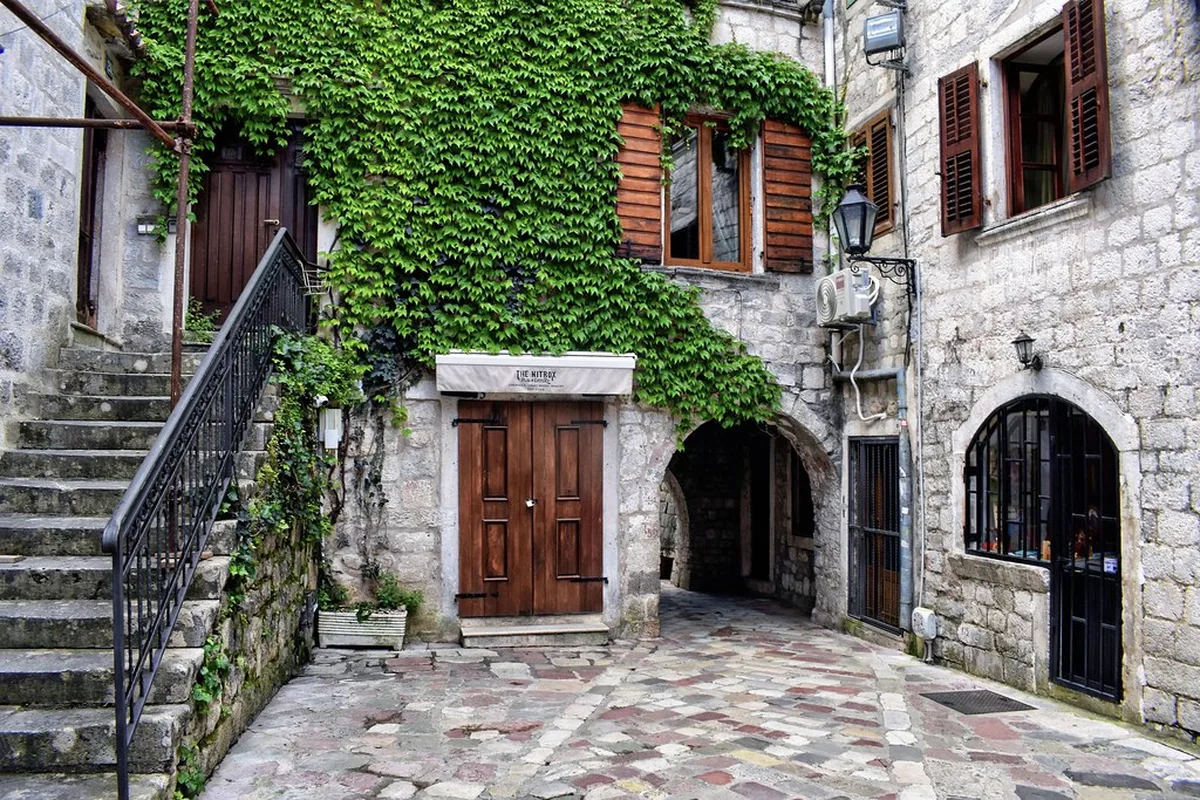
Entry to the UNESCO World Heritage old town is free, but climbing the fortress walls costs €8 per adult. The walls stretch for 4.5 km and rise to 260 metres above the city — completing the full circuit takes 1–2 hours and rewards visitors with panoramic views of the bay. Go early morning or after 5 PM to avoid the midday heat and cruise ship crowds, which typically swell between 10 AM and 3 PM.
Inside the old town, accommodation ranges from €40–70/night for a guesthouse double room to €120–200/night for boutique hotels within the walls. Restaurants in the old town serve local Montenegrin dishes — try Black risotto (made with cuttlefish ink) for around €12–15, or grilled sea bass for €14–18. A coffee on the main square runs €1.50–2.50. Budget about €30–50/day for food and drinks if dining primarily within the walls.
Kotor is compact enough to explore entirely on foot. The Cathedral of Saint Tryphon (entrance €2.50) holds Byzantine mosaics and relics dating to 809 AD. St. Luke's Square, with its twin churches from different centuries sitting side by side, is a favourite photo spot. The Clock Tower at the main entrance gate is free to view and one of Kotor's most photographed landmarks. For a deeper dive into what to see and do, read our Kotor Old Town Guide.
Bay of Kotor
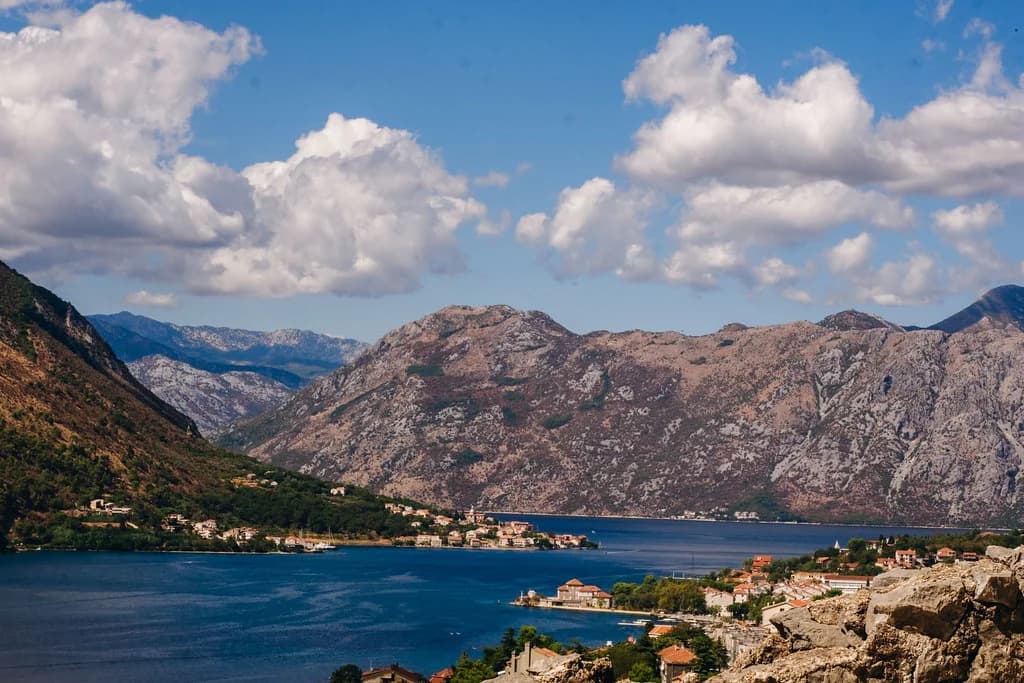
Often called Europe's southernmost fjord, the Bay of Kotor is a dramatic inland sea dotted with Venetian churches, fishing villages, and the fairytale island-church of Our Lady of the Rocks. The road circling the bay is one of Europe's great scenic drives.
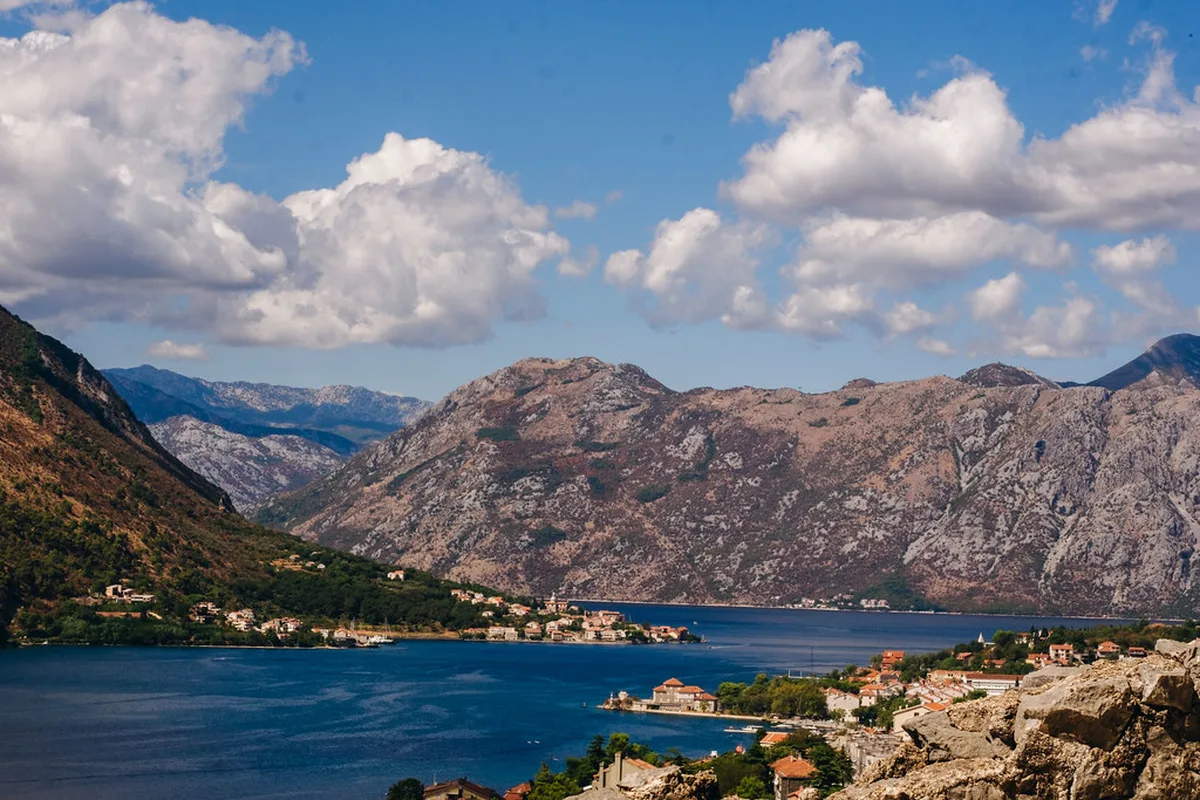
The bay stretches across two connected inlets — the Outer Bay (Herceg Novi side) and the Inner Bay (Kotor side) — connected by the narrow Verige Strait. A car ferry crosses the strait at Lepetane every 15–30 minutes and costs €5 per car, saving the 45-minute drive around the bay. Foot passengers pay €1. The full scenic drive around the bay without the ferry takes about 1.5 hours from Kotor to Herceg Novi.
Perast is the bay's most picturesque village, a Baroque maritime town of stone palaces and 17 church towers. It sits 12 km from Kotor and is easily reached by local bus (€2) or taxi (€15). Boat taxis from Perast's waterfront ferry visitors to Our Lady of the Rocks for €5 return — the island church houses a museum of ex-votos and antique navigational charts (entry €1). The boat ride takes 5 minutes each way. Just across the international border, Croatia's famous Dubrovnik Old Town is 90 kilometres south by road.
For those looking to explore beyond Kotor, the bay offers excellent day trip opportunities to villages like Risan (home to the only Roman mosaic in Montenegro, free entry), Dobrota, and the walled town of Herceg Novi at the bay's entrance. Our Day Trips from Kotor guide covers all the best excursions with full logistics.
Beaches & Coastal Villages
Montenegro's coast south of Kotor opens into the Budva Riviera with long sandy beaches, lively beach bars, and a nightlife scene that runs through the summer. While Kotor itself sits on a protected bay without ocean beaches, the surrounding coastline offers some of the Adriatic's most varied swimming spots within easy reach.
Budva, 26 km south of Kotor, is Montenegro's beach capital. The town beach (Slovenska Plaza) is free and stretches 1.8 km, while premium beach clubs on the Budva Riviera charge €10–25 for a sunbed and umbrella. A bus from Kotor to Budva costs €3.50 and runs hourly; the journey takes 40 minutes. Sveti Stefan, the iconic pink-walled island village now operating as an Aman resort, is 5 km from Budva. Non-guests can swim on the public beaches either side of the causeway for free.
Closer to Kotor, the beaches of Dobrec (15 minutes from Kotor by car) and Morinj offer calm, sheltered swimming in the bay. For open-sea beaches, Jaz Beach near Budva — a 2 km crescent of pebble and sand — is consistently ranked among Montenegro's best and has free access. Beach season runs from mid-May to early October; water temperatures peak at 26°C in August. For detailed swimming spot recommendations near Kotor, see our Kotor Beach Guide.
Herceg Novi at the bay's western entrance offers a different coastal experience: a historic old town of stairs and flower-lined alleyways, fortresses, and a busy marina. Day boat trips from Herceg Novi explore the bay's highlights for €20–35 per person including lunch. The beach at Igalo, adjacent to Herceg Novi, is a free pebble beach popular with local families.
Mountains & National Parks
The Durmitor massif in northern Montenegro is one of the Balkans' most spectacular natural areas — a UNESCO biosphere with glacial lakes, ancient black pine forest, and the Tara Canyon, which at 1,300 metres depth is Europe's deepest canyon. Durmitor National Park sits around Žabljak, a small mountain town 130 km north of Kotor (approximately 2.5 hours by car or organised tour).
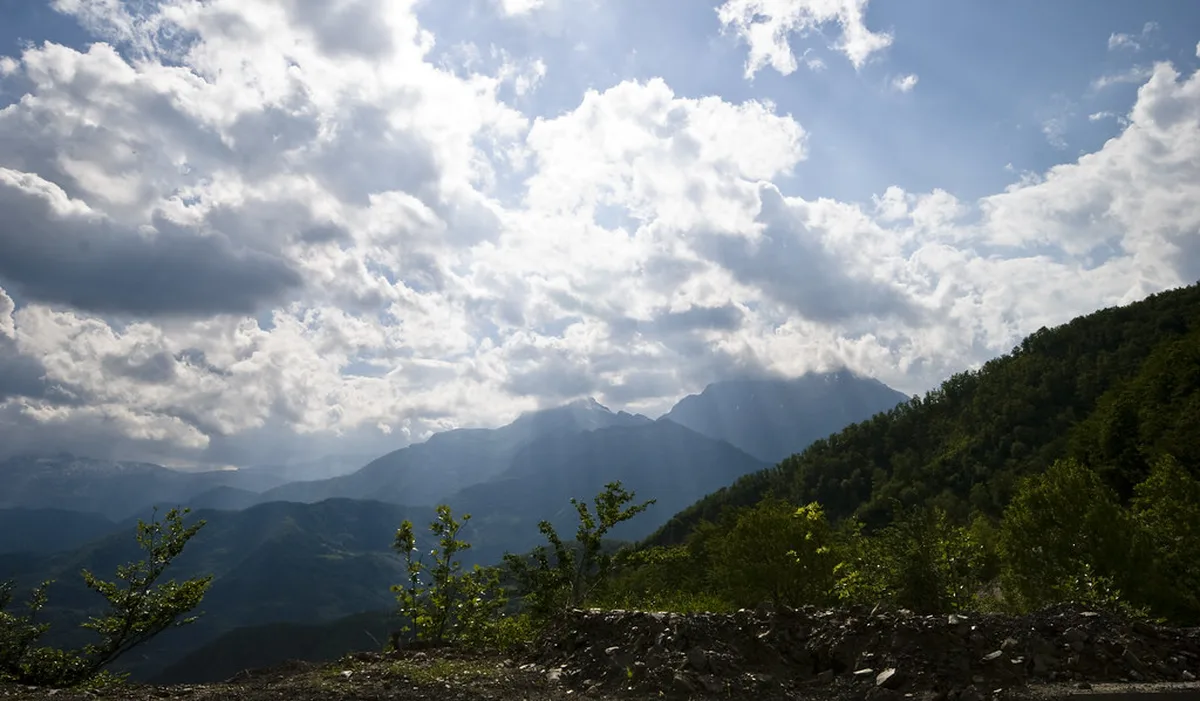
Entry to Durmitor National Park costs €3 per person per day (paid at park checkpoints). The Black Lake (Crno Jezero) is the park's signature attraction — a 30-minute walk from Žabljak's centre — and is surrounded by ancient black pine forest. The full loop trail takes 2–3 hours and is suitable for all fitness levels. Guided rafting trips on the Tara River run from €45–65 per person for a half-day section, or €85–120 for a full day including meals.
Other national parks worth visiting include Biogradska Gora (one of Europe's last three primeval forests, entry €3), Prokletije (the "Albanian Alps" region, free entry), and Lake Skadar — the Balkans' largest lake, straddling the Montenegro-Albania border. Lake Skadar National Park charges €4 entry; boat tours of the lake cost €10–20 per person and depart from the village of Virpazar, 60 km south of Podgorica.
Accommodation in Žabljak averages €35–60/night for a guesthouse room, making the mountains a budget-friendly contrast to the pricier coastal hotels. Winter skiing at Durmitor's Savin Kuk runs from December to March (ski pass: €25/day). In summer, Durmitor hosts hiking, mountain biking, and paragliding from €60 per tandem flight.
Montenegro Travel Budget 2026
Montenegro offers excellent value for Adriatic travel in 2026, with costs noticeably lower than neighbouring Croatia or the Greek islands — particularly outside the July–August peak season. All prices below are in EUR and reflect 2026 figures.
Backpacker budget (€50–80/day): Hostel dormitory beds in Kotor cost €18–28/night in high season, dropping to €12–18 in May and October. Budget meals from local konoba restaurants average €6–10 for a main course. Local buses between towns cost €2–5 per journey. With self-catering, free beach access, and hiking in national parks, €50/day is achievable outside peak season.
Mid-range budget (€100–150/day): A double room in a guesthouse or boutique hotel within or near Kotor's old town runs €70–130/night in peak season. Eating at sit-down restaurants costs €25–40/person including wine. A rental car for independent exploration of the bay and national parks costs €35–60/day. Day trips by tour operator add €30–60 per person. Most mid-range travellers spending 7 days in Montenegro should budget around €900–1,050 total (excluding flights).
Luxury budget (€200+/day): Five-star properties in Kotor and the Budva Riviera charge €200–450/night. The Aman Sveti Stefan starts at €800/night. Fine dining at Kotor's top restaurants costs €50–80 per person. Private boat charters on the Bay of Kotor run €200–400/half day.
Key costs at a glance (2026): Airport taxi Dubrovnik→Kotor €70–90 | Local bus Kotor→Budva €3.50 | Kotor fortress walls entry €8 | National park day pass €3–4 | Supermarket meal supplies €8–12 | Espresso €1.20–1.80 | Tara River rafting half-day €45–65.
ATMs are widely available in Kotor, Budva, and Podgorica. Card payment is accepted at most hotels and restaurants but less reliable at market stalls and small villages — carry €30–50 in cash as a buffer. There are no currency exchange fees when using EUR.
Frequently Asked Questions about Travelling to Montenegro
Is Montenegro safe for tourists?
Montenegro is safe for tourists. Kotor and the coastal areas are well-policed with very low rates of violent crime. Petty theft can occur in crowded tourist areas during peak season — keep valuables secure in Kotor Old Town's busier squares and on crowded buses. The UK Foreign Office and US State Department both rate Montenegro as a low-risk destination. Emergency services can be reached on 112 (EU standard) and 122 (police). Standard travel precautions apply: watch your bag in crowds, use licensed taxis, and avoid poorly lit areas at night.
How do I get to Kotor from the nearest airport?
Dubrovnik Airport in Croatia is the closest major airport to Kotor, approximately 65 km away (1 hour by road). A shared shuttle costs €15–20 per person; a private taxi runs €70–90. Local bus services connect Dubrovnik bus station to Kotor for around €13, with several departures daily — note these cross the border into Bosnia-Herzegovina at Neum (brief stop). Podgorica Airport (Montenegro's capital) connects to Amsterdam, Vienna, London, Istanbul, and Frankfurt, with a 1.5-hour drive or bus transfer to Kotor for €10–12. Tivat Airport is only 20 km from Kotor and receives seasonal charter flights from UK, German, and Scandinavian cities in summer.
When is the best time to visit Montenegro?
May–June and September–October offer the best combination of warm weather, lower prices, and fewer crowds. July and August are peak season with temperatures reaching 32–35°C on the coast, accommodation prices 30–50% higher than shoulder season, and cruise ships docking at Kotor daily. For budget travellers, May and October are ideal — sea temperatures are still comfortable (20–23°C in May, 22–24°C in October) and Kotor's old town is much quieter. The Kotor Carnival (February) is one of the Adriatic's most celebrated local festivals, drawing visitors from across the region.
Does Montenegro use the Euro?
Yes, Montenegro uses the Euro (EUR) as its official currency despite not being an EU member. This makes budgeting and currency exchange seamless for European visitors. Card payments are widely accepted in Kotor, Budva, and major hotels, but rural areas and small markets often prefer cash. ATMs are available in all main towns and dispense euros directly. There are no currency conversion fees for euro cardholders.
Do I need a visa to visit Montenegro in 2026?
Montenegro offers visa-free entry for up to 90 days within a 180-day period to citizens of the EU, United States, United Kingdom, Canada, Australia, and most Western nations. You will need a valid passport (at least 6 months' validity). Upon entry at a land border or airport, you may be asked to show proof of sufficient funds (typically €50 per day) and onward travel. EU nationals can enter with a national ID card. Always check the latest visa requirements with your country's foreign ministry before travel.
What is the best way to get around Montenegro?
Renting a car gives the most freedom in Montenegro, especially for visiting national parks like Durmitor and Biogradska Gora. Car hire costs €35–60/day including insurance. Roads are generally good on the coast and main routes but can be narrow and winding in the mountains — an automatic gearbox or experience with mountain driving is recommended. For the coast, local buses connect Kotor, Budva, Bar, Herceg Novi, and Perast cheaply (€2–5 per journey). Taxis are affordable — Kotor to Budva costs around €25 by taxi. Organised day tours from Kotor to Durmitor, Lake Skadar, and Perast run from €30–70 per person and are a practical option for non-drivers.
How many days do you need in Montenegro?
Three to five days allows you to cover Kotor's old town, the Bay of Kotor, and one or two beach destinations comfortably. A week lets you add Durmitor National Park or Lake Skadar. Two weeks enables a thorough exploration of the entire country including the Albanian Alps border region and the underrated capital Podgorica. Most visitors base themselves in Kotor (2–3 nights) and Budva (1–2 nights) and take day trips from both. If you're combining Montenegro with Dubrovnik, Croatia, or Albania, a minimum of 3 nights in Montenegro is recommended to get beyond the old town alone.
Montenegro offers an extraordinary breadth of experiences — from Kotor's medieval old town and the scenic Bay of Kotor to dramatic mountain national parks and vibrant Adriatic beaches. Whether you're planning your first visit or returning to explore deeper, our Kotor guides below give you everything you need to plan a confident, rewarding trip in 2026.