The Ultimate Kotor Old Town Guide for Your 2026 Visit
Kotor Old Town entry is free in 2026. The city walls climb costs €8 per person, St. Tryphon Cathedral charges €4, and the Maritime Museum is €4 for adults. Budget €20–30 for a full day covering all major landmarks, lunch, and snacks. Arrive before 9 AM to beat the cruise ship crowds that flood the narrow streets from 10 AM onward.
Best timing for 2026: visit before 9 AM or after 5 PM to avoid the worst congestion. The city walls are free to enter between 9 PM and 9 AM, making a sunrise ascent or a post-sunset golden-hour climb the best value option. Cruise ships dock most frequently on Tuesdays and Saturdays from May through September, so plan around those days if possible.
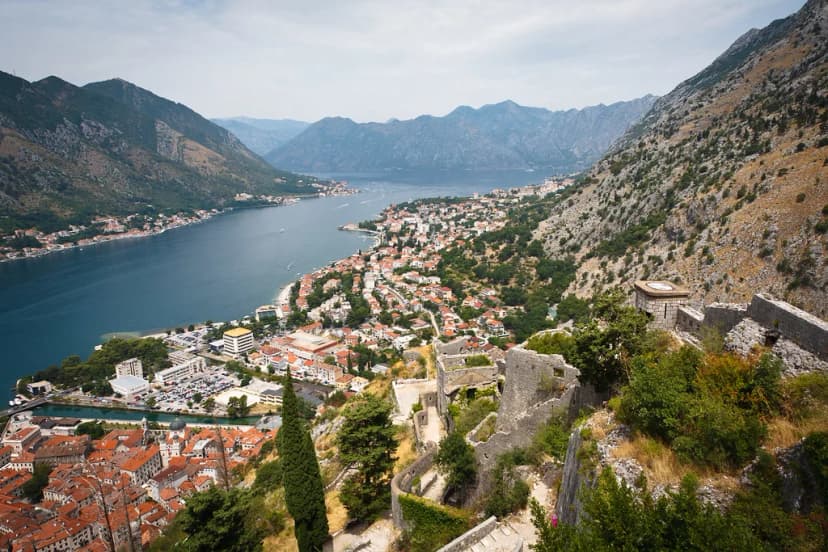
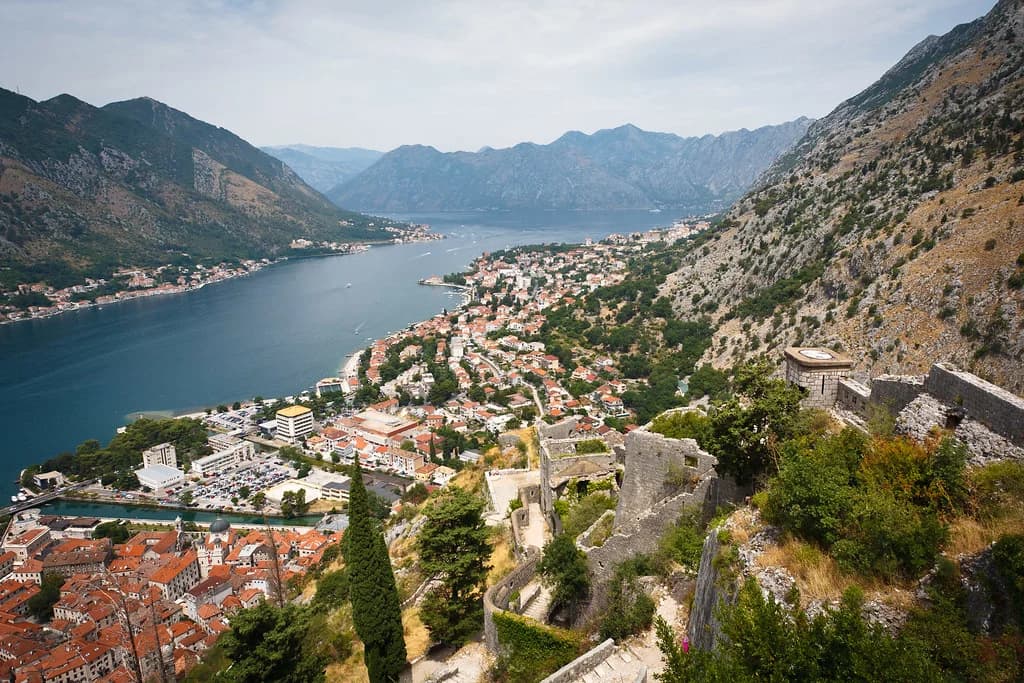
Kotor stands as a preserved jewel along the dramatic coastline of the Adriatic Sea in Montenegro. This UNESCO World Heritage site offers a rare glimpse into medieval life through its perfectly maintained stone architecture. Visitors often find themselves enchanted by the limestone cliffs that tower over the red-tiled roofs of the city.
The town serves as a living museum where history breathes through every narrow alley and limestone square. Walking through the massive stone gates feels like entering a different century where time moves much slower. You will discover a vibrant culture that blends Venetian heritage with modern Montenegrin hospitality during your stay.
This comprehensive Kotor Old Town guide provides the essential details needed to navigate the labyrinthine streets effectively. We cover everything from the best historical landmarks to the challenging hike up the ancient city fortifications. Proper planning ensures you experience the magic of the bay without the stress of the crowds.
Navigating the Medieval Layout of Kotor
Kotor features a triangular layout designed to confuse invaders during the Middle Ages. Most travelers begin their journey at the Sea Gate (Vrata od Mora), which has served as the main entrance since 1555. You will see a stone relief of a winged lion representing the long period of Venetian rule over the region, alongside the inscription "This is the land of our freedom" — a phrase Kotor residents have taken pride in for five centuries.
The streets do not follow a logical grid, so getting lost is actually part of the intended experience. Narrow passages often open up into wide squares filled with cafe tables and historic stone wells. Finding your way back to the main entrance is easiest if you look for the tall Clock Tower, built in 1602, as a central landmark.
Residential buildings sit tucked away in the northern corner of the town where life remains surprisingly traditional. Locals still hang laundry between the windows of ancient palaces while children play in the shaded stone courtyards. Exploring these quieter zones offers a peaceful break from the busy commercial areas near the main gates.
Signage within the walls is minimal to preserve the historical aesthetic of the limestone facades. You should grab a physical map from the tourist information booth located just outside the Sea Gate for a small fee. Digital maps can sometimes struggle with accuracy due to the high stone walls blocking satellite signals.
The Old Town contains three main squares that act as navigational anchors. Arms Square (Trg od Oružja) sits at the western entrance and is the largest and busiest. St. Tryphon Square (Trg Sv. Tripuna) is roughly 150 metres east and clusters around the cathedral. The quieter Square of Wood (Trg od Drva) lies near the northern Gurdić Gate and is roughly 200 metres from the Sea Gate. Moving between these three squares gives you a reliable mental map without needing a phone screen at every turn.
The entire Old Town measures just 450 metres at its longest diagonal, which means even the most leisurely walker covers the full interior within 15 minutes of direct walking. The compact size makes it easy to re-visit favourite spots. If you step through the Gurdić Gate at the southern end you can walk along the outside of the walls back to the Sea Gate in about 10 minutes, giving a full exterior perspective of the fortifications before re-entering. Combine your old town exploration with a visit to Kotor's best beaches for a full day along the bay.
Top Landmarks in the Kotor Old Town Guide
The majestic St. Tryphon Cathedral (Katedrala Svetog Tripuna) serves as the primary focal point of the main town square. This Romanesque building dates back to 1166 and has survived several major earthquakes throughout its long history. Visitors pay €4 to see the impressive silver altar screen and the upper museum, which houses relics of Saint Tryphon alongside a collection of Byzantine icons spanning several centuries. The cathedral is open daily from 9 AM to 7 PM in the summer season and 9 AM to 3 PM outside peak months — giving afternoon arrivals ample time to explore the interior in good light.
The Clock Tower, constructed in 1602, stands proudly near the main entrance as a symbol of civic endurance. It has leaned slightly over the centuries because of the soft soil and seismic activity in the bay area. Entry to view the tower exterior is free. The Pillar of Shame directly in front of the Clock Tower was historically used to publicly display lawbreakers — a detail most tour groups walk past without realising. Local shops nearby sell handmade lace and traditional Montenegrin souvenirs that reflect centuries of local craftsmanship.
The Maritime Museum of Montenegro (Pomorski muzej Crne Gore) sits inside Grgurina Palace on St. Luke's Square and is one of the most informative museums on the Adriatic coast. Entry costs €4 for adults in 2026, with opening hours of Monday to Saturday 9 AM to 6 PM. The four floors of exhibits cover Kotor's seafaring legacy from ancient Roman trade routes through to the city's peak influence as a major Venetian port in the 15th century. The city is recognized by UNESCO as a Natural and Culturo-Historical Region, a designation that underscores the importance of its maritime heritage. The top floor holds a particularly striking collection of navigational instruments and hand-drawn nautical charts that give genuine insight into how Kotor's maritime captains operated across the Mediterranean.
St. Luke's Square is home not only to the Maritime Museum but also to St. Luke's Church, one of the oldest surviving structures in Kotor, dating from 1195. For many centuries it served simultaneously as a Catholic and Orthodox church — a symbol of the town's pragmatic interfaith co-existence during Venetian rule. Entry is free, and the interior holds Byzantine frescoes that survived the 1979 earthquake almost completely intact. The Cat Museum, a charming small gallery dedicated to Kotor's famous feline population, is also free to enter and sits a short walk from St. Luke's Square. Kotor is estimated to be home to over 200 resident cats living within the old town walls, making it one of the most cat-dense historic centres in Europe.
Palaces belonging to wealthy noble families like the Pima and Bizanti clans line the larger squares. The Pima Palace on Arms Square features an ornate balcony supported by carved stone brackets that are some of the finest examples of Venetian architectural influence in the Eastern Adriatic. The Bizanti Palace, dating from the 14th century, sits on St. Tryphon Square and still displays the family coat of arms above its main doorway. Many of these buildings now house government offices or boutique hotels for luxury travelers.
- St. Tryphon Cathedral
- Type: Romanesque Cathedral (built 1166)
- Best for: History lovers, religious art
- Where: Trg Sv. Tripuna
- Cost: €4 entry | Hours: 9 AM–7 PM (summer), 9 AM–3 PM (off-season)
- Maritime Museum
- Type: Historical Museum
- Best for: Naval history, 4 floors of exhibits
- Where: Grgurina Palace, St. Luke's Square
- Cost: €4 adults | Hours: Mon–Sat 9 AM–6 PM
- Clock Tower
- Type: Civic landmark (built 1602)
- Best for: Photography, orientation
- Where: Trg od Oružja (Arms Square)
- Cost: Free to view
- Cat Museum
- Type: Quirky cultural gallery
- Best for: Families, cat lovers
- Where: Old Town interior
- Cost: Free entry
- St. Luke's Church (1195)
- Type: Byzantine-Catholic church
- Best for: Frescoes, quiet atmosphere
- Where: St. Luke's Square
- Cost: Free entry
- Sea Gate / Vrata od Mora
- Type: Historic entrance gate (1555)
- Best for: Arrival photos, Venetian inscription
- Where: Main western entrance
- Cost: Free
The City Walls and Fortress: Kotor's Most Iconic Hike
The climb to St. John's Fortress (San Giovanni) along Kotor's ancient city walls is widely considered the single best thing to do in the entire Bay of Kotor. The fortification stretches approximately 1,200 metres in total length and rises 260 metres above sea level, protecting the city from a near-vertical limestone cliff face. Climbing the full route to the fortress involves ascending roughly 1,355 stone steps that have been worn smooth by centuries of footsteps.
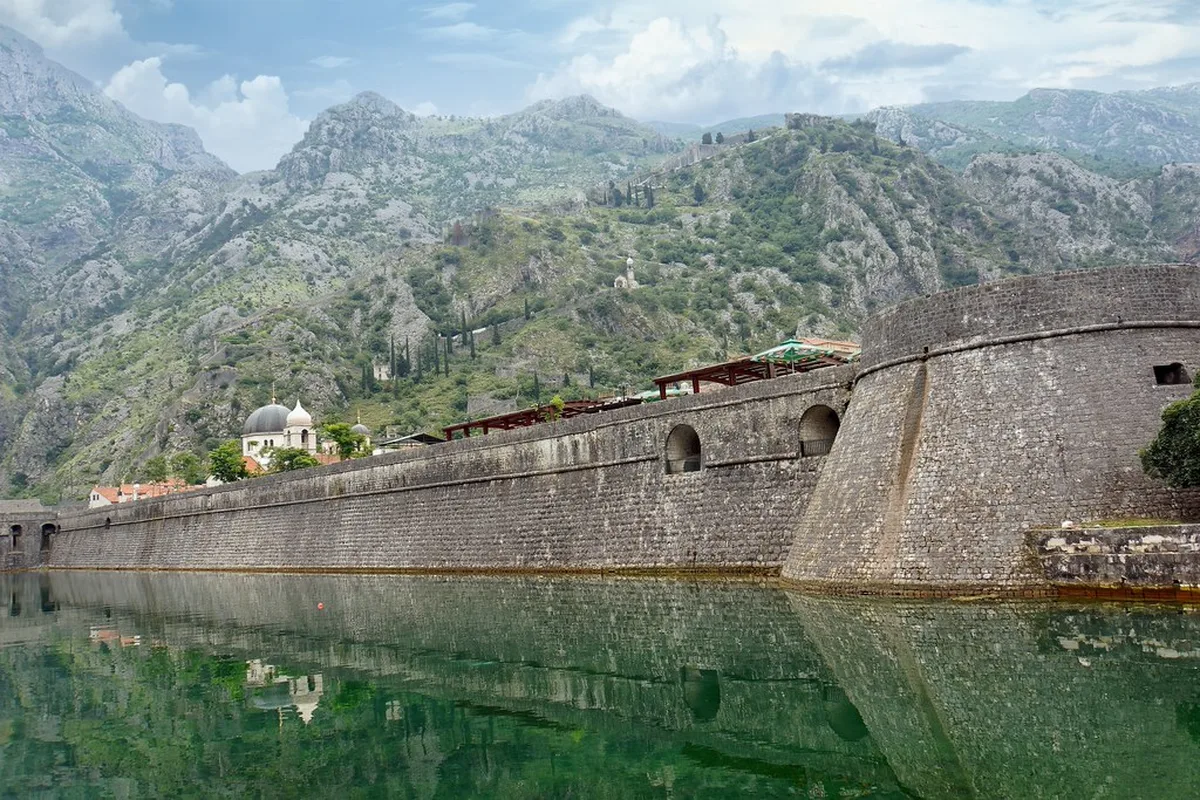
Entry to the city walls costs €8 per person in 2026, payable at the ticket booth inside the Old Town near the start of the staircase ascent. The walls are open daily from 9 AM to 9 PM during the paid hours. Crucially, the walls are free to enter between 9 PM and 9 AM, making a sunrise hike or a golden-hour evening climb the most cost-effective — and atmospherically stunning — option available to budget travellers.
The hike itself takes between 45 and 90 minutes to reach the top, depending on your pace and the number of rest stops. The first third of the climb is the steepest, passing through a series of watchtowers with progressively expanding views over the red-tiled rooftops below. At roughly the halfway point, the small Church of Our Lady of Remedy provides a natural resting point. This 15th-century chapel sits in a shaded alcove and offers the first truly breathtaking panoramic view of the Bay of Kotor — a perfect excuse to stop, drink water, and let your heart rate settle.
The final approach to St. John's Fortress opens onto the ruined battlements where Kotor's medieval garrison once stood watch over approaching fleets. From the summit at 260 metres the panorama is extraordinary: the entire Bay of Kotor spreads out below like a painted fjord, the winding mountain road to Lovćen National Park is visible to the east, and cruise ships in the harbour look toy-like in comparison to the vast wall of limestone. On clear days you can see as far as Perast and the island church of Our Lady of the Rocks.
Best time to hike: Start before 8 AM to beat the heat and the cruise-ship crowds. The light on the bay is golden and the streets below are quiet. Alternatively, arrive at the ticket booth at around 4:30 PM for golden-hour light that turns the limestone walls amber — just ensure you allow 90 minutes so you are not rushing the descent in fading light. Descent takes roughly the same time as ascent and is harder on the knees on the steep upper section.
What to bring: At minimum one litre of water per person (there is no water source on the route), sun protection for the exposed upper half of the climb, and rubber-soled shoes with good grip. The steps are uneven and polished smooth in sections. A light layer is useful at the summit where a sea breeze can be surprisingly cool even in July. Photography enthusiasts should bring a wide-angle lens — the sweeping bay panorama is impossible to capture in a single standard frame.
The walls connect several intermediate towers and gates that are worth pausing at individually. The Kamp Tower at the midpoint is the most photogenic intermediate structure, its crumbling arched window framing a perfect composition of the bay. The descent on the inner side of the walls passes through shaded sections of the fortification where the stonework is at its most impressive — massive interlocking limestone blocks assembled without mortar that have held for over 800 years. After the hike, many visitors extend their day with day trips from Kotor to Perast and the island churches of the bay.
What to Expect Inside the Old Town Gates
Entering through the Sea Gate (Vrata od Mora) immediately immerses you in a compact world of stone, shadow, and the smell of fresh coffee from the cafes that line the first square. The gate itself was rebuilt in 1555 under Venetian rule and bears a stone relief of the winged lion of St. Mark flanked by the protective figures of the city's patron saints. The inscription above the gate reads: "This is the land of our freedom" — a phrase Kotor residents have taken pride in for five centuries.
The labyrinthine interior streets narrow to as little as one metre in places, creating a natural coolness even in the peak summer heat. Many of these passages are not on digital maps at all, which makes wandering them a genuinely exploratory experience rather than a GPS-guided tour. The best approach is to enter the town, pocket your phone, and simply walk in any direction that looks interesting for the first hour.
Restaurants and souvenir shops cluster heavily in the first 100 metres from the Sea Gate and on Arms Square. Prices here carry a tourist premium — an espresso costs €2–3 compared to €1.20 at a local bar three blocks further in. The authentic Montenegrin dining experience is found in the residential northern quarter of the town, where family-run konobas serve grilled meats, local cheese, and the regional njeguška prosciutto for considerably less than the waterfront restaurants.
The northern quarter, accessible via a series of narrowing passages off the Square of Wood, is where permanent residents still live. Potted geraniums on balconies, cats sleeping in doorways, and the sound of local radio drifting through shuttered windows mark this area as genuinely lived-in rather than tourist-facing. Visiting this section in the early morning before the day-trip crowds arrive gives a quiet and authentic perspective on life inside a UNESCO World Heritage site. Consider pairing your visit with day trips from Kotor to see the surrounding bay villages at the same relaxed pace.
The Square of Wood (Trg od Drva) near the northern Gurdić Gate often feels significantly less crowded than the main tourist squares. Prices at the small bars on this square are noticeably lower — coffee costs €1.20–1.50 versus €2–3 near the Sea Gate entrance. The northern exit through the Gurdić Gate leads directly to the start of the free section of the city walls path, making this square a natural launchpad for an early-morning climb before the ticket booth opens at 9 AM.
Hidden Gems and Secret Squares to Explore
Beyond the main squares lie quiet courtyards where locals hang their laundry across the narrow stone alleys. These residential areas offer a glimpse into the daily life of people who still live within the ancient fortifications. You might find a small bakery serving warm burek for less than €3 in these side streets — a far cry from the tourist pricing near the Sea Gate.
The Pima Palace features a beautiful balcony supported by ornate stone brackets that showcase Venetian architectural influence at its finest. The carved vine-leaf detailing on the brackets is some of the finest stonework in the entire old town, yet most visitors walk past while looking at their phones. Taking a slower pace — deliberately standing still and looking upward — allows you to appreciate the subtle details of the historic stonework that professional architects travel here specifically to study.
Kotor is famous for its large population of friendly street cats that roam the squares — over 200 resident cats live within the old town walls, making it one of the most cat-dense historic centres in Europe. You will find cat-themed cafes, a dedicated Cat Museum (free entry), and cat-motif souvenirs in almost every shop. Many locals leave water bowls outside their doors to care for the community animals throughout the year — a tradition that dates back to the town's maritime trading days when cats were essential for controlling rats aboard ships docked in the harbour.
The Square of Wood (Trg od Drva) is a smaller plaza near the northern Gurdić Gate that often feels significantly less crowded than the main tourist squares. It provides a great spot for a slow coffee while watching locals rather than tour groups moving past. Prices at the two small bars on this square are noticeably lower than on Arms Square — a coffee costs €1.20–1.50 versus €2–3 at the main entrance.
St. Luke's Church, located between the two main squares, is one of the oldest surviving structures in Kotor, dating from 1195. For many centuries it served simultaneously as a Catholic and an Orthodox church — a symbol of the town's pragmatic interfaith co-existence during Venetian rule. Entry is free and it is rarely crowded. The interior is small but beautifully decorated with Byzantine frescoes that survived the 1979 earthquake almost completely intact. It is one of the most historically interesting buildings in the old town and among the least visited by casual tourists. For a broader picture of what the Kotor region offers, see our full Montenegro travel guide.
Cruise Ship Crowds in Kotor: When to Visit and When to Avoid
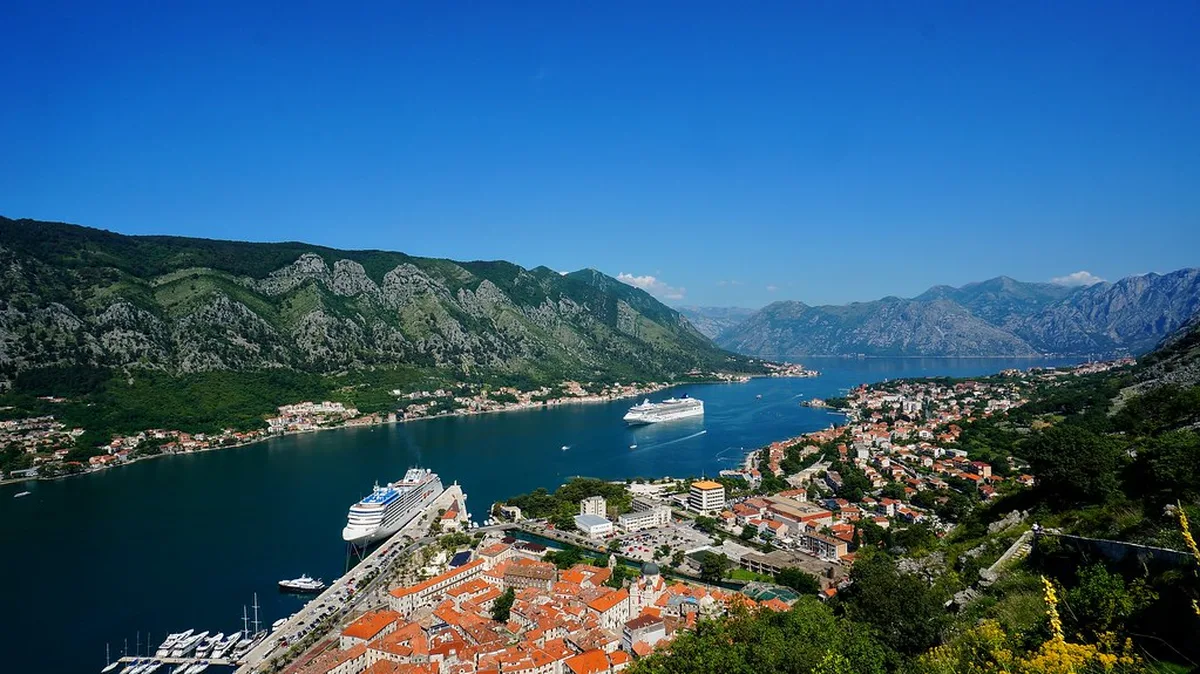
Kotor is one of the most visited cruise ports on the Adriatic, receiving well over 500 cruise ship calls per year. In peak months — June through September — it is not uncommon for three or four ships to dock simultaneously, unleashing between 8,000 and 12,000 additional visitors into the old town streets within a two-hour window. The impact on the narrow medieval lanes is dramatic: queues form at the Sea Gate entrance, the city walls ticket booth can have 30-minute waits, and restaurants fill to capacity by 11 AM.
The ships typically dock between 8 AM and 10 AM and their passengers leave the old town between 4 PM and 6 PM. The golden window for an uncrowded visit is therefore before 9 AM — when the first passengers are still disembarking and the old town has its early-morning quiet — or after 5:30 PM, when the crowds thin rapidly as passengers return to the ship for dinner. Staying overnight in Kotor transforms the experience entirely: by 7 PM the squares belong to residents, cats, and overnight guests.
The busiest days of the week are Tuesday and Saturday, when multiple ships frequently dock simultaneously. Mondays and Thursdays tend to have lighter cruise traffic. You can check the exact schedule for your travel dates at the Port of Kotor's official website (portofkotor.co.me), which publishes the full ship calendar several months in advance — an indispensable planning tool that most tourists overlook.
From an admission-cost perspective, cruise crowd pressure also affects the city walls climb most severely. The ticket booth opens at 9 AM, and by 10 AM on a busy day queues at the entrance can be 20–30 minutes long. The €8 admission is non-negotiable; there are no fast-track or pre-booking options available in 2026. Your best tactics are: arrive at the ticket booth when it opens at 9 AM on a low-cruise day, or hike for free before 9 AM (the walls are unstaffed during free hours). The free evening window after 9 PM is an excellent alternative — the city lights below and the moonlit bay create a very different but equally memorable ascent.
If your travel dates fall on a peak cruise day and you cannot avoid it, use the crowd surge strategically. The old town cafes and restaurants accept the volume well; it is the narrow interior streets and the city walls queue that suffer most. Head to the far northern quarter of the old town (through the Square of Wood toward the Gurdić Gate) during peak hours — this residential zone is largely bypassed by day-trippers on a 3-hour tour schedule, and you can enjoy it in near-solitude even when the main squares are at capacity. Similarly, St. Luke's Church and the Cat Museum see far fewer visitors than St. Tryphon Cathedral during peak hours, making them ideal mid-day alternatives when the cathedral square is at its most crowded.
Shoulder season — April, May, and October — offers the best balance of warm weather, navigable crowds, and lower accommodation prices. In October specifically, cruise traffic drops significantly while the autumn light on the bay is considered by many photographers to be more dramatic than the harsh summer midday sun. Hotel rates in October can be 30–40% lower than August peaks, making it the savviest month for budget-conscious visitors who still want warm enough weather to enjoy the beaches near Kotor.
Common Mistakes to Avoid in Kotor Old Town
One common mistake is visiting when large cruise ships are docked in the harbor nearby. Thousands of passengers flood the narrow streets between 10:00 AM and 4:00 PM every day during the busy season from May to September. Checking the port schedule at the Kotor Port Authority website before your visit helps you plan a much quieter experience during the early morning or late evening when the day-trippers return to their ships.
Staying overnight within the city walls provides a unique perspective of the medieval atmosphere that day visitors never experience. The town becomes peaceful and romantically lit once the day-trippers depart for their next destination — cats reclaim the squares, restaurant owners chat across the alleys, and the distant sound of water lapping against the old harbour walls becomes audible. If you have extra time, consider extending your stay to explore the surrounding region.
Avoid eating at the first restaurant you see right next to the main city gates. These spots often have higher prices and lower quality compared to the hidden gems deeper in the town. Walk at least three blocks away from the entrance to find authentic Montenegrin flavors and better service — look for handwritten menus in Montenegrin as a reliable indicator of a local rather than tourist-oriented kitchen. A typical sit-down meal at a local konoba runs €12–18 per person including a drink, versus €20–30 at the tourist-facing restaurants near the Sea Gate.
Packing the wrong shoes is a frequent error that can ruin your day of exploration. The limestone paving stones have been polished to a near-mirror finish by millions of footsteps over the years. Wear rubber-soled shoes with good grip to prevent slipping on the smooth surfaces, especially after light rain when the stone becomes treacherously slick. This applies equally to the Old Town streets and to the city wall steps, where a fall would be serious given the exposed elevation.
Finally, underestimating the climb is a mistake many visitors make after seeing it described as a "short hike." The 1,355 steps are steep and uneven, and the upper section in direct July or August sun can feel genuinely gruelling without adequate water and sun protection. If you have mobility concerns, the lower ramparts offer excellent views without requiring the full ascent, and the Church of Our Lady of Remedy halfway up is a rewarding destination in its own right. The €8 entry fee is charged at the single ticket booth near the start of the staircase — there is no other entry point and no concession pricing available.
Frequently Asked Questions
Is Kotor Old Town free to enter?
Yes, entry to Kotor Old Town itself is free in 2026. You walk through the Sea Gate at no charge. Individual attractions charge separately: St. Tryphon Cathedral costs €4, the Maritime Museum costs €4 for adults, and climbing the city walls costs €8 per person. The Cat Museum and St. Luke's Church are both free. Budget €20–30 for a full day including the main paid attractions and lunch.
How much does it cost to climb Kotor city walls?
Climbing the Kotor city walls costs €8 per person during paid hours (9 AM to 9 PM) in 2026. The walls are free to enter between 9 PM and 9 AM, making a sunrise hike or an evening golden-hour climb the most cost-effective option. There are no student or senior discounts at the main ticket booth, and there is no pre-booking option — payment is cash or card on arrival.
How long does it take to walk the Kotor city walls?
Climbing to St. John's Fortress at the top of the Kotor city walls takes 45 to 90 minutes depending on fitness level and how often you stop for photos. The route covers 1,355 steps over approximately 1,200 metres of fortification. The descent takes roughly the same amount of time. Budget a minimum of 2 hours for the full round-trip, or 3 hours if you plan to stop frequently and explore the Church of Our Lady of Remedy at the halfway point.
What is the entry fee for St. Tryphon Cathedral in 2026?
St. Tryphon Cathedral charges €4 per person in 2026. The ticket includes access to the main cathedral interior, the silver altar screen, and the upper museum which houses relics of Saint Tryphon and a collection of Byzantine icons. Opening hours in summer are 9 AM to 7 PM daily. Outside peak season hours reduce to 9 AM to 3 PM. No booking is required — pay at the door.
What is the best month to visit Kotor?
May, June, and September offer the best balance of warm weather and manageable tourist crowds. July and August can be extremely hot and very crowded due to peak cruise ship season — cruise traffic peaks on Tuesdays and Saturdays when multiple ships dock simultaneously. October provides cooler temperatures, dramatic autumn light on the bay, and accommodation prices 30–40% lower than August peaks for budget-conscious travelers.
Are cars allowed inside the Kotor Old Town walls?
No, the entire Old Town is a pedestrian-only zone with no car access allowed. You must park your vehicle in the designated lots located just outside the city walls near the Sea Gate. Parking fees usually range from €1 to €2 per hour during the day, with overnight flat rates available at the main car park. Arriving by bus or taxi and walking in is often the most convenient approach for day visitors.
How much does the Maritime Museum cost in Kotor?
The Maritime Museum of Montenegro in Kotor charges €4 for adults in 2026. It is open Monday to Saturday from 9 AM to 6 PM. The museum occupies four floors of Grgurina Palace on St. Luke's Square and covers Kotor's seafaring history from Roman trade routes to its peak as a Venetian port. It is one of the best museums on the Adriatic coast and well worth the €4 admission, especially if you want to understand the history behind the old town's architecture.
Kotor Old Town remains one of the most captivating destinations in the Balkans for history enthusiasts and casual travellers alike. The combination of dramatic natural beauty and perfectly preserved medieval architecture creates an unforgettable atmosphere for every visitor. Following this 2026 guide ensures you see the best sites — from the €4 St. Tryphon Cathedral and the €8 city walls climb to the free Cat Museum and St. Luke's Church — while avoiding the common pitfalls of a busy UNESCO tourist hub.
Take the time to climb the fortress walls either at sunrise or during the free evening window, and wander through the quietest residential alleys of the northern quarter where real life continues undisturbed by cruise-ship schedules. You will leave with a deep appreciation for the resilience and beauty of this Montenegrin coastal treasure. Start planning your journey today to experience the timeless charm of the Bay of Kotor for yourself.