Ultimate Cordoba Walking Tour Guide for 2026
The classic Córdoba self-guided walking tour is a 2-hour loop starting at Puente Romano (free), entering the Mezquita (€13, or free 8:30–9:30 AM weekdays), crossing into Alcázar gardens (€6), then weaving through the Judería back to your start — total budget €20–25.
Budget breakdown for the full loop in 2026: Mezquita entry €13 (book online 48 hours ahead), Alcázar de los Reyes Cristianos €6, Synagogue €1.50 — all other stops including Puente Romano and the Judería are free; carry €20–25 total and you will not be caught short.
Cordoba is a city where history feels alive in every narrow alleyway and sun-drenched plaza. A Cordoba walking tour offers the best way to experience the layers of Roman, Islamic, and Christian heritage. You will discover architectural wonders that have stood the test of time for over a thousand years. Walking through these streets allows you to absorb the local atmosphere at your own comfortable pace.
Ancient stone walls tell stories of a time when this city was the most advanced in Europe. Modern travelers can still find quiet corners that feel untouched by the rush of the twenty-first century. Planning your route carefully ensures you see the major landmarks without missing the subtle local details. This guide provides everything you need to navigate the winding streets of the historic center effectively.
Planning Your Cordoba Walking Tour Route
Starting your journey at the Roman Bridge provides a grand entrance to the city center. Most visitors prefer to begin their exploration before 9:00 AM to avoid the midday heat, which regularly climbs above 38°C in July and August. Early starts also help you beat the large tour groups that arrive from Seville (70 minutes by AVE high-speed train, from €18 each way) and Madrid (1 hour 45 minutes, from €35). Buy Mezquita tickets online at least 48 hours in advance in 2026 — popular time slots sell out by midday.
Wear comfortable, closed-toe walking shoes because the cobblestone streets are uneven in the older districts. Many monuments require timed entry in 2026 to manage visitor flow during peak spring and Easter periods. Carrying a printed map is helpful when GPS signals falter inside the narrowest medieval lanes. Budget a three-to-four-hour window for a relaxed self-guided walk with photo stops at every major site.
Consider the weather when choosing your dates. Spring (March–May) and autumn (September–October) offer the most pleasant conditions — temperatures between 18°C and 25°C — for spending several hours outdoors. Summer afternoons are brutal; locals observe siesta from roughly 2:00–5:00 PM and many small shops close. Timing your walk to end near the Taberna Salinas on Calle Tundidores — a local institution serving salmorejo and rabo de toro since 1879 — gives you a perfect post-walk reward for around €12–16 for a two-course lunch.
The entire historic core is less than 1.5 km across, meaning every landmark listed in this guide is within comfortable walking distance of the Mezquita. Mark your key stops on a phone before you start: Roman Bridge → Puerta del Puente → Mezquita exterior → Calleja de las Flores → Synagogue → Alcazar gardens. This sequence follows a natural loop and avoids backtracking. If your group includes young children or elderly members, the Alcazar gardens are fully paved and wheelchair accessible.
For those who prefer a guided option, our Cordoba old town guide covers the full heritage zone in detail, including opening hours and the latest 2026 ticket prices for every major monument.
Highlights of the Cordoba Old Town
The Mezquita-Catedral stands as the undisputed crown jewel of the city's vast architectural heritage. Its forest of over 850 red-and-white striped arches creates a visual experience unlike any other building on earth. Walking around the exterior walls — especially the Puerta del Perdón on the north side — reveals intricate Islamic doorways dating to the 10th century. Entry in 2026 costs €13 for adults, €6.50 for children (10–14), and is free on weekday mornings from 8:30–9:30 AM for prayer access only (no sightseeing during this slot). Plan at least 60–90 minutes inside the cathedral to fully absorb the layered history.
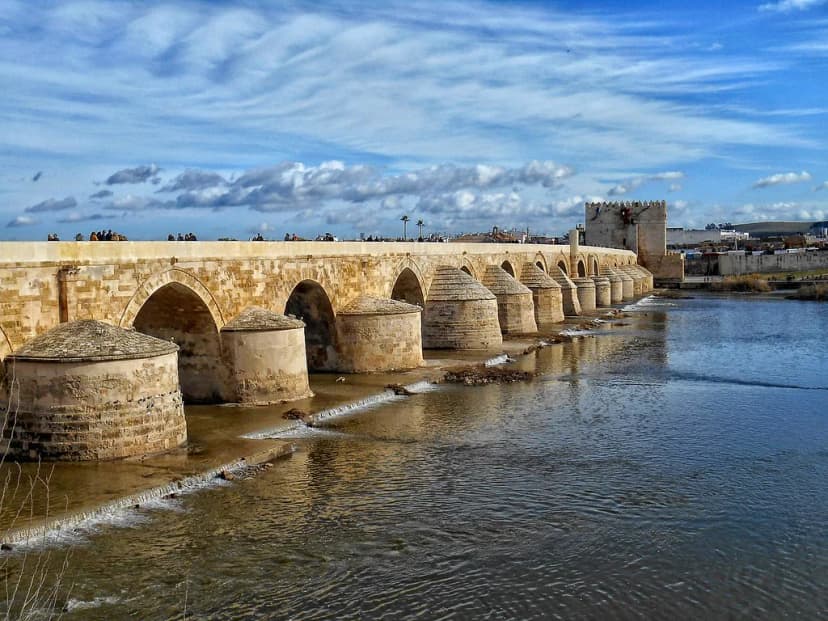
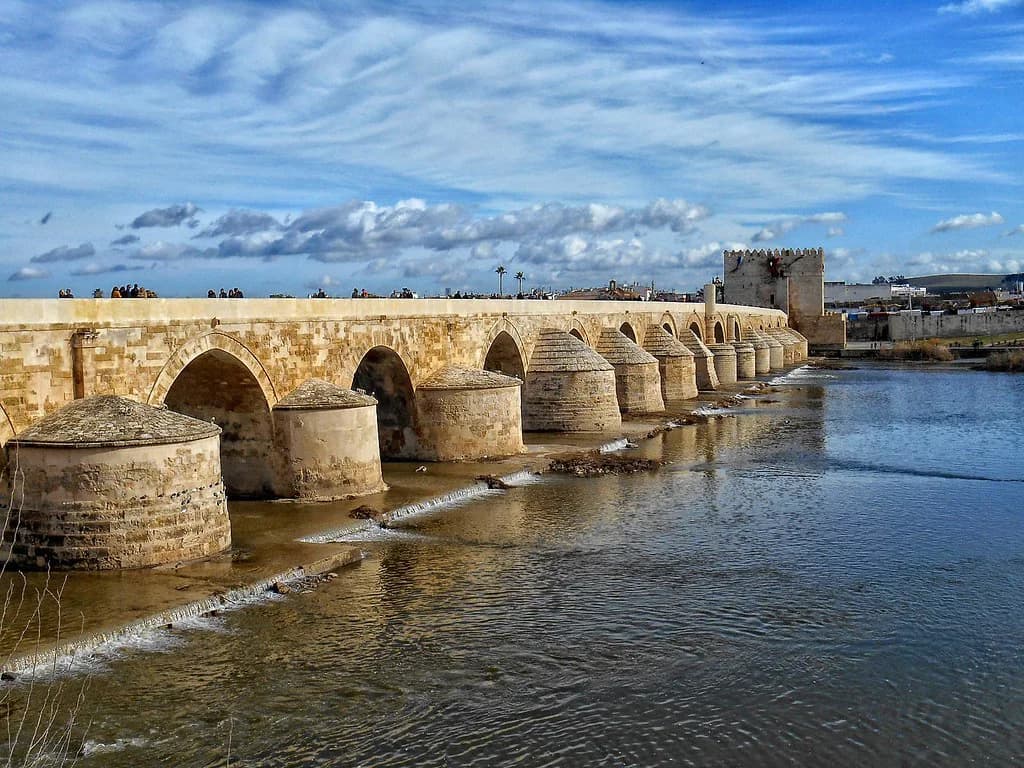
Just a short five-minute walk south, the Roman Bridge (Puente Romano) spans the Guadalquivir River with sixteen stone arches. The original structure dates to the 1st century BC under Augustus; the current form was rebuilt in the 8th century. The view of the city skyline from the midpoint of the bridge is particularly stunning at sunset — photographers gather on the eastern railing to capture the golden light hitting the Mezquita tower and the Calahorra Tower on the opposite bank. Entry to the Torre de la Calahorra museum on the south bank costs €4.50 and includes an audio guide covering Córdoba's history as the intellectual capital of medieval Europe.
The Alcazar de los Reyes Cristianos sits a five-minute walk west of the Mezquita along the river. Entry costs €5 for adults and €2.50 for students in 2026. The fortress features terraced gardens, Roman mosaics recovered from the city centre, and ramparts offering panoramic views over the Guadalquivir floodplain. Budget at least 60–75 minutes here to explore the towers, the mosaic hall, and the lower gardens with their reflecting pools and orange trees. Tuesday afternoons are typically less crowded, making it the best day to visit if your schedule is flexible.
Between the Mezquita and the Alcazar, the Puerta del Puente gateway marks the historic southern entrance to the city. This Renaissance arch was built in 1572 and still bears the original coats of arms carved into its stone. Standing beneath it at dusk as the evening light fades behind the bridge is one of the most atmospheric moments available anywhere in Andalusia. Admission is free and it takes only a few minutes to appreciate, making it a perfect photo stop on the circuit between monuments.
Hidden Patios and Jewish Quarter Secrets
While the famous Festival de los Patios runs each May (2026 dates: 9–23 May; tickets €3 per patio circuit booklet), dozens of flower-filled private courtyards remain open to curious visitors year-round. Look for small hand-painted ceramic signs reading "patio" on the doorways of the streets running north of the Mezquita. The best year-round patios cluster along Calle San Basilio and Calle Martín de Roa, roughly a seven-minute walk west of the Calleja de las Flores. Owners often greet visitors themselves — a brief, respectful admiration of the geraniums and jasmine is always appreciated.
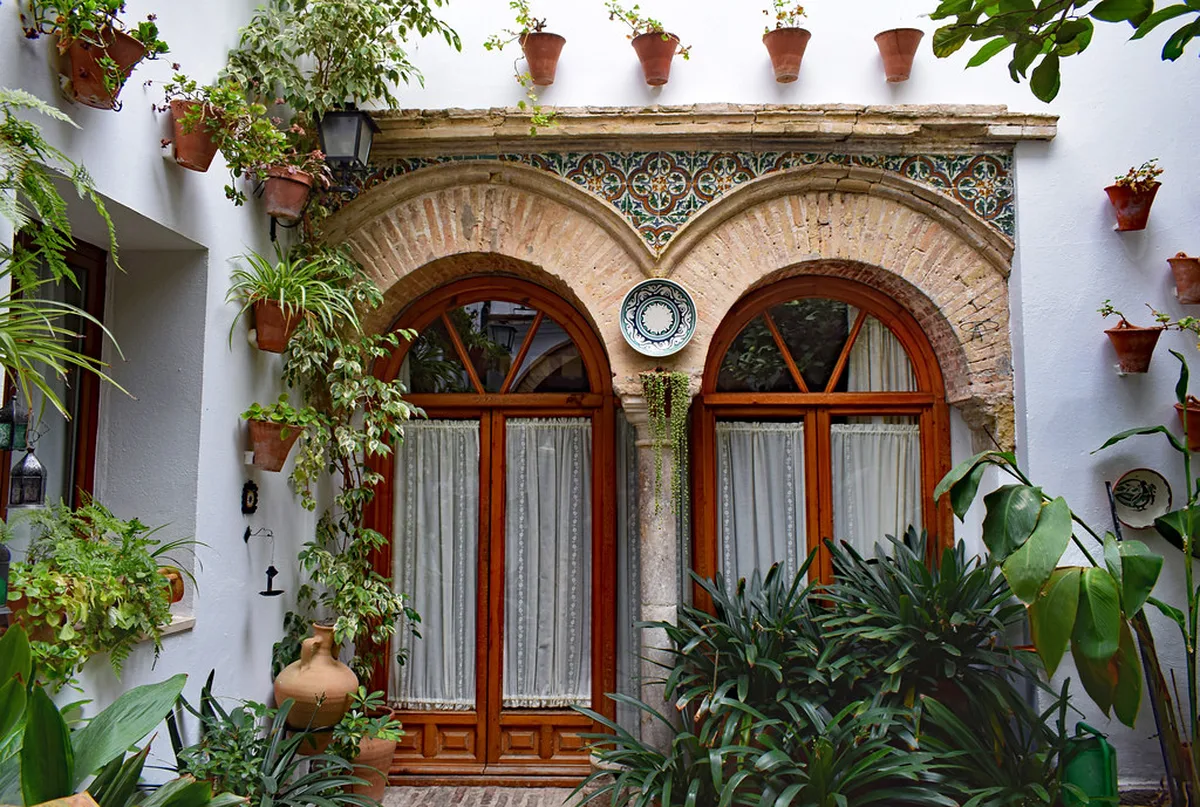
The Jewish Quarter (Judería) is a labyrinth of white-washed walls and terracotta flower pots that occupies the area immediately west of the Mezquita. Calleja de las Flores — a narrow alley whose end frames a perfect view of the Mezquita tower — is the single most photographed street in Córdoba. Arrive before 9:00 AM or after 7:00 PM to capture it without the crowds that pack it solid between 10:00 AM and 6:00 PM. The nearby Plaza de Judá Leví is far quieter and equally beautiful, with a central fountain shaded by orange trees.
The medieval Synagogue on Calle Judíos (Sinagoga de Córdoba) is one of only three surviving medieval synagogues in Spain and the only one in Andalusia. It dates to 1315 and bears Hebrew inscriptions alongside Mudéjar plasterwork. Entry costs €1.50 in 2026 (free for EU citizens under 25). The space is tiny — expect your visit to last 10–15 minutes — but the cultural weight is enormous. A short walk from the Synagogue brings you to the Casa de Sefarad, a small private museum dedicated to Sephardic Jewish heritage; entry costs €4 and the self-guided audio tour is excellent.
Artisan workshops still thrive in the Judería, concentrating on silver filigree jewellery and repujado (embossed leather), both crafts with roots in Moorish Córdoba. The workshop of Manuel Aranda on Calle Deanes is one of the oldest, producing silver filigree pieces from €15 for small pendants to over €200 for elaborate brooches. Watching the craftsman at work — even for a few minutes — provides a living connection to more than a thousand years of craft tradition. Many workshops double as galleries displaying antique pieces alongside contemporary work, and entry is always free.
Practical Tips for a Smooth Experience
Staying hydrated is essential when navigating the sun-exposed plazas of southern Spain. Public drinking fountains are available in Plaza de las Tendillas, Plaza del Potro, and inside the Alcazar gardens, all offering cool, safe drinking water. Refilling a reusable bottle keeps you comfortable and avoids the €2–3 per bottle cost at tourist-facing kiosks near the Mezquita. Sunscreen with SPF 50+ is strongly recommended from April through October — the southern Spanish sun is intense even in spring.
Navigating the winding streets is easiest when you use the Mezquita tower as a constant visual landmark — it is visible from most of the historic centre. All major sites are within a 15-minute walk of each other; public transport inside the historic core is essentially unnecessary. Licensed taxis wait at the rank on Avenida del Alcazar if you need to return to your hotel quickly; expect to pay €5–8 for a ride anywhere within the city centre. Alternatively, the No. 3 city bus connects the historic centre to the main Renfe train station, costing €1.30 per journey.
Local dining in the Jewish Quarter offers authentic Cordoban dishes at fair prices. Salmorejo (a thick cold tomato soup, €3–5 per tapa) and flamenquin (pork loin wrapped in ham and deep-fried, €4–6) are the regional specialities to try. Avoid the restaurants directly opposite the Mezquita entrance — they charge a 30–50% premium for the location. Walk two blocks north to Taberna El Soldado de Turina or south to Taberna La Montillana for full meals in the €12–18 per person range including house wine. Most tapas bars offer one free tapa with each drink order before 2:00 PM, making lunchtime the best value window for eating well.
Cash is accepted at most small workshops and market stalls, but card payment is now standard at all major monuments, restaurants, and tour operators. ATMs are available at Caja Rural de Córdoba on Calle José Cruz Conde and at several banks along the Avenida del Gran Capitán. The nearest pharmacy to the Mezquita is on Calle Torrijos — useful if you develop blisters from the cobblestones partway through your walk.
Essential Stops for Your Cordoba Walking Tour
A self-guided tour allows you to spend as much time as you want at each location. The sequence below follows a natural clockwise loop starting from the Roman Bridge, minimising backtracking. Allow approximately 30–45 minutes per stop plus transit time between sites — a full circuit takes around 3.5–4 hours at a leisurely pace.
- The Historic Roman Bridge (Puente Romano)
- Type: Ancient Landmark (1st century BC)
- Best for: Photography, panoramic river views
- Where: South entrance to the historic centre, off Paseo de la Ribera
- Cost: Free access; Torre de la Calahorra museum on south bank €4.50
- Timing: Sunset is the prime photo window; allow 20–30 minutes on the bridge
- Puerta del Puente (Bridge Gate)
- Type: Renaissance triumphal arch (1572)
- Best for: Architecture, entry to historic core
- Where: Immediately north of the Roman Bridge
- Cost: Free
- Timing: 5 minutes; best lit in afternoon
- Mezquita-Catedral de Córdoba
- Type: UNESCO World Heritage mosque-cathedral (785 AD)
- Best for: Iconic architecture, Islamic-Christian heritage
- Where: Calle Cardenal Herrero, 1
- Cost: €13 adults, €6.50 ages 10–14; book online in advance
- Timing: Allow 60–90 minutes; avoid midday crowds by arriving at opening
- The Iconic Calleja de las Flores
- Type: Scenic medieval alleyway
- Best for: Photography, flower-pot courtyards
- Where: Jewish Quarter, 2 minutes north-east of the Mezquita
- Cost: Free access
- Timing: Visit before 9:00 AM or after 7:00 PM to avoid crowds
- The Ancient Córdoba Synagogue (Sinagoga de Córdoba)
- Type: Medieval religious site (1315 AD), one of three surviving in Spain
- Best for: Jewish heritage, Mudéjar architecture
- Where: Calle Judíos, 20
- Cost: €1.50 (free for EU citizens under 25)
- Timing: 10–15 minutes; combined with Casa de Sefarad next door (€4) makes a 45-minute stop
- Alcazar de los Reyes Cristianos
- Type: Fortress-palace and gardens (14th century)
- Best for: Garden walks, Roman mosaics, river panorama from ramparts
- Where: Calle Caballerizas Reales, s/n (riverfront area)
- Cost: €5 adults, €2.50 students; gardens only €3
- Timing: Allow 60–75 minutes; Tuesday afternoons are least crowded
Free and Guided Tour Companies in Córdoba (2026 Comparison)
Córdoba is widely regarded as the birthplace of the free tip-based walking tour format in Spain — SANDEMANs New Europe launched here in 2004 and still operates one of the most popular circuits. Understanding the options available helps you choose the experience that best matches your budget, available time, and preferred level of detail.
SANDEMANs New Europe Córdoba departs daily at 10:30 AM and 4:00 PM from Plaza de las Tendillas (the large fountain square, a 10-minute walk from the Mezquita). Tours last approximately 2.5 hours and cover the Roman Bridge, Mezquita exterior, Calleja de las Flores, the Synagogue street, and the Alcazar exterior. The format is tip-based — the company suggests €10–15 per person, though locals note guides work hard and deserve the higher end. Online reservation is free and strongly recommended in spring and summer when groups cap at 20 people.
GuruWalk Córdoba aggregates independent local guides who design their own routes. Prices on the platform range from fully tip-based to fixed fees of €8–12 per person for themed tours (Jewish heritage, gastronomy, flamenco history). The platform's rating system makes it easy to read recent reviews before booking. Many independent guides offer smaller groups — sometimes just 4–6 people — which allows for a more personal experience and the flexibility to linger at stops that interest you most.
Private guided tours booked through local agencies such as Córdoba Guided Tours or Welcome Cordoba typically cost €12–18 per person for groups of 4 or more, rising to €60–80 for a fully private two-hour tour for couples. Private tours can be tailored to skip the exterior Mezquita circuit if you have already booked individual timed entry, instead adding interior stops such as the Bishop's Treasury or the Bell Tower climb (an additional €2 on top of standard entry).
Self-guided audio tours via the Córdoba Tourism app are free to download and cover 24 stops across the historic centre with narration available in English, Spanish, French, German, and Italian. The app works offline, making it useful inside the narrow lanes where signal drops. Battery drain is significant — bring a portable charger if you plan to use it for the full 3.5-hour circuit.
For visitors arriving on day trips from nearby cities, the 10:30 AM SANDEMANs tour fits neatly into a day schedule: arrive by AVE at 9:30 AM, walk to Plaza de las Tendillas, join the tour, break for lunch, and explore the Mezquita independently before the 5:30 or 7:00 PM return train. This itinerary is the most efficient use of limited time without feeling rushed.
The Evening Paseo Route and Patios Festival Circuit
One of the most underrated experiences in Córdoba is the evening paseo — the traditional Spanish stroll taken by locals in the cooler hours between 7:00 PM and 10:00 PM. The best route for visitors follows the Guadalquivir riverfront west from the Roman Bridge along the Paseo de la Ribera, turns north through the Jardines de la Agricultura, and circles back through the Avenida del Gran Capitán toward the historic centre. The walk is approximately 3 km and takes around 50 minutes at a leisurely pace; it is entirely flat and fully lit after dark.
During the evening, the Mezquita exterior is illuminated and the crowd thins significantly, giving you the best opportunity to photograph the famous walls without other tourists. The Puente Romano at night, reflected in the slow-moving Guadalquivir, is arguably more beautiful than any daytime view. Street musicians often play near the bridge approach from 8:00 PM onward; flamenco guitarists are common on weekends.
If you visit during the Patios Festival (2026: 9–23 May), the city organises an official circuit of 50–60 participating patios, each competing for the annual prize awarded by Córdoba City Council. The circuit booklet costs €3 and maps each patio with opening hours (typically 10:00 AM–2:00 PM and 5:00 PM–10:00 PM). The festival patios are concentrated in two main neighbourhoods: San Basilio (south-west of the Mezquita) and Santiago (north of the historic core). Locals advise visiting San Basilio patios in the morning and Santiago patios in the evening when the light quality is best. Queue times at the most popular patios can reach 20–30 minutes during peak festival weekends.
Outside festival season, the Mercado Victoria on Paseo de la Victoria is the best evening food destination. This covered market (open from 12:00 PM daily, until midnight Thursday–Saturday) houses around 20 independent food stalls selling everything from Iberian ham to craft beer. Budget €15–25 per person for a relaxed evening of grazing across multiple stalls. The market sits at the western end of the paseo route, making it the perfect final stop before returning to your hotel. Parking in the city centre is challenging during the festival; consult our Córdoba parking guide for the best-value car parks within walking distance of the historic zone.
Complete Self-Guided Córdoba Walking Tour Route 2026
This step-by-step route covers every major landmark in a logical 2-hour loop of approximately 3.5 km. It starts and ends at the Roman Bridge, follows the natural contours of the old city, and is designed to minimise backtracking. Total admission cost for all paid stops: €20.50 per adult (Mezquita €13 + Alcázar €6 + Synagogue €1.50). Carry cash for the Synagogue — card is not always accepted at the entrance kiosk. Download the Córdoba Tourism app offline before you start for free audio narration at each stop. Our Córdoba old town guide has detailed context on the heritage zone if you want deeper background reading before you arrive.
- Stop 1 — Puente Romano (Roman Bridge) — Distance from start: 0 km — Cost: Free
Begin at the south end of the Roman Bridge, 250 metres from the Renfe bus station drop-off on Paseo de la Ribera. Walk the full 230-metre span of the bridge (approximately 5 minutes) to enjoy unobstructed views of the Mezquita tower and the Guadalquivir. The sixteen stone arches beneath you date to the 1st century BC, rebuilt in their current form during the 8th century Moorish period. The Torre de la Calahorra museum on the south bank is worth 30 minutes if your schedule allows — entry costs €4.50 and the audio tour is excellent. Otherwise, cross the bridge north and proceed directly toward the city gate. Distance to next stop: 150 metres.
- Stop 2 — Puerta del Puente (Bridge Gate) — Distance from Roman Bridge: 150 m — Cost: Free
The Renaissance triumphal arch at the north end of the bridge was built in 1572 to mark the formal entrance to the city. Pause beneath its carved coats of arms — they include the emblems of both Córdoba and the Spanish crown. The afternoon light hits the stonework particularly well between 4:00 PM and 6:00 PM, making this the prime photography window. Spend 5 minutes here before heading west along the river path toward the Mezquita. Distance to next stop: 400 metres.
- Stop 3 — Mezquita-Catedral de Córdoba — Distance from Bridge Gate: 400 m — Cost: €13 adults (€6.50 ages 10–14; free 8:30–9:30 AM weekdays)
The Mezquita is the centrepiece of the entire walk and deserves a full 60–90 minutes of your time. Enter via Calle Cardenal Herrero — your online booking QR code is scanned at the south-east turnstile. Inside, the forest of 856 bi-chromatic red-and-white striped arches creates an optical illusion of infinite depth. Walk the entire nave systematically: north colonnade first, then the Capilla de Villaviciosa (the first Christian chapel added in 1236), then the ornate baroque cathedral at the centre, and finally the Mihrab — the gilded prayer niche that once faced Mecca. The Mihrab's Byzantine mosaics were a gift from the Emperor of Constantinople around 965 AD. Exit through the Patio de los Naranjos orange grove (free to cross, entry from Calle Cardenal Herrero) and head north-east toward the Judería. Distance to next stop: 200 metres.
- Stop 4 — Calleja de las Flores — Distance from Mezquita: 200 m — Cost: Free
Turn right off Calle Blanco Belmonte onto this famous narrow alley — it is signed and impossible to miss. The 30-metre lane ends in a wall of potted geraniums that frames a perfect triangular view of the Mezquita bell tower. Arrive before 9:00 AM or after 7:00 PM to photograph it crowd-free; midday queues for the photo spot can stretch 20 people deep. Continuing north from the Calleja leads into the heart of the Judería, where the streets narrow to less than 2 metres and the white-washed walls are dotted with ceramic flower pots year-round. Distance to next stop: 300 metres.
- Stop 5 — Sinagoga de Córdoba (Córdoba Synagogue) — Distance from Calleja de las Flores: 300 m — Cost: €1.50 (free for EU citizens under 25)
Walk west along Calle Judíos to reach this 1315 synagogue at number 20 — one of only three surviving medieval synagogues in all of Spain. The single-room interior is tiny (allow 10–15 minutes) but the Mudéjar plasterwork and Hebrew inscriptions are extraordinary up close. The adjacent Casa de Sefarad museum (€4, audio guide included) tells the story of Sephardic Jewish life in Andalusia and pairs well as a 45-minute combined stop. After leaving, continue south along Calle Judíos toward the Alcázar. Distance to next stop: 400 metres.
- Stop 6 — Alcázar de los Reyes Cristianos — Distance from Synagogue: 400 m — Cost: €6 adults (€3 students; gardens only €3)
Enter the Alcázar via Calle Caballerizas Reales at the south-west corner of the historic zone, a short 5-minute walk from the Synagogue. The fortress-palace dates to the 14th century and served as the headquarters from which Ferdinand and Isabella launched the final Reconquista campaign. Allow 60–75 minutes: start in the mosaic hall (Roman mosaics recovered from beneath the city centre), climb the north tower for panoramic views over the Guadalquivir and the Mezquita skyline, then descend into the lower terraced gardens with their long reflecting pools and orange trees. The gardens are fully paved and wheelchair accessible. Exit via the main gate and walk 10 minutes east along the river path to return to the Roman Bridge, completing the loop. Distance back to start: 700 metres.
Total walk distance: approximately 3.5 km. Total time including monument visits: 3.5–4 hours at a relaxed pace, or 2 hours if you skip interior monument entry. The route is entirely flat — no significant inclines or stairs except inside the Alcázar towers. For day-trippers arriving from Granada or Seville, see our guide to day trips from Córdoba for the best train schedules and how to fit this route into a half-day stop. If you are driving, our Córdoba parking guide covers the five nearest car parks to the Roman Bridge, all within 5 minutes' walk of Stop 1.
Frequently Asked Questions
How long does a Cordoba walking tour take?
A standard self-guided walk through the main historic sites — Roman Bridge, Mezquita exterior, Calleja de las Flores, the Synagogue, and Alcazar gardens — takes 3 to 4 hours at a comfortable pace with photos. Add 60–90 minutes if you enter the Mezquita interior. Guided group tours with SANDEMANs or local operators last approximately 2.5 hours and cover the same core circuit at a brisker pace.
Is Cordoba walkable for people with mobility issues?
The historic centre is mostly flat and compact, but traditional cobblestone streets can be challenging for wheelchair users or those with limited mobility. The Alcazar de los Reyes Cristianos gardens are paved and accessible. The main pedestrianised routes near the Mezquita are the safest and smoothest for those with mobility concerns. Stick to the paved tourist paths rather than the narrower alleyways of the Judería for the easiest passage.
Can I see Cordoba on a day trip from Seville or Madrid?
Yes, Córdoba makes an excellent day trip. The high-speed AVE train connects it to Seville in around 70 minutes (from €18 each way) and to Madrid in under 2 hours (from €35). Arriving before 10:00 AM gives you enough time for the Mezquita, the Jewish Quarter, and a long lunch before returning in the evening. Book the Mezquita entry online 48 hours ahead to avoid missing out. See our full guide to day trips from Córdoba for regional itinerary ideas.
Are there free walking tours available in Cordoba?
Yes. SANDEMANs New Europe and several independent guides listed on GuruWalk offer tip-based tours departing daily from Plaza de las Tendillas at 10:30 AM and 4:00 PM. The tours last about 2.5 hours and cover the main landmarks. A tip of €10–15 per person is standard and fair. Book a free spot online in advance during spring and summer as groups fill quickly, especially during the Patios Festival in May.
How much does it cost to enter the Mezquita-Catedral?
In 2026, entry to the Mezquita-Catedral costs €13 for adults and €6.50 for children aged 10–14. Children under 10 enter free. There is a free access window on weekday mornings from 8:30–9:30 AM for religious prayer; sightseeing is not permitted during this slot. Online booking through the official website is strongly recommended — popular time slots sell out days in advance during spring and summer. Bell Tower climbs cost an extra €2 on top of the standard ticket.
When is the best time of year to do a walking tour of Córdoba?
The best months are March, April, October, and November, when temperatures sit between 16°C and 24°C and crowds are manageable. May is spectacular if you want to coincide with the Patios Festival (9–23 May 2026), though hotels book up quickly and prices rise by 20–40%. Avoid July and August if you are sensitive to heat — daytime temperatures regularly exceed 40°C and the cobblestoned streets radiate warmth. September is underrated: summer crowds have thinned but the weather remains warm and sunny.
Exploring Córdoba on foot is an unforgettable experience that brings over a thousand years of history to life in a single afternoon. From the towering striped arches of the Mezquita to the jasmine-scented patios of the Judería, every step reveals another layer of this extraordinary city. Taking the time to wander beyond the main tourist drag — into the quiet streets around San Basilio or along the evening riverfront paseo — ensures you capture the true spirit of Andalusia rather than just a postcard version of it.
Planning your route before you arrive saves time and money in 2026: book the Mezquita entry online, aim for an early start before 9:00 AM, and build in flexibility for the smaller discoveries — the workshop doorway, the hidden patio, the tapas bar nobody else seems to know about. The city's unique convergence of Roman, Islamic, and Christian traditions makes it one of the most intellectually rich places to visit anywhere in Europe. Enjoy your adventure through the historic heart of Córdoba.