Top Day Trips From Cascais for Every Traveler
The fastest day trip from Cascais is Sintra — 40 minutes by bus 1623/1624 (€2.60 one-way, 2026), with Pena Palace entry at €17.50. Book tickets online to skip same-day queues.
Cascais to Lisbon costs €2.30 by Linha de Cascais train, takes 33–40 minutes to Cais do Sodré, and trains run every 20 minutes until 01:30 — the easiest capital day trip on Portugal's Atlantic coast.
Cascais serves as a perfect seaside base for exploring the diverse landscapes of central Portugal. This charming coastal town offers easy access to historic palaces, rugged cliffs, and the vibrant capital city. You can enjoy the relaxed beach atmosphere while taking quick journeys to world-famous heritage sites. Planning the right excursions ensures you see the best of the region without feeling rushed.
Many visitors find that the local transport network makes exploring nearby towns simple and affordable. From the scenic train line to the capital to direct buses into the Sintra hills, options are plentiful. Travelers often discover that the variety of nearby destinations keeps every day of their holiday fresh. Our guide highlights the most rewarding spots to visit during your stay in this beautiful region.
Whether you seek mountain views or urban culture, these locations provide memorable experiences for all ages. You should consider your preferred pace of travel when choosing between public transit and car rentals. Explore the Cascais old town guide to plan your time in town before setting off on excursions. Setting off early allows you to beat the crowds at the most popular Portuguese attractions.
Exploring the Magic of Sintra from Cascais
Sintra is arguably the most popular destination for travelers looking for day trips from Cascais. This UNESCO World Heritage site features colorful palaces and misty forests that feel like a storybook setting. Most visitors head straight for the Pena Palace to see its vivid yellow and red towers. You should prepare for steep walks and cooler temperatures compared to the coast.
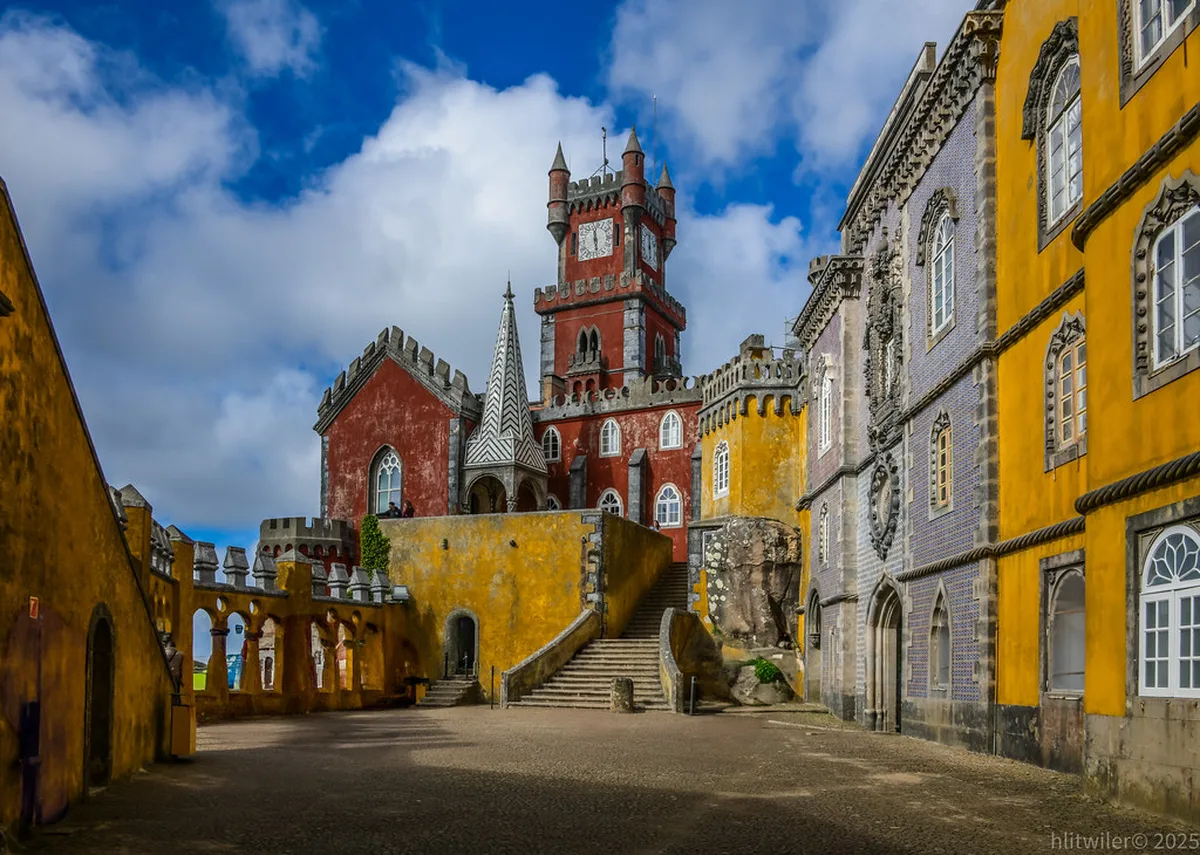
Getting to Sintra from Cascais is straightforward using the dedicated bus services. The 1623 and 1624 buses depart regularly from the Cascais bus terminal located beneath the Cascais Shopping center. In 2026 a one-way ticket costs €2.60 when paid in cash at the driver, or €2.34 if you tap your Navegante card. The trip takes about 35–45 minutes depending on traffic along the EN247. Buses depart approximately every 30 minutes between 07:30 and 20:00, with reduced frequency in the evening.
Entry fees in Sintra have increased modestly in 2026. Pena Palace charges €17.50 for adults and €14.50 for students and seniors (park only: €8.00). The Moorish Castle costs €10.00 for adults. Quinta da Regaleira charges €12.00 per adult and €7.50 for under-14s. Monserrate Palace is €12.00 for adults. A combined pass for four palaces costs around €38.00 and can save €15–18 compared to buying separately. Always book online in advance — same-day queue times at Pena can exceed 90 minutes in June through September.
Walking through the historic center of Sintra offers a chance to sample local pastries like travesseiros (€1.80 each at Piriquita) and queijadas (€1.50). Many travelers spend their morning at the Moorish Castle before heading to the mystical Quinta da Regaleira. This estate features hidden tunnels and an initiation well that fascinates visitors of all ages. Make sure to wear sturdy shoes for the uneven stone paths throughout the town.
For a detailed self-guided walking route through the palaces and gardens, the Sintra day trip from Lisbon guide covers timings and the most efficient palace sequence from arrival. You can also explore the Sintra Pena Palace guide for a focused deep-dive on the palace's interior rooms and best photography spots. Planning your entry times for the major palaces is essential for a smooth 2026 experience. Try to arrive at the first palace by 09:30 to enjoy the grounds before the largest groups arrive. This strategy allows for a more peaceful exploration of the intricate garden designs and forested hillsides.
If you prefer a circular route, consider returning to Cascais via the 1253 bus through Cabo da Roca, combining two destinations in one day. The combined journey adds about 45 minutes but rewards you with the dramatic westernmost cliffs before dropping back to the coast. Taxi rides between Sintra village and the palaces cost approximately €5–8 depending on the hill, which is worth considering if carrying luggage or travelling with elderly companions.
- Bus Transport to Sintra Village
- Route: Bus 1623 or 1624 from Cascais Shopping terminal
- Cost: €2.60 cash / €2.34 Navegante card (2026)
- Frequency: Every 30 minutes, 07:30–20:00
- Duration: 35–45 minute ride
- Pena Palace Visit Strategy
- Entry: €17.50 adult, €14.50 student/senior (2026)
- Booking: Required online time-slot reservation
- Best arrival: 09:30 opening slot
- Feature: Romanticist polychrome architecture
Coastal Wonders at Cabo da Roca and Guincho
A journey to Cabo da Roca takes you to the westernmost point of mainland Europe at longitude 9°30' W. The dramatic cliffs rise 140 metres above the churning Atlantic Ocean and deliver some of the most photographed coastal views in Portugal. You can visit the iconic lighthouse, pick up a certificate of your visit at the tourist office (€1.50), and soak in the wild ocean panorama. The wind here is often very strong, so bring a light jacket even during summer months.
Getting to Cabo da Roca in 2026 is easy via the 1253 bus from the Cascais terminal. A single fare costs €2.60 (cash) or €2.34 with a Navegante card. The route runs roughly every 60 minutes and the journey takes approximately 25 minutes through the Sintra-Cascais Natural Park villages. Check the Scotturb timetable carefully — the last return bus departs Cabo da Roca at around 19:00 in summer. If you miss the last bus, a taxi back to Cascais costs around €20–25.
Hikers will enjoy the coastal trails that lead from the cape toward the northern beaches of Praia Grande and Praia das Maçãs. These paths offer a rugged look at the natural beauty of the Sintra-Cascais Natural Park. You might spot endemic Lusitanian stonechat birds and unique rock formations while walking along the cliff edges. The main marked trail (PR11) covers about 12 km one-way and takes 3–4 hours at a comfortable pace.
Guincho Beach is a world-class destination for windsurfers and kitesurfers located just 9 km down the coast from Cascais, making it the closest dramatic beach on this route. The powerful swells and consistent northwesterly winds create a spectacular atmosphere for spectators and athletes alike. Lifeguards are stationed from June to September, and the flag system is strictly enforced — red flags mean no swimming. Check our Cascais beach guide for more detail on all the nearby sandy shores and flag meanings. Portugal's Atlantic coast offers world-class conditions year-round.
You can reach Guincho via the 1253 bus or by cycling the dedicated Ecovia coastal path from the Cascais marina. In 2026, bike rental from Cascais marina starts at €12 for a standard hybrid for the day, or €18–22 for an electric bike — a worthwhile upgrade given the steady headwind on the return journey. The 9 km coastal cycle is mostly flat on a dedicated lane separate from traffic and takes about 30–40 minutes at a relaxed pace.
Parking at Cabo da Roca is free but limited to around 60 spaces. During July and August the car park fills by 10:00 on weekends. Guincho beach parking costs €1.50 per hour (maximum €8.00 daily) enforced between June and September. A combined bus day pass allowing unlimited hops on Scotturb routes in the Cascais-Sintra area costs €6.50 in 2026 and is excellent value if you plan to visit both the cape and Sintra in the same day.
A Cultural Journey to Belém and Lisbon
The train journey from Cascais to Lisbon is one of the most scenic commutes in Europe. For just €2.30 (2026 single fare), you can ride the Linha de Cascais with a constant view of the Tagus estuary. The journey takes approximately 33–40 minutes to reach the final station at Cais do Sodré in central Lisbon. Trains run every 20 minutes throughout the day, and the service extends until around 01:30 making evening meals in the capital very practical.
Many travelers choose to hop off two stops early at Belém (Cascais line stop: Belém) to explore Portugal's maritime history before heading into the city. This district is home to the Jerónimos Monastery and the iconic Belém Tower. Both sites are UNESCO protected and represent the wealth of the Age of Discovery. The Jerónimos Monastery entry costs €12.00 for adults (free under-12) in 2026. The Belém Tower charges €6.00 for adults. The MAAT contemporary art museum nearby is €11.00. You should try the original Pastéis de Belém at the famous nearby bakery — the pastéis de nata cost €1.55 each and are worth the short queue.
Lisbon city center offers endless opportunities for shopping, dining, and historic sightseeing. From the Cais do Sodré waterfront, you can walk to the grand Praça do Comércio in about ten minutes along the riverside promenade. The steep hills of Alfama provide a glimpse into the city's oldest neighbourhood and Fado culture — a free listening at a tasca typically requires a meal order of €15–25 per person. Using a rechargeable Navegante card makes switching between trains, trams, and the metro very simple. Top up at any station kiosk; a Navegante card costs €0.50 and subway single trips are €1.65.
The Lisboa Card offers unlimited public transport plus free or discounted entry to 35+ attractions. In 2026 it costs €22.00 (24 hours), €38.00 (48 hours), or €47.00 (72 hours). If you plan to visit more than two paid museums, it pays for itself quickly. Pick it up at the Lisboa Visitors Centre at Praça do Comércio or at Lisbon Airport arrivals. For detailed coverage of Lisbon's beaches reachable by metro and bus, see the Lisbon beach guide.
Exploring the capital as a day trip allows you to return to the sea breeze by evening. You will find that the temperature in Lisbon is often 2–4 °C warmer than Cascais, so pack accordingly in winter. Wear comfortable walking shoes to navigate the famous black and white calçada pavements — standard leather-soled shoes are slippery on wet stone. The last trains back to Cascais from Cais do Sodré run until approximately 01:30, giving you plenty of time for a late dinner in Bairro Alto or along the Cais do Sodré bar strip.
Taxis and Uber are plentiful in Lisbon city centre. A ride from Cais do Sodré to the Alfama viewpoints (Portas do Sol) costs around €6–8 by Uber and saves a steep 20-minute walk. If you visit mid-week, expect fewer crowds at the major museums — the Museu Nacional do Azulejo (€7.00, 2026) is a personal highlight best visited on quieter Tuesdays through Thursdays.
Surfing and Seafood in Ericeira and Azenhas do Mar
Ericeira is a vibrant fishing village that has become a global hub for surfing enthusiasts approximately 40 km north of Cascais. It was officially named a World Surfing Reserve in 2011 due to its consistent waves and high-quality reef breaks — one of only a handful worldwide. The town centre features white-washed buildings with blue trim and narrow cobblestone streets. You can find excellent seafood restaurants serving fresh Atlantic catch throughout the pedestrianised historic quarter.
Getting to Ericeira from Cascais by car takes about 45–55 minutes via the A5 motorway to Mafra and then the IC22 local road. Parking in Ericeira costs €1.00 per hour in the main Largo da Ericeira car park, with a daily maximum of €7.00, enforced from June to September. If you prefer public transport, take the Linha de Cascais train to Sintra (€2.60, 40 min) and then a connecting Mafrense bus 1252 to Ericeira (€3.40, 40 min) — total approximately €6.00 each way. Ride-share services such as Uber are available from Cascais but cost approximately €35–45 each way depending on demand.
Azenhas do Mar is a stunning cliffside village located about 10 km south of Ericeira on the D247 coastal road. It is famous for its natural ocean pool carved into the rocks at the base of the cliffs, which is free to use from June to October. The view of the white houses clinging to the edge of the precipice is one of the most iconic images in Lisbon-region Portugal. This spot is a favourite for photographers, especially during golden hour before sunset. The village has a handful of restaurants with terrace views; a seafood lunch typically runs €20–30 per person.
Ribeira d'Ilhas beach, just 2 km north of Ericeira town centre, is the most famous surf break and hosts World Surf League events annually. Watching professional surfers from the clifftop viewing deck is free and spectacular. Several surf schools along Ericeira's waterfront offer beginner lessons from €45 (2 hours including equipment hire). Board and wetsuit rental without a lesson costs around €20–25 per day at Neptuno Surf or Uíge Surf schools.
Visiting Ericeira offers a quieter alternative to busy Sintra or central Lisbon. Fresh fish grills (sardinhas assadas) cost €8–12 per portion at the harbour-front tascas. Local shops sell handmade ceramics, traditional cork products, and surf gear that make for practical souvenirs. If you time the visit well, the Ericeira weekly market on Fridays sells local cheese, honey, and vegetables at very reasonable prices. This northern coastal route provides a deeper look at the authentic Atlantic lifestyle of the region and pairs beautifully with a stop at Azenhas do Mar on the return drive.
Strategic Planning for Day Trips from Cascais
A common mistake travelers make is trying to visit Sintra and Lisbon on the same day. Both locations require a full day to appreciate their history and various landmarks properly. Focus on one major destination per trip to avoid spending your entire holiday in transit. Setting a clear priority for each day helps you pace the holiday without exhaustion.
Public transport is generally the best choice for trips to Lisbon or the centre of Sintra. The trains are frequent and avoid the heavy traffic congestion often found on the A5 motorway during peak hours. However, a rental car is invaluable if you plan to visit multiple beaches or remote cliffside villages in a single day. Day rental prices from Cascais start at around €35–50 (compact class, 2026) including basic insurance from agencies near Cascais train station. Decide on your primary goal for the day before choosing your mode of transport.
Parking in the centre of Cascais can be expensive and difficult to find during peak hours from June to September. Street parking meters charge €1.50 per hour in Zone 1 (town centre), with a maximum of 2 hours. The underground Parque de Estacionamento Cascais on Rua Afonso Sanches offers 600 spaces at €1.20 per hour (daily cap: €12.00). If you rent a car, look for accommodations that offer private parking spaces to save both time and money. Using the Via Verde app can make paying for parking and highway tolls much more convenient; the A5 toll from Cascais to Lisbon costs €2.75 one-way in 2026.
Timing your departures can significantly impact the quality of your day trips from Cascais. Commuter trains toward Lisbon are very crowded between 08:00 and 09:30 on weekdays, and Sintra-bound buses fill quickly after 10:00 on weekends. Plan to leave after the morning rush or very early to secure a comfortable seat. Returning from Sintra in the late afternoon often involves long waits; aim to catch a bus before 17:00 or accept a 30-minute queue in high season. A Navegante metropolitan monthly pass covering all train and bus zones in the Greater Lisbon region costs €43.00 in 2026 — worth buying if you plan more than 20 single trips during your stay.
Setúbal and the Arrábida Natural Park from Cascais
The Arrábida Natural Park is one of the most underrated day trips from Cascais and arguably the most visually stunning. Located approximately 60 km south of the town, it takes around 60–75 minutes by car via the A2 motorway crossing the 25 de Abril Bridge and then the IP1/A2 south. The park stretches along a dramatic limestone ridge covered in Mediterranean scrub, dropping sharply to turquoise coves that rival the Algarve in clarity and colour.
Driving is by far the most practical option for this trip in 2026. Rental cars from Cascais start at €35–50 per day (compact class, basic insurance included). Highway tolls via the Via Verde app cost approximately €4.50 each way (Cascais → Setúbal via A2/25 de Abril Bridge). Parking at Portinho da Arrábida, the most famous beach cove, is very limited — arriving before 09:30 in summer is essential. The park authorities operate a paid shuttle (€4 return per person) from the lower car park on the EN10 during July and August to manage visitor flow.
Portinho da Arrábida is the park's most iconic beach, with electric-blue water that looks Caribbean on a calm day. In 2026 the park levies an access fee of €5 per person to enter the Arrábida coastal zone (paid at the checkpoint on the EN10-4 scenic road). The fee is waived if you arrive at Portinho by the official shuttle. Snorkelling here is exceptional — the rocky reefs host octopus, seabream, and starfish in crystal-clear water. Equipment rental is available on the beach from €10 per set.
The Convento da Arrábida sits dramatically on the southern slope of the Sierra da Arrábida ridge, visible from the beach far below. Built by Franciscan friars in the 16th century, the white convent exterior can be admired for free from the EN10-4 scenic road viewpoint. Guided interior tours are available on weekday mornings for a donation (roughly €3–5 suggested); call ahead as opening hours are limited and irregular in 2026.
Setúbal city, 5 km east of the park entrance, is worth a morning stop before heading to the beaches. The Mercado do Livramento is a stunning Art Nouveau covered market where local vendors sell produce, meat, and outstanding fresh oysters. In 2026 a dozen oysters at the market stalls costs between €8 and €12, shucked and served with lemon — among the best value in Portugal. A glass of local Setúbal moscatel dessert wine costs about €3 at the market bar and makes a wonderful accompaniment.
Praia de Galapinhos is widely regarded as the finest beach in the Arrábida park — it won the Best Beach in Portugal award several years running. Accessed by a 15-minute walk down a steep path from a small parking area on the EN10-4 (€2/hour in summer), it is backed by forest and bounded by limestone cliffs. Praia de Portinho da Arrábida is more accessible and has a small restaurant with outdoor tables (fresh grilled fish: €14–18 per portion). For a less crowded alternative, Praia de Galapinhos requires more effort but rewards with near-pristine conditions even in high season.
Day trip vs overnight decision: if you plan to visit the park beaches and Setúbal market, a day trip is entirely feasible — leave Cascais by 08:30, reach the market by 10:00, then drive to Portinho by 11:30 and enjoy the afternoon. For a more relaxed pace, or if you want to combine sunset at the convent viewpoint with an evening of seafood in Setúbal city, consider staying one night. Setúbal has affordable guesthouses from €55–85 per room (2026), and the drive back next morning avoids peak-hour bridge traffic. Either way, book market parking or arrive before 09:00 on weekdays — the EN10-4 scenic road is closed to private cars above a certain size from 11:00 to 14:00 on weekends in July and August.
Frequently Asked Questions
What is the best way to get from Cascais to Sintra?
The most efficient way is taking the 1623 or 1624 bus from the Cascais Shopping terminal. The journey takes about 35–45 minutes and costs €2.60 cash (€2.34 with Navegante card) each way in 2026. Buses run every 30 minutes from 07:30 to 20:00. Book Pena Palace tickets online in advance to avoid queues that can exceed 90 minutes in high season.
How long is the train from Cascais to Lisbon?
The Linha de Cascais train takes 33–40 minutes to reach Cais do Sodré in central Lisbon. In 2026, a single fare costs €2.30. Trains depart every 20 minutes throughout the day and run until approximately 01:30, making evening dinners in Lisbon very practical. Use a Navegante card for faster boarding.
Can you visit Cabo da Roca by bus?
Yes, the 1253 Scotturb bus connects Cascais terminal directly to Cabo da Roca for €2.60 each way (2026). The ride takes approximately 25 minutes. The last return bus departs the cape at around 19:00 in summer — missing it means a €20–25 taxi back. A certificate of your visit to Europe's westernmost point costs €1.50 at the tourist office.
Is a car necessary for day trips from Cascais?
A car is not necessary for Lisbon or Sintra due to excellent public transit. However, reaching Ericeira, Azenhas do Mar, or the Arrábida Natural Park is significantly faster and easier with your own vehicle. Compact car rental from Cascais starts at €35–50 per day including basic insurance in 2026. A mix of transport modes works best for a varied itinerary.
How much does it cost to enter the Arrábida Natural Park in 2026?
In 2026, access to the Arrábida coastal zone on the EN10-4 scenic road costs €5 per person, collected at the checkpoint. This fee is waived if you use the official summer shuttle (€4 return) from the lower EN10 car park. Parking at Portinho da Arrábida is limited; arrive before 09:30 in July and August or use the shuttle. The Convento da Arrábida exterior is free to view at any time.
What is the cheapest day trip from Cascais using public transport?
The cheapest day trip is Lisbon, costing €4.60 return by train in 2026. If you visit Belém and walk along the waterfront without paying museum entry, the total transport cost stays under €5. Cabo da Roca via the 1253 bus is equally affordable at €5.20 return. A Scotturb area day pass costs €6.50 and covers unlimited bus hops including Sintra and Cabo da Roca — good value if you plan to visit both.
Óbidos and Mafra Palace from Cascais
Óbidos is one of Portugal's best-preserved medieval walled towns, sitting approximately 90 km north of Cascais on the A8 motorway. The whitewashed village enclosed by 12th-century Moorish walls takes around 70–80 minutes to reach by car from Cascais in 2026. Entering through the Gothic Porta da Vila gate you step straight into a pedestrian lane lined with bougainvillea, ceramic shops, and tiny taverns. The castle at the northern end of the village — now a state pousada hotel — is free to view from the ramparts walk (€1.50 entry to the wall walk), which delivers panoramic views over vineyards and green valleys.
By public transport, combine the Linha de Cascais train to Lisbon Oriente station (€2.30, 40–50 min) and then a Rede Expressos coach to Óbidos (€10.80 single, approximately 1 hour). Total one-way travel time is around 2 hours, making it a longer but very rewarding excursion. An alternative is to join a small-group day tour from Lisbon or Cascais, which typically costs €45–65 per person including transport, wine tasting, and a guided walk through the walls.
The medieval village is famous for ginjinha, a sour-cherry liqueur traditionally served in a dark chocolate cup for €2.50 at the stalls along Rua Direita. The Mercado Biológico on Saturday mornings (08:00–13:00) brings local farmers selling honey, smoked sausage, sheep's cheese, and regional wines. Lunch at Tasca do Ramiro inside the walls offers pork cheek rice and octopus salad for €14–18 per main — excellent quality for the price. Give yourself at least three hours in Óbidos to walk the full wall circuit and browse the artisan ceramics without feeling rushed.
Mafra is a natural pairing with Óbidos on the same day, sitting just 35 km south on the IC2 road (25 minutes by car). The Palácio Nacional de Mafra is a UNESCO World Heritage Site since 2019 — an immense baroque palace and convent complex commissioned by King João V in 1717 as a royal residence and Franciscan monastery. Entry in 2026 costs €6.00 for adults and €3.00 for seniors and students; free for under-12s. The palace's library alone, housing over 36,000 18th-century books, justifies the entrance fee. Guided tours of the royal hunting grounds (Tapada de Mafra) are offered on weekends for €10 per person and reveal a protected ancient oak forest with red deer and wild boar.
The town of Mafra is also useful as a transit hub if you are travelling by public transport to Ericeira — Mafrense bus services connect the two towns in around 20 minutes (€2.10). Combining Mafra Palace in the morning with lunch in Ericeira's harbour and a surf session at Ribeira d'Ilhas in the afternoon creates one of the most diverse single-day itineraries in the greater Cascais region. Budget approximately €80–100 all-in for the day including transport, entry fees, lunch, and equipment hire, whether travelling by car or using public bus connections.
If medieval history is a key interest, consider also comparing the Sintra walking tour as another option for palace and fortress exploration in the same region. Together, Óbidos and Mafra represent a cultural depth that balances the beach-heavy character of most Cascais itineraries and they are especially rewarding in spring (March–May) and autumn (September–October) when crowds thin dramatically and prices for accommodation in Mafra fall to their lowest.
Choosing to take day trips from Cascais allows you to experience the best of Portugal's central region without changing your base. You can easily transition from historic palaces in the morning to sandy beaches by the afternoon, or from vibrant city culture to wild Atlantic cliffs. Reliable public transport and scenic roads make every journey an enjoyable part of your 2026 holiday. Start planning your route today to ensure you don't miss these incredible nearby destinations.
Remember to check local schedules and book palace tickets well in advance — especially for Pena Palace in Sintra, where queues are longest from June to September. The variety of landscapes ensures that every traveler finds something to love near the coast. Whether you prefer the energy of Lisbon, the turquoise coves of Arrábida, or the quiet drama of the western cliffs, Cascais is the perfect starting point for exploring one of Europe's most diverse coastal regions.