Exploring Rovinj Old Town: A Complete 2026 Travel Guide
Rovinj Old Town is a car-free, hilltop-crowned peninsula on Croatia's Istrian coast where the St. Euphemia Church bell tower costs €3, the Heritage Museum costs €5, and the waterfront promenade and Grisia Street gallery quarter are completely free to explore in 2026.
Park at Valdibora garage (€2–3/hr, 5-minute walk to Balbi's Arch) and walk the entire peninsula on foot — the old town is 100% pedestrian with no cars or scooters, making rubber-soled shoes your single most important packing decision for the smooth limestone streets.
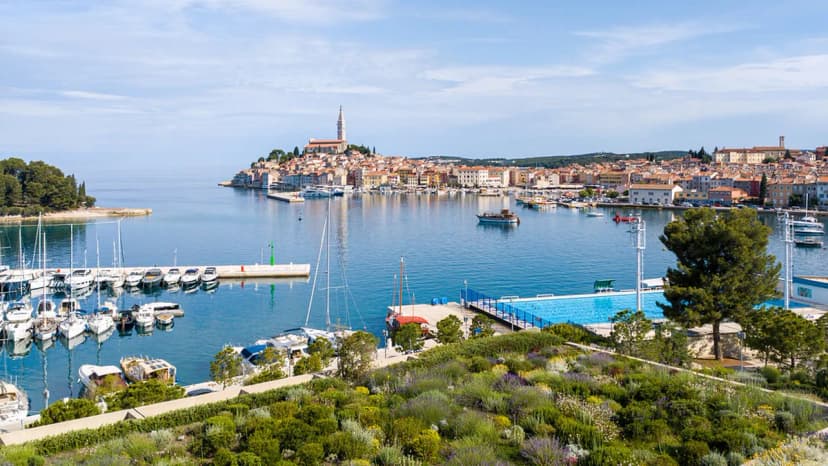
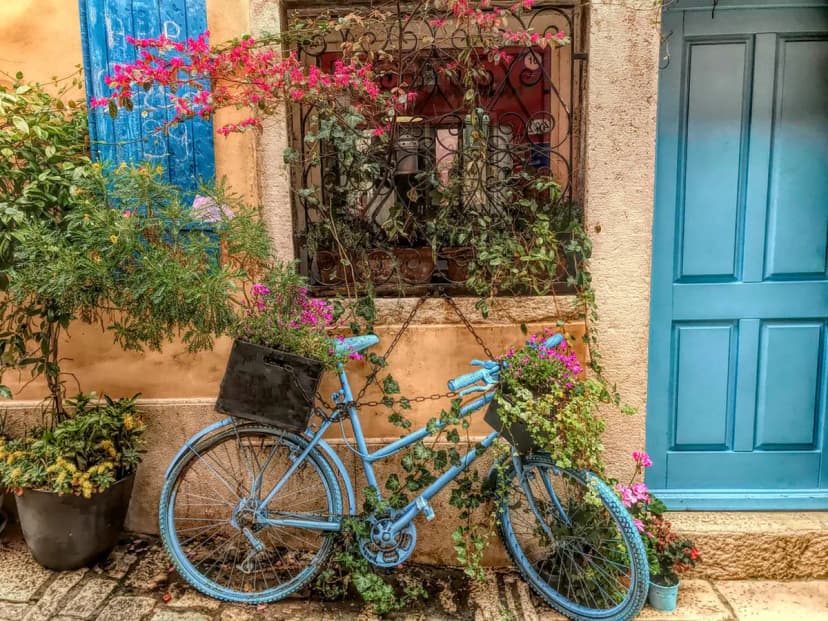
Rovinj sits like a sparkling jewel on the Istrian coast of Croatia. This ancient town features narrow streets that wind up to a hilltop church, colorful houses, and vibrant shutters around every corner. Our Rovinj Old Town guide helps you navigate these historic paths with confidence and get the most out of every hour you have here.
The town was once an island before being connected to the mainland in 1763. This history creates a uniquely intimate atmosphere of tight spaces, hidden courtyards, and centuries-old stone worn smooth underfoot. Most visitors start their journey at the busy harbor, watching local fishermen bring in their daily catch — a ritual that has played out every morning for hundreds of years.
Navigating the Historic Limestone Streets
Walking through Rovinj feels like stepping back into a Venetian dreamscape. The limestone streets have been polished to a mirror shine by centuries of footsteps, and they are genuinely slippery when wet. Rubber-soled shoes are not optional — sandals and heeled boots cause real falls on steep descents like Grisia. This single practical choice makes the difference between a magical morning and a miserable one.
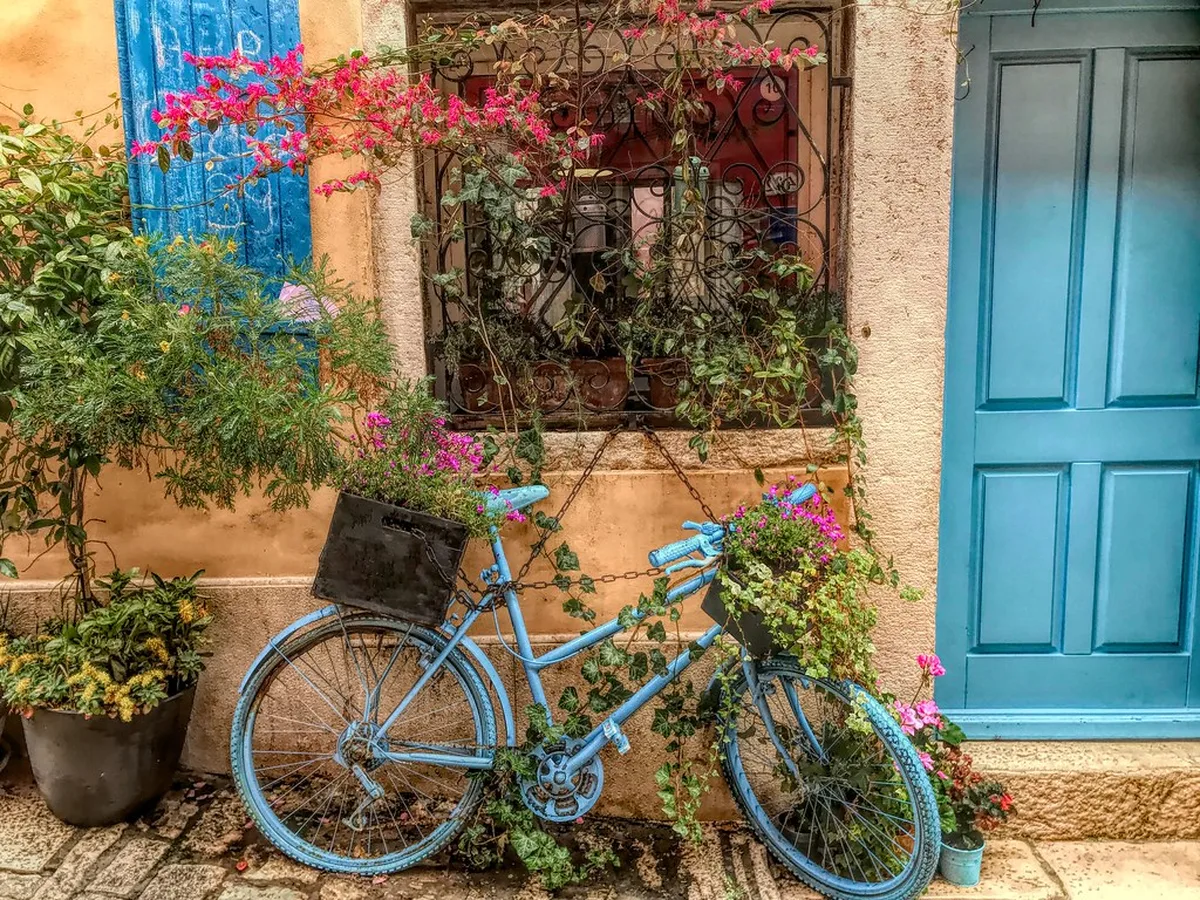
The town layout is an intentional maze, designed to confuse ancient invaders and slow military advances. Modern visitors share the same confusion, looping back to the same square twice without realising it. Look for small stone carvings on the walls — an angel here, a worn coat of arms there — to help orient yourself. A paper map from the tourist office near Trg Marafor is still the best navigation tool; GPS signal drops in the narrowest alleys.
Mornings offer the best light and the quietest atmosphere for photography. The limestone reflects warm morning sunlight and creates a golden glow on the buildings that disappears by midday. Arriving before 9:00 AM lets you beat the heavy day-trip crowds that descend from buses between 10 AM and 2 PM. Early birds also enjoy the fish market on the harbour (open 6–8 AM), where local fishermen sell the catch of the day directly from their boats. Fresh sea bass, bream, and scampi go fast — by 8:30 AM the best picks are gone.
Accessibility is worth noting for those with mobility considerations. The steep hills and ultra-smooth stones are genuinely challenging for pushchairs, wheelchairs, and anyone with knee problems. The lower harbour area and Trg Marafor are relatively flat. The climb to St. Euphemia involves roughly 150 stone steps on sloped lanes; take it slowly and use the rope handrails where fitted. Most of the magic is reachable at a slow pace — the town rewards patience over speed regardless.
The best loop for a first visit takes about three hours at a comfortable pace. Start at Balbi's Arch, wind up through Grisia Street to St. Euphemia, descend the other side to Trg Marafor, then circle the western cliff rocks before returning along the harbour promenade. This route captures every major landmark and delivers two spectacular sea-view payoffs — the bell tower panorama and the cliff-top sunset point. The full promenade walk along the waterfront is free, lined with outdoor cafes and boats at anchor, and takes roughly 20 minutes at a leisurely stroll from the harbour to the western rocks.
Top Landmarks in the Rovinj Old Town Guide
The Church of St. Euphemia dominates the skyline with its massive bell tower, visible from across the bay and from the islands offshore. The church itself is free to enter and houses the sarcophagus of Rovinj's patron saint, moved here in 800 AD according to local legend. The interior is cool and quiet even in peak summer, making it a welcome refuge from the midday heat. Lighting is dim — bring a small torch if you want to read the inscriptions on the older tombs along the side walls.
The bell tower climb costs €3 and is absolutely worth it. You ascend 60 metres via a wooden staircase that grows increasingly steep near the top. The panoramic view from the terrace is the finest in all of Istria — you can see the islands of Sveta Katarina and Crveni Otok, the Lim Fjord to the south, and on clear days the outline of Pula. Go before 10 AM or after 4 PM to avoid crowds on the narrow staircase. The tower is open daily from April through October, typically 10:00 AM–6:00 PM; confirm times at the tourist office as hours shift seasonally.
Balbi's Arch marks the formal entrance to the historic center. This 17th-century gate stands on the site of an older city wall, and the detail work rewards a close look. One face of the arch carries a carved stone head of a Turk — the Venetian shorthand for a defeated enemy — while the opposite side features a helmeted Venetian patrician. The lion of St. Mark, symbol of Venetian rule, appears on the frieze above. It is one of the best-preserved Venetian gateways in Croatia and the most photographed spot in town. Entry is free, and it is accessible at all hours.
Grisia Street is the town's famous open-air art gallery, a steep cobbled lane lined with artists displaying paintings on the stone walls and steps. Quality ranges from tourist prints to genuinely impressive oil work; expect to pay €50–500 for original canvases. The street is free to walk and browse at any time, though the artists set up their displays from mid-morning. The annual Grisia Art Festival each August turns the street into a juried outdoor exhibition — one of the oldest in Croatia — and draws serious collectors from across Europe.
The Heritage Museum (Zavičajni Muzej Grada Rovinja) on Trg Marafor holds the town's main collection of paintings, archaeological finds, and local historical artifacts across three floors. Entry costs €5. The museum occupies a 17th-century Baroque palace and its collection includes works by Venetian masters, Roman-era pottery recovered from the seabed, and detailed models of traditional Batana boats. Opening hours are Tuesday to Sunday, 10:00 AM–6:00 PM in summer, with shorter hours off-season. Combined with the Batana Eco-Museum nearby (also €5 entry), the two museums give you the fullest picture of Rovinj's maritime and cultural heritage.
Trg Marafor, the rectangular square at the western end of the peninsula, sits on the foundations of a Roman forum. Stone fragments of a temple to Neptune and another dedicated to Mars survive at the square's edge. It is almost always quieter than the rest of the old town — a good place to sit, read, and let the crowds thin before dinner. Access is free and the square is open at all hours.
- St. Euphemia Bell Tower
- Type: Historic viewpoint
- Best for: Panoramic photography, Adriatic views
- Where: Hilltop center of the old town
- Cost: €3 entry (church free)
- Hours: Typically 10:00 AM–6:00 PM Apr–Oct; confirm locally
- Heritage Museum (Zavičajni Muzej)
- Type: Local history and art museum
- Best for: Venetian paintings, Roman artifacts, maritime history
- Where: Trg Marafor, western end of the peninsula
- Cost: €5 entry
- Hours: Tue–Sun 10:00 AM–6:00 PM (summer)
- Grisia Street
- Type: Open-air art gallery
- Best for: Original paintings, handmade crafts
- Where: Steep lane from Balbi's Arch to St. Euphemia
- Cost: Free to browse; artworks €50–500
- Trg Marafor
- Type: Ancient Roman square
- Best for: Roman ruins, quiet resting spot
- Where: Western tip of the peninsula
- Cost: Free access
- Balbi's Arch
- Type: 17th-century Venetian gate
- Best for: Architecture, photography
- Where: Main entrance to old town
- Cost: Free
Rovinj Sunset: The Golden Hour from the Old Town Hilltop
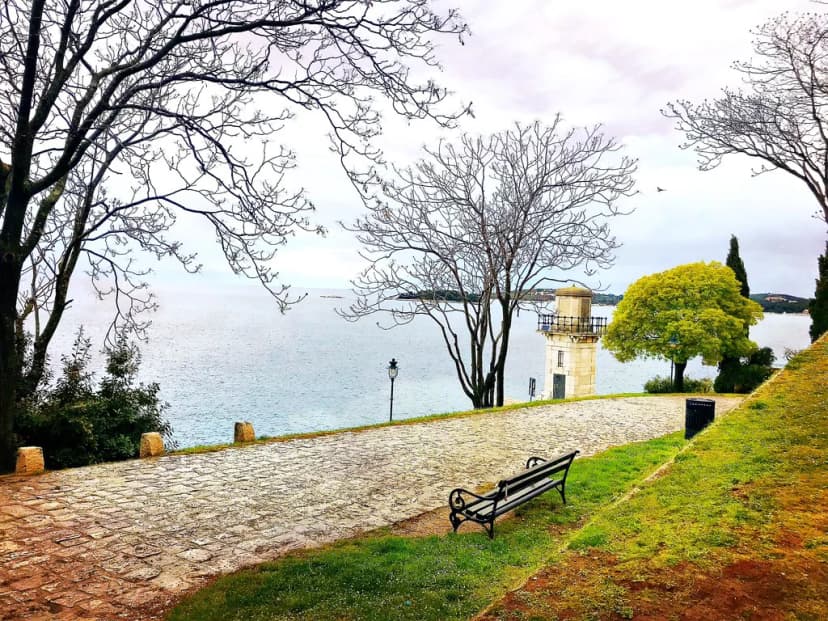
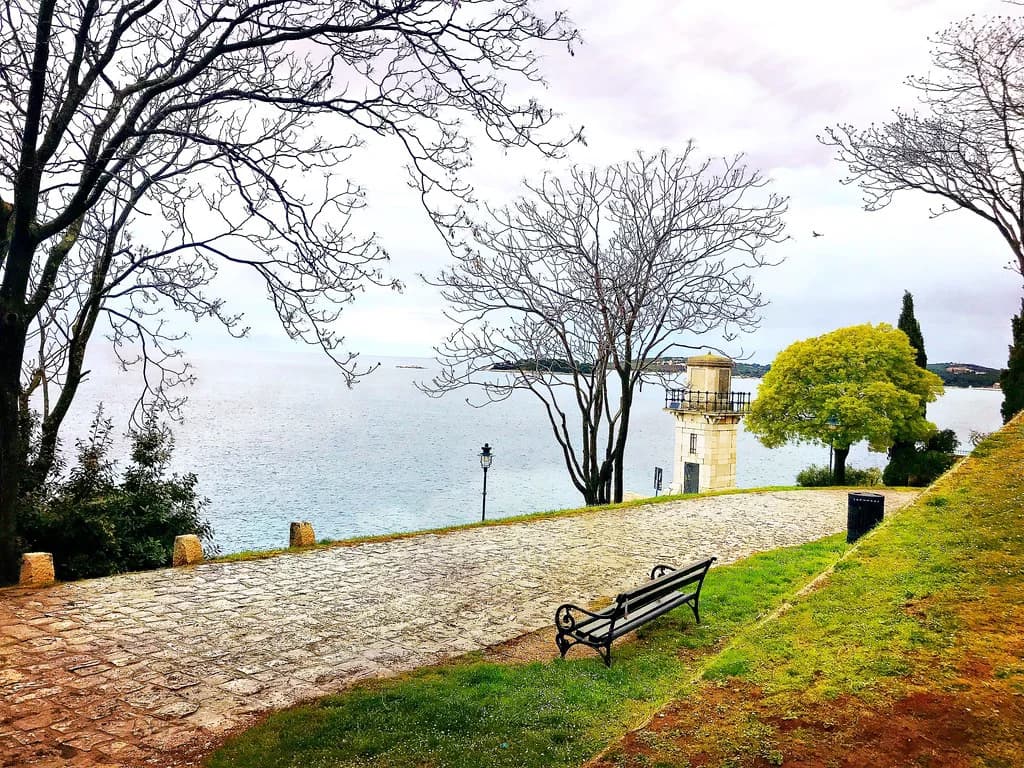
Rovinj has earned a genuine cult following among travel photographers for one specific reason: it is one of the very few towns on the Adriatic where the sun sets directly over open sea rather than over land or mountains. From the western cliff rocks below St. Euphemia and from the hilltop terrace near the church, you watch the sun descend into the horizon with nothing in the way — a 180-degree arc of orange and pink over the water, reflected off the smooth limestone underfoot. This happens every clear evening from spring through autumn, and it never gets ordinary.
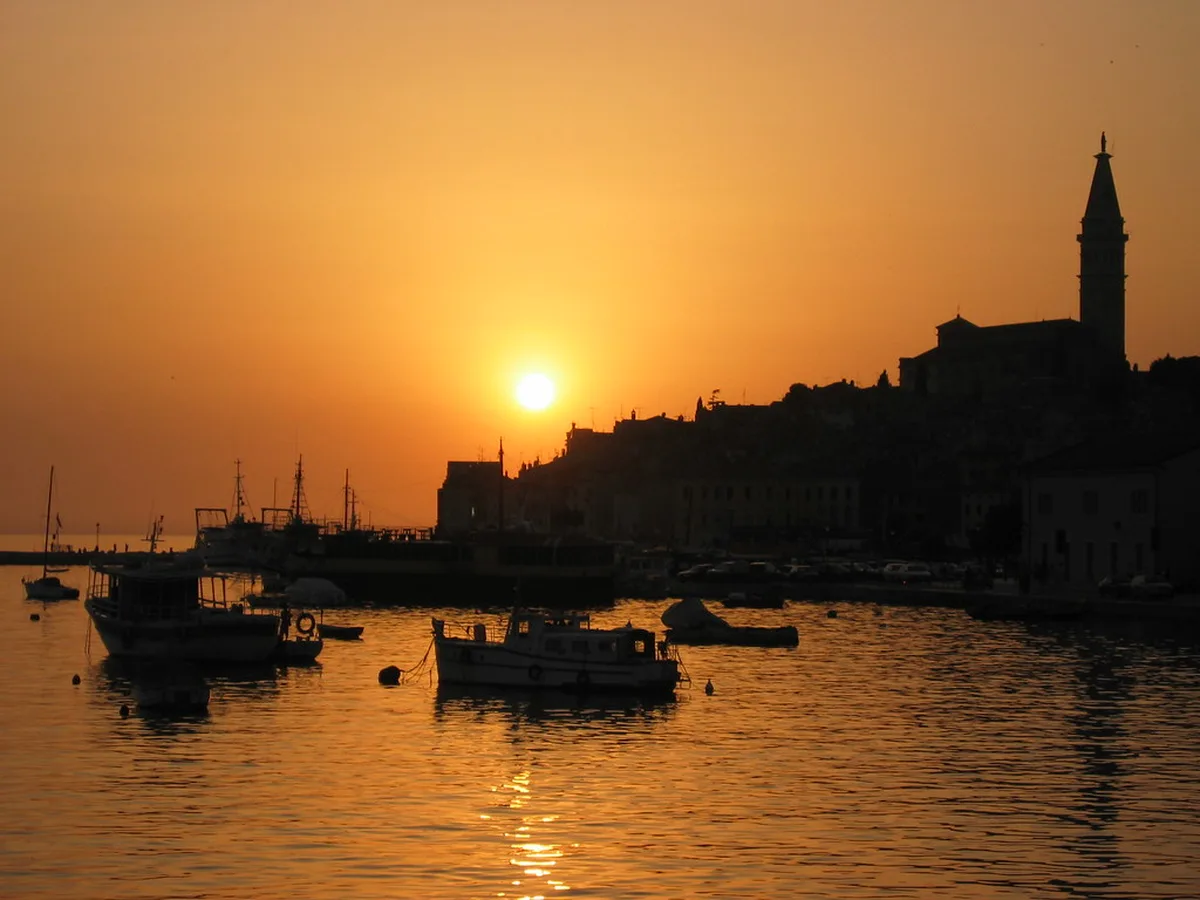
The best vantage points are free and accessible to all visitors. The cliff-top area southwest of the church — locals call it Punta Corrente or simply "the rocks" — is a series of flat, sun-warmed limestone ledges that drop directly into the sea. Locals and long-stay visitors gather here from around 6:30 PM in summer, sitting with a bottle of wine as the light turns golden. The mood is convivial and unhurried; this is not a tourist attraction with queues and entry fees, but a daily ritual that the town shares collectively. Bring a bottle of Malvazija Istarska white wine (€8–12 from any old-town wine shop) and arrive 30 minutes before sunset to claim a ledge.
From the bell tower at €3, you get the elevated version of the same view. The tower closes at 6:00 PM in most seasons, so the standard ground-level rock perch is the practical sunset option for most visitors. However, if you time your bell tower visit for late afternoon — arriving at 5:00 PM in shoulder season when the light is already warm — you capture a panorama that the morning visit cannot match: the islands gilded to the west, the fishing boats returning to harbour below, and the old town's terracotta rooftops catching the late sun from above.
The hilltop itself around St. Euphemia offers a second free option: the narrow lane that circles the church exterior gives unobstructed views west and north without needing to climb the tower. Photographers with telephoto lenses set up here to frame the sunset between the old town's chimney stacks and laundry lines — a composition that captures the lived-in, working character of the town alongside the cinematic light. A tripod is useful but not essential; the stone balustrades along the lane make a steady resting surface.
After sunset, the transition into evening is itself spectacular. The town's streetlamps warm the limestone to amber, and the harbour lights begin to reflect on the water. Dinner reservations inside the old town are typically from 7:00 PM — sunset, drinks on the rocks, and dinner in the candlelit alleys is the perfect Rovinj evening arc. Book your table before heading to the sunset point; peak-season tables fill by 6:00 PM for the 7:00 PM sitting. For the best combination of view and a glass of Istrian wine before dinner, Zlatna Ribica bar (cocktails €9–13) seats its terrace guests from 6:00 PM on the cliff edge with an unobstructed sea view that competes with anywhere in the Mediterranean.
Rovinj's Art Galleries and the Grisia Street Scene
Rovinj has been a magnet for artists since the 1950s, when the Yugoslav government designated it a "town of artists" and provided studios to painters and sculptors from across the region. That designation shaped the character of the old town profoundly. Today, working artists live in the upper floors of the colorful houses that line the hilltop lanes, and their studios are often open to the public on an informal basis — a knock on a half-open door frequently leads to a private viewing and a conversation about technique, in English, Italian, or Croatian.
Grisia Street is the most visible expression of this tradition. The steep cobbled lane running from near Balbi's Arch up to St. Euphemia is lined with artists who display original paintings, prints, watercolors, and crafts on the stone walls and steps from mid-morning daily in summer. The range of quality and style is wide: photorealistic oil seascapes hang beside abstract acrylics, hand-thrown ceramic bowls sit next to hand-printed linen. The street is entirely free to walk and browse. Original canvases run €50–500 depending on scale and reputation; prints and smaller pieces start from €15. Bargaining is accepted in a relaxed, non-pressured way — many artists quote a first price they expect to be countered on.
The annual Grisia Art Festival, held on the second Sunday of August each year, is the highlight of the town's cultural calendar. The street becomes a juried open-air exhibition with more than 100 participating artists; the festival has run continuously since 1967, making it one of the oldest outdoor art events in Croatia. Entry to the festival is free. Works shown that day are vetted by a selection committee, so the standard is higher than the everyday display. Serious collectors from Italy, Slovenia, and Austria fly in specifically for it — if you are in Rovinj during the second week of August, adjust your schedule to coincide.
Beyond Grisia, the old town has several small private galleries worth seeking out. The Galerija Adris on the waterfront exhibits contemporary Croatian and international artists in a beautifully restored 18th-century building, with rotating exhibitions roughly every six weeks. Entry is typically free or €2–4 for major shows. The gallery shop sells high-quality prints and art books — a more considered souvenir than a mass-produced postcard. Opening hours are generally 10:00 AM–1:00 PM and 6:00 PM–9:00 PM in summer; confirm at the door.
For a deeper dive into local creative life, look for the signage for individual studio-galleries tucked into the lanes above Grisia. These are small, personal spaces — sometimes a single room — where the artist both works and sells. Visiting one is a genuinely different experience from a commercial gallery; you may see works in progress, unfinished canvases against the wall, and get an explanation of the artist's relationship with the Istrian landscape directly from the person who painted it. The quarter around Via Garibaldi and the lanes directly behind the church is the densest concentration of these studio spaces.
Waterfront Dining and Coastal Views
Dining by the water provides a quintessential Adriatic experience, but knowing the price geography saves you money without sacrificing quality. Restaurants directly on the harbour terrace command a 25–40% premium for the view. A main course of grilled fish runs €20–35 on the waterfront; the same dish costs €14–22 two streets back. For a budget-conscious seafood fix, buy directly from the harbour fish market (6–8 AM) — the fishermen weigh and sell fresh-caught sea bass, dentex, and scampi on the spot for a fraction of restaurant prices.
Truffle pasta is Istria's signature dish and Rovinj is one of the best places to eat it. The Motovun forest — one of Europe's finest truffle regions — is less than 50 km away, so the truffles on your plate are genuinely local. Expect to pay €18–28 for a generous bowl of pappardelle or tagliatelle with white or black truffle shavings. Avoid restaurants that offer truffle dishes at suspiciously low prices (under €14); they typically use truffle oil rather than real truffles. Ask staff whether the truffle is fresh or preserved — fresh is significantly better in season (autumn for white, winter/spring for black).
Sunset is the most popular time to visit the western rocks below St. Euphemia. Locals and tourists gather on the flat limestone ledges to watch the sun sink below the open sea. It is one of the few places in the Adriatic where you see the sun set over water rather than land — the reason Rovinj's sunsets have a cult following among travel photographers. Bring a bottle of Istrian wine from the nearby Vinoteka Barel and watch the sky turn from orange to deep pink over the islands.
For cocktails and nightlife, Zlatna Ribica (Golden Fish) bar tucked into a narrow alley off the harbour is the locals' evening institution. The bar is tiny — barely eight stools inside — but the terrace spills over a cliff edge with uninterrupted sea views. Cocktails run €9–13. Arrive at 6 PM to secure a terrace spot before the queues form; by 8 PM it is standing room only on weekends in summer. It is the single best place in Rovinj to combine a drink with a view that genuinely competes with anywhere in the Mediterranean.
Istrian wine pairs perfectly with the local cuisine. Malvazija Istarska is the flagship white — dry, aromatic, and slightly golden, ideal with seafood and the local sheep cheese (sir). Teran is the top red — earthy, tannic, and made for red-sauced dishes and aged sheep cheese. Both varietals are produced within 30 km of Rovinj; you can buy bottles from €8–15 at local wine shops, significantly cheaper than restaurant mark-ups. The Vinoteka in the old town carries 50+ Istrian labels with knowledgeable staff who speak English.
For the most authentic konoba experience, look for small family-run restaurants on the streets immediately behind the harbour front. These spots typically offer hand-written menus that change daily based on what the market had that morning. Look for buzara-style mussels (cooked in white wine, garlic, and breadcrumbs) at €12–16 per portion, and brodetto — the local fisherman's stew — at around €18. These preparations are specific to Istria and rarely replicated faithfully outside the region.
Smart Parking and Transportation Logistics
Parking inside the old town is strictly prohibited for non-residents, and enforcement is active year-round. The Valdibora parking garage is the most convenient option for day visitors — it sits directly outside the old town walls, and the walk from the garage to Balbi's Arch takes under five minutes. Rates in 2026 run approximately €2–3 per hour in peak season (June–August) and drop to €1.50 per hour in shoulder season. The garage is multi-storey and covered, which matters if afternoon thunderstorms are forecast. There is also an open-air surface lot adjacent to the garage that fills first in summer — aim for the garage itself for guaranteed space.
The strategic move for a full-day visit is to park, walk everything, and not move the car until you leave town. Once you are inside the old town walls, every attraction, restaurant, and bar is within 10 minutes on foot. Taking the car out mid-day to find a restaurant parking spot wastes 30–45 minutes in summer traffic and risks losing your space. Commit to the walk-in approach and the day flows much more easily.
Heavy traffic on the main access road from Pula can make reaching town difficult in July and August, particularly on Saturday mornings when weekly Croatian holidaymakers arrive and depart simultaneously. If you are driving from Pula, aim to arrive before 9 AM or after 3 PM. The approach from Poreč to the north is generally less congested. During extreme peak weeks (last two weeks of July, first two weeks of August), park-and-ride services operate from a designated lot on the Pula road — check the Rovinj tourist board website for the year's specific dates and bus frequency.
If you are staying in Rovinj and renting a car only for day trips, bicycles are the superior option for exploring the immediate area. The Zlatni Rt (Golden Cape) forest park begins immediately south of the old town and has 10+ km of flat coastal cycling paths. Rental shops near the bus station charge €10–15 per day for standard bikes, €20–30 for e-bikes. The harbour promenade itself is pedestrian only, but paths through the park deliver sea views without a single hill. A bike also lets you reach the best beaches around Rovinj faster than walking, particularly Lone Bay and Mulini Beach to the south.
The bus station is a 10-minute walk from Balbi's Arch and connects Rovinj to Pula (approximately 90 minutes, €6–9), Poreč (45 minutes, €5–7), and Zagreb (several hours, €20–30). Taxis and ride apps operate from a stand beside the bus station. There is no direct train to Rovinj — the nearest rail connection is Pula, then bus. If you are arriving from Venice or Trieste by sea, summer ferry services run to Rovinj harbour; book ahead as these fill quickly.
Lim Fjord and Day Trips from Rovinj Old Town
The Lim Fjord (Limski kanal) is one of the most dramatic landscapes in Istria and one of the most accessible half-day trips from Rovinj. The fjord is actually a drowned river valley — a 12 km flooded canyon with sheer limestone walls rising 100 metres on either side, dense forest clinging to the slopes, and turquoise water running dead calm between the cliffs. It is one of the most cinematic natural features in the Adriatic and looks entirely out of place next to the flat coastal plains surrounding it.
Boat tours from Rovinj harbour are the most popular way to reach the fjord. Operators depart from the main promenade from May through October; the trip takes about 30 minutes each way and tours typically include a stop at an oyster and mussel farm inside the fjord where you eat freshly harvested shellfish directly from the water. Expect to pay €15–25 per person for a standard 2–3 hour tour including the oyster tasting. Private boat hire is also available from €60–80 for a half-day, which lets you linger as long as you want.
You can also reach the fjord overland — drive the Pula road south, then turn inland at the sign for Limski Kanal (approximately 20 minutes from Rovinj). There is a viewing platform at the canyon rim with a panorama that gives you the full scale of the gorge. Two restaurants at the waterside serve grilled fish and fresh oysters; prices are moderate (mains €14–22) given the location. The overland approach is useful if you want to combine the fjord with a visit to the cave system at the canyon head.
For a full day of Istrian hinterland exploration, combine the fjord with a truffle hunt and lunch in Motovun or a visit to Groznjan, the tiny hilltop village-turned-arts-colony. Both are under 50 km from Rovinj and require a car. More options are covered in our day trips from Rovinj guide, including Poreč with its Byzantine Euphrasian Basilica (UNESCO), the walled town of Pula with its Roman amphitheatre, and the lesser-visited Pazin Castle above its gorge.
Avoiding Common Tourist Mistakes in Rovinj
Many travelers only stay for a few hours on a day trip from Pula or the larger Istrian resorts. This is the single biggest mistake. Spending the night transforms the experience completely — the town belongs to the 20% of visitors who stay over once the day-trip buses depart around 5 PM. Evening walks through the lit alleys, dinner without a queue, and a sunrise over the empty harbour are only available to those who book accommodation inside or just outside the old town. Budget accommodation (guesthouses, rooms in private homes) starts at €50–70 per night in shoulder season.
Booking dinner reservations is essential during July and August. The best waterfront tables and small konobas with only 10–15 covers fill up several days in advance. If you arrive without a reservation on a Friday or Saturday evening in peak season, you will either queue 45 minutes or eat somewhere mediocre. Call ahead the day before at minimum, or use the restaurant's WhatsApp booking link (most post these on Google Maps).
Avoid the main tourist menus that feature generic pizza and pasta at inflated prices. Look for restaurants with hand-written or chalk-board specials — these change daily based on the market and signal a kitchen that is cooking to order rather than from frozen. The word "Konoba" in the restaurant name is a reliable indicator of a traditional Istrian tavern. Ask the waiter for the catch of the day rather than ordering from the printed menu; in-season fresh fish at a konoba is almost always better and often competitively priced versus the fixed-menu options.
Do not skip the morning harbour fish market. Most tourists are still at breakfast between 6 and 8 AM, which means the fish market is quiet, the fishermen are in good spirits, and the selection is at its peak. Even if you are not cooking, watching the weighing and bargaining is one of the most authentic slices of daily Rovinj life you can witness. A bag of fresh mussels to cook that evening (if your accommodation has a kitchen) costs €3–5 — cheaper than anywhere in Europe for equivalent quality.
Finally, do not forget sunscreen for the cliff rocks at sunset. The limestone absorbs heat and reflects sun intensely in the afternoon. The rocks are also genuinely slippery when wet from spray or morning dew. Wear shoes rather than sandals if you plan to walk the full cliff circuit, and keep children away from the unfenced edges on the western point.
Frequently Asked Questions
Is Rovinj Old Town car-free?
Yes. The historic old town peninsula is a fully pedestrian zone — no private cars, no scooters. Visitors must park outside the walls at Valdibora garage (€2–3/hr in 2026 peak season), which is a five-minute walk from the main Balbi's Arch entrance. Hotels inside the old town use electric luggage carts to move bags through the narrow lanes.
How much does it cost to visit Rovinj Old Town's top attractions?
Most of Rovinj Old Town is free. The waterfront promenade, Balbi's Arch, Trg Marafor, and the Grisia Street gallery quarter all cost nothing to enter. Paid attractions in 2026 include the St. Euphemia Church bell tower at €3, the Heritage Museum (Zavičajni Muzej) at €5, and the Batana Eco-Museum at €5. The church itself is free to enter. Budget €11–13 for all three paid sites combined.
How much time do I need in Rovinj Old Town?
You can cover the main landmarks — Balbi's Arch, Grisia Street, St. Euphemia bell tower, Heritage Museum, Trg Marafor, and the cliff-top sunset point — in about four to five hours at a relaxed pace. Staying two full days is better: you can visit the morning fish market (6–8 AM), dine properly, and see the town at both sunrise and sunset without rushing. Overnight visitors consistently rate the experience higher than day-trippers.
What is the best month to visit Rovinj?
May, June, and September offer the best balance of warm weather, manageable crowds, and lower prices. July and August are peak season: hot (28–33°C), crowded with international tourists, and 30–50% more expensive for accommodation. Early October is a hidden gem — the crowds clear, truffle season begins, and the sea stays warm enough to swim until mid-month.
Does Croatia use the Euro? What currency should I bring to Rovinj?
Yes. Croatia joined the Eurozone on 1 January 2023 and the official currency is the Euro (€). You do not need to carry Croatian kuna or exchange currency. All restaurants, shops, and parking machines in Rovinj accept Euros; major credit and debit cards are widely accepted. In 2026, typical costs are: bell tower €3, Heritage Museum €5, Batana Museum €5, truffle pasta €18–28, harbour fish market mains €14–22, Zlatna Ribica cocktails €9–13.
How do I get from Pula airport to Rovinj Old Town?
Pula Airport is approximately 40 km from Rovinj. A taxi or rideshare takes 35–45 minutes and costs €40–60 in 2026. By public bus, take a local bus to Pula bus station (€3–5, 20 minutes) then a Rovinj-bound bus (€6–9, 90 minutes). Total public transit journey is around 2–2.5 hours including waiting time. Car hire from the airport is the most flexible option and costs from €35/day in shoulder season.
What is Grisia Street and is it worth visiting?
Grisia Street is a steep cobbled lane in Rovinj Old Town where local artists display original paintings, prints, and crafts on the stone walls and steps. Entry is free; original canvases cost €50–500. It runs from near Balbi's Arch up to the Church of St. Euphemia and is one of the oldest open-air art exhibitions in Croatia. The annual Grisia Art Festival in August transforms the street into a juried outdoor gallery — worth timing your visit around if you are an art buyer.
Where is the best spot to watch the sunset in Rovinj?
The western cliff rocks below St. Euphemia Church — locally known as Punta Corrente — are the best free sunset viewpoint in Rovinj. The flat limestone ledges face directly west over open sea, giving an unobstructed view of the sun sinking into the Adriatic. Arrive 30 minutes before sunset to claim a good spot. For a paid option, the St. Euphemia bell tower (€3) offers an elevated panorama, but closes at 6:00 PM most seasons. Zlatna Ribica bar (cocktails €9–13) combines a cliff-edge terrace seat with a drink from 6:00 PM.
Rovinj remains one of the most picturesque and genuinely livable small towns in the Mediterranean. The combination of Venetian architecture, Croatian hospitality, world-class truffles, and an Adriatic sunset that turns the limestone orange is a sequence of experiences that is hard to replicate anywhere else in Europe. Planning your visit around the morning fish market, the bell tower at opening time, a truffle pasta lunch, and Zlatna Ribica at sunset gives you the full arc of what makes Rovinj extraordinary.
Bring rubber-soled shoes, park at Valdibora and leave the car there, book dinner in advance if visiting July or August, and above all — stay the night. The day-trippers leave. The town exhales. The alleys light up. That version of Rovinj is what stays with you.
For more on the surrounding region, read our Rovinj beach guide for the best swimming spots, our day trips from Rovinj guide for Lim Fjord, Motovun, and Poreč itineraries, and our Croatia travel guide for broader country planning.