The Ultimate Porto Old Town Guide for 2026 Travelers
Porto's historic center costs €5–€14 per major landmark in 2026, with São Francisco Church at €5, Clérigos Tower at €6, Livraria Lello at €8, and Palácio da Bolsa at €14 — budget €33 to cover all four in a single day.
The UNESCO-listed Ribeira district is walkable in under two hours end-to-end; a single metro ticket costs €1.85 in 2026, Port wine tastings run €10–€25 per flight at Rua Fonte Taurina bars, and the Dom Luís I Bridge crossing to Gaia wine cellars is free on foot.
Porto's historic center feels like a living museum where ancient granite walls meet the sparkling Douro River, in the heart of Portugal's vibrant north. Wandering through the narrow, winding alleys reveals centuries of maritime history and local Portuguese culture. This UNESCO World Heritage site offers a unique blend of medieval architecture and vibrant modern life. Our Porto old town guide will help you navigate the steep hills and discover the most authentic corners of the city.
Essential Landmarks in the Historic Center
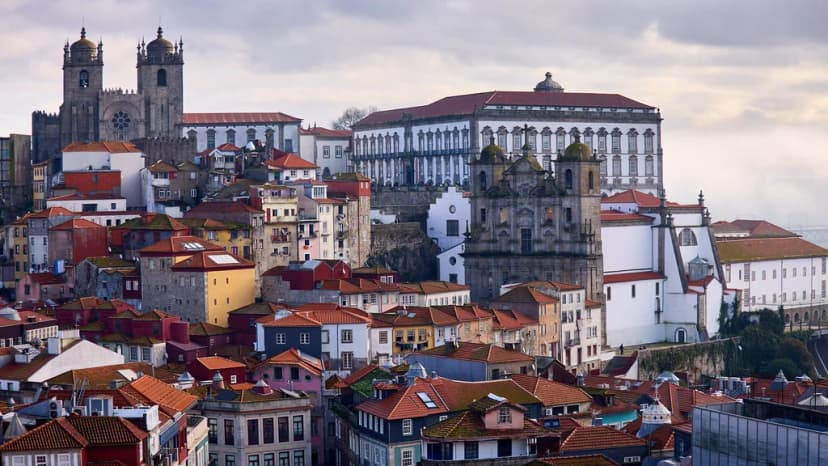
The Sé do Porto stands as a fortress-like cathedral overlooking the entire historic district from its hilltop perch. Visitors can explore the 12th-century cloisters decorated with intricate blue and white azulejo tiles. The terrace outside provides a sweeping view of the terracotta rooftops stretching down to the riverbank. It remains a perfect starting point for any walking tour of the district. Entry to the cathedral itself is free; the cloisters and treasury cost €3 in 2026. Allow at least 45 minutes here — the Romanesque nave, the silver altarpiece, and the adjoining bishop's palace all deserve close attention. Early morning visits, before 9:30 AM, mean you will share the terrace with only a handful of other travelers rather than the midday crowds.

Descending toward the water brings you to the Palácio da Bolsa, a 19th-century neoclassical monument of great beauty. This former stock exchange features the stunning Arabian Room, which took eighteen years to complete with intricate gold leaf. Guided tours are mandatory and usually last about 30 minutes, so booking ahead is highly recommended. In 2026 the standard guided tour ticket costs €14, with a combined ticket available if you also want to visit the adjacent Church of São Francisco. Many travelers find the craftsmanship here to be the highlight of their cultural itinerary. The Moorish arches, painted stars, and gilded plasterwork in the Arabian Room rank among the finest 19th-century interiors in the entire Iberian Peninsula. Photography is permitted in most rooms but tripods are not allowed inside.
Nearby sits the Church of São Francisco, famous for its breathtaking baroque interior covered in hundreds of kilograms of gold. The contrast between the plain Gothic exterior and the glittering wooden carvings inside is truly remarkable. In 2026 the ticket price is €5, which includes access to the catacombs beneath the church floor and the small museum next door. Plan for at least an hour to fully appreciate the detail in this historic place of worship. The catacombs hold the remains of members of the Franciscan Order and leading Porto merchant families, providing a sobering counterpoint to the gold-drenched nave above. The museum contains religious silverware, liturgical vestments, and 17th-century paintings that document the church's centuries of patronage. Arriving just after opening at 9:00 AM gives you the best light through the rose window and avoids the afternoon tour buses.
Do not miss the Clérigos Tower, one of the most recognizable silhouettes in Porto's skyline. The baroque granite tower was completed in 1763 and climbs to 76 metres, making it the tallest building in Porto for most of its history. Admission in 2026 is €6, which includes entry to the adjoining church and a small museum about the Clérigos Brotherhood. The 240 steps to the top are narrow and steep but reward visitors with a 360-degree panorama across the old town, the Douro, and on clear days all the way to the Atlantic coast. The museum is often overlooked but contains fascinating painted wooden figures and historical documents tracing the tower's construction. Combined entry with Livraria Lello is €13, a worthwhile saving if you plan to visit both on the same morning.
The Livraria Lello bookshop, just a few hundred metres from the tower, is one of the most photographed interiors in Portugal. The neo-Gothic facade, the famous red spiral staircase, and the stained-glass skylight attract enormous queues. In 2026 entry costs €8, which is fully redeemable against any book purchase inside. Arriving before 10:00 AM or after 5:30 PM dramatically reduces waiting time. Even if you do not intend to buy a book, the architectural experience is worth the entry fee and the short wait.
- Visit the Sé do Porto Cathedral
- Type: Historic Cathedral
- Best for: Panoramic Views
- Where: Upper Old Town
- Cost: €3 (cloisters & treasury)
- Tour the Palácio da Bolsa
- Type: Neoclassical Palace
- Best for: Architecture Lovers
- Where: Near Ribeira
- Cost: €14
- Explore São Francisco Church
- Type: Gothic Church
- Best for: Golden Interiors
- Where: Lower Ribeira
- Cost: €5
- Climb Clérigos Tower
- Type: Baroque Bell Tower
- Best for: City Panorama
- Where: City Centre
- Cost: €6
- Browse Livraria Lello
- Type: Historic Bookshop
- Best for: Architecture & Books
- Where: Near Clérigos
- Cost: €8 (redeemable)
Ribeira Waterfront District In Depth
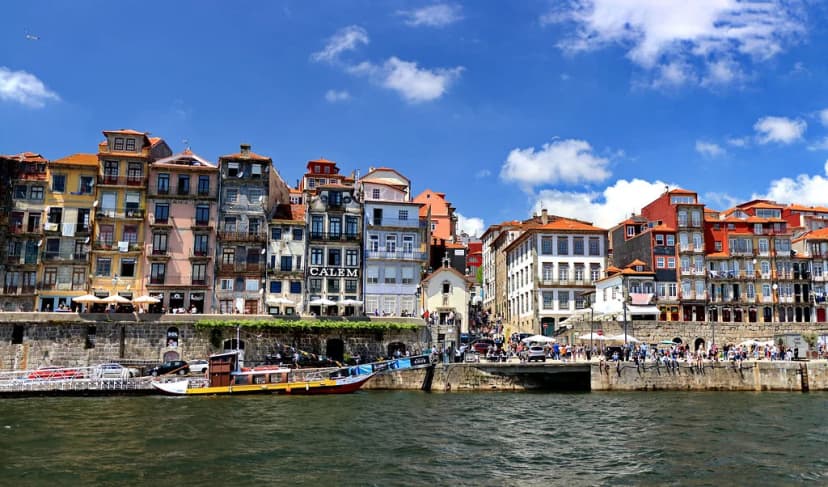
The Ribeira is Porto's oldest neighborhood and the UNESCO-listed core of the city, running along the north bank of the Douro River between the Dom Luís I Bridge and the Ponte Infante Dom Henrique. The district's character comes from the contrast between its crumbling, laundry-draped tenements rising steeply above the quay and the polished granite of the restored restaurants lining Cais da Ribeira at water level. This duality — lived-in chaos above, curated tourism below — is exactly what makes the Ribeira unlike any other European riverside quarter.
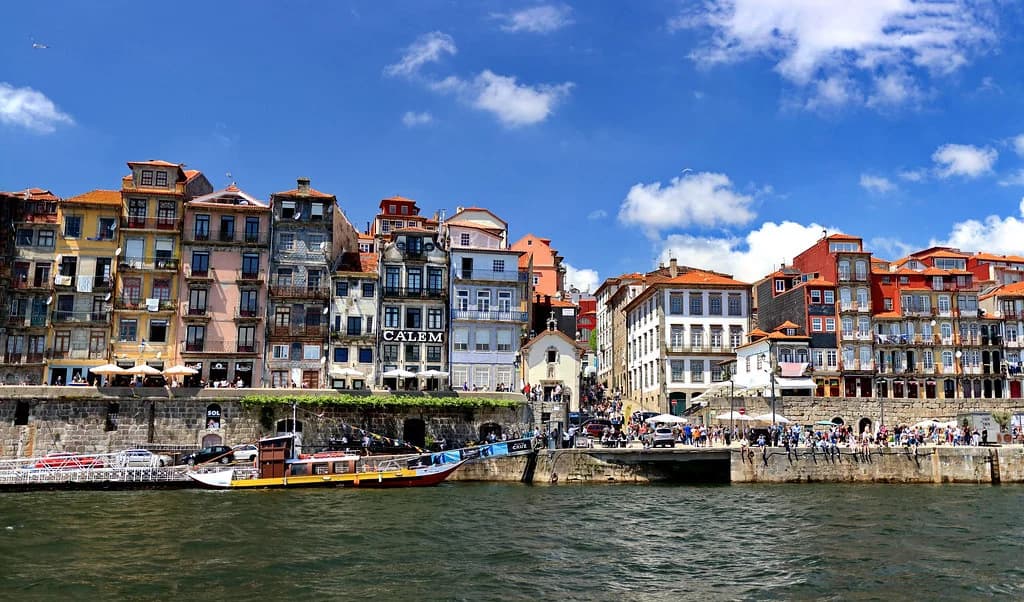
The Cais da Ribeira promenade stretches for roughly 400 metres and anchors the neighborhood's daily rhythm. In the early morning, local fishermen still unload catches near the eastern end of the quay. By mid-morning the café terraces fill with tourists sipping galão coffee and watching the traditional Rabelo boats bob on the Douro. These flat-bottomed wooden vessels once transported wine barrels from the Douro Valley vineyards downstream to the Gaia lodges, and their painted sails remain one of the most iconic images of Porto. Several operators offer short river cruises departing from Cais da Ribeira; a 50-minute Six Bridges cruise costs €15–€18 per person in 2026 and provides an unbeatable perspective on the old town's stacked facades.
Stepping back from the waterfront into Rua Fonte Taurina and Rua da Reboleira reveals a Ribeira that few tour groups reach. These narrow lanes are lined with medieval houses whose ground floors have been converted into small wine bars and tascas. Lunch here typically costs €12–€18 for a generous plate of bacalhau com natas (salt cod in cream sauce) or a bowl of tripas à moda do Porto, the tripe stew that gave Porto residents their affectionate nickname of "tripeiros." The climb from the quay to these alleys is steep — roughly 20 metres of elevation over 150 metres of distance — but the reward is an atmosphere that feels genuinely local rather than staged.
The Praça da Ribeira, the main square at the heart of the neighborhood, is anchored by a baroque fountain topped with a globe. The surrounding buildings are a patchwork of restoration efforts spanning three centuries, from whitewashed 18th-century façades to iron-balconied 19th-century townhouses. The square comes alive on summer evenings when street musicians set up near the fountain and the surrounding restaurants spill their tables onto the cobblestones. For a quieter experience, visit on a weekday morning when locals use the square as a shortcut to the market. The Mercado Ferreira Borges, a neoclassical iron market hall just north of the square, now hosts cultural events and a permanent exhibition on Porto's commercial history — entry is free.
The Dom Luís I Bridge, designed by a pupil of Gustave Eiffel and opened in 1886, frames the Ribeira from both ends of the quay. The upper deck (at 60 metres elevation) carries the Metro Line D and pedestrians across to the Serra do Pilar convent on the Gaia hilltop. The lower deck carries road traffic and pedestrians to the Gaia quayside and the famous Port wine lodges. Walking both levels — down on one, back on the other — is the standard route for visitors wanting to combine the Ribeira with a lodge visit. The upper deck crossing takes about 12 minutes at a relaxed pace and costs nothing; the Metro ride across is €1.85. For visitors with limited time, the Porto 3 day itinerary structures this crossing as a mid-afternoon activity on day one, allowing a full lodge visit before sunset.
Azulejo Tile Trail Through the Old Town
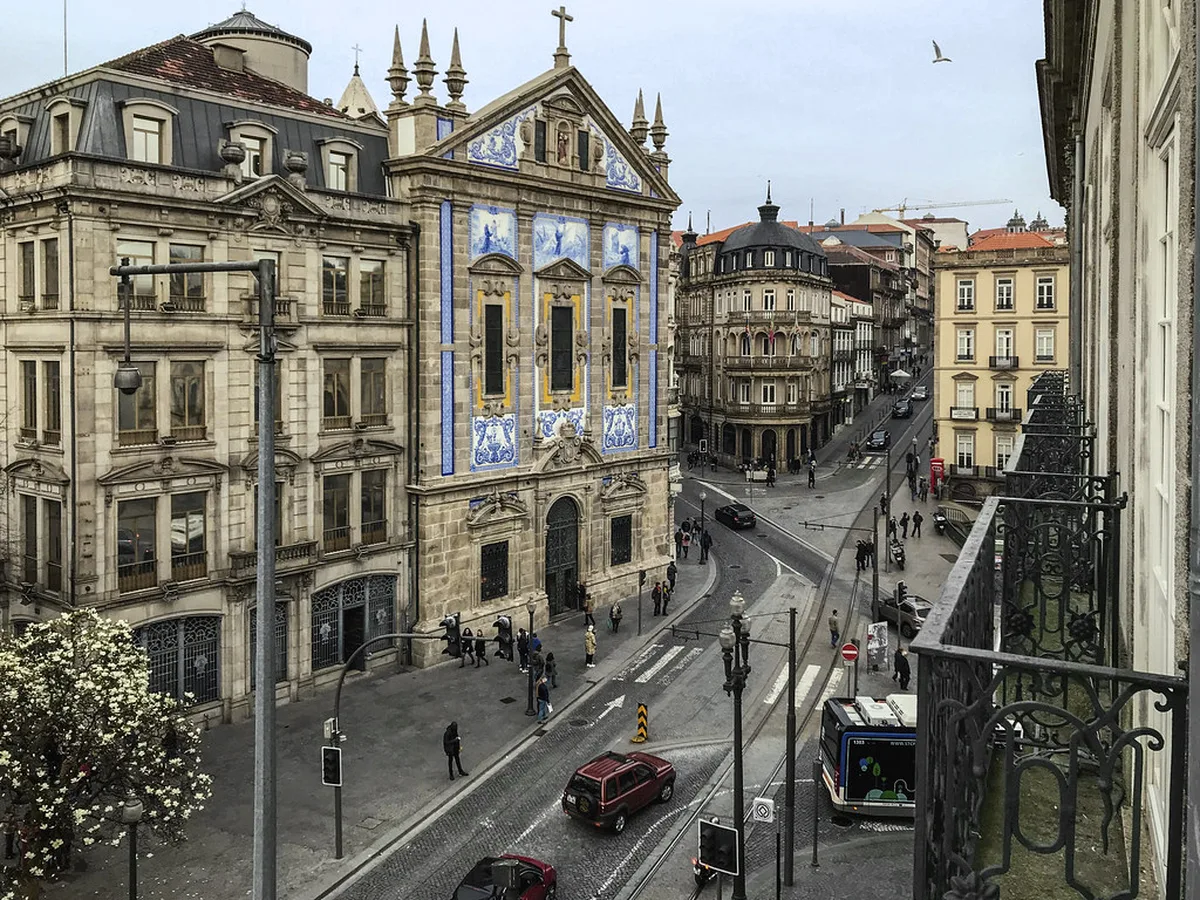
Porto is arguably the best city in Portugal to study azulejo tilework in its natural urban setting. Unlike Lisbon's tile museum, which concentrates examples in a single building, Porto's tiles remain in situ on façades, church interiors, and railway halls throughout the old town. Following an informal azulejo trail takes between two and three hours and is completely free, making it one of the highest-value cultural experiences in the city.
The São Bento railway station is the undisputed highlight of any tile itinerary. Its entrance hall is covered in approximately 20,000 blue and white azulejo panels created by artist Jorge Colaço between 1905 and 1916. The panels depict scenes from Portuguese history — the Battle of Valdevez, the arrival of John I in Porto, harvest scenes from the Minho region — in a panoramic narrative that functions as a visual encyclopaedia of national identity. Entry to the station hall is free and it is open throughout the day; the best light for photography falls between 10:00 AM and noon when the sun enters from the east-facing windows. São Bento sits just a five-minute walk from Livraria Lello and makes a natural pairing on any morning itinerary.
The Church of Santo Ildefonso, perched above São Bento on Rua de Santo Ildefonso, presents the most striking exterior tilework in the city. Its entire façade is clad in 11,000 blue and white tiles painted by Jorge Colaço between 1932 and 1936, depicting biblical scenes and allegories of the arts and sciences. The effect is monumental — the church façade becomes a public altarpiece visible across the neighbourhood. Entry to the church interior is free, and the gilded baroque retable inside is easily the equal of anything in São Francisco.
For a more intimate encounter with tiles, seek out the private house façades on Rua das Flores, Porto's "street of flowers." This pedestrianised street connecting the Ribeira to the Palácio da Bolsa area is lined with 18th and 19th-century townhouses whose owners clad their buildings in tilework ranging from simple geometric patterns to elaborate pictorial panels. The street itself is traffic-free and dotted with specialty shops selling hand-painted reproduction tiles at prices ranging from €5 for a single coaster to €80 for a full 12-tile panel — a more authentic souvenir than the mass-produced versions sold near the cathedral. The Sé do Porto cloisters, accessible for €3, contain some of the finest 17th-century azulejo panels in Portugal, depicting scenes from the Song of Songs in over a thousand individual tiles.
Navigating the Streets with a Porto Old Town Guide
Walking through the old town requires sturdy shoes and a good degree of physical stamina for the steep inclines. The granite steps of Escadas do Guindais connect the upper town near the cathedral to the Ribeira waterfront at river level — 61 steps in total — and are considered a scenic alternative to the main roads. Many travelers find that descending toward the river is much easier on the knees than the climb back up, so the standard recommendation is to begin any walking tour at the Sé and let gravity carry you downhill toward Cais da Ribeira. If the return climb feels too steep, the Porto funicular and cable car guide covers the Funicular dos Guindais (€2.50 single, €3.50 return in 2026), which runs between the riverfront and the upper town from 10:00 AM daily.
The Cais da Ribeira is the heart of the lower town and stays busy throughout the day. Street performers and local vendors create a lively atmosphere along the riverfront promenade. You can walk across the lower level of the Dom Luís I Bridge to reach the Port wine cellars in Gaia — the crossing is free and takes about ten minutes on foot. This path offers a close-up look at the traditional Rabelo boats moored along both banks. The lodges on the Gaia side offer free entry with paid tasting sessions; a standard three-wine flight costs €12–€18 depending on the lodge. Graham's, Taylor's, and Ramos Pinto are particularly well regarded for their self-guided visitor experiences in 2026.
For a different perspective on the city, the upper level of the Dom Luís I Bridge provides a dramatic view of the entire UNESCO site from 60 metres above the river. Pedestrians share this level with the metro, so stay within the marked walking lanes. Crossing at sunset offers some of the best photographic opportunities in the city — the warm light catches the yellow, orange, and faded blue façades of the Ribeira houses and turns the Douro surface to copper. The walk takes about twelve minutes but most visitors stop several times for photographs and to watch the Rabelo boats below.
Organizing your route by elevation prevents unnecessary backtracking through the steep alleys. Start at the Sé cathedral in the morning, work south and west through Livraria Lello and Clérigos Tower before 10:00 AM to beat the crowds, then descend via Rua das Flores to the Palácio da Bolsa and São Francisco Church for the late morning. Lunch on a side street off the Ribeira promenade keeps costs reasonable (€12–€18 per person), and the afternoon is best spent crossing to Gaia. If you are planning multiple days, a Porto 3 day itinerary distributes these highlights so that no single day feels rushed. Day-trip visitors arriving from Lisbon by train have roughly eight hours, which is enough for the core landmarks if they start immediately on arrival at São Bento — and travelers undecided between the two cities will find a full comparison in the Porto vs Lisbon guide.
Navigation apps work well in the old town but do not always account for staircases and pedestrian-only lanes that create genuine shortcuts. The area bounded by Rua Mouzinho da Silveira to the north, the Douro to the south, and the two bridges to east and west covers most of the key sites and can be walked end-to-end in under 25 minutes at a brisk pace. The tourist office on Rua Clube dos Fenianos provides free printed maps; the staff there speak English, French, and Spanish and can advise on current admission prices and opening hours, which do occasionally change seasonally.
Authentic Dining and Local Culinary Experiences
Many visitors make the mistake of eating only on the main riverfront promenade where prices are often inflated. Stepping just two blocks back into the narrow alleys of the Ribeira reveals local tascas with much more affordable daily specials. These smaller spots often serve a traditional Francesinha sandwich — a Porto original of cured meats, melted cheese, and spiced beer-and-tomato sauce — for €11–€13 including a drink in 2026. Choosing these authentic eateries supports local families and provides a far more genuine dining experience than the polished tourist restaurants on Cais da Ribeira.
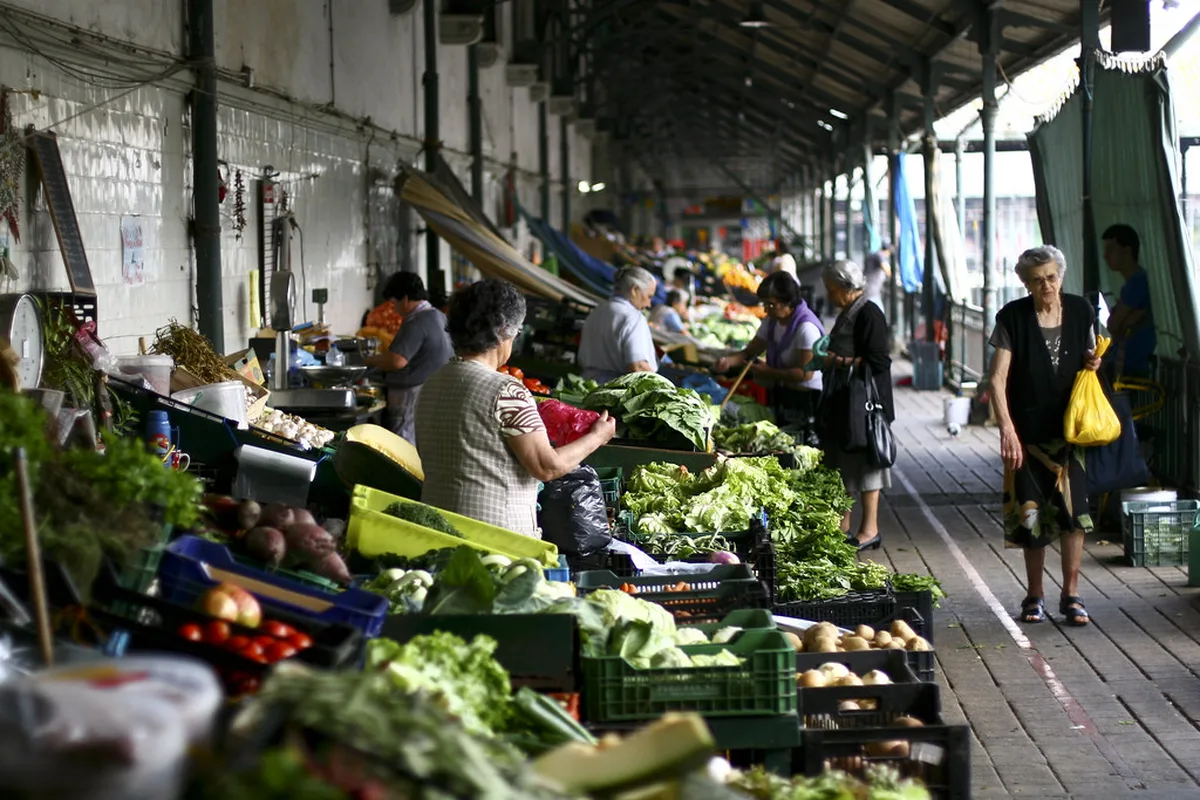
Fresh seafood is a staple of the local diet thanks to Porto's proximity to the Atlantic Ocean. Look for grilled sardines in season (June to September) or salt-cod dishes like Bacalhau à Brás or Bacalhau com natas in the family-run restaurants near São Francisco Church. Most traditional menus change daily based on what is freshest at the local Bolhão market. Expect to pay €14–€20 for a high-quality main course with a half-bottle of local Vinho Verde at these mid-range spots. For a budget lunch, the daily set menus (prato do dia) in the uphill tascas on Rua da Reboleira offer soup, main, dessert, and a drink for €9–€11 in 2026.
No visit to the old town is complete without sampling Port wine. While the major lodges are across the river in Gaia, many small wine bars in the Ribeira offer curated tasting flights ranging from three to six glasses. You can learn about the differences between Ruby, Tawny, White, and Late Bottled Vintage Port from knowledgeable local staff. Tasting sessions in these in-town bars usually cost €10–€20 for a three-wine flight or €22–€30 for a six-wine premium selection including a 20-year Tawny. The bars on Rua Fonte Taurina are consistently recommended by locals over the tourist-facing options directly on the promenade. Pairing Port wine with locally produced queijo da Serra cheese and thin slices of presunto (air-cured ham) costs around €8–€12 as an aperitivo and is one of the most satisfying and affordable experiences in the old town.
For those with a sweet tooth, the pastéis de nata available at the small pastry counters near the Sé are freshly baked and cost €1.20–€1.50 each in 2026 — significantly less than the café versions on the tourist promenade. The bica (espresso) to accompany it costs €0.80 at a local counter versus €2.50–€3.00 at a terrace café with a river view. These small savings compound quickly over a full day of sightseeing and allow you to redirect the difference toward a higher-quality Port wine tasting or a lodge visit across the bridge.
Managing the Crowds and Logistics in 2026
Tourism in Porto continues to grow, making strategic timing more important than ever for a peaceful experience in 2026. Arriving at major landmarks like Clérigos Tower (€6) and Livraria Lello (€8) before 10:00 AM helps you avoid the largest tour groups, which typically arrive by 10:30 AM. Mid-week visits between Tuesday and Thursday are generally quieter than weekends when domestic travelers and city-break visitors from Lisbon swell the numbers in the historic center. Early morning light — from 8:00 to 10:00 AM — also provides the best photographic conditions for capturing the colorful facades of the Ribeira houses before café umbrellas and street crowds fill the frame.
Safety in the historic center is generally very good for tourists. The area is well-policed and well-lit, and serious crime is rare. That said, it is wise to review resources on is Porto safe for tourists before your trip to understand the neighborhoods where petty theft has been reported. The main precautions are standard European tourist-city advice: use a front-facing bag or an under-shirt money belt in crowded areas like Cais da Ribeira and on the trams, and keep phones out of sight in narrow alleys at night. The Bonfim and Campanhã areas to the east of the historic center require more caution after dark, but the UNESCO core is tourist-friendly at all hours.
Public restrooms are sparse within the old town's maze of narrow streets. Most cafes expect a small purchase — typically an espresso at €0.80–€1.20 — before allowing access to their facilities. Large museums including Palácio da Bolsa and São Francisco Church have clean restrooms included with admission. The main São Bento railway station has paid facilities for €0.50 near the main entrance. Identifying these stops in advance and building coffee or water breaks around them makes a full day of sightseeing considerably more comfortable, particularly on warm days when hydration is essential on the steep climbs.
Porto's public transport is an affordable complement to walking in the old town. The Metro costs €1.85 per single journey and the funicular is €2.50 one way. For visitors spending multiple days, a rechargeable Andante Tour card (€7 for one day, €11 for three days in 2026) covers unlimited metro, bus, and funicular travel across zones 2 and 3 and pays for itself quickly. Taxis and ride-share apps are readily available throughout the Ribeira area and typically cost €5–€8 for short journeys within the historic center. For an overview of getting around the city more broadly, the Porto funicular and cable car guide covers every transport option in the steep upper and lower districts in detail.
Port Wine Lodges and Vila Nova de Gaia
Vila Nova de Gaia, directly across the Douro from the Ribeira, is home to over 30 Port wine lodges whose distinctive white-lettered signs have defined Porto's skyline for centuries. The lodges cluster along the Gaia quayside — known as Cais de Gaia — within a 20-minute walk of the Dom Luís I Bridge. Visiting at least one lodge is considered essential context for understanding Porto's economic and cultural identity: it was Port wine that funded the baroque churches, the azulejo tile campaigns, and the merchant palaces you see throughout the old town.
Graham's Lodge, perched on the hillside above the Gaia quay at Rua do Agro 141, is consistently rated the finest visitor experience in 2026. The self-guided tour (€10 per person) takes you through oak barrel warehouses holding up to 10,000 casks at any one time, ending in an elegantly restored tasting room with views across the Douro to the Ribeira. The premium tasting (€25) adds a 30-year Tawny and a vintage Late Bottled Vintage to the standard three-wine flight. Advance booking online is strongly recommended for weekend visits; weekday slots are usually available on the day. The lodge restaurant, Vinum, serves a three-course lunch for €45 per person and is one of the best dining experiences in the greater Porto area.
Taylor's Lodge, at Rua do Choupelo 250, offers a similar self-guided format with a free entry option on the understanding that you purchase from the tasting menu. The terrace bar here is one of the most photographed viewpoints in the city — positioned 60 metres above the Douro with an unobstructed line of sight to the Ribeira and the two bridges. A glass of 10-year Tawny at the terrace bar costs €5.50; the three-wine tasting flight is €12. Taylor's is a five-minute uphill walk from the quay, so comfortable footwear is essential. The lodge opens daily from 10:00 AM to 6:00 PM, with last entry at 5:30 PM.
Sandeman Lodge, located directly on the Gaia quay at Largo Miguel Bombarda, is the most recognizable brand in Port wine and caters well to first-time visitors. Entry to the lodge tour is €15 and includes a guided 45-minute walk through the history of Port wine production, from the Douro Valley harvest to the aging process in Gaia. Three tasting tiers are available: Origin (€15, two wines), Founder (€25, four wines), and Premium (€40, six wines including a 40-year Tawny). The brand's iconic black-caped figure logo, designed in 1928, is stamped on everything from bottles to cobblestones at the lodge entrance.
Budget-conscious visitors should note that Ramos Pinto Lodge offers one of the best value tastings on the quay — a four-wine flight for €10 that includes access to a small art museum dedicated to the label's Art Nouveau poster collection. The lodge opens at 9:00 AM, making it the best option for travelers who want to visit Gaia before the midday crowds arrive. Combining the Gaia visit with a walk along the Porto beach guide route gives a full day out of the city center without requiring a car — several beaches are reachable by Metro Line E from São Bento station in 35–45 minutes for €1.85 per journey. For excursions beyond the city, the day trips from Porto guide covers the Douro Valley, Braga, and Guimarães as half-day options from the historic center.
The walk back from Gaia to the Ribeira via the lower level of the Dom Luís I Bridge takes ten minutes and can be timed for sunset when the Ribeira facades glow amber and the Douro surface turns molten gold. This is the most photographed moment in all of Porto — arrive on the Gaia side at least 30 minutes before sunset to secure a position on the bridge walkway. For visitors who prefer not to walk, a water taxi connects the two quaysides; the crossing costs €4 per person in 2026 and runs until 9:00 PM daily in summer.
Frequently Asked Questions
Is the Porto old town walkable for seniors?
The old town is steep and features many uneven cobblestone streets that can be tiring for seniors or anyone with mobility challenges. The Funicular dos Guindais (€2.50 one way in 2026) connects the lower Ribeira to the upper town near the cathedral and eliminates the hardest climb. We recommend basing the lower Ribeira as your starting point to minimize uphill walking, and using the funicular or a short taxi ride (€5–€7) to return to the upper town landmarks like Clérigos Tower (€6) at the end of the day rather than climbing on foot.
How much time should I spend in the historic center?
Dedicate at least one full day to see the main landmarks: Sé do Porto, Palácio da Bolsa (€14), São Francisco Church (€5), Clérigos Tower (€6), and Livraria Lello (€8). A second day allows you to cross the Dom Luís I Bridge to the Gaia wine lodges, explore the azulejo tile trail through São Bento station and Santo Ildefonso church, and eat a proper sit-down lunch rather than rushing between sites. A two-day schedule is the sweet spot for most travelers who also want to explore Porto's neighborhoods beyond the UNESCO core.
Are there many tourist traps in Ribeira?
The main Cais da Ribeira promenade has several restaurants that charge €20–€30 for dishes available two streets uphill for €12–€15. To find genuine value, walk five minutes up into Rua Fonte Taurina or Rua da Reboleira — the tascas on these lanes serve the same bacalhau and Francesinha at roughly half the price. A Francesinha sandwich on the promenade typically costs €15–€17 including a drink; the same dish on a side street costs €11–€13. The street-level souvenir stalls near the Dom Luís I Bridge also sell mass-produced tiles; for handmade reproductions at fair prices, the specialist shops on Rua das Flores are a better choice.
What is the best time of year to visit Porto?
May and September offer the best balance of mild temperatures (18–24°C), manageable crowd levels, and hotel prices that are 20–30% lower than July peak rates. Summer (July–August) is very hot — reaching 35°C on some days — and the Ribeira promenade can feel oppressively crowded with cruise-ship day visitors. Winter (December–February) brings significant rainfall and some chilly days, but hotel rates drop further and the old town has an authentic, locals-only atmosphere. The São João festival on 23–24 June is a major annual event worth planning around if you do not mind the crowds.
What does it cost to visit the main Porto old town landmarks in 2026?
The five main paid attractions in the historic center cost a combined €36 in 2026: Sé do Porto cloisters €3, Palácio da Bolsa guided tour €14, São Francisco Church and catacombs €5, Clérigos Tower €6, and Livraria Lello €8 (redeemable against a book purchase). São Bento station, the Dom Luís I Bridge crossings, and the Santo Ildefonso church façade are all free. A Port wine tasting flight at a Ribeira wine bar adds €10–€20 more. A total daily budget of €60–€70 per person covers all landmarks plus a sit-down lunch on a side street.
Can I visit the Porto old town and the Gaia wine lodges in the same day?
Yes — the combination is one of the most popular full-day itineraries in Porto and is entirely doable on foot. Cross the lower level of the Dom Luís I Bridge from the Ribeira (free, 10 minutes) to reach the Gaia quayside. The major lodges — Graham's, Taylor's, Sandeman, and Ramos Pinto — are all within a 15-minute walk of the bridge. Standard tasting sessions cost €12–€20 for a three-wine flight and most lodges do not require advance booking on weekdays. Allow two to three hours for a lodge visit plus the bridge crossings, and aim to be back in the Ribeira by early evening for a riverside dinner.
Is there parking available near the Porto old town?
Driving into the Ribeira is strongly discouraged — the streets are extremely narrow, most are one-way or pedestrian-only, and on-street parking is almost non-existent inside the UNESCO core. The closest practical option is the Alfândega car park near the customs house on Rua Nova da Alfândega, which charges approximately €1.50 per hour. Alternatively, the Bom Jesus or Fontainhas surface car parks on the upper eastern edge of the historic center offer lower rates at around €0.80–€1.00 per hour and are within a 10-minute walk of Clérigos Tower (€6). Most visitors arriving by car are better served by parking outside the old town and using the Metro (€1.85 per journey) or funicular (€2.50 one way) to reach the historic center. A full breakdown of all zones and pricing is available in the dedicated parking in Porto guide.
Exploring the historic heart of Porto is an essential experience for any traveler visiting Portugal in 2026.
From the gold-encrusted interior of São Francisco Church (€5) to the sweeping panorama from Clérigos Tower (€6) and the lively Ribeira waterfront below, the old town rewards every hour you invest in it.
Use this guide to plan your route, budget your day around the 2026 admission prices, and immerse yourself in the rich maritime and architectural traditions of this remarkable UNESCO city.