Ultimate Alsace Travel Guide: Strasbourg and Colmar (2026)
Alsace is a northeastern French region where visitors explore Strasbourg's UNESCO Grand Île and Colmar's Petite Venise canals — the TER regional train connects both cities in 30 minutes with a €12 return ticket in 2026.
A daily budget of €80–€130 per person covers transport, entry fees, and a full Alsatian winstub dinner; the 170 km Alsace Wine Route links 70+ villages with tasting sessions priced at €10–€25 per domaine.
Alsace sits on the border of France and Germany, blending two distinct cultures into one beautiful region. Visitors often flock to this area for its colorful timber-framed houses and world-class white wines. This Alsace travel guide helps you navigate the best of the region's two most famous cities. Plan your journey across this historic landscape to experience a unique slice of French heritage.
Strasbourg serves as the grand regional capital, offering a mix of medieval history and modern European politics. Colmar feels like a fairy tale come to life with its flower-lined canals and narrow cobblestone streets. Choosing between these two gems can be difficult, but most travelers find time to visit both. Helpful logistics and destination highlights are detailed in the following sections of this guide.
Navigating Between Strasbourg and Colmar
Regional trains connect the two cities frequently throughout the day with reliable service. A return ticket on the TER Fluo Grand Est train costs approximately €12 when booked through the SNCF Connect app in advance; buying at the station window costs around €15 one-way. These comfortable trains complete the scenic journey in just under thirty minutes from platform to platform. Trains run roughly every thirty to sixty minutes between 5 AM and 11 PM, making spontaneous day trips entirely straightforward.

Travelers preferring more flexibility might consider renting a car for their Alsace adventure. Driving allows you to explore the famous Wine Route at your own relaxed pace between cities. Compact car rentals start at €35–€55 per day from agencies at Strasbourg Entzheim Airport or the Gare Centrale. Many small villages between the main hubs offer free parking on their outskirts for visitors, and toll roads in Alsace are minimal, adding almost nothing to your daily budget.
Cycling is another popular way to move through the flat plains of the Rhine Valley. Dedicated bike paths link Strasbourg to several nearby towns and rural vineyards safely. Vélostation rental shops in both cities provide daily rates starting at roughly €20 for standard city bikes and €35–€45 for electric bikes. The EuroVelo 15 Rhine Cycle Route passes directly through the region and is well-signposted, making it possible to cycle between Strasbourg and Colmar in under three hours on flat terrain. Helmets and panniers are available as accessories for an additional €3–€5 per day.
For those who prefer guided travel, hop-on hop-off bus tours covering both cities depart from Strasbourg's Place de la Cathédrale. A combined two-city pass costs €38 per adult in 2026 and includes stops at the main highlights. This is a particularly good option for first-time visitors who want orientation before exploring independently. Group walking tours in Strasbourg depart daily from the tourist office for €14 per person, while private guided tours of both cities combined run €90–€120 for up to six people. Children under 12 travel free on most TER regional services when accompanied by an adult, making the train the best budget option for families.
Top Highlights of Strasbourg Old Town
The Strasbourg old town, known as the Grande Île, is a protected UNESCO World Heritage site and one of the finest examples of medieval urban planning in Western Europe. Its center features the stunning Cathedral of Notre-Dame, built in pink Vosges sandstone over four centuries; the spire, completed in 1439, remained the world's tallest structure for over two hundred years. Visitors can climb the platform at 66 metres for a panoramic view stretching to the Black Forest and the Vosges mountains on a clear day. Entry to the main cathedral floor is free, though the astronomical clock show inside requires a €3 ticket timed to the noon performance.
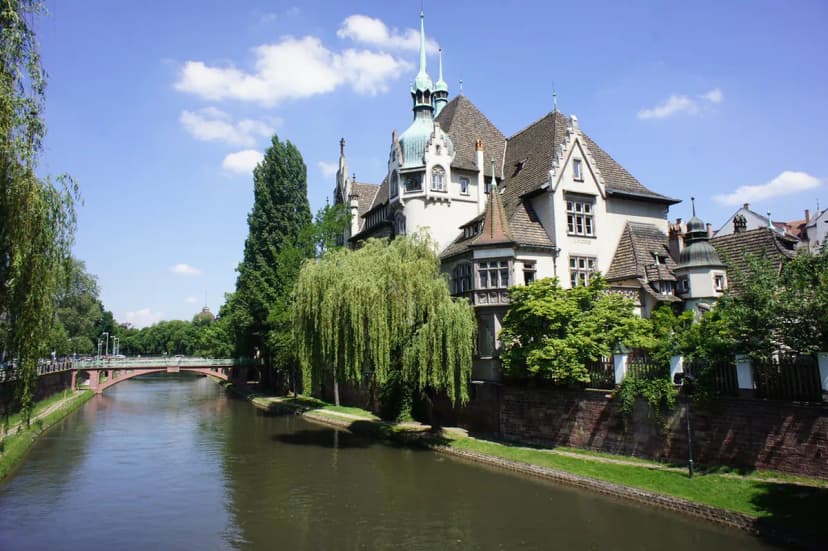
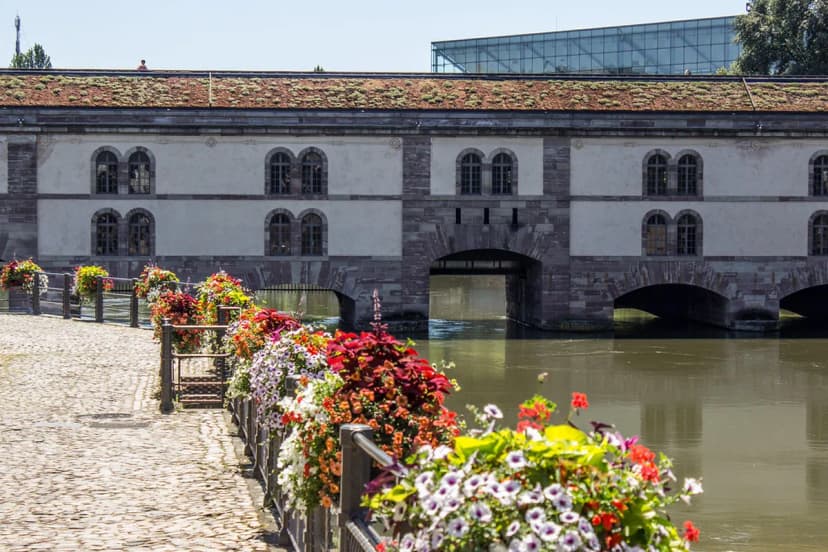
Petite France remains the most photogenic district with its ancient tanneries and half-timbered buildings dating from the 16th and 17th centuries. Historically, this area housed the city's tanners, millers, and fishermen, and the smell of the river and damp stone still gives it an authentic medieval atmosphere. Today, the narrow alleys are filled with cozy winstubs serving traditional Alsatian cuisine — expect to pay €18–€28 for a full plate of choucroute garnie with local Riesling. Walking through this district at sunset offers the best lighting for photography, particularly from the Ponts Couverts (covered bridges) that frame the water towers built in 1230.
Consider taking a Batorama boat tour to see the city from the water's edge. These glass-covered boats depart near the cathedral and pass through the historic locks of the Ill River and the European Parliament quarter. A standard tour lasts about seventy minutes and provides multilingual commentary in twelve languages for all passengers. Tickets cost €16 for adults and €8.50 for children under 14 in 2026; booking online at least 24 hours in advance is strongly recommended during July and August when waiting times can exceed ninety minutes.
Art and history enthusiasts should also visit the Musée Alsacien, housed in a row of connected townhouses near the Ponts Couverts. Admission is €7.50 for adults and covers an extensive collection of Alsatian folk art, ceramics, and traditional costumes. The Musée d'Art Moderne et Contemporain (MAMCS) on the riverfront charges €10 for adults and hosts rotating international exhibitions alongside a permanent collection covering Impressionism through contemporary digital art. The Strasbourg walking tour route conveniently links all these highlights in a single half-day loop of about 4 km, and takes approximately three to four hours at a relaxed sightseeing pace.
- Cathédrale Notre-Dame de Strasbourg
- Type: Gothic Cathedral
- Best for: Panoramic views, astronomical clock
- Cost: Free entry; €3 clock show
- Access: Central square
- Barrage Vauban Bridge
- Type: Covered bridge and dam
- Best for: Skyline photos, Petite France views
- Cost: Free access
- Access: Petite France district
- Batorama Boat Tour
- Type: River cruise
- Best for: Full city overview
- Cost: €16 adults, €8.50 children
- Access: Departs near cathedral
Exploring the Charm of Colmar
Wandering through the Colmar old town feels like stepping into a classic storybook, and that comparison is no exaggeration — the pastel facades and flower boxes of the Rue des Marchands are among the most photographed streetscapes in France. The Little Venice district, or La Petite Venise, offers peaceful canal views that look spectacular in the afternoon light when the reflections of the 16th-century guild houses shimmer in the water. You can book a short flat-bottomed boat ride piloted by local guides to see the colorful houses from the water; tours last approximately 25 minutes and cost €7.50 per adult in 2026, with departures every 20 minutes from April through October.
Art lovers should not miss the Unterlinden Museum, located in a former 13th-century Dominican convent that has been impressively expanded with a modern wing designed by architects Herzog and de Meuron. It houses the famous Isenheim Altarpiece by Matthias Grünewald (circa 1512–1516), a polyptych altarpiece widely considered the most important work of German Renaissance painting in existence. The museum is open daily except Tuesdays and costs €15 for adult entry in 2026 — a price increase of €2 from the previous year due to the new contemporary galleries. Plan for at least two to three hours to explore the extensive collection, which also covers medieval sculpture, Alsatian archaeology, and a superb impressionist wing featuring Monet and Renoir.
Market lovers will enjoy the covered Marché Couvert, built in neo-Gothic style in 1865 and recently restored. Local vendors sell fresh pretzels (€1.50–€2 each), Munster cheese, foie gras, and various regional delicacies every morning from Tuesday to Saturday. This venue is the perfect spot to grab a quick and affordable lunch — a cheese platter with a glass of local Pinot Gris runs about €12–€16 per person. Most stalls close by 1 PM, so arrive before noon for the best selection. The adjacent Place de l'Ancienne Douane hosts seasonal outdoor markets on weekend mornings from spring through autumn.
The Colmar walking tour route takes about three hours at a leisurely pace and passes the Maison Pfister (1537), the Maison des Têtes (1609), and the statue of Bartholdi — Colmar's most famous son, who designed the Statue of Liberty. Free, self-guided audio tours are available via the Colmar Tourisme app. For those visiting with children, the Parc du Château provides a free outdoor space with play areas and open lawns just a short walk from the old town center. Colmar is also an excellent base for the day trips from Colmar guide, which covers Riquewihr, Eguisheim, and five more Wine Route villages with suggested half-day itineraries.
- La Petite Venise Canals
- Type: Scenic waterway district
- Best for: Boat rides, romantic walks
- Cost: Free to wander; €7.50 boat tour
- Access: South old town
- Musée Unterlinden
- Type: Art and history museum
- Best for: Isenheim Altarpiece, Impressionism
- Cost: €15 adults (2026)
- Access: Place d'Unterlinden, near tourist office
Alsace Wine Route: Driving Guide and Best Villages
The Route des Vins d'Alsace stretches 170 km along the eastern foothills of the Vosges mountains, running from Marlenheim in the north to Thann in the south. It passes through more than 70 villages and towns, each with its own distinct character and speciality grape variety. The route is best driven over two to three days to fully appreciate the scenery, winemakers, and medieval villages; Colmar makes the ideal base, as it sits near the geographic midpoint. A rental car is the most flexible option — expect to pay €35–€55 per day for a compact vehicle in 2026 — though dedicated cycling paths run alongside most of the route for those who prefer two wheels.
Riquewihr is arguably the most beautiful village on the entire Wine Route. Surrounded by its original 16th-century ramparts and free of through-traffic, its main street is lined with half-timbered houses painted in vibrant ochres, reds, and greens. The village is famous for Riesling and Gewurztraminer; wine tasting sessions at domaines such as Hugel & Fils or Dopff au Moulin cost €15–€20 per person for four to six pours. Entry to the village is free, and the Dolder tower museum charges €3.50 for adults. Arrive before 11 AM or after 4 PM to beat the tour-bus crowds that peak in the middle of the day.
Eguisheim, voted France's Favourite Village in 2013, is a perfectly circular medieval settlement built around a Carolingian castle. Walking the inner ring road takes less than fifteen minutes, but most visitors linger for an hour or two in the wine cellars and artisan shops. The village is the historical birthplace of Alsatian viticulture, credited with planting the first vines on these slopes in the 8th century. Wine tastings here are slightly more affordable at €10–€18 per session; look for domaines with the AOC Alsace Grand Cru label for the highest quality. The annual Fête des Ménétriers folk music festival in August is free to attend.
Ribeauvillé offers a more authentic, less-touristed experience than Riquewihr, with a backdrop of three ruined medieval castles (Saint-Ulrich, Girsberg, and Haut-Ribeaupierre) visible on the ridgeline above town. The castle ruins are accessible via a 45-minute hike from the village center at no cost. The lower town has a well-preserved Baroque fountain and excellent local wineries where tastings run €12–€20 for five to seven wines. Ribeauvillé also hosts the Pfifferdaj festival every September, one of the oldest folk festivals in France, which is free to watch in the town square.
Kaysersberg, birthplace of Nobel Peace Prize laureate Albert Schweitzer, combines a ruined imperial castle (free entry, 10-minute walk from the center) with a beautifully preserved old town and excellent gastronomy. Winemaker Marc Tempé and the Domaine Weinbach are both based here, with cellar visits and tastings costing €20–€25 per person. The covered bridge (Ponte Coperto) over the Weiss river dates from 1514 and makes for an excellent photo stop. Budget a full afternoon for Kaysersberg, especially if you plan to visit the Albert Schweitzer Museum (€5 entry) and browse the artisan shops on Rue du Général de Gaulle.
For practical planning: the full route from Marlenheim to Thann takes around five hours to drive without stops. Most visitors focus on the central section between Obernai and Guebwiller, which concentrates the best villages. Parking is free in most village lots from October to April; summer weekend parking fees range from €2–€4 per hour in the largest villages. The day trips from Colmar guide covers the Wine Route villages in greater depth with suggested itineraries.
The Magic of Alsace Christmas Markets
Visiting during the holiday season transforms these cities into a sparkling winter wonderland unlike anywhere else in France. The Strasbourg Christmas market guide explains in full why this city has been called the Capital of Christmas since 1570, making it the oldest Christmas market in France and one of the oldest in Europe. Over three hundred wooden chalets spread across eleven separate locations in the city center, from the Place de la Cathédrale to the Place Broglie and beyond. Local crafts, hand-painted ornaments, and hot mulled Vin Chaud (€3–€4 per cup) are available at almost every corner from late November until December 24th.
Colmar offers a more intimate and equally enchanting holiday experience with six distinct thematic markets spread across the old town. Each square focuses on different crafts — Place de l'Ancienne Douane specializes in Alsatian woodwork, Place Jeanne d'Arc has a dedicated children's market, and Place des Dominicains features gourmet Alsatian food products. Check the Colmar Christmas market guide for specific opening dates in 2026; markets typically run from late November to December 26th. A mug of Vin Chaud or warm Chocolat de Noël costs €3–€5, and artisan stalls sell hand-crafted items priced from €5 for small ornaments to €60–€80 for larger woodcarvings.
Be prepared for significant crowds and significantly higher accommodation prices during the month of December. Hotel rates in Strasbourg's city center can reach €180–€280 per night on December weekends versus €90–€130 at other times of year. Booking your hotel at least six months in advance is highly recommended — properties in Colmar's old town often sell out within days of opening their December availability. Most markets close by Christmas Eve, though some remain open until December 26th or 28th. Mid-week visits on Tuesday through Thursday are far less crowded than weekends, and morning hours before 11 AM offer the calmest experience before tour groups arrive from Strasbourg and Basel.
The day trips from Strasbourg guide includes details on reaching the Christmas markets in Obernai, Sélestat, and Kaysersberg, all of which are smaller and more authentic alternatives if the main markets feel overwhelming. A regional train day pass costs €25–€30 and allows unlimited travel to multiple market towns during December, making it easy to visit three or four locations in a single day trip.
Strategic Base: Where Should You Stay?
Choosing a base depends heavily on your planned activities and preferred pace of travel. Strasbourg offers better international train connections — direct TGV trains reach Paris Gare de l'Est in under 2 hours and cost €25–€65 booked in advance — and a wider variety of nightlife options. This city remains the ideal choice for those relying solely on public transport for day trips; the Strasbourg tram network covers the entire city for a flat fare of €1.80 per journey or €5 for a 24-hour pass. Hotels near the train station provide the most convenience for regional commuters, with three-star options in the €100–€140 per night range in low season.
Colmar serves as a better gateway for exploring the smaller villages of the Wine Route. Staying here allows for easier morning departures to places like Riquewihr, Eguisheim, or Kaysersberg — all within 15 km by car or bike. The city feels much quieter once the day-trip crowds depart in the late evening, making the old town canals particularly atmospheric after dark. Boutique hotels in the old town, such as those around the Unterlinden Museum, offer a more authentic and romantic atmosphere with rates starting from €110–€160 per night for a standard double room in 2026. Colmar's compact size means most sights are within a 15-minute walk of the train station.
Budget travelers may find better value in the suburbs or smaller towns nearby. Sélestat sits halfway between the two cities and offers significantly lower hotel rates — budget options from €60–€85 per night — along with its own impressive medieval heritage and a remarkable library housing manuscripts by Beatus Rhenanus. This middle ground provides easy access to both hubs via the local TER rail line; trains to both Strasbourg and Colmar run roughly every 30 minutes. Parking is also free on most residential streets in Sélestat, making it a practical base for car-based travelers. The town's 15th-century Humanist Library (Bibliothèque Humaniste) charges just €4 for adults and is a hidden gem frequently missed by visitors focused on the larger cities.
Practical Travel Tips: Getting There, Getting Around, and Saving Money
Strasbourg Entzheim Airport (SXB) serves the region with direct flights from London Heathrow, Amsterdam, Madrid, and Lisbon via Lufthansa, Transavia, and Volotea; return fares start from €80–€160 in shoulder season. The airport shuttle to Strasbourg city centre takes 9 minutes by tram (Line D) for €2.10. Alternatively, many international visitors arrive via Basel-Mulhouse-Freiburg Airport (BSL/MLH), a 45-minute drive from Colmar; a taxi to Colmar costs approximately €60–€80, while a bus-and-train combination via Basel SBB station costs €18–€24. The fastest long-distance option from Paris remains the TGV direct to Strasbourg Gare Centrale (1h47 from Paris Est, from €19–€65 booked 3+ weeks ahead on SNCF Connect).
Within Strasbourg, the tram network (operated by CTS) covers every major sight on six lines with tickets at €1.80 per single journey or €5 for a 24-hour pass. Day-trippers arriving by train in Colmar will find the entire old town walkable within 10 minutes of the station. For the Wine Route villages, car hire is the most practical option — most villages have no bus link outside summer. Drivers should note that parking enforcement is strict in Strasbourg's city centre; the Grand'Rue car parks charge €2–€3 per hour and maximum-stay limits of 2 hours apply in the blue-zone marked streets.
Money-saving strategies for 2026 include the Alsace Pass Musées (€25 per adult, valid 3 days, covers 80+ regional museums) and the Strasbourg City Pass (€27 for 24 hours, €36 for 48 hours), which bundles unlimited tram travel with the Batorama boat tour (normally €16). Both passes are available at the respective tourist offices and online. Supermarkets such as Monoprix and Carrefour City in both town centres are useful for affordable picnic supplies — a baguette costs €1.10–€1.40, local Munster cheese €3–€5 per 200 g, and Alsatian Pinot Blanc wine €4–€8 per bottle. Street food pretzels (bretzels) from market vendors cost €1.50–€2.50 and make an excellent, cheap mid-morning snack. Most museums offer free or half-price entry on the first Sunday of each month, which is worth planning around if your dates allow it.
Safety in both cities is generally excellent for tourists. Petty theft in crowded Christmas market areas and on trams is the primary concern — use a money belt or inside zip pocket for passports and large cash amounts. The Is Strasbourg safe for tourists? guide provides a full neighbourhood-by-neighbourhood breakdown for 2026, including specific streets to avoid after midnight. Emergency numbers follow the standard EU system: 112 for all emergencies, 15 for SAMU medical, and 17 for police. Pharmacies (marked with a green cross) can advise on minor medical issues; most city-centre pharmacies in Strasbourg and Colmar have at least one English-speaking pharmacist on duty.
Essential Tips for Your Alsace Trip
Language in the region is primarily French, but many locals also speak Alsatian (a Germanic dialect) and German, and most tourism-facing staff in both cities speak basic to fluent English. Learning a few basic French phrases — particularly bonjour, merci, and s'il vous plaît — will significantly improve your interactions with local shopkeepers and restaurant owners. Menus in tourist areas are generally available in French, German, and English; some winstubs in smaller Wine Route villages may only have French-language menus, where staff are usually happy to explain dishes verbally.
Sunday is a day of rest in France, meaning many shops and supermarkets remain closed or operate with reduced hours. Plan your grocery shopping or souvenir hunting for earlier in the week to avoid disappointment — particularly on the Wine Route where small domaine shops may close entirely on Sundays outside the peak tourist season. Some museums and restaurants stay open on Sundays, but it is best to verify their hours on their official websites or Google Maps the morning of your visit. Bakeries (boulangeries) typically open on Sunday mornings until noon, making it easy to grab fresh croissants or bretzels for €1–€2 each before heading out.
Tipping in France is not mandatory as a service charge (service compris) is legally required to be included in all restaurant bills. Leaving €1–€3 for a café or bistro meal, or rounding up to the nearest €5 for a more formal dinner, is customary and appreciated by wait staff. Most establishments in tourist areas accept major credit cards including Visa and Mastercard; contactless payments up to €50 work at most terminals without a PIN. Carrying €20–€40 in cash is advisable for market stalls, village parking machines, small bakeries, and the occasional rural winery that does not have card facilities.
For 2026 visitors, the Alsace Pass Musées offers free or reduced admission to over 80 regional museums for a one-time fee of €25 per adult. This pass is valid for three days and available at the Strasbourg and Colmar tourist offices. The Strasbourg City Pass (€27 for 24 hours, €36 for 48 hours) additionally covers unlimited tram rides, the Batorama boat tour, and entry to several museums — excellent value if you plan to use public transit and visit multiple attractions in a single day. Both passes can be purchased online in advance via the official Alsace tourism website.
Frequently Asked Questions
Is one day enough to see both Strasbourg and Colmar?
One day is technically possible but will feel very rushed. The TER regional train between the two cities takes just 30 minutes and costs €12 return in 2026, but each city deserves at least four to five hours to do it justice. Ideally, spend one full day in Strasbourg and one in Colmar — two nights minimum is the recommended stay for a satisfying visit.
What is the best month to visit the Alsace region?
June and September offer the best combination of good weather, open vineyards, and manageable crowds. The Alsace Wine Harvest (vendanges) runs from mid-September to mid-October and is a wonderful time to visit domaines and festivals. December is magical for Christmas markets but prices surge and crowds are intense. Avoid the peak of August if you dislike heat and large tour groups. Hotel rates in low season (January–March) drop to €70–€110, making winter visits outside the Christmas period very affordable.
Do I need a car to travel between Strasbourg and Colmar?
No, a car is not necessary for travel between the two main cities. The TER Fluo Grand Est regional train runs frequently throughout the day and costs approximately €12 return (booked via SNCF Connect app), with the journey taking under 30 minutes. A car is only needed if you plan to explore remote Wine Route villages like Riquewihr or Eguisheim, which are not well served by public transport. Car rental starts at €35–€55 per day at Strasbourg airport.
Is Alsace expensive for international travelers?
Alsace is moderately priced compared to Paris or the French Riviera. A full Alsatian meal (choucroute garnie, wine, dessert) in a local winstub costs €25–€38 per person. Mid-range hotel rooms in both cities run €100–€160 per night in low season. Budget travelers can eat well for €15–€20 per meal by visiting covered markets and bakeries. Wine tastings at domaines on the Wine Route range from €10–€25 per session in 2026. A comfortable two-city trip over three nights typically costs €350–€550 per person all-in excluding flights.
What are the best villages to visit on the Alsace Wine Route?
The four most rewarding villages on the Alsace Wine Route are Riquewihr, Eguisheim, Ribeauvillé, and Kaysersberg. Riquewihr is the most iconic, with intact 16th-century ramparts and world-class Riesling producers; wine tastings cost €15–€20 per session. Eguisheim is circular and less crowded, voted France's Favourite Village in 2013. Ribeauvillé offers medieval castle ruins and a local atmosphere, while Kaysersberg is the birthplace of Albert Schweitzer and has excellent gastronomy. All four are within 20 km of Colmar and easily visited by car in a single day from either city.
What is the Strasbourg City Pass and is it worth buying in 2026?
The Strasbourg City Pass costs €27 for 24 hours or €36 for 48 hours in 2026, and includes unlimited tram travel across the city network, one Batorama boat tour (normally €16), and free or discounted entry to key museums including the Musée Alsacien and the Musée d'Art Moderne. For visitors planning to use the tram and take the boat tour, the 24-hour pass pays for itself within those two activities alone. It is available online or at the Strasbourg tourist office on Place de la Cathédrale.
When is the best time to visit Strasbourg's Christmas market?
Strasbourg's Christkindelsmärik opens in late November (typically the last Friday of November) and runs until December 24th each year. The market is least crowded on Tuesday, Wednesday, and Thursday mornings before 11 AM; weekend afternoons attract the largest tour groups, with queues for mulled wine (€3–€4 per cup) stretching 10–15 minutes during peak hours. Hotel prices during December weekends reach €180–€280 per night in the city centre — book at least six months in advance for the best rates. The full Strasbourg Christmas market guide has date-by-date crowd forecasts for 2026.
Alsace offers a captivating blend of history, culture, and stunning architecture that appeals to every traveler. Whether you choose the grandeur of Strasbourg or the charm of Colmar, you will find plenty to enjoy in 2026. The Wine Route villages of Riquewihr, Eguisheim, and Ribeauvillé add a third dimension to any visit, turning a city break into a full regional journey. Internal transport is affordable and easy, with the €12 return train between Strasbourg and Colmar and bike rentals from €20 per day connecting all the highlights.
Plan your trip carefully to balance the major sights with relaxed afternoons tasting wine in village cellars and lingering over lunch in a canal-side winstub. The day trips from Colmar and day trips from Strasbourg guides offer detailed itineraries for expanding your exploration beyond the two main cities. Safe travels as you discover the beautiful landscapes and historic streets of this extraordinary border region.