The Best Strasbourg Old Town Guide for 2026 Travelers
Strasbourg Cathedral entry is free; the tower platform climb costs €6.50 in 2026. The Musée de l'Œuvre Notre-Dame next door charges €8.50 and houses the cathedral's original medieval sculptures.
A single tram ride costs €1.80 in 2026, and the Strasbourg city pass (€24 for 24 hours) covers unlimited trams plus free museum entry at seven heritage sites on the Grande Île.
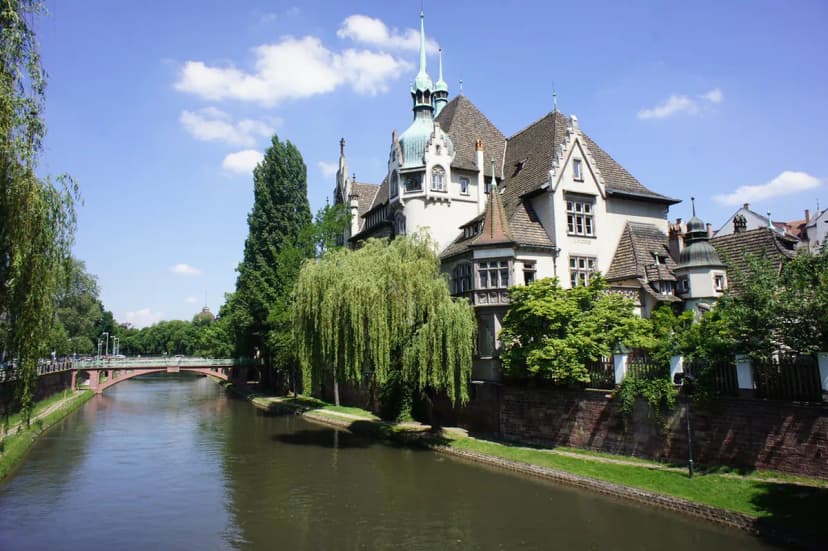
Strasbourg's historic center sits on a beautiful island called the Grande Île. This UNESCO World Heritage site offers a perfect blend of French and German culture. You will find narrow cobblestone streets and stunning medieval architecture around every corner. Exploring these alleys reveals why the city remains a top destination in eastern France.
This Strasbourg old town guide helps you navigate the winding alleys and famous landmarks. Discovering the heart of the city reveals centuries of history in a single afternoon. Reviewing the top things to do in Strasbourg ensures you miss nothing important. Wear comfortable shoes as you prepare to discover one of Europe's most charming districts.
Exploring the Heart of the Grande Île
The Strasbourg Cathedral stands as the undisputed centerpiece of the old town's skyline. Massive pink Vosges sandstone blocks give the facade a unique warm glow in the afternoon sunlight, particularly during the golden hour before sunset. Visitors often climb the 332 steps for a panoramic view stretching across the Rhine plain to the Black Forest on clear days. In 2026, entry to the main nave remains free for all visitors, while the platform climb costs €6.50 per adult — well worth the modest fee for the sweeping rooftop perspective.
Inside, the astronomical clock is the cathedral's most intricate treasure. Built between 1838 and 1843, it performs a daily mechanical show at 12:30 PM sharp, when apostle figurines parade past a crowing rooster. Tickets for the clock show cost €3 per person and must be purchased at the cathedral entrance in advance. Arriving at least 30 minutes early secures a good spot near the base of the clock tower.
Place du Château surrounds the cathedral with several historic museums and elegant buildings. The Palais Rohan directly faces the south facade and contains three separate museums under one roof: the Museum of Fine Arts, the Archaeological Museum, and the Museum of Decorative Arts. A combined ticket for all three costs €7.50 per adult in 2026. Walking through the ornate inner courtyard allows you to appreciate the 18th-century baroque architecture before committing to a full museum visit.
The Musée de l'Œuvre Notre-Dame, just steps from the cathedral's north portal, charges €8.50 in 2026 and is arguably the most rewarding museum on the island. It preserves the original medieval sculptures removed from the cathedral facade for conservation, including the remarkable 13th-century Angel Pillar. The collection spans Romanesque goldsmithing, Gothic stained glass, and Alsatian Renaissance paintings — all displayed in a restored 14th-century building that is itself a heritage monument. Opening hours run Tuesday to Sunday, 10:00 AM to 6:00 PM.
Nearby, Place Gutenberg honors the inventor of the printing press who lived in Strasbourg during the 1440s. The square often hosts local markets and seasonal events throughout the year, and a bronze statue of Gutenberg commands its center. Many travelers use this open space as a meeting point before starting a Strasbourg walking tour. Check the local event calendar to see if a festival is happening during your stay — the city hosts over 40 public events annually.
Walking just a few blocks further leads you to Place Kléber, the city's main commercial square. Large department stores and modern cafes border this expansive public space, and tram lines A and D intersect here, making it the practical transport hub of the center. This area serves as the commercial hub for locals and tourists alike. Finding a bench here in the afternoon offers a great chance for people-watching while the Alsatian sun warms the sandstone facades.
Wandering Through the Magic of Petite France
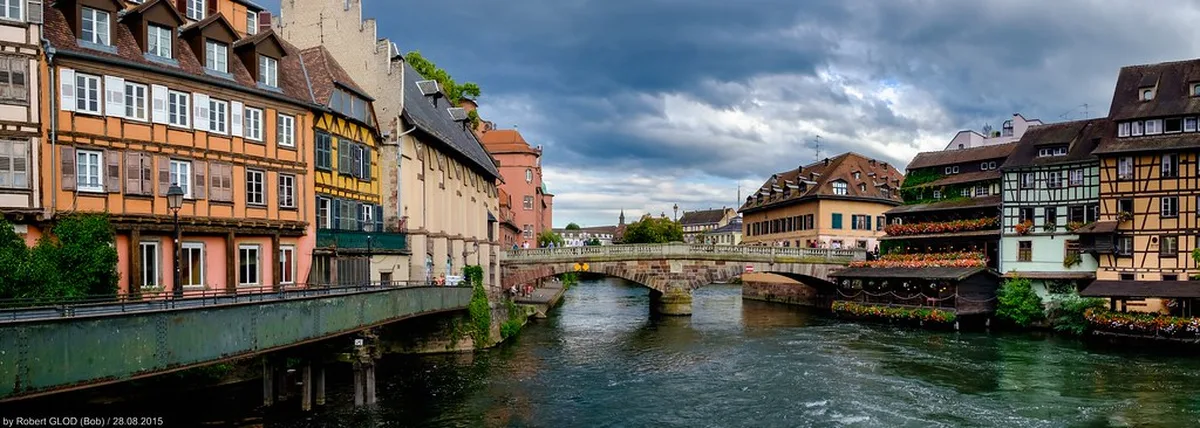
Petite France is arguably the most photogenic part of the historic district, and no visit to Strasbourg is complete without spending at least two hours here. This area features iconic half-timbered houses reflecting off the quiet canal waters, creating mirror-image compositions that draw photographers from across Europe. Centuries ago, this neighborhood served as the home for tanners, millers, and fishermen who needed direct water access for their trades. Today, it offers a peaceful escape from the busier cathedral district, lined with boutique shops, creperies, and riverside cafes where locals linger over Alsatian Pinot Gris.
The tanners' houses are the architectural centerpiece of the quarter. These tall, narrow structures — some dating to the 16th century — feature rows of upper-floor windows designed to maximize airflow for drying animal skins. The steep, asymmetric rooflines give each building a distinct silhouette. The best stretch for photography runs along Rue du Bain-aux-Plantes, where a half-dozen perfectly preserved tanners' houses face the canal in an unbroken row. Visit on a weekday morning before tour groups arrive for the quietest experience.
Strolling along the Quai de la Petite France provides the best reflective views of traditional architecture. Many houses date back to the 16th century and feature steep, slanting roofs that were originally designed to help dry animal skins in the open air above canal workshops. Look for the colorful flower boxes that decorate the windows during the spring and summer months — the municipality funds a floral decoration programme that has run since the 1990s, making the district particularly vibrant between May and September.
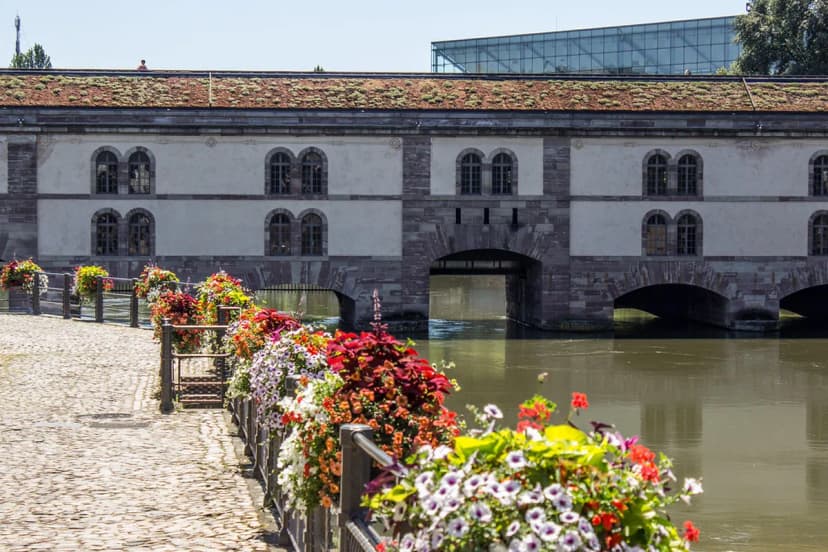
The Ponts Couverts (Covered Bridges) mark the entrance to this historic quarter with three massive square stone towers connected by open bridges over the Ill river. These structures date to the 13th century and were originally topped with wooden rooftops — hence the name — to shelter soldiers defending the city walls. While the roofs were removed in the 18th century, the towers remain as powerful symbols of medieval fortification. Crossing these bridges on foot is free and provides an excellent vantage point looking back toward the half-timbered district. Plaques on the tower walls explain each bridge's role in Strasbourg's layered defensive history.
Just beyond the Ponts Couverts stands the Barrage Vauban, a 17th-century dam designed by the legendary military engineer Sébastien Le Prestre de Vauban. Its primary defensive purpose was to allow Strasbourg's defenders to flood the southern plains and halt approaching armies. Today, climbing to the wide rooftop terrace is completely free and rewards visitors with one of the finest panoramic views in the entire city: the three towers of the Ponts Couverts in the foreground, the cathedral spire dominating the skyline above the timbered rooflines, and the forested Vosges mountains visible on the western horizon on clear days. The terrace is open daily from 9:00 AM to 7:30 PM with no ticket required. Photographers should position themselves on the western end of the terrace during the golden hour for the best lighting on the towers below.
Top Sites and Dining in the Old Town
Maison Kammerzell is one of the most famous buildings in the entire city and a genuine architectural masterpiece. This ornate 15th-century merchant's house sits right next to the cathedral square and features three floors of increasingly elaborate carved wooden galleries. The ground floor was rebuilt in stone in 1467, while the upper wooden stories were added in 1589 — making it one of the most complete examples of late Gothic secular architecture in Alsace. Its dark wood carvings depict biblical scenes, playing card suits, and historical figures in extraordinary detail. Booking a table inside the restaurant allows you to enjoy traditional Alsatian choucroute garnie (sauerkraut with meats) in a heritage setting; expect to pay €18–€26 for a main course. The building's exterior can be admired for free at any hour.
Saint Thomas Church, a few minutes' walk toward Petite France, is Strasbourg's principal Protestant church and a remarkably serene counterpoint to the cathedral's Gothic grandeur. Entry is free. The church contains the elaborate marble mausoleum of Marshal Maurice de Saxe, sculpted by Jean-Baptiste Pigalle in the 18th century and considered one of the finest funerary monuments in France. The church also houses a famous Silbermann organ dating to 1741, on which a young Albert Schweitzer frequently practiced — guided organ recitals take place on Sunday afternoons at around 17:00 with a suggested donation of €5.
Gastronomy plays a huge role in the local culture of the old town. Winstubs are small, cozy traditional taverns that serve hearty dishes like flammekueche (thin-crust tart with crème fraîche, lardons, and onions), baeckeoffe (slow-cooked meat and potato casserole), and locally produced Riesling and Pinot Gris wines. Most of these spots fill up quickly for dinner, so making a reservation at least 24 hours ahead is wise. Expect to pay between €16 and €28 for a main course in established winstubs; lunch prix-fixe menus typically offer better value at €13–€18 for two courses. Evening entertainment often centers around the lively bars and taverns in the Krutenau district, just south of the Grande Île, where a younger local crowd mixes with visitors. Consulting a Strasbourg nightlife guide helps you find the best local craft beer spots. Many establishments stay open until 1:00 AM on weekdays and later on weekends.
- Maison Kammerzell
- Type: Historic Landmark
- Built: 1427 (stone ground floor), 1589 (upper stories)
- Location: Cathedral Square
- Feature: Intricate Gothic wood carvings
- Saint Thomas Church
- Type: Protestant Church
- Best for: Silbermann organ + Saxe mausoleum
- Where: Near Petite France
- Cost: Free entry
- Musée Alsacien
- Type: Regional Folk Museum
- Best for: Traditional Alsatian interiors and crafts
- Where: Quai Saint-Nicolas, Grande Île
- Cost: €7.50 per adult in 2026
- Musée de l'Œuvre Notre-Dame
- Type: Cathedral Museum
- Best for: Original medieval cathedral sculptures
- Where: Steps from the cathedral north portal
- Cost: €8.50 per adult in 2026
The European Parliament District and Eastern Strasbourg
Most visitors spend their entire time in the Grande Île without realizing that Strasbourg's European quarter — just 2 km northeast of the cathedral via tram line D — offers a completely different but equally compelling half-day itinerary. Strasbourg is one of four official seats of the European Union and the home of the European Parliament, the European Court of Human Rights, and the Council of Europe, all clustered within a 10-minute walk of each other in the Quartier Européen.
Entry to the European Parliament visitors' gallery is free when Parliament is in session (typically one week per month), but requires pre-registration online at least two weeks in advance via the official EP website. During plenary weeks you can watch live debates from the hemicycle gallery — an experience that is entirely unique among European capitals. Outside session weeks, free guided tours of the Parliament building are available Monday to Thursday at 10:00 AM and 3:00 PM; registration closes 48 hours before each slot. The striking glass-and-steel building itself, designed by Architecture Studio and completed in 1999, is worth photographing from the Allée du Printemps walkway alongside the Ill river.
The European Court of Human Rights building, designed by British architect Richard Rogers and opened in 1995, is a short walk from the Parliament and visually dramatic — two cylindrical towers clad in stainless steel rising from the riverbank. Public access to the interior is limited, but the building's exterior and the adjacent riverside promenade are freely accessible. Informational panels along the promenade explain the Court's role and landmark cases in straightforward language, making this a genuinely educational stop even for non-lawyers.
To reach the European quarter from the old town, take tram line D from the Homme de Fer stop (central hub at Place Kléber) to the Parlement Européen stop — a single journey costs €1.80 in 2026, or use a day pass (€4.60) if you plan multiple tram trips. The tram runs every 6–8 minutes during daytime hours. The full journey from the cathedral district to the Parliament stop takes approximately 12 minutes. Combining a morning in the Grande Île with an afternoon in the European quarter fills a full day without feeling rushed and gives visitors a genuine sense of Strasbourg's dual identity as both a medieval Alsatian city and a living symbol of European integration.
The Orangerie park, adjacent to the European institutions, offers a pleasant outdoor respite between visits. Landscaped in the 18th century for Joséphine de Beauharnais (Napoleon's first wife), it features a small zoo with storks — the symbol of Alsace — a boating lake, and a waterfall pavilion. Entry to the park is free and it is open daily from 7:00 AM until nightfall. In summer, the park cafe serves cold Kronenbourg 1664 (brewed in Strasbourg) and freshly made tarte flambée for around €10–€14 per person.
Practical Logistics for Your Visit
Navigating the old town is easiest on foot because many streets on the Grande Île are pedestrian-only zones protected since the 1990s. Cyclists share a network of dedicated bike lanes throughout the island; the city's Vélhop bike-share scheme charges €1.50 per hour or €8 for a full day, with docking stations beside the cathedral and at Petite France. If you arrive by car, finding parking in Strasbourg near the center can be challenging and expensive. The Parking de l'Étoile garage beneath Place de Bordeaux charges approximately €3.50 per hour; most visitors prefer using the Park and Ride lots (Parc Relais) located at outer tram stations, where parking is free or €1–€2 per day with a valid tram ticket.

Safety is generally high throughout the tourist areas of the Grande Île. However, it is always smart to check is Strasbourg safe for tourists before you arrive for the latest advice. Pickpockets sometimes operate in crowded areas near the cathedral or during the Christmas market weeks. Keep your belongings secure, use a front-pocket or anti-theft bag in busy squares, and avoid leaving bags unattended on cafe chairs outside.
Public restrooms are available near the Cathedral and Place Kléber, typically for a €0.50 coin fee. Most shops and restaurants in the old town accept contactless credit cards for any purchase amount. You will find that many locals speak English, though a few French phrases — bonjour, s'il vous plaît, merci — are always appreciated. Plan for a full day (8–9 hours) to see the main highlights of both the Grande Île and Petite France without feeling rushed.
Tram lines A and D stop right at the edge of the historic center. A single journey costs €1.80 in 2026 and must be validated at the machine on the platform before boarding. A 24-hour pass costs €4.60 and covers unlimited tram travel across all lines, making it worthwhile if you plan to visit the European Parliament district or reach a Park and Ride lot. The Strasbourg City Pass (€24 for 24 hours) extends this further with free or discounted entry to seven heritage sites, a free boat tour on the Ill canals, and unlimited public transport. For a Strasbourg walking tour that covers all the major squares in a single guided loop, several operators depart from the cathedral at 10:00 AM and 2:00 PM daily in spring and summer.
Boat tours on the Ill river canals are one of the most pleasant ways to see Petite France from the water. In 2026, a standard 70-minute guided boat tour costs €16 per adult, with departures every 30 minutes from the Palais Rohan landing stage between 9:30 AM and 9:00 PM in peak season (April–October). The commentary is available in French, German, and English via personal headsets. Evening departures at 7:30 PM and 9:00 PM offer a particularly atmospheric experience as the timbered facades glow in the dusk light. Booking online saves €1.50 versus buying at the dock.
Alsatian Food and Wine in the Old Town
No visit to Strasbourg's old town is complete without sitting down inside a proper winstub — the small, wood-paneled taverns that are the living heart of Alsatian food culture. The word literally means "wine room," and these family-run establishments have served the same handful of hearty dishes for generations. Unlike tourist traps lining the main squares, the best winstubs are tucked into side streets where locals regularly return for the same table each week. Le Tiroir on Rue Gutenberg is a reliable choice: expect €17–€22 for a main course, and a half-carafe of house Riesling for €8.50. Au Renard Prêchant near Place du Marché Gayot is another institution, open Tuesday to Saturday for lunch and dinner, with a plat du jour at €14 that always includes a regional speciality.
Flammekueche — also called tarte flambée — is the dish to order first. This razor-thin unleavened tart is topped with crème fraîche, thinly sliced onions, and lardons, then baked at high heat in a wood-fired oven for about five minutes. At Chez Yvonne on Rue du Sanglier (one of the oldest winstubs in the city, open since 1873), a single large flammekueche costs €13.50 and feeds one generously or two as a starter. The classic version is called "Alsacienne"; ask for the "forestière" variant topped with forest mushrooms and crème fraîche for an extra €2.
Baeckeoffe is the old town's most comforting winter dish: a slow-cooked casserole of mutton, pork, and beef layered with potatoes, onions, and leeks, marinated overnight in Alsatian white wine and sealed in an earthenware pot. By law, it must be ordered 24 hours in advance at most winstubs because the pot is sealed and baked for the entire following day. At Winstub Ernst on Rue du Fossé des Tanneurs, a baeckeoffe for two costs €38 when pre-ordered; the same restaurant also offers a simplified express version on Wednesdays and Thursdays for €21 per person. The dish pairs perfectly with a Pinot Gris from the Alsace wine route — ask for something from the Ribeauvillé appellation for a particularly food-friendly bottle.
Alsatian wines are underrated by most visitors who arrive expecting the wines of Bordeaux or Burgundy. The local varietals — Riesling, Pinot Gris, Gewurztraminer, and Muscat — are classified by grape rather than château, and all come in the distinctive tall, slender bottle called the flûte d'Alsace. At Maison des Vins d'Alsace on Place du Général de Gaulle, a guided tasting of five wines costs €18 per person, including notes on food pairings with typical Alsatian dishes. The shop sells bottles from €8.50 upward for a Sylvaner to €55 for a Grand Cru Riesling from Zinnkoepflé. If you are planning a day trip into wine country, the Alsace travel guide covering Strasbourg and Colmar includes a curated route through the top producers between the two cities.
Street food and market snacks deserve equal attention. Place du Marché aux Poissons hosts a twice-weekly morning market (Tuesday and Friday, 7:00 AM to 1:00 PM) selling freshly smoked trout from the Vosges, saucisses de Strasbourg (the boiled pork sausages that French choucroute is built around), and rounds of Munster cheese from nearby farms. A warm saucisse de Strasbourg in a crusty roll costs €3.50 from the deli stalls and makes an excellent mid-morning snack. Grab a Bretzel — the Alsatian pretzel, larger and softer than the German version — at the Boulangerie Seltz on Rue des Grandes Arcades for €1.80. Finish with a slice of Kougelhopf, the iconic ring-shaped Alsatian cake flavored with almonds and dried fruit, sold at most boulangeries for €2.50–€4 per slice depending on size. These small food stops are among the most authentic experiences the old town offers, far more so than any sit-down tourist menu.
Best Time to Visit the Historic Center
Spring and autumn offer the most comfortable weather for exploring the cobblestone streets of the Grande Île. Temperatures in May and September usually stay between 15 and 22 degrees Celsius — warm enough to sit at a canal-side cafe in comfort, cool enough to walk for hours without overheating. You will encounter noticeably fewer crowds than in the peak summer months, particularly on weekday mornings when the cathedral square is almost peaceful. This balance also makes it easier to photograph the timbered facades without tour groups in frame and to find seats at popular winstubs without a reservation made days in advance. Refer to our full guide on the best time to visit Strasbourg for a month-by-month breakdown of weather, crowds, and events.
Winter transforms the old town into a festive wonderland during the famous Christmas markets. Strasbourg is known as the Capital of Christmas in Europe — a title it has held since 1570, when the first documented Christmas market was established here — and today attracts over 3 million visitors each December across 12 separate market sites. If you visit during this time, book your accommodation months in advance: prices for centrally located hotels roughly double during the market weeks (late November to December 24). The atmosphere is genuinely magical, with illuminated stalls selling vin chaud (mulled wine, €3–€4 per cup), handmade ornaments, and Alsatian gingerbread beneath a 30-metre illuminated tree on Place Kléber. Our dedicated Strasbourg Christmas market guide covers the best stalls, arrival strategy, and nearby day trips from Strasbourg to Colmar and Obernai.
Summer brings long days and vibrant energy to the riverside terraces of Petite France. July and August can be quite hot, with temperatures occasionally exceeding 32 degrees Celsius during heatwaves. Many travelers enjoy the Strasbourg light show — a 15-minute free projection mapped onto the cathedral's Gothic facade — which runs nightly at 10:15 PM, 10:45 PM, and 11:15 PM throughout July and August. Booking the evening boat tour on these nights gives you the added experience of the illuminated Petite France quarter at its most atmospheric. Summer is also the best season to pair your old town visit with a broader Alsace travel itinerary combining Colmar and the Alsatian wine route.
January and February are the quietest months for tourism in the city. Some smaller shops and winstubs may close briefly for seasonal breaks during the first two weeks of January. Accommodation rates are typically 30–40% lower than summer peaks during the mid-winter weeks. This is the perfect time for budget-conscious travelers who enjoy a peaceful atmosphere: the cathedral interior is uncrowded, the Musée de l'Œuvre Notre-Dame can be explored in tranquility, and the canal reflections in Petite France take on a misty, monochrome beauty on cold mornings.
Frequently Asked Questions
How long does it take to walk through Strasbourg Old Town?
You can walk across the Grande Île from end to end in about 20 minutes without stopping. However, most visitors spend 4 to 6 hours exploring the cathedral, the Petite France quarter, the Ponts Couverts, and the Vauban Dam. Budget a full day — 7 to 8 hours — if you plan to visit any of the paid museums (Musée de l'Œuvre Notre-Dame at €8.50, Musée Alsacien at €7.50) and take a 70-minute boat tour on the Ill canals (€16 in 2026).
Is the Strasbourg Cathedral free to enter?
Entry to the main nave of Strasbourg Cathedral is free for all visitors in 2026. The astronomical clock show at 12:30 PM costs €3 per person and requires a separate ticket purchased at the entrance. Climbing the 332 steps to the tower platform costs €6.50 per adult and rewards you with panoramic views across the Rhine plain toward Germany's Black Forest. All areas open from around 8:30 AM to 7:15 PM daily (shorter hours on Sundays and religious holidays).
Can you drive a car in the Strasbourg Old Town?
Driving is strictly limited in the historic center to protect the pedestrian zones on the Grande Île. Most streets are restricted to residents, taxis, and delivery vehicles only. Visitors should use the Park and Ride lots (Parc Relais) at outer tram stations — parking is free or €1–€2 per day with a valid tram ticket — and then take tram line A or D into the center. A single tram ride costs €1.80 in 2026, and the journey from most Park and Ride stops takes under 15 minutes.
How much does a boat tour in Strasbourg cost in 2026?
A standard 70-minute guided boat tour on the Ill river canals costs €16 per adult in 2026. Boats depart from the Palais Rohan landing stage every 30 minutes between 9:30 AM and 9:00 PM in peak season (April to October). Commentary is available in French, German, and English via personal headsets. Booking online in advance saves €1.50 per ticket compared to buying at the dock. Evening departures offer the most atmospheric experience as the timbered facades of Petite France are lit up after dark.
What is the Musée Alsacien and is it worth visiting?
The Musée Alsacien on Quai Saint-Nicolas is Strasbourg's regional folk museum, dedicated to traditional Alsatian domestic life, crafts, costumes, and religious objects spanning the 17th to 19th centuries. Entry costs €7.50 per adult in 2026. The museum occupies three interconnected Renaissance townhouses arranged around a central courtyard and is particularly well-suited for visitors interested in how ordinary Alsatian families lived before industrialization. It is open Tuesday to Sunday, 10:00 AM to 6:00 PM. Visitors who enjoy cultural heritage rather than fine art consistently rate it among the most charming museums on the island.
Can you visit the European Parliament in Strasbourg?
Yes. Free guided tours of the European Parliament building are available Monday to Thursday at 10:00 AM and 3:00 PM, with registration required online at least 48 hours in advance via the Parliament's official website. During plenary session weeks — typically one week per month — visitors can watch live debates from the hemicycle gallery for free, with registration closing two weeks before the session date. The Parliament is located in the Quartier Européen, approximately 2 km northeast of the cathedral. Take tram line D from Homme de Fer to the Parlement Européen stop (€1.80 in 2026, approximately 12 minutes).
Strasbourg's old town remains one of the most enchanting historic districts in Europe. From the towering cathedral — free to enter in 2026 — to the quiet canal reflections of Petite France and the medieval towers of the Ponts Couverts, there is more than a single day can comfortably hold. Planning your visit with this Strasbourg old town guide ensures a smooth and memorable experience. Take your time to soak in the unique Alsatian atmosphere, try a classic flammekueche at a winstub, and let the city's dual French-German identity reveal itself at its own pace.
Whether you visit for the summer light shows on the cathedral facade or the winter magic of the Christmas markets, the city never fails to impress. For a wider Alsace adventure, pair your Grande Île visit with a day trip from Strasbourg to Colmar or the wine villages of the Route des Vins. The full Alsace travel guide covers both cities in detail. Start planning your 2026 trip today to experience the magic for yourself.