Essential Colmar Old Town Guide for Your Alsace Visit
Colmar's Unterlinden Museum costs €15 in 2026 and houses the Isenheim Altarpiece — one of Europe's most important Renaissance masterpieces. La Petite Venise boat rides cost €8 per person for a 30-minute canal circuit departing near Rue de Turenne.
The Bartholdi Museum charges €7 admission in 2026 and displays original Statue of Liberty sketches and plaster casts. Wine tastings along Rue des Marchands and Grand Rue run €10–20 per session at local Alsatian producers.
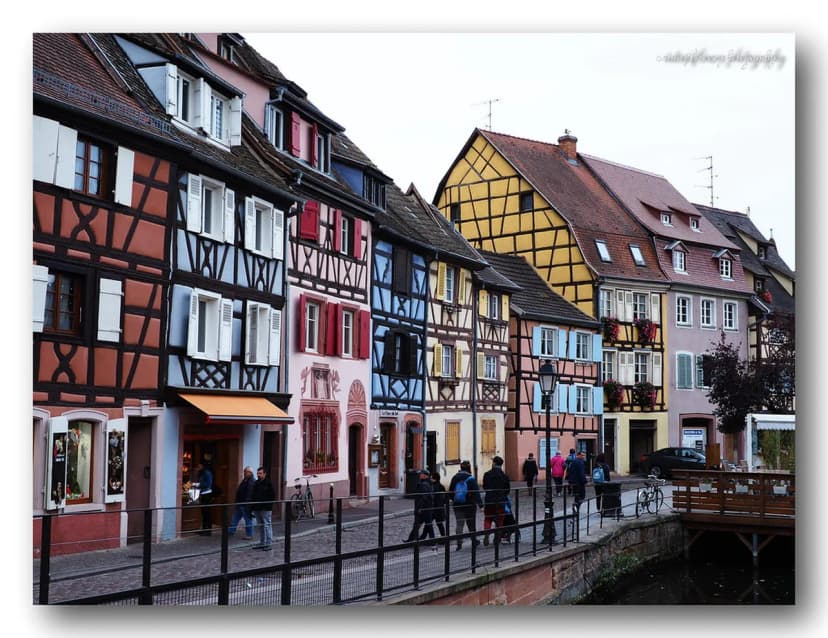
Colmar is a gem in the Alsace region of France known for its colorful half-timbered houses. This Colmar old town guide helps you navigate the winding streets and historic landmarks effectively. The city center remains perfectly preserved from the Middle Ages, giving visitors a sense of stepping directly into a Renaissance painting. Most visitors start their journey in the pedestrian-only zone where cars are rarely permitted during the day. This area offers a quiet atmosphere for exploring the local shops and charming cafes. Plan to spend at least one full day soaking in the unique Franco-German culture, and consider two days if you want to include the Unterlinden Museum and a La Petite Venise boat ride. The city's compact layout means even a half-day walker can cover all the key districts on foot without rushing.
Exploring History with This Colmar Old Town Guide
The Maison Pfister stands as one of the most famous buildings in the entire old town district. Built in 1537, this house features beautiful wooden galleries and painted murals on its exterior walls. It represents the wealth of the Renaissance era in the Alsace region and is widely regarded as the finest secular Renaissance building in all of Alsace. The two-story wooden gallery is carved with medallion portraits of emperors and biblical figures, a visual record of 16th-century political and religious life along the Rhine frontier.
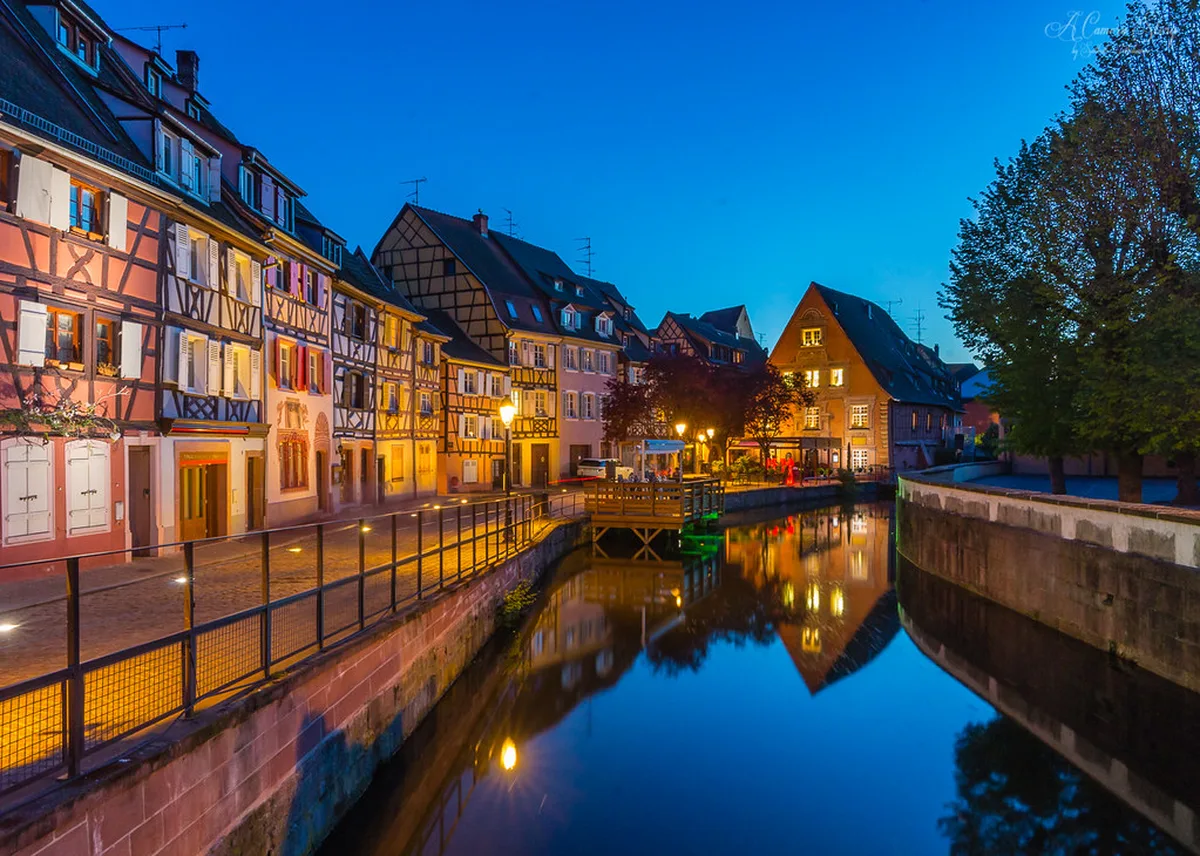
Another must-see spot is the Maison des Têtes, which is decorated with 106 small stone heads carved directly into the sandstone facade. This building now houses a luxury hotel and a fine dining restaurant for high-end travelers. You can view the intricate facade for free while walking along Rue des Têtes. The carvings depict wind gods, merchants, soldiers, and fantastical creatures — each one different from the next, and worth a slow circuit of the building to appreciate.
The Koïfhus, also called the Ancienne Douane or Old Customs House, anchors Place de l'Ancienne Douane with its distinctive ochre-and-grey banded stonework. Built in 1480, it served as the city's main tax and storage hall where Rhine merchants paid duties on goods passing through Alsace. The ground floor arches still frame an open-air market square that hosts farmers' stalls on weekend mornings throughout 2026. Entry to the building interior is not public, but the exterior and the square it commands are free to enjoy.
The Saint-Martin Church serves as the heart of the religious history in this beautiful city. Often called a cathedral, this Gothic structure was built mainly between 1235 and 1365 with yellow limestone from the Vosges quarries. Entry is free for visitors who wish to see the impressive stained glass windows, many of which were restored in the 20th century after wartime damage. The crossing tower offers a recognizable silhouette over the rooftops and appears in virtually every panoramic photograph of the old town.
Walking the Rue des Marchands from Maison Pfister toward the Koïfhus gives you the densest concentration of medieval architecture in a single street in Alsace. This roughly 400-meter stretch passes the Bartholdi birthplace, half a dozen Renaissance guild houses, and several gourmet shops selling local Munster cheese and Gewurztraminer wine. Allow at least 30–40 minutes on this street alone and resist the urge to hurry past the carved doorways.
Top Attractions in the Historic District
The Unterlinden Museum is a world-class institution located in a former 13th-century Dominican convent. It houses the famous Isenheim Altarpiece, a masterpiece of German Renaissance art painted by Matthias Grünewald between 1512 and 1516. General admission costs €15 in 2026, which also covers the museum's modern wing featuring works by Monet, Renoir, and Picasso. The museum stays open until 6:00 PM most days, with extended Thursday hours until 8:00 PM. Plan at least 90 minutes to explore the full collection without rushing past the altarpiece's multiple folding panels, each depicting a different biblical scene in vivid, emotionally intense detail.
The Bartholdi Museum celebrates Frédéric Auguste Bartholdi, the creator of the Statue of Liberty, who was born in this very city in 1834. You can explore his former home and see original sketches, clay models, and full-scale plaster casts of his most famous sculptures. Admission is €7 in 2026, and the museum keeps hours aligned with the Unterlinden. The highlight is a corner room displaying small-scale models showing how the Statue of Liberty evolved from Bartholdi's early Alsatian fountain designs into the icon recognizable worldwide.
For a deeper look into local history, check out the day trips from Colmar guide to discover nearby Alsatian villages and castles that complement a visit to the city. The Toy Museum on Rue des Boulangers offers a fun break for families traveling with children in the heart of the old town. It features a massive collection of trains, dolls, and board games from the last two centuries. Kids will enjoy the interactive displays while adults appreciate the nostalgic trip through time. Admission is €6 for adults and €3 for children under 12 in 2026.
- Unterlinden Museum
- Entry: €15 per adult (2026)
- Focus: Isenheim Altarpiece + fine art
- Time: 90 minutes recommended
- La Petite Venise Boat Rides
- Activity: Flat-bottomed canal boats
- Cost: €8 per person (2026)
- View: Half-timbered houses from the water
- Saint-Martin Church
- Style: Gothic limestone architecture
- Entry: Free of charge
- Where: City center, Place de la Cathédrale
- Bartholdi Museum
- Entry: €7 per adult (2026)
- Focus: Statue of Liberty origins
- Time: 45–60 minutes
La Petite Venise Boat Tour and Canal District
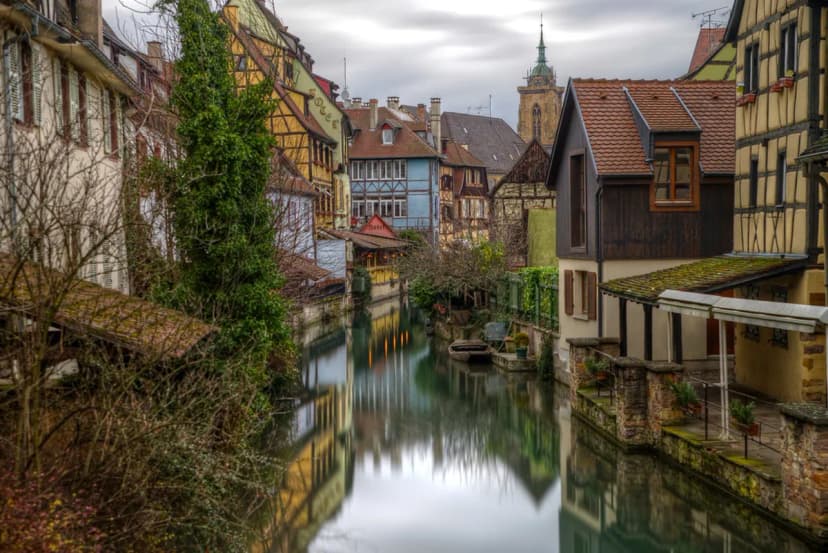
La Petite Venise — Little Venice — is the most photographed part of Colmar and the one experience most visitors remember longest after their trip. The district takes its name from the network of narrow canals that branch off the River Lauch as it threads through the southern edge of the old town. For centuries this area was the working quarter of butchers, tanners, and fishmongers who relied on the water for their trades, and the low, brightly painted houses that line the banks were built as workshop-residences by these artisan guilds.
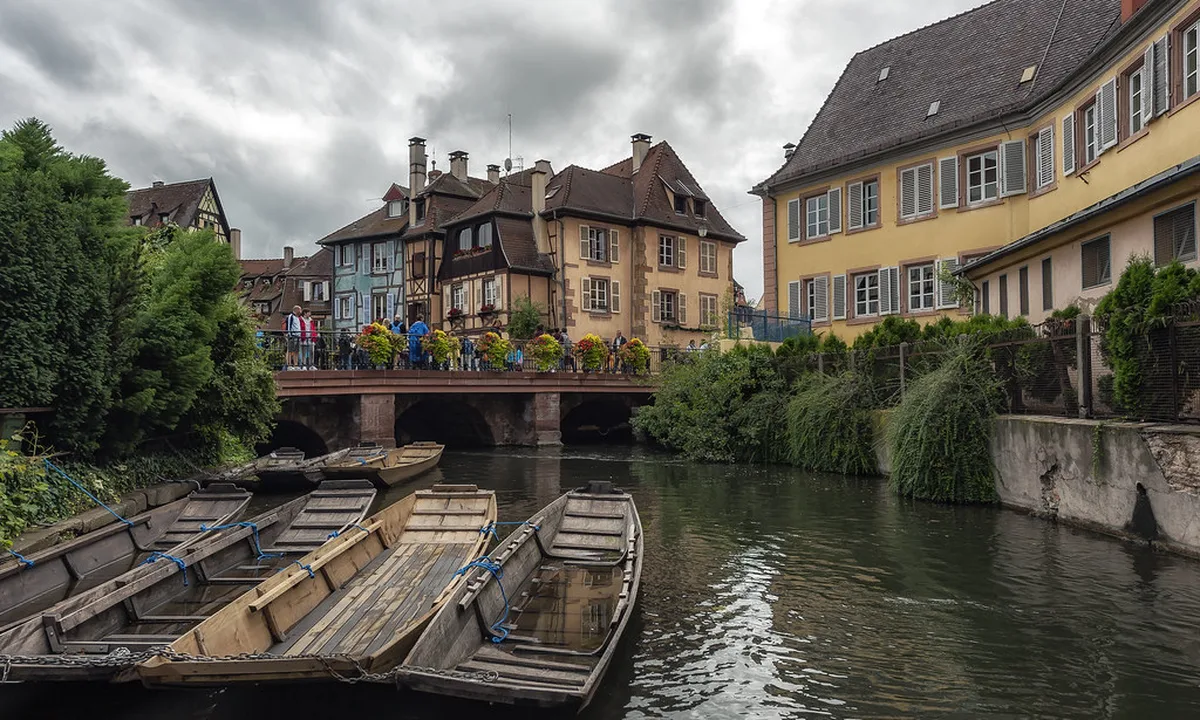
In 2026, guided flat-bottomed boat rides along the canals depart from the landing near Rue de Turenne and cost €8 per person for a circuit of roughly 30 minutes. Boats run daily from early April through late October, typically between 10:00 AM and 7:00 PM, with no advance booking required for groups of fewer than eight. The route passes directly beneath overhanging window boxes filled with red geraniums and gives passengers an unobstructed view of the timber-frame facades that are simply not visible from the towpath above.
If you prefer to stay on foot, the Quai de la Poissonnerie is the best vantage point for capturing the classic Colmar canal reflection shot. Arrive before 9:00 AM to beat the large tour groups that arrive by midday. The light from the east falls directly onto the painted house fronts in the morning hours, making early visits ideal for photography. A short walk south along Quai de la Tournelle reaches the Pont Saint-Pierre, a small stone footbridge that frames the most celebrated view in the district.
Flowering plants hang from every balcony during the summer months to create a vibrant display of color that peaks in July and August. Many riverside restaurants along the Quai de la Poissonnerie provide outdoor terrace seating where you can enjoy an Alsatian meal of tarte flambée (€12–15) or choucroute garnie (€18–22) while watching the boats pass. These spots fill up quickly, so making a reservation for lunch is strongly recommended during the June-to-August peak season. The area is equally beautiful in winter, when the Christmas market lanterns reflect in the still canal water — read the Colmar Christmas market guide for full details on the winter season.
Wine tastings are available at several producer shops just steps from the canal district. Domaine Barmès-Buecher and other local négociants along Grand Rue offer guided tastings priced at €10–20 per session in 2026, typically covering four to six Alsatian varietals including Riesling, Gewurztraminer, and Pinot Gris. These short sessions are an excellent way to understand the wine culture of the region without driving out to the Route des Vins.
Walking the Pfister House and Koïfhus Landmark Trail
One of the most rewarding walks in Colmar follows a compact loop connecting the city's two most architecturally significant secular buildings: the Maison Pfister and the Koïfhus. The route covers roughly 600 meters and can be completed in 20 minutes at a leisurely pace, though most visitors find themselves stopping every 50 meters to examine another carved doorway or painted medallion.
Begin at the Maison Pfister on Rue des Marchands, built in 1537 for a hatmaker named Ludwig Scherer who commissioned Alsace's finest craftsmen to decorate the two-story wooden gallery with Renaissance portraits and floral motifs. The building is privately owned and not open for interior visits, but the painted exterior is one of the most photographed facades in France. Look upward at the corner oriel — a polygonal bay window projecting from the first floor — for the best detail work.
Continue north along Rue des Marchands past the Bartholdi Museum (on your left at No. 30) until you reach Place de l'Ancienne Douane. This opens onto the Koïfhus, the Old Customs House built in 1480. The ground-floor loggia of pointed arches runs the full length of the building's street frontage and shelters a weekend farmers' market selling local Munster cheese, smoked meats, and Alsatian wine. Restaurant mains at the brasseries surrounding the square range from €15 to €25 in 2026 for traditional Alsatian dishes.
From the Koïfhus square, a short detour east along Rue des Têtes brings you to the Maison des Têtes, whose 106 carved stone faces stare down from every cornice and windowsill. The ground floor of this building operates as a fine-dining restaurant where a two-course lunch menu runs approximately €35–45 per person. The building's current name comes from the carved heads covering the facade, a 17th-century decorative fashion that was never repeated anywhere else in Alsace at this scale.
To complete the loop, return along Grand Rue toward the Saint-Martin Church. The Colmar walking tour guide maps this full route with GPS waypoints and additional stop annotations for each landmark building, which is useful if you want printed reference while navigating the medieval street grid.
Practical Tips for Navigating Medieval Streets
The best way to experience the charm of the city is by following a structured Colmar walking tour route that sequences the main landmarks efficiently. Most streets are paved with uneven cobblestones, so wearing comfortable flat-soled sneakers is essential for a pain-free day. Avoid wearing heels as they can easily get caught between the old stones, particularly on the steep approach to Saint-Martin Church from the south.
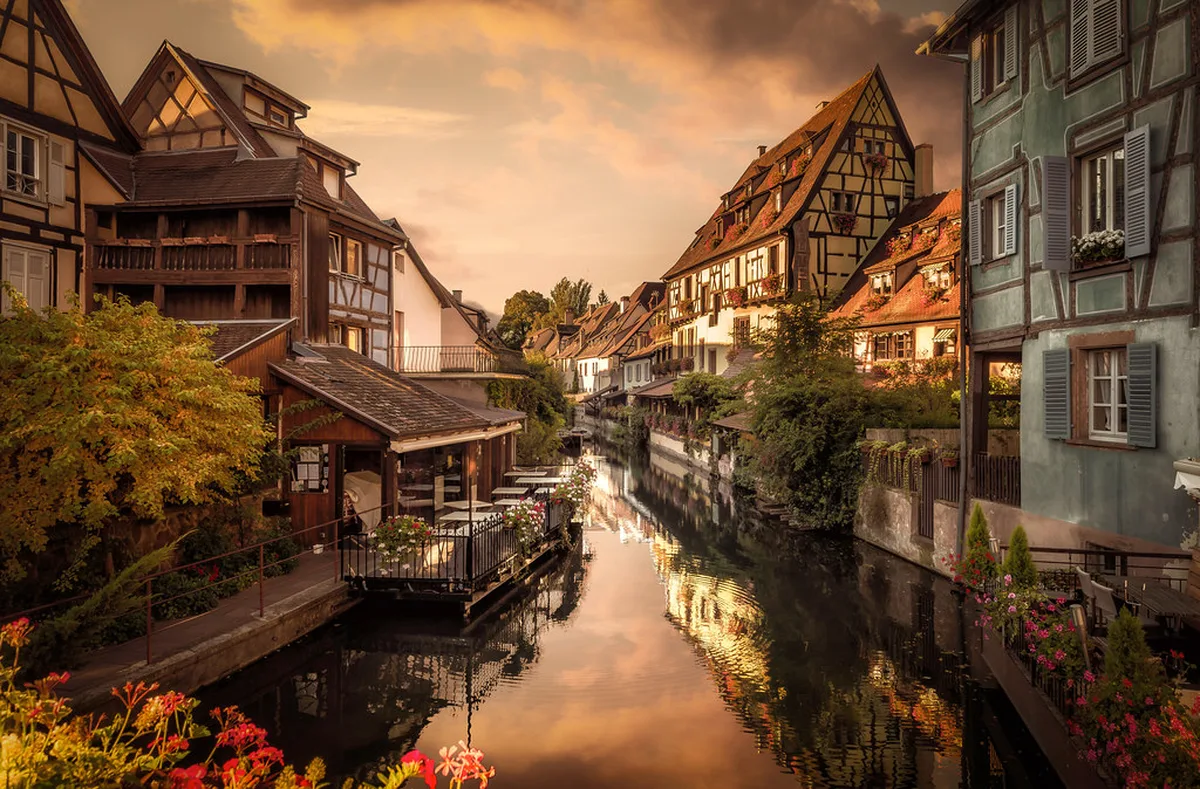
Driving directly into the center is difficult because many roads are restricted to residents or delivery vehicles only between 7:00 AM and 7:00 PM. The parking in Colmar guide covers all major underground lots located just outside the pedestrian ring. The Parking Rapp and Parking Mairie are the two most convenient options, with rates starting at €2 per hour in 2026 and easy walking access to the main sights. Both lots are open 24 hours and accept credit cards at the payment machines. If you arrive early on weekdays, on-street parking is sometimes available on Boulevard du Champ de Mars just outside the pedestrian boundary for €1.50 per hour.
Public restrooms are available near the covered market on Rue des Écoles and near the Unterlinden Museum on Place Unterlinden for a €0.50 fee in 2026. Most shops in the old town close for a lunch break between 12:00 PM and 2:00 PM on weekdays — plan your browsing around this window to avoid arriving at a shuttered door. Keep a small amount of cash (€10–20) on hand for small purchases at local bakeries, the Saturday morning farmers' market at the Koïfhus, and the boat ride landing. Currency exchange is available at the post office on Rue de la République and at several banks on Grand Rue. The nearest ATM to La Petite Venise is on Rue Turenne, just 50 meters from the boat landing.
Multilingual tourist maps are available free of charge at the Colmar Tourist Office on Rue Unterlinden, directly opposite the museum entrance. Staff there can also book wine tasting tours and provide updated opening hours for smaller private museums that change seasonally. The tourist office is open Monday through Saturday from 9:00 AM to 6:00 PM and on Sundays from 10:00 AM to 4:00 PM during the summer season.
Seasonal Magic and Local Festival Timing
Visiting during the Christmas season transforms the city into a sparkling winter wonderland with six different markets spread across the old town squares. Each market has its own theme, ranging from local crafts and artisan gifts to gourmet Alsatian food, mulled wine (vin chaud at around €3–4 per cup), and children's toys and decorations. The lights turn on at dusk from late November through late December, creating a warm amber glow against the dark timber frames that has made Colmar's Christmas market one of the most-visited in France. The full Colmar Christmas market guide covers all six market locations, opening dates, and accommodation booking tips for this busy season.
Spring brings the Easter markets and colorful flower displays to the public squares and stone bridges throughout the old town. You can find unique hand-painted eggs and local spring treats at the stalls in Place de l'Ancienne Douane, typically during the two weeks around Easter weekend. This season is significantly less crowded than December but offers equally beautiful scenery for photography, with flowering cherry trees lining the canal banks of La Petite Venise. Hotel rates in spring are typically 20–30% lower than in peak summer and Christmas periods.
Summer from June through August brings the highest visitor numbers but also the most vibrant street life, with outdoor concerts in the courtyards of the Unterlinden and evening festivals along the Quai de la Poissonnerie. July and August see the geranium displays on La Petite Venise balconies at their fullest, and the evening boat rides continue until 8:00 PM as dusk falls late. Restaurant terraces fill up from midday onward during this period, so reserving a table by 11:30 AM is advisable.
September and October are ideal for wine lovers who want to see the grape harvest in the surrounding Alsatian vineyards. Consider taking the day trips from Colmar during these months to visit Eguisheim, Ribeauvillé, and Kaysersberg, all within 20 kilometers. Travelers combining Colmar with Strasbourg will find the best time to visit Strasbourg guide useful for coordinating the two cities into a single Alsace itinerary. The weather remains mild enough for long walks through golden hillsides, and many wine producers along the Route des Vins d'Alsace hold open-house tasting events in October with entry fees of €10–15 per person. Autumn foliage in the Vosges foothills framing the city creates dramatic backdrops visible from the flat rooftop terraces of the old town's boutique hotels.
Alsatian Food and Wine in Colmar Old Town
Colmar's culinary identity is one of the most distinctive in France, shaped by centuries of cross-border exchange between French and German gastronomic traditions. The old town concentrates the best of this hybrid cuisine within a few pedestrian streets, making it genuinely easy to eat exceptionally well without leaving the historic center. Tarte flambée — a thin, wood-fired flatbread topped with crème fraîche, onions, and lardons — is the signature dish, priced at €12–15 at most brasseries along the Quai de la Poissonnerie and Rue des Marchands in 2026. Choucroute garnie, a plate of braised sauerkraut served with six or more varieties of cured pork and Alsatian sausages, costs €18–22 at traditional winstubs (Alsatian wine taverns) and is best eaten at midday when kitchens prepare it fresh.
Winstubs are the local equivalent of a French bistro crossed with a German beer hall — small, wood-paneled rooms serving regional dishes alongside house Riesling and Pinot Gris by the half-carafe. The most well-established winstubs in the old town sit on Rue des Marchands and Grand Rue, with fixed-price lunch menus of two courses ranging from €22–28 per person in 2026. These menus typically include a charcuterie board of local Munster cheese and smoked Alsatian ham, followed by a main of baeckeoffe (a slow-baked casserole of three meats braised in white wine) or a fisherman's plate from the River Lauch heritage menu.
Wine shops are woven throughout the old town, often located in vaulted cellar spaces beneath Renaissance merchant houses. Domaine Barmès-Buecher on Grand Rue and several other négociant-owned boutiques offer walk-in tastings of four to six Alsatian varietals for €10–20 per person in 2026, with no reservation required except during the December Christmas market weeks. Riesling and Gewurztraminer are the flagship whites, but Pinot Noir — an underappreciated Alsatian red — is worth requesting specifically; a good Colmar producer's Pinot Noir retails for €12–18 per bottle at the cellar door. Many shops will ship purchases internationally at flat rates posted near the checkout counter.
Colmar's covered market on Rue des Écoles operates Tuesday through Saturday from 8:00 AM to 1:00 PM and gives visitors direct access to the same produce that supplies the old town restaurants. The market sells local Munster cheese (€4–8 per wedge depending on age), Alsatian charcuterie, fruit preserves, and seasonal vegetables from farms in the Rhine plain. Arriving early on Saturday morning, when the outdoor extension around Place de l'Ancienne Douane also fills with vendors, gives the most complete picture of the region's agricultural abundance. Budget €15–25 for a picnic spread from the market, which pairs perfectly with a bottle of wine purchased from one of the adjacent cellar shops.
For visitors planning a wider Alsatian food trail beyond Colmar itself, the Alsace travel guide covering Strasbourg and Colmar maps the most productive two-city food route in the region, linking the winstub traditions of both cities. Those extending their trip north should also check the day trips from Strasbourg guide for wine road villages that sit midway between the two cities and offer producer tastings not available in either urban center. The Colmar dining scene rewards visitors who eat early — restaurants fill from 12:15 PM onward at lunch and from 7:30 PM onward at dinner, with no walk-in space available after those windows on summer weekends.
Frequently Asked Questions
Is Colmar old town walkable for all visitors?
Yes, the old town is entirely walkable. Most of the historic center is a pedestrian zone where cars are not permitted during daylight hours. The main sights — Unterlinden Museum, Maison Pfister, Saint-Martin Church, and La Petite Venise — form a rough loop of under two kilometers that takes about three to four hours at a relaxed sightseeing pace. Wear flat, rubber-soled shoes as the cobblestones are uneven and can be slippery when wet.
How many days should I spend in Colmar?
One full day covers the main highlights: the Unterlinden Museum (€15, 90 minutes), a La Petite Venise boat ride (€8, 30 minutes), and a walk along Rue des Marchands past Maison Pfister. Two days allow you to add the Bartholdi Museum (€7), a guided wine tasting (€10–20), and an evening at a riverside restaurant where mains typically cost €15–25. Three days is ideal if you plan day trips to nearby Alsatian villages.
Is Colmar expensive for a weekend trip?
Colmar suits a range of budgets in 2026. A budget day covering free sights (Saint-Martin Church, Maison Pfister exterior, Koïfhus square), a bakery lunch, and a boat ride (€8) costs under €30. A mid-range day including the Unterlinden Museum (€15), a sit-down Alsatian lunch with a glass of Riesling (€25–35), and a wine tasting (€10–20) runs €50–70 per person. Riverside restaurants with canal views are pricier; budget €25–35 for a two-course dinner at those locations.
Where is the best place to park near the old town?
The two most convenient options in 2026 are Parking Rapp on Avenue de la République and Parking Mairie on Rue Kléber, both located at the edge of the pedestrian zone and a five-minute walk from the main sights. Both are underground, open 24 hours, accept credit cards, and charge approximately €2 per hour. Day-rate caps apply after four hours at Parking Mairie, making it slightly cheaper for full-day visits.
How much does a La Petite Venise boat ride cost in 2026?
Guided flat-bottomed boat rides along the La Petite Venise canals cost €8 per person in 2026. Boats depart from the landing near Rue de Turenne and run daily from early April through late October, roughly 10:00 AM to 7:00 PM. Each circuit lasts approximately 30 minutes and no advance booking is required for groups under eight people. The boat route passes directly beneath the overhanging flower boxes and timber-frame houses that are not visible from the towpath above, making it one of the best-value experiences in Colmar.
What is the best time of year to visit Colmar old town?
Late May through early June and the month of September offer the best combination of good weather, manageable crowds, and attractive scenery. Spring brings flowering window boxes and Easter market stalls without the July–August peak visitor volumes. September coincides with the Alsatian wine harvest when local producers offer tastings (€10–20) along the Route des Vins just minutes from the old town. The famous Colmar Christmas market runs from late November through late December and is spectacular but extremely busy; book accommodation at least two months in advance for that period.
Colmar offers a unique blend of Renaissance architecture, canal scenery, and living wine culture that is genuinely hard to find elsewhere in France. The Unterlinden Museum (€15), La Petite Venise boat rides (€8), and the free walking circuit past Maison Pfister and the Koïfhus give visitors an exceptionally high return on a modest daily budget. Using this guide will help you find the best spots while avoiding common tourist mistakes such as arriving at museums during the midday lunch closure or missing the early-morning light on the canal district.
Remember to bring your camera for the canal reflections at Quai de la Poissonnerie and the carved facade details on Rue des Marchands. Planning your visit around the local festivals — Easter, the summer canal concerts, or the Christmas markets — adds an extra layer of excitement to your 2026 trip. Enjoy your journey through one of the most completely preserved medieval old towns in all of Europe.