The Ultimate Split Walking Tour: Discover Old Town Secrets
The Split walking tour is a 2.5-hour self-guided loop starting at the Riva promenade, covering Golden Gate, the Cathedral bell tower (€5), free Peristyle, free Vestibule, Silver Gate, and Iron Gate for a total budget of €15–20.
All paid stops on the Split walking tour use EUR: Cathedral tower €5, palace cellars €10, Temple of Jupiter €3 — outdoor areas including the Peristyle, Vestibule, and all four Roman gates are entirely free to enter in 2026.
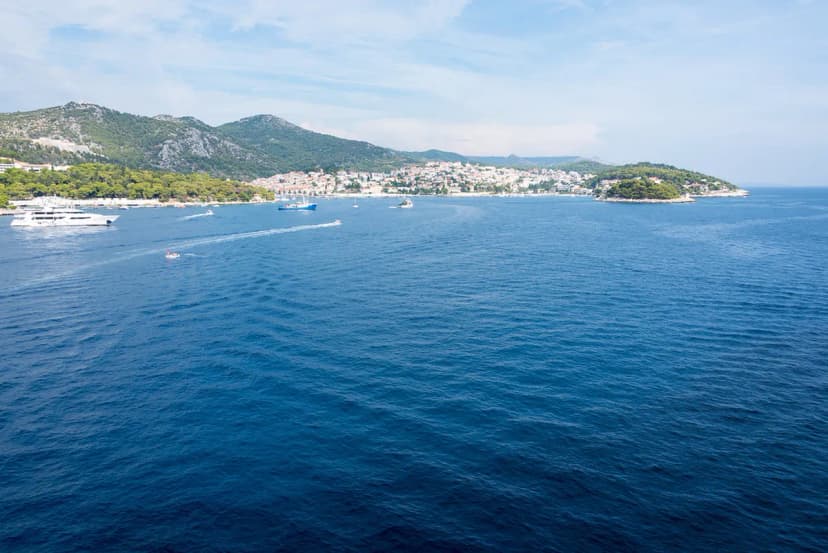
Welcome to the heart of Dalmatia where ancient Roman history meets the sparkling Adriatic Sea. Split offers a unique blend of ruins and modern life that is best explored on foot. A well-planned Split walking tour provides the perfect introduction to these narrow limestone streets. You will discover how a retired Emperor built a home that became a thriving city, and how local families have lived inside its walls for seventeen centuries without interruption.
Walking through the city center feels like visiting a massive living museum with no entrance gates. Local guides bring the white stone walls to life with stories of Roman power and medieval survival. Most visitors start their journey within the walls of the famous Diocletian's Palace, a UNESCO World Heritage Site. This guide covers the complete self-guided route, exact 2026 prices for every attraction, and a frank comparison of free versus paid guided tours — everything you need to plan the perfect walk through this coastal gem.
Self-Guided Route: Distances, Stops, and Logistics
The most rewarding self-guided route through Split runs approximately 2.5 km and takes between 2.5 and 3.5 hours depending on how long you linger at each stop. The route is almost entirely flat inside the palace precinct, with one optional climb toward Marjan Hill at the end. Croatia joined the Eurozone in January 2023, so all prices are now in euros — budget roughly €15–25 per person for paid attractions plus coffee stops along the way.
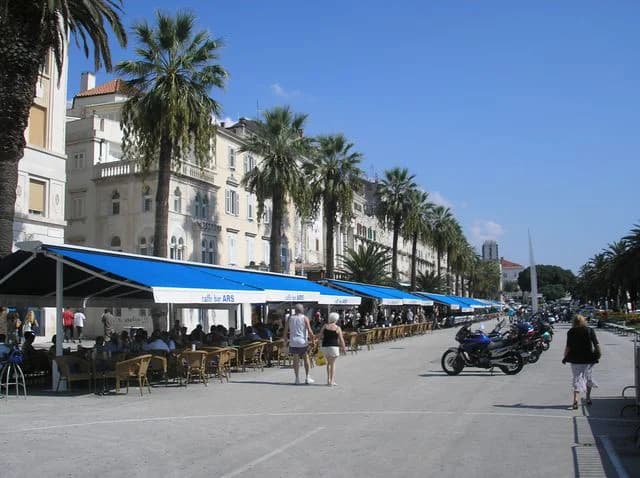
Begin at the Meštrović Promenade on the western edge of the city, where the palm-lined coastal path offers sweeping views of the offshore islands. This is the calmest stretch of waterfront before you hit the busier Riva. Walk east for about 600 metres until you reach the broad Riva promenade, the social spine of Split. Here ferries depart for Brač and Hvar, and nearly every guided tour assembles at the Riva fountain before departure. Grab a coffee at one of the outdoor cafés (espresso €1.50–2.00) and study the southern facade of Diocletian's Palace rising directly from the waterfront.
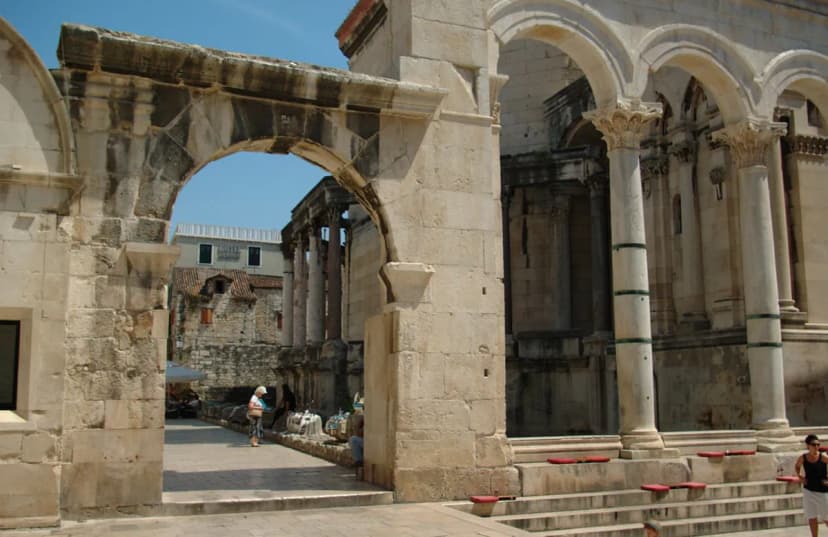
Enter the palace complex through the Brass Gate (Mjedena vrata) on the south wall — this gate opens directly into the underground cellars at basement level. The cellars (Podrumi) charge an entry fee of €10 per adult in 2026 and are worth every cent: the vaulted Roman stone chambers give you the clearest sense of the palace's original three-storey layout. Budget 30–40 minutes here. Emerge from the cellars into the bright Peristyle, the ceremonial heart of the palace, framed by granite columns shipped from Egypt in the fourth century. Entry is free; the atmosphere is extraordinary.
From the Peristyle, duck into the Cathedral of Saint Domnius, built inside the Emperor's own mausoleum — one of the oldest functioning cathedrals in the world. The cathedral itself costs €5, the bell tower €3, or a combined ticket for both is €6 (2026 prices). Climbing the 57-metre bell tower rewards you with panoramic views over the red rooftops toward the Mosor mountains and the harbour below. Allow 20–25 minutes for both interior and tower. Just behind the cathedral stands the small Temple of Jupiter (€3 entry), now converted into a baptistery, where you can see the original Roman coffered ceiling still intact.
Exit through the Golden Gate (Zlatna vrata) on the north wall — the grandest of the palace's four gates, with double arched portals that once filtered everyone who entered the Emperor's domain. Immediately outside stands the famous bronze Statue of Gregory of Nin by Ivan Meštrović. Rub the statue's left big toe for good luck; the polished gold patch proves millions of visitors already have. Walk back through the palace interior toward the eastern Silver Gate (Srebrna vrata), which opens onto the Pazar green market — the best place to buy fresh fruit, local honey (€5–8 per jar), and dried lavender from island farms.
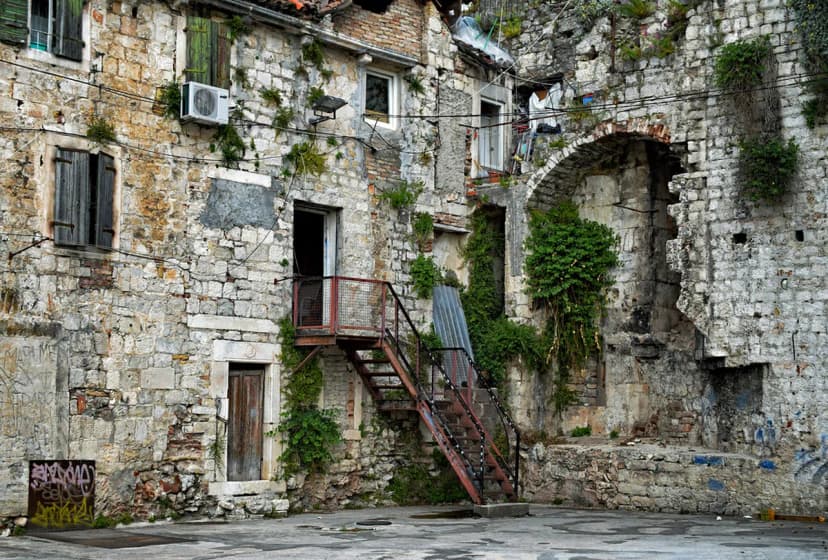
End the route in the Varoš neighbourhood, the old fishermen's quarter immediately west of the palace walls. Narrow stepped alleys, drying laundry, and cats lounging on sun-warmed stone create a scene that feels completely removed from the tourist bustle. The optional finale is the 20-minute walk uphill to the Marjan Hill viewpoint, where the whole city spreads below you — Split's rooftops, the harbour, and Brač across the channel. This is the best landscape photograph of the day. Total distance including Marjan: approximately 3.2 km.
- Meštrović Promenade → Riva: 600 m, flat, ~10 min
- Riva → Brass Gate → Palace Cellars: 200 m, flat, ~40 min (with cellars)
- Cellars → Peristyle → Cathedral → Golden Gate: 400 m inside palace, ~45 min
- Golden Gate → Silver Gate → Pazar: 300 m, flat, ~15 min
- Pazar → Varoš → Marjan viewpoint: 700 m + climb, ~40 min
- Total route: ~2.5 km (3.2 km with Marjan), approximately 3 hours
Top Highlights of a Split Walking Tour
Diocletian's Palace serves as the magnificent centerpiece for almost every walking route in the city. This UNESCO World Heritage Site contains massive gates and intricate stone carvings from the fourth century. Entry to the main squares and outdoor areas is free because people still live and work within these ancient walls — roughly 3,000 residents call the palace home today. Expect your guide to spend significant time explaining the complex engineering of the Roman structures, including the system of underground vaults that once supported the Emperor's apartments above.
The Peristyle is the ceremonial heart of the entire palace complex and a hub of daily activity. Ancient red granite columns from Egypt still stand tall around this open-air courtyard, creating one of the best preserved Roman public spaces in the Mediterranean. In summer, the steps host evening classical music performances and the occasional opera — check local listings for the Split Summer Festival (July–August). Travelers often sit on the steps to watch live performances or simply enjoy the timeless atmosphere; there is no charge simply to be here. This area is also a central feature of any Split 3-day itinerary focused on heritage, and the columns create superb framing for photographs during the golden hour just before sunset.
Visit the Cathedral of Saint Domnius to see one of the oldest cathedral buildings in the world, converted from the Emperor's octagonal mausoleum around the seventh century. Its Romanesque bell tower offers a panoramic view of the harbor and the surrounding Mosor mountains. The combined cathedral and bell tower ticket costs €6 in 2026. The interior features exquisite 13th-century carved wooden choir stalls, a Romanesque portal by Andrija Buvina, and Roman masonry that has survived for 1,700 years without significant rebuilding. Look for the Egyptian sphinx crouching at the foot of the bell tower — Diocletian brought several from Egypt, and this is the most intact example in Split.
The Golden Gate was once the primary entrance for the Emperor and his royal guests, far grander in its original form with statues in the niches above the arch. Massive stone fortifications show how the city protected itself from invaders over the centuries; the gatehouse walls are nearly 2 metres thick. Walking through these gates connects the palace directly to the vibrant northern parts of the city, where the Salona road once led to the provincial capital. The statue of Gregory of Nin just outside — cast by Meštrović in 1929, standing over 8 metres tall — is the most photographed landmark in Split outside the palace itself.
The palace cellars (Podrumi Dioklecijanove palače) are the most underrated attraction on the entire route. Preserved almost perfectly because medieval inhabitants filled them with rubbish over centuries — accidentally protecting the Roman stonework — the vaulted chambers now house a permanent exhibition and occasional art installations. Entry is €10 per adult (2026); children under 7 enter free. The central barrel-vaulted corridor is the finest example of Roman subterranean architecture in Croatia and offers a cool refuge on hot summer days.
- The Central Peristyle Imperial Square — Free entry, best photographed at sunrise or 1 hour before sunset
- Cathedral of Saint Domnius Bell Tower — €6 combined ticket (2026), 57 m height, panoramic views
- The Substructure Palace Cellars — €10 adult entry (2026), children under 7 free, ~40 min visit
- Temple of Jupiter / Baptistery — €3 entry (2026), original Roman coffered ceiling intact
- Gregory of Nin Statue — Free, best photo from 10 m back on the diagonal
Free vs Paid Guided Tours: Honest 2026 Comparison
Split has two distinct guided tour markets, and understanding the difference saves you both money and disappointment. Tips-based "free" tours depart from the Riva fountain daily at 10:00 AM and 12:00 PM (year-round) and at 6:00 PM (May–September). These tours run for approximately 2 hours through the palace highlights and are led by trained local guides who work on tips. The recommended tip is €10–15 per person; guides earn nothing if you pay nothing, so be fair. Platforms like Guruwalk and Sandeman's New Europe list Split departures online — book in advance in July and August when spots fill within hours.
Paid private guided tours cost €20–35 per person (2026) for groups of 2–8 and offer a fundamentally different experience. You set the pace, ask specific questions without holding up a group of 20, and the guide can take you off the standard route into the Jewish Ghetto, the secret passage behind the cathedral apse, or the residential courtyards where locals dry their laundry above Roman columns. For families with young children or anyone interested in specific topics — Roman engineering, medieval Croatian history, contemporary architecture — private tours earn their premium quickly. Most private tour operators are found via GetYourGuide and Viator; always confirm whether palace entry fees (cellars €10, cathedral €6) are included in the quoted price.
Self-guided tours cost nothing beyond entry fees and are completely viable with this article as your map. The main trade-off is depth of context: you will see everything, but you will miss the storytelling layer that explains why Diocletian chose this exact coastal site, how the palace fell into private hands after the empire collapsed, and what the graffiti scratched into the Roman stone columns actually says. Audio guide apps (Rick Steves, VoiceMap) bridge the gap at around €5–8 per download — VoiceMap's Split Old Town and Marjan Hill tour is particularly well-produced for the self-guided walker.
For most first-time visitors, the best approach is a free tips-based morning tour to get your bearings, followed by independent exploration of the cellars and cathedral in the afternoon when crowds thin. Repeat visitors or history enthusiasts should invest in a private tour for a second, deeper pass through the palace complex. Either way, wear your most comfortable walking shoes — the polished limestone of the Peristyle becomes very slippery in rain, and the uneven palace stones are unforgiving on thin-soled footwear.
Best Photo Spots on the Split Walking Tour
The Peristyle colonnade is the single most photogenic location in Split, offering a theatrical framing of the cathedral dome between Egyptian granite columns. For the cleanest shot with minimal tourists in frame, arrive before 8:30 AM in peak season or after 6:00 PM when cruise-ship crowds have returned to their ships. Position yourself at the southern end of the colonnade looking north toward the cathedral apse; the raking morning light catches the limestone detail beautifully. In the evening, the golden hour transforms the warm stone into something approaching the original Roman appearance.
The Cathedral bell tower steps — accessible from the external staircase for the climbing fee — offer the best elevated view of the Peristyle from above, giving you a bird's-eye perspective of the courtyard geometry that is impossible from ground level. This angle is particularly striking for travel photographers who want something different from the standard street-level shot. From the top of the tower, frame the harbour ferries against the Brač coast for a classic Dalmatian composition.
The city walls café terrace on the southeastern corner of the palace (near the Iron Gate) is a local secret that most tourists walk straight past. Several small cafés here have rooftop seating immediately against the medieval fortifications, providing a ground-level view of the walls rising directly above your table. A coffee here costs €2–3 and the photograph looking up at the walls with the sea visible beyond is among the best in the city. Ask staff which table has the best angle — they will know immediately.
For the classic wide-angle view of the entire old town from outside, walk to the Marjan Hill viewpoint at the end of your route. The wooden platform at the base of the Telegrin summit (178 m) — about a 20-minute walk up a shaded forest path from Varoš — frames the whole palace outline, the harbour, and the distant islands of Šolta and Brač in a single composition. Bring a 24–35mm equivalent lens for this shot; a longer focal length will compress the depth and lose the sense of scale. The view at sunset, when the palace glows orange against the darkening Adriatic, is genuinely exceptional.
Essential Tips for Your Split Walking Tour
Morning tours offer cooler temperatures and softer light for taking travel photographs. Starting by 9:00 AM helps you beat the cruise ship crowds that descend on the palace from around 10:30 AM — on busy summer days, five or six ships may be in port simultaneously, funnelling several thousand visitors into the palace by midday. Check the parking in Split options if you are driving into the city; the Gripe garage (€1.20/hour) and the Matejuška lot near the Riva are the most convenient. Early starts also mean you finish before the midday Dalmatian sun, which peaks ferociously between 12:30 and 3:00 PM in July and August.
Wear shoes with grippped soles for the polished limestone streets of the Old Town. The ancient stones become extremely slippery when wet or even when dusty in dry heat. Avoid high heels or thin-soled sandals that might catch in the uneven joints between paving stones — the Peristyle floor in particular has deep gaps between the ancient slabs. A sturdy pair of walking trainers or hiking sandals with Vibram-style soles is the single best preparation you can make for a half-day city exploration. Many visitors arrive in flip-flops and regret it within twenty minutes.
Bring a reusable water bottle to refill at the historic fountains located around the palace perimeter. The tap water in Split is safe to drink and stays refreshingly cold even in July when air temperatures reach 34°C. Sunscreen (SPF 50 recommended) and a wide-brimmed hat are essential for protection during the bright Dalmatian afternoon. Most tours run rain or shine, and the palace interior provides some shelter in a brief shower, but a light compact umbrella is worth carrying between May and October. Budget €20–30 per person for a half-day including cellars, cathedral, and a coffee stop at the Riva — more if you add a private guide.
The palace is free to enter and freely accessible 24 hours a day, 365 days a year — there are no gates, no admission barriers, and no closing time for the outdoor spaces. The paid attractions (cellars, cathedral, temple) each have their own opening hours: generally 8:00 AM to 8:00 PM in summer (June–September) and 9:00 AM to 5:00 PM off-season. The Pazar market operates Monday to Saturday from dawn until around 1:00 PM; Sunday hours are shorter. Guided tours typically run twice daily in shoulder season and every 1–2 hours in peak summer — check individual operator websites for current schedules.
Common Mistakes to Avoid While Walking Split
Many visitors make the mistake of skipping the underground basements of Diocletian's Palace entirely because they look like a souvenir market from the entrance. These substructures provide the clearest blueprint for how the upper floors once looked in Roman times — the barrel vaults, the drainage channels cut into the floor, the service corridors running between support pillars are all original Roman construction. The central hall is partly free for browsing craft stalls and local artwork; paying the €10 museum ticket allows you access to the full vaulted extent of the cellars including the permanent archaeological exhibition. Allocate at least 40 minutes here, not 10.
Rushing through the narrow alleys of the Jewish Ghetto means missing some of the most historically significant architecture in Dalmatia. Split's Jewish community dates to the 16th century, and the synagogue on Židovski prolaz (Jewish Alley) is one of the three oldest continuously used synagogues in Europe, dating to around 1500 CE. Look up at the timber gallery inside if it is open (small donation requested). Small art galleries and boutiques hide in these alleys — one of the city's best contemporary photography galleries occupies a medieval ground-floor space here. Allow 20–30 minutes for a proper exploration of this quarter, which most guided tours skip.
Ignoring the Egyptian sphinxes scattered around the palace complex is a common oversight. Diocletian brought these ancient granite statues from Egypt to decorate his retirement residence — they predate the palace itself by nearly 1,500 years, originating from around 1350 BCE. One sphinx sits prominently in the Peristyle courtyard; a second, more weathered example lies near the Temple of Jupiter. A third, headless sphinx is installed near the Vestibule. Ask your guide to point all three out — finding the hidden ones requires knowing where to look, and the contrast between their extreme antiquity and the Roman setting around them is one of the great history-layering experiences anywhere in Europe.
Visiting only the palace precinct and ignoring the Riva and Varoš means you leave Split without understanding the city that grew up around the palace after Roman rule ended. The Riva was comprehensively redesigned in 2007 and is now one of the finest urban waterfronts in the Adriatic — wide, car-free, lined with cafés and shaded by palms. Varoš, by contrast, preserves the pre-tourist character of a working fishing neighbourhood, with alleys too narrow for cars and houses stacked up the Marjan hillside that have changed little since the 19th century. Both are essential parts of the same story, and both are free to explore.
Choosing the Best Type of Split Walking Tour
Group tours on a tips-based model are the most budget-conscious way to see the main sights with a local guide. These typically run 90–120 minutes and cover the major palace landmarks in a logical sequence from Riva to Golden Gate. You pay only what you feel the experience was worth — the widely accepted standard is €10–15 per person for a high-quality guide. You will likely meet other solo travellers and couples from around the world; the social element is part of the appeal for many visitors. Sandeman's New Europe and Guruwalk both operate tips-based Split departures daily in season — book online at least 24 hours ahead in July and August, as groups cap at 20 people.

Private tours allow for a deeply personalised experience and a completely flexible pace for your group. At €20–35 per person (typically with a minimum spend of €80–100 for the group), you get undivided attention and the ability to ask highly specific questions about Roman engineering, medieval Croatian politics, or the contemporary architecture debates happening inside the palace today. Private tours are ideal for families with children under 12 (who engage better with direct interaction than group commentary), travellers with limited mobility who need frequent breaks and route modifications, and serious history enthusiasts who want to go beyond the standard script. Check operator profiles on GetYourGuide for language options — English, German, Italian, and French guides are readily available in Split.
Food-focused walking tours combine historical facts with tastings of traditional Dalmatian cuisine and cost €40–65 per person in 2026, inclusive of food and drink. You might visit the Pazar fish market at dawn, sample local pršut (air-dried ham) in a konoba, taste Dalmatian olive oil pressed from centuries-old trees on the islands, and finish with a glass of Plavac Mali — the indigenous Dalmatian red grape variety. These tours run 3–4 hours and are best booked for an early evening slot to combine history in the cooler afternoon with dinner as the tour concludes. Confirm exactly which foods and how many stops are included; quality varies significantly between operators.
Self-guided tours using this article as your route map cost only the entry fees: cellars €10, cathedral and tower €6, Temple of Jupiter €3 — a total of €19 per person for every paid attraction on the route. Download the VoiceMap Split audio guide (€7.99) if you want curated commentary en route, or use the free Rick Steves Split audio tour as a more basic alternative. Combine your self-guided morning walk with a day trip from Split in the afternoon to maximise your time in the region.
Combining History with Modern Dalmatian Life
The Riva promenade serves as the social heart of Split and borders the entire southern facade of the palace walls. Walking along this 500-metre palm-lined waterfront offers a scenic view of the harbour and the departing car ferries heading to Brač (45 min, €8 foot passenger, 2026) and Hvar (1 hour, €12). It is the perfect place to sit for a coffee after your historical walk concludes — prices are tourist-standard at €2–3 for an espresso but the location earns the premium. Several outdoor terraces have direct views of the Brass Gate and the southern Roman wall rising dramatically from the promenade stones. Consult our Split beach guide for afternoon swimming options within easy reach of the city centre.
Pazar is the vibrant Green Market located immediately outside the eastern Silver Gate of the palace. Farmers from the Split hinterland and the Dalmatian islands bring fresh produce here every morning Monday through Saturday, arriving from around 6:30 AM. You can buy local honey (€5–8/jar), dried figs and lavender, organic olive oil, and seasonal fruit to carry for the rest of your walk. The market is most active before noon when local residents do their daily shopping; by 1:00 PM most stalls have packed up and gone. A bunch of seasonal cherries or a bag of figs for €2–3 is the ideal fuel for the Marjan Hill climb at the end of your route.
The Varoš neighbourhood offers a glimpse into the traditional fishermen's lifestyle from past centuries, and it is one of the parts of Split that feels least touched by mass tourism. Its narrow alleys climb steeply up the western flank of Marjan Hill through a jumble of stone houses, terracotta pots of herbs on windowsills, and hand-painted house numbers. Many visitors explore Varoš just before sunset for the best warm light and atmosphere, then transition from a day of history into the city's evening routine. You can easily continue from here to explore the Split nightlife guide options, which concentrate around Bačvice beach and the Diocletian palace bars in the evening hours.
For the full picture of what makes Split remarkable, consider a quick comparison with its Adriatic rival: our Dubrovnik vs Split comparison breaks down which city rewards different types of travellers. Split is generally better for longer stays, authentic local life, and accessing island day trips; Dubrovnik is more concentrated, more polished, and more expensive. Many visitors do both on the same Croatia trip using the coastal bus or ferry connections between them.
Split Walking Tour with Kids: Family-Friendly Route with Numbered Stops
Travelling with children in Split is genuinely enjoyable because the palace is a hands-on living history lesson with no velvet ropes and plenty of open space to run. This 10-stop family route covers the essential highlights in around 2.5 hours at a child-friendly pace, with breaks built in and an ice cream stop at the halfway point. The route is entirely flat until the optional Marjan detour at the end. All prices are in EUR (Croatia joined the Eurozone in January 2023).
Stop 1 — Riva Promenade (0.0 km, free): Start at the broad palm-lined waterfront where the whole southern wall of Diocletian's Palace rises directly from the pavement. Children love watching the Brač and Hvar ferries manoeuvre in the harbour — a departure every 45 minutes keeps the view animated. Grab a banana or fresh pastry from the kiosks here (€1.50–2) before heading inside. Allow 10 minutes.
Stop 2 — Brass Gate and Palace Cellars (0.2 km, €10 adult / children under 7 free): Enter through the Brass Gate in the south wall and descend into the underground cellars. The barrel-vaulted corridors are cool even in July — a welcome break from the heat — and the sense of walking through genuine Roman stone at child eye-height is hard to replicate anywhere else. The central hall often hosts local craft stalls where children can watch artisans. Allow 30–40 minutes.
Stop 3 — Peristyle Imperial Courtyard (0.3 km, free): Emerge from the cellars into the bright Peristyle, flanked by red Egyptian granite columns. Tell the children that the same columns have stood here since 305 CE — roughly 1,720 years. The broad stone steps are an excellent place for a family photograph with the Cathedral dome visible behind. Allow 15 minutes.
Stop 4 — Cathedral of Saint Domnius and Bell Tower (0.3 km, €5 tower / €6 combined with interior): Climbing the 57-metre bell tower is the highlight for most children — narrow stone steps, a rope handrail, and a vertiginous view from the top. The bell tower entry is €5; the combined interior and tower ticket is €6. Children under 7 require an adult to hold their hand on the upper flights. Allow 20–25 minutes.
Stop 5 — Vestibule (0.35 km, free): The circular domed Vestibule — the palace's original ceremonial entrance — is directly behind the Cathedral. Its open oculus roof lets a shaft of light fall onto the worn stone floor, creating a natural spotlight that fascinates children and photographers alike. Street performers sometimes position themselves here to catch the acoustic echo. Allow 5–10 minutes.
Stop 6 — Temple of Jupiter / Baptistery (0.4 km, €3): The intimate Temple of Jupiter, now a baptistery, houses an original Roman coffered ceiling that is easy for children to point at and count. The headless sphinx guarding the entrance always prompts questions — use it to explain who Diocletian was and why he brought Egyptian statues to Croatia. Allow 10 minutes.
Stop 7 — Golden Gate and Gregory of Nin Statue (0.6 km, free): Walk north through the palace interior to the grandest of the four Roman gates. Just outside the Golden Gate stands Ivan Meštrović's 8-metre bronze statue of Gregory of Nin. Children delight in rubbing the famously polished left big toe for good luck — lift small ones up to reach it. The gate arch itself frames a perfect photograph looking back south into the palace. Allow 10 minutes.
Stop 8 — Ice Cream Break, Stari Grad Alleys (0.7 km, €2–4 per scoop): Retrace through the palace interior to the cluster of gelaterie near the Peristyle and the Silver Gate. Sladoled (Croatian ice cream) shops here serve local flavours including fig, lavender, and Dalmatian cherry. A two-scoop cone costs €2–4 and buys important goodwill for the second half of the route. Allow 10–15 minutes.
Stop 9 — Silver Gate and Pazar Green Market (0.8 km, free to browse): Exit through the Silver Gate on the eastern wall into the open-air Pazar market. Monday through Saturday until noon, farmers sell strawberries, cherries, honey, and dried lavender. Children can handle the produce and talk to vendors — a far more engaging history lesson than any museum exhibit. Buy a bag of fruit for the road (€2–3). Allow 15 minutes.
Stop 10 — Iron Gate and Narodni Trg (1.0 km, free): Complete the loop by exiting through the western Iron Gate onto Narodni Trg (People's Square), the main civic square of medieval Split. The 15th-century clock tower and the Town Hall facade give the square a completely different medieval character from the Roman interiors. Children can run freely across the broad open space while adults take in the architecture. From here you are back within a 3-minute walk of the Riva start point, completing the loop at roughly 2.5 hours total. Allow 10 minutes.
The optional extension for families with older children (aged 8+) is the 20-minute uphill walk from the Varoš quarter to the Marjan Hill viewpoint, which adds a further 0.7 km and 90 metres of ascent. The shaded forest path is manageable in the morning but hot in the afternoon — if you attempt it, bring water and snacks. The panoramic viewpoint over the city, harbour, and islands is genuinely spectacular and earns its own photograph. Total family route including Marjan: approximately 3.2 km, 3 to 3.5 hours.
- Stop 1 — Riva Promenade: Free, 10 min
- Stop 2 — Brass Gate + Palace Cellars: €10 adult / under 7 free, 35 min
- Stop 3 — Peristyle Courtyard: Free, 15 min
- Stop 4 — Cathedral Bell Tower: €5 tower / €6 combined, 25 min
- Stop 5 — Vestibule: Free, 10 min
- Stop 6 — Temple of Jupiter: €3, 10 min
- Stop 7 — Golden Gate + Gregory of Nin Statue: Free, 10 min
- Stop 8 — Ice Cream Break: €2–4, 15 min
- Stop 9 — Silver Gate + Pazar Market: Free to browse, 15 min
- Stop 10 — Iron Gate + Narodni Trg: Free, 10 min
- Optional — Marjan Hill viewpoint: Free, +20 min climb
- Total budget per adult (paid stops): €18–19 (cellars + bell tower + Jupiter)
Frequently Asked Questions
How long does a self-guided Split walking tour take?
A self-guided Split walking tour covers roughly 2.5 km through Diocletian's Palace and takes approximately 3 hours at a relaxed pace, including 40 minutes in the palace cellars and 25 minutes at the Cathedral and bell tower. Adding the optional Marjan Hill viewpoint extends the total to about 3.5 hours and 3.2 km. Guided group tours typically run 90–120 minutes and cover the outdoor highlights only, without entering the paid attractions unless the group opts in.
How much does a Split walking tour cost in 2026?
Tips-based free guided tours of Split cost €10–15 per person in tips (2026); private guided tours run €20–35 per person with a typical minimum of €80–100 per group. For self-guided walkers, the main paid attractions are: palace cellars €10 adult, cathedral and bell tower €6 combined, Temple of Jupiter €3 — totalling €19 per person for all three. Croatia joined the Eurozone in January 2023, so all prices are in euros.
Where does the Split walking tour start and end?
The recommended self-guided route starts at the Meštrović Promenade on the western waterfront, follows the Riva east to the Brass Gate, passes through the palace cellars, Peristyle, Cathedral, Golden Gate, and Gregory of Nin statue, then continues through the Silver Gate into the Pazar market, and finishes in the Varoš neighbourhood with an optional climb to the Marjan Hill viewpoint. Guided group tours typically meet at the Riva fountain and finish near the Golden Gate.
Are walking tours in Split suitable for people with mobility issues?
The central palace area is mostly flat but has uneven limestone paving and some unavoidable steps, particularly inside the cathedral and at the bell tower entrance. The palace cellars involve a short flight of stairs with no lift. The Marjan Hill viewpoint requires a 20-minute uphill walk on a forest path and is not suitable for wheelchairs. Private tour guides can adapt routes to skip the steepest sections — confirm accessibility requirements when booking.
Do I need to book a Split walking tour in advance?
Booking ahead is essential during peak summer (July–August) when cruise ships bring thousands of additional visitors daily and popular guided tours fill within hours of opening. Tips-based tours cap at 20 people and sell out by mid-morning on busy days — book via Guruwalk or Sandeman's at least 24 hours in advance. Private tours should be reserved 2–3 days ahead in summer. In shoulder season (May–June, September–October) and winter, same-day or next-day booking is usually possible.
What is the best time of day to walk through Diocletian's Palace?
The best time to walk through Diocletian's Palace is between 8:00 and 10:00 AM, before cruise ship passengers arrive and when the morning light is best for photographs at the Peristyle. The second-best window is after 6:00 PM when crowds thin and the stone takes on a golden evening glow. Avoid 11:00 AM to 2:00 PM in July and August — the palace can hold over 2,000 tourists simultaneously during peak midday hours, and the heat inside the stone-walled alleys becomes intense.
A Split walking tour is the most rewarding way to experience the 1,700 years of history compressed into a few compact city blocks on the Dalmatian coast. Whether you walk the full self-guided 2.5 km route from Meštrović Promenade to Marjan Hill, join a tips-based group tour for €10–15, or invest in a private guide at €20–35 per person, the experience consistently ranks among the highlights of any Croatia trip. The palace cellars, the Peristyle at sunrise, and the Gregory of Nin statue are not to be missed.
Plan your visit for the morning to beat the crowds, wear grippy-soled shoes for the polished limestone, and budget roughly €19–25 per person for entry fees and a coffee on the Riva. For a complete picture of what to do in the city, our Split Old Town guide covers the full neighbourhood beyond the palace walls, and our Diocletian's Palace complete visitor guide goes deep on the history and architecture of every room. Start your adventure today and discover why Split consistently earns its place as one of the Mediterranean's most compelling historic cities.