Best Day Trips From Lecce 2026: Discover the Salento Region
Lecce is the ideal Salento base: Otranto is 45 km away (FSE train €4, 50 min), Gallipoli is 40 km southwest, Alberobello is 80 km north (FSE train €8–12), and Galatina is just 25 km south — all reachable in a day.
The FSE (Ferrovie del Sud Est) network connects Lecce Centrale to Gallipoli, Otranto, and Alberobello for €4–12 per journey in 2026; Salento in Bus coaches serve coastal villages from June to September for €2–5 per trip.
How far are day trips from Lecce? Most top destinations sit within 40–80 km of Lecce. Otranto is 45 km (50 min by FSE train, €4); Gallipoli is 40 km (40 min by car); Alberobello is 80 km north (1.5h by FSE train, €8–12).
What transport is best for Salento day trips in 2026? The FSE train network is the cheapest option for Otranto and Alberobello. For Gallipoli, Castro, and Leuca, a rental car offers more flexibility. The Salento in Bus network covers coastal routes in summer.
Coastal Magic in Otranto
Otranto sits on the Adriatic coast 45 km from Lecce and remains one of the most popular destinations in the region. The FSE train from Lecce Centrale runs regularly and takes approximately 50 minutes; a single ticket costs €4 in 2026. Visitors arriving by car can expect a 40-minute drive via the SS16 — parking near the old town costs around €1–2 per hour in the paid blue-line zones. The Salento in Bus network also serves this route during summer months at comparable prices.
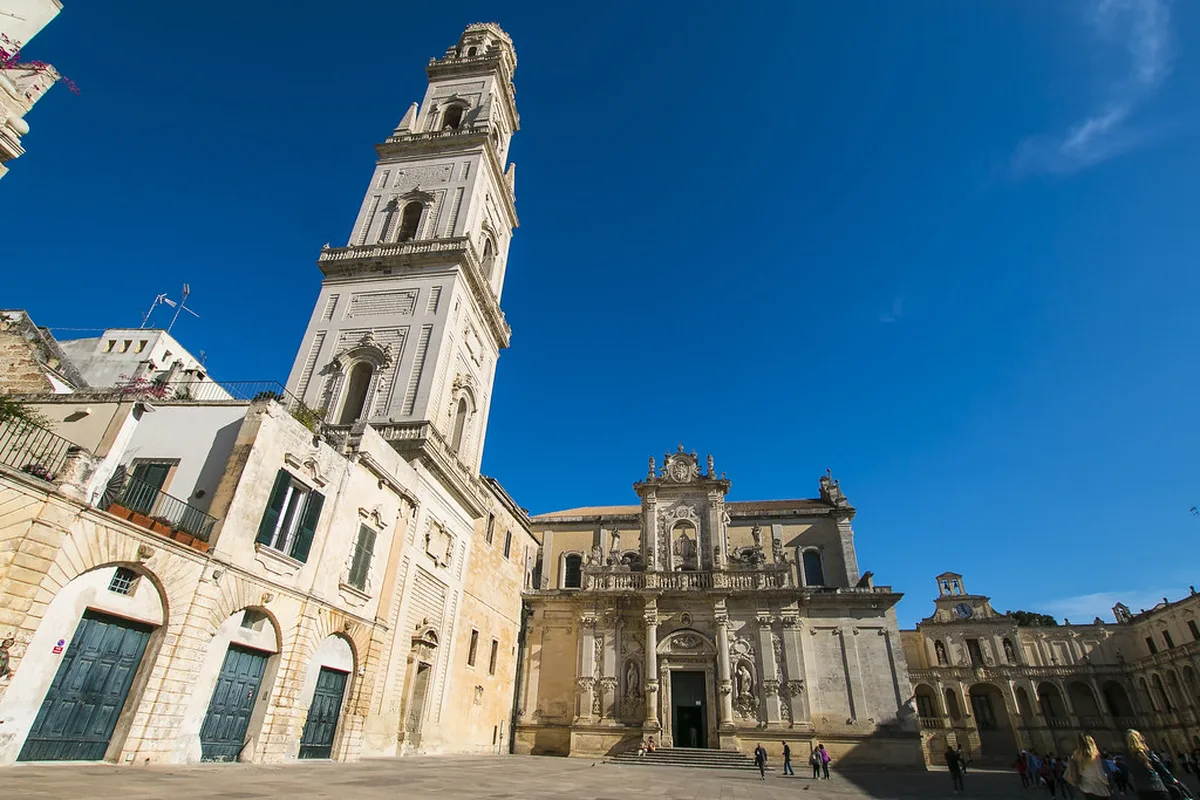
Visitors should head straight to the Cathedral of Santa Maria Annunziata to see its famous 12th-century floor mosaics. These artworks depict the Tree of Life and various biblical scenes in extraordinary detail, spanning the entire nave floor. Entry to the cathedral is free, though a small donation is appreciated. The Aragonese Castle stands at the entrance to the old town and hosts seasonal art exhibitions — entry costs around €5 in 2026, and climbing the ramparts provides panoramic views of the harbor and the Adriatic beyond.
Walking through the historic center reveals narrow whitewashed alleys filled with local artisan shops selling handmade ceramics, linen garments, and olive-wood carvings, with prices typically ranging from €5–30. A short drive south of the town leads to the striking Bauxite Quarry with its emerald lake. The contrast between the red earth and green water creates a unique landscape for photography. Parking near the quarry is limited, so arriving before 9 AM is highly recommended, especially from June through August. Torre dell'Orso beach, just 8 km from Otranto, offers one of the finest sandy stretches on the Adriatic coast, with free access and clear, shallow water ideal for swimming and snorkeling.
For lunch, the Ristorante Peccato di Gola near the harbor serves locally caught sea bass and spaghetti alle cozze (mussels) for €12–18 per main course. After eating, the short climb to the clifftop town walls rewards visitors with sweeping views of the Strait of Otranto, with Albania visible on clear days. A gelato from Bar Centro costs around €2.50 and makes for the perfect end to a morning of sightseeing before returning to Lecce on the afternoon FSE service.
- Otranto Cathedral Mosaics
- Cost: Free entry
- Best for: History lovers
- Tip: Modest dress required
- Time: 30–45 minutes
- Aragonese Castle Ramparts
- Cost: ~€5 (2026)
- Best for: Coastal views
- Where: Old town entrance
- Time: 1 hour
- Torre dell'Orso Beach
- Cost: Free access
- Distance: 8 km from Otranto
- Best for: Swimming, sunbathing
- Tip: Arrive before 10 AM in July–August
Gallipoli's Island Old Town
Gallipoli sits on the Ionian Sea, 40 km southwest of Lecce, and features a unique historic center located on a limestone island. By car, the journey takes around 40 minutes via the SP363 or SP360 roads. Alternatively, the FSE train connects Lecce to Gallipoli in 55–70 minutes, with tickets priced at approximately €4–5 in 2026. The Salento in Bus also covers this route with summer-only service. A 16th-century bridge connects the old town to the modern mainland where most parking is concentrated. Blue-zone parking on the mainland costs €1.50 per hour; white lines in the new town are free but fill quickly.
Wander through the narrow streets to find the Baroque Cathedral of Sant'Agata — entry is free — and various local craft workshops selling handmade sandals, lacework, and majolica tiles. Most visitors enjoy a seafood lunch at the local port where fresh catches arrive daily; expect to pay €15–25 for a full seafood plate at a trattoria, with grilled octopus and crudi di mare among the local specialties. The city walls offer a beautiful walking path that circles the entire historic island district. Spiaggia della Purità provides a small but stunning sandy beach right at the edge of the old town — perfect for a quick swim before the afternoon heat peaks.
Exploring the underground oil mills reveals the history of Gallipoli as a global lamp oil hub during the 18th and 19th centuries. Frantoio Ipogeo di Palazzo Granafei offers guided tours for €5 per person throughout the summer season. These cool underground chambers provide a welcome escape from the intense midday southern sun. The tour explains how laborers lived and worked in these dark spaces for months at a time, pressing millions of litres of olive oil for export to France, England, and Northern Europe.
The beaches north of Gallipoli — particularly Baia Verde and Lido Conchiglie — are among the best sandy stretches on the Ionian coast, with sun lounger rentals from around €10–15 per day at lidos. For free beach access, walk past the pay zones to the public stretches marked with white-and-blue signs. The sunsets over the Ionian Sea from the old town ramparts are among the finest in Puglia and are best experienced with a glass of Primitivo wine from one of the rooftop bars, typically priced at €4–7 per glass in 2026.
- Spiaggia della Purità
- Cost: Free access
- Best for: Quick swims
- Where: Old town walls
- Tip: Bring your towel
- Hypogeum Oil Mill (Frantoio Ipogeo)
- Cost: €5 (2026)
- Best for: Cultural insight
- Where: Via Antonietta de Pace
- Time: 30 minutes
Alberobello: The UNESCO Trulli Town
Alberobello lies 80 km north of Lecce and makes for a rewarding full-day excursion thanks to its iconic UNESCO World Heritage landscape. The FSE train connects Lecce to Alberobello in approximately 1.5 hours, with tickets costing €8–12 in 2026 depending on the service. Drivers can cover the journey in about the same time via the SS7 toward Taranto, then the SP581 north. Plan to arrive by 9 AM to explore the streets before day-trippers from Bari arrive mid-morning. Parking in Alberobello costs €1–2 per hour at the municipal car park on Via Indipendenza, located a short walk from the trulli district.
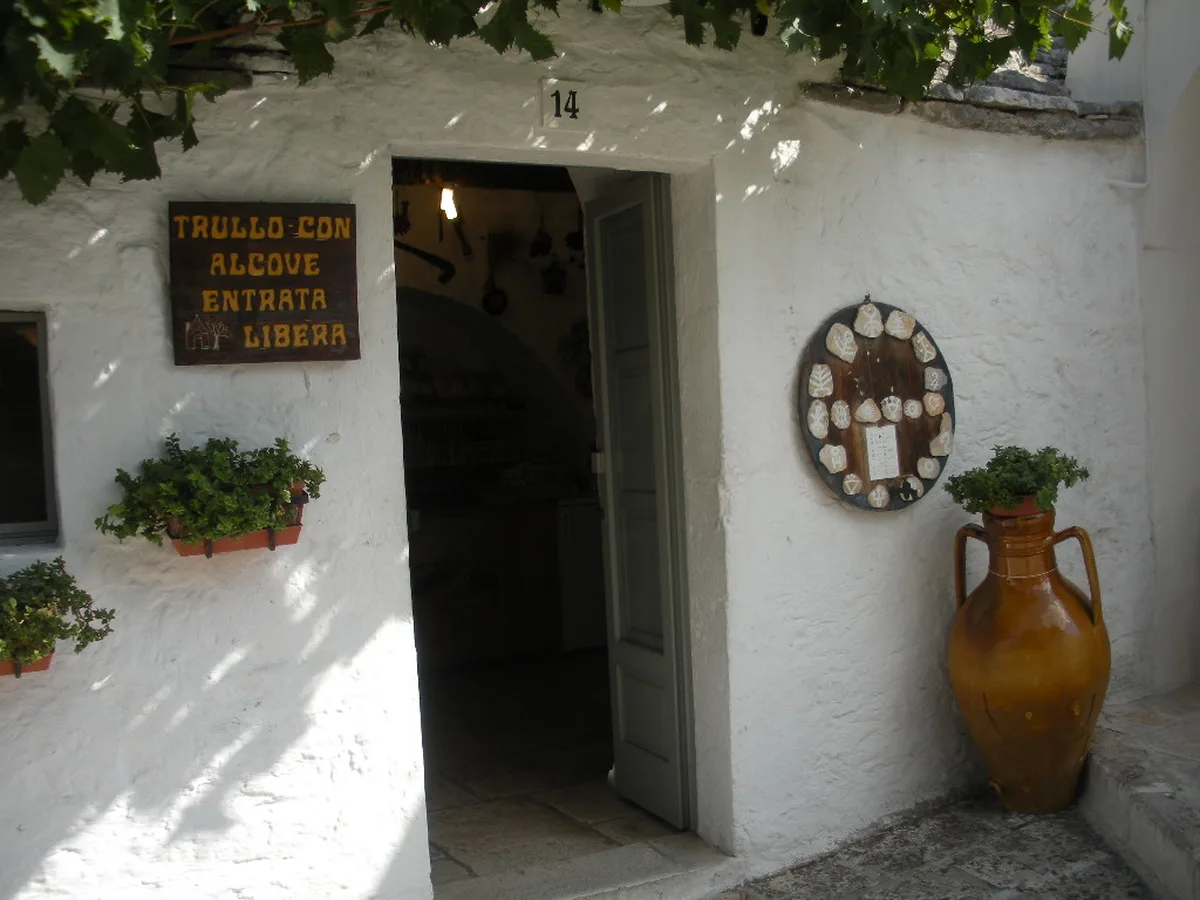
Alberobello is famous for its trulli — ancient dry-stone dwellings with distinctive conical roofs whitewashed in lime. The Rione Monti district contains over 1,000 trulli clustered on a hillside and is the most photogenic area. Entry to the district itself is free and you can wander the narrow lanes at your own pace. For an in-depth look inside a historically furnished trullo, visit Trullo Sovrano on Piazza Sacramento, the only two-storey trullo in town, with entry priced at just €1.50 in 2026.
Beyond the famous trulli, the town has several good trattorias serving traditional Pugliese dishes like orecchiette al ragù, fave e cicorie, and tiella di riso, patate e cozze. Ristorante Il Trullo d'Oro near Piazza del Popolo offers a three-course set lunch for around €22 per person including water. A half-day is enough to cover the main sights, but staying for lunch allows you to enjoy the town once the main tourist crowd has departed by early afternoon. Check our Puglia travel guide for how to combine Alberobello with Matera or Bari on a northern loop.
The Rione Aia Piccola district — less visited than Rione Monti — offers an equally atmospheric trulli experience with fewer souvenir shops and more residential charm. Several of the trulli here are still inhabited by local families. The local tourist office on Via Monte Nero provides free maps and a list of trulli available for short-term rental if you want to extend your stay. Photography is best in the golden hour before 9 AM or after 5 PM when the crowds thin and the limestone cones glow in the warm Pugliese light.
- Rione Monti Trulli District
- Cost: Free to walk
- Best for: Photography, architecture
- Tip: Visit before 10 AM for quieter streets
- Time: 1.5–2 hours
- Trullo Sovrano
- Cost: €1.50 (2026)
- Best for: Interior trullo experience
- Where: Piazza Sacramento
- Time: 30–45 minutes
The Artistic Frescoes of Galatina
Galatina offers a quieter experience compared to the busy coastal hubs of the Salento region. Located just 25 km south of Lecce, the town is easily reached by car in 20–25 minutes or by FSE bus in around 40 minutes. The Basilica of Santa Caterina d'Alessandria houses stunning 15th-century frescoes that rival northern Italian art — entry is free and the church is open most mornings, typically from 9:00 AM to noon and again from 3:00–6:00 PM. The frescoes cover the entire interior, depicting scenes from the life of Saint Catherine, the Apocalypse, and the Resurrection in vivid ochre, blue, and terracotta tones.
Stop at Pasticceria Ascalone on Via Roma to try the original pasticciotto leccese, a famous local custard-filled pastry invented in this very bakery in 1745. This family-run establishment has been serving travelers and locals for nearly three centuries. One pastry costs about €2 in 2026 and makes for a perfect mid-morning snack with a short macchiato. The warm filling and crumbly crust represent the true taste of the Lecce province, and the bakery also sells vacuum-packed versions that travel well as gifts.
Galatina is also known as the birthplace of the tarantella dance and the ancient tarantismo healing rituals, which drew pilgrims from across the Salento every June 29 for centuries. Small chapels around the town center, including the Chapel of Saints Peter and Paul, tell the story of the mythical spider bite cures through frescoes and votive objects. Visitors can learn about this fascinating folk heritage at the Museo Civico Pietro Cavoti during afternoon opening hours — entry is €3. The museum also houses an important collection of 19th-century Salentine paintings and local archaeological finds.
The town remains one of the most authentic spots for those seeking traditional Salentine culture away from the crowds. A combined visit to the basilica, pasticceria, and museum takes around 2.5 hours, making Galatina ideal as a morning excursion paired with an afternoon at Gallipoli or the Ionian beaches. The weekly market on Wednesdays fills the central piazza with local produce, clothing, and handmade goods — prices are notably lower than in Lecce's tourist-facing shops.
Dramatic Cliffs at Castro and Leuca
Castro is famous for its dramatic cliffs and the Zinzulusa Cave, which is accessible by boat from the small harbor below the town. Guided boat tours cost around €15–25 in 2026, depending on the season and duration. The cave features impressive stalactites and crystal-clear water that glows under the sunlight. Check the weather forecast before heading out as boat tours often cancel during windy days. Castro is approximately 55 km from Lecce — allow about an hour by car via the coastal SS173 road. The hilltop borgo above the harbor contains a Norman castle with free exterior access and a small archaeological museum open in summer for €2.
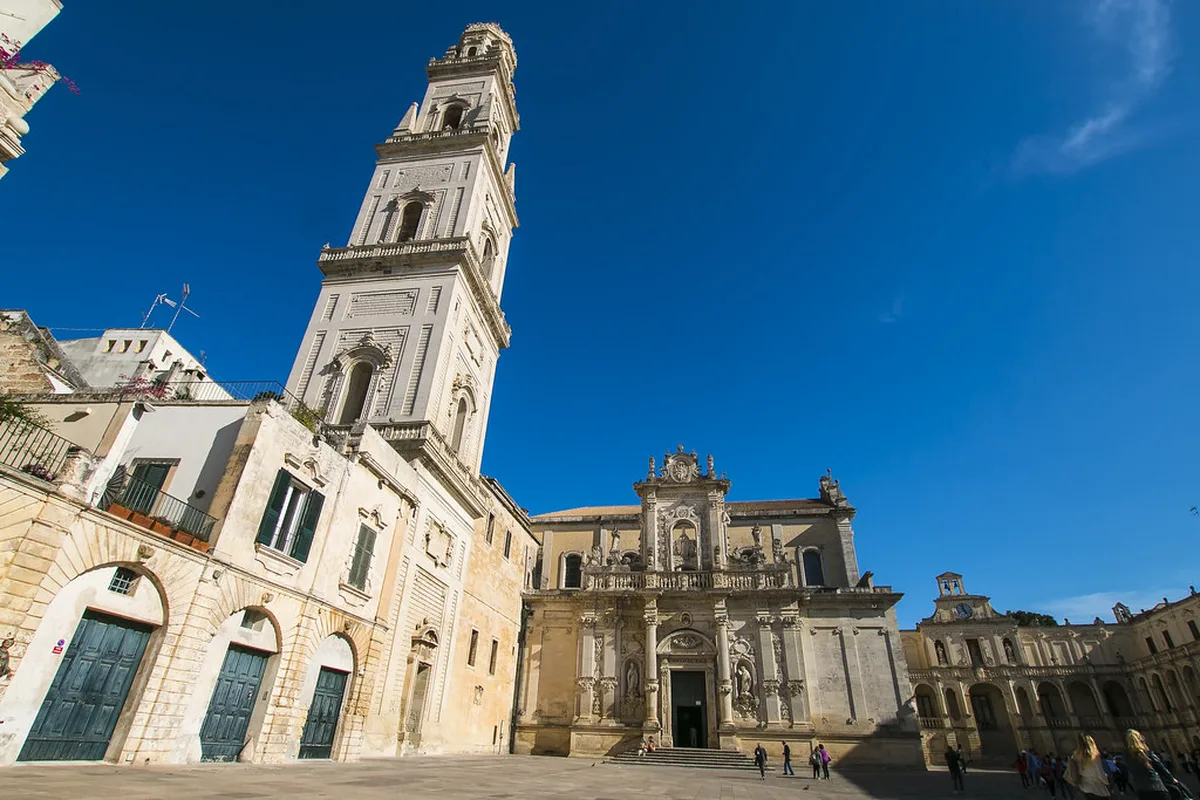
Continuing south leads to Santa Maria di Leuca, where the Adriatic and Ionian seas meet at Italy's southern tip — roughly 80 km and 1 hour 10 minutes from Lecce by car. The Sanctuary of Santa Maria de Finibus Terrae stands at the cliff edge above the harbor and has welcomed pilgrims since the early Christian era; entry is free. The lighthouse behind the sanctuary offers panoramic views of the rugged coastline and deep blue horizon. Walking down the monumental staircase of 240 steps leads to the waterfall that marks the terminus of the Pugliese aqueduct — a scenic photo spot with no entry fee.
Drivers should follow the coastal road (Litoranea Adriatica) between Castro and Leuca for the best scenic views. Several small pull-off areas allow you to stop and photograph the rocky coves, sea stacks, and watchtowers that punctuate the cliffline. Many travelers combine these two stops into a single full-day road trip from Lecce, allowing time for a seafood lunch at a harbor restaurant in Castro for around €20–30 per person. Plan for at least six hours in total to enjoy the sights at a relaxed southern pace.
Swimming near Castro is possible at the Ciolo natural gorge, where the cliffs open to a narrow sea inlet popular with cliff divers and snorkelers. Parking at the Ciolo viewpoint costs €2–3 in peak season. Fins and snorkel sets can be rented from a small kiosk at the gorge entrance for €8 per day. The Grotta della Poesia near Roca Vecchia, about 25 km north of Otranto, is another detour worth combining on the coastal road back toward Lecce — it contains Bronze Age inscriptions and has a €2 entry fee in 2026.
Matera: An Ancient Cave City Within Reach of Lecce
Matera is one of the most dramatic cities in southern Italy and an increasingly popular day trip for travelers based in Lecce, though at 135 km it sits at the outer edge of a comfortable single-day excursion. By car, the drive takes approximately 1 hour 45 minutes via the SS7 toward Taranto and then north on the SS99 — fuel costs are the only variable, with tolls minimal on this route. There is no direct rail connection from Lecce to Matera, so a car or organized minibus tour (€55–75 per person from Lecce in 2026) is required. Several Lecce-based tour operators run full-day Matera excursions departing at 8:00 AM and returning by 8:00 PM, including a guided walk of the Sassi districts.
Matera's ancient cave dwellings, known as the Sassi, are divided into two districts: Sasso Caveoso and Sasso Barisano. Both districts tumble down a ravine in a breathtaking layered cityscape that earned Matera UNESCO World Heritage status in 1993 and the title of European Capital of Culture in 2019. Entry to the Sassi neighborhoods themselves is free and you can wander the atmospheric stone alleys at will. For a deeper experience, visit the Casa Grotta di Vico Solitario in Sasso Caveoso — a reconstructed cave dwelling showing how families lived here until the 1950s forced relocation — entry costs €3 in 2026.
The Palombaro Lungo, a vast underground cistern carved beneath the main Piazza Vittorio Veneto, is one of Matera's hidden highlights. Guided tours depart hourly and cost €5 per person; the cistern held up to five million litres of water and the underground chambers are genuinely awe-inspiring. The Museo Nazionale Ridola houses an important collection of Magna Graecia artifacts from the surrounding region and is open Tuesday to Sunday for €4. Lunch in Matera typically costs €20–30 per person at a mid-range restaurant, with crusco peppers, lamb ragu, and locally produced Primitivo wine the culinary highlights.
For those combining Matera with a broader regional itinerary, our Matera old town guide covers the full Sassi circuit, best viewpoints, and restaurant recommendations in detail. The Belvedere di Murgia Timone viewpoint across the ravine from the city offers the most iconic panoramic view and is accessible by car or a 3 km walking trail. Combine a Matera day trip with an overnight stay in Bari's old town, 65 km north, to make the most of a northern Puglia loop from your Lecce base.
Transportation Tips and the Salento in Bus Network
Choosing between a rental car and public transport is the most critical decision for Salento travelers. The FSE (Ferrovie del Sud Est) train network is the backbone of public transport and runs from Lecce to Gallipoli, Otranto, and Alberobello at affordable fares — typically €4–12 per journey in 2026. Trains can be infrequent on Sundays and public holidays, so always check timetables at fse.it in advance. Validate your ticket at the station machine before boarding to avoid fines of up to €50.
The Salento in Bus network complements the FSE trains and operates seasonal coach routes to beach towns and smaller villages between June and September. Routes cover destinations including Gallipoli beaches, Leuca, Otranto, and Porto Cesareo. Tickets are sold on board and typically cost €2–5 per trip. For secluded beaches and smaller villages off the train network, a rental car provides far greater flexibility. If you drive, check our guide on parking in Lecce to avoid ZTL fines before leaving the city center.
Parking in coastal towns becomes difficult after 10:00 AM during the busy months of July and August. Look for blue-line zones (paid, usually €1–2/hour) and check nearby meters. White lines are usually free but rare in historic centers. For those wanting a guided option, several operators in Lecce run full-day minibus tours to multiple Salento destinations for €40–60 per person including transport and a local guide — ask at the tourist office on Piazza Duomo for a current list of licensed operators.
Cycling is an underrated option for the flat coastal strip between Otranto and Castro. Bike rental shops in Lecce typically charge €15–20 per day for a quality hybrid bike or €30–40 for an e-bike. The dedicated cycle path (Ciclovia dell'Adriatico) runs along the coast for much of this stretch, making it a safe and scenic choice for fit travelers. For the full Lecce old town guide and tips on using Lecce as a regional base, including accommodation zones and ZTL map details, see our companion article.
Frequently Asked Questions
What is the best day trip from Lecce by train?
Otranto and Gallipoli are both excellent by FSE train from Lecce. Otranto takes approximately 50 minutes and costs €4 in 2026, making it the quickest and cheapest rail option. Gallipoli takes 55–70 minutes at a similar price. Both FSE stations are within easy walking distance of the historic centers, so a car is not needed at either destination. On Sundays and public holidays, check timetables in advance as FSE services run less frequently.
How far is Otranto from Lecce?
Otranto is 45 km from Lecce by road, or approximately 50 minutes by FSE train from Lecce Centrale. A direct train ticket costs around €4 in 2026. The Aragonese Castle (entry €5) and Cathedral of Santa Maria Annunziata (free) are both within easy walking distance of the Otranto FSE station, making this one of the most straightforward Salento day trips without a car.
Can I visit Otranto and Gallipoli in the same day from Lecce?
You can visit both towns in one day if you have a rental car — the drive between Otranto and Gallipoli across the peninsula takes about an hour. However, this schedule leaves little time for relaxing on the beaches or visiting the Aragonese Castle (€5) and hypogeum oil mill (€5). It is better to dedicate a full day to each coast for a more relaxed and rewarding experience.
Is Alberobello worth a day trip from Lecce?
Yes, Alberobello is one of the most rewarding day trips from Lecce, especially for first-time visitors to Puglia. The UNESCO-listed trulli of the Rione Monti district are unlike anything else in Europe. The FSE train reaches Alberobello in around 1.5 hours from Lecce, with 2026 tickets priced at €8–12. Entry to the trulli district is free; Trullo Sovrano on Piazza Sacramento costs just €1.50 to enter. Arrive before 10 AM to beat the day-trip crowds from Bari.
Which is better for a day trip from Lecce: Gallipoli or Otranto?
Choose Gallipoli if you prioritize beaches and a lively atmosphere — its sandy Ionian shores, island old town, and Frantoio Ipogeo oil mill tours (€5) are ideal for a summer beach day. Choose Otranto if you prefer history and architecture — the Aragonese Castle (€5), 12th-century Cathedral mosaics (free), and the Bauxite Quarry lake make it the stronger cultural destination. Both are roughly 40–45 km from Lecce and reachable in under an hour by car or FSE train for €4–5.
Is Matera possible as a day trip from Lecce?
Yes, Matera is doable as a long day trip from Lecce, though at 135 km it requires an early start. There is no direct train connection, so a rental car (approximately 1 hour 45 minutes each way via Taranto) or an organized minibus tour (€55–75 per person from Lecce in 2026) is necessary. Key highlights include the Sassi cave districts (free to explore), Casa Grotta di Vico Solitario (€3), and the Palombaro Lungo underground cistern (€5). Allow at least 4–5 hours on the ground to do Matera justice.
Are there beaches near Lecce accessible for a day trip?
San Cataldo is the closest beach to Lecce, located just 15 km away — about 15 minutes by car or reachable by local bus from Lecce Centrale. For more scenic sandy shores, head to Torre dell'Orso near Otranto (free access) or Porto Cesareo on the Ionian coast (sun loungers from €10/day). The Alimini Lakes nature reserve, 20 km from Otranto, offers calm freshwater bathing alongside the sea. See our Lecce beach guide for the full rundown of 2026 options, facilities, and public versus lido beach comparisons.
Lecce provides a strategic starting point for discovering the diverse landscapes of southern Puglia in 2026. Whether you prefer the UNESCO trulli of Alberobello, the Aragonese Castle in Otranto, the Ionian beaches of Gallipoli, the cave cities of Matera, or the cliffs at Castro and Leuca, the Salento has something for every traveler. The FSE train network and Salento in Bus make most destinations reachable without a car at €4–12 per journey, while a rental car unlocks the smaller coastal gems and longer routes to Matera. For the broader southern Italy picture, our best beaches in southern Italy guide helps you plan the full regional sweep from Puglia to Calabria. Review our Lecce old town guide to balance your city time with Salento adventures and make the most of your time in the deep south.