Explore the Ancient Sassi: A Matera Old Town Guide for 2026
Casa Grotta di Vico Solitario (€3–5) and Palombaro Lungo cistern (€5) are the two essential paid stops in Matera's UNESCO-listed Sassi — book cistern tours ahead in summer to avoid 60-minute queues.
Matera Cathedral (Civita ridge, free entry, open daily 09:00–19:00) and Church of Santa Maria de Idris (€3) anchor the old town's two ancient cave districts, Sasso Barisano and Sasso Caveoso.
Matera quick fact: The Sassi di Matera are two ancient cave-dwelling districts — Sasso Caveoso and Sasso Barisano — carved into a limestone ravine in Basilicata, southern Italy. UNESCO listed them as a World Heritage Site in 1993.
Understanding the Layout of the Sassi Districts
The historic center divides into two primary districts known as Sasso Barisano and Sasso Caveoso. Sasso Barisano contains more renovated buildings and sits closer to the modern city shops along Via Ridola and Via del Corso. Many visitors start their exploration here because the paths feel slightly wider and flatter, making it the natural entry point from Piazza Vittorio Veneto. You will find various restaurants and boutique hotels tucked into these restored stone structures, some carved five or six levels deep into the canyon wall. Expect a lively mix of artisan workshops, ceramics studios, and well-signed lookout terraces as you descend from the piazza toward the lower rock churches. This UNESCO site represents one of Italy's most remarkable architectural achievements.
Sasso Caveoso retains a more ancient and rugged atmosphere for curious travelers to explore. This southern district, stretching toward the church of Santa Maria de Idris (€3 entry) on the Monterrone rock, features many original cave dwellings that remain in their primitive state. Walking through this area provides a deeper look into the difficult living conditions of the past, with alley grades exceeding 20% in places. Expect steeper inclines and more challenging stairs as you descend toward the canyon floor and the valley floor of the Gravina gorge roughly 60 metres below the Civita ridge. The atmosphere changes noticeably from Barisano — fewer cafés, more silence, and a sense that time genuinely stopped here in 1952.
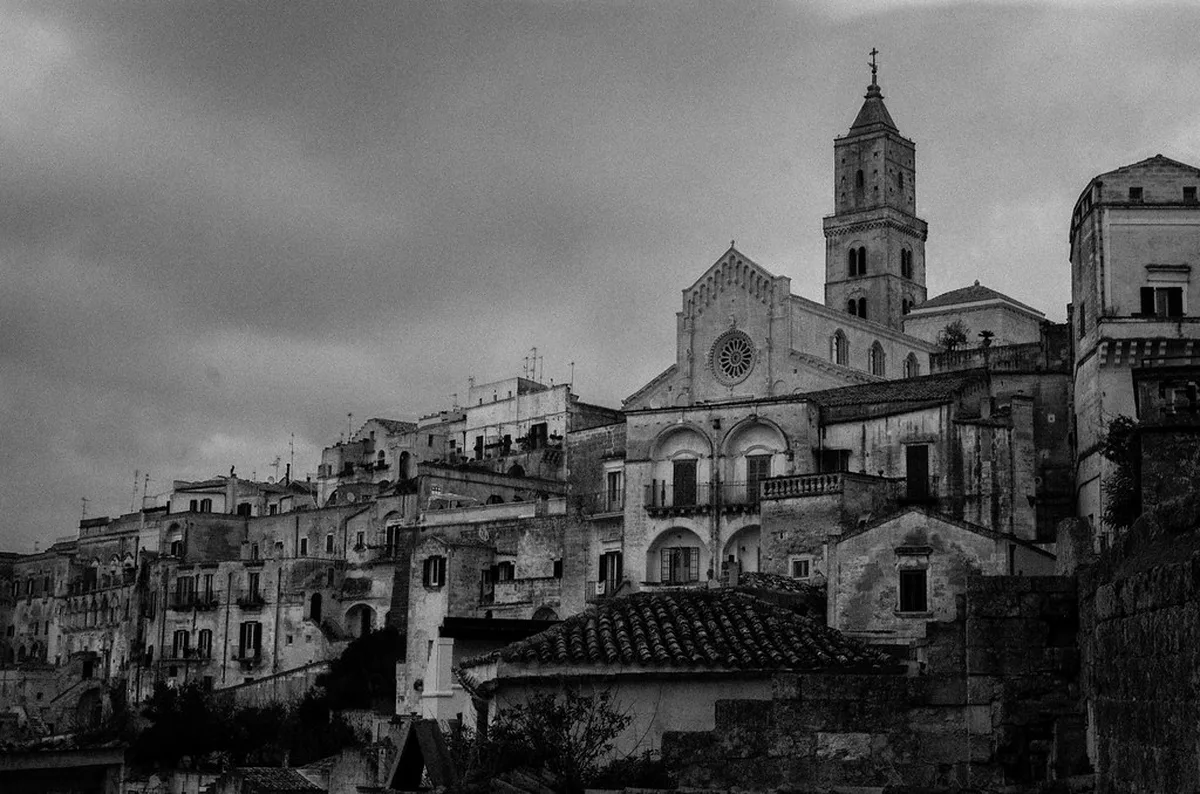
The Civita district sits on the high ridge between the two main Sassi valleys, separated from the modern town by a natural saddle. This area houses the majestic Matera Cathedral — free to enter and open daily from 09:00 to 13:00 and 15:00 to 19:00 — along with several noble palaces from later centuries. Views from the Civita offer incredible panoramic photos of the surrounding stone architecture, especially at golden hour when the calcarenite glows amber. The walking distance from Piazza Vittorio Veneto to the Cathedral is roughly 800 metres but takes 20 minutes due to the uneven limestone steps.
Staying oriented in the old town can be difficult without a digital map or guide. The winding alleys often loop back on themselves or lead to private cave entrances. Look for the brown historical signs that point toward major churches and museums. A useful mental model: Sasso Barisano lies north-west of the Cathedral, Sasso Caveoso lies south-east, and the Civita ridge connects them like the spine of a fish. Local residents usually help lost tourists find their way back to the main squares, and most accommodations provide printed neighbourhood maps on request. Downloading a GPS-capable offline map of Matera before arrival is strongly recommended, as mobile signal can be unreliable inside the deeper cave alleys.
Must-See Landmarks in Matera Old Town
Matera features incredible rock-hewn churches — known locally as chiese rupestri — that showcase ancient religious art and Byzantine frescoes painted directly on the soft calcarenite walls. These spiritual sites were carved directly into the rock by medieval monks between the 8th and 13th centuries. Visiting these locations requires a small entrance fee that supports ongoing conservation efforts; most charge between €2 and €4 per adult. Plan to spend at least twenty minutes inside each church to appreciate the fine detail of the surviving frescoes, many of which retain vivid ochre, blue, and crimson pigments despite centuries of moisture and candlelight. Combo tickets bundling two or three rock churches are available at each entrance and typically save €1–2 per person compared to buying separately.
The underground water systems represent a marvel of ancient engineering for this dry region. Palombaro Lungo — the largest Roman-era cistern in Matera — sits right beneath Piazza Vittorio Veneto and held up to five million litres of rainwater harvested from the surrounding streets. Guided tours descend 15 metres underground to see the scale of this massive vaulted reservoir; admission is €5 per adult and tours depart every 30 minutes. Reservations are recommended during the busy summer months, particularly July and August when waiting times can exceed an hour. The cistern stays a cool 14 °C year-round, so bring a light layer even in summer.
Traditional cave houses offer a glimpse into the daily lives of Matera's former residents. These museums display original tools, furniture, terracotta water jugs, and hearths used by families until the forced evacuations of the 1950s. Seeing the cramped quarters — entire extended families sharing a single room with their livestock in a lower alcove — helps explain why Prime Minister Alcide De Gasperi signed Law 619 in 1952 ordering the relocation of around 15,000 residents to new public housing on the plateau above. Most cave house museums provide audio guides in English, Italian, French, and German for a modest supplement of €1–2. Expect a strong emotional response; the conditions described by the exhibits are genuinely sobering even for experienced travelers.
- Casa Grotta di Vico Solitario
- Type: Historic cave museum, Sasso Caveoso
- Cost: €3–5 entry (2026)
- Hours: Daily 09:00–20:00 (closes earlier in winter)
- Time: 30-minute visit recommended
- Focus: Traditional peasant life, original furnishings
- Church of Santa Maria de Idris
- Type: Rock-hewn church atop Monterrone rock, Sasso Caveoso
- Cost: €3 adult (combo tickets with nearby chiese rupestri available)
- Hours: Daily 10:00–18:00
- Feature: Ancient Byzantine frescoes, 12th–14th century
- View: Overlooks the full length of Sasso Caveoso and the Gravina
- Palombaro Lungo Cistern
- Type: Underground Roman water reservoir
- Access: Piazza Vittorio Veneto (entrance inside the piazza)
- Cost: €5 adult (2026)
- Depth: 15 metres underground
- Hours: Tours every 30 min, daily 10:00–19:00; book ahead in summer
- Matera Cathedral (Cattedrale di Matera)
- Type: 13th-century Romanesque-Apulian cathedral, Civita
- Cost: Free entry (2026)
- Hours: Daily 09:00–13:00 and 15:00–19:00
- Feature: carved facade, crypt, frescoes of the Last Judgement
- MUSMA — Museum of Contemporary Sculpture
- Type: Contemporary art museum inside Palazzo Pomarici cave complex
- Cost: €5 adult (2026)
- Hours: Tue–Sun 10:00–14:00 and 16:00–20:00
- Feature: 250 sculptures spanning the 20th–21st century in cave galleries
Casa Grotta: Living Inside a Sassi Cave
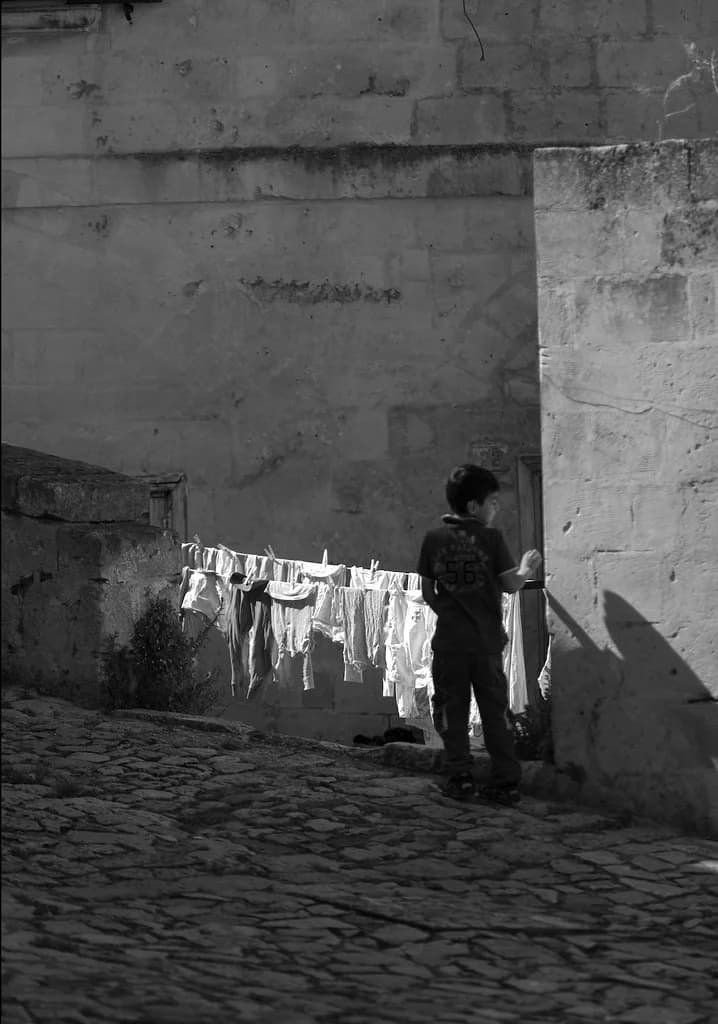
The most viscerally affecting stop in all of Matera is the Casa Grotta museum tucked into Sasso Caveoso near Vico Solitario. Step through its low doorway and you are transported into a single vaulted room that housed an entire family — parents, children, grandparents, and the family mule — until the mid-20th century. Every object on display is authentic: hand-carved wooden cradles, smoke-blackened terracotta cooking pots, a stone grain-grinding basin worn smooth by generations of daily use, rough-woven blankets, rope ladders that doubled as storage shelves, and a manger alcove carved directly into the back wall where the family donkey spent the winter. Admission is €3–5 per person (2026), and the small entrance fee funds the upkeep of the authentic furnishings rather than replica props.
The political story behind this place is inseparable from the objects you see. In 1945, writer and anti-fascist exile Carlo Levi published Cristo si è fermato a Eboli describing the abject poverty of Basilicata's cave-dwelling communities. The book reached Prime Minister Alcide De Gasperi, who visited Matera in 1950 and was photographed in conditions that shocked post-war Italy. The international press labelled the Sassi "la vergogna d'Italia" — the shame of Italy. Law 619, signed by De Gasperi in 1952, ordered the forced relocation of roughly 15,000 Sassi residents to purpose-built housing blocks on the plateau above. By 1963 the old cave districts were legally uninhabitable, the doors sealed, the alleys empty.
The reversal came slowly. Academics lobbied for preservation through the 1970s and 1980s, arguing the Sassi represented a unique record of troglodytic urban planning continuous from the Neolithic period. UNESCO agreed: in December 1993 the Sassi di Matera became one of the first southern Italian sites inscribed on the World Heritage List, described as "the most outstanding, intact example of a troglodyte settlement in the Mediterranean region." Private investment followed. Cave rooms that housed peasant families began transforming into boutique hotels with heated stone floors and rainfall showers — the same low doorways now fronting luxury suites at €200–400 a night. The poignant contrast is Matera's defining tension: a place that was shameful enough to require a government evacuation now attracts visitors who pay premium prices precisely to sleep inside those same stones.
Allow at least 30 to 45 minutes at Casa Grotta. The volunteer guides who rotate through the museum often have personal family connections to the Sassi — their grandparents may have lived in nearly identical conditions — and their stories add a layer no audio guide can replicate. The museum is a short 5-minute walk from the Piazza San Pietro Caveoso, which itself offers one of the best uninterrupted views over the entire Caveoso district toward the canyon beyond. Combine the visit with a stop at one of the nearby chiese rupestri for a combo ticket that covers Santa Maria de Idris, Madonna de Idris, and San Giovanni in Monterrone for approximately €5 total.
Rock-Hewn Churches: Complete Chiese Rupestri Guide
Matera's network of rupestrian churches is one of the most concentrated collections of medieval cave religious art in all of southern Europe, and many visitors overlook the smaller, less-publicised ones while focusing only on Santa Maria de Idris. The Cripta del Peccato Originale — sometimes called the "Sistine Chapel of rupestrian art" — lies about 15 km outside the city center near Contrada Pietrapenta, but it is worth the short drive for its extraordinary 8th-century frescoes depicting the Fall of Adam and the Annunciation, preserved in vivid terracotta reds and ultramarine blues. Guided visits cost €10 per person and must be pre-booked via the Fondazione Zétema; independent entry is not permitted, and group sizes are capped at 12 to protect the fragile pigments.
Within the Sassi themselves, the Church of San Pietro Caveoso (free entry, open daily 09:30–13:00 and 15:00–19:00) sits immediately above the canyon rim at Piazza San Pietro Caveoso and offers one of the best free viewpoints in the city at no cost. Its Baroque facade was added in the 17th century over much older cave foundations, and the interior houses a 16th-century painted wooden crucifix and several devotional paintings donated by local noble families. Directly adjacent, the Church of Santa Lucia alle Malve (€3 adult, open daily 10:00–18:00) is among the earliest rupestrian churches in Matera, with frescoes dating from the 9th to 12th centuries covering nearly every surface of the cave walls — the stylized faces of Byzantine saints stare down from every direction in a scene that is genuinely otherworldly.
For visitors wanting a structured itinerary of the rock churches, the Cooperativa Amici del Turista on Piazza Vittorio Veneto sells a combined rupestrian churches pass for €10–12 per adult that covers entry to Santa Maria de Idris, Santa Lucia alle Malve, and Madonna de Idris. This pass saves approximately €2–3 compared to individual entry and also includes a printed map marking all accessible chiese rupestri within the Sassi boundaries. Budget half a day to cover this circuit — the terrain between churches involves significant stair climbing, and rushing defeats the contemplative experience that makes these spaces so memorable. Most rock churches close between 13:00 and 15:00 for the traditional midday break, so plan morning or late afternoon visits.
Photographic restrictions vary by church. Santa Lucia alle Malve prohibits flash photography and tripods to protect the ancient pigments; Santa Maria de Idris allows non-flash photography freely. Always check the posted rules at each entrance and follow them — the frescoes have survived a thousand years and need no additional stress from light or physical contact. If you reach out to touch the painted rock surfaces, staff will ask you to stop, and in some cases entry may be denied to the rest of your group. The experience of simply sitting quietly inside these cool, dimly lit chapels — often with only one or two other visitors — ranks among the most profoundly peaceful moments available anywhere in southern Italy.
Essential Transport and Parking Logistics
Driving inside the ancient Sassi districts is strictly prohibited for all non-resident visitors. The city operates a strict ZTL (Zona a Traffico Limitato) zone monitored by cameras at every entrance point, active 24 hours a day throughout the year. Hefty fines of €80–€160 apply to anyone who accidentally enters these restricted areas with a car, and rental companies routinely pass the charge on to the renter after the fact. You must find a secure spot outside the pedestrian zone before exploring on foot.
Several large parking garages and surface lots sit on the perimeter of the historic old town center. Multi-storey facilities near Via Annunziatella offer the safest option for travelers with luggage or rental cars; daily rates for covered parking typically range from €10 to €20. The Parking Sasso Barisano on Via Madonna delle Virtù provides easy access to the northern Sassi entrance and charges around €1.50 per hour or €12 for a full day. Consult our dedicated parking in Matera guide for the best rates, lot locations, and current ZTL camera positions. Campervan visitors will find dedicated areas near the sports complex about 1 km from the Cathedral.
Shuttle buses connect the outlying parking lots to the main entrances of the Sassi. The Linea Sassi city bus runs frequently between Piazza Matteotti and the old town, roughly every 15–20 minutes during peak tourist season (April–October). Tickets cost €1.30 and can be purchased from the driver or at local tobacco shops (tabaccherie). Using public transport saves your energy for walking the beautiful alleys of the center, particularly valuable on a hot summer afternoon when the reflected heat off the limestone walls can be intense.
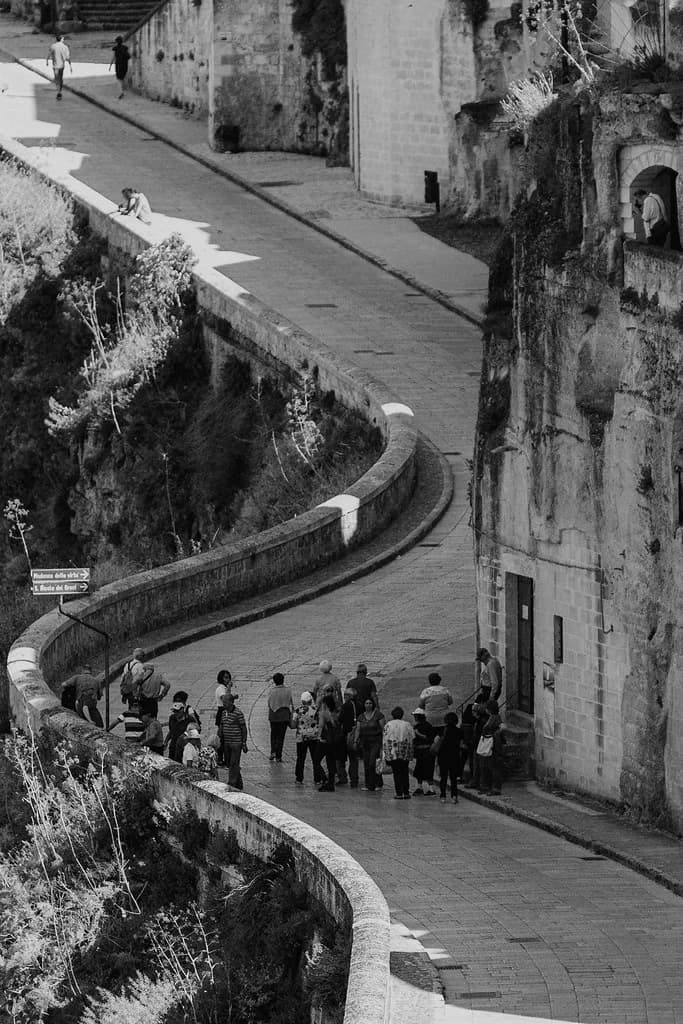
Walking remains the only true way to experience the heart of the old town. The recommended circuit descends from Piazza Vittorio Veneto through Sasso Barisano to the bottom of the canyon, crosses under the Monterrone rock past the church of Santa Maria de Idris, climbs through Sasso Caveoso to Piazza San Pietro Caveoso, then ascends back to the Cathedral on the Civita ridge — roughly 4 km total with 120 m of elevation change. Plan your route to descend into the Sassi and take a bus back up. This strategy minimises the physical strain of climbing hundreds of limestone steps at the end of a full day of sightseeing. For those arriving from Bari or Lecce by train, taxis from Matera Central Station to Piazza Vittorio Veneto cost approximately €8–12. See our Puglia travel guide for transport options across the region.
Strategic Planning for Your Matera Visit
Choosing between a guided tour and solo exploration depends on your personal travel style and how much historical context you want. A licensed local guide provides essential background about specific cave interiors, individual sassi families, and the evacuation politics that you would likely miss while walking alone. Solo walking, on the other hand, allows you to discover quiet corners, photograph at your own pace, and sit in a café alcove without any time pressure. Most professional walking tours of the Sassi last about two to three hours for a standard circuit and cost €15–€25 per person, bookable through the main tourist office on Piazza Vittorio Veneto or via local operators such as Matera Experience and BCC Matera.
Spring and autumn offer the most comfortable weather for exploring the hilly stone terrain. Temperatures in May and October stay between 16 °C and 22 °C — mild enough for long walks without excessive heat or the glare of the limestone in full summer sun. Summer months bring intense radiant heat off the white calcarenite walls, with afternoon temperatures in July regularly exceeding 36 °C. If visiting in July or August, plan all outdoor activities before 10:00 or after 17:30 and carry at least 1.5 litres of water per person, as shade is scarce inside the Sassi. Winter visits (December–February) offer dramatically lower crowds and moody atmospheric fog over the gorge, though several smaller rock churches may reduce hours to weekends only.
Check the latest Matera walking tour itinerary for seasonal events and museum hours. Opening times for rock churches can change based on the specific month or religious holidays — many chiese rupestri reduce their hours significantly between November and February. Most attractions close between 13:00 and 15:00 for the traditional siesta period. Verify the 2026 schedule for local festivals such as the Festa della Bruna (2 July), one of southern Italy's most vivid religious celebrations, to avoid unexpected crowds or closures near Piazza Vittorio Veneto. During the Festa della Bruna, a papier-mâché triumphal float is ritually dismantled by the crowd — a striking and chaotic spectacle that draws tens of thousands of visitors to the city.
One major mistake travelers make is only visiting Matera for a quick day trip from Naples or Bari — each roughly 2.5–3 hours by car or train. The city transforms at night when the cave dwellings glow with thousands of soft amber lights — a spectacle entirely missed by day-trippers who leave before sunset. Staying overnight allows you to experience the magical, near-silent atmosphere after the tour groups depart. Budget at least two full days: one for Sasso Caveoso and the chiese rupestri, one for Sasso Barisano, the Cathedral, and the Palombaro Lungo cistern (€5). Matera also makes an excellent base for a day trip into the Gravina canyon, where ancient hermit caves and a Roman bridge reward adventurous walkers willing to descend a rough trail costing nothing beyond good footwear.
How long do you need in Matera? Plan a minimum of two full days to cover both Sassi districts, the Cathedral, and at least two cave museums comfortably. One day is enough for highlights only; three days allows a relaxed pace plus a day trip into the Gravina canyon.
Local Dining and Cave Stays Experience
Dining in Matera offers a chance to taste traditional Lucanian flavors in genuinely unique settings. Many of the most memorable restaurants operate inside ancient caves with vaulted calcarenite ceilings, candlelit niches, and a naturally cool temperature of around 18 °C that makes them ideal on summer evenings. Try the local Pane di Matera IGP, a semolina sourdough loaf famous for its thick crunchy crust and bright yellow interior from the durum wheat of the Murgia plateau — it stays fresh for up to a week, which made it essential for peasant families working distant fields. Dinner reservations are strongly recommended for the popular cave restaurants, particularly on Friday and Saturday evenings and throughout July and August when the city fills with Italian and international tourists. Expect main-course pasta dishes priced at €12–18 in the Sassi, noticeably higher than the same dishes would cost in the modern upper town.
Cave hotels provide one of the most memorable accommodation experiences in all of Italy and increasingly in all of Europe. These rooms blend ancient stone walls — sometimes 2,000 years old — with contemporary luxury amenities like under-floor heating, rainfall showers set into rock alcoves, and private terraces carved into the canyon face. Sleeping inside a renovated grotto keeps you naturally cool during the hot summer nights thanks to the thermal mass of the surrounding limestone. Prices in 2026 vary significantly: budget cave B&Bs start around €80 per night, while top-tier boutique hotels such as Le Grotte della Civita or Sextantio Sassi command €200–€400. Book at least three months ahead for summer weekends — availability is tight given the finite number of cave rooms in the protected zone.
Local markets near the modern center sell regional specialties worth bringing home. Look for dried cruschi peppers (sweet, crunchy, and intensely flavoured when fried in olive oil — a staple in pasta dishes and antipasti across Basilicata), jars of peperoni cruschi preserved in sunflower oil, local aged cheeses like caciocavallo podolico, and artisanal liqueurs made from local herbs. Pair your meal with a glass of Aglianico del Vulture DOC, a robust structured red wine grown on volcanic soils 50 km north of Matera and one of southern Italy's most respected appellations. Food prices in the Sassi are generally 20–30% higher than in the newer parts of town, reflecting the premium location and the logistics of delivering supplies through narrow medieval alleys.
Always carry a small amount of cash for smaller cafés and souvenir artisan workshops scattered through the Sassi. While most major businesses accept contactless card payments, some tiny wood-carving studios and pottery workshops still prefer physical currency. Tipping is appreciated but not mandatory — rounding up to the nearest euro or leaving €1–€2 per person after a sit-down meal is well received. Enjoy the slow pace of Lucanian café culture while sipping a caffè alla mandorla (espresso with almond syrup) in a sun-warmed stone piazza. For visitors combining Matera with the wider southern Italian coast, the best beaches in southern Italy are within a 90-minute drive, making a combined cultural-and-sea itinerary very achievable. If your route passes through Lecce or Bari, check our Lecce old town guide and Bari old town guide for additional medieval architecture to add to your itinerary.
Frequently Asked Questions
What are the Sassi di Matera?
The Sassi di Matera are two ancient troglodyte districts — Sasso Caveoso and Sasso Barisano — carved into a deep limestone ravine in Basilicata, southern Italy. Continuously inhabited since at least the Neolithic period, they represent one of the oldest human settlements in the world. UNESCO inscribed the Sassi as a World Heritage Site in 1993, recognising them as the finest surviving example of cave-city urbanism in the Mediterranean. The two districts are separated by the elevated Civita ridge, where Matera Cathedral stands free of charge and open daily from 09:00 to 19:00.
How long do you need in Matera old town?
Budget a minimum of two full days. Day one covers Sasso Caveoso, Casa Grotta di Vico Solitario (€3–5), the Church of Santa Maria de Idris (€3), and Piazza San Pietro Caveoso. Day two is ideal for Sasso Barisano, Matera Cathedral (free entry, open 09:00–19:00), and the Palombaro Lungo cistern (€5 per adult, tours every 30 minutes). Staying overnight is essential — the Sassi at night, lit by soft amber lighting, is one of Italy's most spectacular sights and completely different from the daytime experience.
Is Matera old town walkable for everyone?
The old town features many steep stairs and uneven stone paths that can be challenging for visitors with limited mobility. Wheelchairs and pushchairs can access the upper Civita ridge and some sections of Sasso Barisano, but Sasso Caveoso involves unavoidable stairways. Visitors with mobility issues should stick to the flatter upper ridges near the Cathedral and use the Linea Sassi shuttle bus (€1.30 per ticket) to reduce climbing. Sturdy shoes with good grip are essential for everyone to navigate the slippery polished limestone safely.
Can I drive my rental car into the Sassi?
No, the historic center operates a strict ZTL (Zona a Traffico Limitato) zone with camera enforcement active 24 hours a day, every day of the year. Fines range from €80 to €160 and are typically forwarded to the renter by the car hire company. You must park in a designated garage or surface lot outside the Sassi boundary — covered lots near Via Annunziatella charge €10–20 per day, and the Parking Sasso Barisano on Via Madonna delle Virtù costs around €1.50 per hour or €12 for a full day. Walk or take the Linea Sassi shuttle bus into the old town from there.
What is the best viewpoint for photos of Matera?
The viewpoint at Piazza Pascoli offers the most iconic panoramic look at Sasso Caveoso, with the canyon and the rock church of Madonna de Idris in the foreground. Another excellent spot is the terrace in front of Matera Cathedral on the Civita ridge, which gives a side-on view across both Sassi districts simultaneously. Sunset and the first hour after dark provide the best lighting — the calcarenite glows golden then transitions to a warm amber under the floodlights. Both viewpoints are free and accessible without a ticket.
How much does it cost to visit Matera old town in 2026?
The Sassi themselves have no single entry fee — you walk freely through the districts. Individual attractions carry their own charges: Matera Cathedral is free; Casa Grotta di Vico Solitario costs €3–5; Palombaro Lungo cistern costs €5 per adult; the Church of Santa Maria de Idris costs €3; MUSMA contemporary sculpture museum costs €5; and a combined rupestrian churches pass covering three rock churches is approximately €10–12. A full day of paid attractions for one adult therefore costs roughly €20–30, not including food, parking (€12–20 per day), or guided tour fees (€15–25 per person).
What is the best time of year to visit Matera?
May, June, September, and October offer the best combination of mild temperatures (16–24 °C), manageable crowds, and full opening hours at all rock churches and museums. July and August are the busiest and hottest months — afternoon temperatures regularly exceed 36 °C and the reflected heat from limestone walls intensifies the effect. If you must visit in summer, confine outdoor walks to before 10:00 or after 17:30. Winter visits (December–February) are atmospheric with far fewer tourists, but some smaller chiese rupestri reduce to weekend-only hours. The Festa della Bruna on 2 July is spectacular but draws very large crowds to Piazza Vittorio Veneto.
Matera offers a travel experience that is truly unlike any other destination in Italy. Following this Matera old town guide ensures you see the best sites — from the intimate Casa Grotta cave museum (€3–5) to the vast Palombaro Lungo cistern (€5) — with minimal stress and maximum historical depth. The combination of ancient history, poignant 20th-century social upheaval, and stunning UNESCO-listed architecture creates a lasting impression on every visitor who gives the city more than a fleeting afternoon.
Proper preparation regarding parking, ZTL zones, and walking routes makes your journey much more enjoyable. Respect the local culture and the delicate environment of this World Heritage site by staying on marked paths and following museum guidelines. Your visit to this stone city — once labelled a national shame, now celebrated as one of Italy's greatest treasures — will likely be the highlight of your southern Italian adventure in 2026. Pack your walking shoes, book your cave hotel early, and get ready to explore one of humanity's oldest living landscapes.