Best Beaches in Southern Italy: The Complete 2026 Guide
Sun lounger sets at San Vito Lo Capo start at €12, Scala dei Turchi charges €3 entry, and Procida Island hydrofoils run €11 from Pozzuoli — all in 2026.
Southern Italy's 7,000 km coastline guarantees 30% free spiaggia libera on every beach, with private lido umbrella-and-lounger sets ranging from €10 at Tropea to €50 at Positano.
This best beaches in southern Italy guide helps you find the perfect sandy shores and crystal-clear waters, whether you are chasing secluded coves in Sicily, dramatic Puglia sea stacks, or family-friendly Naples bays. From the white marl cliffs of Scala dei Turchi to the volcanic coves of Procida, explore each region's distinct coastal character with real 2026 prices and transport details.
San Vito Lo Capo: Sicily's Tropical Paradise
San Vito Lo Capo stands out as the premier destination for travelers seeking a tropical feel in Europe without crossing the Atlantic. The 3-km stretch of fine white quartz sand is consistently ranked among Italy's top five beaches by Legambiente's Bandiera Blu survey, and in 2026 it has once again earned its Blue Flag certification for water quality and beach management.
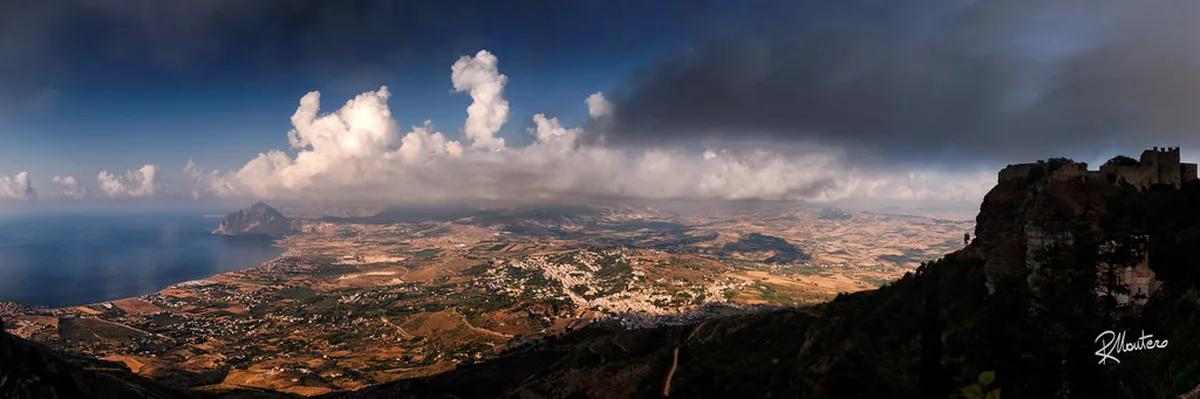
The shallow, turquoise water remains calm and safe for young swimmers throughout the summer season, with depths rarely exceeding 1 metre for the first 50 metres from shore. Water visibility regularly reaches 15 metres, making simple snorkeling along the rocky northern headland extremely rewarding even without specialist equipment. Sea temperatures peak at 27°C in August and remain a comfortable 24°C into late September.
Arriving before 9:00 AM ensures you find a spot in the designated public lots located 400 metres from the beach. Parking costs €2 per hour or €10 for a full day in the main municipal lot. Many hotels in the town centre offer free shuttle services to the shore in July and August, running every 30 minutes from 8:30 AM to 7:00 PM. Alternatively, the town is easily navigable on foot — the walk from the main square (Piazza Santuario) to the water takes under 10 minutes.
Private lido sections offer umbrella-and-two-sun-lounger sets for €18–€28 per day in peak season (July–August), dropping to €12–€18 in June and September. Free spiaggia libera stretches occupy approximately 40% of the total beach length and are clearly marked with white signs. Kayak rentals at the northern end cost €12 per hour in 2026. A pedalo for two runs €10 per hour. The annual Couscous Fest takes place every September and turns the beachfront into a remarkable open-air food festival that draws over 100,000 visitors — book accommodation three months ahead if you plan to attend.
AST buses from Trapani bus station serve San Vito Lo Capo directly throughout summer, with the journey taking approximately 1 hour and costing €5.10 each way. Services run at least every 90 minutes between 7:00 AM and 8:00 PM during July and August. If you are staying in Palermo, the combination of a train to Trapani (€9.70, 2 hours) and then the AST bus gives you a full beach day for under €20 in transport. For broader coverage of Sicily's coastal towns and island connections, the Catania beach guide covers the eastern Sicilian coast in detail.
- San Vito Lo Capo Visit Details
- Type: Sandy beach — fine white quartz
- Best for: Families, swimming, snorkeling
- Where: Northwest Sicily, 37 km from Trapani
- Parking: €2/hr or €10/day
- Sun lounger set (2026): €12–€28 depending on season
- Open: Year-round; lifeguards June–September
Scala dei Turchi: The Iconic White Marl Cliffs
Scala dei Turchi features striking chalk-white marl cliffs that cascade in natural stair-steps directly into the deep blue Mediterranean Sea near Realmonte, 24 km west of Agrigento. This geological formation is entirely unique in Europe — the soft white rock (marna) has been sculpted by centuries of wind and wave erosion into smooth terraces that visitors can walk along at low tide. In 2026, the site continues to attract over 500,000 annual visitors, making it one of Sicily's most photographed natural landmarks.
Local authorities have introduced a ticketed access system to protect the soft rock from erosion. In 2026, entry to the cliff terrace area costs €3 per person (free for children under 6), payable at the kiosk at the top of the descent path. Access is open daily from 7:00 AM to 9:00 PM between June and September, and 8:00 AM to 6:00 PM in April, May, and October. Always follow the marked paths and avoid climbing onto unroped sections of the upper cliff — fines of €150 apply for violations.
The sandy beach at the base of the cliffs is free to access at all times and has no entrance fee. Umbrella-and-sun-lounger sets on the private lido section (Lido Scala dei Turchi) cost €20 per day for a set of two loungers. Several small cafes and restaurants sit along the road above the beach. These spots provide extraordinary views of the white cliffs glowing orange at sunset and serve excellent granita (€3–€4), arancini (€3), and fresh seafood pasta (€14–€18).
Plan to spend at least three hours here to fully appreciate the geological beauty — one hour on the cliffs, one hour swimming, and one hour for lunch. The walk from the paid parking area (€5 for up to 5 hours) involves a 10-minute descent on stairs and uneven paths. Wear flat, closed-toe shoes with grip — sandals are not recommended on the marl steps. Avoid visiting between 12:00 PM and 3:00 PM in July and August when the white rock radiates intense heat.
Late afternoon visits from 4:30 PM onward provide the best golden-hour lighting for photography and the most comfortable temperatures for exploring. Bus connections from Agrigento run via TUA bus company with the journey taking 30 minutes and costing €3.50 each way. For a full day out, combine Scala dei Turchi in the morning with the Valley of the Temples (Agrigento) in the late afternoon — both are UNESCO World Heritage Sites and sit within 25 km of each other.
Riserva dello Zingaro: Nature and Hidden Coves
Riserva dello Zingaro is Sicily's first nature reserve — established in 1981 after a celebrated public campaign blocked the construction of a coastal road — and it remains one of southern Italy's most breathtaking coastal wildernesses. The reserve stretches for 7 km along the northwestern Sicilian coast between Scopello and San Vito Lo Capo, protecting seven distinct pebble-and-rock coves that can only be reached on foot or by boat. The landscape combines limestone cliffs, Mediterranean maquis (wild herbs, carob, and euphorbia), and sea caves carved by millennia of wave action.
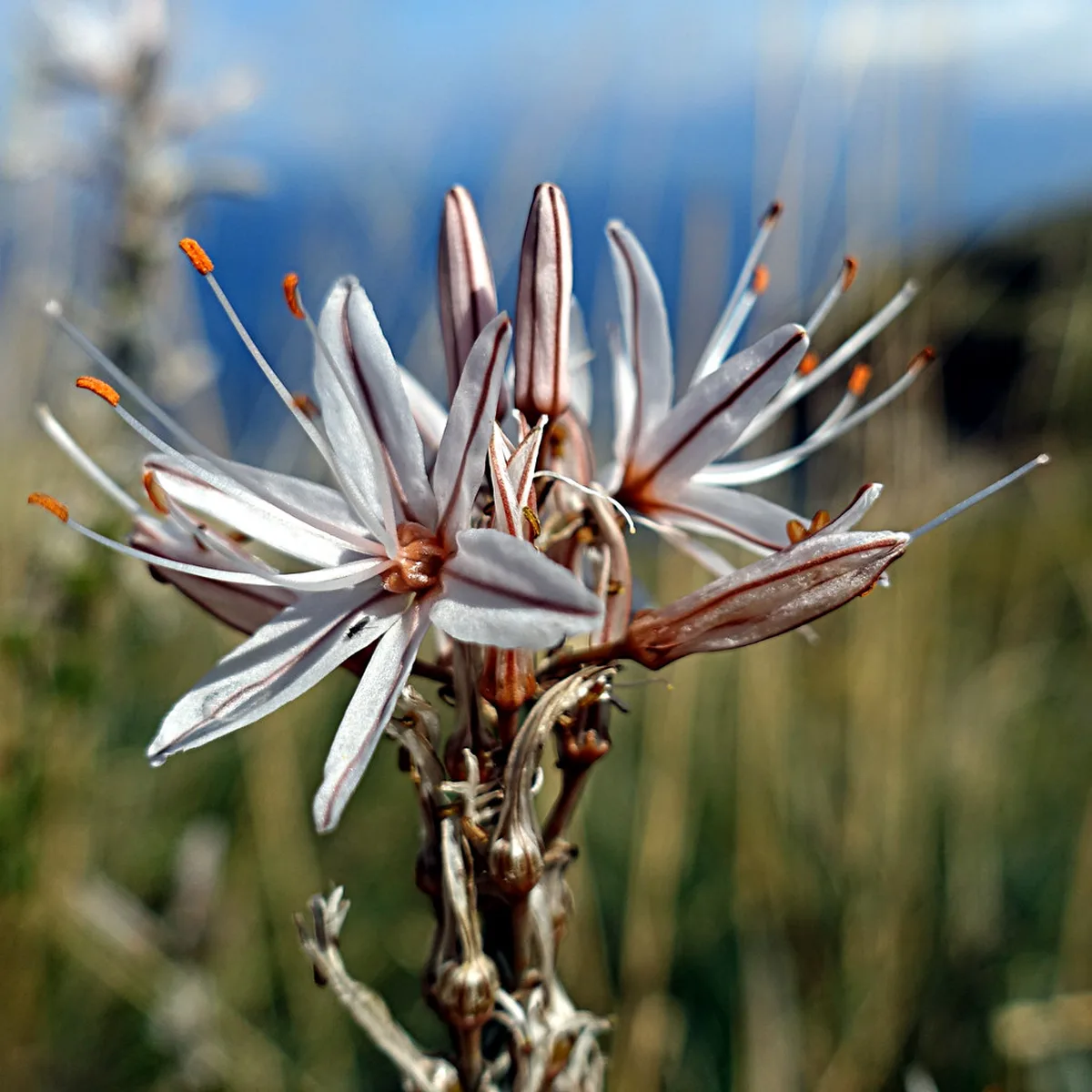
Entry to the reserve in 2026 costs €5 per person, payable at either the Scopello entrance (southern gate) or the Tonnarella entrance (northern gate, closer to San Vito Lo Capo). The park is open daily from 7:00 AM to 7:30 PM in summer (June–September) and 8:00 AM to 6:00 PM in spring and autumn. The main coastal trail (Sentiero Costiero) runs the full 7 km length of the reserve and takes approximately 2.5 hours to complete one-way at a comfortable walking pace. The path is well-signed but involves some uphill sections with cumulative elevation gain of around 220 metres.
Of the seven coves, Cala Tonnarella dell'Uzzo is consistently rated the most scenic — a small arc of white pebbles framed by rust-red cliffs and water so clear you can see the seabed at 6 metres depth. Cala dell'Uzzo, the third cove from the Scopello entrance, is better suited to families because it has a small, sheltered sandy section ideal for children. There are no shops, cafes, or sun-lounger rentals inside the reserve, so pack at least 2 litres of water per person, high-SPF sunscreen, snorkeling gear, and food for the full day.
Boat tours depart daily from Castellammare del Golfo (15 minutes by car south of Scopello) and typically cost €35–€45 per person for a 4-hour trip that includes three snorkeling stops and a simple lunch of fresh bread, cheese, and local wine. Booking 24 hours in advance is strongly recommended in July and August. Private boat hire from Scopello harbour starts at €180 for a half day (up to 6 passengers). Seeing the reserve from the water during early morning, when the light strikes the limestone walls, offers a perspective impossible to achieve on foot and is widely considered worth the extra cost.
Best Beaches Near Naples: Bacoli and Procida Island
Naples sits within striking distance of some of the Campania coast's most underrated beaches — and in 2026, savvy travelers are bypassing the crowded Amalfi strip in favour of the Phlegrean Fields coast and the island of Procida. Both options are far less expensive than Positano or Capri and offer genuine local atmosphere instead of a tourist-dominated promenade.
Bacoli is a small town 20 km west of Naples, reachable in 35 minutes by direct bus (Line 152 from Piazzale Tecchio, €1.50 each way). Its two main beaches — Torregaveta and Miliscola — are broad, gently sloping, and family-oriented. Sun-lounger-and-umbrella sets at lido clubs in Bacoli cost €10–€15 per day in 2026, roughly half the price of equivalent facilities on the Amalfi Coast. The water quality has improved dramatically since the 2022–2024 coastal cleanup, and Miliscola now holds a Bandiera Blu certification. The beachfront is lined with excellent local restaurants serving fried fish platters (frittura mista) for €12–€16.
Procida is a small volcanic island 35 minutes by hydrofoil from Pozzuoli port (€11 each way with Caremar ferries, running every 90 minutes from 6:00 AM to 10:00 PM). Procida was designated Italy's Capital of Culture in 2022 and has since attracted significant investment in its harbour and beaches without losing its working-class fishing-village character. The island's main beach, Lido di Procida (Chiaiolella), is a wide crescent of dark volcanic sand protected by a natural breakwater, with crystal-clear water and depths suitable for snorkeling along the rocky western edge. Sun lounger sets cost €18–€22 per day. Pozzo Vecchio, made famous as a filming location in the film Il Postino, is a smaller, scenic bay on the island's north side that is largely free and less crowded. A moped rental on Procida costs €35–€45 per day in 2026, making it easy to visit all six beaches in a single long day. Book the last hydrofoil back (departing 9:30 PM in summer) to maximize your time on the island.
If you want to go further, the islands of Ischia and Capri are also accessible by ferry from Naples' main port (Molo Beverello). Ischia ferries run from €14 each way and the crossing takes 80 minutes on the standard ferry or 35 minutes on the faster hydrofoil (€22). Capri hydrofoils depart every 40 minutes in summer and cost €22.50 each way. Both islands offer a very different beach experience from the mainland — Ischia with its thermal spa beaches and Capri with its luxury atmosphere and the famous Faraglioni sea stacks. For a comprehensive breakdown of every beach option around the city, see the Naples beaches guide.
Exploring the Broader Southern Italian Coast: Puglia and the Amalfi Coast
While Sicily and Naples deserve their fame, the broader southern Italian coast offers equally spectacular scenery in less-visited areas. The Puglia coastline — stretching 800 km around the heel of the Italian boot — delivers some of the most visually striking beach landscapes on the entire Mediterranean. Turquoise water lapping against white limestone rocks characterizes the Adriatic coast near Otranto and Polignano a Mare, while the Ionian coast near Gallipoli offers long sandy beaches more reminiscent of the Caribbean than Europe. The Puglia travel guide covers every corner of this region in detail, including transport options and the famous trulli houses of Alberobello.
Polignano a Mare, 35 km south of Bari, is famous for the Lama Monachile cove — a tiny natural inlet flanked by 20-metre cliffs whose pale stone walls reflect in the emerald water below. Entry to the cove beach is free, though space is extremely limited. Arriving before 8:00 AM in July and August is essential. The town above the cove is built on a cliff edge and hosts numerous outdoor restaurants where you can eat grilled fish (branzino, €18–€24) while watching the waves crash against the rocks below. It is a 45-minute train ride from Bari Centrale (€3.40, trains every 30–60 minutes). The Bari beach guide covers Polignano a Mare and the other top coastal stops on the Adriatic coast in depth.
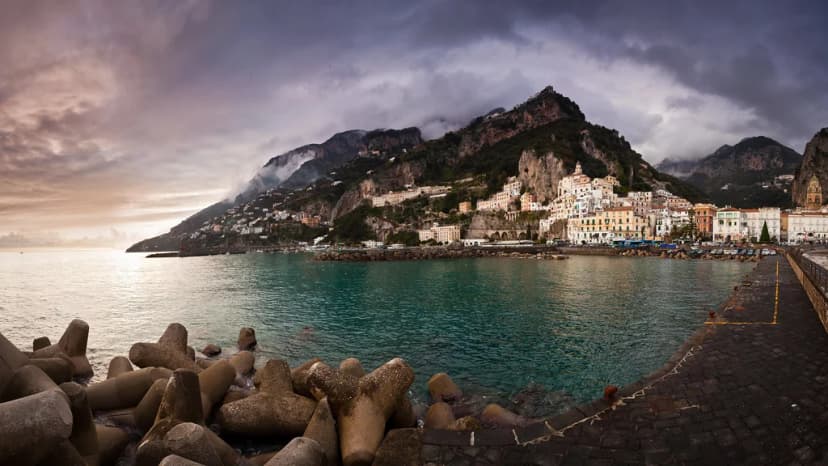
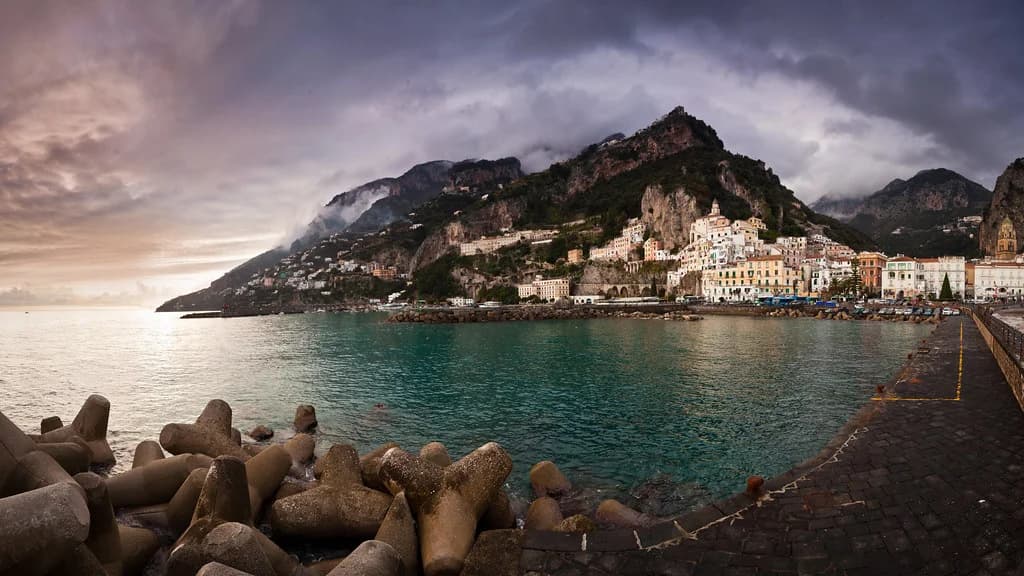
The Amalfi Coast to the northwest remains one of Italy's most iconic coastal drives, with the 40-km SS163 coastal road winding between Positano and Salerno offering views that appear on postcards worldwide. However, this coastline is genuinely challenging to navigate in summer — the road is single-lane in many sections and traffic jams of 2–3 hours are common on weekends in July and August. A Naples to Amalfi Coast day trip by ferry (€12–€18 each way, departing from Molo Beverello in Naples, journey time 90 minutes) sidesteps the road congestion entirely and allows you to arrive at the main towns fresh rather than car-sick. Amalfi town's main beach is small and lido-organized (sun lounger sets €25–€35), but the nearby village of Atrani — a 10-minute walk east along the coast road — has a charming free beach almost entirely without tourists. See the full Amalfi Coast travel guide for ferry schedules, town-by-town beach breakdowns, and day-trip planning from Naples.
Traveling between these regions by rail is efficient and economical. The Trenitalia high-speed route from Palermo to Naples takes 6 hours and costs €35–€60 in advance. From Naples to Bari by Frecciargento train takes 3 hours 20 minutes and costs €30–€55. Sicily is connected to the mainland by large car ferries departing from Villa San Giovanni (Trenitalia ferry, €15 per person, 35-minute crossing) and Messina Tremestieri. Planning your transport links 2–3 days in advance will save money and guarantee seats during the busy summer season.
Free vs Paid Beaches in Southern Italy: What You Need to Know in 2026
One of the most common questions from first-time visitors to southern Italy concerns the division between free beaches (spiaggia libera) and private beach clubs (lidi). Understanding how this system works will save you money and prevent frustration when you arrive at a beautiful stretch of coast only to find rows of identical blue umbrellas managed by a private operator.
Italian law requires that at least 30% of every coastal shoreline remain freely accessible to the public. In practice, on the most popular beaches of Sicily, Calabria, and Campania, you will find clearly alternating sections: free stretches marked with white spiaggia libera signs, and private lido sections demarcated by low fencing or rows of uniformly coloured umbrellas. On free sections you may use your own towel, umbrella, and equipment without charge. Free beaches typically lack sunbed rentals, changing rooms, beach bars, and lifeguards, though the water quality is identical to adjacent private sections.
Private lido prices in 2026 vary significantly by location. On Sicily's north coast (San Vito Lo Capo, Mondello), expect to pay €12–€22 for a sun-lounger-and-umbrella set (two loungers + one umbrella). On the Amalfi Coast (Positano, Amalfi) prices run €30–€50 per set. Calabria's Tropea — one of the most competitive beach markets in Italy — has sets from €10–€18 even in peak August, making it excellent value. Puglia's Gargano peninsula charges €15–€25 in mid-season. All prices include access to the lido's changing rooms and showers. Beach bar food and drinks are sold separately and are typically priced at a 25–40% premium over the same items in town.
For families travelling on a budget, the best strategy in 2026 is to target Calabria's Tropea coast or the Ionian coast of Puglia near Gallipoli — both offer long, wide sandy beaches with a good ratio of free stretches, reasonable lido prices, and excellent local seafood restaurants within walking distance. Remote Sardinian-style beaches in southern Sicily (the Ragusa coast between Punta Secca and Marina di Ragusa) are almost entirely free, have clean water, and see a fraction of the crowds that pack the northwestern Sicilian resorts. The Lecce beach guide maps the best free and paid Puglia coastline spots near the Ionian and Adriatic shores south of the city.
Puglia Beach Towns: Lecce and the Salento Coast
The Salento peninsula — the southernmost tip of Puglia, stretching between the Adriatic Sea to the east and the Ionian Sea to the west — offers one of the most underrated beach circuits in all of southern Italy. Unlike the more commercialized Amalfi or Sicilian resorts, the Salento coast retains a genuinely local character in 2026, with small fishing villages, sun-bleached baroque architecture, and beach clubs that cater primarily to Italian rather than international tourists.
Lecce, the baroque capital of Salento, sits 30 km inland from both coasts and serves as the ideal base for exploring the peninsula's beaches. The closest Adriatic beaches are at Otranto (44 km from Lecce, reachable by train in 55 minutes, €4.30) and Torre dell'Orso (35 km, bus €3.50), both known for exceptionally clear water with visibility exceeding 10 metres in July and August. Torre dell'Orso's twin sea stacks — the Due Sorelle — rise 10 metres from the water's surface just 200 metres offshore and are the defining image of the Adriatic Salento coast. Sun lounger sets at Torre dell'Orso cost €15–€20 per day from June through September, with free stretches occupying about 35% of the total 1.2-km beach length.
The Ionian coast west of Lecce, reachable via the Gallipoli direction, presents a completely different character: long, wide sandy beaches with pale blue water and a more relaxed, family-oriented atmosphere. Gallipoli's Baia Verde lido complex (18 km south of the historic centre) is one of the longest continuous sandy beaches in Puglia — running 4 km without interruption — and has more than 30 private lidi clustered along it, with umbrella-and-lounger sets ranging from €12 to €22 per day. The Gallipoli old town, situated on a rocky island connected to the mainland by a baroque bridge, has its own free beach (Spiaggia della Purità) just beneath the town walls: a genuinely scenic spot that costs nothing and stays cool until mid-morning. For a deeper dive into the Lecce coastline and day-trip connections to the peninsula's best beaches, visit the Lecce beach guide.
Further south at Santa Maria di Leuca — the very tip of the Italian boot where the Adriatic and Ionian officially meet — a series of sea caves (Grotte della Zinzulusa) can be visited by boat for €8 per person (tours depart daily 9:00 AM–5:00 PM, June–September). The caves contain stalactites, a subterranean lake, and rare endemic crustaceans found nowhere else on Earth. The boat operator, Grotte Marina, also runs snorkeling tours of the surrounding caves for €15 per person including equipment hire. Combining Leuca with a morning at Torre Vado or Pescoluse (the so-called "Maldives of Salento") — a stretch of shallow, crystal-clear Ionian water with white sand that genuinely rivals tropical beaches — makes for one of the most memorable beach days available anywhere in southern Italy. Rental cars are the most practical option for exploring the full Salento circuit; car hire from Lecce airport starts at €35 per day in the low season and €55–€70 per day in July and August.
Essential Tips for Southern Italian Beach Trips
Many travelers make the mistake of assuming all Italian beaches are free and open to everyone. Most popular spots are divided into private lidi where you pay for umbrellas and loungers. A typical 2026 sun-lounger-and-umbrella set costs €12–€35 depending on the location and season — Sicily's north coast and Calabria's Tropea are the most affordable, while the Amalfi Coast commands a significant premium. Look for spiaggia libera signs if you prefer to use your own towel and equipment, as these sections are always free of charge.
Parking in coastal towns can be a major challenge due to Limited Traffic Zones known as ZTL. Driving into these areas without a permit results in fines of €100–€500 sent to your home address within 30 days. Look for blue painted lines on roads, which indicate paid parking (typically €1–€2 per hour, pay at nearby kiosks), or white lines for free spots that are not restricted. Always display your ticket clearly on the dashboard. In major resorts like Positano and Taormina, park outside the ZTL and take the local shuttle bus (€2–€3 each way) to the beach instead of driving into the centre.
The sun in Southern Italy is exceptionally strong during peak afternoon hours from 12:00 PM to 4:00 PM, with UV index regularly reaching 9–10 (very high) between June and August. Locals take a long lunch break during this period and return to the beach after 4:00 PM when the heat becomes more tolerable. Follow their lead to stay cool and avoid heat exhaustion. Use SPF 50 sunscreen and reapply every 90 minutes. A wide-brim hat and UV-protective swimwear are strongly recommended for children and fair-skinned adults. Early morning swimming (before 10:00 AM) and late evening sessions (after 5:30 PM) are the most pleasant times for outdoor activity.
Carry a small amount of cash for beach bars and small shops. While most larger lidi accept contactless card payments, smaller seaside kiosks, parking machines, and nature reserve entry booths often accept cash only. Having €20–€30 in five and ten Euro notes makes transactions much smoother. The nearest ATM (Bancomat) is usually found in the nearest town centre, not at the beach itself. A portable water bottle is essential — 1.5-litre bottles of mineral water cost €0.80–€1.20 at supermarkets but €2.50–€4 at beachfront kiosks. Buying your daily water supply at a supermarket the night before will save several euros per person per day across a week-long holiday.
Frequently Asked Questions
What is the best month to visit beaches in Southern Italy?
June and September are the best months for visiting beaches in Southern Italy in 2026. Both months offer sea temperatures of 23–25°C, warm air temperatures of 26–30°C, and significantly fewer crowds than the July–August peak. Hotels and lido prices drop by 20–40% compared to August, and umbrella-and-lounger sets that cost €25 in August can fall to €14 in September on the same beach. Water visibility is also at its best in September after the summer plankton bloom subsides. Avoid the first two weeks of August, when Italian domestic tourism peaks and prices on the most popular beaches such as San Vito Lo Capo and Mondello rise sharply.
Are beaches in Sicily suitable for young children?
Yes, many beaches in Sicily are ideal for families with young children. San Vito Lo Capo has shallow water no deeper than 1 metre for the first 50 metres, a gradual sandy entry, and a long flat beach perfect for sandcastles. Mondello near Palermo offers similar conditions and has a promenade with ice cream shops and playgrounds directly adjacent. Private lido clubs on both beaches provide changing facilities, showers, and playgrounds. Lifeguards are on duty at all major Sicilian lidi from late June through early September, typically from 9:00 AM to 7:00 PM. Sun lounger sets at family-oriented Mondello lidi cost €14–€20 per day in 2026.
Do I need a car to reach the best beaches in Southern Italy?
A car gives you the most flexibility, especially for remote reserves like Zingaro or the Calabrian coast, but many excellent beaches are reachable without one. San Vito Lo Capo is served by regular AST buses from Trapani (€5.10 each way, 1 hour). Scala dei Turchi has a TUA bus connection from Agrigento (€3.50 each way, 30 minutes). Procida and the Naples coast beaches are easily reached by ferry from Pozzuoli port (€11 each way). The Amalfi Coast SITA bus runs the full coastal road from Sorrento to Salerno year-round. Lecce's Salento beaches are reachable by regional Puglia rail (Torre dell'Orso via Otranto, €4.30 from Lecce).
How much does a beach day cost in Southern Italy in 2026?
A typical beach day on a private lido in 2026 costs €12–€35 per person all-in, depending on location. Budget breakdown: sun-lounger set (shared between two) €12–€28; beach bar lunch (pasta or panini + drink) €12–€16 per person; parking €2–€10; return transport €0–€5. On a free spiaggia libera section, the same day can cost under €10 per person if you bring food and water from a supermarket. Expensive Amalfi Coast lidi (Positano, Ravello) charge €30–€50 for a lounger set and €18–€25 for a light lunch, making a full day €50–€80 per person. Calabria's Tropea offers the best budget value, with all-day lounger sets from €10 and seafood platters for €12.
What is the clearest water in Southern Italy?
The clearest water in southern Italy in 2026 is consistently found at three locations: Cala Tonnarella dell'Uzzo inside Riserva dello Zingaro in Sicily (visibility 12–15 metres), the sea caves near Polignano a Mare in Puglia (visibility 8–12 metres), and the Blue Grotto channel near Capri (visibility up to 20 metres in calm conditions). All three sites benefit from minimal industrial runoff, rocky or sandy seabeds, and strong offshore tidal circulation that keeps the water refreshed. Water quality tests by ARPA (Italy's environmental agency) in 2025 rated all three sites "Excellent" — the highest possible classification under Italian coastal monitoring standards.
Which southern Italy beach is best for snorkeling and diving in 2026?
Ustica Island, a small volcanic island 60 km north of Palermo reachable by hydrofoil (€26 each way, 2 hours), is widely considered the best snorkeling and diving destination in southern Italy. The island sits inside Italy's first and only protected Marine Reserve (Riserva Marina di Ustica, established 1986), where fishing and anchoring are banned. Visibility regularly reaches 25–30 metres, and the underwater landscape of lava formations, sea caves, and posidonia meadows hosts grouper, barracuda, moray eels, and sea turtles. Dive centre packages in 2026 start at €45 for a guided 45-minute introductory dive including equipment hire. For snorkelers, the northern marine reserve zone (Zona A) can be explored on a rented inflatable dinghy for €40 per half day.
What is the difference between a spiaggia libera and a lido in Italy?
A spiaggia libera is a free public beach where anyone can lay a towel without paying. Italian law requires at least 30% of every beach to remain free of charge. A lido is a private beach club that rents out umbrella-and-sun-lounger sets, typically for €10–€50 per day in 2026 depending on location. Lidi provide showers, changing rooms, beach bars, and often lifeguards in exchange for the daily fee. On the same stretch of coastline, you will often find alternating free and paid sections clearly marked with signs. Choosing a lido makes sense in busy July and August when guaranteed shade and facilities are worth the cost; free stretches are ideal in June and September when crowds are smaller.
Which Puglia beach is best for families traveling to Southern Italy?
Baia Verde near Gallipoli on the Ionian coast of Puglia is the best Puglia beach for families in 2026. The 4-km continuous sandy beach has shallow, calm Ionian water ideal for children, more than 30 lidi with affordable umbrella-and-lounger sets from €12 per day, and a full range of beach restaurants and ice cream shops along the promenade. Torre dell'Orso on the Adriatic side, 35 km from Lecce, is another strong family choice — the water is crystal clear with gentle waves and the distinctive Due Sorelle rock stacks just offshore make it one of the most memorable settings in all of southern Italy. Both beaches are reachable by public transport from Lecce, making them accessible without a rental car.
Southern Italy provides a diverse range of beach experiences that cater to every type of traveler, from families seeking calm shallow water in Sicily to divers chasing pristine marine reserves and couples looking for dramatic cliff scenery in Puglia.
From the white marl staircase of Scala dei Turchi to the volcanic-sand coves of Procida island near Naples, the options across this 7,000-km coastline are genuinely endless and varied.
Use this best beaches in southern Italy guide to plan an unforgettable coastal adventure in 2026 — with real prices, honest crowd advice, and the specific transport details that make the difference between a smooth trip and a stressful one.
Embrace the local rhythm of late starts, long lunches, and golden-hour swims, and you will understand why southern Italy's coast draws millions of visitors year after year.