The Ultimate Bari Old Town Guide for Travelers in 2026
Bari Vecchia covers roughly 0.3 km² on a limestone peninsula and packs over 40 churches, 3 major piazzas, and 1,000 years of layered history into a grid of alleys you can cross end-to-end in under 15 minutes.
In 2026 the Basilica di San Nicola remains free to enter, the Cathedral of San Sabino charges €3 for its underground museum, and street focaccia costs €1.50–2.50 per slice from vendors along Via Arco Basso.
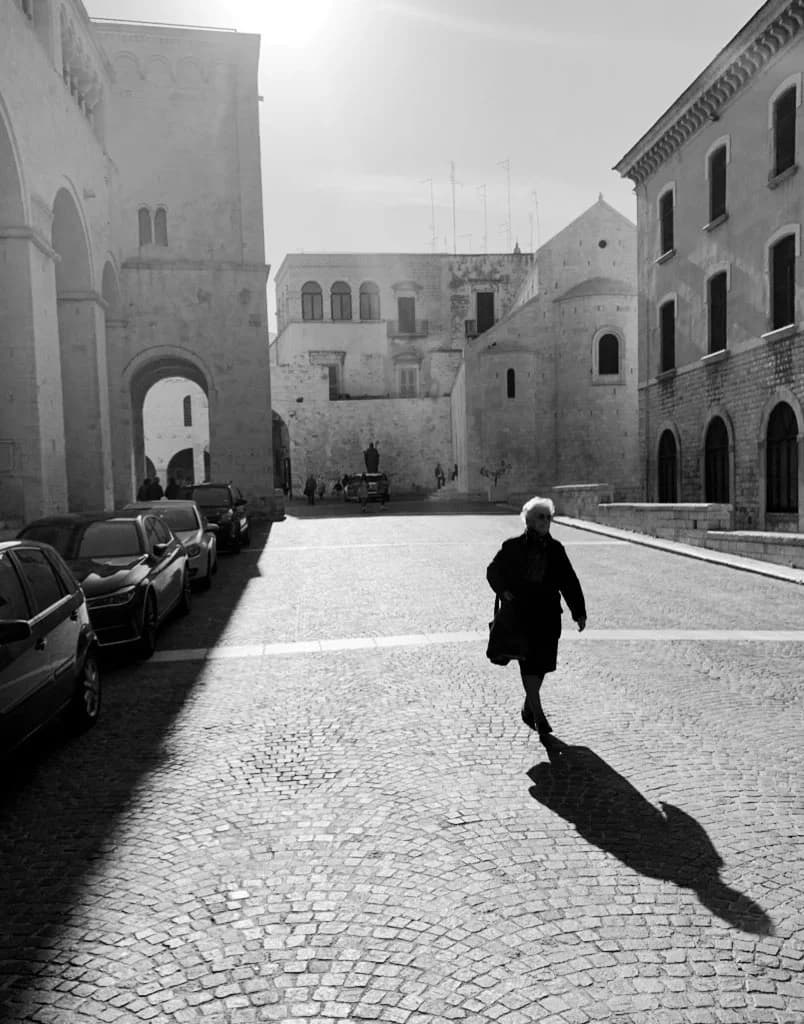
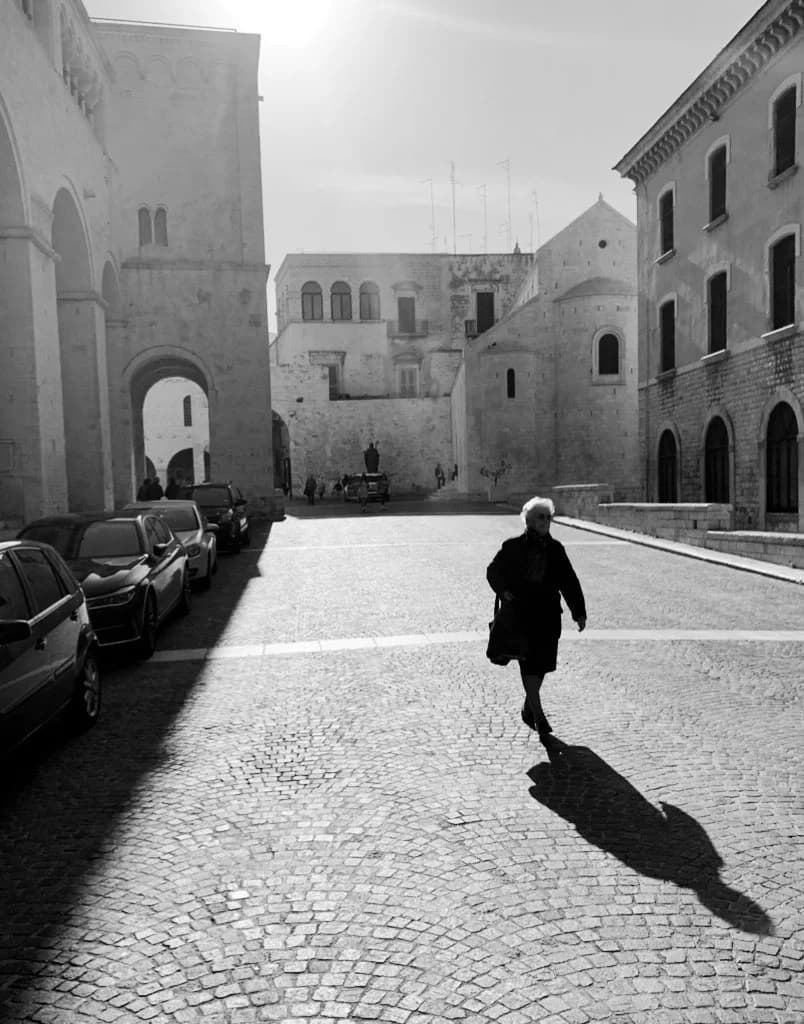
Bari Old Town, locally known as Bari Vecchia, sits on a scenic limestone peninsula overlooking the Adriatic Sea. This historic district offers a dense maze of narrow alleys, hidden courtyards, and ancient stone churches. Exploring this area provides a deep look into the authentic soul of southern Italian life. Our comprehensive bari old town guide helps you navigate these ancient streets while discovering local secrets.
Visitors often feel transported back in time as they walk past white-washed buildings and hanging laundry. The scent of fresh focaccia and salty sea air fills the winding pathways throughout the day. You will find a vibrant community where traditions remain a central part of daily existence. Planning your route carefully ensures you see the major monuments without missing the quiet, charming corners. For broader regional context, our Puglia travel guide covers the wider coastline and hinterland around Bari.
Iconic Landmarks of Bari Vecchia
The Basilica di San Nicola stands as the most famous landmark within the historic city walls. This grand structure houses the relics of Saint Nicholas, making it a major pilgrimage site drawing hundreds of thousands of visitors annually. Marvel at the impressive Romanesque architecture that has influenced many other churches across the Puglia region. The basilica opens Monday to Saturday 07:00–20:30 and Sunday 07:00–22:00; entry to the main church is entirely free in 2026. The lower crypt, which holds the actual relics, is accessible without charge but requests a modest donation. Plan for 45–60 minutes to appreciate both the nave and the ornate side chapels at a comfortable pace.
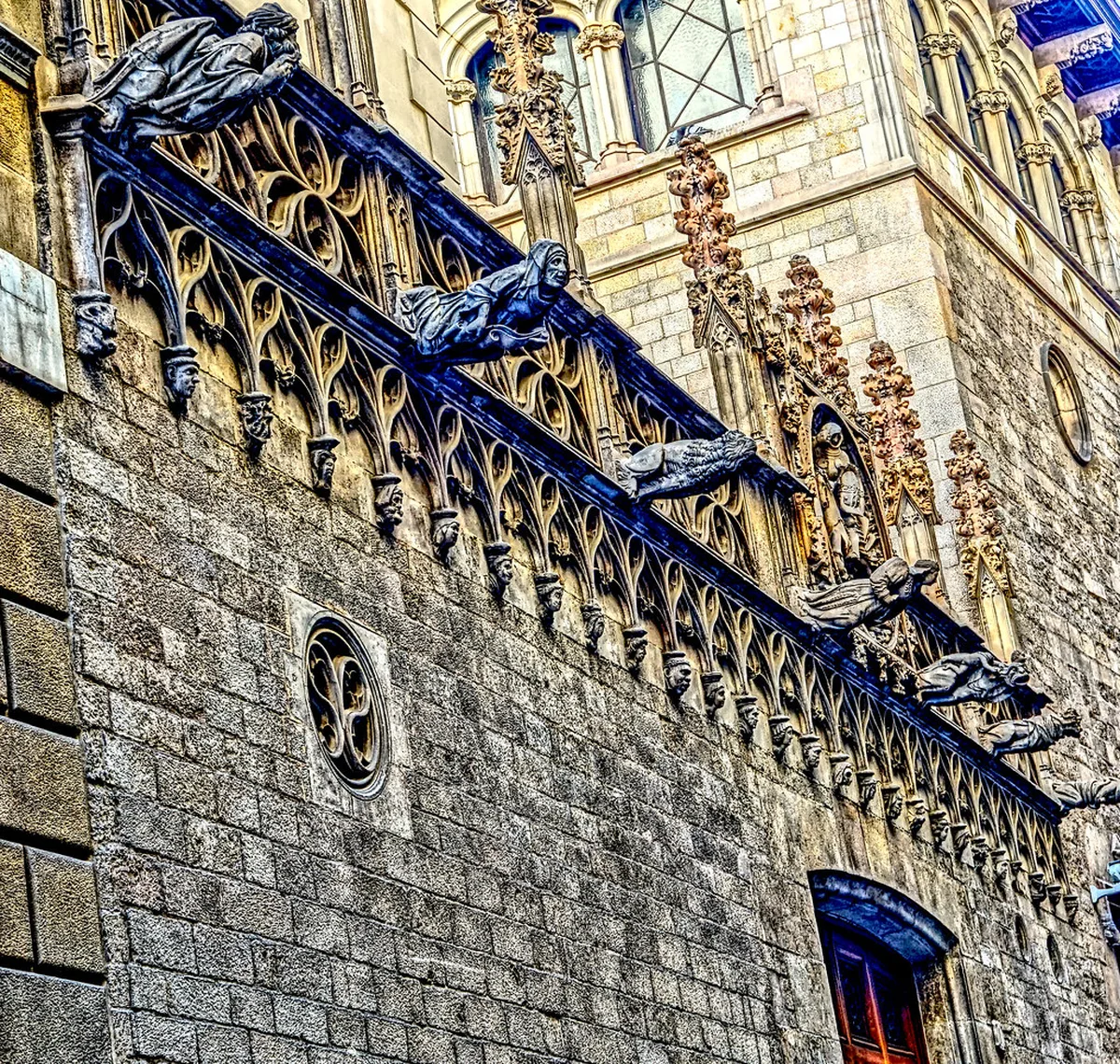
The Cathedral of San Sabino (Cattedrale di Bari) sits just 200 metres east of the Basilica and offers a quieter but equally stunning example of local religious heritage. The white stone facade glows under the Mediterranean sun, creating a perfect backdrop for photography. Descend into the underground archaeological area to see remains of ancient Roman and Byzantine structures, including a floor mosaic dating to the 5th century. In 2026 entry to the main cathedral is free, but the cathedral museum (Museo Diocesano) charges €3 per adult and is open Tuesday to Sunday 09:00–13:00 and 16:00–19:00. The subterranean area beneath the apse, housing the early-Christian baptistery, costs an additional €2 and is accessible only on guided visits at 10:00 and 17:00. Allow a full hour if you plan to visit all three levels.
The Castello Svevo (Swabian Castle) guards the northern entrance to the old town district. This massive fortress features thick walls and a deep moat that once protected the city from Norman and Saracen invaders. Walking around the perimeter provides excellent views of the harbor and the modern city beyond. In 2026 the castle is managed by the Soprintendenza delle Belle Arti; adult entry costs €6, reduced €3 for EU citizens aged 18–25, and free for under-18s. Opening hours are Tuesday to Sunday 09:00–19:30, last entry at 19:00. Allow at least 90 minutes to explore the interior exhibit halls, the courtyard, and the two temporary gallery spaces that host rotating regional art exhibitions.
Piazza del Ferrarese, on the eastern seafront edge of the old town, is the natural starting point for any Bari Vecchia walk. The square's wide esplanade overlooks the Adriatic and connects the historic district to the modern city. Evening light here is particularly striking, when the limestone buildings and medieval arch of the Arco di San Nicola turn amber in the low sun. No entry fee applies, and the square functions as a free public gathering space at all hours. Street performers, gelato vendors, and local families congregate here from 18:00 onward throughout spring and summer, making it an excellent orientation point before you push deeper into the medieval grid.
- Basilica di San Nicola — free entry, open daily 07:00–20:30 (Sun until 22:00), crypt donation €1–2 suggested
- Cathedral of San Sabino — free church entry; museum €3, subterranean €2; Tue–Sun 09:00–19:00
- Castello Svevo — €6 adult / €3 reduced; Tue–Sun 09:00–19:30
- Piazza del Ferrarese — free public square, best visited at sunset for harbor views
The Famous Orecchiette Street Experience
Walking through the Arco Basso tunnel leads you directly into the heart of Bari's pasta-making tradition along Via dell'Arco Basso, a narrow residential street that has been famous for hand-rolled orecchiette for generations. Local women — known affectionately as the "orecchiette ladies" — sit at wooden tables outside their homes every morning from around 08:30 to 12:30, shaping the signature ear-shaped pasta with practised ease. This is one of the most authentic craft experiences you will find anywhere in Italy. The rhythmic sound of knives against wood creates a unique soundtrack that you will hear well before you see the pasta-makers. Watching this craft provides a rare glimpse into a skill transmitted through families since at least the 13th century, and one that remains entirely unscripted for tourists. Arrive before 10:00 on weekdays for the best viewing experience before the tour groups arrive.
Travelers are encouraged to interact politely with the pasta makers while they work. You can purchase bags of sun-dried orecchiette directly from the makers to take home as a delicious and authentic souvenir. In 2026 a 500 g bag of freshly dried pasta costs approximately €4–6 depending on the maker, while a larger 1 kg bag runs €8–10. Buying directly supports the neighbourhood economy and ensures authenticity that supermarket versions simply cannot replicate. The pasta must be completely dry before you pack it — hold it up to the light and check there is no visible moisture before sealing it in your luggage.
Beyond pasta, the local bakeries in this area serve the famous Bari-style focaccia barese. This thick, olive-oil-rich bread is topped with fresh cherry tomatoes, pitted olives, and sometimes capers or anchovies. Look for small windows with queues of locals to find the freshest batches, typically pulled from the oven between 10:00 and 11:30 and again after 17:00. A slice costs €1.50–2.50 depending on size. Panzerotti — deep-fried half-moon pastries filled with tomato and mozzarella — are another unmissable Bari street food, available from dedicated friggitorie for €1.50–2.00 each. Eating a warm panzerotto while standing in a narrow alley is a quintessential Bari experience that no sit-down restaurant can replicate.
For visitors wanting to take the experience further, several local culinary schools and informal cooking workshops offer orecchiette-making classes in Bari Vecchia. Sessions typically last 2–3 hours and include hands-on pasta rolling followed by a shared meal. In 2026 prices range from €35–55 per person for a small-group class (4–8 participants), with most sessions running at 10:00 and 17:00. Book at least 48 hours in advance during shoulder season and a week ahead in July and August. The workshops are held in residential kitchens, giving participants an authentic glimpse into Barese home cooking beyond the tourist trail.
Bari Fish Market: Mercato del Pesce on the Waterfront
One of the most atmospheric and underappreciated stops on any visit to Bari Vecchia is the Mercato del Pesce (fish market) located along the Lungomare Imperatore Augusto, just a five-minute walk from the Basilica di San Nicola. This open-air market runs every morning Tuesday to Sunday from around 07:00 until approximately 12:00, when the catch of the day sells out. It is one of the last working fish markets in southern Italy that operates directly on the seaside promenade without moving to an enclosed hall.
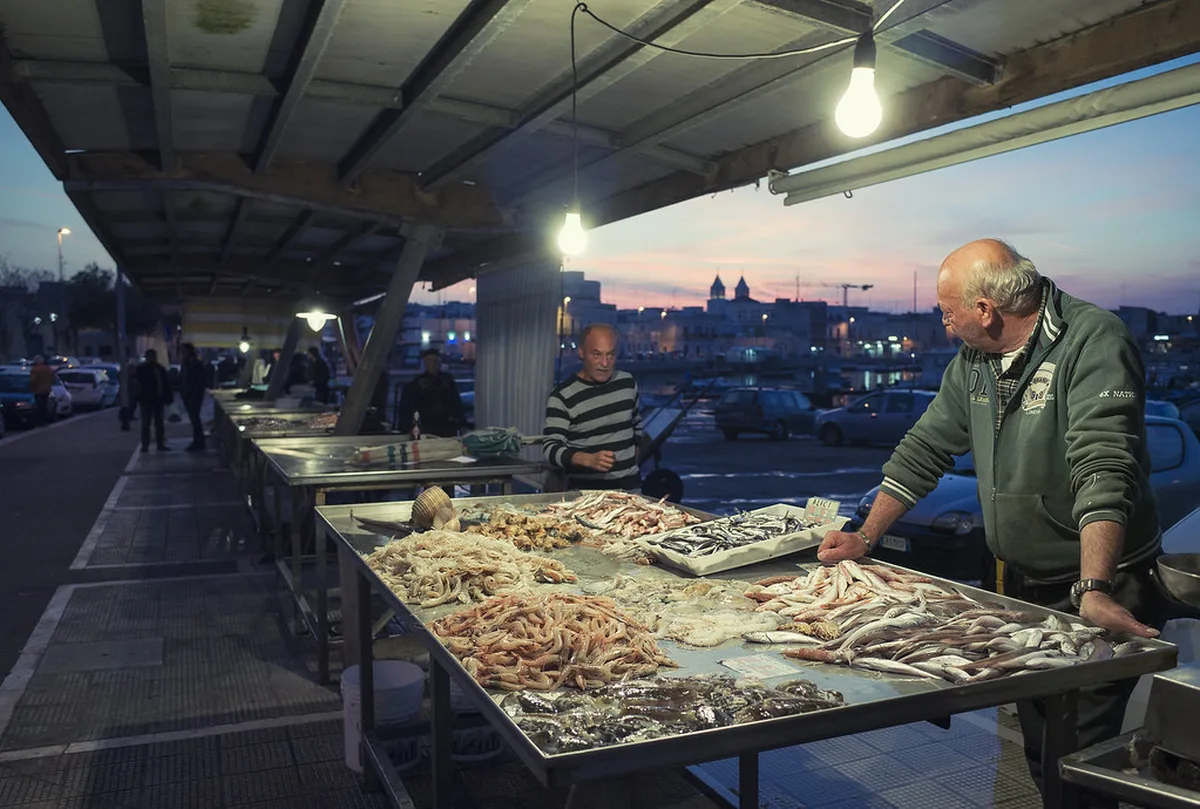
The market specialises in the Adriatic catch: sea bass (spigola), bream (orata), red mullet (triglia), octopus (polpo), squid (calamari), and the prized ricci di mare (sea urchins). Stalls are run by local fishermen and their families who have worked the same stretch of waterfront for decades. In 2026 sea urchins are sold for €2–3 each and can be eaten on the spot, typically served with a plastic spoon and a wedge of lemon from a neighbouring vendor. A whole sea bass of around 500 g costs approximately €8–12 depending on freshness and the season.
Even if you have no plans to cook, the market is worth a visit purely for the sensory experience: the smell of salt water and fresh fish, the cries of vendors, the brightly coloured catch spread across ice-packed tables, and the backdrop of the old city walls rising behind the stalls. Arrive by 08:00 on weekends for the best selection; by 10:30 the most prized items are often gone. There is no entry charge, and photography is welcomed provided you are respectful of the sellers. Several neighbourhood restaurants adjacent to the market will cook a fish you purchase for a preparation fee of around €5–8, allowing you to combine the market experience with a fresh lunch.
On Mondays the market is closed, as Monday is the traditional rest day for the fishing fleet. If your Bari visit falls on a Monday, the Mercato Coperto di Bari (the covered central market on Via Calefati, a 10-minute walk from the old town) remains open and sells a good selection of preserved and farmed seafood alongside local cheeses, olives, and seasonal produce. The covered market operates Monday to Saturday 07:30–13:30 and on Tuesday and Friday afternoons from 16:30–19:30.
Hidden Churches and Lesser-Known Gems of Bari Vecchia
Beyond the celebrated Basilica di San Nicola and the Cathedral of San Sabino, Bari Vecchia conceals dozens of smaller churches and architectural details that most guidebooks overlook entirely. Slowing down and peering down side alleys is consistently rewarded in this compact district. The following are the most worthwhile hidden gems that reward the curious visitor willing to explore beyond the main tourist circuit.
The Chiesa di Santa Teresa dei Maschi on Via Roberto il Guiscardo is one of Bari's finest Baroque interiors, dating from the late 17th century. The vaulted ceiling is decorated with elaborate fresco work depicting scenes from the life of Saint Teresa of Ávila, and the ornate wooden choir stalls are considered among the best-preserved examples of Puglian woodcarving from this era. Entry is free; the church is typically open Monday to Friday 09:00–12:00 and 16:00–18:30, and on Sunday mornings from 09:00–12:00 for mass. Photography of the interior is permitted outside of service times.
The Palazzo Simi, a restored 18th-century aristocratic residence on Via Palazzo di Città, now houses a small cultural center and hosts rotating exhibitions of Puglian contemporary art. Entry to permanent gallery spaces is free; temporary exhibitions typically charge €4–6. The ground-floor courtyard with its decorated stone well is open to visitors without charge and provides a quiet retreat from the midday heat. Opening hours are Tuesday to Sunday 10:00–13:00 and 16:00–19:30.
Equally rewarding is a walk along Via Venezia, a narrow residential lane that runs parallel to the northern sea wall and is almost entirely free of tourist-oriented shops. Residents hang laundry between the upper floors of the three-story stone buildings, creating a scene unchanged in its essentials since the early 20th century. The lane ends at a small locked gate in the sea wall where, on mornings with calm weather, local men fish from the rocks below. This is also the best vantage point in the old town to photograph the Castello Svevo from across the inlet without obstructions. No facilities are present on this lane, so bring your own water.
The Roman floor mosaics preserved in situ beneath a glass floor panel on Via del Vallisa — discovered during renovation works in 2018 — are another overlooked highlight. The 4th-century geometric tessellated floor, attributed to a Roman-era private residence, is visible through a purpose-built viewing window set into the pavement at no cost to passersby. A small information panel in Italian and English describes the archaeological context. The location is GPS-searchable under "Mosaico Romano Via del Vallisa" and is open continuously as it sits on a public thoroughfare. This is a genuinely surprising discovery that most visitors to the Basilica walk past without realising it exists.
Navigating the Maze and Avoiding Mistakes
Many visitors struggle with the winding layout of the limestone streets because GPS signals often fail in the narrow sections. The thick stone walls of ancient buildings — some up to 1.5 m thick — block satellite connections in the tightest alleyways, causing phones to show inaccurate positions offset by 50–100 metres. Use the tall bell towers of the Basilica and the Cathedral as visual landmarks to maintain your orientation. Download the Bari Vecchia offline map from Google Maps or Maps.me before you enter the historic core; both apps retain street-level detail even without a data connection.
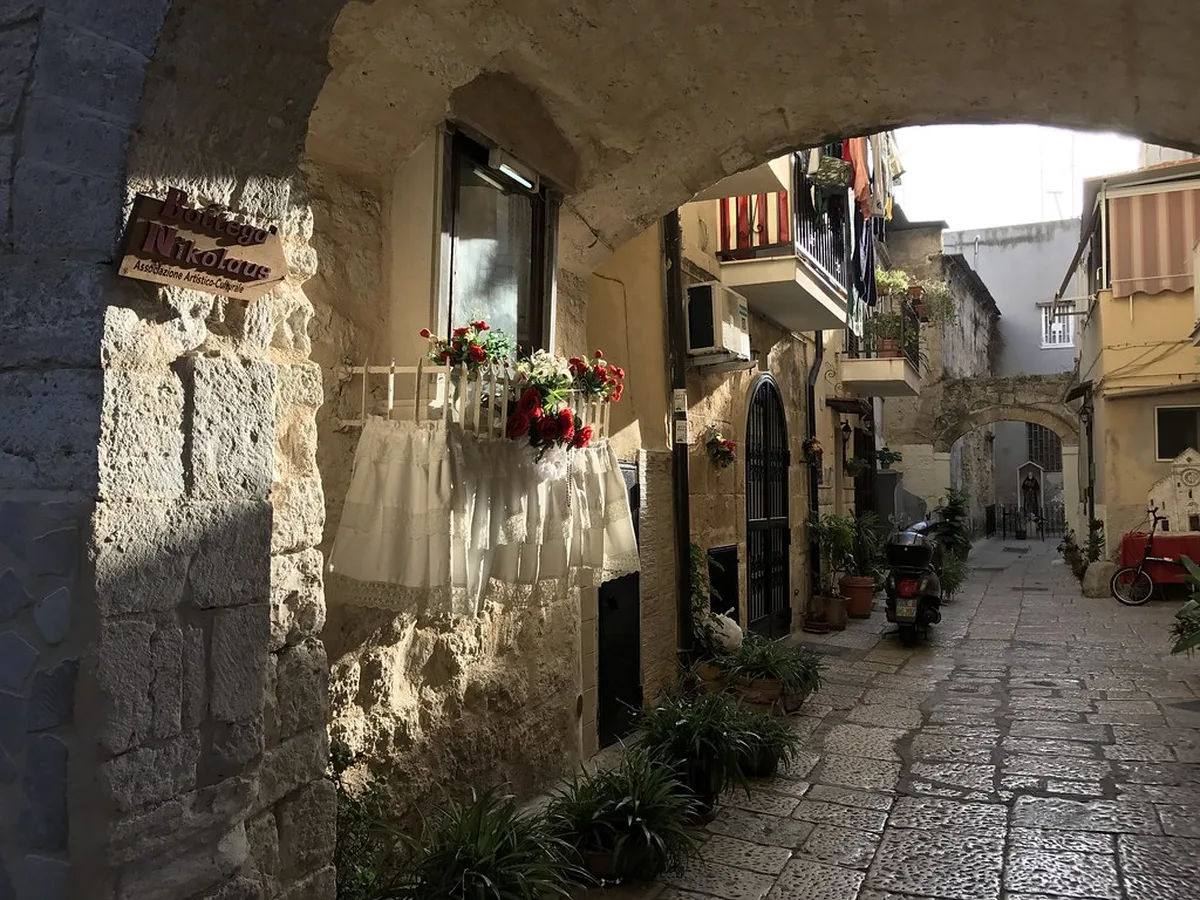
Respect the local siesta culture when planning your mid-afternoon sightseeing. Most small shops and residential areas become very quiet between 13:30 and 16:30. This quiet window offers the best photography opportunities without the usual daytime tourist crowds and provides genuinely calm light for architectural shots in the narrow alleys. Avoid making loud noises near open windows during these hours out of respect for residents. Many of the most iconic doorways and courtyard arches are located in fully inhabited buildings — this is a living neighbourhood, not an open-air museum.
Dress codes are strictly enforced at the major religious sites throughout the old town. Ensure your shoulders and knees are covered before attempting to enter the Basilica or the Cathedral; staff at both sites turn visitors away without exception. Many churches keep spare shawls near the entrance door, but supply is limited during peak season (June to September). Bringing your own lightweight scarf or sarong is the most reliable solution, and it doubles as sun protection on the exposed seafront promenade. Comfortable, closed-toe shoes with a flat rubber sole are essential — the limestone cobblestones are beautiful but uneven and can be slippery after rain or when wet from sea spray near the walls.
Peak season runs June to August with daily high temperatures of 28–34 °C. The shoulder months of April–May and September–October offer the most pleasant conditions: temperatures of 18–26 °C, smaller crowds, and lower accommodation rates. If you visit in summer, start your old town walk no later than 08:30 to cover the main landmarks before the midday heat makes the stone-walled alleys uncomfortable. Carry at least 500 ml of water per person; public drinking fountains (fontanelle) are located near the Basilica entrance and in Piazza del Ferrarese. If you plan to venture beyond the old town during your stay, the day trips from Bari guide covers seasonal packing advice and transport options for the surrounding region.
Evening Atmosphere in Piazza Mercantile
Piazza Mercantile serves as the primary social hub for both locals and visitors in Bari Vecchia, functioning as the old town's living room from late afternoon well into the night. This historic square once hosted the city's main market and the offices of the Sedile dei Nobili, the city's medieval governing body. The Column of Justice (Colonna della Giustizia) stands in the northwest corner — a marble pillar to which debtors were once symbolically tied — as a vivid reminder of the square's medieval administrative importance. In 2026 the area continues to thrive as the most popular meeting point in the city for evening aperitivo, drawing a mix of university students, families, and travellers.
The atmosphere shifts dramatically as the sun sets and the ochre stone buildings are bathed in warm amber light. Outdoor tables fill with people enjoying local wines — Primitivo di Manduria (€4–7 per glass) and Negroamaro rosé (€3.50–5 per glass) are the most common pours — alongside small plates of burrata, taralli crackers, and Apulian cheeses. A full aperitivo spread with a drink typically costs €8–12 per person at the bars facing the square. Check our Bari nightlife guide for vetted wine bars and cocktail spots in and around Piazza Mercantile. Reservations are strongly recommended on Friday and Saturday nights from June through September when the square reaches capacity by 20:30.
Walking along the old city walls provides a romantic view of the Adriatic Sea at night. The elevated Muraglia path runs for approximately 600 metres along the northeastern edge of the peninsula and is well-lit by embedded ground lighting installed during the 2023 urban renovation project. From the highest point you can see the lights of the harbor and the ferry terminal reflecting on the water, and on clear nights the coast of Albania is faintly visible 80 km across the sea. The path is open 24 hours and is used by local residents for their evening exercise walks. The best viewpoint is the platform above the Arco Sant'Antonio, approximately 200 metres east of the Basilica.
The Lungomare Imperatore Augusto seafront promenade stretches southward from Piazza del Ferrarese for nearly 3 km and connects Bari Vecchia to the modern city's Poggiofranco and Carrassi neighbourhoods. This wide pedestrian avenue is lined with oleander and palm trees and is fully lit and busy until midnight throughout summer. An evening stroll along the Lungomare after aperitivo in the old town is the classic local way to end a day in Bari. Gelato stands along the route sell cones from €2.00 (one scoop) and the sea breeze makes the walk considerably more pleasant than staying in the hotter interior streets. The promenade is fully accessible for pushchairs and wheelchairs.
Practical Planning for Your Bari Visit
Comfortable walking shoes with a flat rubber sole are essential because the old town streets are paved with uneven limestone cobblestones that can be slippery when wet. Avoid high heels or thin sandals that can catch in the gaps between stones or provide no traction on the polished surfaces near fountains. The entire district is pedestrian-friendly and covers roughly 0.3 km², meaning you can cross it end-to-end in under 15 minutes at a brisk pace — but a full exploratory loop including all major churches takes 3–4 hours. The best beaches in southern Italy guide can help you plan a coastal extension to your Bari stay, with options within 30–90 minutes of the city centre.
Public transport options near the old town are straightforward. AMTAB city buses 3/A, 3/B, and 12 stop at Piazza Massimo on the eastern edge of Bari Vecchia; a single ticket costs €1.50 and is valid for 90 minutes. The main Bari Centrale train station (Stazione di Bari Centrale) is approximately 1.2 km from the Basilica di San Nicola — a flat 15-minute walk along Via Sparano and the seafront promenade, or a 4-minute taxi ride (€6–8 metered). Licensed taxis queue at Piazza Aldo Moro in front of the station and can drop you at the edge of the district at Piazza del Ferrarese, but they cannot legally enter the restricted pedestrian zone. Ride-hailing via FREE NOW and Uber are both available in Bari in 2026 and offer comparable pricing to metered taxis.
Bari is an excellent base for exploring the surrounding coastal towns and rural landscapes. The city connects directly to Alberobello (trulli houses, 1 hr 10 min by regional train, €4.60), Matera (1 hr 20 min by bus, €5–6), Polignano a Mare (30 min by train, €2.90), and Ostuni (1 hr 15 min by train, €6.10). Ferries to Albania (Durrës) and Montenegro depart from the nearby ferry terminal year-round. Allocate at least three full days to see both the city and the nearby regional highlights. For pre-planned itineraries and coastal day-trip transport details, see our Bari beach guide, which provides practical transit information for the coastal towns within 45 minutes of the centre.
Frequently Asked Questions
Is Bari Old Town safe for solo travelers?
Bari Old Town is generally safe for solo travelers during daylight hours and into the early evening. Stick to well-lit main alleys — Via Palazzo di Città, Via Roberto il Guiscardo, and the Piazza Mercantile corridor — after dark. Keep your phone in a front pocket or bag and remain alert in crowded areas near the Basilica. The local community is welcoming and the presence of residents going about daily life provides a natural sense of security. Police foot patrols increased in 2025 along the main tourist corridors, further improving the atmosphere for visitors travelling alone.
How much time should I spend in Bari Vecchia?
A minimum of half a day (4–5 hours) covers the Basilica di San Nicola, the Cathedral of San Sabino, Piazza Mercantile, and a walk along the Muraglia sea walls. A full day allows for a relaxed pace: watch the orecchiette makers on Via dell'Arco Basso from 09:00, visit the fish market (Mercato del Pesce on Lungomare Imperatore Augusto) before noon, enjoy a long lunch, and experience the evening aperitivo scene in Piazza Mercantile from 19:00 onward. If you are a history or architecture enthusiast, consider staying overnight in the old town to experience the district after all day-trippers have left.
Can I drive a car into the old town area?
Driving is strictly prohibited for non-residents within the narrow streets of Bari Vecchia. The entire area is a designated ZTL (Zona a Traffico Limitato) with camera-enforced entry points at Via Venezia and Piazza del Ferrarese; unauthorized entry results in an automatic fine of €87–€350. Park your car in the large pay-and-display lots near the harbor or the Parcheggio Largo Sorrentino adjacent to the station. Rates average €1.50–2.00 per hour in city-run lots. There are no on-street parking spaces available inside the ZTL boundary.
What are the must-try foods in Bari Old Town?
The five foods you must try in Bari Vecchia are: hand-made orecchiette pasta (buy directly from the Via dell'Arco Basso makers, €4–6 per 500 g bag), focaccia barese — thick olive-oil bread topped with cherry tomatoes and olives (€1.50–2.50 per slice from bakeries along Via Arco Basso), panzerotti — deep-fried pastries filled with tomato and mozzarella (€1.50–2.00 each from local friggitorie), ricci di mare — fresh sea urchin eaten on the spot at the Mercato del Pesce waterfront market (€2–3 each), and sgagliozze — fried polenta squares (€1.00–1.50 a portion). All five are available within a ten-minute walk of the Basilica di San Nicola.
How much does it cost to visit Bari Old Town's main sights in 2026?
Most of Bari Vecchia is completely free to explore. The Basilica di San Nicola costs nothing to enter; a crypt donation of €1–2 is appreciated. The Cathedral of San Sabino is free for the main church but the Museo Diocesano costs €3 and the underground baptistery €2 (guided visit only, at 10:00 and 17:00). The Castello Svevo charges €6 for adults and €3 for EU citizens aged 18–25 (free for under-18s). Budget approximately €15–20 total per person for all three paid attractions, plus another €10–15 for street food and a glass of Primitivo di Manduria or Negroamaro rosé at aperitivo hour in Piazza Mercantile.
When is the best time of year to visit Bari Vecchia?
The best months to visit Bari Vecchia are April to June and September to October. During these shoulder season windows temperatures range from 18–26 °C, accommodation rates are 20–35% lower than peak summer, and the old town alleys are noticeably less crowded. July and August are the busiest and hottest months (up to 34 °C) but also coincide with outdoor festivals including the Festa di San Nicola in early May and various summer evening markets in Piazza Mercantile. December offers a quiet, atmospheric visit with Christmas street markets and mild temperatures around 12–15 °C.
What day trips are easy to reach from Bari Old Town?
Bari Centrale station, a 15-minute walk from the Basilica di San Nicola, connects directly to several outstanding destinations. Polignano a Mare (dramatic cliff-side village, 30 min by train, €2.90) and Alberobello (UNESCO trulli houses, 1 hr 10 min by regional train, €4.60) are the two most popular short trips. Matera, a UNESCO cave city, is reachable by bus in 1 hr 20 min for €5–6. Ostuni, the white hilltop town, takes 1 hr 15 min by train for €6.10. All can comfortably be done as a day trip and returned to Bari Vecchia for the evening aperitivo in Piazza Mercantile.
Bari Vecchia remains one of the most authentic historic centres in all of southern Italy, a place where a living community and centuries of architecture occupy the same narrow limestone streets. Following this bari old town guide ensures you experience the perfect blend of history, culture, street food, and waterfront atmosphere. The combination of ancient religious monuments at the Basilica di San Nicola and the Cathedral of San Sabino, the daily ritual of the orecchiette makers on Via dell'Arco Basso, the fresh catch at the Mercato del Pesce on Lungomare Imperatore Augusto, and the convivial evening piazzas around Piazza Mercantile creates a travel experience that is genuinely hard to replicate anywhere else in Europe.
Remember to respect the local customs, cover up at the churches, and embrace the slow pace of life that defines Puglia. In 2026, the old town remains refreshingly ungentrified — most of the bars and food stalls are run by local families, prices are fair, and the warmth of the residents is genuine. For a complete picture of what the region has to offer, the Puglia travel guide covers day trips to Lecce, Matera, and beyond. Your time in Bari Vecchia will almost certainly be the highlight of your visit to southern Italy.