Discover the Florence of the South on a Lecce Walking Tour
A Lecce walking tour covers roughly 2 km through a pedestrian historic centre, taking 2–4 hours, with most sights free or under €8 in 2026.
The best starting point is Piazza Sant'Oronzo, where the Roman amphitheatre, the Sedile building, and the Column of Saint Orontius stand within 50 metres of each other.
Lecce captures the hearts of travelers with its warm limestone buildings that glow under the southern Italian sun. This city is often called the Florence of the South due to its incredible collection of Baroque masterpieces. A comprehensive walking tour remains the best way to uncover the hidden courtyards and ornate churches found here. Walking through Italy's Salento peninsula reveals layers of history at every turn.
Exploring the Lecce old town guide reveals a labyrinth of narrow streets filled with history. Every corner offers a new discovery from ancient Roman ruins to vibrant artisan workshops. Visitors should prepare for a sensory journey through one of Italy's most visually stunning urban centers.
Start Your Lecce Walking Tour at Piazza Sant'Oronzo
The most natural starting point for any exploration is the grand Piazza Sant'Oronzo in the heart of the city. This bustling square serves as the primary meeting spot for locals and guided groups alike. You will immediately notice the impressive Roman Amphitheater that sits partially excavated below the current street level. Built in the second century AD, it once seated over 25,000 spectators and still hosts cultural performances during the warmer summer months. In 2026, underground guided visits to the amphitheatre are available for €6 per person, departing daily at 10:00 AM and 3:00 PM from the ticket kiosk on the south side of the square.
Standing tall in the center of the square is the Column of Saint Orontius, the city's patron saint, rising approximately 29 metres above the piazza floor. The statue atop the column was originally a gift from Brindisi to celebrate the end of a plague in the 17th century. Nearby, the Sedile building on Via Libertini displays a striking mix of Gothic and Renaissance styles that contrast with the surrounding Baroque facades. This structure formerly served as the town hall and now frequently hosts temporary art exhibitions; entry is free when exhibitions are showing, typically open 9:00 AM–1:00 PM and 4:00 PM–8:00 PM Tuesday through Sunday.
Take a moment to admire the mosaic of the she-wolf on the ground near the center of the piazza, approximately 15 metres west of the Column of Saint Orontius. Local legend says that stepping on this mosaic brings good luck to travelers passing through the city. Most visitors spend about 30–40 minutes here before moving toward the more narrow alleys of the historic district, starting with Via Augusto Imperatore which leads directly toward the Cathedral complex 300 metres to the north-west. The square also features several historic cafes along its eastern edge where you can grab a quick espresso for around €1.20 to start your morning before the sites become busy after 10:00 AM.
For the best light and fewest crowds, arrive at Piazza Sant'Oronzo between 8:30 AM and 9:30 AM in spring and autumn. The warm pietra leccese limestone turns a deep amber at this time of day, making it ideal for photography. Street musicians often perform in the square from around 7:00 PM onwards during the warmer months, which can make for a wonderful end to an evening stroll. Free public Wi-Fi is available throughout the piazza, operated by the Comune di Lecce, connecting automatically on most devices.
- The Roman Amphitheater
- Location: Piazza Sant'Oronzo (south side)
- Age: Second century AD
- Access: Street-level view free; underground tours €6
- Hours: Underground tours daily 10:00 AM and 3:00 PM
- The Sedile Building
- Location: Via Libertini, east side of piazza
- Style: Gothic-Renaissance
- Function: Former town hall, now exhibition space
- Entry: Free (exhibitions vary); open Tue–Sun 9:00 AM–1:00 PM, 4:00 PM–8:00 PM
Admiring the Baroque Masterpieces of the Old Town
Walking north-west from Piazza Sant'Oronzo along Via Vittorio Emanuele II brings you to the Basilica di Santa Croce, a pinnacle of Leccese Baroque architecture and arguably the most important building in the city. Its facade features an overwhelming amount of detail including griffins, lions, and intricate floral wreaths carved from the soft local pietra leccese limestone. Stone carvers worked for over a century from 1549 to 1695 to perfect these decorations. Entering the church reveals a stunning gold-leaf ceiling that reflects the afternoon light in a spectacular fashion. Entry to the Basilica di Santa Croce is completely free in 2026, and it is open Monday to Saturday 9:00 AM–12:30 PM and 5:00 PM–8:00 PM, and Sunday 9:00 AM–1:00 PM.
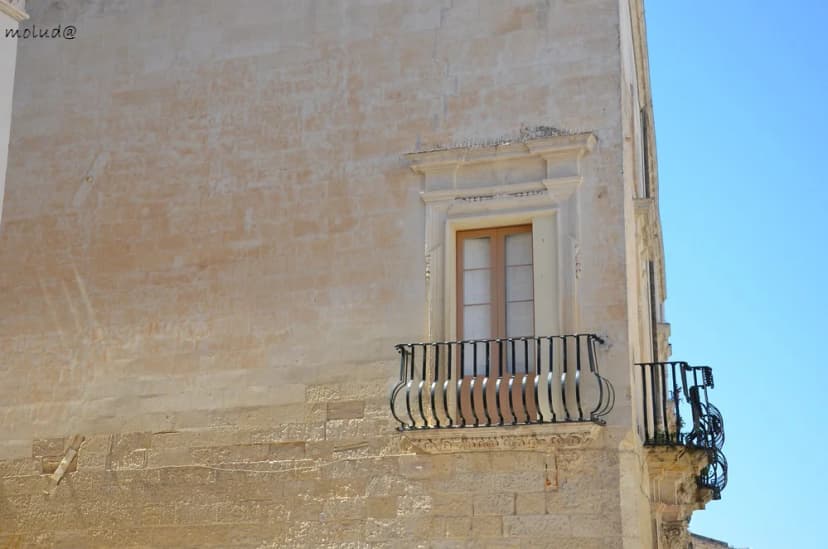
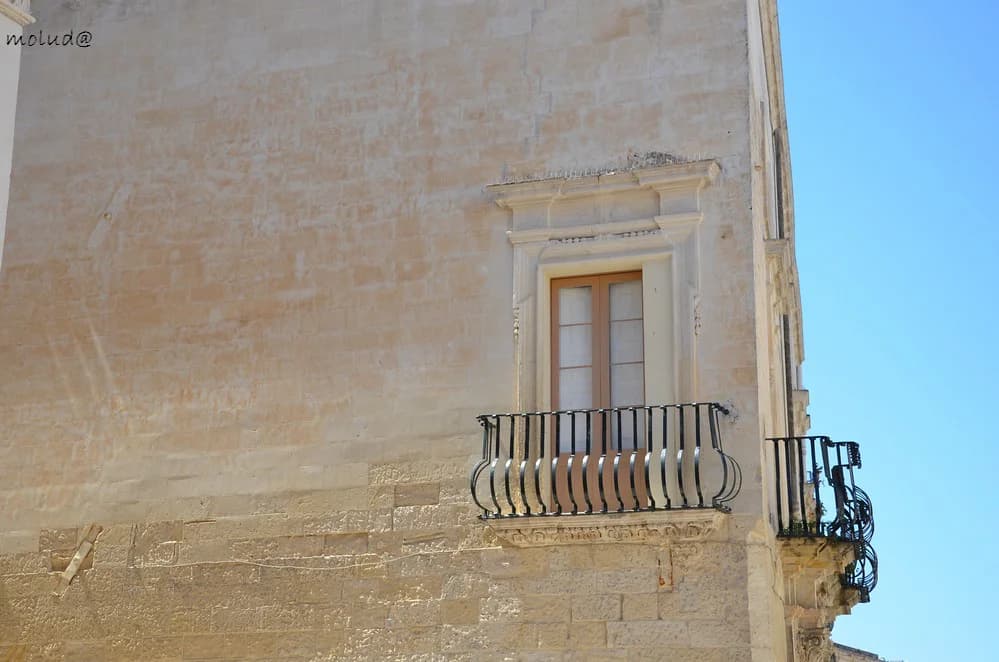
Immediately adjacent to the Basilica stands the Palazzo dei Celestini, now the Prefettura di Lecce. Its lower loggia was designed by the same artisans who worked on the Basilica, and the courtyard is freely accessible to visitors during office hours (Monday–Friday 9:00 AM–1:00 PM). A short walk west along Via dei Templari leads to Palazzo Marrese, a 16th-century noble residence whose exterior balconies and window frames showcase some of the finest pietra leccese carving in the entire city. The building is privately owned but its facades are viewable from Via della Tonnara at any time.
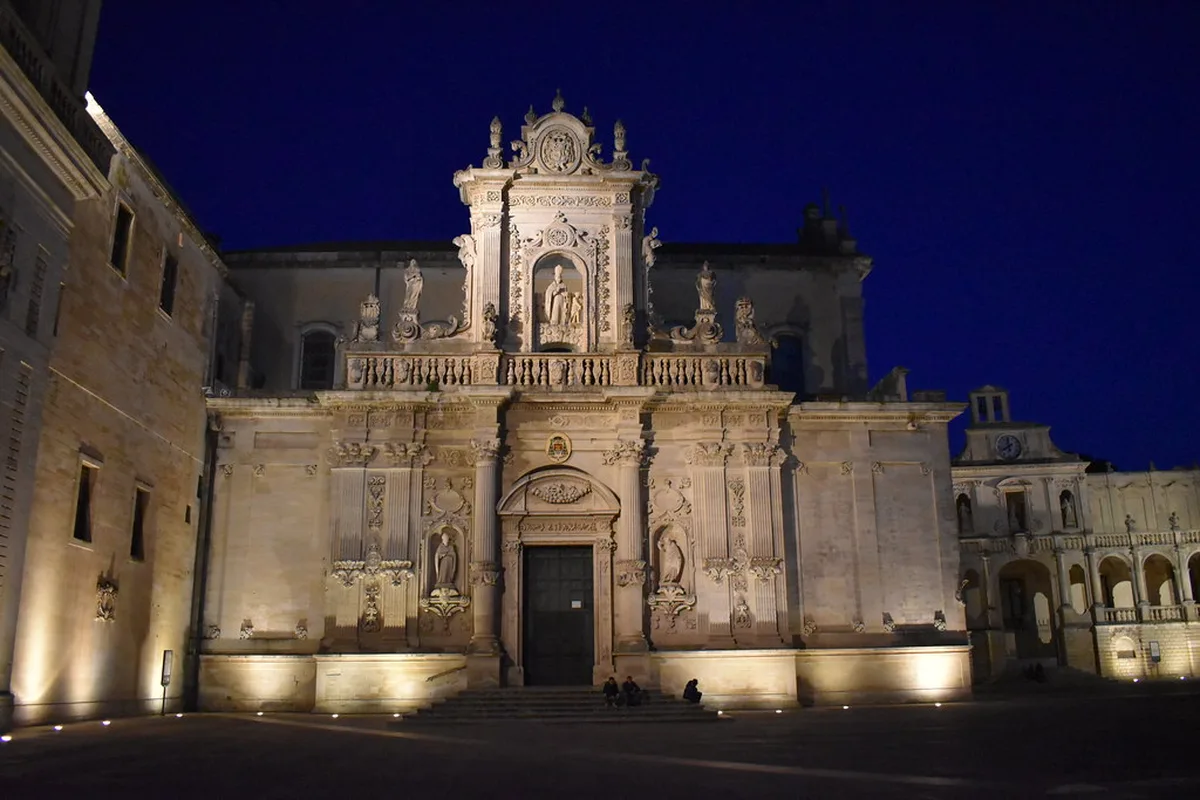
Continuing south-west approximately 400 metres along Via Giuseppe Libertini leads to the Piazza del Duomo, which is one of the few completely enclosed squares in Europe. This architectural complex includes the Cathedral of Lecce (rebuilt by Giuseppe Zimbalo between 1659 and 1670), the 70-metre Bell Tower, and the Bishop's Palace. The square feels like an outdoor theater set when you enter through its single narrow opening on Via Vittorio Emanuele II. In 2026, the Cathedral complex charges €4 for an all-sites ticket that also includes the crypt; it is open daily 7:30 AM–12:00 PM and 4:00 PM–7:30 PM. Visit during the late afternoon to see the stone turn a deep honey colour as the sun sets over Via Brindisi.
Many smaller churches dot the landscape of the centro storico and offer unique insights into centuries of religious history. The Church of San Matteo on Via dei Perroni stands out because of its unusual curved facade that deliberately mimics Roman Baroque styles; entry is free and it is open Tuesday to Sunday 9:30 AM–1:00 PM. The Church of Sant'Irene on Corso Vittorio Emanuele II is another highlight, featuring a single-nave interior with an impressive carved wooden altarpiece dating to the 17th century. A combined religious-sites ticket covering four minor churches is available for €5 from the tourist information office on Via Vittorio Emanuele II 22, open 9:00 AM–7:00 PM daily in 2026.
Free Walking Tours in Lecce 2026
One of the best-value ways to explore the city in 2026 is through Free Walking Tour Italia's Lecce programme, which operates a tip-based guided tour that runs daily at 10:30 AM. The meeting point is the north-west corner of Piazza Sant'Oronzo, directly in front of the Column of Saint Orontius. No booking is required; simply arrive a few minutes early and look for the guide holding the yellow Free Walking Tour Italia umbrella. The tour lasts approximately two hours and covers roughly 1.8 km through the historic centre, finishing near the Basilica di Santa Croce on Via Vittorio Emanuele II.

The route takes in the Roman amphitheatre, the Sedile building, the Cathedral complex on Piazza del Duomo, Palazzo dei Celestini, Via dei Perroni, and ends with a demonstration of local cartapesta craft techniques. Guides are trained local residents who speak fluent English and Italian; Spanish and French options are available on request with 48 hours advance notice via the Free Walking Tour Italia website. The tour is genuinely tip-based: a suggested tip of €10–€15 per person is customary for a good experience, though the amount is entirely at your discretion.
For visitors who prefer a more structured experience, private guided walking tours of the historic centre are available from several agencies along Corso Vittorio Emanuele II. In 2026, a standard 2-hour private guided tour for up to 4 people costs €55–€80 depending on the operator, working out to €15–€20 per person in a small group. Agencies such as Salento Walking Tours and Lecce Experience both offer online booking; tours depart from Piazza Sant'Oronzo at flexible times including early morning (8:30 AM) slots designed to beat the midday heat. Night tours of the illuminated Baroque facades are also available on Friday and Saturday evenings at 9:00 PM for approximately €18 per person, lasting 90 minutes.
For solo travellers and budget-conscious visitors, the Comune di Lecce publishes a free self-guided walking map (available in English, Italian, French, and German) at the tourist information office on Via Vittorio Emanuele II 22. This map outlines a 2.2 km route with 14 numbered stops, each with a QR code linking to an audio guide in multiple languages. The self-guided experience works best on weekday mornings before 11:00 AM when the narrow streets remain relatively quiet and every major monument is open.
Discovering Lecce's Artisan Heritage and Crafts
Lecce is world-famous for its ancient tradition of cartapesta, which is the art of paper-mâché. This craft began in the 17th century when wood and marble were too expensive for making religious statues. Artisans used simple materials like paper, straw, and glue to create lightweight and realistic figures. You can still find active workshops on Via degli Ammirati and Via Francesco Rubichi where masters teach apprentices this delicate and time-consuming technique. Most workshops welcome visitors between 9:00 AM and 1:00 PM and again from 4:30 PM to 8:00 PM, Monday through Saturday, with no appointment necessary.
Peeking into these studios allows you to see the complete process of molding, drying, and painting these unique statues. Many shops sell smaller versions of these works that make for authentic and portable souvenirs. Prices for small handmade cartapesta figurines start around €20–€35 for a 15 cm piece, while larger decorative panels measuring 30 cm or more typically cost €60–€120 depending on the complexity of the design and the reputation of the studio. Supporting these local artists helps preserve a cultural heritage that is unique to the Salento region and recognised by the Italian Ministry of Culture as an intangible cultural heritage.
Beyond paper-mâché, the city is also known for its skilled stonemasons who still work with the local pietra leccese rock along Via Libertini and in the workshops behind Piazza del Duomo. This limestone is so soft when first quarried that it can be worked with a simple blade, yet hardens to a durable finish when exposed to air over several months. Modern designers now use this stone to create beautiful lamps, geometric jewellery, and home décor items. A quality carved pietra leccese lamp typically retails for €40–€90 in 2026. Exploring these shops provides a different perspective on the city's intimate relationship with its natural resources and the reason its Baroque facades have survived centuries in remarkable condition.
The Centro Storico Artigianato district, which runs along Via Idomeneo between Piazza Sant'Oronzo and the Cathedral, concentrates many of the best artisan shops within a compact 500-metre stretch. On Saturday mornings from 9:00 AM to 1:00 PM, several workshops open their doors for free short demonstrations lasting 15–20 minutes. This is an excellent opportunity for families with children who want to try shaping a small piece of cartapesta under the guidance of a local artisan. Materials are provided at no extra cost during these demonstrations, though a small donation to the workshop is appreciated.
Planning Your Walking Route Logistics
Navigating the historic centre on foot is generally easy because most of the area within the ancient city walls is pedestrian-only. The ZTL (Zona a Traffico Limitato) zone covers virtually the entire centro storico between 7:00 AM and 10:00 PM daily; cameras at each gate entrance issue automatic fines of €80–€160 to unregistered vehicles. Consulting the parking in Lecce guide is essential before arriving by car to identify the nearest authorised car parks. Parcheggio Via Adua, located 350 metres south of Piazza Sant'Oronzo off Via Taranto, costs €1.50 per hour or €8 for a full day in 2026 and is the most convenient option for day visitors. Parcheggio Foro Boario to the north-west of the old town on Viale Marcello Salvi charges a flat rate of €5 for up to 8 hours.
The best time to start your walk is around 9:00 AM before the midday heat becomes intense, particularly from June through August when temperatures regularly exceed 35°C. Many shops and churches close for the traditional riposo (afternoon rest) between 1:00 PM and 5:00 PM, though the Cathedral complex and the Basilica di Santa Croce maintain abbreviated afternoon hours. Planning your route around these opening times ensures you can access the interiors of all major monuments. The quietest days for a walking tour in 2026 are Tuesday, Wednesday, and Thursday mornings; Saturday afternoons and Sunday mornings attract the most local visitors.
Wear comfortable walking shoes with good grip because the ancient paving stones of Via Libertini and Piazza del Duomo can be quite slippery, especially after rain. The limestone has been polished by centuries of footsteps and becomes particularly treacherous on steep sections near Porta Napoli to the north. Carry a refillable water bottle as there are several public drinking fountains (nasoni) in Piazza Sant'Oronzo and near Porta Rudiae to the west. Most guided tours last about two to three hours and cover a distance of roughly two kilometres; a self-guided itinerary covering all major sites requires approximately four hours including time for church visits and a mid-morning snack break.
Public transport connections to the historic centre are good: Lecce railway station on Piazza Adua is a 15-minute walk (approximately 1.1 km) south of Piazza Sant'Oronzo along Viale Otranto. City buses run from the station forecourt to Via Gallipoli (3 stops, €1.20 per journey) which deposits you 200 metres west of the Cathedral. Taxis from the station to Piazza Sant'Oronzo cost approximately €8–€10 in 2026 and are available from the rank on Piazza Adua. For those arriving by long-distance bus, Flixbus and Marozzi services stop at the Lecce bus station on Via Adua, a 5-minute walk from Parcheggio Via Adua.
Culinary Breaks During Your Lecce Walk
No walking tour is complete without sampling the local street food and traditional pastries. The pasticciotto is the most famous treat, consisting of shortcrust pastry filled with creamy lemon custard originating from the village of Galatina, 20 km south of Lecce. Locals usually enjoy these warm for breakfast or as a mid-morning snack at a corner bar. You can find excellent pasticciotti at Pasticceria Natale on Via Trinchese 7, open from 7:00 AM to 9:00 PM daily, for about €1.80–€2.20 each in 2026. Caffè Alvino on Piazza Sant'Oronzo, one of the oldest bars in the city, serves a consistently excellent version for €2.00.
Pair your pastry with a caffè leccese for the ultimate local experience. This drink features strong espresso served over ice with a sweet splash of almond milk syrup (latte di mandorla). It provides a refreshing caffeine boost perfectly suited to the warm climate of southern Italy. A caffè leccese costs €1.80–€2.50 at most bars in the historic centre in 2026. Visitors heading toward the coast after their city walk can find this regional specialty served at cafes near the Lecce beach guide destinations, roughly 20 km to the east at San Cataldo and Torre dell'Orso.
For a savory snack, look for a rustico leccese at one of the many small food stalls and forno (bakeries) throughout the centro storico. This flaky puff pastry is filled with mozzarella cheese, béchamel, tomato sauce, and a touch of black pepper. The best spot in 2026 is Forno Sammarco on Via Vittorio Emanuele II 19, open Monday to Saturday 8:00 AM–2:00 PM and 5:00 PM–8:30 PM, selling rustici for €1.80 each. The bakery Forno Artigianale on Via degli Ammirati 7 offers a slightly larger version for €2.20, baked fresh every two hours throughout the morning. Both venues accept contactless payment as well as cash.
For a full sit-down lunch in the centro storico, the area around Via Libertini and Piazza San Martino offers several trattorie serving traditional Salentine cucina. A standard two-course lunch (primo + secondo) with house wine costs €20–€28 per person at most mid-range restaurants in 2026. Ciceri e Tria (chickpeas with fried pasta) and Friselle con polpo (dried bread rings with marinated octopus) are signature dishes worth ordering. The restaurant district is busiest between 1:00 PM and 2:30 PM; arriving at 12:30 PM avoids the main rush and usually secures a table without a reservation.
Lecce Walking Tour at Night: Baroque Under the Stars
Lecce transforms dramatically after dark, and an evening stroll through the centro storico offers a completely different experience from the daytime tour. The municipality's floodlighting system, upgraded in 2024, illuminates the Basilica di Santa Croce, the Cathedral Bell Tower, and Porta Napoli with warm LED lights that make the pale pietra leccese glow as if lit from within. The effect is most striking between 9:00 PM and midnight when the streets quieten after the evening passeggiata and the monuments seem to float against the deep blue southern Italian sky.
Several operators run dedicated evening walking tours of the illuminated old town in 2026. Lecce by Night by Salento Walking Tours departs every Friday and Saturday at 9:00 PM from Piazza Sant'Oronzo and lasts approximately 90 minutes, covering 1.5 km at a leisurely pace. The cost is €18 per adult and €10 for children under 12; booking is required at least 24 hours in advance via the Salento Walking Tours website or at their Via Trinchese 24 office (open Monday–Saturday 9:00 AM–7:00 PM). Groups are capped at 15 people, ensuring an intimate experience with good sightlines for photography.
The evening route is deliberately different from the daytime circuit. Starting at Piazza Sant'Oronzo, the guide leads the group through Via degli Ammirati to reach Piazzetta Sigismondo Castromediano, a small square rarely visited during the day that is ringed by 17th-century noble palaces whose carved balconies are beautifully lit at night. The route continues along Via Idomeneo to reach the Arco di Prato, one of the city's lesser-known Baroque gateways, before looping back through Piazza del Duomo where the enclosed square is completely deserted and acoustically remarkable. The guide shares local legends about Lecce's founder and the miraculous survival of the city through earthquakes and invasions.
For independent night walkers, the Piazza del Duomo deserves at least 20 minutes of contemplation in the evening; its single entrance creates an otherworldly silence even on busy weekends. The nearby Enoteca Mamma Elvira on Via Battisti 8, open daily 6:00 PM–1:00 AM, pours excellent local Negroamaro and Primitivo wines by the glass from €4.50–€7.00 and serves a free complimentary bruschetta board with every order. A glass of Salice Salentino Riserva DOC here while watching the last visitors drift past the Cathedral makes for one of the most memorable evenings you can spend anywhere in Puglia. Combine this with a visit to the day trips from Lecce guide to plan excursions to nearby Otranto and Gallipoli that are equally rewarding by late afternoon light.
Security in the old town at night is generally excellent. The centro storico is well-lit, populated by locals and tourists alike until well past midnight in summer, and covered by regular carabinieri patrols along Via Vittorio Emanuele II and Corso Libertini. The main practical consideration is footwear: the ancient cobblestones are harder to navigate in the dark, so closed-toe shoes with non-slip soles are strongly recommended. Many artisan shops remain open until 9:00 PM or 10:00 PM in July and August, making it possible to combine an evening stroll with a last-minute souvenir purchase of a carved pietra leccese piece (€15–€90) or a bottle of local olive oil (€8–€15) from the delicatessen on Via Libertini 43.
Frequently Asked Questions
How long does a typical Lecce walking tour take?
Most guided walking tours of Lecce's historic centre last between two and three hours, covering approximately 1.8–2 km and including all major Baroque monuments. Free Walking Tour Italia's tip-based daily tour starts at 10:30 AM from Piazza Sant'Oronzo and runs for about 2 hours. If you choose a self-guided route using the tourist office map (available free on Via Vittorio Emanuele II 22), allow at least four hours to include breaks for food, shopping, and church visits. Private guided tours for groups of up to 4 people cost €55–€80 for 2 hours in 2026.
Is the historic centre of Lecce accessible for everyone?
The old town is mostly flat, making it broadly accessible for visitors with limited mobility. However, some ancient streets such as Via degli Ammirati and sections near Porta Napoli feature uneven paving stones that require caution, particularly after rain when the polished limestone becomes slippery. Most major churches, including the Basilica di Santa Croce and the Cathedral complex on Piazza del Duomo, have ramps or step-free entrances. The Roman amphitheatre underground tours involve a narrow staircase and are not suitable for wheelchair users. Smaller artisan shops on Via Idomeneo may have a single step at the entrance.
What is the best time of year for a walking tour of Lecce?
Spring (April–May) and autumn (September–October) offer the most pleasant temperatures for walking through Lecce's streets, typically 18–24°C with low humidity. These seasons also coincide with lower accommodation prices and smaller crowds. July and August see temperatures regularly above 35°C and the highest tourist volumes, making early morning starts (before 10:00 AM) essential. Winter (December–February) is excellent for independent travellers who prefer near-empty streets, though a handful of smaller churches operate on reduced winter hours of 10:00 AM–12:30 PM only. The Basilica di Santa Croce and the Cathedral complex maintain standard hours year-round.
Are there public restrooms available in the old town?
Public restrooms in Lecce's centro storico are limited. The most reliably clean free public toilets in 2026 are located inside the Castello di Carlo V on Viale 25 Luglio (open 9:00 AM–7:00 PM) and near the Porta Rudiae car park on Viale Otranto. Cafes on Piazza Sant'Oronzo generally allow restroom use if you purchase a small item such as a coffee (€1.20–€1.50). The Cathedral complex on Piazza del Duomo also has facilities available for ticket holders (€4 all-sites entry). Carry a small supply of tissues as paper is not always provided in older facilities.
How much does entry to Lecce's main sights cost in 2026?
Many of Lecce's most impressive sights are completely free in 2026. The Basilica di Santa Croce, the Church of San Matteo, the Church of Sant'Irene, and the exterior viewing of the Roman amphitheatre all carry no admission charge. The Cathedral complex on Piazza del Duomo charges €4 for an all-sites ticket including the crypt. Underground guided tours of the Roman amphitheatre cost €6 per person, departing daily at 10:00 AM and 3:00 PM. A combined ticket for four minor religious sites is available for €5 from the tourist information office on Via Vittorio Emanuele II 22. Guided walking tours range from free (tip-based, Free Walking Tour Italia) to €18–€20 per person for group evening tours.
What is the free walking tour in Lecce and how do I join in 2026?
Free Walking Tour Italia runs a tip-based 2-hour walking tour of Lecce's historic centre every day at 10:30 AM in 2026. No advance booking is required: simply arrive at the north-west corner of Piazza Sant'Oronzo, in front of the Column of Saint Orontius, a few minutes before 10:30 AM. Look for the guide holding the yellow Free Walking Tour Italia umbrella. The tour covers all major Baroque monuments including the Cathedral, the Basilica di Santa Croce, and the Roman amphitheatre, and finishes near Palazzo dei Celestini. A tip of €10–€15 per person is customary at the end of the tour.
Is it worth doing a Lecce walking tour at night in 2026?
Yes — Lecce at night is one of the most spectacular experiences in southern Italy. The municipality's LED floodlighting system makes the pietra leccese facades of the Basilica di Santa Croce and the Cathedral Bell Tower glow brilliantly after dark. Salento Walking Tours runs a dedicated Lecce by Night tour every Friday and Saturday at 9:00 PM from Piazza Sant'Oronzo, costing €18 per adult (€10 under 12) and lasting 90 minutes. The route includes the illuminated Piazza del Duomo and the Arco di Prato gateway, which are rarely visited during the day. Book at least 24 hours in advance as groups are capped at 15 people.
A walking tour of this golden city offers a deep connection to the history and culture of Puglia. From the Roman ruins under Piazza Sant'Oronzo to the extraordinary Baroque facades along Via Vittorio Emanuele II, every street tells a story of artistic passion and centuries of resilience. Planning your visit with these 2026 tips — arriving early, using the free tour as an orientation, and budgeting €15–€25 for entry tickets and food — ensures a smooth and memorable experience in the heart of the Salento.
After finishing your city exploration, consider looking into day trips from Lecce to see more of the surrounding region. The Salentine countryside is filled with ancient olive groves, whitewashed masserie, and stunning Adriatic and Ionian coastal views within an easy 30–60 minute drive. Lecce remains the perfect base for discovering the many wonders of Puglia in 2026.