Cinque Terre Travel Guide 2026: Complete Visitor Guide
Cinque Terre's Sentiero Azzurro (Blue Trail) requires the Cinque Terre Card at €18 per day in 2026, covering unlimited hiking, ATC buses, and park visitor centres across all five villages.
The Cinque Terre Treno MS Card adds unlimited Cinque Terre Express train rides for €5 extra per day, bringing your total daily transport and trail pass to €23 per person.
The rugged Italian Riviera coastline hosts five vibrant fishing villages — Riomaggiore, Manarola, Corniglia, Vernazza, and Monterosso al Mare — clinging to steep cliffs above the turquoise Ligurian Sea.
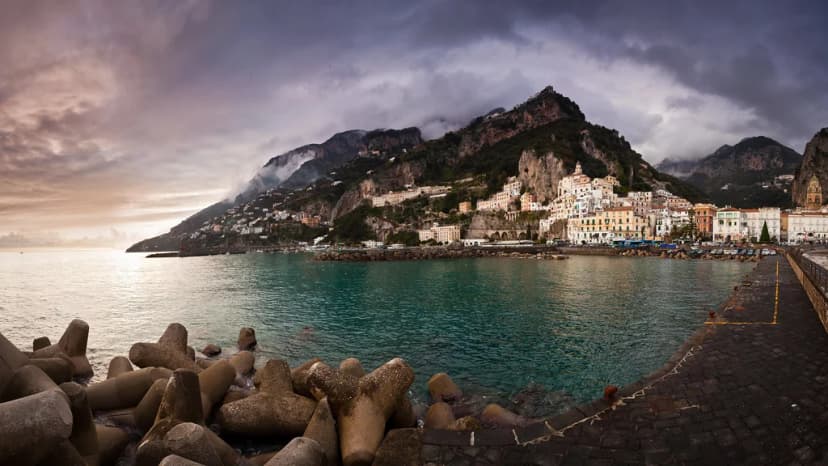
Many travelers combine this trip with a visit to other Italian highlights, such as our Amalfi Coast travel guide, to experience the full sweep of Italy's most dramatic coastlines.
Planning a trip requires navigating narrow paths, specific train schedules, and national park entry rules.
This Cinque Terre travel guide provides essential details for a seamless 2026 journey, including hiking trail specifics, card costs, village-by-village dining picks, and packing advice.
Choosing the Best Time for Your Visit
Visiting during the shoulder seasons of May or September offers the most comfortable walking temperatures, with afternoon highs typically sitting around 22°C — ideal for the steep coastal climbs between villages. Avoiding the intense mid-summer heat (which can push above 33°C in July and August) makes the Blue Trail substantially more manageable, particularly the strenuous Segment 3 between Corniglia and Vernazza.
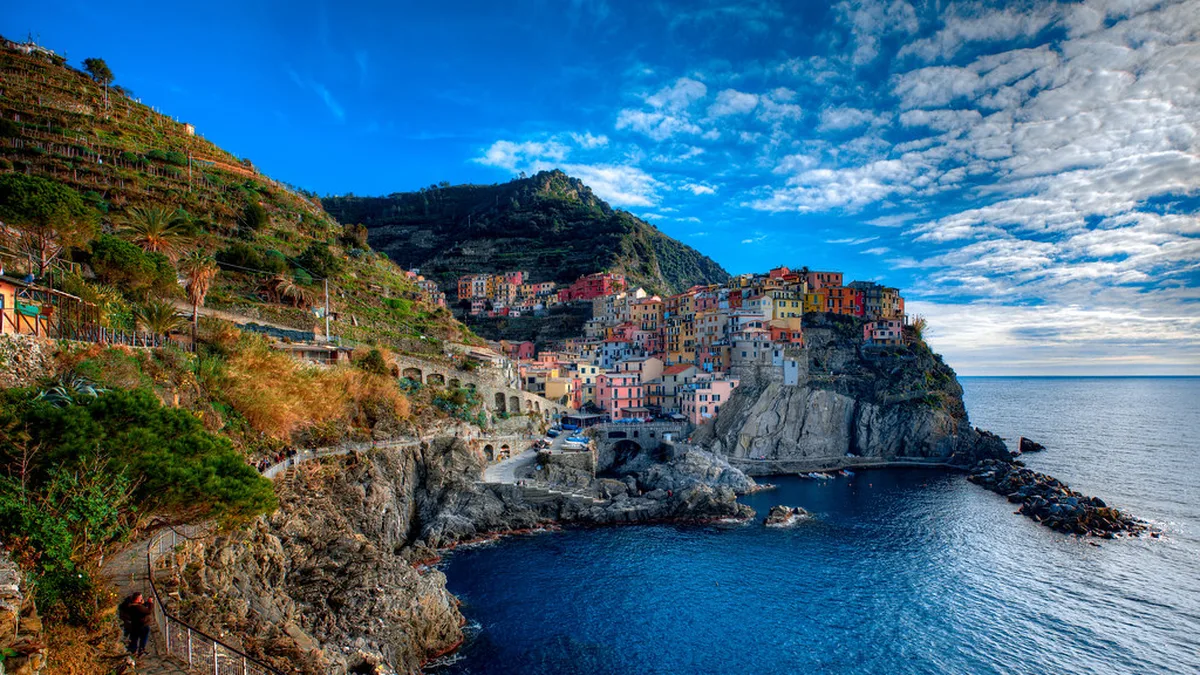
July and August bring intense crowds and significantly higher accommodation prices. Sea-view double rooms at La Torretta Lodge in Manarola, which start at €140 per night in May, can exceed €220 per night in peak summer. Many popular trails become congested with day-trippers arriving from large cruise ships docking in the nearby port of La Spezia. Booking your stay several months in advance is vital for securing any accommodation at a reasonable rate.
For 2026, the national park has introduced timed entry slots on the Sentiero Azzurro during peak summer months. Pre-booking your hiking slot online via the official Cinque Terre National Park portal (parconazionale5terre.it) at least 48 hours ahead is strongly recommended to guarantee access; slots on the Corniglia–Vernazza and Vernazza–Monterosso segments sell out particularly fast on weekends. Trail closures due to erosion or storm damage can occur with little notice, so checking the website before departure each morning is a sensible habit.
Winter travelers will find a much quieter atmosphere, with the villages nearly empty by November. However, many restaurants and shops — including popular Vernazza eateries like Ristorante Belforte — close entirely from mid-November through February. Some ferry services also stop running during the colder months due to rougher sea conditions. The upside: room rates in Riomaggiore can drop below €70 per night, and you may have the Manarola vineyard terraces entirely to yourself on a crisp winter morning.
Spring (late April to early June) is broadly considered the optimal window. Wildflowers blanket the terraces, the sea is calm enough for ferry services to run from early May, and the Sciacchetrà grape harvest cycle is just beginning in the vineyards above Corniglia. Early autumn (September to mid-October) is a close second: the sea remains warm enough for swimming at Monterosso, harvest festivals animate village squares, and the tourist surge from summer has subsided significantly.
Exploring the Five Coastal Villages
Each of the five villages possesses a distinct personality, architectural character, and visitor experience. Choosing where to spend your time — and where to base yourself overnight — makes a material difference to how you experience the national park.
Riomaggiore serves as the southern gateway, featuring a picturesque wharf lined with colourful fishing boats and a narrow main street (Via Colombo) climbing steeply from the harbour. It is the liveliest in winter and a good starting point for the Blue Trail. Budget-friendly rooms at guesthouses like Hotel della Baia start at €85 per night for a double without sea view.
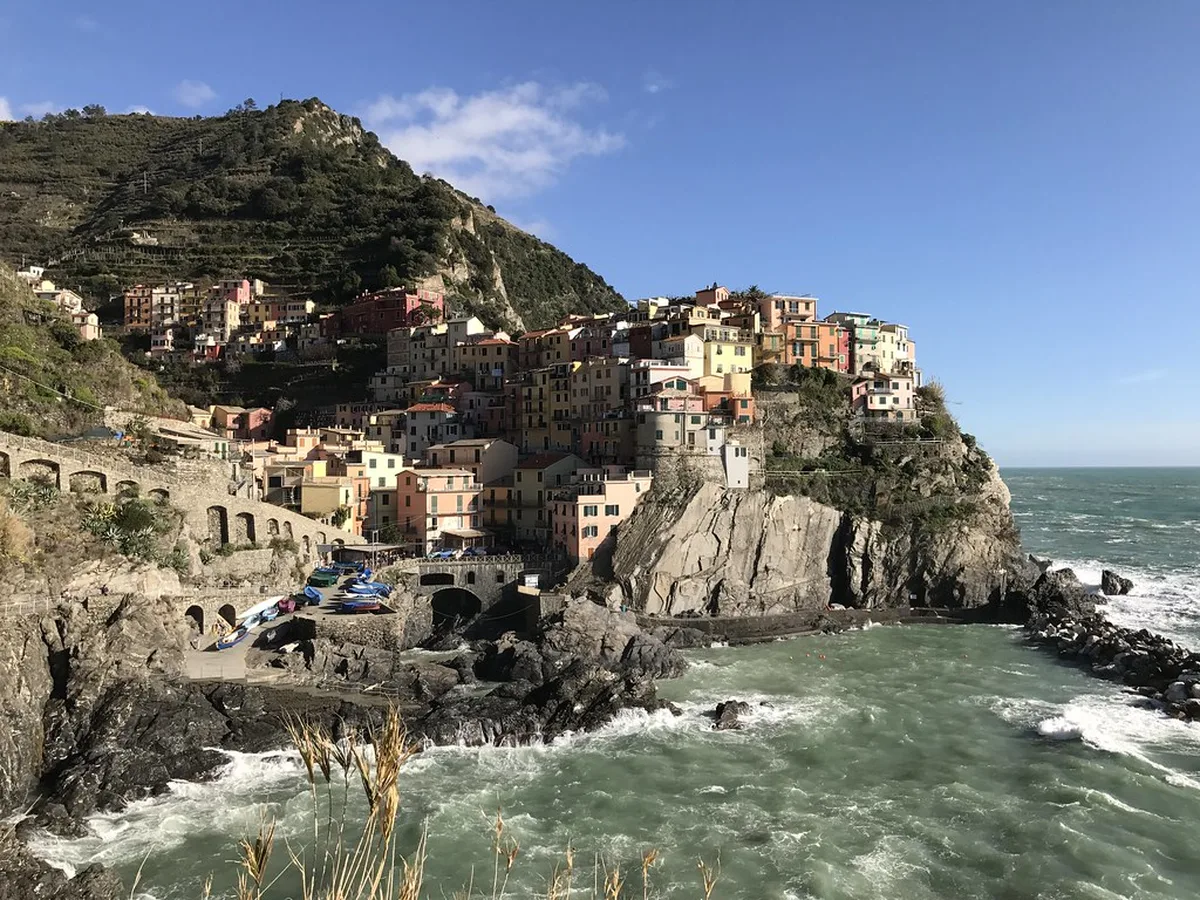
Manarola is famous for its sweeping sunset vistas, historic vineyard terraces, and proximity to the Manarola Wine Museum (Cantina Cinque Terre cooperative), where a tasting flight of three local wines — Cinque Terre DOC white and Sciacchetrà — costs €12 per person. It is the most photographed village and the preferred overnight pick for couples. Sea-view rooms at La Torretta Lodge are priced from €140 per night in May.
Corniglia sits high on a rocky promontory and is the only village without direct sea access. Travelers must climb 382 steps (the Lardarina staircase) from the train station, or take the shuttle bus for €2.50 per person, to reach the town centre. This elevated position offers some of the most panoramic views of the entire coastline. Corniglia has the most authentic local atmosphere and the most affordable dining: a plate of trofie al pesto at Osteria Mananan costs around €12.
Vernazza is widely regarded as the jewel of the five villages. Its natural harbour — the only true harbour on the Cinque Terre coast — frames a stunning medieval watchtower (Castello Doria, entry €1.50) and a lively piazza filled with umbrella tables. Vernazza has the widest choice of restaurants, from harbour-front trattorie to family-run pizzerie. A seafood risotto at Trattoria Gianni Franzi costs around €18–22. Accommodation ranges from €110 to €200 per night for sea-view rooms.
Monterosso al Mare is the only village with a proper sandy beach — split between the free Spiaggia di Fegina and the managed Bagni Gia beach club (sun lounger + umbrella from €20 per person per day). It is the largest and flattest of the five villages, making it the easiest to navigate with wheeled luggage. Monterosso also has the best selection of mid-range hotels, with four-star options like Hotel Porto Roca offering cliff-top sea views from €180 per night in shoulder season.
- Riomaggiore: Southern gateway, historic harbour, budget rooms from €85/night
- Manarola: Sunset views, wine cooperative tastings from €12, romantic stay from €140/night
- Corniglia: Hilltop promontory, local dining from €12, most affordable village
- Vernazza: Natural harbour, Castello Doria (€1.50), sea-view rooms €110–200/night
- Monterosso al Mare: Sandy beach, beach clubs from €20/day, cliff-top hotels from €180/night
The Cinque Terre Card: Is It Worth It in 2026?
The Cinque Terre Card is the official access pass for the national park and the most debated purchase among first-time visitors. In 2026, the card costs €18 per person per day or €33 for two consecutive days. It is issued by Cinque Terre National Park and is mandatory for hiking the Sentiero Azzurro (Blue Trail), the main coastal path linking all five villages. Cards can be purchased online at parconazionale5terre.it, at park information offices in each village station, or at the La Spezia Centrale ticket desk.
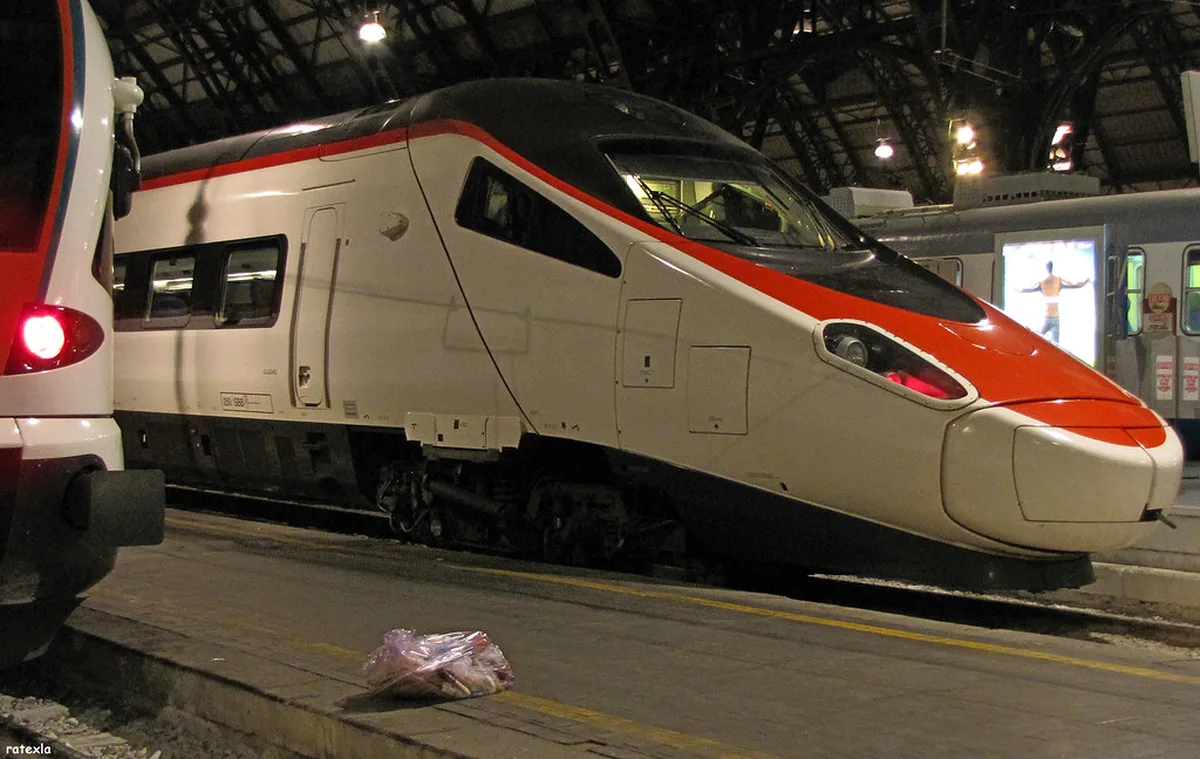
The card includes the following:
- Unlimited access to all open hiking trails within the national park
- Unlimited rides on local ATC buses between villages and hillside hamlets (including the Corniglia shuttle, €2.50 value per ride)
- Free use of public Wi-Fi hotspots in each village square
- Entry to the national park visitor centres and multimedia exhibits in Riomaggiore and Monterosso
The Cinque Terre Treno MS Card adds one day of unlimited Cinque Terre Express train travel for an additional €5 per day, bringing the total to €23 per day. For visitors planning more than two or three train journeys in a day, the combined card easily pays for itself. Individual train tickets on the La Spezia–Levanto line cost €4.40 per single journey, meaning two round trips alone exceed the €5 train add-on cost.
For comparison, the hop-on hop-off seasonal ferry running from Riomaggiore to Monterosso al Mare costs €20 per person for a full day pass in 2026. The Cinque Terre Card does not include ferry travel, which is sold separately at each village dock by the Consorzio Marittimo Turistico 5 Terre operator. A single one-way ferry hop (e.g., Vernazza to Monterosso) costs €7 per person.
Is it worth it? If you plan to hike any section of the Blue Trail, the card is mandatory — wardens check tickets at all main trail entry points. Even without hiking, the unlimited ATC bus access alone is valuable for reaching the Volastra hamlet above Manarola and the San Bernardino chapel viewpoint above Vernazza, neither of which is reachable by train. For a full day of exploration combining trails, buses, and the visitor centres, the €18 card represents excellent value compared to buying piecemeal access at each point. The two-day card at €33 is effectively a 9% discount and recommended for any stay of two or more nights.
Navigating the Cinque Terre Express and Trails
The Cinque Terre Express train is the most efficient way to travel between the villages, running on the La Spezia–Levanto regional rail line. Trains depart several times per hour from 6:00 AM to midnight; the fastest journey between any two adjacent villages takes 3–5 minutes. A standard single ticket costs €4.40, while the Cinque Terre Treno MS Card adds unlimited express trains for €5 per day on top of the hiking card price. Inter-rail and Eurail passes are not valid on the Cinque Terre Express segment.
Hiking the Sentiero Azzurro (Blue Trail) remains the bucket-list activity for active visitors. The trail is divided into four segments with varying difficulty and current access status in 2026:
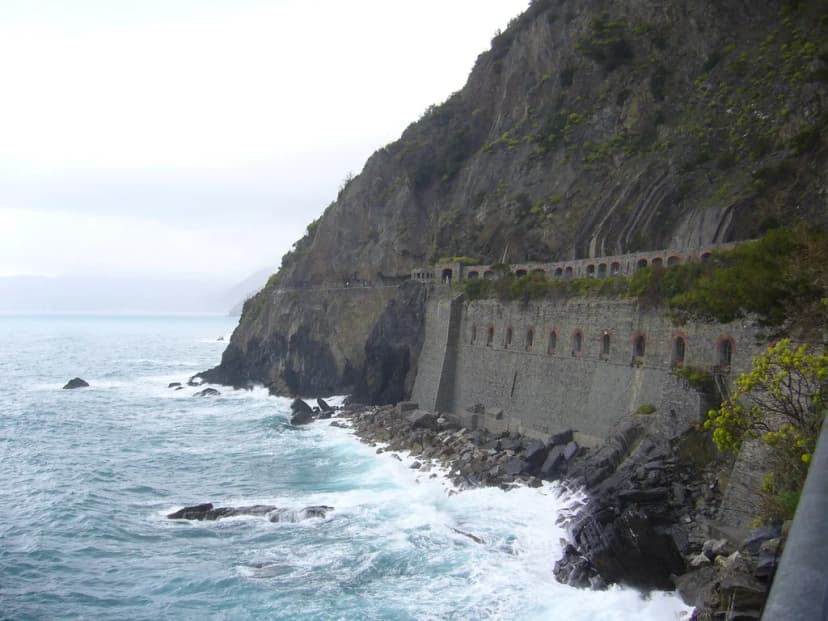
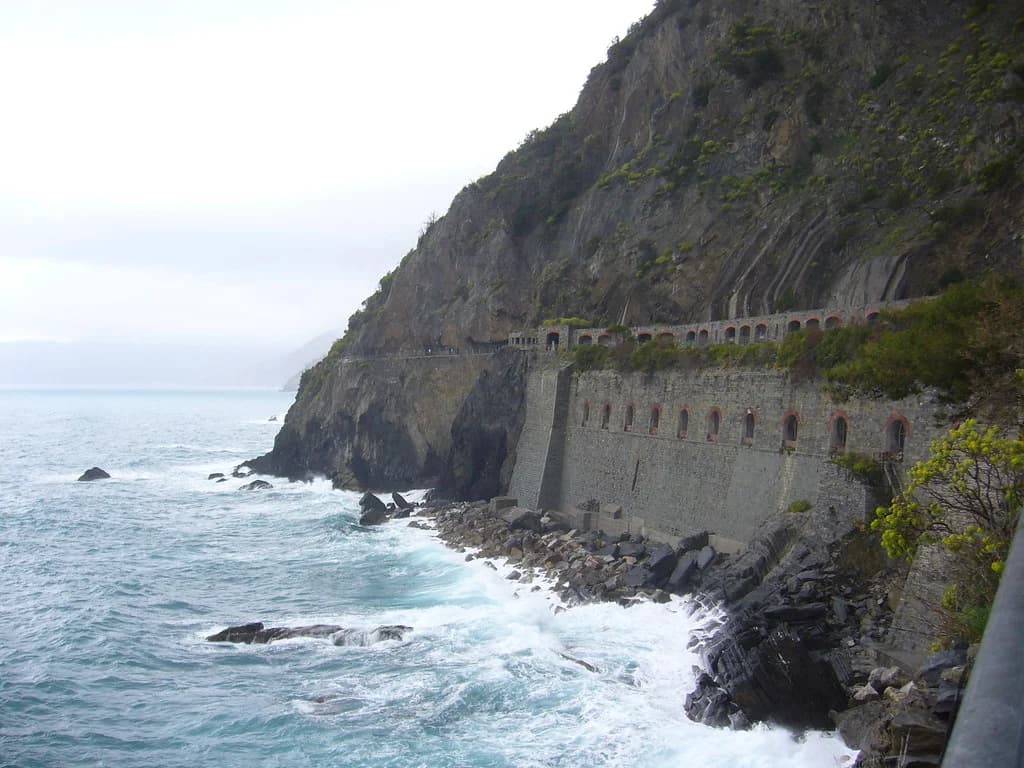
- Segment 1 — Riomaggiore to Manarola (Via dell'Amore): Easy, 1.0 km, approximately 20 minutes. This iconic paved cliff-path is partially reopened after extensive renovation; confirm current access status at the park office on Via San Giacomo in Riomaggiore (open 08:00–19:30 daily in summer). A timed-entry fee of €5 per person may apply on this segment during peak season.
- Segment 2 — Manarola to Corniglia: Moderate, 3.8 km, approximately 1 hour 15 minutes. Includes significant elevation gain through terraced vineyards above the sea. Outstanding views of Manarola's marina from the ridge. Depart before 09:00 to avoid the mid-morning crowd surge.
- Segment 3 — Corniglia to Vernazza: Strenuous, 4.0 km, approximately 1 hour 30 minutes. Rocky, uneven terrain with sharp ascents and descents; the most physically demanding section. Trekking poles strongly recommended. Opens 08:00 daily, closes at sunset.
- Segment 4 — Vernazza to Monterosso: Moderate-strenuous, 3.5 km, approximately 1 hour 45 minutes. Considered the most scenic section, with sweeping panoramic views from the ridgeline at around 210 metres elevation. The descent into Monterosso involves roughly 750 steps.
Beyond the Blue Trail, the national park maintains a network of higher routes. The Alta Via delle Cinque Terre ridge trail links all five villages at altitude and is generally uncrowded; it requires solid fitness and is best tackled north-to-south over two days. Trailhead access is via the Colle del Telegrafo above Riomaggiore (reachable by ATC bus included in the Cinque Terre Card).
The seasonal ferry operated by Consorzio Marittimo Turistico 5 Terre connects all villages except Corniglia, which has no dock. Ferry services typically run April through October, from approximately 09:30 to 18:00. A full daily ferry pass for the Riomaggiore–Monterosso route costs €20 per person in 2026. A single hop (e.g., Vernazza to Monterosso) costs €7 per person. Driving between the villages is strongly discouraged: village centres are car-free, roads are single-track with sheer drops, and parking is almost nonexistent. Leave your vehicle in the multi-storey car parks in La Spezia (Piazza d'Armi, €12 per day) or Levanto (€10 per day) and take the train in.
Savoring Local Cuisine and Regional Wines
Ligurian cuisine is built on a handful of exceptional local ingredients: Genovese basil, Ligurian extra-virgin olive oil, pine nuts, and the anchovies of Monterosso, which are salted and cured in traditional terracotta jars. Pesto was born in this region, and trofie al pesto — short hand-rolled pasta served with the raw basil sauce — remains the essential dish to order. Most village trattorias prepare their pesto daily from scratch; the difference between this and jarred supermarket pesto is significant.
In Vernazza, Trattoria Gianni Franzi (Via Visconti, open 12:00–15:00 and 19:00–22:00, closed Tuesday) is consistently rated among the best seafood restaurants on the coast. A starter of salt-cured Monterosso anchovies with lemon costs €9; a primo of trofie al pesto costs €16; a grilled branzino (sea bass) with grilled vegetables runs €26. Expect to pay €55–70 for a full dinner for two with a bottle of Cinque Terre DOC white wine.
In Corniglia, Osteria Mananan (Via Fieschi 117, open 12:30–14:30 and 19:30–21:30, closed Monday–Tuesday) offers the most authentic and affordable sit-down meal in the area: trofie al pesto for €12, focaccia di Recco (thin cheese-stuffed flatbread) for €8, and a glass of local Vermentino for €5. Budget travelers often find Corniglia the best village for value precisely because it attracts fewer day-trippers and has no beach to inflate prices.
Farinata — a dense, golden chickpea flatbread baked in wood-fired ovens — is the defining street food of the region. Look for it at the tiny bakeries along Riomaggiore's Via Colombo and Vernazza's Via Roma; a generous slice costs €3–5. Fried fish cones of mixed frittura di pesce (whitebait, calamari, and local prawns) are available at harbour-front kiosks in Monterosso and Vernazza for around €6–9 per cone.
On the wine side, Cinque Terre DOC white (made from Bosco, Albarola, and Vermentino grapes) pairs beautifully with the local anchovies and pesto. The rarer Sciacchetrà — a golden, intensely sweet passito wine made from partially dried Cinque Terre grapes — is the prestige local product. A 100 ml pour at the Cantina Cinque Terre cooperative tasting room in Manarola costs €8; a 375 ml bottle retails for €25–40 depending on the vintage. The labour-intensive harvest (baskets are carried by hand because mechanisation is impossible on the steep terraces) justifies every cent of the price.
Getting to Cinque Terre from Major Italian Cities
Understanding the best approach routes into the Cinque Terre in 2026 saves time and prevents common logistical errors — particularly for travellers arriving with large luggage or tight connection windows.
From Florence (Firenze SMN): The fastest and most practical route is a direct Intercity or regional train to La Spezia Centrale, journey time approximately 2 hours, with fares from €15–22 booked in advance via Trenitalia. From La Spezia Centrale, transfer immediately to the Cinque Terre Express (departs from the same station) for the 10–30 minute onward hop to your chosen village. Total travel time from Florence city centre: 2.5–3 hours. This is the most popular arrival route; trains from Florence to La Spezia run roughly every 45–90 minutes throughout the day.
From Genoa (Genova Piazza Principe or Brignole): Direct regional trains run approximately every hour, reaching La Spezia Centrale in around 1 hour 15 minutes; fares from €8–12. Some northbound Cinque Terre Express services originate from Levanto rather than La Spezia, so check your direction when boarding. Alternatively, travellers coming from Genoa can join the trail at the northern end (Monterosso) and hike south, which is a slightly less exhausting direction given the prevailing terrain profile.
From Milan (Milano Centrale): Take an Intercity or high-speed service to La Spezia Centrale; journey time approximately 2 hours 15 minutes on Frecciabianca services, fares from €19 booked early. Avoid the temptation to drive from Milan: the A15 motorway to La Spezia is straightforward, but there is genuinely nowhere to park once you arrive in the villages.
From Pisa: A regional train from Pisa Centrale to La Spezia Centrale takes approximately 1 hour 10 minutes; fares from €8. Pisa Galileo Galilei Airport (PSA) is therefore a practical entry point for international travellers, with the train station a short distance from the terminal. Budget airlines including Ryanair and easyJet operate routes to Pisa, making it a cost-effective gateway if you are combining Cinque Terre with Tuscany (see our Siena walking tour guide for a Tuscan extension).
Luggage logistics: The villages have virtually no flat ground and many accommodations lack lifts. The Cinque Terre Luggage Service (operated from La Spezia Centrale) transfers bags directly to your hotel or guesthouse for €10–15 per bag, eliminating the need to haul a rolling suitcase up 200 steps. Booking in advance via their website is recommended in summer. Alternatively, Deposito Bagagli left-luggage lockers at La Spezia Centrale cost €6 per day for a standard-size bag, allowing you to day-trip to the villages light and retrieve your luggage in the evening before onward travel.
Logistics for Your 2026 Cinque Terre Visit
One common mistake is arriving with oversized rolling suitcases in villages filled with steep stairs and no lifts. Many accommodations — including popular guesthouses like Casa Capellini in Vernazza — require carrying bags up three or four flights of stone steps. Pack light or use the Cinque Terre Luggage Service from La Spezia Centrale (€10–15 per bag) to avoid physical strain upon arrival.
Budget planning for a 2026 trip: the Cinque Terre Card costs €18 per person per day for trail and bus access, plus €5 for the train add-on. Accommodation ranges from €85 per night (budget guesthouse in Riomaggiore or Corniglia without sea view) to €220 per night (sea-view room in Manarola or Vernazza in peak season). Dinner for two at a mid-range trattoria averages €55–70 including a bottle of house wine. A three-day trip per person — including card, train passes, accommodation, and meals — typically runs €350–550 depending on season and village.
Dinner reservations are strongly recommended during peak season (June–September). Family-run eateries like Trattoria Gianni Franzi in Vernazza and Ristorante Dal Billy in Manarola typically open for bookings 1–2 weeks in advance and fill quickly once the evening light begins to fall on the harbour. Call directly or use TheFork (LaFourchette) for online reservations; most restaurants open for dinner from 19:00 to 22:00.
For those combining Cinque Terre with a broader Italian itinerary, the rail connection to Naples is straightforward: take the Cinque Terre Express to La Spezia Centrale, then an Intercity or Frecciarossa south. See our Naples 3-day itinerary for a full southern Italy route that pairs naturally with a Cinque Terre opener. If you are exploring the north, our Bologna 3-day itinerary makes an excellent one-day detour from the Cinque Terre rail line, with Bologna reachable from La Spezia in under 2 hours. For the south, the Sicily travel guide rounds out a longer Italian journey beautifully.
Frequently Asked Questions
How many days do you need in Cinque Terre in 2026?
Three days is the recommended minimum for visiting Cinque Terre in 2026. Day one covers the southern villages of Riomaggiore and Manarola, with a wine tasting at the Cantina Cinque Terre cooperative (tasting flight from €12). Day two is ideal for hiking the Vernazza–Monterosso trail segment (approximately 1 hour 45 minutes, Moderate-strenuous) and exploring Vernazza harbour. Day three allows a leisurely ferry ride (full day pass €20 per person) and quiet time in Corniglia. One-day trips from Florence are possible — Florence to La Spezia by train takes around 2 hours (from €15) — but feel rushed given trail and ferry schedules.
Which Cinque Terre village is the best to stay in?
Vernazza is the best village for first-time visitors: it has a central location, a natural harbour, the medieval Castello Doria (entry €1.50), and the widest choice of restaurants, including Trattoria Gianni Franzi where dinner for two costs around €55–70. Manarola is the top choice for couples, with sunset views and sea-view rooms at La Torretta Lodge from €140 per night. Monterosso al Mare is best for beach lovers — it is the only village with a sandy beach and managed beach clubs from €20 per person per day. Corniglia offers the most affordable rooms (from €75 per night) and the most authentic local atmosphere.
What does the Cinque Terre Card cost and what does it include in 2026?
The Cinque Terre Card costs €18 per person per day in 2026, or €33 for two consecutive days. It is mandatory for hiking the Sentiero Azzurro (Blue Trail) and includes unlimited access to all open national park hiking trails, unlimited ATC local bus rides (including the Corniglia shuttle), free Wi-Fi in all five villages, and entry to park visitor centres. Adding the Cinque Terre Treno MS train option costs an extra €5 per day (total €23 per day), giving you unlimited rides on the Cinque Terre Express train between all five villages. The card can be purchased at park offices in each village station or at La Spezia Centrale.
Can you drive a car between the villages of Cinque Terre?
Driving between the villages is not recommended: the roads are extremely narrow, most village centres are pedestrian-only zones, and parking is almost nonexistent within the national park. The best approach is to park in La Spezia (Piazza d'Armi car park, €12 per day) or Levanto (€10 per day) and use the Cinque Terre Express train for all inter-village travel. A standard single train ticket costs €4.40, or add unlimited express train rides for €5 per day with the Cinque Terre Treno MS Card.
Is the tap water safe to drink in the Cinque Terre villages?
Yes, tap water in all five Cinque Terre villages is safe and high quality for drinking. Public water fountains are located in the main square of each village and at key points along the hiking trails; refilling a reusable bottle here is free. Using these fountains helps reduce plastic waste inside the national park, where waste infrastructure is limited. Carrying at least 750 ml of water per person is recommended before starting any trail segment, particularly the strenuous Corniglia–Vernazza section.
Do I need special gear for hiking the trails in Cinque Terre?
Sturdy walking shoes or low hiking boots with a grippy sole are mandatory on the Cinque Terre coastal trails: flip-flops and sandals are officially banned on most trail segments to prevent injuries on uneven, often wet rock surfaces. For the strenuous Corniglia–Vernazza segment (Segment 3), lightweight trekking poles are a practical addition. Bring at least 750 ml of water per person, high-SPF sun protection (many trail sections are fully exposed), and a light rain layer — afternoon sea mist can roll in quickly even in summer.
How do I get from Florence to Cinque Terre by train?
Take a direct Intercity or regional train from Firenze Santa Maria Novella station to La Spezia Centrale; journey time is approximately 2 hours and fares start from €15 booked in advance via Trenitalia. From La Spezia Centrale, transfer to the Cinque Terre Express (departs from the same station) for the 10–30 minute ride into the villages. Total door-to-door time from Florence city centre to Vernazza is roughly 2.5–3 hours. Trains from Florence to La Spezia run approximately every 45–90 minutes throughout the day.
What is the best local food to try in Cinque Terre?
The essential dishes are trofie al pesto (short hand-rolled pasta with freshly made Genovese basil pesto, €12–16), salt-cured Monterosso anchovies with lemon (€8–10 as a starter), and farinata — a dense chickpea flatbread baked in a wood-fired oven, sold from bakeries along Riomaggiore's Via Colombo and Vernazza's Via Roma for €3–5 per slice. For wine, order the local Cinque Terre DOC white with seafood or try a small pour of the rare Sciacchetrà passito (€8 for 100 ml at the Cantina Cinque Terre cooperative in Manarola). A fried mixed fish cone (frittura di pesce) at a harbour kiosk in Monterosso costs €6–9 and makes a perfect lunch on the move.
Visiting the Cinque Terre offers a breathtaking look at Italy's most iconic coastal landscapes, from the cliffside vineyard terraces of Manarola to the natural harbour of Vernazza and the sandy beach at Monterosso al Mare.
By planning ahead — pre-booking your Cinque Terre Card (€18/day) and timed trail entry slots, reserving tables at Trattoria Gianni Franzi or Osteria Mananan, and choosing the right village for your travel style — you can avoid the most common logistical pitfalls and focus on the experience.
The combination of fresh Ligurian food, well-marked coastal trails, Sciacchetrà wine, and extraordinary sea views creates one of Italy's most memorable multi-day experiences. Use this guide to ensure your 2026 trip is both relaxing and full of adventure along the Italian Riviera. For a broader Italian journey, our Amalfi Coast itinerary and Naples 3-day itinerary pair naturally with a Cinque Terre visit.