How to Spend 3 Days in Bologna: A Complete 2026 Itinerary
Three days in Bologna covers the Quadrilatero market, Asinelli Tower (€5), Piazza Maggiore, Seven Churches complex, and the San Luca Sanctuary portico walk — budget €130–€180 per day including accommodation, meals, and entry fees in 2026.
Day 1 focuses on medieval towers and the food market (€15–25 for a trattoria lunch); Day 2 explores university heritage and the aperitivo scene (€8–12 per drink); Day 3 tackles the hilltop sanctuary hike and hidden canals before optional day trips to Modena (€4–6 return) or Parma (€8–10 return).
Bologna is often called the culinary capital of Emilia-Romagna for its rich pasta traditions, celebrated cured meats, and centuries-old food culture. Known locally as "La Grassa" (The Fat One), the city wears that title with pride — every neighbourhood offers some of Europe's most celebrated street food, market stalls, and family-run trattorias. Beyond the plate, Bologna rewards curious visitors with medieval towers, Europe's oldest university, and 38 kilometres of shaded porticoes that define its red-brick streetscape.
Planning a Bologna 3-day itinerary in 2026 allows you to see the main sights without feeling rushed. Three days give you enough time for historic walks, morning market tastings, and the kind of slow evening aperitivo that locals have perfected over centuries. This guide ensures you hit every major landmark while uncovering the hidden details — including honest 2026 prices — that most visitors miss.
Day 1 Morning: Quadrilatero Market and Bologna's Famous Foods
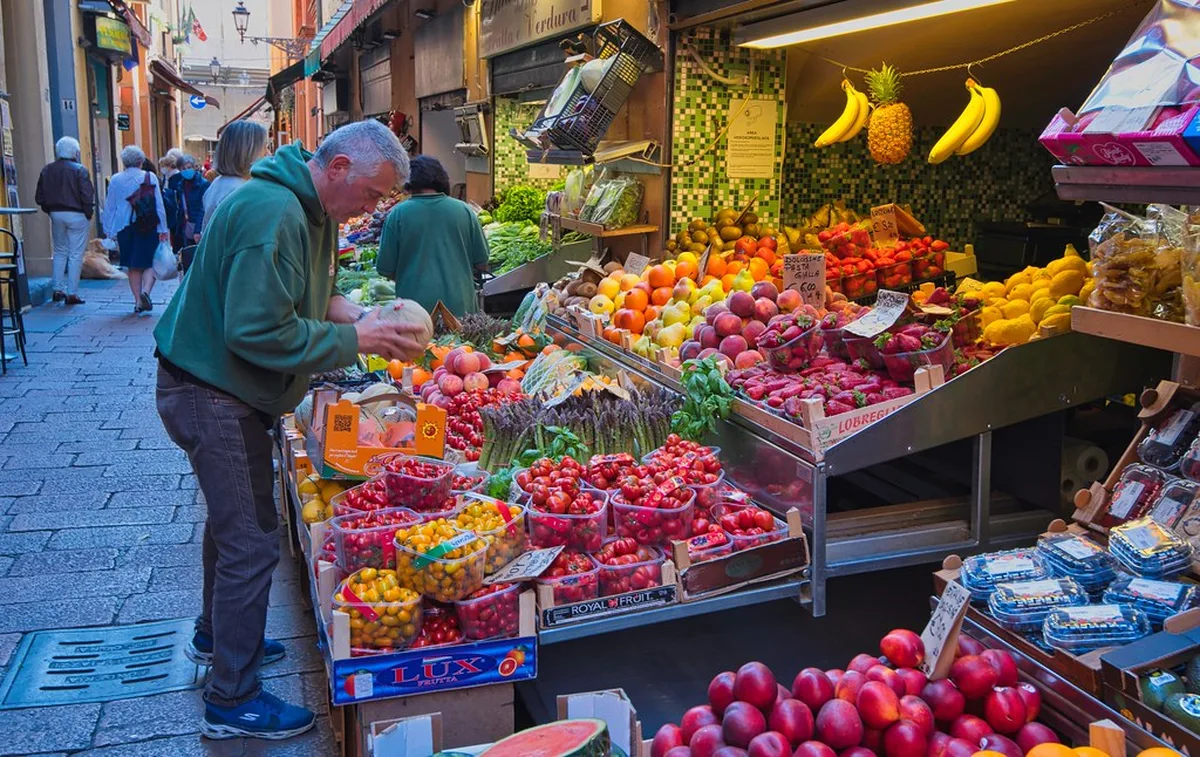
No Bologna itinerary is complete without beginning at the Quadrilatero, the ancient grid of market streets tucked just east of Piazza Maggiore. This tight cluster of lanes — Via Drapperie, Via Pescherie Vecchie, and Via degli Orefici — has operated as the city's food hub since the Middle Ages. Arrive between 8:00 AM and 10:00 AM on weekdays to catch stalls at their freshest and avoid the midday crush.
The Quadrilatero is ground zero for Bologna's three signature foods. Ask any vendor for tortellini in brodo (small ring-shaped pasta in golden broth) — a proper portion at a market counter costs €4–6 in 2026. Look for mortadella, the original Bolognese cured meat, sold by the slice for €1.50–€2.50. The large pink rounds studded with pistachios are impossible to miss hanging in every salumeria window. Finally, stop at a gelateria on Via Rizzoli for a scoop of artisan gelato: expect to pay €2.50 for a single scoop, €3.50 for a double in 2026.
For a structured tasting, the historic Eataly store near Piazza VIII Agosto opens at 9:00 AM and stocks curated local producers alongside an in-store cafe. The adjacent Mercato delle Erbe on Via Ugo Bassi is another covered market open Monday–Saturday from 7:15 AM to 2:00 PM, with an evening food court running Thursday–Saturday from 6:00 PM to midnight. Entry to both is free.
- Quadrilatero Market District
- Type: Historic food market streets
- Cost: Free to browse; tortellini €4–6, gelato €2.50
- Hours: Stalls open 7:30 AM–1:00 PM (Mon–Sat)
- Highlight: Mortadella, tortellini, aged Parmigiano-Reggiano
- Mercato delle Erbe
- Type: Covered indoor market
- Cost: Free entry
- Hours: 7:15 AM–2:00 PM (Mon–Sat); food court Thu–Sat evenings
- Highlight: Local produce and affordable lunch counters
A tortellini meal at a sit-down trattoria near the Quadrilatero costs €12–18 per person in 2026, including pasta, a glass of house wine, and bread. This is where Bologna earns its reputation: the pasta is handmade daily and the ragù slow-cooked for hours. For a broader comparison between Bologna's food culture and its Tuscan neighbour, the Bologna vs Florence day trip guide covers which city wins for food tourists on a short visit.
Day 1 Afternoon: Historic Squares and Medieval Towers
After the morning market, walk five minutes west to Piazza Maggiore, the grand central square that has served as Bologna's civic heart since the 13th century. The Fountain of Neptune (Fontana del Nettuno), completed in 1566 by Giambologna, is a popular meeting point for both locals and tourists. The square is pedestrianised and free to enter at any time. On the south side, the massive Basilica di San Petronio dominates the skyline — it is the world's fifth-largest church by volume, and entry to the nave is free. Modest clothing (covered shoulders and knees) is required for all visitors; opening hours are 7:45 AM–6:00 PM daily.
Next, head two minutes east to the Two Towers (Le Due Torri), the most iconic landmark in the city. The taller Asinelli Tower (97 metres) can be climbed for sweeping views across the red-tile rooftops. In 2026, tickets cost €5 and must be pre-booked online at least 24 hours in advance — same-day walk-up tickets are rarely available in peak season (June–September). The 498 wooden steps are steep and narrow, so wear comfortable, flat-soled shoes. The shorter Garisenda Tower leans at a dramatic angle and is not open to visitors, but makes a striking photo subject from street level. Both towers date to around 1100 AD.
Spend your late afternoon exploring the Archiginnasio Palace on Piazza Galvani, a two-minute walk from the towers. Built in 1563, it served as the main building of the University of Bologna — the world's oldest university, founded in 1088 — before the university moved to its current campus. The ground-floor courtyard is free to visit. The famous Anatomical Theatre (Teatro Anatomico) on the upper floor, where medical dissections were performed in front of students from the 17th century onwards, is open 10:00 AM–6:00 PM Monday–Friday and costs €3 per person in 2026. The carved wooden interior, decorated with 16th-century anatomical statues and hundreds of coats of arms, is one of the most atmospheric rooms in Italy.
To make the most of your afternoon sightseeing loop, consult the dedicated Bologna old town guide for a detailed walking route through the historic centre, including lesser-visited lanes and porticoed courtyards most day visitors miss entirely.
- Piazza Maggiore
- Type: Central civic square
- Cost: Free access always
- Hours: Open 24/7; Basilica di San Petronio 7:45 AM–6:00 PM
- Highlight: Neptune Fountain, Basilica exterior and nave
- Asinelli Tower Climb
- Type: Medieval tower (97 m)
- Cost: €5 per person (2026)
- Hours: 9:00 AM–6:00 PM daily (last entry 5:30 PM)
- Access: Pre-book online; same-day rarely available
- Archiginnasio Palace
- Type: Historic university building
- Cost: Courtyard free; Anatomical Theatre €3
- Hours: Mon–Fri 10:00 AM–6:00 PM; Sat 10:00 AM–5:00 PM
- Highlight: Carved wooden Anatomical Theatre
Day 2: Food Culture and Academic Heritage
Begin your second morning with a slow espresso at one of the historic cafes lining Via dell'Indipendenza, Bologna's main pedestrian boulevard running north from Piazza Maggiore toward the central train station. This wide porticoed street is ideal for a morning stroll before the crowds arrive. Side streets off Via dell'Indipendenza lead quickly into the university quarter, where student energy and centuries of academic tradition converge.
Follow the route through the old town to find hidden gems including the complex of Seven Churches (Santo Stefano Basilica). This remarkable cluster of religious buildings on Piazza Santo Stefano incorporates architecture from six different centuries, from a 5th-century baptistery to a 12th-century Romanesque cloister. Entry is free and the complex opens daily from 9:00 AM to 12:00 PM and again from 3:00 PM to 6:00 PM. The courtyard, known locally as the Cortile di Pilato, hosts antique markets on most weekends. The atmosphere here is significantly more peaceful than Piazza Maggiore — a genuine local neighbourhood rather than a tourist route.
In the afternoon, visit the Palazzo Poggi, now home to the University of Bologna's museum system. The palazzo contains spectacular painted frescoes alongside natural history cabinets, anatomical wax models, and navigational instruments dating to the 16th century. Admission is free for EU citizens under 26; standard tickets cost €5 in 2026. The museum is open Tuesday–Sunday from 10:00 AM to 4:00 PM and is rarely overcrowded, making it one of the best-value cultural stops in the city.
As evening approaches, the Bologna nightlife guide covers the best student bars and wine spots in full detail. The university district around Via del Pratello, ten minutes west of Piazza Maggiore on foot, offers affordable drinks and a reliably lively atmosphere every night of the week. Many bars offer an aperitivo between 6:00 PM and 9:00 PM, where a €8–10 drink comes with a spread of small snacks — a practical way to eat cheaply while sampling local wine. Bologna's Pignoletto white wine and Sangiovese red are the regional house pours worth ordering. Expect to pay €8–12 for a high-quality local cocktail at a sit-down bar in the student quarter.
- Seven Churches Complex (Santo Stefano)
- Type: Multi-century religious complex
- Cost: Free entry
- Hours: 9:00 AM–12:00 PM and 3:00 PM–6:00 PM daily
- Highlight: 12th-century cloister, Cortile di Pilato
- Palazzo Poggi University Museum
- Type: Historic palace and university museum
- Cost: €5 standard; free EU citizens under 26 (2026)
- Hours: Tue–Sun 10:00 AM–4:00 PM
- Highlight: Anatomical wax models, frescoed halls
- Via del Pratello Aperitivo Scene
- Type: Student bar district
- Cost: Drinks €8–12; aperitivo snacks included with drink
- Hours: Bars open from 6:00 PM; aperitivo typically 6:00–9:00 PM
- Highlight: Bologna Pignoletto wine, affordable mixed plates
Day 3: Sanctuary Hikes and Hidden Canals
On your final day, take the scenic pilgrimage walk to the Sanctuary of the Madonna di San Luca, perched on the Colle della Guardia hill southwest of the city. The route runs beneath the world's longest portico — 3.8 kilometres of continuous arched walkway with exactly 666 arches, constructed between 1674 and 1793 to protect pilgrims from the rain. The walk takes approximately 45–60 minutes uphill at a relaxed pace; the descent is faster. Wear comfortable shoes and carry water, especially in summer when temperatures regularly exceed 30°C. The sanctuary itself is open to visitors free of charge Monday–Saturday from 6:30 AM to 12:30 PM and 2:30 PM to 7:00 PM; Sundays from 6:30 AM to 7:00 PM continuously. If you prefer not to walk the full route, the San Luca Express tourist bus runs from Via Sabotino near the city walls and costs €12 return in 2026, including a reserved seat on the panoramic hillside road.
After returning to the city by early afternoon, seek out the hidden canals that once powered Bologna's medieval wool-dyeing and silk industries. Most of the city's waterways were covered over in the 19th and 20th centuries, making the surviving glimpses all the more surprising. The most photographed spot is the small window on Via Piella, in the Pratello neighbourhood, that frames a view of a working canal below street level — the effect genuinely resembles a miniature Venice. The window is unmarked and easy to miss; look for a small wooden shutter on the wall at street level, approximately 50 metres east of the intersection with Via Capo di Lucca. This spot is free to visit and best photographed in the morning light before crowds gather.
Travelers with extra time might consider looking into day trips from Bologna for a final-afternoon extension. Modena (22 minutes by regional train, €4–6 return) is home to the Ferrari Museum in nearby Maranello and the world's finest aceto balsamico tradizionale producers. Parma (57 minutes, €8–10 return) offers Parma ham, Parmigiano-Reggiano, and a spectacular Farnese opera house. Both trains depart from Bologna Centrale station frequently throughout the day and tickets are easy to purchase at self-service kiosks on the platform. Regional trains cost significantly less than high-speed Frecciarossa services — always check the platform board for the slower "regionale" option.
- San Luca Sanctuary and Portico Walk
- Type: Pilgrimage sanctuary and hilltop viewpoint
- Cost: Walk free; San Luca Express bus €12 return (2026)
- Hours: Mon–Sat 6:30 AM–12:30 PM and 2:30 PM–7:00 PM; Sun 6:30 AM–7:00 PM
- Highlight: World's longest portico (666 arches, 3.8 km)
- Hidden Canal Window on Via Piella
- Type: Historic canal viewpoint
- Cost: Free
- Hours: Any time; best light before 11:00 AM
- Highlight: Medieval canal system, photogenic surprise view
- Day Trip to Modena or Parma
- Type: Regional rail day trip
- Cost: €4–10 return by regionale train (2026)
- Travel time: Modena 22 min; Parma 57 min from Bologna Centrale
- Highlight: Ferrari Museum (Modena), balsamic vinegar producers, Parma ham
Bologna's Evening Scene: Where to Eat and Drink After Dark
Bologna's evenings are arguably as rewarding as its days, and no three-day itinerary is complete without at least one long dinner in the right setting. The city's restaurant scene divides into two distinct characters: the upscale osterie of the historic centre, where reservations are essential and tasting menus run €35–55 per person excluding wine, and the casual student-filled trattorias of Via del Pratello and the Bolognina district north of the train station, where a full pasta dinner with house wine costs €15–22 per person.
For a special dinner on Day 1 or Day 2, target the streets immediately east of Piazza Maggiore — Via Clavature, Via Caprarie, and Via degli Strazzacappe — where independent restaurants have operated for generations. Trattoria da Me on Via San Felice is a long-standing favourite for tagliatelle al ragù (€14 in 2026) and crescentine fritte (fried dough pillows with cured meats, €9 as a starter). Reservations are essential Thursday through Sunday; book at least four days ahead from May to September.
The aperitivo culture is worth experiencing on at least one evening. Between 6:00 PM and 9:00 PM, bars across the university quarter set out platters of bruschette, olives, mini sandwiches, and finger food alongside drinks. Osteria del Sole on Vicolo Ranocchi — one of the oldest wine bars in Italy, founded in 1465 — charges €4–6 per glass of local Sangiovese or Albana and allows guests to bring their own food from nearby market stalls. The atmosphere is standing-room only and entirely authentic.
After dinner, the streets around Piazza Verdi (the student square adjacent to the Teatro Comunale opera house) become the social centre of the city from around 9:00 PM onward. The Teatro Comunale itself stages opera and orchestral performances year-round; tickets start from €15 for gallery seats in 2026 and can be purchased online at tcbo.it. Even if you do not attend a performance, the square's outdoor bar scene on warm evenings is worth an hour of lingering. Check the Bologna nightlife guide for a full breakdown of bar types by neighbourhood, opening times, and which nights draw the biggest local crowds.
- Trattoria da Me (Via San Felice)
- Type: Traditional Bolognese trattoria
- Cost: Tagliatelle al ragù €14; full dinner €25–35 per person (2026)
- Hours: Tue–Sat 12:30–2:30 PM and 7:30–10:30 PM; closed Sun–Mon
- Highlight: Handmade pasta, crescentine fritte, historic interior
- Osteria del Sole (Vicolo Ranocchi)
- Type: Historic wine bar (est. 1465)
- Cost: Wine €4–6 per glass; bring your own food
- Hours: Mon–Sat 10:30 AM–9:00 PM; closed Sunday
- Highlight: Oldest wine bar in Bologna, standing-only, no menu
- Teatro Comunale di Bologna
- Type: Opera house and concert venue
- Cost: Gallery seats from €15; premium stalls €60–120 (2026)
- Hours: Varies by performance; box office open 11:00 AM–6:00 PM
- Highlight: Year-round opera, ballet, orchestral programme
Practical Tips for Your Bologna 3-Day Itinerary 2026
Bologna is a working Italian city with a large student population — this keeps prices significantly lower than Rome, Florence, or Venice. In 2026, budget accommodation starts from €70 per night for a well-reviewed central guesthouse or B&B; mid-range hotels within the portico ring typically cost €110–€160 per night. Museum and attraction entry fees range from €3 (Archiginnasio Theatre) to €12 for larger combined-ticket options at the Civic Museums of Bologna. A full day of sightseeing — tower ticket, one museum, lunch at a trattoria, and aperitivo — costs approximately €50–€70 per person excluding accommodation.
Safety is a top priority for most visitors traveling through northern Italy. Generally, Bologna is very welcoming and far calmer than Rome or Naples, but standard precautions against pickpockets apply near the central train station (Bologna Centrale) and in crowded sections of the Quadrilatero market. Keep bags zipped and avoid leaving valuables on cafe tables. The city is well lit at night and the porticoes make evening walking safe and comfortable even in rain. For a detailed safety breakdown, read whether Bologna is safe for tourists before your arrival.
Driving in the city centre is restricted by a strict ZTL (Zona Traffico Limitato) operating Monday–Friday from 7:00 AM to 8:00 PM and Saturday from 8:00 AM to 6:00 PM. Cameras automatically fine non-resident vehicles entering the zone — fines start at €164 and are mailed to your home address or charged to your rental car account weeks later. Research parking in Bologna to find the nearest legal car parks outside the ZTL boundary. Most visitors find walking or the TPER local bus system far easier. The city centre is compact — Piazza Maggiore to the Two Towers is a five-minute walk; Piazza Maggiore to San Luca portico start is 25 minutes on foot. TPER bus tickets cost €1.50 for a 75-minute journey when purchased at a tabacchi or newsagent; onboard cash purchase costs €2.00.
Most high-demand restaurants and the Asinelli Tower require online reservations, particularly from May through September. Book tower tickets at least 48 hours in advance during peak season. For dinner, reserve tables at popular trattorias in the Quadrilatero and university district two to three days ahead. Many traditional osterias close between 2:00 PM and 7:00 PM — plan meals around this gap. The Mercato delle Erbe food court (Thursday–Saturday evenings) is an excellent no-reservation alternative for a casual dinner under €15.
Frequently Asked Questions
Is 3 days enough for Bologna?
Yes — three days is the ideal length for a first visit to Bologna in 2026. It gives you enough time to explore Piazza Maggiore, climb the Asinelli Tower (€5), spend a morning at the Quadrilatero market, walk the San Luca portico (free), and still enjoy two or three proper sit-down meals at local trattorias. A fourth day is worth adding only if you plan a regional train day trip to Modena (€4–6 return) or Parma (€8–10 return).
What food must I try in Bologna?
The three essential foods in Bologna are tortellini in brodo (ring pasta in broth, €12–18 at a trattoria in 2026), mortadella (the original Bolognese cured meat, €1.50–2.50 per slice at market stalls), and tagliatelle al ragù (what the world calls "Bolognese sauce" — slow-cooked, never watery, never served on spaghetti). Finish any meal with a scoop of artisan gelato for €2.50 from a gelateria on Via Rizzoli or Via dell'Indipendenza.
How much does 3 days in Bologna cost?
A realistic 2026 budget for three days in Bologna is €390–€540 per person including accommodation. Accommodation ranges from €70/night (guesthouse) to €160/night (mid-range hotel). Daily expenses — meals, entrance fees, transport — typically run €50–€80 per person. The Asinelli Tower costs €5, most museums charge €3–12, a trattoria dinner costs €15–25 per person, and TPER buses cost €1.50 per journey. Many top attractions including Piazza Maggiore, the Seven Churches complex, and the San Luca Sanctuary are completely free to enter.
How many days are enough to see Bologna?
Three days is the ideal amount of time to see the main historic sites and enjoy the local food scene properly. This allows for a relaxed pace while covering the Two Towers, Quadrilatero market, Seven Churches complex, and the San Luca Sanctuary. Weekend visitors spending just two days should prioritise Piazza Maggiore, the Asinelli Tower climb (€5, book online), and a morning in the Quadrilatero market above all else. A fifth day permits a deeper dive into the university museums at Palazzo Poggi (€5) or the Pinacoteca Nazionale art gallery (€6).
What is the best way to get around Bologna?
Walking is the best way to explore the historic centre because most landmarks are within a 15-minute walk of Piazza Maggiore. The local TPER bus network is efficient for reaching destinations further out — tickets cost €1.50 for 75 minutes when purchased at a tabacchi or newsagent, or €2.00 if bought onboard. The San Luca Express tourist bus (€12 return in 2026) is the comfortable option for the hilltop sanctuary. Avoid driving inside the ZTL restricted zone, which carries automatic camera fines starting at €164 for non-resident vehicles.
When is the best time to visit Bologna?
The best months to visit Bologna are April to June and September to October, when temperatures sit between 15°C and 25°C, crowds are manageable, and outdoor dining and portico walks are at their most pleasant. July and August bring heat above 30°C and reduced student activity, but the Quadrilatero market and most museums remain open year-round. December and January offer the lowest hotel prices — rooms from €70/night — and the city's Christmas market on Piazza Maggiore is a genuine highlight. Avoid the mid-September Motor Show weeks when hotel prices spike by 40–60%.
Is Bologna better than Florence for a short trip?
Bologna and Florence suit different travel styles. Bologna is significantly more affordable — hotel rooms average €70–160/night versus €120–200/night in Florence — and far less crowded. Bologna wins decisively on food authenticity: the Quadrilatero market, artisan gelato, and trattoria culture are unmatched in Tuscany. Florence offers world-class art museums (the Uffizi, €25/entry) and iconic Renaissance architecture that Bologna cannot match. For travellers prioritising food, local atmosphere, and value, Bologna is the stronger choice for three days. The two cities are just 35 minutes apart by high-speed train (€20–35 return), making a combination trip easy to plan.
Bologna offers one of Italy's most rewarding city breaks in 2026 — a place where medieval towers, ancient porticoes, and world-class food exist within minutes of each other. A three-day visit provides the perfect balance of sightseeing and culinary exploration, from early-morning tortellini at the Quadrilatero (€4–6 a portion) to a sunset viewed from the Asinelli Tower (€5). You will leave the city with a deep appreciation for its medieval charm, student energy, and the quiet pride Bolognesi take in their extraordinary food.
Make sure to pre-book your tower tickets and dinner reservations before you arrive — these fill quickly from May through September. Budget €130–€180 per day to enjoy the city comfortably without compromising on food or experiences. Enjoy every moment of your journey through La Grassa, La Dotta, La Rossa — the Fat, the Learned, and the Red.