How to Plan the Perfect Toledo Walking Tour in 2026
The complete self-guided Toledo walking tour is a free 3-hour loop: start at Puerta de Bisagra → Cathedral €10 → Alcázar €5.50 → El Greco Museum €3 → Jewish Quarter → return, total budget under €20.
For a guided experience in 2026, food-and-history tours cost €35–45 per person and cover the Jewish Quarter, mazapán tastings, and two monument entrances — book at least one day ahead during peak season.
Toledo sits on a rocky hill surrounded by the Tajo River, creating a natural fortress that demands exploration on foot. The city served as the capital of the Spanish Empire and remains a labyrinth of medieval secrets, where Gothic cathedrals, Sephardic synagogues, and Moorish mosques occupy the same steep hillside. A self-guided Toledo walking tour lets you discover the City of Three Cultures at your own pace, ducking into alleys that bus tours never reach.
Navigating the narrow streets requires a bit of planning to ensure you see the most iconic landmarks. Our Toledo old town guide provides a helpful foundation for your journey through these historic quarters. Prepare to walk through centuries of history as you explore cathedrals, synagogues, and mosques — all within a few hundred metres of each other.
Essential Route for a Toledo Walking Tour
The classic self-guided loop begins at Puerta de Bisagra, Toledo's most impressive Moorish-revival gate on the northern edge of the old town — entry to the gate itself is free and makes an excellent landmark for starting photos. From Puerta de Bisagra, follow these numbered stops to complete the core route in approximately 3 hours:
- Puerta de Bisagra (free, 0 min) — Start here at the twin-towered 16th-century gate, the ceremonial entrance to the city. Allow 10 minutes to examine the coat of arms and the defensive walls on either side.
- Primatial Cathedral of Saint Mary of Toledo (€10, 20 min walk) — Walk south along Calle Real del Arrabal and turn into the old town via Calle de la Plata. The Gothic structure, begun in 1227, houses the Transparente Baroque altarpiece and eight works by El Greco. Adult entry in 2026 is €10 (concessions €7, under-12 free). Budget 60–90 minutes inside.
- Alcázar of Toledo / Museo del Ejército (€5.50, 10 min walk) — Walk east along Cuesta de Carlos V from the Cathedral. The fortress rises 55 m above the city and houses the Army Museum covering Toledo steel blade-making and medieval armour. Free on Sundays. Allow 45–60 minutes.
- Church of Santo Tomé / El Greco Museum (€3, 5 min walk) — Head west on Calle de Santo Tomé. The museum dedicated to El Greco's life and masterworks costs €3 per adult. The adjacent Church of Santo Tomé also charges €3 and houses the extraordinary Burial of the Count of Orgaz (1586). Combine both for a full El Greco experience.
- Jewish Quarter — Sinagoga del Tránsito (€3, 8 min walk) — Continue west into the Judería via Calle Samuel Leví. The synagogue's interior plasterwork is among the finest Mudejar craftsmanship in Spain. The Museo Sefardí is included with the same ticket. Allow 30–40 minutes.
- Santa María la Blanca (€3.50, 5 min walk) — Walk 150 m northwest. Europe's oldest standing synagogue structure, with iconic horseshoe arches and whitewashed columns. Allow 20–25 minutes.
- Puerta de Bisagra Return (free, 15 min walk) — Complete the loop northward via the outer streets. Total route: approximately 3.2 km, total monument spend: approximately €20.
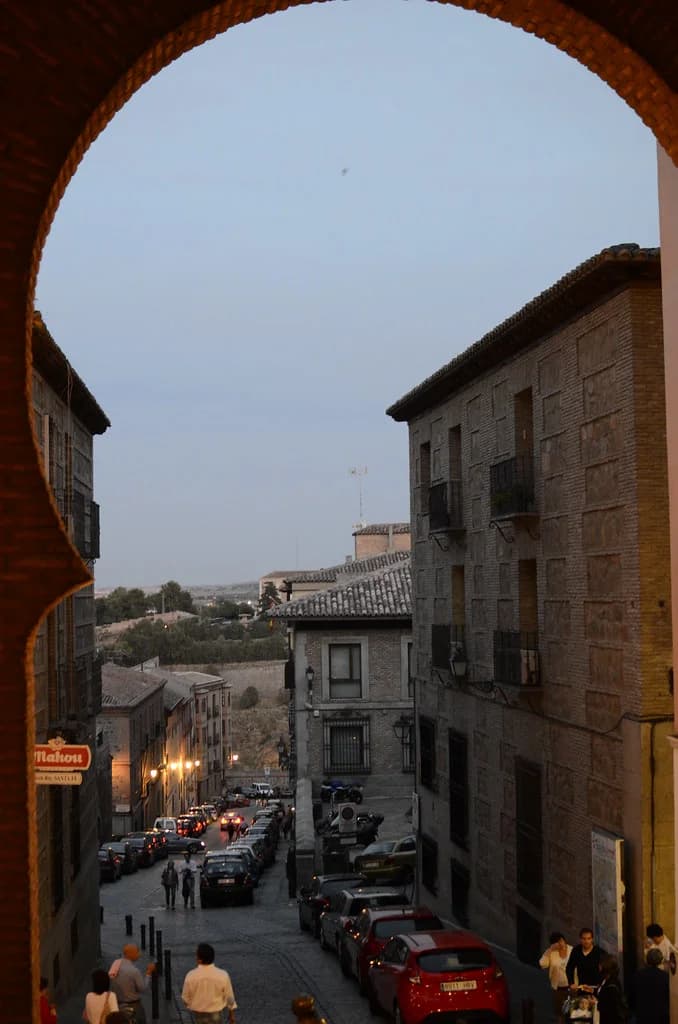
From Zocodover, follow Calle del Comercio southwest for about 350 m to reach the Cathedral. After the Cathedral, continue west along Calle de la Trinidad for 200 m and turn south into the Jewish Quarter. The lanes here narrow to barely two metres, and the relative quiet is a relief after the Cathedral crowds.
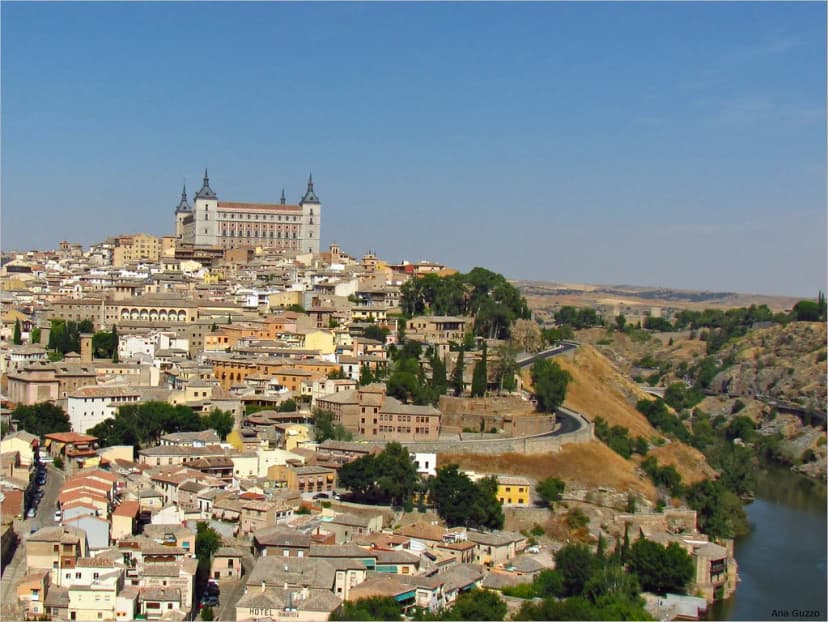
The Monastery of San Juan de los Reyes (entry €3.50) is worth a detour: the finest Isabelline Gothic building in Toledo, with a two-storey cloister of vaulted stone tracery. Note the chains on the south façade, placed by Christian slaves freed from the Moors during the Reconquista. Finish your extended loop at Puente de San Martín, a 14th-century bridge spanning the Tajo gorge. The view east along the river — the Alcázar silhouetted against the sky — is the defining Toledo photograph, especially at golden hour. Total walking distance for the extended loop: approximately 3.8 km.
Top Landmarks to Include on Your Walk
Toledo's historic core packs an extraordinary density of monuments within a compact area. The following landmarks are listed in logical walking order from east to west, making it easy to plan your route efficiently without backtracking. Allocate the times and budgets below when planning your day:
- Alcázar of Toledo (€5.50, free Sundays) — Rises 55 m above the city at the eastern crest of the old town, roughly 400 m east of Zocodover along Cuesta de Carlos V. The Museo del Ejército collections span Toledo steel blade-making, the 1936 siege, and medieval armour. Even if you skip the interior, the plaza in front offers a sweeping view toward the plains of Castilla-La Mancha. Allow 45–60 minutes.
- Church of Santo Tomé (€3) — On Calle de Santo Tomé about 250 m west of the Cathedral. Houses El Greco's masterwork The Burial of the Count of Orgaz (1586), set in a dedicated chapel with its own lighting. Arrive before 10:30 am to beat tour groups — the chapel comfortably holds around 30 people and lines form quickly after 11 am. Allow 20–30 minutes.
- Monastery of San Juan de los Reyes (€3.50) — Finest Isabelline Gothic building in Toledo, completed in 1504. Its two-storey cloister features vaulted stone tracery and carved heraldic symbols of the Catholic Monarchs. The upper gallery is especially beautiful when morning light cuts across the stone. Allow 30–40 minutes.
- Sinagoga del Tránsito and Santa María la Blanca (€3 + €3.50) — Sit within 150 m of each other in the Judería and can be visited consecutively in under an hour. The Tránsito's artesonado cedar ceiling and Hebrew inscriptions are remarkable; Santa María's five-aisled nave — converted to a church in the 15th century, now deconsecrated — shows how Jewish, Christian, and Islamic craftsmen collaborated in Toledo's medieval golden age. A combined Jewish Quarter ticket covering several sites can save €2–3 — ask at the first site you visit.
- Mezquita del Cristo de la Luz (€2.80) — Near Puerta del Sol on the northern edge of the old town, about 350 m northeast of Zocodover. This 10th-century mosque — one of the best-preserved in Spain — converted into a church in the 12th century but retains its original Caliphate arches and tiny horseshoe-domed prayer hall. Combining this with the nearby Puerta del Sol gate makes an excellent short detour to start or finish your route. Allow 20–25 minutes.
A practical tip: purchase the combined ticket for the Jewish Quarter sites (Sinagoga del Tránsito + Museo Sefardí + Santa María la Blanca) at the first site you enter. This saves around €2–3 compared to buying separately. All monuments accept card payment in 2026, though the smaller convent shops nearby are cash-only.
If you are visiting with children, the Church of Santo Tomé is the most engaging stop — the single dramatic painting with its complex figures and the recorded guide hold younger visitors' attention well. The Alcázar has interactive armour displays on the upper floors. The Cristo de la Luz mosque is small but architecturally fascinating and never crowded, making it stress-free with young children.
Navigating Toledo's Vertical Challenges
Toledo's topography is one of the most dramatic of any historic city in Spain, and understanding the vertical layout before you arrive will save significant energy and frustration. The city sits on a granite promontory surrounded on three sides by the Tajo River gorge, creating elevation changes of up to 80 metres within the old town boundaries. Here is how to navigate efficiently:
- Arriving by train or bus — use the free escalators — The Escaleras Mecánicas de Safont (public escalators) rise from the Paseo de Recaredo parking area to a point near the Judería entrance. Six escalator sections save you the equivalent of a five-storey climb. Operating hours: Monday–Friday 7:00 am–10:00 pm, Saturday–Sunday 8:00 am–10:00 pm. Free of charge.
- Ascent from RENFE station — The climb from the train station to Plaza de Zocodover is roughly 80 vertical metres over 1.2 km. Manageable in cooler months, but taxing in summer heat above 35°C. Take bus line 5 from the station forecourt (€1.40) or use the escalators via the Bisagra gate approach.
- Flattest east-west corridors — Within the old town, stick to Calle del Comercio and Calle de la Plata for the smoothest routes between major monuments. Avoid cutting directly north-south unless you are comfortable with sharp inclines on cobblestone. Cuesta de las Armas (east side) and the lanes south of the Alcázar are the steepest sections.
- Evening timing advantage — Day-trip crowds from Madrid typically return after 6 pm. Evening walks between 7 pm and 10 pm are cooler, quieter, and the stone buildings glow under amber streetlights. In July and August, afternoon temperatures routinely exceed 38°C — the evening hours are genuinely the most comfortable window for walking.
- Footwear and hydration — Sturdy trail sneakers or lightweight hiking shoes with rubber soles are essential. Public water fountains are rare — the most reliable one is behind the Cathedral in the small garden near Puerta Llana. Cold water bottles from shops along Calle del Comercio cost around €1.50.
Toledo is world-famous for its mazapán, made by local nuns since at least the 14th century. The most authentic shops are the convents that sell directly through small wooden windows — look for the Convento de San Clemente near the Judería. Commercial shops like Santo Tomé Mazapanes on Calle de Santo Tomé have wider selections including figurines and seasonal shapes. A 200 g box costs around €5–7 and makes an excellent souvenir for the walk. Many visitors buy these at the end of the day so they don't carry the box through monuments all morning.
Driving into the old town is strongly discouraged. The city centre is a Zona de Bajas Emisiones (Low Emission Zone) with restricted vehicular access for non-residents, and the streets are genuinely too narrow for tourist traffic. Use the parking in Toledo, Spain options outside the city walls. The Safont underground car park (Paseo de Recaredo) connects directly to the free escalators and charges around €1.50 per hour or €12 for a full day — the most convenient option for day visitors arriving by car.
Evening Walk: City Walls, Jewish Quarter Circuit, and Rooftop Viewpoints
Toledo rewards visitors who stay past the day-trip crowds, and the city's 2 km western wall circuit is best experienced between 6 pm and 9 pm when the stones are lit and the heat has eased. Here is the recommended evening sequence:
- Start at Puerta del Cambrón (6:00 pm) — The 16th-century Moorish-revival gate on the northwest corner of the old town, 5 minutes walk from San Juan de los Reyes. Free to photograph. The gate illuminates beautifully at dusk.
- Western wall path southward (6:15 pm) — Follow the outer edge of the walls heading south toward the Tajo. The path descends gently to Bajada de la Granja, where the cliff drops sharply to the river gorge — the natural defensive moat that protected Toledo for millennia.
- Puente de San Martín (6:45 pm) — A perfect sunset spot where the water glows orange and the Cathedral tower is visible above the rooftops. Cross the bridge and climb the opposite bank for 10 minutes to reach the Ermita del Valle viewpoint, which gives the classic full-panorama shot of the old city reflected in the Tajo. A taxi to the Mirador del Valle on the far side of the river costs roughly €6–8 one-way, or you can walk the full loop (an additional 2 km) if daylight permits.
- Jewish Quarter evening circuit (7:30 pm) — Back inside the walls, begin at the Sinagoga del Tránsito (exterior only at this hour) and walk the short loop through Calle Reyes Católicos, Calle de los Reyes, and the small plaza behind Santa María la Blanca. Most souvenir shops are closed, leaving the alleyways calm and photogenic. The faint smell of wood smoke from restaurant kitchens drifts through the narrow lanes — Toledo's signature evening ambience.
- Rooftop terrace drink (8:30 pm) — Several hotels along Calle de la Plata and near the Cathedral allow non-guests to use their rooftop terrace bars. The terrace at Hotel Abad Toledo offers an unobstructed view of the Cathedral's north tower for the price of a drink (house wine from €4). Reserve a spot if you plan to arrive after 7 pm in summer — these terraces fill quickly. Sunset from any elevated point in the old town occurs between 9:15 pm (June) and 6:30 pm (December).
If you are combining a food tour with the evening walk, Toledo's gastronomy section is worth a dedicated stop. Beyond mazapán, look for perdiz a la toledana (braised partridge in a clay pot, typically €16–22 per dish at traditional restaurants) and local Manchego cheese from shops on Calle del Comercio. Several private food-tour operators run evening routes that include four stops — mazapán, wine, partridge tapa, and a local liqueur — for around €45 per person with a guide who covers the historical context of each food.
For those visiting Toledo as a day trip from Madrid on a tight schedule, the evening options can be adapted into a compressed 2-hour window between 7 pm and the last train back (around 9:30 pm). Focus on Puente de San Martín for the golden-hour photo, a quick walk through the Jewish Quarter alleys, and a rooftop drink near the Cathedral. This prioritises atmosphere over monument interiors, which is often the most memorable part of a Toledo visit anyway. For more ideas on organising your time around Toledo, see our day trips from Toledo planning guide.
Complete Self-Guided Toledo Walking Tour Route 2026
This section provides the definitive step-by-step route for first-time visitors who want to see the highlights of Toledo in a single day without a guide. The route is designed to minimise backtracking, sequence monuments by opening time, and stay within a €25 total budget for entry fees. Total walking distance: approximately 4.5 km. Total time: 6–7 hours at a comfortable pace.
- 8:00 am — Puerta de Bisagra (free) — Arrive early via the free escalators from the Paseo de Recaredo car park or by bus from the train station. Photograph the gate and the Moorish twin towers in the morning light before tourists arrive. The streets are quiet and beautiful before 9 am.
- 8:30 am — Mezquita del Cristo de la Luz (€2.80, opens 10 am) — Walk 5 minutes northeast to the mosque. Note: if you arrive before 10 am, photograph the exterior and the Puerta del Sol gate next door, then return when it opens. The interior visit takes 20–25 minutes.
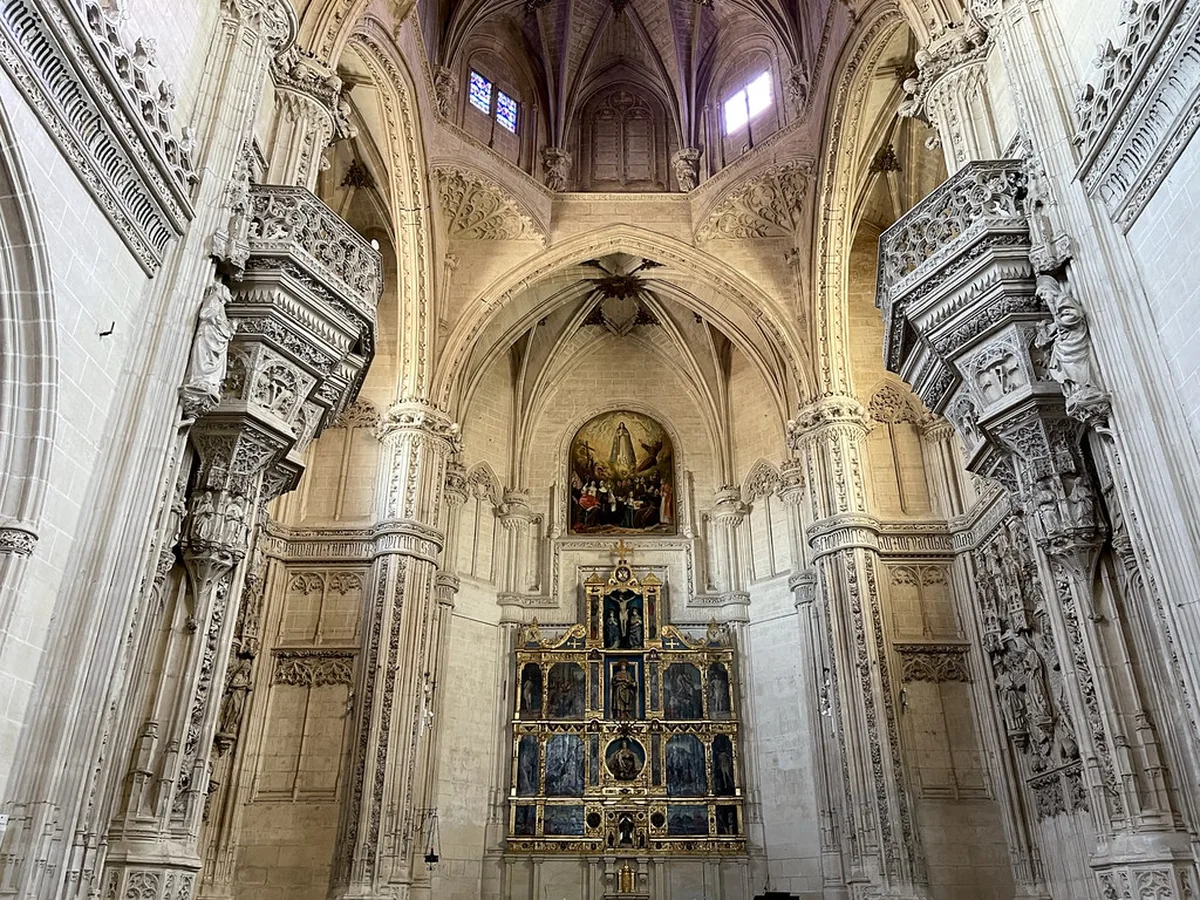
- 10:00 am — Primatial Cathedral (€10) — Walk 8 minutes south. The Cathedral opens at 10 am on weekdays. This is your most time-intensive stop — allow 75–90 minutes to see the Transparente, the El Greco paintings, the Treasury, and the choir stalls. Audio guides are available at the entrance for €4 extra.
- 12:00 pm — Alcázar / Museo del Ejército (€5.50, free Sundays) — Walk 10 minutes east up Cuesta de Carlos V. Free entry on Sundays makes this the busiest day — arrive at opening (10 am) to beat the Sunday crowds. The panoramic terrace view is worth the climb even if the museum content is not your primary interest.
- 1:00 pm — Lunch break on Calle del Comercio — Several menú del día restaurants offer a three-course lunch with wine for €12–15. The street between Zocodover and the Cathedral is the most convenient concentration of mid-range restaurants. Budget 45–60 minutes.
- 2:00 pm — Church of Santo Tomé (€3) — Walk 5 minutes west. The Burial of the Count of Orgaz is the single most impressive painting in Toledo. Visit after the midday lull when tour groups are at lunch — crowds thin noticeably between 1:30 pm and 3 pm.
- 2:30 pm — Jewish Quarter — Sinagoga del Tránsito (€3) — Walk 8 minutes into the Judería. The Tránsito and Museo Sefardí are covered by a single ticket. Allow 35–40 minutes for both.
- 3:15 pm — Santa María la Blanca (€3.50) — Walk 3 minutes northwest. Europe's oldest surviving synagogue structure. Allow 20 minutes.
- 3:45 pm — Monastery of San Juan de los Reyes (€3.50) — Walk 3 minutes further northwest. The cloister is one of the most photographed interiors in Toledo. The exterior chain display on the south façade takes 5 minutes to examine. Allow 30–40 minutes total.
- 4:30 pm — Puente de San Martín (free) — Walk 5 minutes south to the bridge. Rest here, photograph the river gorge, and decide whether to continue to the Mirador del Valle (€6–8 taxi) or begin the return circuit along the walls. By this point your total monument spend is approximately €21.30.
- 5:30 pm — Mirador del Valle / sunset viewpoint — If you take a taxi across the river to the Mirador del Valle, you will have the most iconic panorama of Toledo from the south bank. Budget €12–16 return including waiting time. The blue hour begins approximately 25 minutes after sunset — check the local sunset time for your visit date and plan accordingly.
This self-guided route covers all the major monuments of Toledo within a comfortable single-day budget. You can shorten it to 4 hours by skipping the Alcázar and the Monastery of San Juan de los Reyes — the Cathedral, El Greco / Santo Tomé, and the two synagogues represent the essential Three Cultures experience. For deeper context on the historic neighbourhoods you will walk through, read our Toledo old town guide before your visit.
Families with children should note that the Cristo de la Luz mosque and the Puente de San Martín riverbank are the most child-friendly stops — open spaces, impressive architecture, and no strict silence required. The Cathedral can feel overwhelming for young children during crowded periods, so consider visiting at 10 am sharp when it is quietest. The mazapán shops near the Jewish Quarter are a reliable reward-stop after a long afternoon of monuments.
Timing note for 2026: Toledo is hosting several cultural events through the year as part of Castilla-La Mancha's regional tourism programme. The Cathedral and Alcázar may have restricted access during specific dates — check official websites or the Toledo tourism office (Pl. del Ayuntamiento) before booking timed-entry tickets online. Timed entry for the Cathedral is available via its official website and is recommended on weekends from April through October.
Extending Your Exploration Beyond the Walls
The Mirador del Valle on the south bank of the Tajo offers the most iconic full-city panorama in Toledo, showing the Cathedral, Alcázar, and city walls in a single frame. The viewpoint is approximately 1.8 km from Puente de San Martín by road — a 25-minute walk downhill and across the bridge, or a €6–8 taxi from Zocodover. The view is excellent at any time of day, but most professional photographs of Toledo are taken from here during the blue hour, about 20 minutes after sunset. There is a small café selling drinks and ice cream at the viewpoint car park.
Walking along the Tajo River path beneath the city walls provides a peaceful escape from the tourist centre. The trail follows the curve of the river for approximately 1.5 km between Puente de San Martín in the west and Puente de Alcántara in the east, passing directly under the Roman-era foundations of the city's cliffs. The path is unpaved in sections and can be muddy after rain, but it rewards you with close-up views of the medieval bridge arches and the natural rock that Toledo's fortifications were built upon. It doubles as a quiet morning jog route popular with local residents.
Those with extra time should consider exploring the surrounding Castilla-La Mancha region. The windmills of Consuegra, 65 km south by road, are the quintessential Don Quixote landscape — a ridge of twelve 16th-century white windmills overlooking a Moorish castle. The drive takes about 50 minutes, and entry to climb one windmill is around €3. Toledo's position in the centre of Spain also makes it a practical base for seeing the broader plateau landscape that shaped both Spanish history and literature. Check our full day trips from Toledo guide for distances, timings, and transport options to the most popular surrounding destinations.
If Toledo is part of a broader Spain trip, it pairs naturally with the medieval cities of Segovia (1 hour north by road) and Córdoba (2.5 hours south). Both cities share Toledo's Three Cultures heritage and have similarly compact historic centres navigable on foot in a single day. A logical three-city circuit from Madrid — Toledo, Segovia, Córdoba — covers the core of Castile and Andalusia without repeating the same story twice.
Frequently Asked Questions
How long does a typical Toledo walking tour take?
A comprehensive Toledo walking tour covering the Cathedral, Jewish Quarter, San Juan de los Reyes, and Puente de San Martín takes between 3 and 5 hours. Add 30–45 minutes per monument if you pay to enter (Cathedral €10, Alcázar €5.50, Santo Tomé €3). Spending a full 6–7 hours allows you to include the riverside path and the Mirador del Valle viewpoint. The self-guided loop starting and ending at Puerta de Bisagra is approximately 3.2 km and costs under €20 in total entry fees.
Is Toledo walkable for people with mobility issues?
Toledo is quite steep, but the city's free public escalators on Paseo de Recaredo handle the main ascent from the lower parking area to the old town entrance. The primary shopping street, Calle del Comercio, is relatively flat and the smoothest route between the Cathedral and Zocodover. Side alleys involve uneven cobblestones and sharp gradients, so wheelchair users should stay on the main named streets and avoid the lanes directly south of the Alcázar, which have the steepest gradients.
Are guided walking tours worth it in Toledo?
Guided tours are excellent for understanding the complex Three Cultures history — Jewish, Moorish, and Christian — that shaped Toledo's unique architecture. Local guides identify hidden symbols carved into doorways and synagogue walls that self-guided walkers miss entirely. In 2026, free walking tours (tip-based, €10–15 recommended) run daily at 10 am from Zocodover. Full food-and-history guided tours cost €35–45 per person and include monument entrances and mazapán tastings. For first-time visitors with only a day, a guided tour covers more ground with richer context than a self-guided route alone.
What is the best time of year for a Toledo walking tour?
Spring (April–May) and early autumn (September–October) offer the best walking conditions in Toledo — mild temperatures between 18°C and 24°C, clear skies, and manageable crowds. July and August are the hottest months, regularly reaching 38°C by midday; if you visit in summer, plan to walk before 11 am or after 6 pm. Winter (December–February) is quieter and cooler at 8–12°C, ideal for unhurried exploration of the monuments without the crowds that peak season brings.
How much do Toledo monument entry fees cost in 2026?
The main 2026 entry prices in Toledo are: Cathedral €10 (concessions €7, under-12 free), Alcázar / Army Museum €5.50 (free Sundays), Church of Santo Tomé €3, Sinagoga del Tránsito + Museo Sefardí €3, Santa María la Blanca €3.50, Monastery of San Juan de los Reyes €3.50, and Mezquita del Cristo de la Luz €2.80. A combined Jewish Quarter ticket covering several sites can save €2–3 — ask at the first site you visit. Budget €20–25 to visit all major monuments comfortably.
Can you do a Toledo walking tour as a day trip from Madrid?
Yes — Toledo is 70 km south of Madrid and one of the most popular day trips in Spain. The high-speed AVE train from Madrid Atocha reaches Toledo in 33 minutes and costs around €14–16 each way in 2026. First trains depart from 6:55 am, allowing you to arrive before the monument crowds. The last return train from Toledo to Madrid leaves around 9:30 pm, giving ample time for a full day including an evening walk. Book tickets in advance on the Renfe website, especially on weekends and public holidays. See our day trips from Toledo guide for return journey options and tips for combining Toledo with nearby Segovia or Córdoba.
Where should I start the Toledo walking tour?
The best starting point for a Toledo walking tour is Puerta de Bisagra, the city's main northern gate, which is free to visit and connects directly to the free escalators from the Safont car park. From Puerta de Bisagra you can walk south into the old town toward the Cathedral and Zocodover, following the self-guided loop described in this guide. Alternatively, start at Plaza de Zocodover if you arrive by local bus — it is the city's central hub and the most convenient launch point for the Cathedral route. Either starting point puts you within 15 minutes walk of the main monuments.
Exploring Toledo on foot in 2026 is the most rewarding way to absorb the layers of history compressed into this hillside city. From the soaring Gothic nave of the Cathedral to the silent horseshoe arches of the Cristo de la Luz mosque, every turn reveals a different century. Whether you follow the core loop from Puerta de Bisagra through the Cathedral, Alcázar, El Greco Museum, and Jewish Quarter for under €20, or extend into the evening wall circuit and the Tajo river path, Toledo consistently delivers more than expected.
Use the free escalators to save your legs for the monuments, wear proper footwear for the cobblestones, and leave time for at least one unplanned detour — the best discoveries in Toledo happen when you take a wrong turn. For further planning, our Toledo old town guide covers the historic district in depth, and our day trips from Toledo article helps you plan the wider region.