Essential Toledo Old Town Guide for Your Spain Trip
Toledo Cathedral costs €10 to enter in 2026, the Alcázar fortress-museum charges €5.50, and both surviving synagogues (Santa María la Blanca and Sinagoga del Tránsito) are €3 each — all reachable on foot within the walled old town.
The cheapest way to reach Toledo from Madrid is by bus at €6 return; the journey takes about 30 minutes, and the El Greco Museum is only €3 — making a full-day sightseeing budget of €30–€45 per person very achievable in 2026.
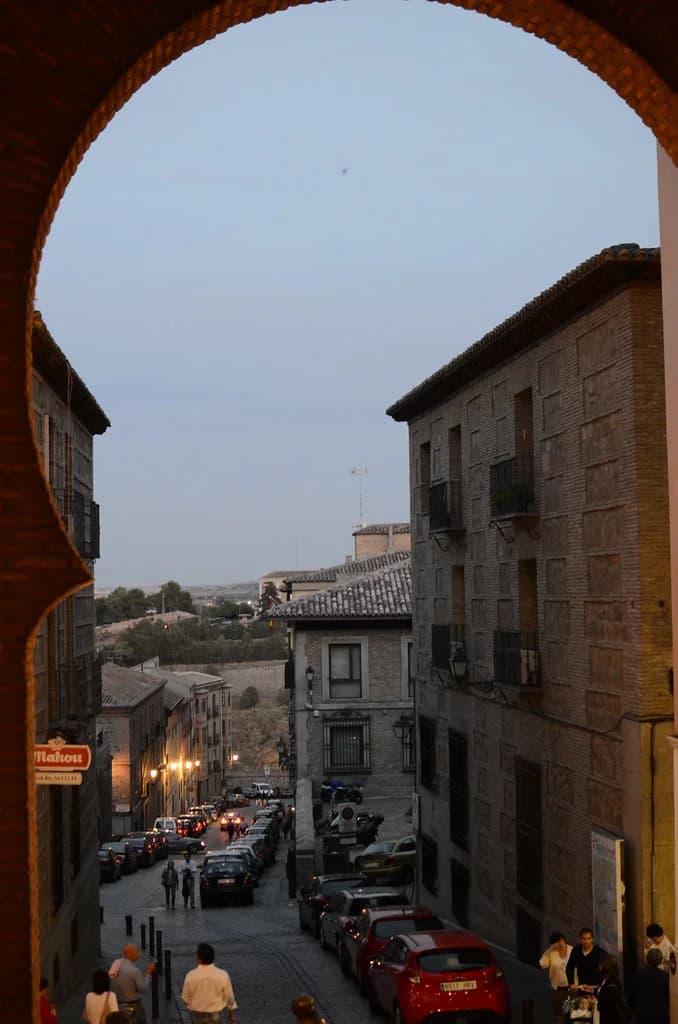
Toledo stands as one of the most stunning medieval cities in all of Europe. Perched on a high granite hill, this ancient capital offers a glimpse into Spain's rich history. Walking through the narrow alleys feels like stepping back hundreds of years into the past. Our comprehensive toledo old town guide helps you navigate every winding corner.
The city is famously known as the City of Three Cultures for its diverse heritage. Christians, Muslims, and Jews lived together here for centuries and left behind incredible monuments. You will find synagogues, mosques, and cathedrals all within walking distance of each other. This unique blend of architecture creates a skyline unlike any other in the world.
Modern travelers often visit Toledo as a quick trip from the Spanish capital. The high-speed train connects Madrid to this historic center in just over thirty minutes. Planning your route carefully ensures you see the best sites without getting lost in the maze. Prepare for a day of steep climbs and breathtaking rewards around every single turn.
Navigating the Steep Streets of Toledo
The historic center sits high above the Tagus River on a very steep incline. Many visitors make the mistake of trying to hike up from the train station on foot. Walking the entire way can be exhausting before you even reach the main plaza. Smart travelers use the public escalators hidden near the Safont parking area — these free mechanical escalators rise roughly 60 metres from the riverbank and deposit you near the old gate of Alfonso VI, saving at least twenty minutes of hard climbing.
If you are driving, finding parking in Toledo Spain can be quite challenging inside the walls. The streets are extremely narrow and often restricted to local residents only. We recommend using the large underground lots located just outside the medieval gates. Safont underground garage charges around €1.20 per hour in 2026 and is the closest paid facility to the escalators. The Parking Miradero near Puerta de Bisagra is another reliable option, typically €1.50 per hour, with a flat evening rate after 8:00 PM.
Comfortable footwear is the most important item to pack for your visit. The cobblestones are often uneven and can become slippery after a light rain. Avoid wearing thin sandals or high heels if you plan to explore for several hours. Supportive sneakers will help you manage the thousands of steps you will likely take across the day.
Public transport within the old town consists mostly of small buses and taxis. These vehicles are specially designed to fit through the incredibly thin passages. Standard buses cannot enter the heart of the city due to the tight corners. Consider taking a taxi to the highest point and walking downhill to save energy. The tourist minibus (Línea 12) loops between the train station, Zocodover square, and the Alcázar for €0.80 per ride, running every fifteen minutes on weekdays.
Electric scooter rentals have become available near the main gate for self-guided exploration. A one-hour rental typically costs €8–€10 and allows you to cover ground between distant viewpoints without fatigue. Helmets are provided and the terrain, while hilly, is manageable with an electric motor assist. Return scooters to the designated racks near the Bisagra Gate before heading into the pedestrian zone where riding is prohibited.
- The Safont Public Escalators
- Location: Near bus station
- Cost: Free to use
- Benefit: Avoids steep 60-metre climb
- Access: Near Safont parking
- High Speed Train From Madrid
- Duration: 33 minutes total
- Station: Toledo Railway Station
- Frequency: Every hour daily
- Tip: Book tickets early online
Exploring the Majestic Toledo Cathedral
The Primate Cathedral of Saint Mary is the crowning jewel of the city skyline and the most important Gothic building in Spain. Construction began in 1226 under King Fernando III and took more than two and a half centuries to complete, with successive generations of master builders adding chapels, towers, and cloisters. The soaring 90-metre bell tower dominates the old town roofline and serves as the unmistakable landmark you can use to orient yourself on any street. Visitors should allow at least two hours to see the interior properly, though serious art lovers may easily spend three.
Entry to the Cathedral costs €10 per adult in 2026 and includes access to the sacristy, the treasury, the chapter house, and the cloister. Audio guides are available for an additional €2 at the ticket desk near the Llana Gate. The Cathedral opens Monday to Saturday from 10:00 AM to 6:30 PM and on Sundays from 2:00 PM to 6:30 PM; morning masses mean the tourist entrance is closed until the afternoon on Sundays. Arrive by 10:00 AM on weekdays to beat tour groups and have the interior to yourself.
Inside you will find the famous Transparente, a stunning Baroque altarpiece carved by Narciso Tomé between 1729 and 1732. A sculpted oval opening in the vaulted ceiling allows natural light to pour down onto the tabernacle in a theatrical diagonal beam — an engineering trick that was revolutionary for its era. The effect is truly magical and remains a highlight for most international tourists. Make sure to look up to fully appreciate the illusionistic figures of angels that surround the opening.
The sacristy functions as a world-class art gallery with original masterpieces by El Greco, Goya, Titian, Van Dyck, and Rubens displayed in a single room. El Greco's large canvas "The Disrobing of Christ" (El Espolio), painted in 1577, hangs here and is widely considered the peak of his Spanish period. The painting's bold crimson robe and compressed crowd scene are impossible to fully appreciate in reproduction; the original commands the room. Goya's portraits of Archbishop Lorenzana add an 18th-century counterpoint to El Greco's Mannerist intensity.
After your tour, take a moment to sit in the quiet cloister garden on the north side of the building. Orange and lemon trees grow in the central courtyard and the Gothic arches frame each quadrant of the garden perfectly. This peaceful space offers a welcome respite from the busy tourist crowds outside. The carved stone keystones in the cloister vaulting depict scenes from the lives of Toledo's bishops — a detail most visitors rush past.
The Alcázar Fortress and Military Museum
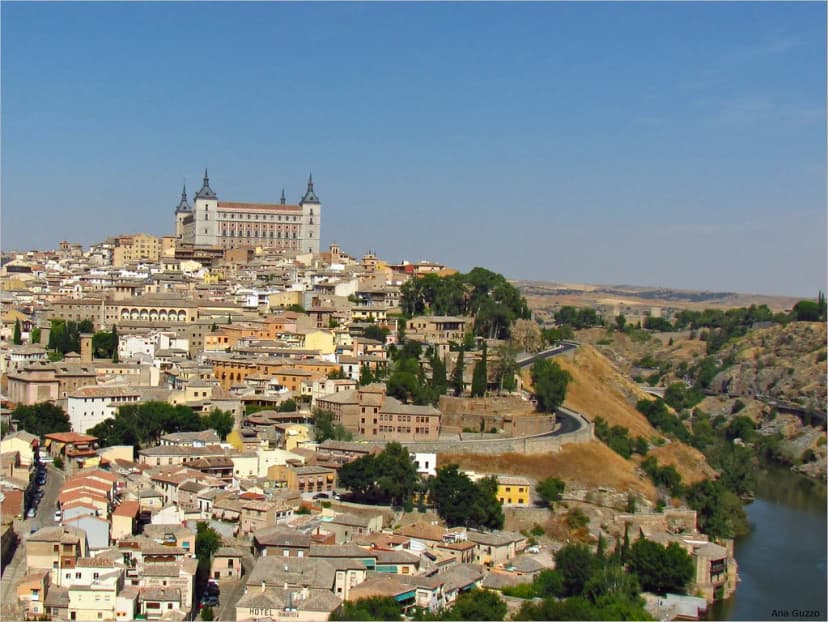
The Alcázar of Toledo rises from the highest point of the city and has served as a Roman palace, a Visigothic court, a Moorish fortress, and a royal residence for Charles I of Spain. Its four-sided Renaissance façade was redesigned in the 16th century by Alonso de Covarrubias, giving the building the severe symmetry you see today from every approach road. The south façade's Herreran austerity contrasts sharply with the ornate Plateresque decoration around the main doorway, making it a textbook example of transitional Spanish architecture.
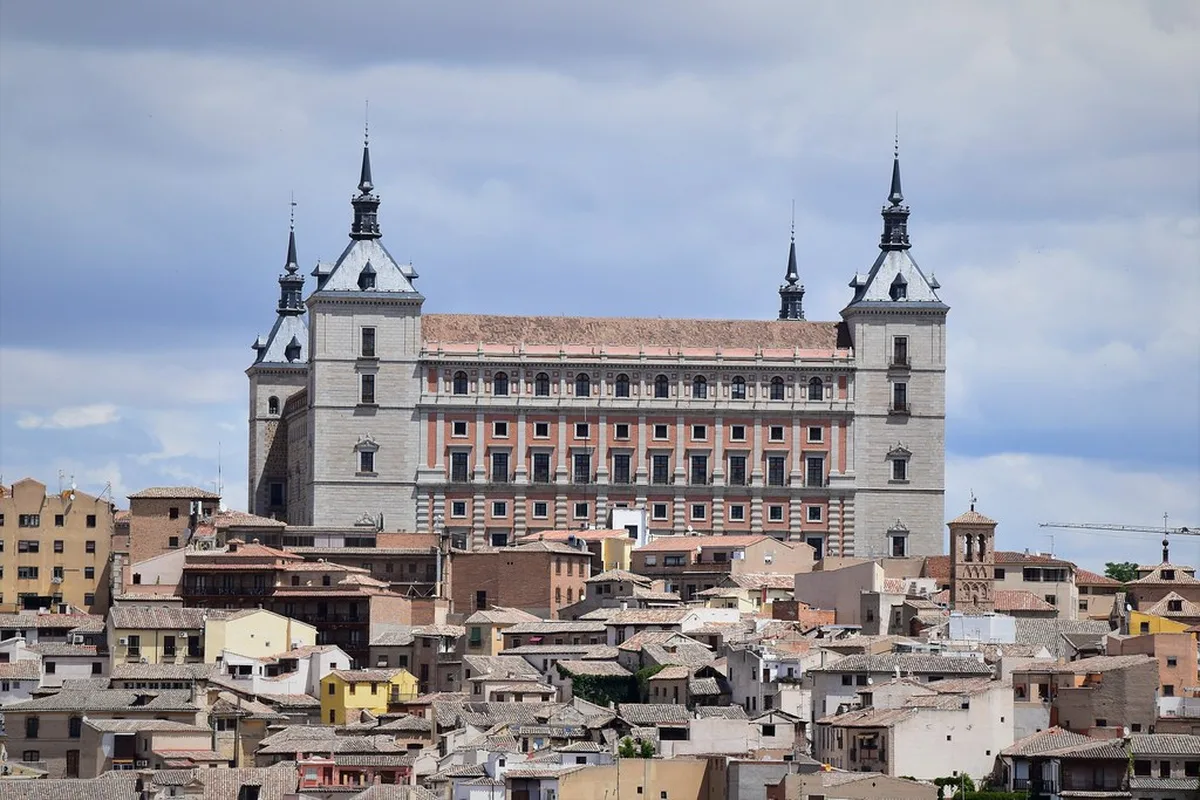
Entry to the Alcázar military museum costs €5.50 per adult in 2026, with free admission on Sundays for Spanish nationals and EU citizens. The museum opens Tuesday to Sunday from 10:00 AM to 5:00 PM and is closed on Mondays. The collection spans 2,400 years of Spanish military history across four floors, covering Roman legions, medieval knights, the Spanish Armada, and 20th-century conflicts. Allow at least 90 minutes to cover the highlights without rushing through the extensive armour and weaponry galleries.
The rooftop terrace is the real draw for most visitors. From here you have an unobstructed 360-degree panorama of Toledo's old town, the Tagus River gorge, and the cathedral's bell tower at eye level. On clear days the view extends south toward the plains of La Mancha where Don Quixote famously tilted at windmills. The terrace is free to access once inside the museum and is open during the same hours as the building.
The basement of the Alcázar preserves the original cistern and the legendary telephone exchange room where Colonel Moscardó directed the 1936 siege. During the Spanish Civil War, Nationalist forces held out inside the fortress for 70 days under Republican bombardment. The rooms have been preserved as they were at the moment of relief, with shattered walls and burned timbers left in place as a memorial. Whether or not you find the episode politically complex, the engineering of the historic water storage system in the same basement is genuinely impressive and well worth a look.
The Alcázar connects via a short walk to Plaza de Zocodover, Toledo's main square and the best place to pick up the tourist train or find a café before heading to the Jewish Quarter. The square buzzes with activity from mid-morning until late evening and is surrounded by traditional bars serving vermouth and local cured meats.
Walking Through the Historic Jewish Quarter
The Judería is a peaceful neighborhood located on the western side of the city. It features winding lanes that lead to some of the most significant historic sites in Toledo. Following a Toledo walking tour is the best way to find these hidden spots without missing the unmarked doorways that conceal the finest interiors. Look for the small blue tiles on the ground that mark the Jewish heritage route — they start near the Puerta del Sol and guide you through the quarter in a logical loop.
Santa María la Blanca is a former synagogue with beautiful white horseshoe arches arranged in five naves. Built in the 12th century in pure Almohad style, it is one of the oldest synagogue buildings still standing anywhere in Europe and has the distinction of having been designed by Muslim craftsmen for a Jewish congregation. Entry costs €3 in 2026. The simple whitewashed exterior hides an incredibly bright interior; the capitals of the columns are carved with pine cones and geometric interlacing that echo the decoration of the Great Mosque of Córdoba. Opening hours are 10:00 AM to 6:45 PM daily.
The Sinagoga del Tránsito stands a short walk further into the quarter and is the more ornate of Toledo's two surviving synagogues. Commissioned in 1356 by Samuel ha-Levi, treasurer to King Pedro I, it features breathtaking plasterwork inscriptions in Hebrew, Arabic, and Castilian running along the upper walls — a visual reminder of the city's multicultural literacy. Entry costs €3 in 2026 and includes the Sephardic Museum housed in the same building, which charts the history of Spanish Jews from Roman times to the 1492 expulsion. Open Tuesday to Saturday 9:30 AM to 7:30 PM, Sunday and Monday 10:00 AM to 3:00 PM.
The Monasterio de San Juan de los Reyes sits at the edge of the quarter. King Ferdinand and Queen Isabella built this Franciscan monastery to celebrate their victory at the Battle of Toro in 1476. The two-story cloister is considered one of the most beautiful in Spain and rewards slow examination — each arch medallion carries a different carved emblem from the Catholic Monarchs' heraldic vocabulary. Chains hanging on the exterior walls represent Christian prisoners freed from Moorish captivity during the Reconquista campaigns. Entry costs €3.50 in 2026. Open daily 10:00 AM to 6:45 PM.
Art lovers must visit the El Greco Museum (Casa-Museo El Greco) located within this historic district. The museum celebrates the life and work of Doménikos Theotokópoulos, the Cretan-born painter who settled in Toledo in 1577 and created his most important canvases here. Permanent exhibits include his celebrated series "Views and Map of Toledo" and a rich collection of devotional portraits. Entry costs €3 in 2026 and the building itself recreates a typical 16th-century noble house from the era, complete with garden. Open Tuesday to Saturday 9:30 AM to 7:30 PM, Sunday 10:00 AM to 3:00 PM.
Toledo's Three Cultures: The Jewish, Moorish and Christian Heritage
Toledo's reputation as the "City of Three Cultures" stems from an eight-century experiment in convivencia — the coexistence of Christian, Jewish, and Muslim communities under the successive rule of Visigoths, Moors, and Castilian kings. At its peak in the 12th and 13th centuries, Toledo operated as the most sophisticated translation centre in Europe, where Arabic scientific texts were rendered into Latin by trilingual scholars working side by side in the same scriptoria. The phrase convivencia should not be romanticised — tensions and forced conversions were constant — but the architectural and intellectual legacy of that encounter is still readable on every block of the old town.
The best single building to appreciate this layered history is the Cristo de la Luz mosque, originally the Bāb al-Mardūm mosque built in 999 CE. Its nine brick vaulted bays each carry a different Islamic geometric pattern — no two are identical — and the building preserves a Visigothic horseshoe arch on the entrance facade that was incorporated whole from an earlier church. After the Reconquista, a Christian apse was added to the eastern end. In a single small chapel you can read Visigothic, Caliphal, and Romanesque construction techniques stacked like geological strata. Entry is €2.80 in 2026; open daily 10:00 AM to 5:45 PM.
The Puerta del Sol, a 14th-century gate built by the Knights of St John, carries Mudéjar decorative panels derived from Islamic geometric art but crowned with a Gothic rose window and Christian iconography — a literal gate between cultural worlds. Just inside it, the Mezquita de las Tornerías (admission free, Tuesday to Sunday) is one of the few complete Moorish interiors in the city and preserves original stucco decoration. These are not tourist reconstructions; they are authentic standing buildings that saw centuries of contested use.
Toledo's Jewish community numbered perhaps 10,000 at its height and occupied a quarter that contained ten synagogues. After the 1391 pogrom and the 1492 expulsion decree of Ferdinand and Isabella, most converted (conversos) or fled to Portugal and the Ottoman Empire. The Sephardic Museum in the Sinagoga del Tránsito documents this diaspora through manuscripts, silver ceremonial objects, and textiles, and explains why Ladino — the Judeo-Spanish language brought to Istanbul, Thessaloniki, and Jerusalem — still carries traces of 15th-century Castilian vocabulary.
For visitors wanting a structured narrative, the free Toledo Jewish Heritage walking trail (blue tile markers, map at the tourist office on Plaza del Consistorio) connects fourteen sites across the Judería in a 90-minute loop. The route passes the ruins of the Halévi synagogue courtyard, the converso neighborhood of La Magdalena, and ends at the Puerta del Cambrón where exiles departed the city in 1492. Combining this walk with a visit to both surviving synagogues and the Cristo de la Luz mosque gives you the most complete picture of what convivencia actually looked like in stone.
Finding the Best Views of the City
For the most iconic photograph of Toledo, you must leave the city walls and cross to the southern bank of the Tagus. The Mirador del Valle offers a panoramic view of the entire historic peninsula from a slight elevation that allows you to see the Alcázar fortress and the Cathedral rising above the river in a single frame. This viewpoint faces northwest, making it particularly beautiful during the golden hour in the late afternoon and at blue hour immediately after sunset when the monument floodlights switch on against a deep indigo sky. A free car park operates at the mirador and many drivers stop here on the way into or out of the city.
The tourist train (Tren Imperial) is an easy way to reach these distant viewpoints without navigating the outer ring road on foot. It departs from Plaza de Zocodover and loops around the perimeter of the old town on a 45-minute circuit. The ride includes a recorded audio guide available in eight languages and pulls into Mirador del Valle for a ten-minute photo stop. Tickets cost €6.50 for adults and €4 for children in 2026; departure times are every 30 minutes from 11:00 AM to 7:00 PM in summer.
Walking across the Puente de San Martín provides another perspective of the dramatic river cliffs. This 14th-century bridge features massive crenellated towers that once defended the western approach to the city. You can watch the light change on the ochre limestone walls from the stone parapet along the span. Many locals gather here in the evening to enjoy the cooler air rising from the water; small groups of musicians sometimes perform near the central arch at weekends.
The lesser-known Cigarrales viewpoints — private estate terraces on the south bank — are accessible along a footpath that begins near the Parador hotel. Walking this path for 20 minutes brings you level with the Cathedral tower and affords unobstructed telephoto angles that the mirador does not. Bring good light if you are shooting; the path has no artificial illumination after dusk. Toledo is also a great base for exploring other nearby Spanish attractions — there are many wonderful day trips from Toledo to consider for your itinerary, including the windmills of Consuegra that inspired Don Quixote.
Local Traditions and Culinary Secrets
Toledo is world-famous for its traditional marzipan (mazapán) made from Marcona almonds and sugar in proportions protected by a local denomination of origin. The nuns in local convents have been perfecting these recipes for many centuries, and the convent of San Clemente still sells hand-wrapped mazapán figures through a revolving wooden hatch in its door — a centuries-old practice. Look for the Santo Tomé brand shop on Calle Santo Tomé for some of the most commercially reliable treats, but also try La Yedra and the Confitería Casimiro near the Alcázar for artisan alternatives. A small 200g box of assorted figures costs between €6 and €10 in 2026 and makes for a perfect local souvenir.
The city also has a long history of making high-quality swords and Damascene metalwork. Damascene art involves inlaying 24-carat gold or silver threads into oxidised black steel surfaces using a hammer-and-chisel technique brought to Iberia by Moorish craftsmen. You can watch artisans working in shops along Calle Comercio and Calle del Hombre de Palo. Authentic pieces carry a mark from the Toledo Artisan Guild; reproductions sold near tourist sites are usually mass-produced in factories. A genuine hand-worked letter opener costs €15–€35; a decorative sword plaque runs €50–€200 depending on size.
Lunch is the main meal of the day and usually happens around 2:00 PM. Try the carcamusas, which is a local pork stew slow-cooked with tomatoes, peas, and Manchego white wine — a dish you will not find outside the province. Perdiz estofada (stewed partridge) is another Toledo specialty, particularly in autumn when hunting season begins and the game appears fresh on menus. Many restaurants near Plaza de Zocodover offer a fixed-price menú del día for €12–€16, including a starter, main, dessert, and a glass of local Castilla-La Mancha wine. Reservations are recommended for lunch between 2:00 PM and 3:30 PM on weekends.
Shopping for ceramics is another popular activity for visitors in the historic center. The nearby town of Talavera de la Reina, 75 km west of Toledo, has been producing distinctive blue-on-white earthenware since the 16th century and its designs dominate the souvenir shops here. You will find colorful plates, decorative tiles, and traditional pitchers that reflect the city's Moorish artistic heritage. Most established ceramic shops on Calle de la Plata and around San Juan de los Reyes will offer insured shipping services for fragile or bulky items, typically adding €12–€25 to your total.
Frequently Asked Questions
How much time do I need for a Toledo old town guide tour?
A minimum of six to eight hours is needed to visit the Cathedral, the Alcázar, the Jewish Quarter synagogues, and the Mirador del Valle viewpoint without rushing. Staying overnight allows you to experience the city after the day-trip crowds return to Madrid and to see the floodlit skyline from the south bank of the Tagus.
How much does it cost to visit Toledo's main monuments in 2026?
Toledo Cathedral entry costs €10 per adult in 2026. The Alcázar military museum charges €5.50 (free Sundays for EU citizens). Santa María la Blanca synagogue and El Greco Museum are each €3. The Sinagoga del Tránsito with Sephardic Museum is €3. San Juan de los Reyes monastery is €3.50. The Toledo Card (€16–€30) bundles several sites and skips some queues — worth it if you plan to visit four or more monuments.
Is the Toledo old town easy to walk?
The old town is almost entirely pedestrianized but features steep hills and uneven cobblestones throughout. You will need a reasonable level of fitness to explore all day on foot. The free public escalators near the Safont parking area eliminate the hardest climb from the train station up to the city gates — use them on arrival to conserve energy for the rest of the day.
What are the opening hours for Toledo's main monuments in 2026?
Toledo Cathedral opens Monday to Saturday 10:00 AM to 6:30 PM and Sunday 2:00 PM to 6:30 PM. The Alcázar opens Tuesday to Sunday 10:00 AM to 5:00 PM and is closed Mondays. Both synagogues (Santa María la Blanca and Sinagoga del Tránsito) open from 10:00 AM to 6:45 PM daily. San Juan de los Reyes opens daily 10:00 AM to 6:45 PM. Confirm times on official sites before visiting as seasonal adjustments apply.
Can I drive my car into the historic center of Toledo?
Driving inside the city walls is restricted for tourists. Many roads are reserved for residents and monitored by automatic cameras that issue fines directly to registered vehicle owners. Use the Safont underground garage (approximately €1.20 per hour) near the public escalators or the Miradero car park near Puerta de Bisagra (approximately €1.50 per hour). Both have walking access to the main sights within five minutes.
What day trips can I take from Toledo to nearby attractions?
Toledo sits at the centre of Castilla-La Mancha and makes an excellent base for excursions. The windmills of Consuegra are 70 km south and take about 45 minutes by car — they are the best-preserved Don Quixote windmills in Spain. Aranjuez, a UNESCO Royal Palace town, is 47 km north toward Madrid. The medieval village of Almagro, known for its baroque theatre, is 130 km south. See the full day trips from Toledo guide for public transport options and itineraries.
Toledo remains a timeless destination that captures the essence of Spanish history in a single walkable hilltop city. From the towering Alcázar to the quiet Jewish lanes of the Judería, there is something genuinely extraordinary around every corner. The Cathedral at €10, the Alcázar at €5.50, and the synagogues at €3 each represent some of the best-value monument visits in Spain — the quality of what you see far exceeds the entry price. Plan your visit for 2026 and use this guide to experience the full depth of the City of Three Cultures. If you enjoy medieval hilltop cities, the nearby Segovia old town guide covers another spectacular UNESCO World Heritage site just 90 km north of Toledo.
Remember to wear your most comfortable shoes and bring a camera for the sweeping views from Mirador del Valle. The memories of the golden sunset over the Tagus River with the Cathedral bell tower silhouetted against the sky will stay with you. For getting the most from your visit, combine this guide with the Toledo walking tour route and check parking options at parking in Toledo Spain before you drive in.