The Ultimate Siena Old Town Guide for 2026 Travelers
The Siena Duomo complex costs €20 with the Opa Si Pass in 2026, covering five monuments including the Duomo, Baptistery, Museo dell'Opera, Cripta, and Libreria Piccolomini — the best-value ticket for first-time visitors.
Torre del Mangia admission is €15 in 2026 and must be pre-booked online at comune.siena.it; the tower closes when lightning is forecast, so always confirm on arrival day before joining the queue.
Siena captures the essence of medieval Italy like no other city in the beautiful Tuscan region. Walking through its brick-lined streets feels like stepping back into the fourteenth century for every modern visitor. This Siena old town guide helps you navigate the winding alleys and hidden squares with total ease. You will find everything from iconic cathedrals to secret local spots within the ancient city walls.
The entire historic center is a UNESCO World Heritage site that preserves a unique Gothic atmosphere. Preserving this architectural integrity means the city looks much as it did during its golden age. Visitors often feel a sense of wonder as they emerge into the massive open-air public spaces. Preparing for the hilly terrain and pedestrian rules ensures a much smoother Italian holiday experience for everyone visiting in 2026.
Navigating the Historic Center of Siena
Siena's historic old town is almost entirely pedestrian, which makes it a fantastic dream for modern walkers. Drivers must be extremely careful because the ZTL or Limited Traffic Zone is strictly enforced with cameras. Accidentally entering these restricted areas can result in heavy fines that arrive months after your trip. Most visitors choose to leave their vehicles at one of the several large lots outside the walls.
Finding the right spot to leave your car is much easier when you plan your entry gate. Check our detailed guide on parking in Siena to find the most convenient locations for your arrival. The Fortezza Medicea lot offers plenty of spaces and easy access to the main shopping streets. Other lots like Parcheggio Il Campo provide direct routes to the famous central square via modern escalators.
Using the city's unique escalator systems, known as Risalita, saves you from climbing very steep hills. These moving walkways connect the lower parking areas with the high ridges of the historic center. The San Francesco escalator is particularly useful for reaching the eastern side of the city quickly. Planning your route around these mechanical aids makes exploring much less tiring for older travelers and families with young children.
Walking remains the primary way to experience the charm of the narrow, winding medieval corridors. Distances between major gates like Porta Camollia and Porta Romana take about thirty minutes to traverse. You should allow extra time for spontaneous stops at local bakeries or small artisan leather shops. Navigation apps generally work well, but the tall stone buildings can sometimes interfere with GPS signals.
In 2026 the city has introduced an updated tourist information app called VisitSiena that works fully offline once downloaded. The app includes audio guides, accessible route suggestions, and real-time alerts for closures or special event road restrictions. Downloading it before your arrival helps enormously, especially during the busy Palio season in July and August. Physical tourist information points operate at Piazza del Campo and near Porta Camollia on weekdays from 09:00 to 18:00.
Taxis in Siena operate from fixed ranks at Piazza Matteotti and Piazza Stazione rather than being hailable on the street. In 2026 a standard taxi ride from the train station to the historic center costs around €12–15 depending on luggage. Ride-sharing apps have limited coverage within the old town ZTL boundaries, so taxis remain the most reliable option for door-to-door travel. Electric golf-cart shuttles also operate on Via di Città for visitors with mobility needs at approximately €5 per trip.
Top Landmarks in the Siena Old Town Guide
The Piazza del Campo serves as the beating heart of the city and hosts the famous Palio race. This shell-shaped square remains one of Europe's greatest medieval spaces for people-watching and relaxing. Local residents and tourists alike often sit directly on the warm bricks to enjoy the Tuscan sun. The surrounding cafes offer great views, though prices are often higher than in the side streets — expect to pay €4–5 for an espresso at a terrace table.
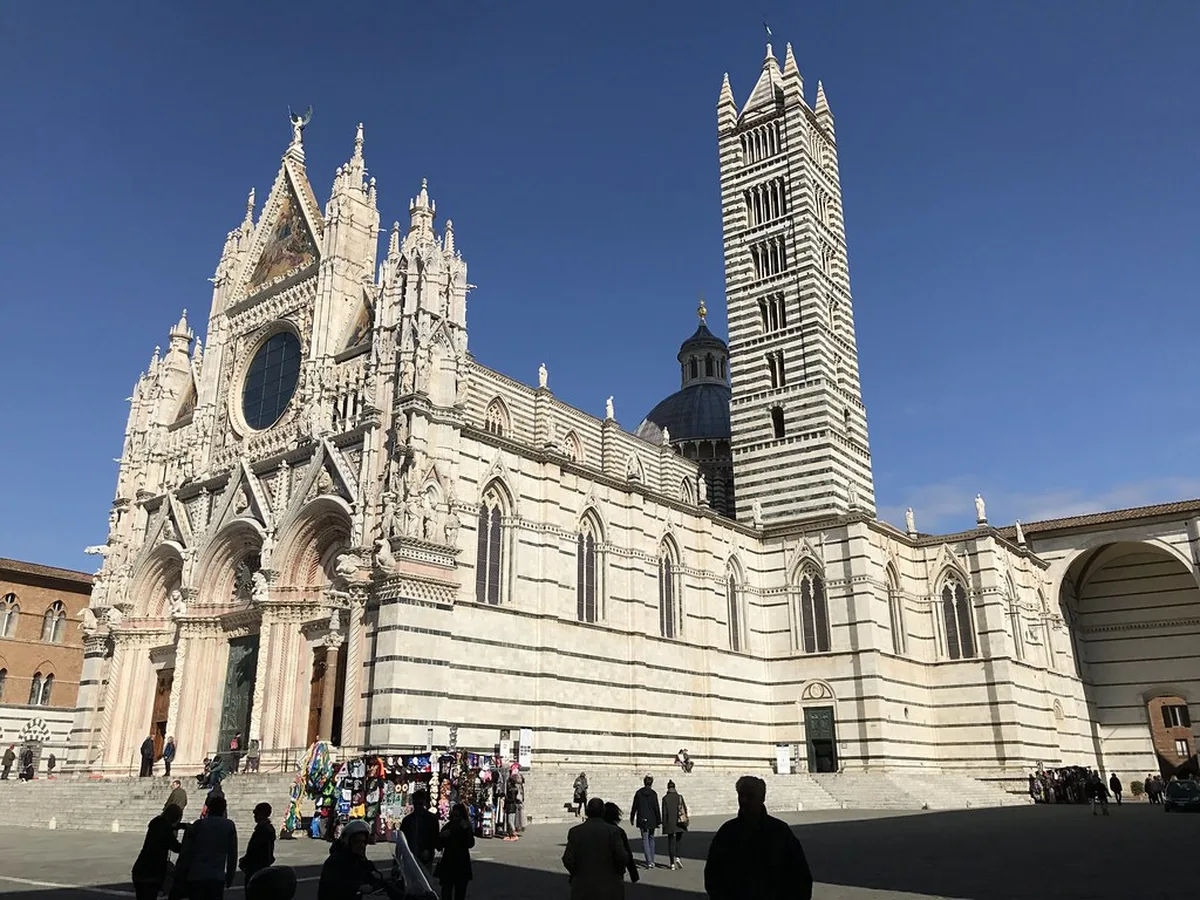
Nearby, the Siena Cathedral showcases incredible striped marble and intricate floor mosaics that require advance booking. This Gothic masterpiece contains works by famous artists like Donatello, Bernini, and the young Michelangelo. Take a Siena walking tour to fill your itinerary with rich history. Visiting during the special floor unveiling periods in late August and September provides a truly rare visual treat that only opens for around six weeks per year.
The Palazzo Pubblico stands tall at the base of the main square and houses the city museum. In 2026 entry to the Palazzo Pubblico museum is €10, which includes the Sala del Mappamondo and the full Lorenzetti fresco cycle. Inside, you can view the famous Allegory of Good and Bad Government frescoes by Ambrogio Lorenzetti. These paintings offer a fascinating look at medieval political philosophy and daily life in the countryside, considered among the most important secular frescoes in all of Europe.
Climbing the adjacent Torre del Mangia costs €15 in 2026 and provides the best panoramic views of the entire Sienese landscape and the rolling Crete Senesi hills beyond. The tower opens daily from 10:00 to 19:00 in summer (last entry 18:30) and 10:00 to 16:00 in winter. Tickets must be purchased in advance at comune.siena.it or from the booth at the base, but they sell out on peak days by mid-morning. Allow at least forty-five minutes for the climb and views; the 503-step staircase is steep and narrow throughout.
Exploring the Baptistery and the Crypt located behind the Cathedral reveals even more hidden artistic treasures. The baptismal font features bronze panels that are considered masterpieces of early Renaissance sculpture, including contributions by Jacopo della Quercia and Lorenzo Ghiberti. Many visitors overlook these smaller sites, but they offer a quieter and more intimate historical experience. Purchasing the Opa Si Pass for €20 covers the Baptistery, the Duomo, the Crypt, the Museo dell'Opera, and the Libreria Piccolomini in one convenient ticket available at operaduomo.siena.it.
- The Majestic Siena Cathedral (Duomo)
- Type: Gothic Cathedral
- 2026 Cost: €6–€15 standalone; €20 Opa Si Pass (all monuments)
- Best for: Art lovers and architecture enthusiasts
- Access: Advance ticket recommended at operaduomo.siena.it
- Piazza del Campo Square
- Type: Public Square
- Cost: Free access always
- Best for: People watching and Palio atmosphere
- Access: Open 24 hours
- Torre del Mangia Tower
- Type: Historic Tower
- 2026 Cost: €15
- Best for: Panoramic views over the city and countryside
- Access: 503 steps; book in advance at comune.siena.it
- Palazzo Pubblico Museum
- Type: Municipal Palace and Museum
- 2026 Cost: €10
- Best for: Medieval frescoes and civic history
- Access: Open daily 10:00–19:00 (summer), 10:00–18:00 (winter)
Siena Duomo Complex: Full Visitor Guide 2026
The Siena Duomo complex is one of the most concentrated collections of Gothic and early Renaissance art in Europe, spread across five distinct monuments connected under the Opera della Metropolitana di Siena. Understanding the full entry options before you arrive saves both money and the frustration of discovering you need a separate ticket at each door. All tickets and passes are sold online at operaduomo.siena.it, which is the only official booking platform and the safest way to guarantee entry during peak season.
The flagship ticket is the Opa Si Pass at €20, which covers all five monuments: the Duomo itself, the Libreria Piccolomini, the Baptistery of San Giovanni, the Museo dell'Opera (Museo della Metropolitana), and the Cripta. This pass is valid for three days from the date of first use, so you do not need to rush through everything in a single morning. For visitors who only want the Duomo interior and Libreria, a combined ticket is available at €15. The Libreria Piccolomini can also be visited standalone for €4 if you are short on time, and its frescoed ceiling by Pinturicchio is one of the best-preserved examples of late fifteenth-century painting in Italy.
The Baptistery of San Giovanni sits directly below the apse of the Duomo and is reached via a staircase on Piazza San Giovanni. Admission is €6 standalone in 2026. The hexagonal baptismal font at its center, completed around 1434, features gilded bronze relief panels by Lorenzo Ghiberti, Jacopo della Quercia, and Donatello — a remarkable concentration of talent for a single commission. The Baptistery is considerably cooler than the open Piazza and offers a quieter environment for slow contemplation of the art. Opening hours are 10:30 to 17:30 daily, with the last entry at 17:00.
The Museo dell'Opera (€8 standalone) is housed in what was intended to be a vastly enlarged nave for the Duomo — a fourteenth-century construction project abandoned when plague reduced the city's population. The museum's highlight is Duccio di Buoninsegna's massive Maestà altarpiece, painted between 1308 and 1311 and considered the founding work of the Sienese school of painting. The top floor of the museum opens onto the so-called Facciatone, an unfinished wall that provides a spectacular elevated view across the rooftops toward the Piazza del Campo. This viewpoint is far less crowded than the Torre del Mangia and is free to access when you hold the museum ticket.
The recommended visiting sequence to avoid the worst crowds is: start with the Museo dell'Opera at 09:00 when doors open and the Facciatone view is at its clearest in the morning light. Move to the Cripta next (open 10:00, just a short walk around the side of the Duomo), then cross to the Baptistery before the tour groups arrive around 10:30. The Libreria Piccolomini is best visited immediately after entering the Duomo as it is located just inside the left aisle — enter the library first and then walk the Duomo interior. Save the Duomo's famous inlaid marble floor for last, as it becomes most crowded between 11:00 and 14:00. Midweek mornings in April, May, and October are significantly quieter than summer weekends.
Several practical notes for 2026 visits: photography inside the Duomo is allowed without flash, but tripods are prohibited. The Libreria Piccolomini requires removing backpacks before entry. Audio guides for the full complex are available at €8 from the ticket desk near the Duomo main entrance and cover all five monuments with GPS-triggered commentary. The Duomo itself typically opens at 10:30 on Sundays due to morning Mass, which is free to attend but requires respectful attire covering shoulders and knees for all visitors regardless of the day.
The Living History of the Contrade Districts
Unlike many tourist hubs, Siena is divided into seventeen distinct districts known as the Contrade. Each neighborhood has its own animal symbol, unique flag, and even a private fountain for baptisms. You can spot these symbols on street lamps and wall plaques as you wander through the streets. Respecting these local boundaries offers a deeper look into the city's living and breathing social fabric, one that has remained largely unchanged since the medieval period.
The Contrade are not just historical relics but active social clubs for the modern Sienese people. Walking through the Oca (Goose) or Giraffa (Giraffe) districts might lead you past a lively neighborhood street dinner on a summer evening. These communities provide social support, organize festivals, and maintain their own private museums and churches, many of which open to the public on select days throughout the year. Tourists are welcome to observe, but remember that these are private residential areas with deep traditions and genuine community bonds that predate modern tourism entirely.
The Palio horse race is the ultimate expression of the rivalry and pride between these seventeen districts. Held twice every summer — on July 2nd for the Palio di Provenzano and on August 16th for the Palio dell'Assunta — this event transforms the main square into a high-stakes dusty racetrack covered with a layer of compacted earth. In 2026 bleacher tickets for the Palio are sold through official Sienese tour operators and typically range from €300 to €600 per seat, while the central standing area inside the Campo remains free but fills hours before the race begins. Even if you visit outside of race days, the energy of the Contrade remains palpable in flags, murals, and neighborhood pride everywhere you look.
Local shops often sell scarves and flags representing the different animals like the dragon, wolf, snail, or tortoise. Finding the 'Battesimo di Contrada' or district baptismal fountains is a fun way to explore hidden corners of the city that most day-trippers never reach. Each fountain is a unique work of art that represents the spirit of its specific neighborhood, often featuring the district's heraldic animal in bronze or ceramic detail. Children born in the district are symbolically baptized at these fountains to mark their lifelong membership, ensuring that the medieval identity of the city remains strong well into the twenty-first century.
The Contrada museums are among the least-visited but most rewarding cultural experiences in Siena for curious travelers. Each museum houses centuries of Palio banners, trophies, costumes, and historical documents that tell the story of the district's victories and defeats over centuries of competition. Most are open only on Sunday mornings or by pre-arranged appointment; contacting the individual Contrada via their official websites is the best approach. The Contrada della Torre (the Elephant district) and the Contrada dell'Oca (the Goose district) are particularly welcoming of outside visitors and often have bilingual staff available on weekend afternoons.
Sienese Food, Wine, and Local Market Guide
Siena's culinary identity is rooted in the medieval trade routes that once made the city one of the wealthiest in Europe, and in 2026 the food scene remains one of the most rewarding reasons to visit beyond the famous monuments. The old town is packed with family-run trattorie, specialized wine bars, and artisan food shops that serve dishes you will not find replicated anywhere else in Tuscany. Understanding what to eat, where to buy it, and how much to pay ensures you get full value from every meal in the city. Starting your food exploration early in the morning at Piazza del Mercato — the old town's main market square on the south side of the Palazzo Pubblico — puts you in step with local residents who shop there daily for fresh produce, cheese, and cured meats.
The signature pasta of Siena is pici, a thick hand-rolled spaghetti that is wider and chewier than most pasta found elsewhere in Italy. Served most authentically with a rich wild boar ragu (cinghiale) or a simple cacio e pepe made with aged Pecorino Senese, a full portion of pici costs €12–16 at restaurants in the side streets off Via Banchi di Sopra. Avoid the tourist menu ('menu turistico') options priced at €10–12 on the Piazza del Campo itself, as the pasta is usually factory-made and the sauces are simplified. Osteria Il Carroccio on Via del Casato di Sotto and Grotta Santa Caterina da Bagoga on Via della Galluzza are two long-standing local favourites where pici is made by hand every morning and served at honest prices under €15 for a full first course.
Siena's most famous sweet exports are panforte and ricciarelli. Panforte is a dense, dark spiced cake made from honey, nuts, dried fruit, and warming spices like cinnamon, nutmeg, and white pepper — it has been produced in Siena since at least the thirteenth century. In 2026 a 100-gram slice costs around €3–4 at the Nannini bakery on Via Banchi di Sopra, while whole gift boxes range from €8 to €22 depending on weight and variety (Panforte Nero is spicier than Panforte Margherita, which is more delicate and topped with icing sugar). Ricciarelli are soft almond biscuits with a slight chewy center and a powdered-sugar crust; a packet of eight costs approximately €6–8 from reputable pasticcerie. Both make excellent purchases to bring home. Drogheria Manganelli at Via di Città 71, a working grocery since 1879, stocks one of the widest selections of both alongside local honey, saffron from the nearby Val d'Orcia, and bottled Chianti Classico at honest prices.
Wine is an essential part of any visit to Siena, which sits at the heart of some of Tuscany's most famous denominazioni. Chianti Classico DOCG — produced just north of the city in the Chianti hills — is available by the glass for €4–7 at most enoteca in the old town and starts at around €12–15 per bottle at wine shops like Enoteca Italiana, housed in the atmospheric cellars of the Fortezza Medicea and open Tuesday to Sunday 12:00–20:00. Brunello di Montalcino DOCG, made from Sangiovese grapes grown south of Siena, is pricier but considered one of Italy's greatest reds; a glass costs €10–18 at specialist wine bars and bottles start around €35–40. For a more affordable introduction, order a glass of Rosso di Montalcino (the younger sibling of Brunello) for €6–9. The Enoteca Italiana also stocks Vernaccia di San Gimignano — a crisp white wine from a nearby hilltop town that pairs beautifully with the local Pecorino cheese platter at around €12 for a shared board.
The weekly outdoor market in Siena takes place every Wednesday morning from 08:00 to 13:00 along the streets between Piazza La Lizza and the Fortezza Medicea. In 2026 this is still the best place to buy local seasonal produce, cheap saffron, fresh herbs, and inexpensive Sienese ceramics that are half the price of the tourist-oriented shops on Via di Città. Vendors from surrounding agricultural villages bring olive oil, honey, and aged Pecorino di Pienza that is hard to find in the old town's retail shops. Arriving before 09:00 guarantees the best selection of produce and the least crowded atmosphere. If you are self-catering or making up a picnic to enjoy in the Piazza del Campo, the Wednesday market is the single best opportunity to source everything you need at genuinely local prices. Tuscany's broader culinary identity is equally fascinating to explore on day trips from Siena, where wine estates and agriturismi open their cellars for tastings directly from the barrel.
Practical Tips for Your Siena Walking Tour
The best way to see the city is by taking a Siena walking tour through its three main ridges. Steep hills and narrow staircases connect the different levels of the historic old town center. Wear comfortable shoes as the ancient brick pavement can be slippery when wet or worn smooth. Early morning walks allow you to enjoy the architecture before the large day-trip crowds arrive from Florence, which is just 90 minutes away by bus.
Navigation can be tricky because many streets look similar and wind in unexpected circular directions. Look for the black and white city crest, known as the Balzana, to stay on main paths. If you get lost, simply head downhill to eventually find your way back to Piazza del Campo. Most major landmarks are well-signposted with brown historical markers located at eye level on corners throughout the historic center.
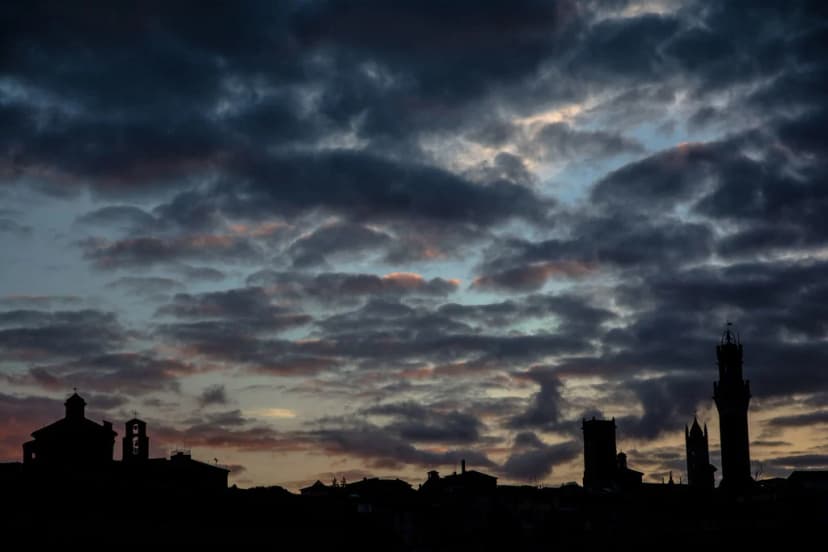
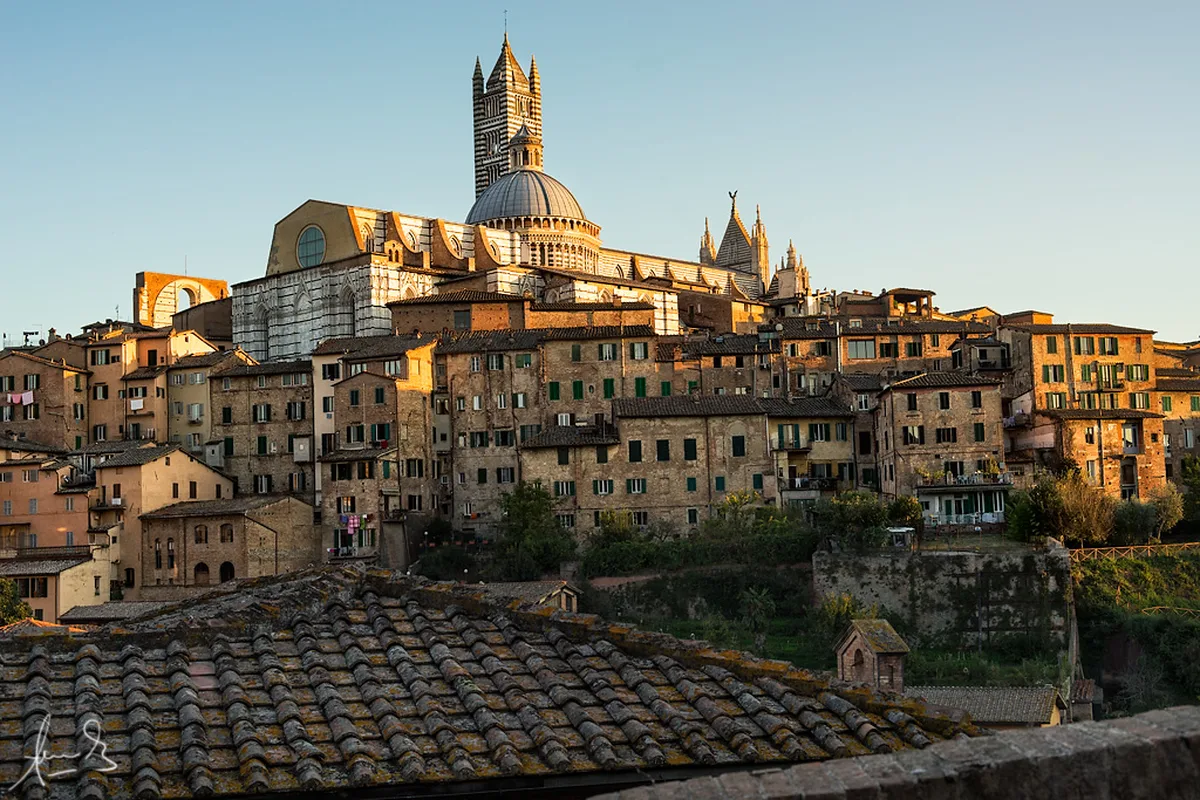
Photographers should head to the viewpoint near the San Domenico church for the best city skyline shot available without climbing a tower. This spot offers a classic view of the Cathedral dome and the Tower of Mangia against the rolling Tuscan hills beyond. Late afternoon between 16:30 and 18:30 provides the softest golden light for capturing the famous burnt sienna tones of the brick buildings. Be mindful of residents when taking photos in the smaller, quieter residential alleys of the Contrade districts at any time of day.
Drinking water is easily available from the many public fountains scattered throughout the old town streets. These 'fontanelle' provide cold, fresh water that is perfectly safe for thirsty travelers to drink throughout the year. Carrying a reusable bottle helps you stay hydrated while navigating the many steep inclines of the city. This simple tip saves money and reduces plastic waste during your long day of medieval exploration and sightseeing.
Gelato lovers will find excellent options throughout the old town, with prices typically starting at €3 for a single scoop at the smaller artisan gelaterie away from the Piazza. The best-regarded gelaterie in the area include those on Via Banchi di Sopra and Via di Città, where fresh seasonal flavors like cantucci-and-vin-santo or fig-and-almond use local Tuscan ingredients. Avoid the bright neon-colored displays in the shops directly on the Piazza del Campo where tourist pricing inflates costs significantly. Budget around €3 per scoop and you will eat far better in the side streets than you would on the main square.
Guided walking tours in 2026 typically run €18–25 per person for a two-hour group tour and are available in English, French, German, and Mandarin. Private tours start at around €80 for up to four people and can be customized to focus on specific interests such as the Contrade, medieval art, or Sienese food culture. Booking at least 48 hours in advance through operators listed on the official Siena Turismo website guarantees a licensed local guide with authorized access to some areas not open to independent visitors. If you enjoy medieval urban exploration, consider pairing your Siena trip with nearby Umbria — the Perugia old town guide covers another outstanding preserved hilltop city just two hours south by bus.
Planning Your Stay and Tuscan Connections
While many see Siena in a single day, staying overnight reveals a much quieter and romantic atmosphere that day-trippers entirely miss. The golden hour light turns the brick buildings a deep amber color that is truly magical to witness from anywhere in the old town. Evening walks through the illuminated streets feel safer and more peaceful than in larger Italian cities, and the Piazza del Campo becomes almost ethereal once the tour groups have left for their hotels in Florence. You can enjoy a glass of Chianti Classico or Brunello di Montalcino in the square after the tour buses have departed, typically by 19:00 in summer.
Hotel prices within the historic center in 2026 range from around €80 per night for a comfortable two-star guesthouse to over €300 for a boutique hotel with Piazza del Campo views. Booking three to four months in advance is strongly recommended for July and August travel, particularly for the Palio weekends when rooms sell out entirely and prices can double. Agriturismo stays in the surrounding Chianti and Crete Senesi countryside offer a more affordable alternative at €60–100 per night with the benefit of private parking and local organic breakfasts.
If you have more time, consider taking day trips from Siena to explore the nearby Chianti vineyards and hilltop medieval towns. This central location makes it a perfect base for exploring the wider and scenic Tuscan landscape, with excellent rail and bus connections radiating outward to the region. Buses run frequently from Piazza Gramsci to hilltop towns like San Gimignano (about 90 minutes, around €6 one way) or the historic village of Monteriggioni (about 30 minutes, €3). Renting a car for a day allows you to reach smaller wineries and agriturismo estates in Montalcino and Montepulciano that are not accessible by public transit.
Dining in the old town is best when you move two or three blocks away from the main square and look for 'osterie' that post their menus in Italian first. Look for small family-run establishments that serve local specialties like pici pasta with wild boar ragu or ribollita in winter months. Authentic Sienese sweets like panforte (a dense spiced cake, around €8–12 per box) or ricciarelli cookies (€6–10 per packet) make excellent gifts for friends back home. Many traditional bakeries have been family-owned for generations and still use the original medieval recipes that earned the city its reputation for distinctive pastry and confectionery.
Planning your 2026 visit from April through early June gives you the most pleasant walking weather with temperatures between 15°C and 22°C and longer daylight hours to explore. Most major sites now offer online booking to help you skip the long lines during peak summer months, and the Duomo complex in particular should always be booked at least two to three days ahead. Spring wildflowers in the surrounding countryside make this an especially photogenic period for anyone planning to combine the city with rural Tuscan day trips. Winter visitors from November through February will find fewer crowds, reduced prices in many hotels, and a more authentic local atmosphere, but should prepare for chilly winds in the open Piazza del Campo. For a broader overview of what Italy's lesser-visited yet stunning destinations offer, browse the Perugia walking tour guide or the Matera old town guide for southern Italic historic towns worth adding to your 2026 itinerary.
Frequently Asked Questions
Is Siena's old town easy to walk for seniors?
The old town is very hilly and features many steep inclines and uneven brick surfaces throughout. However, the city provides several public escalator systems (Risalita) to help visitors reach the higher ridges without climbing. Using these mechanical aids, available free of charge at multiple entry points near parking areas, and wearing supportive non-slip shoes makes the experience much more manageable. The stretch between Piazza del Campo and the Duomo is on relatively flat ground and is accessible to most mobile visitors.
Can I drive into the Siena old town center?
Driving into the historic center is strictly prohibited for non-residents due to the ZTL (Zona a Traffico Limitato) regulations that are fully active in 2026. Cameras monitor every entrance and will automatically issue fines to unauthorized vehicles, typically delivered by post months after your visit. The best approach is to use the large parking lots located just outside the city walls — such as Parcheggio il Campo (€2 per hour) or Fortezza Medicea (€1.50 per hour) — and walk or take the free escalators into the center from there.
How long should I spend in the Siena old town?
A single full day (eight to nine hours) is enough to see the main landmarks including the Duomo complex at €20 with the Opa Si Pass, Piazza del Campo (free), the Palazzo Pubblico at €10, and a Contrada district. However, staying for two days allows you to visit all five Duomo monuments without rushing, explore the quieter Contrade neighborhoods in the evening, and enjoy the city's dining scene at a relaxed pace. Overnight guests consistently experience a more authentic atmosphere once the day-trip crowds have returned to Florence after 18:00.
When is the best time to avoid crowds in Siena?
Visiting in the early morning (before 10:00) or staying overnight is the best way to avoid the midday day-trip crowds that flood in from Florence between 10:30 and 16:00. The months of April, May, and October offer pleasant weather with temperatures of 14°C–20°C and far fewer tourists than the peak July and August season. Mid-week visits are generally quieter than weekends, and avoiding the Palio dates of July 2 and August 16 means significantly lower hotel prices and more space to move through the streets.
What is the best value ticket for the Duomo complex in 2026?
The Opa Si Pass at €20 is the best-value option for most visitors in 2026 because it covers all five monuments: the Duomo interior, Libreria Piccolomini (normally €4 standalone), Baptistery of San Giovanni (normally €6 standalone), Museo dell'Opera (normally €8 standalone), and the Cripta. The pass is valid for three consecutive days, so there is no need to rush. It must be purchased in advance at operaduomo.siena.it; walk-up tickets are available but frequently sell out by mid-morning during the summer months of June through September.
How do I get from Florence to Siena by public transport in 2026?
The fastest and cheapest option in 2026 is the Tiemme/Sena express bus (rapida) from Florence's BUSITALIA terminal at Via Santa Caterina da Siena, which takes approximately 75 minutes and costs around €8–10 one way, running roughly every 30 minutes during the day. The train via Empoli is slower (90–110 minutes with a change) and no more affordable, so the bus is generally preferred. Buses arrive at Siena's Piazza Gramsci, which is just a short walk from the historic center's northern entrance at Porta Camollia. Book tickets in advance at tiemmespa.it during peak summer travel periods to guarantee a seat.
What traditional Sienese foods should I try in 2026?
The three most essential Sienese foods to try in 2026 are pici pasta (a thick hand-rolled spaghetti served with wild boar ragu or cacio e pepe for around €12–16 at side-street osterie), panforte (a dense medieval spiced cake costing €3–4 per slice or €8–22 per box at Nannini bakery on Via Banchi di Sopra), and ricciarelli (soft almond biscuits at €6–8 per packet). Pair any of these with a glass of Chianti Classico DOCG (€4–7 per glass) or a more premium Brunello di Montalcino (€10–18 per glass) from Enoteca Italiana in the Fortezza Medicea, open Tuesday to Sunday 12:00–20:00. The Wednesday morning market at Piazza La Lizza (08:00–13:00) is the best place to buy local produce, honey, and Pecorino cheese at non-tourist prices.
Siena remains one of the most well-preserved medieval cities in the world for a very good reason. Its commitment to tradition and architectural heritage creates an atmosphere that is truly unique in all of Italy. Following this Siena old town guide ensures you see the best sites — from the Duomo complex at €20 with the Opa Si Pass to the Torre del Mangia at €15 — while avoiding the most common travel mistakes visitors make. The city will surely leave a lasting impression on your heart long after you leave its ancient walls.
Whether you are admiring the striped marble of the Cathedral or wandering through a quiet Contrada district in the evening, there is always something new to discover around the next corner. Embrace the slow pace of Sienese life and take the time to enjoy the small local details — a €3 gelato on a side street, a free public fountain, the heraldic animals painted on medieval lamps. Your journey through these ancient streets is a chance to connect with centuries of vibrant Italian history. Safe travels as you explore the winding paths and majestic squares of this magnificent Tuscan treasure in 2026.