Discover the Ultimate Perugia Walking Tour for 2026
Perugia's hilltop old town is free to enter via Rocca Paolina escalators; the Galleria Nazionale dell'Umbria costs €12 and the Pozzo Etrusco €3 in 2026.
Walk Corso Vannucci from Piazza IV Novembre to the Etruscan Arch in 3–5 hours, stopping at Fontana Maggiore, San Lorenzo Cathedral, and Palazzo dei Priori along the way.
Perugia is a vertical masterpiece located in the heart of the Umbria region. Most travelers arrive at the train station and feel overwhelmed by the steep hilltop center. A well-planned Perugia walking tour helps you navigate these ancient stone steps with ease. Our guide ensures you see the best landmarks without getting lost in the winding alleys. You will discover hidden fortresses, medieval aqueducts, and vibrant social squares. This journey through time offers a perfect introduction to one of Perugia's tourism portal most underrated destinations, with direct access to official information and guides for exploring the city and broader Umbrian region.
Prepare for a day of discovery as we reveal the best routes for 2026. Whether you enjoy art or history, this hilltop destination has something special for everyone. Let us dive into the logistics of exploring this historic capital on foot.
Planning Your Perugia Walking Tour Route
Start your journey at Piazza Partigiani, the main transport hub at the base of the hill, where buses from Perugia Fontivegge train station drop off passengers. From here, the escalators (Scale Mobili) carry you upward roughly 200 metres through the belly of the Rocca Paolina fortress, depositing you on Corso Vannucci within five minutes. Morning starts between 8:00 and 9:30 are best to avoid the midday heat on the stone streets and to reach the Galleria Nazionale dell'Umbria before tour groups arrive.
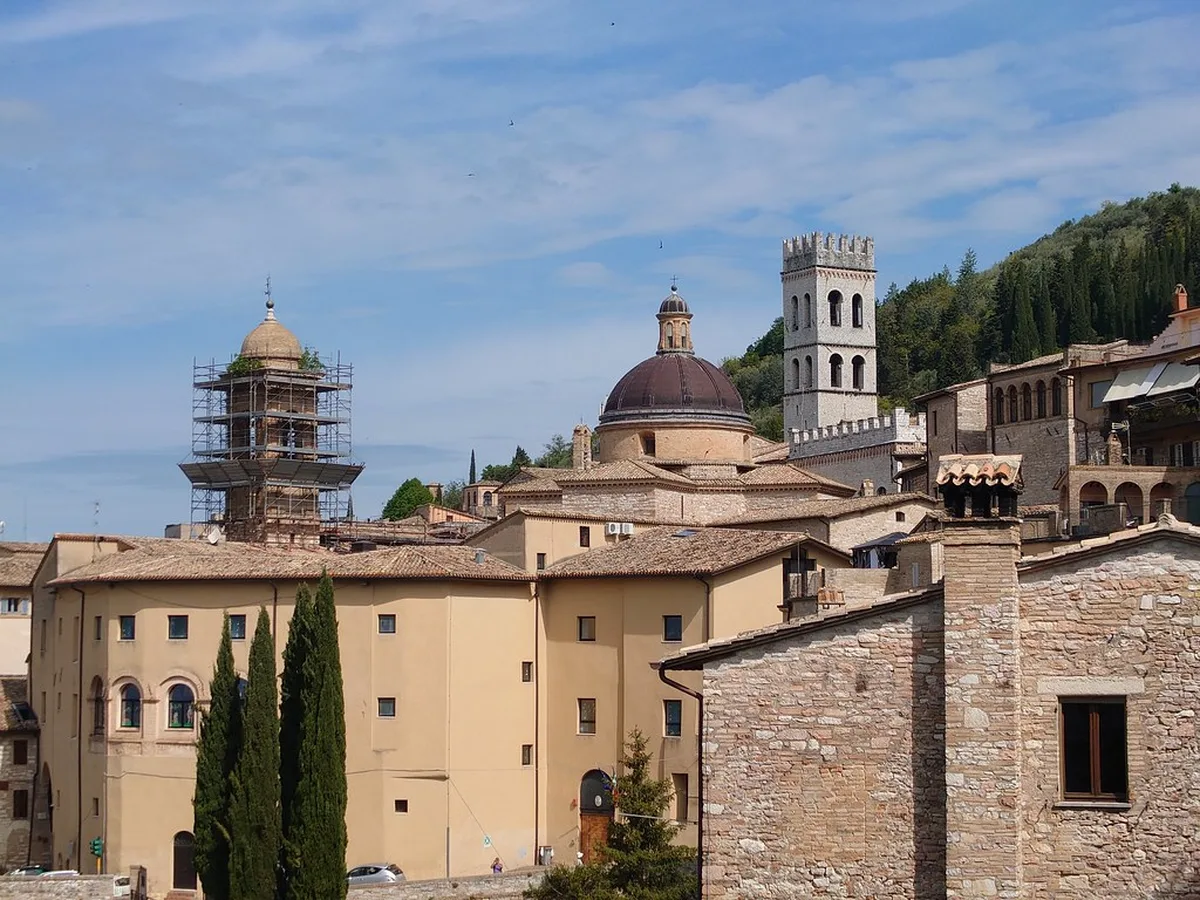
The recommended loop covers approximately 3 km of walking distance once you are in the old town. From Corso Vannucci, head north-east along Via dei Priori toward the Etruscan Arch (Arco Etrusco) — about 400 metres from the main square. Then descend Via Ulisse Rocchi to the university quarter before looping back through Via della Viola and Piazza Danti to the cathedral. The full circuit takes 3–5 hours at a sightseeing pace including brief stops at each landmark.
Wear comfortable shoes with good grip for the uneven and slick cobblestones. Many paths in the center involve steep gradients and narrow staircases. You might want to check the Perugia old town guide for specific street maps and neighbourhood descriptions. Carrying a refillable water bottle is smart because the city has many public fountains, including the historic Fontana Maggiore.
The city center is largely pedestrian-only, which makes walking much safer and more pleasant. Local authorities strictly limit car access to residents with special permits. This lack of traffic allows you to fully appreciate the medieval atmosphere at every turn. Keep a map on your phone, but do not be afraid to wander down unmarked vicoli (alleyways) — they often lead to hidden viewpoints over the Umbrian valley below.
Spring and autumn offer the most comfortable temperatures for long walks. Summer can be quite intense when the sun reflects off the stone buildings. If you visit in July, try to schedule your walk for early morning or late evening. Winter brings a quiet charm, and the Rocca Paolina tunnels stay cool year-round regardless of outside temperature. The Minimetrò automated rail (€1.50 single ticket) also connects Pian di Massiano to Piazza dei Partigiani in about seven minutes, giving you a practical alternative to walking the valley approach entirely on foot.
Must-See Landmarks on a Perugia Walking Tour
Piazza IV Novembre serves as the social and architectural heart of the city. Here you will find the Fontana Maggiore, a 13th-century fountain carved between 1275 and 1278 by Nicola and Giovanni Pisano. The intricate bas-reliefs depict scenes from the Old Testament, the months of the year, and the patron saints of the city. Viewing the exterior is free in 2026, and restoration work completed in 2025 has left the pink and white marble looking exceptionally vivid.
The pink and white marble facade of the Cathedral of San Lorenzo stands right across the square, though it remains famously unfinished. Local students often gather on its broad steps in the late afternoon sun. Step inside to see the baroque interior and the Cappella del Sant'Anello, which claims to house the Virgin Mary's wedding ring. Entry to the cathedral is free, and it is open daily from approximately 7:30 to 19:30 with a midday pause.
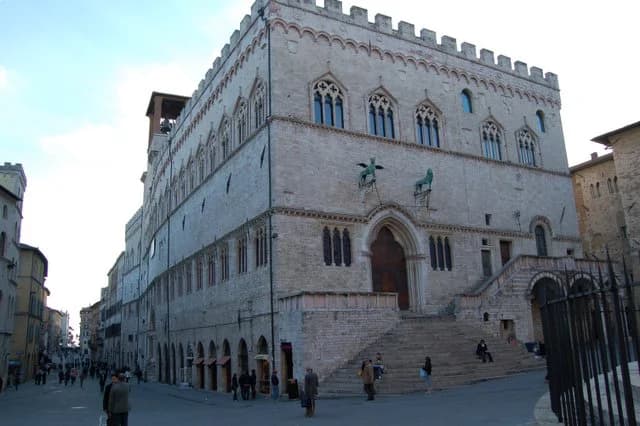
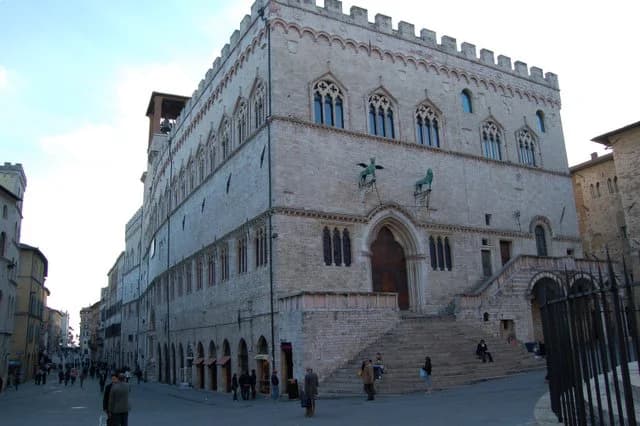
The Palazzo dei Priori dominates the western side of Piazza IV Novembre and is one of the finest examples of Gothic civil architecture in Italy. Inside, the Hall of Notaries (Sala dei Notari) is often free of charge — check the posted hours at the main entrance on the piazza. The building also houses the Galleria Nazionale dell'Umbria, which holds Umbria's greatest collection of medieval and Renaissance painting. In 2026 the gallery charges €12 for standard adult admission and is open Tuesday to Sunday from 08:30 to 19:30; tickets are available at the door or via the regional museum website. Plan at least 90 minutes if you intend to see the gallery in full.
Don't miss the Corso Vannucci, which is the main pedestrian street for a classic passeggiata stroll. This wide avenue runs roughly 350 metres from Piazza IV Novembre to the scenic Giardini Carducci overlook. You can find many day trips from Perugia described in our companion guide for when you are ready to explore the wider Umbrian valley. Stop for a chocolate treat at one of the historic cafes along the corso — Perugia is Italy's chocolate capital and home to the Perugina brand. A cappuccino at one of the Corso Vannucci bars runs €1.50–€2.00, while a hot chocolate with Baci squares costs around €4.50.
- Fontana Maggiore
- Type: Medieval fountain
- Built: 1275–1278
- Location: Piazza IV Novembre
- Cost: Free (exterior)
- Palazzo dei Priori
- Type: Town Hall / Gallery
- Style: Gothic
- Galleria Nazionale dell'Umbria: €12 (2026)
- Palazzo entry (Hall of Notaries): often free
- San Lorenzo Cathedral
- Type: Religious site
- Facade: Unfinished Gothic
- Interior: Baroque
- Entry: Free
Perugia Underground: The Rocca Paolina and Etruscan Walls
Beneath Perugia's elegant Corso Vannucci lies an entire subterranean world that most tourists never fully explore. Pope Paul III commissioned the Rocca Paolina fortress in 1540 following the bloody Salt War, ordering the architect Antonio da Sangallo the Younger to demolish the entire Baglioni family neighbourhood — dozens of medieval houses, towers, and streets — and bury them under a massive military stronghold. The result is a ghost city frozen in the 16th century, preserved underground for nearly 500 years.
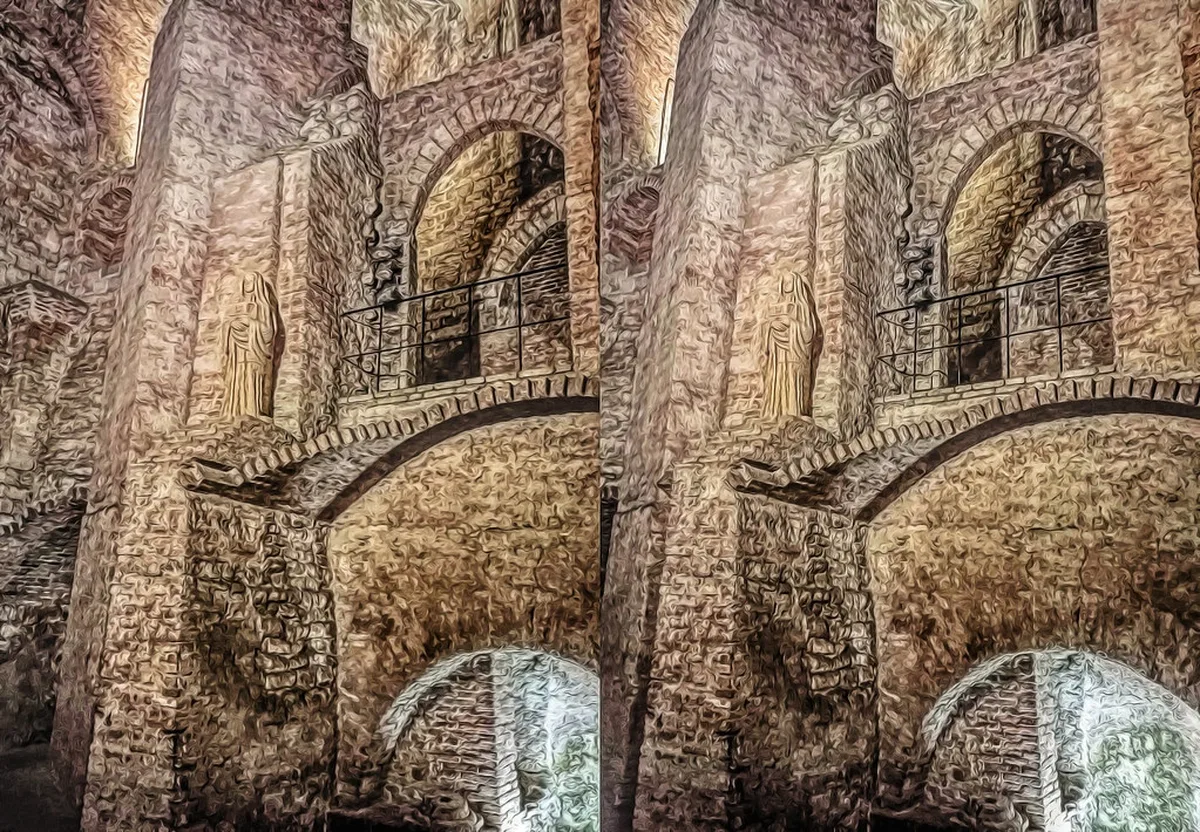
Today the Rocca Paolina is free to enter and open daily from 06:00 to 21:00 (summer hours; winter hours vary slightly). The main subterranean walkway connects Piazza Italia at the top of the hill down to Piazza Partigiani at the base. A series of escalators runs through the heart of the ruins, but the most atmospheric experience is to step off the moving stairs and walk through Via Baglioni — the original medieval street that was swallowed whole by the fortress. You can still see doorways, arched windows, and even the bases of towers rising from the original cobblestone surface. The vaulted brick ceilings above were built directly on top of the demolished houses, creating a ceiling of history just a metre above your head.
The Arco Etrusco (Etruscan Arch), also called Arco di Augusto, stands at the north end of Via Ulisse Rocchi and is one of the most intact Etruscan city gates in all of Italy. It dates to the 3rd century BC and features two massive cylindrical towers flanking a central archway that still carries pedestrian traffic today. Entry is free — you walk through it as part of the street. Look up at the travertine voussoirs and you will see the Roman restoration work grafted onto the original Etruscan stonework in a visually striking contrast of building eras.
The Etruscan city walls encircling the hilltop are a UNESCO-recognised heritage asset as part of the broader recognition of Perugia's archaeological significance. Walking a section of the walls along Via delle Mura Etrusche gives you a sense of the original 3rd-century BC perimeter, which once stretched over three kilometres around the hilltop. Porta Marzia, another preserved Etruscan gate, was dismantled stone by stone by Sangallo and rebuilt into the lower facade of the Rocca Paolina — making it simultaneously a 3rd-century BC gateway and a 16th-century fortress wall. This remarkable palimpsest of civilisations is unique in Italy.
For photography, the Rocca Paolina tunnels are best visited between 10:00 and 14:00 when natural light filters down the escalator shafts and illuminates the brick vaults. Bring a wide-angle lens or use portrait mode on a smartphone to capture the full height of the medieval street beneath the fortress ceiling. The underground temperature stays around 14°C year-round — bring a light layer if you plan to linger. Admission is free at all times, making this the single best value sight in the entire city.
Navigating the Medieval Aqueduct and Scenic Paths
The Acquedotto Medievale (medieval aqueduct) is one of Perugia's most distinctive walking experiences. Built in the 13th century to carry water from Monte Pacciano roughly 4 km to the Fontana Maggiore in the city centre, the aqueduct was cleverly converted into a raised pedestrian walkway in recent decades. The accessible section runs from near the University for Foreigners (Università per Stranieri), on Via Alessio Baldovinetti, and offers an elevated view over the valley rooftops that most visitors completely miss. The walk along the aqueduct spans roughly 200 metres and is free at all hours.
Follow the aqueduct path toward the university quarter for stunning valley views across the Tiber basin. This route is significantly quieter than the main tourist areas near the cathedral, and in the early morning you are likely to share it only with local students heading to lectures. You can see the rolling hills of Umbria stretching toward the Apennines on the eastern horizon. It is an ideal spot for a sunset walk before dinner in the centro storico.
Porta Sole offers another incredible vantage point for those who enjoy panoramic views. Reached via Via dell'Aquila from Piazza Danti — a roughly 300-metre uphill walk from the cathedral — it stands as one of the highest points in the old town and provides a sweeping look at the Umbrian countryside. On clear days between October and April you can see all the way to Mount Amiata (1,738 m) on the Tuscan horizon. There is a small belvedere terrace with benches suitable for a picnic break, and the viewpoint is free to access at any hour.
Descending from Porta Sole southward leads you through the Frontone Gardens, a terraced park near the church of Sant'Ercolano. This green space features classical statues, cypress trees, and shaded benches that are popular with local families on weekend afternoons. The gardens are particularly beautiful in late April when wisteria blooms across the iron railings. Entry is free and the park opens from dawn to dusk throughout the year.
Further south, the church and cloisters of San Pietro — reachable via Borgo XX Giugno, approximately 600 metres from Piazza IV Novembre — contain one of the most beautiful carved wooden choir stalls in Umbria and a ceiling fresco cycle of staggering quality. Entry to the church is free; the cloister garden charges a small supplementary fee in 2026 of around €2. This southern end of the walking route is less visited but rewards those willing to make the extra 15-minute detour with genuine solitude and an extraordinary acoustic when the choir practises on weekday mornings.
Essential Tips for Navigating Perugia's Hills
Perugia is built on a series of ridges rising to roughly 493 metres above sea level, making navigation tricky for first-time visitors. Use the Minimetrò automated people-mover if you are staying in the Pian di Massiano district or near the Fontivegge train station. This elevated, driverless rail system covers approximately 3 km and connects the valley floor to a terminal near Piazza dei Partigiani in about seven minutes. Single tickets cost €1.50 and day passes are available at station kiosks and the main bus terminal for €3.50.
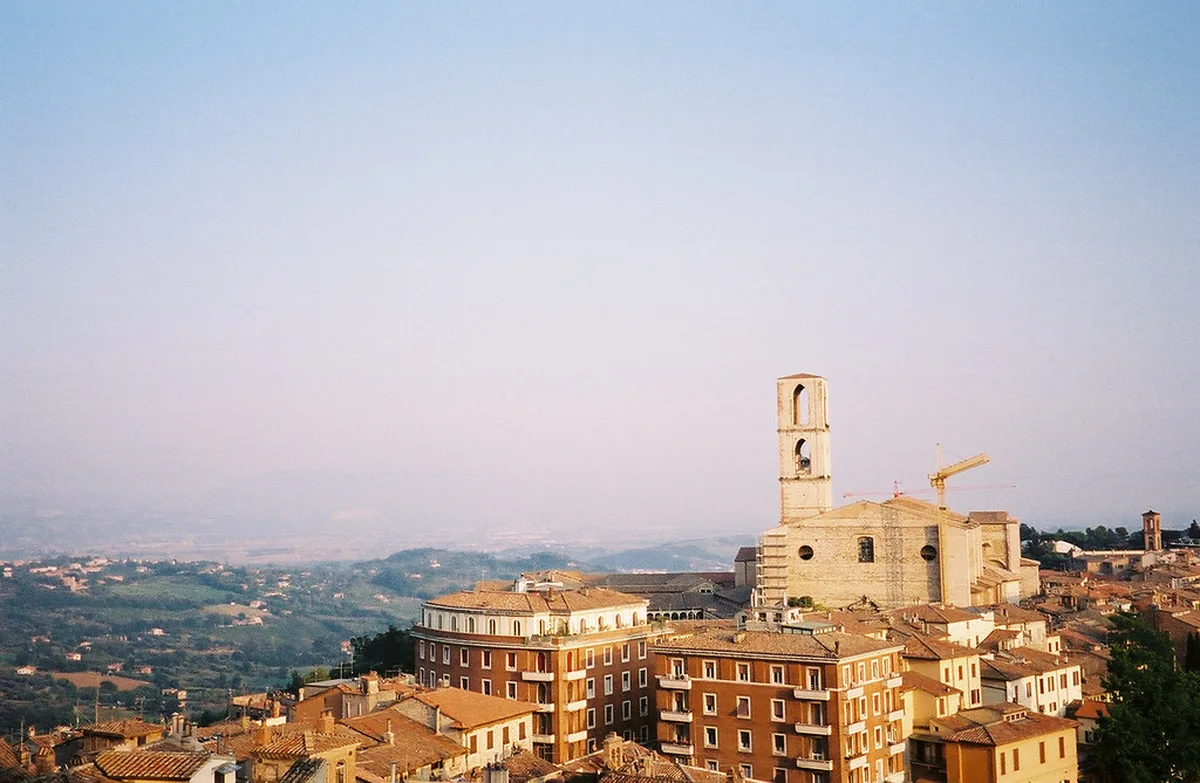
Many travelers make the mistake of trying to walk up the steep Via Pellas from Piazza Partigiani directly to Corso Vannucci. That climb involves roughly 60 metres of vertical ascent over 350 metres of uneven stone steps — an exhausting start before you have even reached the first landmark. Instead, take the escalators inside the Rocca Paolina: they deposit you on Corso Vannucci in under three minutes, completely free of charge, and you get a bonus subterranean experience along the way.
Public restrooms can be difficult to find in the narrow backstreets of the centre. The best reliable options in 2026 are: inside the Rocca Paolina tunnel system (near the midpoint escalator landing), at the Galleria Nazionale dell'Umbria (for ticket-holders), and at the bus terminal at Piazza Partigiani. Most cafes on Corso Vannucci provide restrooms after a coffee purchase, typically costing €1.20–€1.80 at the bar.
Luggage storage is available at the main Fontivegge train station (left luggage lockers, approximately €6 per bag for 24 hours) if you are visiting on a day trip. The historic centre itself has no dedicated left-luggage facility, so travelling light is strongly recommended. Backpacks with laptop compartments are awkward on the narrow stairways of the underground city.
If you have extra time after your Perugia walking tour, the wider Umbrian region is outstanding for day excursions. Assisi is reachable in 25 minutes by regional train (€3.40 single), Spello in 20 minutes (€2.20), and Orvieto in 75 minutes with a change at Terontola. You can also head further afield across Italy — our Siena walking tour guide covers another magnificent hilltop city with many similarities to Perugia's medieval atmosphere and is a natural companion piece to this route.
Etruscan Heritage and Ancient Stone Gates
The Arco Etrusco (Etruscan Arch), standing at the junction of Via Ulisse Rocchi and Via Cesare Battisti in the northern quarter of the old town, is one of the most impressive ancient structures in central Italy. Dating to approximately the 3rd century BC, the gateway still spans a live pedestrian street and serves as a functioning city entrance just as it did 2,300 years ago. Standing beneath the two cylindrical Etruscan towers and looking up at the travertine arch blocks — some weighing over a tonne — gives you a visceral sense of the city's extraordinary age. Entry is free and unrestricted at all hours.
Look for the Pozzo Etrusco (Etruscan Well), located on Piazza Danti just 80 metres north-east of the cathedral. This 5th-century BC cistern descends 36 metres into the bedrock and held over 400,000 litres of water for the ancient city. Visitors can descend a modern steel walkway into the upper section of the well for a €3 admission fee (2026 rate). The experience lasts about 20 minutes and includes an audio guide in English. It provides a fascinating look at the sophisticated hydraulic engineering that sustained Perugia long before Roman rule.
The Etruscan city walls themselves narrate a story of defense and expansion across two millennia. Walking along Via delle Mura Etrusche on the northern perimeter allows you to spot the original 3rd-century BC coursed stonework alongside later Roman repairs — identifiable by smaller, more precisely cut blocks — and medieval additions in brick. These fortifications encircled a settlement of approximately 800 hectares at the height of Etruscan power, making ancient Perugia one of the twelve principal cities of the Etruscan League.
Porta Marzia is perhaps the most poignant archaeological sight in the city. This 3rd-century BC gate was painstakingly dismantled stone by stone in the 1540s and rebuilt by architect Antonio da Sangallo the Younger into the lower facade of the new Rocca Paolina fortress, preserving it even as the fortress erased the neighbourhood around it. Look for it embedded in the rusticated stone wall near the base of Via Baglioni underground. The upper register of Porta Marzia features three carved figures — possibly the Dioscuri (Castor and Pollux) flanking a central deity — which represent a beautiful bridge between the Etruscan religious world and the later Renaissance structures built above them.
For a broader picture of Umbria's Etruscan legacy beyond Perugia's gates, the National Archaeological Museum of Umbria (Museo Nazionale d'Arte Medievale e Moderna) on Piazza Giordano Bruno holds thousands of artefacts excavated from surrounding sites, including funerary urns, bronze mirrors, and painted ceramics. Admission costs €8 in 2026 (combined ticket with certain Palazzo dei Priori rooms available for €15) and the museum opens Tuesday to Sunday from 08:30 to 19:30. This is the definitive indoor complement to the open-air Etruscan sites scattered across the hilltop.
Perugia Food and Chocolate Stops on the Walking Tour
No Perugia walking tour is complete without experiencing the city's legendary chocolate culture. Perugia is the birthplace of the Perugina brand and the home of the iconic Baci chocolate, first created here in 1922. The Eurochocolate festival, held every October in the streets of the old town, turns the entire centro storico into a chocolate marketplace for ten days, attracting over 900,000 visitors annually. But in any month of 2026, you will find world-class chocolate experiences woven into the walking route itself.
Caffe Sandri at number 32 Corso Vannucci is the oldest and most celebrated cafe in the city, operating since 1860 beneath extraordinary painted vaulted ceilings. A bicchierino di cioccolato (small cup of hot chocolate) costs around €3.50, and the display cases are stocked with Perugina-style bonbons, torta di farro (spelt cake), and seasonal chocolate sculptures. The cafe is open daily from 07:30 to 21:00 and is worth a 20-minute stop midway through your Corso Vannucci stroll.
For savoury food, the Mercato Coperto (covered market) in Piazza Matteotti offers fresh Umbrian produce, truffle products, and local cheeses. Entry is free and the market opens Monday to Saturday from 07:30 to 13:30. Here you can buy sliced norcineria (Umbrian cured meats) for a picnic in the Giardini Carducci: a generous mixed board costs approximately €8–€12 from market vendors. Truffle-infused olive oil (100 ml bottle) runs €12–€18 and makes an excellent compact souvenir.
Osteria del Gambero on Via Baldeschi, about 150 metres from Piazza IV Novembre, is a well-regarded trattoria serving traditional Umbrian pasta dishes. A bowl of strangozzi al tartufo nero (thick pasta with black truffle sauce) costs around €16–€18, while a glass of local Sagrantino di Montefalco wine runs €6–€8. Booking ahead for lunch is advisable, particularly on weekends between April and October when the walking tourism season peaks.
For a quick mid-walk energy boost, several street food windows (porchetta stalls and schiacciata flatbread windows) are dotted along the side streets off Corso Vannucci. A generous serving of Umbrian porchetta on bread costs €4–€5 and is the city's classic working-lunch format, eaten standing in a doorway. These snack stops are ideal around 11:30 before the full lunch crowds arrive at the sit-down restaurants. Pair with a local craft beer from one of the enoteca bars near the university for around €4 per bottle. The food scene in Perugia punches well above its modest size, making it a genuinely rewarding culinary stop alongside its architectural highlights.
Frequently Asked Questions
What is Perugia best known for?
Perugia is best known as Umbria's hilltop capital, the birthplace of the Perugina chocolate brand and its famous Baci chocolates, and one of the finest concentrations of Etruscan and medieval heritage in Italy. The city hosts the internationally acclaimed Umbria Jazz Festival each July, drawing over 200,000 visitors. Its underground Rocca Paolina fortress (free entry), Gothic Palazzo dei Priori, and the Galleria Nazionale dell'Umbria (€12 in 2026) are the defining cultural attractions.
How long does it take to walk Perugia Old Town?
A focused walk through Perugia's old town covering the main landmarks — Piazza IV Novembre, Corso Vannucci, the Rocca Paolina underground (free), and the Etruscan Arch (free) — takes approximately 2–3 hours at a steady sightseeing pace. Adding the Galleria Nazionale dell'Umbria (€12, allow 90 minutes), the medieval aqueduct path, and the Frontone Gardens stretches the experience to a comfortable full day of 6–7 hours. Most visitors find 4–5 hours the sweet spot for a relaxed but thorough tour.
Is Perugia walkable for people with mobility issues?
The city is quite challenging due to its steep hills and uneven cobblestones. However, the extensive system of free escalators through the Rocca Paolina and the Minimetrò automated rail (€1.50 per trip) make the main sites considerably more accessible than they might appear. Stick to Corso Vannucci for the flattest walking surface in the old town. Visitors using wheelchairs should note that much of the historic centre remains difficult due to medieval street gradients; the Rocca Paolina escalators do provide a fully level route between Piazza Italia and Piazza Partigiani.
What is the best starting point for a walk in Perugia?
Piazza Partigiani is the best starting point if you are arriving by bus or parking a car in the underground car park. From here, take the free escalators through the Rocca Paolina fortress tunnels directly into the heart of the city in under three minutes — you arrive on Corso Vannucci steps from Piazza IV Novembre. Alternatively, if you are already in the centre, start at Piazza IV Novembre and work outward to the Etruscan Arch (free, 400 m north-east) and back through the Corso before descending to the underground tunnels.
Are there free things to see on a Perugia walking tour?
Many of the best sites in Perugia are completely free to visit in 2026. The Rocca Paolina underground tunnels, the San Lorenzo Cathedral, the Fontana Maggiore exterior, the Arco Etrusco, the medieval aqueduct walkway, and the Frontone Gardens all cost nothing. Paid highlights include the Galleria Nazionale dell'Umbria (€12), the Palazzo dei Priori gallery rooms (€8), and the Pozzo Etrusco Etruscan Well (€3). A full free-only itinerary covering 6 major sites is entirely achievable in 3–4 hours.
How do I get from Perugia train station to the old town?
From Perugia Fontivegge station, take city bus line 6, 7, or 9 to Piazza dei Partigiani (approximately 10 minutes, €1.50 ticket purchased at the station newsagent). From Piazza Partigiani, the free Rocca Paolina escalators carry you directly to Corso Vannucci in under 3 minutes. Alternatively, the Minimetrò automated rail connects Pian di Massiano (near the station area) to Piazza dei Partigiani in 7 minutes for €1.50. Taxis from the station to the old town cost approximately €10–€14 depending on traffic.
What is the best time of year to visit Perugia for a walking tour?
April, May, September, and October offer the most comfortable walking weather, with daytime temperatures of 15–22°C, low humidity, and clear skies ideal for valley panoramas from Porta Sole and the Giardini Carducci viewpoint. July brings the Umbria Jazz Festival but also summer heat above 30°C — start walks before 09:00 or after 18:00. October coincides with Eurochocolate festival (over 900,000 visitors in 10 days) making it lively but crowded. December and January are quiet, cool at around 6–10°C, and offer the tunnels and cathedral in near-total solitude.
Exploring Perugia on foot is the most rewarding way to experience its medieval charm. From the ghost-town streets buried beneath the Rocca Paolina (free) to the sweeping valley views at Porta Sole, every corner of this hilltop city reveals a new layer of history stretching back more than 2,500 years. Few Italian cities pack so much archaeological and artistic depth into such a compact and walkable area, and the remarkable combination of free Etruscan monuments and world-class paid galleries (€12 at the Galleria Nazionale dell'Umbria) means the walking tour suits every budget.
Remember to take your time and enjoy the local atmosphere at a sidewalk cafe on Corso Vannucci. The vertical nature of the city means you will get plenty of exercise while sightseeing — and the escalator systems will save your energy for the landmarks that matter most. Arrive early, walk slowly, and linger underground: the Rocca Paolina is at its most atmospheric before the tour groups arrive at midday. For those planning to explore more of Umbria, our guides to Siena's old town and day trips from Perugia make ideal companions for extending your Italian hill town adventure.
Perugia remains a highlight of any trip to Umbria because of its authentic feel and exceptional cultural heritage. We hope this guide helps you navigate the hills, alleys, and underground passages with confidence in 2026. Enjoy your journey through one of Italy's most beautiful and underrated hilltop capitals.