Unforgettable Day Trips from Perugia to Explore Umbria
The fastest day trip from Perugia in 2026 is Spello by regional train: 15 minutes, €2.70 one-way, and the historic center is a 10-minute walk from the station.
For a full spiritual and cultural day, Assisi is the top choice: 25 km from Perugia, 30-minute direct train at €3–4, and the Basilica di San Francesco is free to enter.
Perugia serves as a perfect central hub for exploring the rolling hills and medieval towns of Umbria. Most regional destinations remain reachable within an hour by train or bus from the main Fontivegge station. Travelers can easily combine history, nature, and local food while staying in this historic capital city. Booking a base here allows for deep exploration without the need to pack bags every single day.
The city sits high on a hill, providing stunning views of the surrounding valley and distant mountain peaks. You will find many hidden gems just a short distance from the busy city center and university squares. Before heading out, consult our Perugia old town guide to familiarize yourself with the Minimetrò stops and the main squares. Planning ahead ensures you catch the best regional connections for a smooth and stress-free Italian holiday.
Assisi: A Spiritual Journey Near Perugia
Assisi stands as the most famous destination for travelers looking to venture out from the city of Perugia. Regional trains run frequently between the two cities and take approximately twenty-five to thirty minutes for a one-way trip in 2026. Tickets cost €3.00–€4.10 depending on the service, making this an extremely affordable option for a full day of sightseeing. The station in Assisi sits in the valley below the old town, so take the local orange APM bus (line C) for €1.50 up to the historic center — the ride is about fifteen minutes.
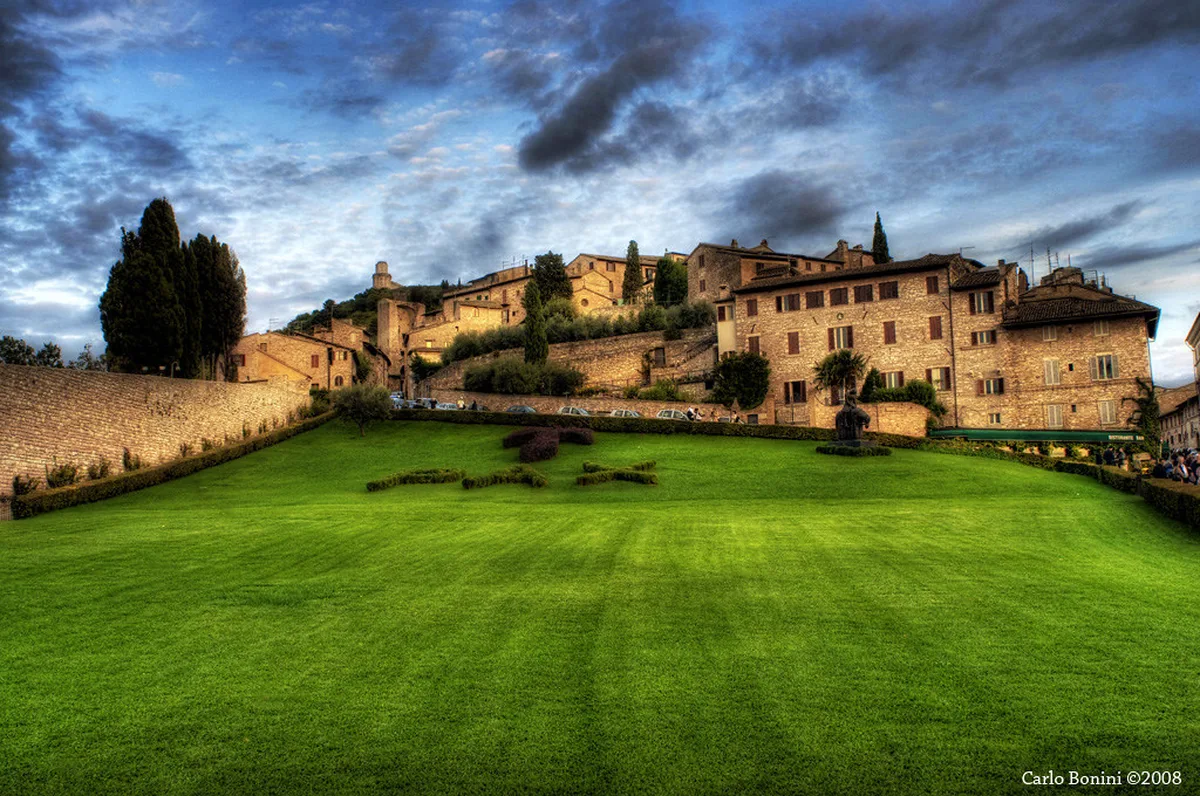
Visitors often head straight to the Basilica di San Francesco to see the incredible medieval fresco cycles painted by Giotto and Cimabue. The lower and upper basilicas offer a peaceful atmosphere despite the large number of daily pilgrims and tourists who arrive by the busload after mid-morning. Strict dress codes apply here, so ensure your shoulders and knees remain covered for your entire visit inside. Entry to the main church areas remains completely free in 2026, though donations toward restoration and maintenance are always welcome by the resident friars.
Walking through the steep stone streets leads you toward the Piazza del Comune and the well-preserved Temple of Minerva, now a church, which dates back to the first century BC. Art lovers should spend time in the Museo del Tesoro e Collezione Perkins to see Flemish and Italian masterworks rarely seen by casual tourists. Local guides recommend arriving at the basilica before 9:00 AM to enjoy the light through the stained glass without crowds. Stop at a small bar on Via San Francesco for a traditional cornetto and espresso before continuing your climb toward the upper fortress that dominates the skyline.
Hikers enjoy the steep trail up to the Rocca Maggiore fortress for the best panoramic views across the valley toward Perugia and Mount Subasio. The walk from the main square takes about twenty minutes on an uneven stone path, so wear sturdy shoes with grip. Entry to the Rocca Maggiore costs €6 per adult in 2026, with reduced rates of €4 for children aged 6–14. Carry extra water during the summer months because the exposed ramparts offer very little shade from the intense midday Italian sun. Sunset from the battlements provides a magical end to your day in this holy Umbrian city before catching the evening train back.
The Eremo delle Carceri hermitage lies 4 km above Assisi on Mount Subasio and is reachable on foot in about ninety minutes or by taxi for around €10–12 one way. This small monastery hidden in an oak forest is where Saint Francis retreated to pray and is free to visit throughout the year. The atmosphere inside the rocky caves and narrow stone corridors feels genuinely meditative even with other visitors present. Pack a picnic and enjoy the picnic tables near the forest trail before descending back into town for the return train.
- The Basilica di San Francesco
- Type: Religious landmark and UNESCO site
- Entry: Free of charge in 2026
- Top Feature: Giotto fresco cycle (Upper Basilica)
- Time: Allow at least two hours
- Rocca Maggiore Fortress
- Type: Medieval castle with ramparts
- Cost: €6 adult / €4 child (2026 rate)
- Highlight: 360-degree panoramic views
- Access: 20-minute uphill walk from Piazza del Comune
Lake Trasimeno: Nature and Island Escapes
Lake Trasimeno offers a refreshing change of pace with its calm reed-edged waters and charming lakeside fishing villages that have barely changed in decades. Passignano sul Trasimeno is the easiest town to reach by regional train from Perugia in about thirty to thirty-five minutes, with tickets priced at €3.50 one way in 2026. The lakefront promenade features several gelaterias, bike rental stands, and shaded benches where you can watch the local ferry boats dock and depart. Boat schedules for 2026 show regular departures to the islands starting from 8:30 AM until approximately 7:00 PM during the summer high season.
Isola Maggiore remains the most popular island stop for travelers interested in traditional Umbrian lace-making and quiet walking paths through olive groves. The island has a small permanent population of around forty residents and genuinely feels like stepping back into a much slower era of Mediterranean island life. Walk the perimeter trail in about forty to fifty minutes to see the old fishing harbour, the fifteenth-century church, and the abandoned neo-gothic villa. Ferry tickets from Passignano cost €8 return per adult in 2026, or €12 return from Castiglione del Lago if you prefer to board from the western shore.
Isola Polvese, the largest island, is entirely car-free and hosts a nature reserve with marked walking trails suitable for families with children. The ruins of a fourteenth-century castle and a small monastery can be reached within thirty minutes of the ferry landing. Entry to the island is free in 2026, though the ferry from San Feliciano costs €6 return and runs on a reduced schedule outside July and August. Bring a picnic because the island has no permanent restaurant, only a small kiosk open during the high summer season.
Castiglione del Lago sits on the western shore and features the imposing Castello del Leone and the adjacent Palazzo della Corgna, which contains beautiful Renaissance frescoes that tell the story of the della Corgna ruling family. A combined entry ticket for both buildings costs €7 per adult in 2026. You can walk along the restored fortress battlements for sweeping views over the blue-green lake toward the Tuscan border on clear days. This town often feels noticeably less crowded than Passignano because it sits farther from the main tourist train line and requires either a bus or a car to reach efficiently.
Dining by the lake allows you to sample local specialties like smoked eel, Trasimeno carp in tomato sauce, and bean soups made with the rare fagiolina del Trasimeno legume. Many restaurants on the lakefront offer outdoor tables where you can enjoy the cool breeze during warm summer evenings. Prices for a full lakefront lunch with a glass of local white wine typically range from €18 to €28 per person in 2026. Always check the final ferry departure times carefully to ensure you do not miss your last connection back to Passignano station.
Gubbio: The Medieval Stone City
Gubbio is often called the stone city because of its remarkably uniform grey limestone buildings and labyrinthine medieval alleys that have changed very little since the Middle Ages. The Umbria Mobilità APM bus departs from the Piazza Partigiani station in Perugia and takes roughly seventy to eighty minutes to reach Gubbio in 2026. A return bus ticket costs approximately €5 and is available at the ticket kiosk inside the bus station or via the Umbria Mobilità app. The drive through the Umbrian countryside includes dramatic views of the Apennine foothills and forested gorges that appear completely unchanged from medieval maps.
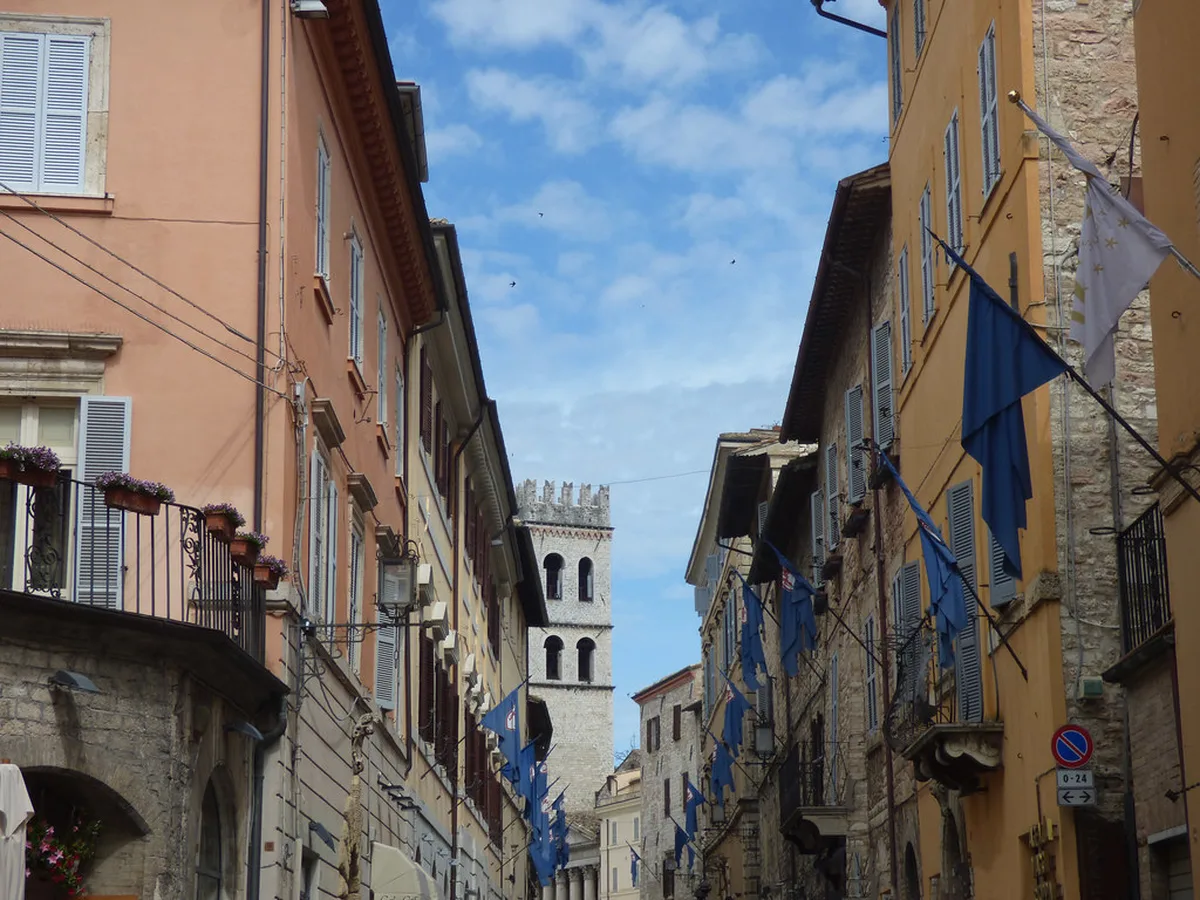
The most famous and thrilling attraction in Gubbio is the Funivia Colle Eletto, an open-air cage funicular that whisks visitors up the steep mountainside to the Basilica di Sant'Ubaldo. Two people stand inside the small birdcage gondola as it ascends 472 metres to the top, offering dizzying views over the rooftops and valley below. A return funicular ticket costs €8.50 per adult in 2026, with a reduced rate of €5.50 for children under 12. The basilica at the summit houses the body of Gubbio's patron saint and is free to enter. From the terrace beside the church you can see clear to Assisi and, on exceptional days, to Perugia itself.
Piazza Grande serves as the dramatic heart of the city and is in fact a vast hanging terrace built out from the hillside in the fourteenth century — an extraordinary feat of medieval engineering. The Palazzo dei Consoli towers over the square and houses the Museo Civico, which contains the famous Eugubine Tablets: seven bronze tablets inscribed in both Umbrian and Latin that represent one of the most important ancient linguistic documents ever found in Italy. Entry to the museum costs €6 per adult in 2026, reduced to €3 for students. Photographers find the best diagonal angles of the facade from the far western corner of the terrace, especially in the golden hour before sunset when the stone turns amber.
The Roman Theater located just outside the city walls dates back to the first century BC and still retains much of its curved seating area and stage platform. The site is free to walk around during daylight hours and in summer hosts outdoor concerts and classical plays as part of the Gubbio Festival calendar. Wandering through the lower town on Via dei Consoli reveals many artisan shops selling handmade ceramics decorated with the local medieval crossbow motif and high-quality truffle products sourced from the surrounding Apennine forests. Gubbio feels authentically Italian because its economy remains far less dependent on day-trippers than Assisi or the lakeside towns, meaning prices in the local trattorie are noticeably lower.
Food lovers should seek out crescia, the local flatbread cooked on a cast-iron griddle and stuffed with prosciutto and local cheese. A full lunch in a family-run trattoria in Gubbio costs €14–€20 per person including a glass of Montefalco Rosso. Budget the return bus carefully: the last bus back to Perugia typically departs around 19:30 on weekdays and significantly earlier on Sundays, when services are often reduced to two per day. Always check the Umbria Mobilità timetable online before departing to avoid being stranded in the stone city after dark.
Spello: The Flower Town of Umbria
Spello is frequently listed as one of the most beautiful villages in all of Italy due to its abundant floral decorations and impeccable medieval streetscape. The regional train from Perugia takes only fifteen minutes and costs €2.70 one way in 2026, making it the fastest and cheapest day trip on this entire list. Locals take extraordinary pride in their flower-covered balconies and arched doorways, which are typically decorated with colorful geraniums, roses, and oleander from late spring through early autumn. Walking through the town genuinely feels like exploring an open-air garden gallery with ancient stone walls as the backdrop for every photograph.
The Collegiata di Santa Maria Maggiore houses the Cappella Baglioni, which contains world-famous frescoes painted by Pinturicchio between 1500 and 1501. These paintings are considered masterpieces of the central Italian Renaissance and demonstrate Pinturicchio's mastery of architectural perspective and vivid mineral pigments that have barely faded in five centuries. Entry to the chapel costs €3.50 in 2026 and goes directly toward the ongoing conservation of the delicate tempera surfaces. Arrive before 9:30 AM on summer weekdays to enjoy the artwork without the tour groups that fill the nave from mid-morning onward.
Roman history is visible at every corner of Spello, starting from the enormous Porta Consolare gate with its three embedded Roman statues to the well-preserved stretches of Augustan-era city walls that wrap around the upper town. Follow the signposted route to the Villa Urbana di Mosaici, a Roman country house discovered in 2014 whose floors contain some of the most elaborate geometric and figurative mosaics found anywhere in central Italy. The dedicated museum opened in 2022 and tickets cost €9 per adult in 2026, including a multi-language audio guide that explains the symbolism of each floor panel in detail.
Spello is also celebrated for its high-quality extra-virgin olive oil produced in the hillside groves that surround the town on every side. Many small oil shops along the main street offer free tastings where knowledgeable staff will guide you through the peppery, grassy notes that define fresh Umbrian oil from the current harvest. Buy a 250ml bottle as a lightweight souvenir for around €7–€10 before catching the afternoon train back to Perugia. The town is compact enough to explore fully in three to four hours, leaving ample time for a relaxed two-course lunch at one of the family trattorias on Via Garibaldi.
In June, Spello hosts the Infiorata, one of Italy's most spectacular flower festivals in which the streets are carpeted with elaborate floral tapestries created overnight by the townspeople. If your 2026 visit coincides with Corpus Christi weekend in mid-June, plan to arrive the evening before to watch the artisans lay the petals under floodlights — an unforgettable experience. Train services run later than usual on festival days, but seats fill quickly so validate your return ticket early and wait on the platform rather than in the town square.
Orvieto: A Dramatic Cliffside Town
Orvieto sits dramatically on top of a massive volcanic tufo cliff rising sixty metres above the scenic Paglia river valley, making it one of the most visually striking towns in all of central Italy. The train journey from Perugia costs approximately €8 one way in 2026 and takes around sixty to seventy minutes with a change at Terontola, where connections are usually timed with minimal waiting. Upon arrival at the valley-level station, take the historic funicular railway to reach the Piazza Cahen at the top of the cliff. Funicular tickets cost €1.30 per person each way in 2026 and depart every ten minutes throughout the daylight hours — no reservation is needed.
The Duomo di Orvieto is consistently cited as one of the finest Gothic cathedrals in all of Italy and arguably in all of Europe. Its façade shimmers with golden mosaics and white-and-green striped marble that were crafted by successive generations of medieval builders over three centuries. Inside the cathedral, the Cappella di San Brizio contains Luca Signorelli's terrifying and magnificent frescoes of the Last Judgment, which directly inspired Michelangelo before he began the Sistine Chapel ceiling. Entry to the cathedral and chapel costs €5 per adult in 2026, and the combined Carta Orvieto Unica museum pass at €20 includes access to nine additional sites including the underground caves.
The Pozzo di San Patrizio (St. Patrick's Well) is a Renaissance engineering marvel that should not be missed while exploring the cliff plateau. Designed by Antonio da Sangallo the Younger in 1527 for Pope Clement VII, the well features two interlocking helical staircases of 248 steps each that allow donkeys to descend and ascend simultaneously without ever crossing paths. Tickets for the well cost €5 per adult in 2026 and the site remains open until 19:00 during the summer months. The temperature inside drops noticeably as you descend, making it a welcome respite during a hot July afternoon.
Orvieto Underground offers guided tours through the Etruscan and medieval tunnels carved into the soft tufo rock beneath the city streets. These tours last approximately one hour and tickets cost €7 per adult in 2026, with multiple departure times starting from the tourist office on Piazza Duomo. Inside the tunnels you will see ancient pigeon houses carved to feed medieval households, an olive oil press still intact from the sixteenth century, and a section of Etruscan-era wells and cisterns. Booking ahead on the Orvieto Underground website is advisable in July and August when the tours sell out by mid-morning.
Orvieto is also celebrated across Italy for its Orvieto Classico DOC white wine, a crisp and slightly mineral blend dominated by Grechetto and Trebbiano grapes that has been bottled here since Etruscan times. Many cellars on the cliff offer direct tastings for €5–€10, typically including two or three wines with a plate of local cheese and salumi. Allow ninety minutes for a proper visit to a cantina, and budget your return train carefully: direct services to Perugia via Terontola run until approximately 21:00 on weekdays, but weekend schedules can be more limited in the off-season.
Todi: Hilltop Perfection Above the Tiber
Todi is one of Umbria's most rewarding lesser-visited day trips from Perugia, combining a beautifully preserved medieval centro storico with sweeping views over the Tiber valley that stretch toward Lazio on clear days. The town sits at 400 metres on a dramatic promontory and has repeatedly appeared on lists of the world's most liveable small cities, something locals cite with obvious pride. Getting there from Perugia by bus takes approximately seventy minutes via the Busitalia regional service departing from Piazza Partigiani, and a return ticket costs around €6 in 2026. Driving is a faster option at about forty-five minutes, with free parking available in the large lot at Parcheggio Via Orvietana just below the old walls.
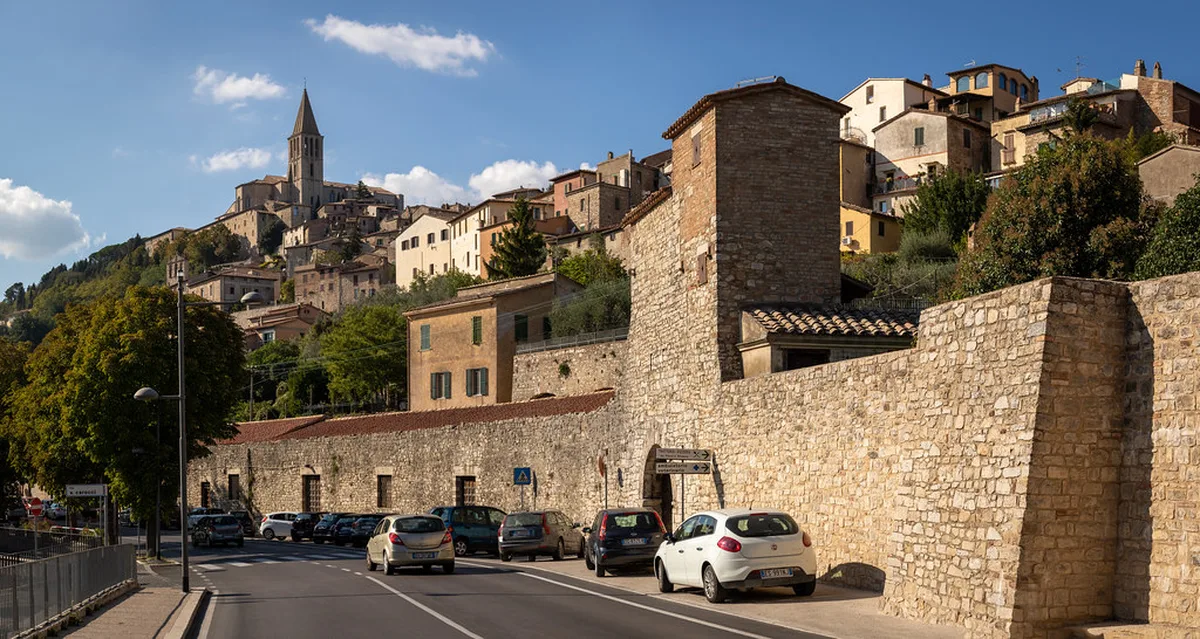
The heart of Todi is the stunning Piazza del Popolo, widely considered one of the finest medieval squares in Italy. Three massive civic palaces frame the north side — the Palazzo dei Priori, the Palazzo del Capitano, and the Palazzo del Popolo — all dating from the thirteenth and fourteenth centuries. Entry to the Museo Civico inside the Palazzo del Popolo costs €4 per adult in 2026 and includes access to the civic art collection and the panoramic terrace. The square itself is free to wander and is most atmospheric in the early morning before the market stalls set up or in the early evening when the golden light catches the travertine stone.
The Duomo di Todi stands at the southern end of the piazza and is notable for its unfinished façade that gives it an honest, raw quality unlike the ornate fronts of Orvieto or Assisi. The interior contains a finely carved wooden choir from 1521 and a monumental crucifix attributed to Alberto Sotio, one of the earliest documented Umbrian painters. Entry is free and the church is generally open from 9:30 to 12:30 and 14:30 to 17:30 daily. Dress modestly and speak quietly as local parishioners often come in for afternoon prayers regardless of the tourist season.
Santa Maria della Consolazione, a Renaissance domed church standing isolated in the fields below the town walls, is one of the most architecturally significant buildings in Umbria. The church was under construction for ninety-nine years (1508–1607) and was inspired by Bramante's design concepts, predating Saint Peter's Basilica in Rome by several decades. Entry is free in 2026 and the walk down from the Porta Orvietana gate takes about ten minutes on a paved path with views over the olive groves. This is an exceptional place for quiet reflection and photography, especially in spring when poppies fill the surrounding meadows in late April and May.
Todi hosts a thriving weekly market every Saturday morning in Piazza Garibaldi and the surrounding streets, where local producers sell Umbrian truffles, aged pecorino, homemade pasta, and seasonal vegetables. Budget around €15–20 for a good lunch in one of the trattorias on Via Ciuffelli, where the menu del giorno typically includes a pasta course, a meat main, and a quarter litre of house wine. The last Busitalia bus back to Perugia on weekdays departs around 19:00, so plan your afternoon with enough time to walk down from the old town to the bus terminus before dark.
Best Time to Visit and Seasonal Tips for Perugia Day Trips
Choosing the right season dramatically changes how enjoyable your day trips from Perugia will be. Spring (April–mid June) is widely regarded as the best overall period for exploring Umbria by day trip: temperatures sit comfortably between 16°C and 24°C, wildflowers carpet the fields below every hilltop town, and visitor numbers remain manageable at major sites like the Basilica di San Francesco in Assisi and the Duomo in Orvieto. Spello's famous Infiorata flower festival falls in June on Corpus Christi weekend, making late spring the absolute peak window for that particular destination.
Summer (mid-June to August) brings intense heat, often reaching 34°C–38°C in the Umbrian valleys by mid-afternoon. Visiting major sites before 10:00 AM and after 17:00 makes the heat manageable, but this requires careful timetabling of your trains and buses. Lake Trasimeno becomes the most appealing summer day trip precisely because the cool water and shaded ferry rides provide relief from the heat. Ferries to Isola Maggiore (€8 return) and Isola Polvese (€6 return via San Feliciano) run at their highest frequency between July and August, with boats departing every thirty to forty minutes at peak hours. Book Orvieto Underground tours (€7 per adult) in advance during August as they sell out well before mid-morning on weekdays.
Autumn (September to November) rivals spring for quality and often surpasses it for atmosphere. The grape harvest — vendemmia — fills the Umbrian air with the smell of fermenting Sagrantino and Montefalco Rosso from late September. Many wineries around Montefalco, a forty-minute drive from Perugia, open their cantinas for free or low-cost tastings and harvest events throughout October. Truffle hunting season peaks in October and November in the forests around Gubbio and Norcia, and some agritourism operators offer half-day truffle hunts with a dog handler and a simple lunch for €40–€60 per person — a memorable alternative to a standard sightseeing day trip.
Winter (December to February) is the quietest season and offers the best prices on accommodation in Perugia itself, with many B&Bs along Corso Vannucci dropping rates by 30–40 percent. Orvieto's Christmas markets run from late November through early January in the Piazza del Duomo, with mulled wine (vin brûlé) for €3 and traditional Umbrian biscuits. Gubbio hosts one of Italy's most extraordinary Christmas experiences: the Monte Ingino Christmas tree, a 750-metre outline of lights stretching up the mountainside that is visible from twenty kilometres away and runs from early December through early January. Temperatures drop to 2°C–8°C and some hilltop roads to Todi and Gubbio can ice over, so driving is not recommended after nightfall in January and February.
Public holidays and local festivals require advance planning regardless of season. Perugia's renowned Umbria Jazz festival in July (free outdoor concerts plus ticketed evening events from €20) draws international crowds that fill every train on the Foligno line by early afternoon. Assisi celebrates its patron saint with the Festa di San Francesco on 3 and 4 October, when the town is packed with pilgrims but also at its most atmospheric. Check the Comune di Perugia tourism calendar for local sagre (food festivals), which happen nearly every weekend across the province from April to November and often include free tastings of regional specialties like strangozzi pasta, norcineria cured meats, and Sagrantino wine at village piazzas throughout the surrounding countryside.
Essential Logistics for Day Trips from Perugia
Most day trips begin at the Perugia Fontivegge station, which sits in the valley below the medieval old town at an elevation some 150 metres lower than the city center. You can reach the station using the Minimetrò, a small automated people-mover that runs from Pincetto in the heart of the old town directly to the Fontivegge terminus. Consult our Perugia walking tour guide to locate the nearest Minimetrò stop to your accommodation. The Minimetrò ride takes about eight minutes and costs €1.50 for a single journey ticket purchased at the automated machines at every station in 2026.
Driving in Umbria offers more flexibility but comes with the persistent challenge of ZTL (Zona a Traffico Limitato) restrictions. Perugia has an extensive network of ZTL cameras that automatically fine any unauthorized vehicle entering the hilltop historic district during restricted hours, which are typically 7:00–21:00 seven days a week. Park your car in one of the large peripheral lots such as Pian di Massiano (€1.20/hour, free after 20:00) to avoid expensive €70–€120 traffic fines sent to your home address months after your holiday. The regional roads connecting Perugia to Gubbio, Todi, and the Trasimeno shore are well-maintained SS-class roads, but many mountain stretches feature sharp hairpin curves and single-lane stone bridges that require patient driving.
Train travel remains the most reliable and cost-effective method for visiting Assisi, Spello, and the Lake Trasimeno towns. Always validate your paper Trenitalia ticket in the yellow or green stamping machines on the platform before boarding any regional train — this applies even if you bought the ticket that same day at the station. Failure to stamp can result in a €50 minimum fine from the conductor during a routine check, with no discretion allowed regardless of tourist status. The Trenitalia app is excellent for checking real-time platform changes, buying contactless digital tickets, and storing your validated e-ticket on your phone.
Sunday travel in Umbria requires careful advance planning because bus services are typically reduced to around 30–40 percent of the weekday frequency. Plan visits to Gubbio and Todi, which depend on APM or Busitalia buses, for a Tuesday through Friday to guarantee good return connections in the early evening. Many smaller family-run restaurants and alimentari shops in Umbrian towns also close on Monday mornings, meaning your food options may be limited if you visit on a long Italian weekend. Check the official Umbria Mobilità and Busitalia websites for 2026 holiday timetables at least two days before you intend to travel to avoid being stranded at a rural bus stop after sunset.
Ticket purchasing tips for 2026: Trenitalia regional tickets for Umbria are fully interchangeable (you can take any train on the same route on the same day once validated) and do not require seat reservations. For bus routes, Umbria Mobilità single-journey tickets bought on board cost an extra €1 compared to kiosk or app prices, so always buy before you board. If you plan three or more bus journeys in a day, the integrated giornaliero day pass at €7.50 covers all APM/Umbria Mobilità bus lines across the region and pays for itself quickly. Water taxis across Lake Trasimeno do not accept contactless card payments at all piers, so carry cash for island ferry trips.
Travelers planning to extend their Umbrian explorations beyond a single base may also want to read our Siena old town guide for day trips across the Tuscan border, or browse day trips from Siena if you plan to split your time between Umbria and southern Tuscany. For a deeper orientation before your first morning out, our Perugia walking tour covers the Minimetrò network, the Rocca Paolina escalators, and the best espresso stops near Fontivegge.
Frequently Asked Questions
What is the easiest day trip from Perugia by train?
Spello is the easiest day trip from Perugia by train in 2026. The regional service takes just 15 minutes and a one-way ticket costs €2.70 at the Fontivegge station machine. The Spello train station is a flat 10-minute walk from the Porta Consolare gate and the historic centre, so no bus or taxi is needed upon arrival. You can realistically see the entire town and the Pinturicchio frescoes in the Cappella Baglioni (€3.50 entry) in under four hours and be back in Perugia for dinner.
Can I visit Assisi and Spello in the same day?
Yes, you can comfortably visit both Assisi and Spello in one day because they sit on the same Foligno-Terontola regional rail line. Take the 8:30 train from Perugia Fontivegge to Assisi (30 minutes, €3–4), spend four hours at the Basilica di San Francesco (free) and the Rocca Maggiore (€6), then catch the 30-minute onward train to Spello (€2 between the two towns). Arrive in Spello around 13:30, have lunch, walk the floral streets, visit the frescoes (€3.50), and take the direct 17:00 train back to Perugia. Total transport cost for the day is under €12 per person.
Do I need a car for day trips in Umbria?
A car is not necessary for the main Umbrian towns reachable from Perugia. Assisi, Spello, and Lake Trasimeno (Passignano) are all on the Trenitalia regional network. Gubbio and Todi are served by APM/Busitalia coaches from Perugia's Piazza Partigiani station. Orvieto requires one train change at Terontola but is fully doable by rail with an €8 one-way ticket. A car becomes genuinely useful only if you want to explore remote Umbrian wineries around Montefalco, tiny hilltop hamlets without bus stops, or the Valnerina gorge area east of Spoleto.
How much does a day trip to Orvieto cost from Perugia in 2026?
Budget approximately €35–€45 per person for a comfortable Orvieto day trip from Perugia in 2026. The breakdown is: return train ticket €16 (€8 each way via Terontola), funicular €2.60 return, Duomo and San Brizio Chapel €5, St. Patrick's Well €5, Orvieto Underground tour €7, and lunch at a central trattoria €18–€22. If you buy the Carta Orvieto Unica pass at €20 instead of individual tickets, you save money when visiting four or more sites. The pass is sold at the tourist office next to the funicular upper station on Piazza Cahen.
What is the best day trip from Perugia for families with children?
Lake Trasimeno is the best day trip for families with children departing from Perugia. The regional train to Passignano sul Trasimeno takes 30–35 minutes at €3.50 one way, and the lakefront promenade is completely flat and stroller-friendly. Children enjoy the ferry ride to Isola Maggiore (€8 return per adult, children under 6 travel free), the beach at Tuoro sul Trasimeno, and the gelaterias along the waterfront. Assisi is also very manageable for older children aged 8 and above who can handle uphill walking, and the Rocca Maggiore (€6 adult, €4 for ages 6–14) holds the attention of most young visitors with its towers and arrow slits.
Is Gubbio worth visiting on a day trip from Perugia?
Gubbio is absolutely worth a day trip from Perugia if you enjoy authentic medieval atmosphere without large tourist crowds. The return bus ticket costs around €5 and the journey takes about 70–80 minutes each way from Piazza Partigiani. Highlights include the open-air cage funicular up to the Basilica di Sant'Ubaldo (€8.50 return adult, €5.50 for children under 12), the dramatic hanging Piazza Grande terrace, and the Museo Civico containing the ancient Eugubine Tablets (€6). Budget a full day: arrive by 10:30, ride the funicular, visit the museum, eat crescia flatbread stuffed with prosciutto for lunch at €10–€15, and catch the late afternoon bus back. Avoid visiting on Sundays when bus services are very limited.
What is the best season to do day trips from Perugia?
Spring (April to mid-June) and autumn (September to November) are the best seasons for day trips from Perugia. Spring brings comfortable temperatures of 16°C–24°C, wildflowers, and Spello's Infiorata flower festival in June. Autumn offers truffle season in the forests around Gubbio, vendemmia harvest events at Montefalco wineries, and noticeably thinner crowds at Assisi and Orvieto. Summer is manageable if you visit major sites before 10:00 AM and use Lake Trasimeno (with ferry tickets from €6–€8 return) as your hot-weather escape. Winter is quieter and cheaper, but some bus services on Sunday are reduced to one or two departures per day.
Perugia is an ideal base for anyone wanting to see the best of central Italy without constant repacking. The variety of nearby towns ensures every traveler finds something compelling, whether that is Giotto frescoes in Assisi, the Etruscan cave system under Orvieto, the cage funicular in Gubbio, or simply a slow afternoon watching the lake ferries at Trasimeno. The regional train and bus network makes it straightforward to reach all of the highlights covered here on a reasonable 2026 budget. Start planning your trip today to experience the enduring charm of these extraordinary Umbrian destinations.