Dubrovnik City Walls Complete Guide: Walk the Ancient Ramparts in 2026
Dubrovnik City Walls tickets cost €35 for adults and €15 for children under 12 in 2026; the 2km circuit opens at 8AM daily from April to October and takes 1.5–2 hours to walk at a comfortable pace.
Arrive before 9AM to beat cruise-ship crowds — Minceta Tower (highest point), Bokar Fortress, and the Ploče Gate entry are all significantly quieter in the first hour after the 8AM opening, and temperatures are 5–8°C cooler than midday.
Walking the historic fortifications of Dubrovnik offers an unparalleled perspective of the shimmering Adriatic coastline. This Dubrovnik city walls complete guide helps you navigate the ancient stone paths with total confidence — from buying your ticket to choosing the best photo spots. Most visitors spend about 1.5 to 2 hours completing the full 2km circuit around the Old Town, but history enthusiasts may linger for 3 hours or more at the main fortresses.
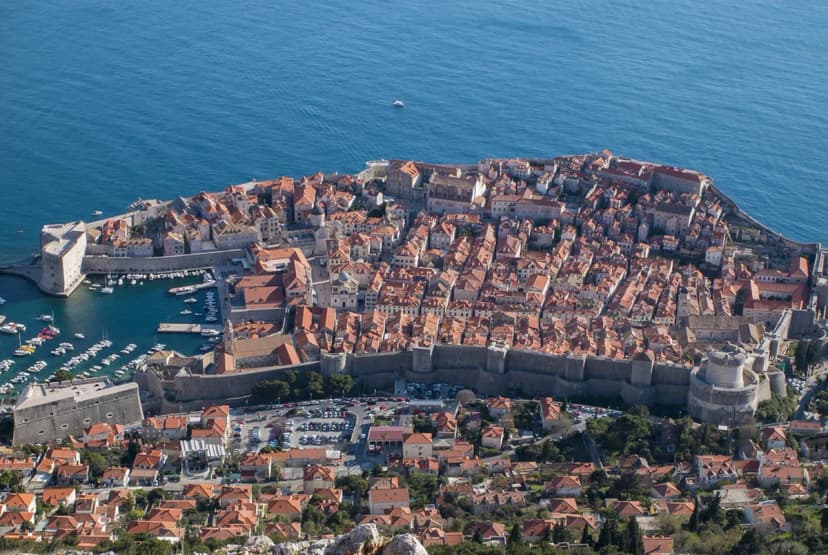
The massive walls represent one of the most impressive and best-preserved fortification systems in Europe. Built between the 8th and 16th centuries and reinforced after the devastating 1667 earthquake, they stand up to 25 metres tall and 6 metres thick in places. You will encounter stunning views of terracotta rooftops and deep blue water at virtually every turn, and the walk is consistently ranked among the top things to do in Croatia.
Ticket Prices and Entry Points in 2026
The 2026 adult ticket price for the Dubrovnik City Walls is €35 per person. Children under 12 years of age enter for €15. There is no family ticket available, so families should budget accordingly. Tickets are sold at each entrance gate — cash and card are both accepted, though card is the faster option during peak hours. You can also purchase tickets online via the official Dubrovnik walls website to save queuing time, though you must still pick up a physical ticket or show a QR code at the gate.

If you are planning to visit multiple attractions, the Dubrovnik City Pass includes wall entry and is worth calculating against standalone ticket prices. A one-day City Pass in 2026 costs €55 and covers the walls plus several museums and unlimited bus travel — a clear saving if you plan to do more than the walls alone. The pass is also available for two and three days. If you are driving into the Old Town area, read our guide to parking in Dubrovnik before you arrive, as spaces fill rapidly from 9am onwards in summer.
There are three main entrance points, each with distinct advantages depending on your priorities:
- Pile Gate (west side) — The most famous and most convenient entry point, steps from the Onofrio Fountain and the start of the Stradun. Ideal if you want to fill your water bottle at the fountain before climbing. This is consistently the busiest gate; expect queues of 20–40 minutes between 10am and 4pm in July and August. Arrive before 9am to walk straight in.
- Ploče Gate (east side) — Significantly quieter than Pile, situated at the eastern end of the Stradun near the Revelin Fortress. Local tip: most guided tour groups enter at Pile, so starting at Ploče is the single best way to get ahead of the crowd. The walk still covers the full circuit — you simply run it anti-clockwise from the other end.
- Maritime Museum / St. John's Fortress (south side) — The least-used entrance, accessible via the Old Port area. This entry point is ideal for visitors who want immediate sea-level views of the harbour before ascending. It sits adjacent to the Aquarium, so it works well if you plan to visit both.
Keep your ticket or QR code accessible throughout the walk. Staff at several checkpoints, including near Minceta Tower and the St. John's Fortress section, may request to see it. Losing or misplacing your ticket may require repurchase to access the remaining sections.
Opening Hours and Seasonal Schedule
The Dubrovnik City Walls follow a seasonal opening schedule that changes significantly between summer and winter. Getting these hours wrong is one of the most common planning mistakes visitors make, especially those visiting outside the peak summer window.
April to October (peak season): Gates open at 8:00am and the last entry is at 5:30pm, with the walls closing fully at 6:30pm. This extended schedule allows for early-morning visits before cruise ship passengers arrive and for late-afternoon golden hour photography. The 8am opening is the single most important time to know — it gives you a full 90-minute window before crowds build.
November to March (off-season): Gates open at 10:00am and close at 3:00pm. The walls are considerably quieter in winter, but the shorter window means you must arrive promptly. December and January can see sections of the walls wet and slippery from rain — extra caution on the narrow limestone ledges is advised. The winter ticket price may differ; check the official site before visiting off-season.
The walls are open every day of the year, including public holidays. Rare exceptions include severe weather events (strong bura wind gusts above 60 km/h occasionally prompt temporary closures) — check local announcements on the day if you are visiting in autumn or winter. Crowd patterns by month: June and September offer a strong balance of good weather and manageable crowds. July and August are peak months with maximum visitor numbers and heat. April, May and October are increasingly popular shoulder months and provide excellent conditions for the walk.
If you are staying in Dubrovnik for a few days, pairing the walls with the Dubrovnik Old Town guide helps you maximise each day without doubling back across the same areas. Many visitors do the walls on arrival day when energy is highest, then explore the Stradun and side streets on subsequent days.
Best Time to Walk the Walls
Timing your visit is the single biggest factor determining whether you enjoy a peaceful, photogenic walk or a sweaty shuffle through shoulder-to-shoulder crowds. The walls are a narrow circuit — in peak season there is genuinely nowhere to go if the path is congested.
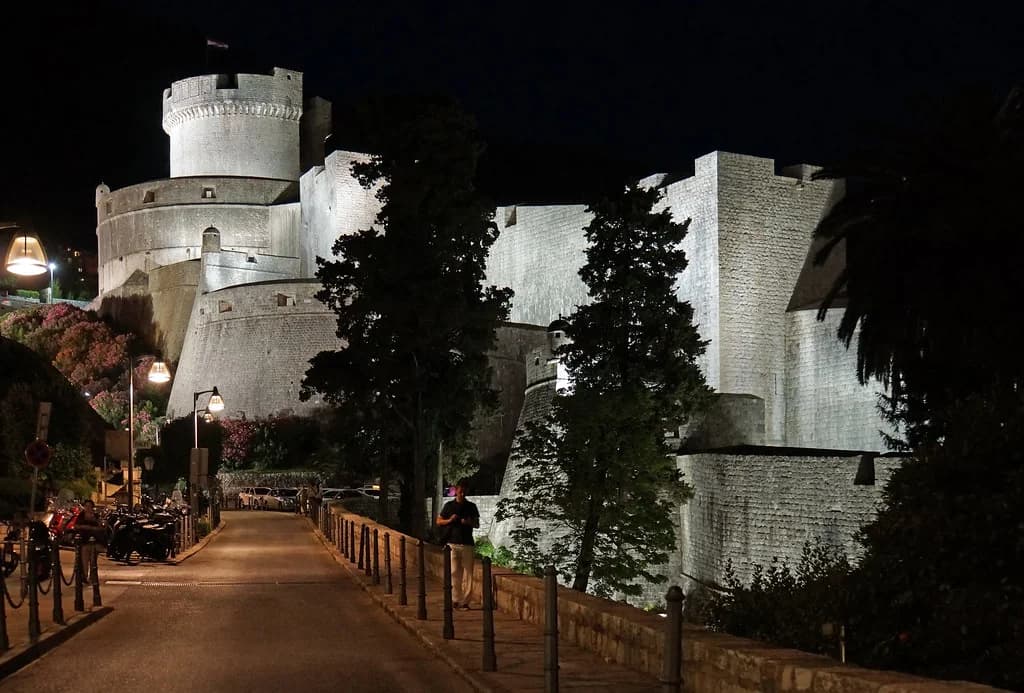
Before 9am (strongly recommended in summer): The gates open at 8am and the first hour is by far the quietest. Temperatures are 5–8°C cooler than midday, the light is soft and flattering for photography, and you will have stretches of wall almost to yourself. This window closes quickly — by 9:30am the first large tour groups begin to arrive.
After 5pm (second-best option): Cruise ship day-trippers must reboard by late afternoon, which drains a significant portion of the crowd. The golden evening light is exceptional for photography of the terracotta rooftops and the Adriatic. Check your target entry gate's last-entry time carefully — in peak season the final entry is 5:30pm, giving you a full hour before the 6:30pm closure.
Midday (11am–3pm): strongly avoid in summer. This window coincides with maximum heat, maximum crowd density, and the least flattering light for photography. The limestone walls radiate stored heat and there is almost no shade on the exposed sections. If midday is your only option, carry at least 1.5 litres of water, wear a hat, and apply high-SPF sunscreen before entering.
Seasonal note: visiting in October or May delivers shoulder-season crowds and temperatures in the comfortable 18–24°C range. Easter week and the last two weeks of August are the two absolute peak periods — if your dates fall in those windows, the 8am entry strategy becomes non-negotiable.
If you are building a full trip itinerary, see our Dubrovnik 3-day itinerary for a day-by-day schedule that places the wall walk at the optimal point in your visit.
Essential Route and Sightseeing Highlights
The path follows a strictly one-way, counter-clockwise direction starting from the Pile Gate to manage the flow of thousands of daily visitors. The circuit is approximately 2km and takes most people 1.5 to 2 hours, though you can slow to 3 hours if you linger at every fortress and café. The route offers a continuous panorama that switches between views of the Adriatic to the south and views down into the Old Town rooftops to the north.
Minceta Tower (northwest corner): The highest point on the entire circuit at approximately 37 metres above sea level. The climb to the crown of this circular tower involves several steep stone steps, but the 360-degree panoramic view over the city, the island of Lokrum, and the open sea is the finest viewpoint on the entire route. Minceta appears in several scenes from Game of Thrones (filmed here as the "House of the Undying"). Allow 10–15 minutes here including the ascent and descent.
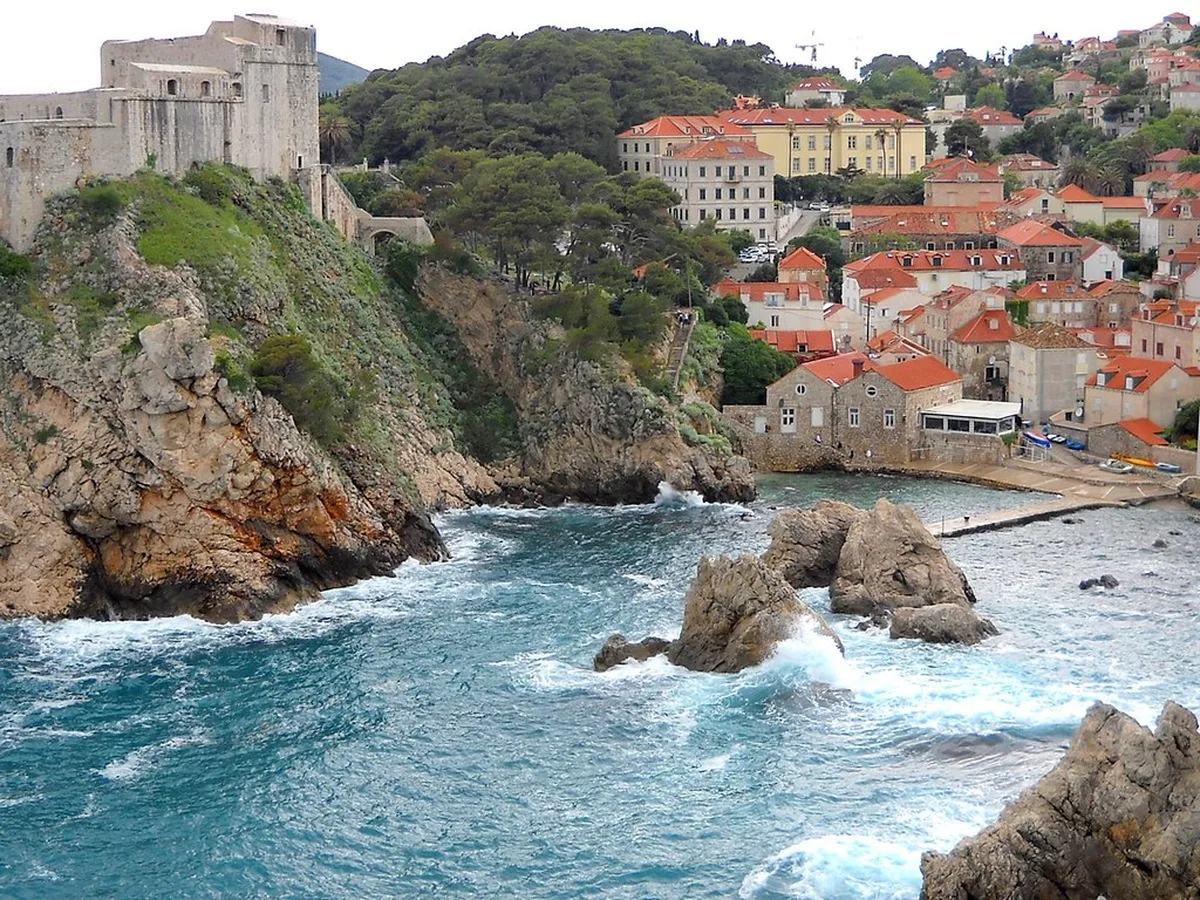
Bokar Fortress (southwest corner): A semicircular bastion protecting the western sea approach, designed by Michelozzo di Bartolomeo in the 15th century. From Bokar you get the iconic view of Lovrijenac Fortress rising dramatically from a 37-metre rock just outside the city walls — one of the most photographed vistas in Dubrovnik. The two fortresses were intentionally designed so that neither could be captured without the other's guns covering it.
St. John's Fortress (southeast corner): Guards the entrance to the Old Port and houses the Maritime Museum collection on its upper floors (separate entry fee applies, approximately €6 in 2026). From the wall walk just above the fortress, you can look directly down into the active harbour and watch the ferries and excursion boats manoeuvring. This is one of the calmest sections of the route and a good spot to rest if you need a break from the exposed upper sections.
The Stradun view (north face): The stretch of wall overlooking the Old Town interior offers a bird's-eye view of the Stradun, Dubrovnik's famous main street, along with the bell tower, the Franciscan Monastery, and the tightly packed medieval street grid. This view rewards patience — wait for a moment when the Stradun is slightly less crowded and the geometry of the city layout is clearly visible below you.
Midway through the route you will pass a small café built into the wall itself. This is one of the only spots to buy water or a cold drink without descending to street level. Prices are higher than in the town below (expect €4–5 for a 500ml bottle of water versus €1.50 in a supermarket), but the sea view from the tiny terrace is genuinely special. It is a good place to sit for 10 minutes and let a group of faster walkers move ahead of you.
What to Bring and How to Prepare
Preparation is the difference between a comfortable, memorable walk and a miserable one. The walls are fully exposed to the elements — there is almost no shade on the seaward side and the limestone surface reflects and retains heat aggressively. The following checklist covers everything you need for a safe and enjoyable visit.
Water: Carry a minimum of 1 litre per person, and 1.5 litres if walking in July or August between 10am and 4pm. The Onofrio Fountain at the Pile Gate provides free, clean drinking water — fill up before you ascend. Bottled water on the walls costs €4–5; buying a 1.5-litre bottle in a supermarket or convenience store inside the Old Town before you start costs approximately €1.50. This is the easiest saving you can make on the entire trip.
Hat and sunscreen: Essential from May through September. The UV index in Dubrovnik regularly reaches 9–10 (very high) during July and August. Even on slightly overcast days, reflected UV from the limestone surfaces is significant. Apply SPF 30+ sunscreen before entering and carry it with you for reapplication on a 2-hour walk.
Footwear: Closed-toe shoes with grip are strongly recommended. The limestone steps and walkway surfaces are worn smooth in many places and become dangerously slippery when wet. Flip-flops and smooth-soled sandals are a genuine safety risk on the steeper descents near the Pile and Ploče sections. Comfortable trainers or walking sandals with grip soles are the right choice.
Camera: The walls are one of the most photogenic locations in Europe. A smartphone with a wide-angle mode is sufficient for most shots. If you carry a DSLR or mirrorless camera, a wide zoom (e.g. 16–35mm equivalent) is the most useful range. A polarising filter dramatically improves the blue of the Adriatic in midday shots.
Disabled access: The walls are not accessible for wheelchair users or visitors with significant mobility impairments. The route involves hundreds of uneven stone steps, narrow passages, and steep ascents with no lift access at any point. Strollers cannot be taken on the walls — a baby carrier is the recommended alternative for families with infants. Visitors with limited mobility should note that there is no accessible bypass on any section of the circuit.
If exploring beyond the walls, our guide to day trips from Dubrovnik covers the best destinations reachable within 90 minutes of the city.
Common Mistakes to Avoid on the Walls
Even well-prepared travellers regularly make avoidable mistakes that diminish the experience. These are the most common errors and how to sidestep each one.

Arriving at the wrong gate at the wrong time: The majority of visitors enter at the Pile Gate and walk counter-clockwise. If you also enter at Pile between 10am and 2pm, you will be walking with the crowd the entire circuit. Instead, enter at Ploče — you will walk the same route in the same direction but start ahead of the majority of the day's visitors. This single change dramatically reduces how many people you encounter at the popular viewpoints.
Not buying water before ascending: As noted above, on-wall water costs 3–4 times the price available at street level. Fill a bottle at the Onofrio Fountain (free) or buy from a supermarket inside the Old Town before entering. Dehydration is the number-one reason visitors leave the circuit early in summer.
Wearing inappropriate shoes: Flip-flops or smooth-soled shoes can be dangerous on the polished and uneven limestone stairs. Some sections are quite narrow and become slippery when damp from morning mist or recent rain. Sturdy trainers or walking sandals with rubber grip soles provide the traction needed for the steep ascents and descents.
Not checking the closing time: Many visitors, especially those arriving in the afternoon, underestimate the time needed and find themselves rushing or — worse — locked out of the remaining sections. Allow a full 2 hours from the moment you enter. If it is 4:30pm and you are entering in peak season, you will make it, but there is no margin for lingering at cafés.
Skipping the Ploče Gate section: The eastern section of the walls, between Ploče Gate and St. John's Fortress, is often less photographed but offers some of the most spectacular open-sea views on the entire circuit. Visitors who start at Pile and rush through the end sections miss it entirely. Slow down as you approach the southeast corner.
Photography Tips and Best Photo Spots
The Dubrovnik City Walls are among the most photographed locations in Europe, and with good reason — the combination of medieval stone, terracotta rooftops, and vivid blue sea is uniquely striking. Getting consistently good shots requires understanding where to stand, when to shoot, and how to handle the crowds.
Top photo spots on the circuit:
- Minceta Tower lookout: The highest point on the walls, giving a true 360° view. Shoot south for the sea and Lokrum Island, north for the rooftop cityscape. Best light: morning (sun behind you for rooftop shots) or late afternoon (golden sidelight from the west).
- Bokar Fortress terrace: The postcard shot of Lovrijenac Fortress rising from its rock outside the walls. Use a focal length of 50–85mm equivalent to compress the scene and isolate Lovrijenac against the sea. Best light: afternoon when the sun illuminates the fortress face.
- Southeast wall overlooking the Old Port: Looking down into the harbour, you can capture the ferry activity and the red-roofed boathouses with the open Adriatic as background. This section works well in any light.
- Stone loopholes and window openings: Found throughout the inner wall face, these narrow medieval openings create natural frames for shots of the city streets below. They add a voyeuristic intimacy to otherwise wide-angle cityscapes. Get your phone or lens as close to the opening as possible to maximise the framing effect.
Use a wide-angle lens or the ultra-wide mode on your phone to capture the vast scale of the fortifications against the Adriatic. The contrast between the bright orange tiles and deep blue sea creates a striking visual that works in almost any light. A polarising filter eliminates sea surface glare and deepens the blue dramatically — one of the most effective single accessories you can bring.
Wait for gaps in the crowd to get clean shots at the major viewpoints — Minceta in particular can be difficult. The two most crowd-free windows are before 9am and in the last 45 minutes before closing. If you are following a Dubrovnik 3-day itinerary, reserve a morning slot for the walls so photography conditions and crowd levels are both favourable.
City Walls vs Dubrovnik Card: Is the Combination Worth It?
The most common value question visitors ask before arriving is whether to buy standalone wall tickets at €35 per person or invest in the Dubrovnik City Pass and cover the walls as part of a broader sightseeing bundle. The answer depends almost entirely on how many other attractions you plan to visit — and how many days you are staying in the city.
The Dubrovnik City Pass is available in one-day (€55), two-day (€75), and three-day (€90) versions. The one-day pass includes unlimited city bus travel, entry to the city walls, and access to several museums including the Rector's Palace, the War Photo Limited gallery, and the Fort Lovrijenac. If you visit the walls (€35) and then step inside Lovrijenac Fortress (normally €10 for a standalone ticket), you have already recovered €45 of a €55 day pass — essentially getting bus travel and every other included museum for free.
The math clearly favours the City Pass for visitors staying two or more days who want to combine the walls with Lovrijenac Fortress and at least one museum. The standalone ticket at €35 makes more sense for travellers on a tight itinerary who want only the wall circuit and nothing else — you avoid committing to more sightseeing than your schedule allows.
Bokar Fortress is accessed as part of the wall circuit itself, so no separate ticket is needed. Minceta Tower is similarly included within the walls ticket. The only major fortification that carries a separate entry charge is Lovrijenac, at approximately €10 per adult in 2026. If Lovrijenac is on your list — and it should be, given its dramatic position on a 37-metre cliff just outside the western walls — factor that into your ticket calculation before deciding.
Families should note that children under 12 pay €15 for the standalone wall ticket. A family of two adults and two children would pay €100 total for standalone wall entry, making the family arithmetic for the City Pass less compelling unless significant additional sightseeing is planned. Larger families with children should calculate their specific group composition before purchasing.
One practical note: the City Pass is available for purchase online before your arrival and at official tourist information kiosks inside the Old Town. Buying online saves queuing time at the gate and guarantees availability during peak season. If you are comparing the wall walk to the broader Dubrovnik experience, our Dubrovnik City Pass guide breaks down exactly which attractions are included and whether the pass earns back its cost for different visitor profiles. For a complete picture of the Old Town beyond the walls, see our Dubrovnik Old Town guide which covers all the major sites at street level.
Frequently Asked Questions
How much do Dubrovnik City Walls tickets cost in 2026?
Adult tickets cost €35 per person in 2026. Children under 12 years of age pay €15. There is no family ticket. Tickets are available at all three entrance gates (Pile, Ploče, and the Maritime Museum) and can also be purchased online via the official Dubrovnik walls website. The Dubrovnik City Pass (€55 for one day in 2026) includes wall entry and may offer better value if you plan to visit additional attractions.
What are the opening hours for the Dubrovnik City Walls?
From April to October, the walls are open from 8:00am to 6:30pm (last entry 5:30pm). From November to March, opening hours are 10:00am to 3:00pm. The walls operate every day of the year including public holidays, with rare closures during severe weather such as very strong bura winds. Always verify current hours on the official website before visiting off-season.
How long does it take to walk the Dubrovnik city walls?
The full circuit is 2km and takes most visitors between 1.5 and 2 hours at a relaxed walking pace with stops for photos and views. History enthusiasts who linger at the main fortresses — Minceta, Bokar, and St. John's — may take up to 3 hours. In peak summer heat, allow extra time and factor in a rest stop at the mid-wall café. Do not start if there is less than 2 hours until the closing time.
Which entrance gate is best for avoiding crowds?
The Ploče Gate on the east side of the Old Town is consistently quieter than the main Pile Gate entrance. Most guided tour groups and cruise ship day-trippers enter at Pile, so starting at Ploče puts you ahead of the majority of the crowd for the first half of the circuit. Both gates give access to the same full 2km route — you simply begin from the opposite end. Arriving at either gate before 9am or after 5pm is the most effective crowd-avoidance strategy regardless of which entry you choose.
Are the Dubrovnik city walls accessible for wheelchairs or strollers?
No. The Dubrovnik City Walls are not accessible for wheelchair users or people with significant mobility impairments. The entire 2km circuit involves hundreds of uneven stone steps, steep ascents and descents, and narrow passages — with no lift, ramp, or accessible bypass at any point. Strollers cannot be brought onto the walls either. Families with infants should use a baby carrier. Visitors with limited mobility can still enjoy views of the walls from street level along the Stradun or from the cable car station above the city.
Are there toilets on the Dubrovnik city walls?
Yes, there are a small number of public restrooms located at specific points along the route, most reliably near the main entrance gates. These facilities typically charge a small fee — carry coins. It is strongly recommended to use toilet facilities before starting the walk, as the restrooms on the route are limited and can be busy in peak season. The mid-wall café area also has limited restroom access for paying customers.
Is Lovrijenac Fortress included in the city walls ticket?
No. Lovrijenac Fortress — the dramatic clifftop fortification visible from the Bokar Fortress section of the walls — requires a separate ticket at approximately €10 per adult in 2026. Entry to Minceta Tower and Bokar Fortress is included within the standard €35 walls ticket, as both are accessed directly from the wall circuit. Lovrijenac sits outside the walls on a 37-metre rock and has its own staffed entrance. It is, however, included in the Dubrovnik City Pass, making the pass particularly good value if you plan to visit both the walls and Lovrijenac on the same day.
Can you see Game of Thrones filming locations on the city walls?
Yes. Dubrovnik served as the filming location for King's Landing in Game of Thrones, and the city walls feature prominently. Minceta Tower was used as the exterior of the House of the Undying in Season 2. The views of the Adriatic from the walls appear in multiple establishing shots throughout the series. Lovrijenac Fortress (visible from the Bokar section) was used as the Red Keep in several early seasons. For dedicated Game of Thrones location tours, several local operators run guided walks that combine the walls with street-level filming spots in the Old Town — these typically cost €35–50 per person and last 2–2.5 hours.
Completing the walk around the Dubrovnik City Walls is one of the defining experiences of any Croatian trip — a 2km circuit that delivers medieval history, dramatic sea views, and a perspective of the Old Town that no street-level visit can match. With 2026 adult tickets at €35, the walls represent genuine value for what is arguably the finest urban fortification walk in Europe.
The most important decisions you will make are when to arrive (before 9am or after 5pm), which gate to use (Ploče for a quieter start), and what to bring (water from the Onofrio Fountain, a hat, closed-toe shoes). Get those three right and the walk is close to perfect. For more things to do in Dubrovnik and the broader Adriatic coast, explore our Dubrovnik Old Town guide, compare options in our Dubrovnik vs Split breakdown, and check our safety tips in is Dubrovnik safe for tourists.