Ultimate Bruges Walking Tour: Explore the Medieval Old Town
Free guided walking tours depart daily from Markt square at 10 AM and 2 PM — tip €10–15 per person; the self-guided loop covers 3 km in 2–3 hours at no cost, with canal boat rides costing €12 per person.
The Belfry tower entry costs €14 per adult in 2026; the Church of Our Lady nave is free while the Michelangelo Madonna treasury costs €7; Begijnhof, Minnewater Lake, Basilica of Holy Blood, and St. Salvator Cathedral nave are all free.
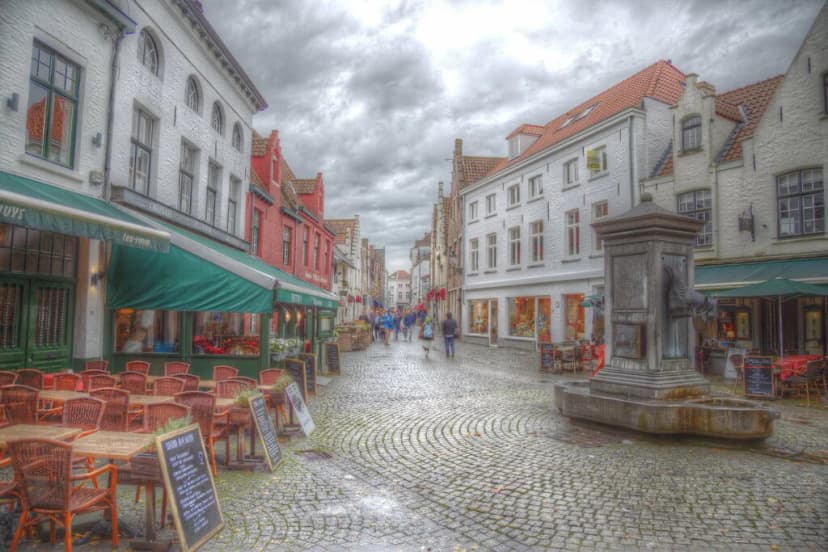
Bruges feels like a medieval fairy tale brought to life in the modern world. Cobblestone streets and winding canals create an atmosphere that transports you back several centuries. Taking a Bruges walking tour is the most authentic way to experience this UNESCO World Heritage site. You can discover hidden courtyards and grand squares that cars simply cannot reach.
The city center remains remarkably preserved with architecture dating back to the Golden Age. Every corner reveals a new story about Flemish merchants and wealthy medieval traders. Walking allows you to set your own pace while admiring the intricate brickwork of historic homes. This guide provides a comprehensive self-guided route to ensure you see every major landmark, with 2026 prices and logistical details at each stop.
Many travelers find that a self-guided route offers the most flexibility for photography and spontaneous exploration. You might choose to linger over a Belgian waffle or stop for a local craft beer at De Halve Maan brewery on Walplein. This journey through the Bruges old town highlights the best of the city. Prepare your walking shoes — flat soles only, as heels on wet cobblestones are genuinely treacherous — for an unforgettable day in Belgium's most charming destination.
Complete 3-Hour Self-Guided Bruges Walking Tour Route
This numbered route covers all the essential stops in logical order, keeping backtracking to a minimum. Total walking distance is approximately 3 km across flat, signposted streets. Allow 2–3 hours for the route itself, plus extra time for any museum visits or canal boat rides. All entry prices are 2026 rates in EUR.
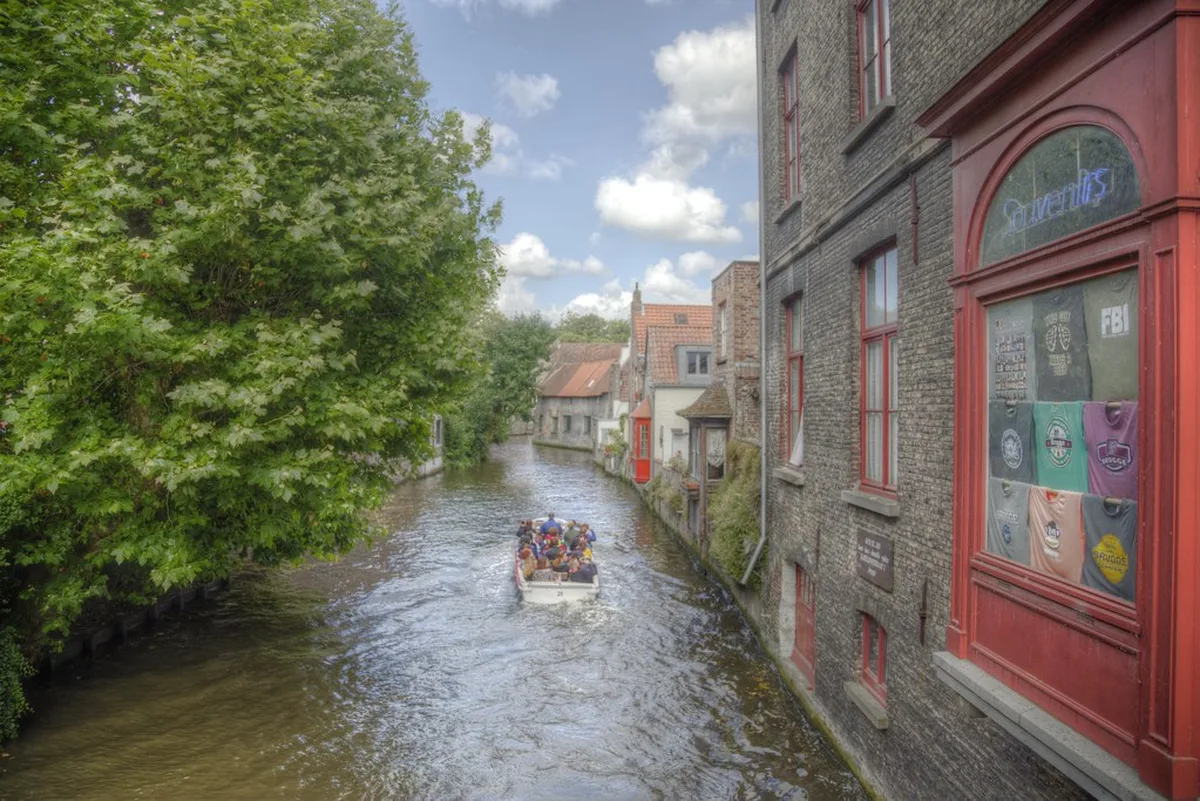
- Stop 1 — Markt (Grote Markt): Start at the central market square, the beating heart of Bruges. The Belfry dominates the south side; guild houses with stepped gables ring the perimeter. Free to enter the square at any hour. Waffle carts here charge €3–5 plain or €5–7 with toppings — a good start-of-tour snack. Horse-drawn carriages offer 35-minute loops for €60 per carriage (up to 5 people). Time on site: 20–30 minutes without Belfry climb.
- Stop 2 — Belfry Tower (€14 adult): 366 steps up the Belfry reward you with a panoramic view over the entire rooftop cityscape and — on clear days — toward the North Sea. Book timed entry online at visitbruges.be to skip the queue. Children under 12 pay €10. Time on site: 30–40 minutes including the climb.
- Stop 3 — Burg Square (5-minute walk from Markt): Walk through the narrow Breidelstraat passage to reach this compact administrative square where architectural styles from 10th-century Romanesque to 17th-century Baroque stand side by side. The Stadhuis (City Hall) Gothic Hall costs €6 adult; the ground floor is free. Time on site: 15–20 minutes.
- Stop 4 — Basilica of the Holy Blood (free): Tucked into the northeastern corner of Burg Square, this double chapel houses a venerated relic said to contain a drop of Christ's blood. The lower Romanesque chapel dates to the 12th century; the upper Gothic chapel is richly gilded. Entry is free. Relic venerated Monday–Saturday 11:30 AM–noon and 2–5:30 PM. Time on site: 15 minutes.
- Stop 5 — Fish Market (Vismarkt) and Rozenhoedkaai (3-minute walk): Exit through the eastern arch of Burg Square to reach the neoclassical Fish Market arcade on the Dijver canal, open Tuesday–Saturday mornings. Continue 3 minutes south along the canal to Rozenhoedkaai — the most photographed viewpoint in Bruges, where two canals converge against a backdrop of medieval gabled houses. Canal boat tours depart from nearby docks: €12 adult, €7 children under 12, running 10 AM–6 PM March–November. Time on site: 20–30 minutes plus boat ride if taken.
- Stop 6 — Church of Our Lady / Onze-Lieve-Vrouwekerk (free nave / €7 Michelangelo): The 122-meter brick tower is the second tallest brickwork structure in the world. The nave is free to enter; the Treasury Museum (€7 adult) houses the only Michelangelo work to leave Italy during his lifetime — the marble Madonna and Child (c. 1501) purchased by a Bruges merchant in 1514. Also contains the bronze tombs of Mary of Burgundy and Charles the Bold. Time on site: 20–40 minutes depending on whether you enter the treasury.
- Stop 7 — Bonifacius Bridge (2-minute walk behind the church, free): A narrow passageway behind the Church of Our Lady leads to this charming 1910 bridge offering a perfectly framed canal view toward the old St. John's Hospital. One of the least-crowded photo spots in the city. Free. Time on site: 10 minutes.
- Stop 8 — Begijnhof (free): Founded in 1245 and occupied today by Benedictine nuns, this UNESCO-listed enclosed community has white-washed houses surrounding a garden of tall poplars. Entry is free but silence is required inside the courtyard. A small museum in one of the preserved houses costs €2. In spring (mid-March to early April) the lawn fills with yellow daffodils. Time on site: 20–30 minutes.
- Stop 9 — Minnewater Lake / Lake of Love (free): Exit through the Begijnhof's southern gate directly onto the banks of Minnewater. This calm, willow-fringed lake is home to Bruges's protected white swans — a city symbol since the 15th century. The stone bridge across the lake carries the legend that couples crossing it together are guaranteed eternal happiness. Benches along the lakeside path make an ideal rest stop. Free. Time on site: 15–20 minutes.
- Stop 10 — St. Salvator Cathedral (free nave, 10-minute walk north): Bruges's oldest parish church, dating to the 10th century, with a treasury holding Flemish tapestries and paintings. The nave and main church space are free to visit; the treasury charges a small fee. Worth a brief stop on the walk back toward the city center. Time on site: 15 minutes.
- Stop 11 — De Halve Maan Brewery, Walplein (5-minute walk, tour €16): End the route at the only working family brewery still operating in the historic center, founded in 1564. Guided tours run every 30 minutes from 11 AM (10 AM weekends), cost €16 adult, and end on the rooftop terrace with panoramic views and a tasting glass. The tap room serves Bruges Zot on draft for €5.50 a glass without the full tour. From Walplein, a 15-minute walk north returns you to the Markt to complete the circuit.
Total estimated cost for the full route without museum stops: €0 (free entry to Basilica, Church of Our Lady nave, Begijnhof, Minnewater, St. Salvator nave). Adding Belfry (€14) + canal boat (€12) + Church treasury (€7) + brewery tour (€16) brings the total to approximately €49 per adult. Budget €55–65 per person for a comfortable full-day visit including a sit-down lunch.
Starting Your Bruges Walking Tour at Market Square (Grote Markt)
The Grote Markt serves as the vibrant heart of every Bruges walking tour. Towering guild houses with stepped gables surround this expansive pedestrian plaza, dating back to the 13th century when Bruges was one of the wealthiest trading cities in all of Europe. Visitors often gather here early — ideally before 9 AM — to enjoy the medieval atmosphere before cruise ship groups arrive mid-morning. The central statue honors Jan Breydel and Pieter de Coninck, local heroes who led the Flemish forces against the French in the Battle of the Golden Spurs in 1302.
The Belfry of Bruges dominates the square with its impressive 83-meter height, visible from almost everywhere in the historic center. Climbing the 366 steep, narrow steps rewards travelers with a panoramic view over the entire rooftop cityscape, the surrounding canals, and on a clear day, the North Sea horizon. The carillon at the top contains 47 bells and plays automatic concerts throughout the day. In 2026, Belfry entry costs €14 per adult and €10 for visitors aged 12 and under. Timed entry slots are essential in peak season (June–August) — book at least 24 hours ahead via the visitbruges.be website to avoid waiting in a line that can stretch 45 minutes.
Colorful cafes line the northern side of the square offering traditional Flemish dishes like stoofvlees (beef stew with fries, around €18–22) and vol-au-vent (chicken in cream sauce, €16–20). While prices here run about 20% higher than side streets, the view of the historic architecture is unmatched. Horse-drawn carriages wait near the center to take visitors on narrated 35-minute city loops for €60 per carriage (up to 5 people), making them good value for families. The square also hosts a lively weekly market on Wednesday mornings where local produce vendors set up from 7 AM to 1 PM. Free walking tours depart from the Markt daily at 10 AM and 2 PM — tip-based, with the standard tip being €10–15 per person. Before leaving the Markt, pick up a plain waffle from one of the street carts around the square's perimeter — expect to pay €3–5 for a plain Liège-style waffle or €5–7 with chocolate and fruit toppings. This is a convenient and authentic mid-morning snack before the route heads toward quieter streets.
Exploring the Historic Burg Square and Basilica of the Holy Blood
Just a five-minute walk from the Markt through the narrow Breidelstraat passage lies Burg Square, the city's historic administrative and religious center. This compact square packs in a stunning timeline of architectural styles spanning nearly a thousand years, from 10th-century Romanesque foundations through Gothic, Renaissance, and Baroque additions. Standing in the center and turning slowly is one of the most disorienting and wonderful experiences in all of Belgian sightseeing — every façade is from a different era yet the ensemble feels coherent.
The Stadhuis (City Hall) at the southern end of Burg Square is one of the oldest Gothic civic buildings in the Low Countries, begun in 1376. Entry to the ground floor is free; access to the first-floor Gothic Hall costs €6 per adult in 2026 and includes an audio guide. Inside, the vaulted timber ceiling is painted with colorful medallions depicting the months and the signs of the zodiac. The murals along the walls illustrate key events in Bruges's medieval history. Allow 20–30 minutes here for a proper visit.
The Basilica of the Holy Blood sits tucked into the northeastern corner of Burg Square, easy to miss if you are moving quickly. This double chapel was built in the 12th century and houses a venerated relic said to contain a drop of the blood of Christ, brought back from Jerusalem after the Second Crusade by Thierry of Alsace, Count of Flanders. The lower Romanesque chapel is a rare surviving example of 12th-century religious architecture in Belgium — dark, austere, and deeply atmospheric. The upper Gothic chapel, reached by a wide stone staircase, is richly decorated with gilded ornaments and 19th-century religious paintings. Entry to both levels is free, and the relic is displayed for veneration Monday through Saturday from 11:30 AM to noon and 2 PM to 5:30 PM. If the timing works, witnessing this daily ritual is genuinely memorable. Also notice the Old Civil Registry building adjacent to the Basilica, with its striking Renaissance façade featuring gold-leaf decorations that glow brilliantly in afternoon sunlight. An arched walkway on the east side of Burg Square leads naturally toward the fish market (Vismarkt) and the canal district beyond.
Fish Market, Rozenhoedkaai Canal, and the Best Photo Stop in Bruges
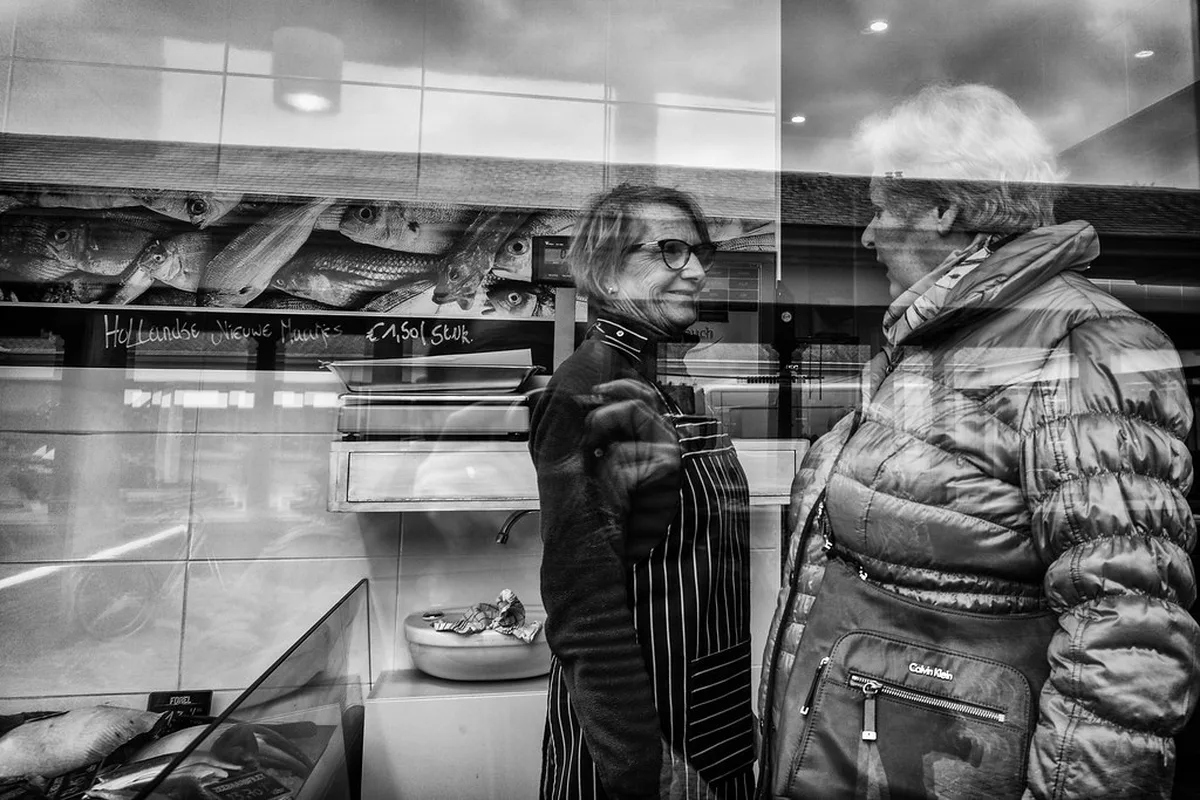
From the eastern archway of Burg Square, a short passage leads to the Vismarkt (Fish Market), a neoclassical open arcade built in 1821 along the bank of the Dijver canal. On Tuesday through Saturday mornings (7 AM to 1 PM), local vendors sell fresh North Sea catch — herring, mussels, shrimp — from stone slabs under the colonnaded hall. Even when the market is closed, the arcade itself is worth a pause, and the canal views from this point are excellent. A fresh shrimp croquette (garnaalrokket) from a nearby frituur costs around €5–7 and makes a superb snack.
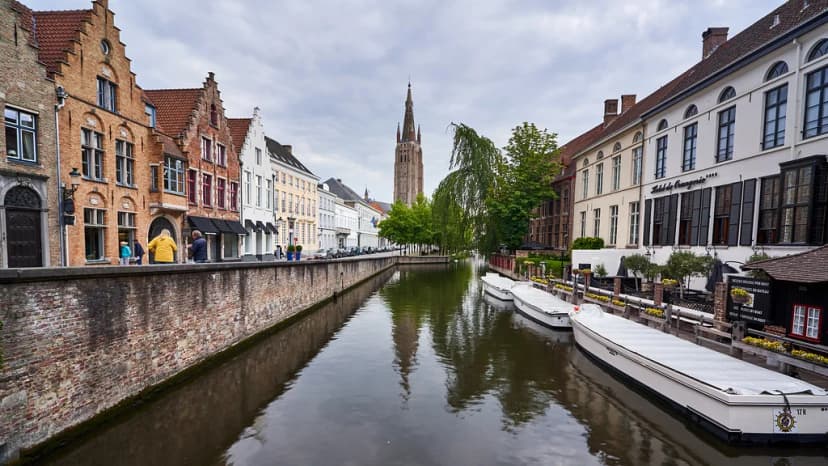
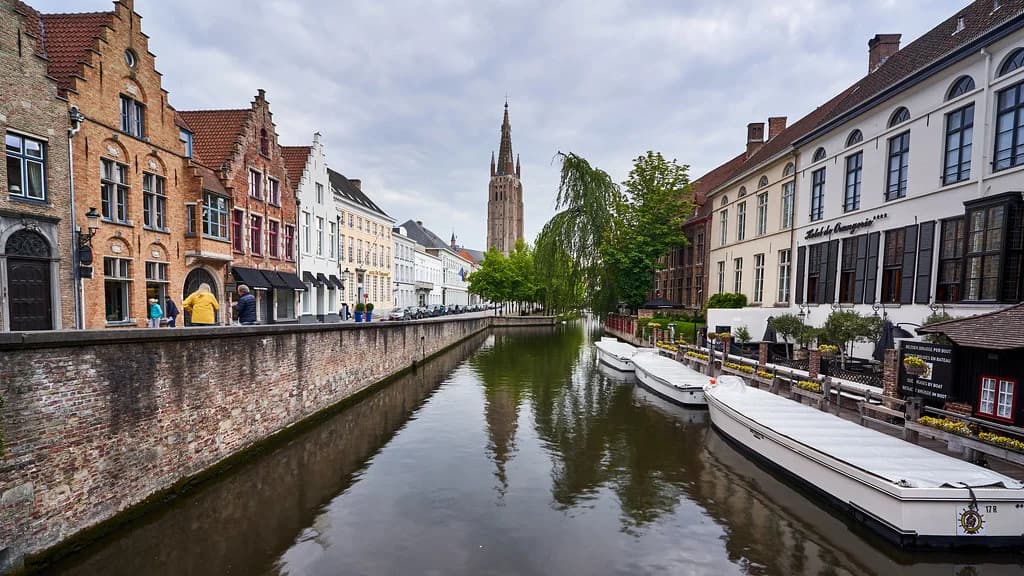
Walk south along the Dijver canal for roughly three minutes and you will reach Rozenhoedkaai — widely considered the single most beautiful viewpoint in the entire city, and one of the most photographed canal scenes in all of Europe. This is where the Dijver and Groenerei canals converge, framed by a medieval stone bridge, weeping willows trailing into the dark water, and a backdrop of stepped-gable houses with the Church of Our Lady spire rising beyond. The light here changes dramatically with the time of day. Early morning (7–9 AM) gives you soft diffuse light and near-empty streets. Golden hour (roughly 7–8 PM in summer, 5–6 PM in spring) is the gold standard — the warm low sun catches the brick facades and reflects perfectly in the water. Plan your route to arrive at Rozenhoedkaai either at the start or the very end of your day if possible. For the clearest reflection shot, position yourself on the bridge and wait for the canal surface to settle after any passing boat.
Canal boat tours depart from several docks within a one-minute walk of Rozenhoedkaai. In 2026, a 30-minute boat ride costs €12 per adult and €7 for children under 12. The boats run daily from 10 AM to 6 PM (March to November) and the trip passes under 11 bridges while narrating the history of the merchant canals. Lines can be long between noon and 3 PM; aim for an early morning slot or the last departure of the afternoon. The Nepomucenus Bridge, a short walk east from Rozenhoedkaai, features a small statue of the patron saint of bridges and makes another excellent stop for photographs of the canal looking north toward the Burg.
Groeningemuseum, Church of Our Lady, and the Bonifacius Bridge
Continuing south from Rozenhoedkaai, the route reaches two of the most artistically significant stops on any Bruges walking tour. The Groeningemuseum on Dijver Street houses one of the finest collections of Flemish Primitive paintings in the world. Masterworks by Jan van Eyck, Hans Memling, and Hieronymus Bosch hang in a quiet, unhurried gallery — a dramatic contrast to the crowds outside. Entry in 2026 costs €14 per adult and €10 for visitors 12 and under. A combined Bruges Museums ticket covers the Groeningemuseum plus several other civic museums for €25 per adult, representing good value if you plan to visit two or more sites. Allow at least 60–90 minutes for a satisfying visit. The museum also has excellent printed guides in English available at the ticket desk for €2.
A short walk south brings you to the Church of Our Lady (Onze-Lieve-Vrouwekerk), whose distinctive 122-meter brick tower is the second tallest brickwork structure in the world. The nave of the church is free to enter for all visitors. The Treasury Museum — where the main artistic treasures are displayed — costs €7 per adult in 2026. The collection's centerpiece is the Madonna and Child marble sculpture by Michelangelo, carved around 1501 and purchased by a Bruges merchant in 1514, making it the only work by Michelangelo to leave Italy during his lifetime. The church also contains the elaborately decorated bronze tombs of Mary of Burgundy (d. 1482) and her father Charles the Bold, two of the most important Flemish rulers of the 15th century. Even visitors who skip the treasury and enter only the free nave will find the soaring Gothic interior and the sheer scale of the tower worth the stop.
Just behind the church, a narrow passageway leads to the Bonifacius Bridge, one of the most charming and least-crowded photo spots in Bruges. Though it looks convincingly medieval, the bridge was actually constructed in 1910. From the bridge, looking east across the narrow canal, you have a perfectly framed view of the old St. John's Hospital (Sint-Janshospitaal), one of the best-preserved medieval hospital complexes in Europe, now housing the Memling in Sint-Jan Museum (€14 adult, 2026). The 15th-century hospital wards and apothecary are remarkably intact. If you have time for only one museum stop after the Groeningemuseum, this is the runner-up choice. The narrowest street in Bruges, Stoofstraat, begins just a two-minute walk north of the Bonifacius Bridge — a worthwhile detour for anyone who enjoys discovering easily-missed urban curiosities.
Finding Peace at the Begijnhof and Minnewater (Lake of Love)
The Begijnhof (Beguinage of Bruges) offers a genuinely serene escape from the busy tourist center, and entry is free year-round. Founded in 1245, this enclosed religious community once housed Beguines — lay women who lived a religious life without taking formal vows — and today it is occupied by Benedictine nuns. The complex is a UNESCO World Heritage Site in its own right, separate from (but complementary to) the broader historic center designation. White-washed houses and a simple church surround a large central garden of tall poplar trees. Visitors must maintain silence inside the inner courtyard, a rule that is respectfully but firmly enforced. The walk from the Bonifacius Bridge area to the Begijnhof takes approximately 8–10 minutes heading south along Mariastraat and Wijngaardstraat.
The atmosphere shifts noticeably the moment you cross the arched gateway. In springtime (mid-March through early April), the central lawn transforms into a vivid sea of yellow daffodils that draws photographers from across Europe. Summer brings lush green shade from the poplars. Even in winter, the white walls and bare branches against grey skies have a haunting elegance. The small Begijnhof museum inside one of the preserved houses (€2, 2026) offers a clear and moving insight into the daily life of the Beguines through reconstructed rooms and original artifacts. Allow 20–30 minutes minimum inside the complex. Photography of the courtyard is permitted; photographing the nuns directly is not.
Exit through the southern gate and you step immediately onto the banks of the Minnewater, known in English as the Lake of Love. This small lake was historically a holding basin for canal boats; local legend says that any couple who crosses the stone bridge together is guaranteed eternal happiness. Whether or not you put stock in the legend, the lake is undeniably beautiful — a wide, calm stretch of dark water ringed by weeping willows and Flemish townhouses, populated by the city's famously protected white swans. Entry to the Minnewater area is completely free and the lakeside path is open at all hours. The swans have been a symbol of Bruges since the 15th century, when the Emperor Maximilian I reportedly imposed them as a penalty for the execution of a local official named Pieter Lanchals (whose name loosely translates to "long neck"). Nearby benches along the lakeside path are the ideal spot to rest your legs and enjoy a snack before the final stretch of the route back toward Walplein.
St. Salvator Cathedral: Free Historic Detour on the Way Back
St. Salvator Cathedral (Sint-Salvatorskathedraal) is Bruges's oldest and largest parish church, founded in the 10th century and elevated to cathedral status in 1834. It stands roughly 10 minutes on foot north of Minnewater along Heilige Geeststraat, making it a natural stop on the walk back toward the Markt or Walplein. The main nave is free to enter — the soaring Gothic interior is impressive, with massive stone columns, historic choir stalls, and 15th-century Flemish tapestries hanging in the apse. Unlike the more famous Church of Our Lady, St. Salvator rarely has a queue.
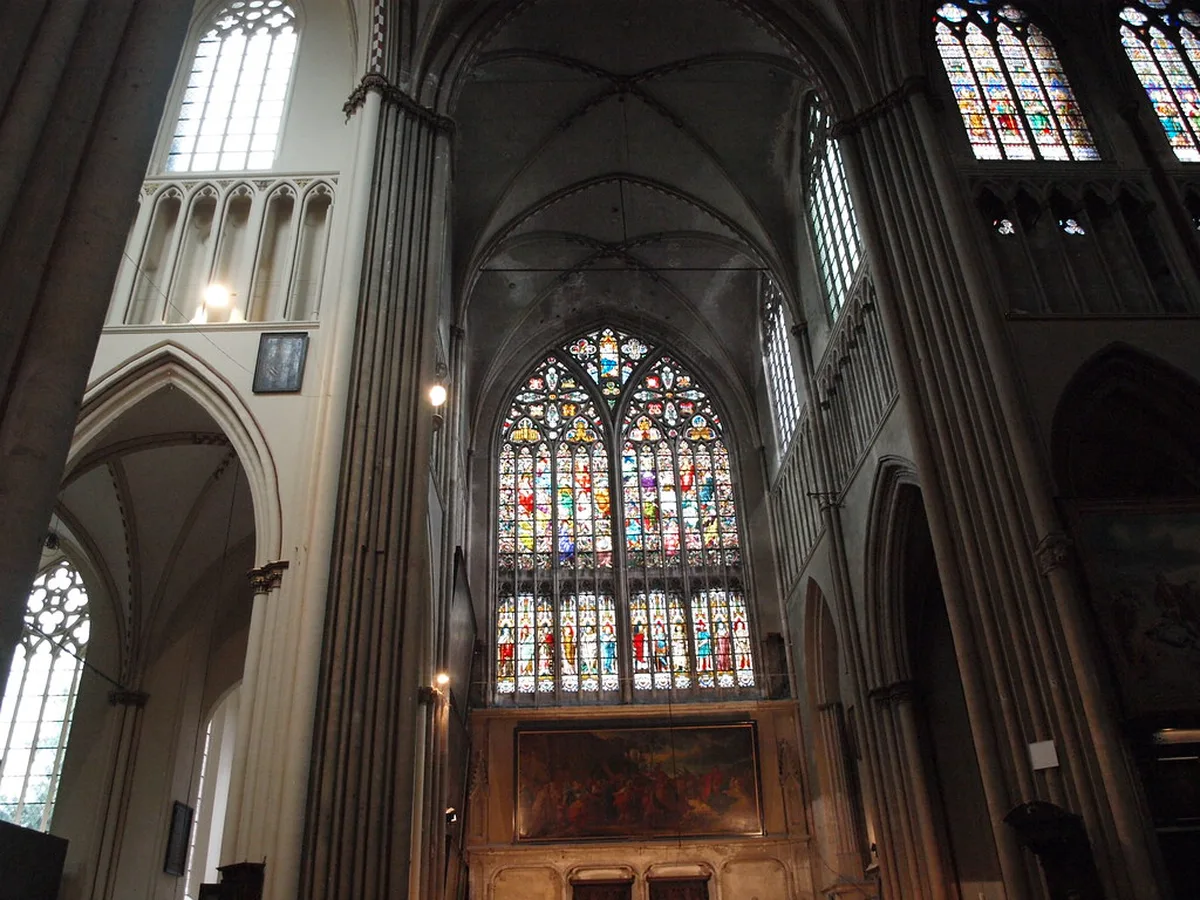
The cathedral treasury houses one of the more underrated collections in Bruges: Flemish Primitive paintings, medieval goldsmithwork, and embroidered vestments spanning six centuries. The treasury entry costs a small fee (typically €4–5 per adult in 2026) and includes an audio guide — worth 20 minutes if ecclesiastical art interests you. The choir stalls carved in oak date to the 15th century and are richly detailed with figurative misericords beneath the seats, a detail most visitors miss entirely. The organ above the western entrance is also historically significant and still used for regular recitals.
The cathedral exterior faces Simon Stevinplein, a pleasant square with a bronze statue of the Flemish mathematician and engineer Simon Stevin (1548–1620), who developed the decimal system and pioneered land sailing. Several cafes on the square serve coffee and light lunches at prices noticeably lower than those on the Markt — a good option for a mid-afternoon break before heading to the brewery at Walplein. From Simon Stevinplein, the walk northwest to Walplein takes about 7 minutes; the walk north to the Markt takes 10 minutes. Both complete the circuit in an orderly way.
Walplein Brewery: Ending the Route with a Local Beer
From the Minnewater, a five-minute walk northeast along Wijngaardstraat leads to Walplein, a quiet residential square that most tourists bypass entirely — making it one of the most authentic spots on the entire Bruges walking tour. The square is dominated by the De Halve Maan (Half Moon) Brewery, the only working family brewery still operating within the historic city center. Founded in 1564 and still run by the Maes family, it has been continuously producing beer for over four centuries. This is where Bruges Zot (the city's flagship blonde ale) and Straffe Hendrik (a stronger, more complex abbey-style ale) are brewed.
In 2026, a guided brewery tour costs €16 per adult and runs approximately 50 minutes, covering the historic brewing hall, the rooftop terrace with panoramic views, and ending with a tasting glass of your choice. Tours run every 30 minutes from 11 AM to 4 PM on weekdays and from 10 AM on weekends. Booking online in advance is strongly recommended during summer, as tours frequently sell out by early afternoon. If a full tour is not your priority, the brewery's tap room serves fresh Zot on draft for €5.50 a glass in a beautifully preserved interior. A bottle of Straffe Hendrik Quadrupel to take home costs €6–8 from the on-site shop.
It is worth knowing that De Halve Maan completed construction of an underground beer pipeline in 2016 — a 3.2-kilometer stainless steel pipe running beneath the city from the brewery at Walplein to a bottling plant on the outskirts. This engineering curiosity cost €4 million and was funded partly through 4,000 individual crowdfunders who each received lifetime free beer in return. The pipeline moves 6,000 liters per hour and has eliminated the need for heavy tanker trucks to navigate the narrow historic streets. From Walplein, it is a 15-minute walk back north through the residential Katelijnestraat and along the Mariastraat to return to the Markt, completing the full circuit.
Guided Tour vs Self-Guided: Which Is Right for You?
The decision between a guided walking tour and a self-guided route depends mainly on how you prefer to absorb a new city. Both options are widely available in Bruges and each has genuine strengths. Understanding the practical differences — including 2026 prices — makes the choice straightforward.
Free walking tours (tip-based) depart daily from the Markt at 10 AM and 2 PM, run by companies such as Pay What You Want Bruges and Viator's free-tour partners. They last around 1.5–2 hours and cover the main landmarks: Markt, Burg, Rozenhoedkaai, and the Begijnhof. The guide is local, often a university student with strong English and a good collection of city legends. Tips typically settle at €10–15 per person, which is the effective cost. The advantage is flexibility — if you like your guide, tip well; if the group is too large, you can peel off. The main limitation is group size, which can reach 20–25 people at peak times, making it harder to hear commentary in busy squares.
Official guided walking tours from the Markt start at €18–22 per adult for a 2-hour circuit, rising to €35–45 per adult for specialist private tours (evening ghost tours, chocolate-themed tours, art-focused routes). These are run by licensed city guides and capped at smaller group sizes. The Visit Bruges Route App, available free from the visitbruges.be website, offers five self-guided digital trails with GPS waypoints, audio commentary, and estimated walking times — a strong middle-ground option that costs nothing beyond your data connection. For most independent travelers with a reasonably curious disposition, the self-guided route in this article combined with the free Visit Bruges app provides the best value: you move at your own pace, stop as long as you like at Rozenhoedkaai for the golden-hour shot, and are not tied to a group schedule.
If rain is a serious possibility, plan a backup route centered on covered or indoor stops: start with the Belfry (book ahead, €14), move directly to the Groeningemuseum (indoor, 60–90 min), cross to the Memling in Sint-Jan Museum, and finish at De Halve Maan brewery for the indoor tour. This rain circuit keeps you dry for 3–4 hours and hits four of the city's most significant cultural sites without requiring extended outdoor exposure. Cobblestone streets become especially slippery when wet — this is when the flat-shoe advice matters most. Heels on wet Bruges cobblestones are genuinely dangerous, and even rubber-soled trainers require caution around canal edges.
Essential Tips for Your Bruges Walking Tour
Exploring the historic center requires sturdy, flat-soled footwear because the streets are almost entirely uneven medieval cobblestones. Heels — even block heels — are genuinely dangerous on wet stones and should not be worn. Trainers or cushioned walking shoes with good ankle support are the practical minimum for a comfortable 3 km circuit. Many travelers find that starting their walk at dawn (6–8 AM) offers the best light for photography and near-empty streets at the most-photographed viewpoints. Check the best time to visit Bruges to avoid the peak cruise ship crowds, which typically swell the Markt from 10 AM to 3 PM between May and September.
If you are arriving by car, read our guide to parking in Bruges before you reach the center. The Centrum Parking lot beneath the 't Zand square is the most convenient for the walking tour route (€3.50 per hour, maximum €18 per day in 2026). The P+R car parks at the city edges cost €3 flat for the day and include free shuttle buses to the Markt. A simple 10-minute walk from the train station arrives directly at the Markt, making the train the single most stress-free access option from Brussels (50 min, every 30 min, around €14 each way in 2026).
The Bruges 3-day itinerary gives a more detailed breakdown for longer stays, including which sites to prioritize on each day. If you are deciding between Bruges and its Flemish rival, the Bruges vs Ghent comparison covers the practical differences to help you choose — or explains why both are worth visiting on a longer Belgian trip.
- Wear flat, comfortable shoes — heels on cobblestones are unsafe, especially when wet
- Pack a compact umbrella — coastal Belgium brings frequent showers year-round
- Arrive at Rozenhoedkaai at golden hour (7–8 PM in summer) for the best canal reflection photos
- Book the Belfry tower online in advance — entry is €14 in 2026 and timed slots fill quickly
- Download the free Visit Bruges Route App for GPS-guided walking with audio commentary
- Carry small cash (€5–20) — canal boat docks and waffle carts often prefer cash payment
- Visit the Begijnhof in silence — this is enforced respectfully but firmly by the nuns
Frequently Asked Questions
How long does a Bruges walking tour take?
A self-guided Bruges walking tour covering the main circuit — Markt, Burg Square, Rozenhoedkaai, Begijnhof, Minnewater, and Walplein — spans approximately 3 km and takes around 2–3 hours at a relaxed pace with photo stops. If you add the Belfry climb (30–40 min extra), a canal boat ride (30 min), and one museum visit (60–90 min), budget a full day of 6–8 hours total.
What shoes should I wear for a Bruges walking tour?
Wear flat, cushioned walking shoes or trainers with good grip. The entire historic center is paved with uneven medieval cobblestones that become dangerously slippery when wet. Heels of any height — including block heels — are not recommended. Waterproof shoes or a second pair of socks is wise in spring and autumn when rain is frequent.
What is the best self-guided walking tour route in Bruges?
The best self-guided Bruges walking tour route runs: Markt (Grote Markt) → Belfry (€14) → Burg Square → Basilica of the Holy Blood (free) → Vismarkt → Rozenhoedkaai canal viewpoint → Church of Our Lady (free nave / €7 treasury) → Bonifacius Bridge (free) → Begijnhof (free) → Minnewater Lake of Love (free) → St. Salvator Cathedral (free nave) → Walplein / De Halve Maan Brewery. Total roughly 3 km, around 2–3 hours without museum stops.
What is the best photo spot on a Bruges walking tour?
Rozenhoedkaai is the single best photo spot in Bruges, where the Dijver and Groenerei canals meet against a backdrop of medieval stepped-gable houses and church spires. The ideal time is golden hour — around 7–8 PM in summer or 5–6 PM in spring — when warm low sunlight catches the brick facades and reflects clearly in the still canal water. Position yourself on the bridge and wait for the surface to settle after any passing boat.
Are there free walking tours in Bruges and how much should I tip?
Yes. Free (tip-based) walking tours depart daily from the Markt at 10 AM and 2 PM, run by companies like Pay What You Want Bruges and partnered Viator operators. Tours last 1.5–2 hours and cover the main landmarks. The standard tip is €10–15 per person for a satisfying tour. Official licensed guided tours start at €18–22 per adult for a 2-hour circuit. For independent travelers, the free Visit Bruges Route App offers GPS-guided self-guided trails at no cost.
How much does a canal boat ride cost in Bruges in 2026?
Canal boat rides in Bruges cost €12 per adult and €7 for children under 12 in 2026. The 30-minute trip departs from several docks near Rozenhoedkaai and the Dijver canal, running daily from 10 AM to 6 PM (March to November). The boat passes under 11 historic bridges with narrated commentary. To avoid queues, take the first or last departure of the day rather than the busy noon-to-3 PM window.
What is the rain backup plan if the weather turns bad in Bruges?
If rain hits, follow an indoor-focused route: book the Belfry first (€14, covered staircase), walk directly to the Groeningemuseum (€14, 60–90 min of Flemish Primitive masterworks), cross to the Memling in Sint-Jan Museum inside the medieval hospital (€14), and finish at De Halve Maan Brewery on Walplein (tour €16, indoor). This circuit keeps you dry for 3–4 hours while covering four of the city's best cultural sites. The covered Fish Market arcade also makes a dry rest stop between destinations.
Bruges is a city that rewards those who take the time to explore on foot. From the towering Belfry at the Markt to the quiet swans of Minnewater, every street and canal bend offers a piece of living medieval history. Following this self-guided Bruges walking tour — roughly 3 km and 2–3 hours of easy, flat walking — ensures you capture the full essence of this Belgian gem. You will leave with a deep appreciation for the city's Flemish heritage, its surprisingly intact architecture, and the simple pleasure of a fresh waffle eaten beside a 600-year-old canal.
If you have extra time, consider looking into day trips from Bruges to nearby coastal towns like Ostend or Damme, both reachable within 30 minutes. For an evening plan, the Bruges nightlife guide covers everything from craft beer bars in the Langestraat to jazz venues and late-night friteries. No matter how you choose to spend your time, Bruges will surely leave a lasting impression — bring comfortable shoes and a good camera, and let the city do the rest.