Ultimate Lisbon Funicular and Cable Car Guide for Travelers
Quick answer — funicular prices in 2026: A single trip on the Glória, Bica, or Lavra funicular costs €3.90 one-way with a Viva Viagem card. The Santa Justa Lift ride costs €1.50 plus €1.50 for the viewing platform. All three funiculars and the Santa Justa Lift are completely free with a Lisboa Card.
Quick answer — best time to ride: Board the Bica or Glória funicular before 9 AM to avoid queues. The Santa Justa Lift queue exceeds one hour by 10 AM in peak season; arrive at 7 AM when doors open or book online via Carris in advance to skip the line entirely in 2026.
Lisbon is famous for its seven steep hills and charming yellow trams that navigate narrow streets. Using the historic funiculars helps you save energy while enjoying some of the best views in the city. This Lisbon funicular and cable car guide covers everything you need for a smooth and scenic journey. You will find essential details on ticket prices, route maps, and the best times to visit each attraction.
The Three Historic Funiculars of Lisbon
Lisbon's landscape creates a beautiful but challenging environment for walkers exploring the historic districts. The traditional funiculars offer a charming way to navigate these steep slopes without getting exhausted. These yellow iron carriages serve as iconic symbols of the city's rich engineering history. Most travelers find that using these lifts is a highlight of their Lisbon 3-day itinerary because of the unique perspectives they provide.
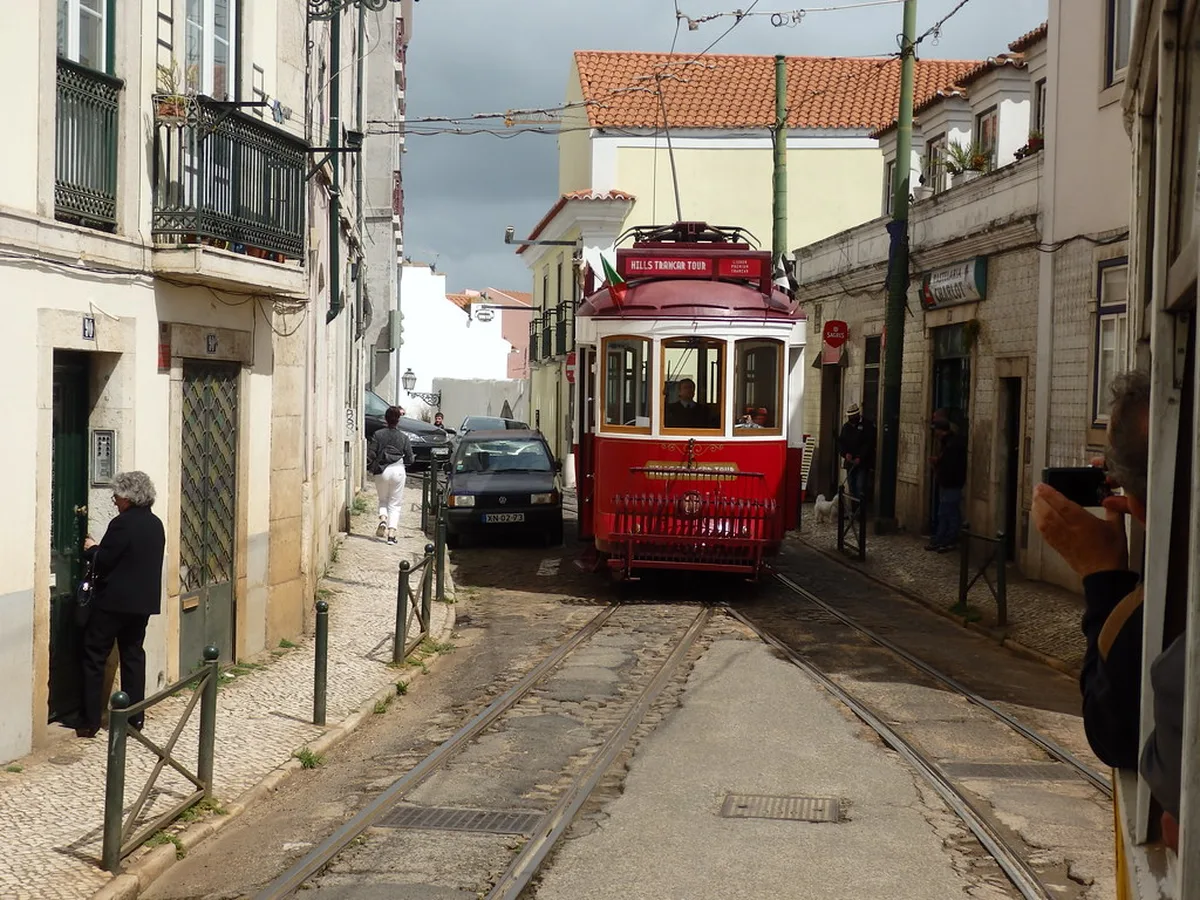
The Glória Funicular is the most popular choice for visitors starting their journey in the city center. It links the bustling Restauradores Square with the scenic San Pedro de Alcântara viewpoint in Bairro Alto. A single trip takes about three minutes and saves you a very difficult uphill climb. In 2026, a single ride costs €3.90 when you tap a Viva Viagem card loaded with zapping credit — buying a paper ticket onboard pushes the price to €4.60. Many people use this route to reach the best spots for evening drinks and dinner. The funicular runs daily from approximately 7:30 AM to midnight on weekdays, and until 12:30 AM on Friday and Saturday nights, which makes it equally useful for late-night returns from Bairro Alto bars. The Glória route is an officially heritage-listed operation by Carris, so service rarely changes, but it is always worth checking the Carris app for temporary suspensions during maintenance weeks in January and February.
Bica Funicular provides what many consider the most picturesque journey through a residential neighborhood. It runs from the riverfront area near Rua de São Paulo up toward the lively streets of the Chiado district. Locals still use this service for their daily commutes alongside groups of excited tourists. The surrounding street on Rua da Bica de Duarte Belo is often decorated with colorful laundry banners during the popular Santo António summer festivals in June. A single ride costs €3.90 with a Viva Viagem zapping card in 2026, or €4.60 for a paper ticket bought onboard. The Bica runs from approximately 7:00 AM to 9:00 PM Monday to Saturday and 9:00 AM to 9:00 PM on Sundays. Arriving at the lower terminus before 9 AM on weekdays gives you nearly empty carriages and the best light for photographs. The neighborhood around Bica is part of Madragoa and Cais do Sodré, so the short walk to the Time Out Market takes under five minutes from the lower station.
Lavra Funicular is the oldest lift in the city and remains a hidden gem for savvy travelers. It opened in 1884 and still uses the same principle of two counterbalanced water-ballast cars that ride on a 265-metre track. It is located slightly off the main tourist path near the grand Avenida da Liberdade. You will find the lower entrance tucked away on a quiet side street called Largo da Anunciada. The ride ends near a peaceful garden called Jardim do Torel that offers a quiet place to rest away from the crowds, along with a small café selling pastries and coffee. A single trip also costs €3.90 with a Viva Viagem zapping card, making the Lavra the best value hidden experience in central Lisbon. Operating hours are approximately 7:30 AM to 7:55 PM Monday to Saturday, with reduced service on Sundays. Because tourism footfall here is far lighter than Bica or Glória, you rarely wait more than one carriage cycle — typically five to ten minutes maximum even in July and August.
- The Historic Ascensor da Glória Route
- Route: Restauradores to Bairro Alto
- Ticket (zapping card): €3.90 one-way / free with Lisboa Card
- Ticket (onboard paper): €4.60
- Best for: Quick city access and evening dining
- Wait: 10–15 minutes average in peak season
- Hours: ~7:30 AM–midnight (Mon–Thu), ~7:30 AM–12:30 AM (Fri–Sat)
- The Picturesque Ascensor da Bica Journey
- Route: Rua de São Paulo to Largo do Calhariz (Chiado)
- Ticket (zapping card): €3.90 one-way / free with Lisboa Card
- Ticket (onboard paper): €4.60
- Best for: Iconic photography and morning walks
- Wait: 15–20 minutes average in peak season
- Hours: ~7:00 AM–9:00 PM (Mon–Sat), ~9:00 AM–9:00 PM (Sun)
- The Quiet Ascensor do Lavra Experience
- Route: Largo da Anunciada to Torel Garden
- Ticket (zapping card): €3.90 one-way / free with Lisboa Card
- Ticket (onboard paper): €4.60
- Best for: Avoiding large crowds, local atmosphere
- Wait: 5–10 minutes average even in summer
- Hours: ~7:30 AM–7:55 PM (Mon–Sat)
Santa Justa Lift: Lisbon's Most Famous Elevator
The Santa Justa Lift — officially the Elevador de Santa Justa — rises 45 metres from Rua do Ouro in the Baixa shopping district to a walkway level with the Largo do Carmo square in Chiado. It is the most recognisable vertical structure in Lisbon and unmissable on any first visit to the city. Designed by engineer Raul Mesnier du Ponsard, a student of Gustave Eiffel, the lift was inaugurated in 1902 and is a masterpiece of Neo-Gothic ironwork: ornate filigree panels, arched windows and decorative columns fashioned entirely from wrought iron. The two wood-panelled cabins carry passengers 45 metres upward in under a minute, and the structure has been a classified national monument since 2002.
In 2026, the standard Carris lift ride (ground floor to walkway) costs €1.50 when paid with a Viva Viagem zapping card. Access to the top viewing platform — a narrow circular terrace perched above the lift machinery — costs an additional €1.50, bringing the total to €3.00 for ride plus platform. If you hold a valid Lisboa Card, both the ride and the viewing platform are included at no extra charge, making the card exceptionally good value here. Paper tickets purchased at the booth cost €5.30 for the round trip including platform access. The viewing platform is open from 7 AM to 11 PM in summer (May–September) and 7 AM to 9 PM in winter (October–April). These hours match the lift's operating schedule, so the last platform entry is 30 minutes before closing.
Queues are the single biggest obstacle at Santa Justa in 2026. By 10 AM on any sunny summer day, the queue snaking along Rua do Ouro easily exceeds 45 minutes; by noon it can reach 90 minutes. The most reliable strategy is to arrive at 7 AM when the doors open — the first 30 minutes of the day are almost always queue-free. A second option is to book tickets online via the Carris website or app the night before; pre-purchased tickets allow you to use a priority lane that bypasses roughly 80 percent of the standing queue. If you miss both windows, the entirely free alternative is to walk up Rua do Carmo from Largo do Chiado and approach the top walkway from the Largo do Carmo side, where you can stand at the iron bridge viewing point without any ticket at all.
Once at the top, the viewing platform delivers one of the widest panoramas in central Lisbon: the red rooftops of Baixa, the Tagus River glittering to the south, São Jorge Castle on the opposite hill, and the dome of the Basílica da Estrela on the western skyline. Allow at least 20 minutes up top. Directly behind the lift exit is the entrance to the Convento do Carmo, one of the most haunting Gothic ruins in Portugal. The convent's nave was left roofless after the 1755 earthquake and today houses the Museu Arqueológico do Carmo. Entry costs €5.00 in 2026 and the museum is open Tuesday to Sunday from 10 AM to 7 PM (closed Monday). The combination of Santa Justa views and the Carmo ruins is the best two-stop micro-itinerary in Chiado and can be completed in under two hours.
Exploring the Teleférico das Nações Cable Car
The Teleférico das Nações offers a completely different experience from the historic lifts in the city center. This modern cable car glides over the river in the eastern Parque das Nações district. It was built for the Expo '98 world fair to showcase the futuristic side of the city. The ride covers about 1.2 kilometres along the beautiful Tagus waterfront, travelling between the Torre Vasco da Gama and the Cais dos Olivais terminal near the Oceanarium.
Passengers enjoy panoramic views of modern architecture and the massive Vasco da Gama Bridge, which at 17.2 kilometres remains the longest bridge in Europe. The gondola cabins move slowly and smoothly — the full ride takes approximately eight minutes each way — giving ample time to photograph the river and the Parque das Nações skyline below. Families travelling with young children find this the most accessible and comfortable of all the Lisbon aerial transport options. The Oceanarium terminal means you can combine a cable car ride with a visit to the famous aquarium in a single morning trip.
Tickets for the cable car are not included in standard Lisboa Cards or Viva Viagem zapping credit. You must purchase them at the kiosks located at either end of the cable line. In 2026, the adult one-way ticket costs €4.95 and the return ticket costs €7.95. Children aged 4–10 pay €3.50 one-way. The cable car operates daily from 11 AM to 7 PM on weekdays and 10 AM to 8 PM on weekends and public holidays, with extended hours to 9 PM during July and August. This area is noticeably quieter on weekday mornings compared to the historic center, so Tuesday through Thursday visits give the most relaxed experience. Parking in the Parque das Nações area is metered but relatively affordable compared to central Lisbon, and the Oriente train station with its Santiago Calatrava roof is a five-minute walk from the cable car terminal — worth seeing even if you don't take the train.
The Parque das Nações district itself is worth at least a half-day of exploration beyond the cable car ride. The waterfront promenade stretches nearly three kilometres along the Tagus and is entirely flat — a welcome contrast to the steep gradients of the historic center. Street artists, pop-up food stalls, and modern sculpture installations line the riverfront walk. If you are planning a longer stay in Portugal, the area around Parque das Nações is well connected by metro (Oriente station, red line) and makes an easy addition to a wider day trips from Lisbon itinerary when combined with a visit to the nearby MAAT Museum of Art, Architecture and Technology.
Elevador do Lavra and Lisbon's Hidden Viewpoints
Beyond the three named funiculars and the Santa Justa Lift, Lisbon hides several lesser-known elevadores and miradores that reward curious travelers willing to venture off the beaten path. The Elevador do Lavra, opened in 1884, is the oldest of the three Carris funiculars and is frequently overlooked in favor of the more photogenic Bica and Glória routes. Its lower terminus sits on Largo da Anunciada, just a five-minute walk from the top of Avenida da Liberdade, and the upper station deposits you directly beside the Jardim do Torel, a shaded terrace garden that counts as one of the best free viewpoints in the city. Admission to the garden is entirely free, and the café inside serves a decent pastel de nata for around €1.50 alongside espresso for €0.80.
The Lavra's relative obscurity translates to shorter wait times across all seasons. In July and August — when the Bica queue can stretch 20 to 30 minutes even before 9 AM — the Lavra rarely keeps passengers waiting more than one carriage cycle. A single ride costs €3.90 one-way with a Viva Viagem zapping card, the same price as Bica and Glória, and the route is fully covered by a Lisboa Card. The carriages run from approximately 7:30 AM to 7:55 PM Monday to Saturday, with reduced frequency on Sundays; the last downward journey departs the upper terminus at 7:45 PM.
Near the upper station, an unmarked staircase leads to the Miradouro do Torel, a lesser-known observation terrace that looks north across the Mouraria district toward the hills of Graça and Penha de França. Unlike the famous Miradouro da Graça or the Miradouro de Santa Luzia in Alfama — both of which fill rapidly with tour groups by mid-morning — the Torel viewpoint draws mostly locals for an evening aperitivo. Arriving between 6:00 PM and 7:00 PM gives you a calm, crowd-free sunset experience that rivals anything Alfama offers. The Intendente square, a ten-minute walk downhill from Torel, has undergone major regeneration since 2018 and now hosts excellent budget lunch spots serving traditional Portuguese dishes for under €12 per person. If your trip also takes you north of Lisbon, the Lavra area connects conveniently to bus routes heading toward Sintra — for a full day plan, see our Sintra day trip from Lisbon guide.
Another hidden vertical transport option is the Elevador do Bom Jesus in Braga — though for Lisbon specifically, the most underrated vertical shortcut is the public elevator at Calçada do Combro, which connects the Chiado plateau with the lower Rua de São Paulo waterfront district for free and operates without queues throughout the day. This glass-and-steel structure was installed by Lisbon City Hall as a public amenity and is entirely free to ride; it effectively provides an alternative descent from Chiado without competing for space on the Bica carriages. Knowing this lift exists is the kind of local knowledge that separates experienced Lisbon visitors from first-timers. The Calçada do Combro elevator runs from 8:00 AM to 10:00 PM daily and is fully accessible for wheelchairs and pushchairs, unlike the historic funiculars.
Practical Tips for Tickets and Passes
Understanding the local ticketing system is essential for saving money while exploring the city's hills. The Viva Viagem card is a rechargeable paper ticket used for almost all public transport in Lisbon. You can buy these cards at any metro station for an initial €0.50 fee. Loading the card with "zapping" credit offers the lowest fare for every funicular ride: €3.90 one-way on Bica, Glória, and Lavra in 2026, compared to €4.60 for an onboard paper ticket. The zapping credit is also valid on all buses, trams (including the famous Tram 28), and the metro, so a loaded card is useful well beyond the funiculars.

The Lisboa Card is the superior option for travelers who plan to see multiple sights in two or more days. It provides unlimited access to all three funiculars — Glória, Bica, and Lavra — Tram 28, and the Santa Justa Lift (including the viewing platform) for a fixed daily price. In 2026, the Lisboa Card costs €22.00 for 24 hours, €37.00 for 48 hours, and €45.00 for 72 hours for adults. Children aged 4–11 pay approximately half price. Beyond transport, the card covers free entry to 39 museums and monuments including the Museu Nacional do Azulejo, the Castelo de São Jorge, the Jerónimos Monastery, and the Museu de Arte Antiga. The break-even point is typically reached after using the card for two funicular trips, the Santa Justa Lift, and one museum visit — which most visitors do before lunchtime on day one. For a deeper overview of what the card covers, see our Lisbon City Pass guide.
Most funiculars operate from early morning until late in the evening. The Bica opens at 7:00 AM, the Glória at 7:30 AM, and the Lavra at 7:30 AM; all close between 7:55 PM and midnight depending on the route and day. Checking the official Carris website or app for any sudden schedule changes is always a smart move, especially around national holidays in June (Corpus Christi, Santo António on 13 June) when service patterns shift. While the city is welcoming, always check if Lisbon is safe for tourists regarding pickpockets in crowded carriages — keep bags zipped and phones in a front pocket on the Bica and Glória during peak hours.
One practical tip many guides overlook: if you are visiting in late October or November and have a Lisboa Card, confirm that the Santa Justa winter hours (7 AM–9 PM) apply on your visit date, as Carris sometimes adjusts closing times by up to 30 minutes during low season. Similarly, the Teleférico das Nações does not accept Lisboa Cards, so budget the €7.95 return ticket separately. Finally, always validate your Viva Viagem card at the yellow reader at the funicular entrance gate — uninspected cards result in a €120 fine if a Carris inspector boards for a spot check.
Avoiding Common Mistakes and Local Nuance
A common mistake is using the funiculars only for the novelty of the ride. Many people forget that these are functional transport tools for the local residents. Be mindful of people trying to get to work or carry their groceries during the morning rush between 8:00 AM and 9:30 AM. Keeping your bags close helps maintain enough space for everyone on the small carriages, which typically hold around 20 passengers at capacity.
Photographers should aim for the Bica Funicular during the golden hour before the sun sets, typically between 6:30 PM and 7:30 PM in summer. The warm Atlantic light hits the yellow paint and the cobblestones in a truly beautiful way, and the colorful laundry banners strung above the street add a uniquely Lisbon texture to the shot. Position yourself at the top of Rua da Bica de Duarte Belo for the best perspective of the descending carriage with the Tagus River glimpsed in the distance at the bottom of the hill. Avoid standing directly on the tracks or on the access channel between the rails, as the carriages move quietly and more frequently than they appear to during peak service — roughly every six to eight minutes.
If the Glória Funicular queue is too long, the nearby Lavra route provides a similar historic experience with almost no waiting time. You will find more authentic cafes and local tabacaria shops near the Lavra terminals, and the Jardim do Torel at the top is a genuinely lovely spot for a mid-morning coffee break. Budget travellers should note that both terminals of the Lavra are very close to the Intendente neighbourhood, which has undergone significant regeneration and now hosts some of the best budget lunch spots in central Lisbon.
One frequently overlooked local nuance is the weather effect on queues. On overcast mornings — common in Lisbon from October through March — queues at the Santa Justa Lift and the Bica shrink by 50 to 70 percent compared to sunny days, because many day-trip tourists cancel or shorten their itineraries. If you have flexibility in your schedule, saving the funicular rides for a slightly grey morning is a legitimate crowd-avoidance strategy. The views from the Santa Justa platform on a cloudy day with diffused light are actually preferable for photography because there are no harsh shadows across the rooftops. If you are coming from Sintra and heading into the city, the funiculars make an excellent afternoon addition — check our Sintra day trip from Lisbon guide for timing tips on combining both.
Frequently Asked Questions
Is the Lisboa Card worth it for using the funiculars?
Yes, the Lisboa Card is highly valuable if you plan to use multiple funiculars and the Santa Justa Lift. In 2026, the 24-hour card costs €22.00 for adults and covers unlimited rides on the Bica (€3.90/trip), Glória (€3.90/trip), and Lavra funiculars, plus the Santa Justa Lift and its viewing platform (normally €3.00 combined). It also includes free entry to 39 museums. Most visitors reach break-even value within the first morning of sightseeing alone.
What is the most scenic funicular in Lisbon?
The Bica Funicular is widely considered the most scenic because it runs through a narrow, colorful street called Rua da Bica de Duarte Belo. It offers a stunning view of the Tagus River as it descends the hill. The golden hour before sunset — around 6:30 PM to 7:30 PM in summer — provides the best photography conditions. A single ride costs €3.90 one-way with a Viva Viagem zapping card in 2026, or is free with a Lisboa Card.
Are the Lisbon funiculars accessible for wheelchairs?
Unfortunately, the three historic funiculars (Bica, Glória, Lavra) and the Santa Justa Lift are not fully accessible for wheelchair users. The carriages are historic and feature narrow doors with several steep steps at each terminal. The modern Teleférico das Nações cable car in Parque das Nações is fully accessible, with level boarding platforms and wide gondola doors, making it the recommended aerial transport option for travelers with mobility needs. The free Calçada do Combro public elevator in Chiado is also fully wheelchair accessible and runs daily from 8:00 AM to 10:00 PM.
How much does the Santa Justa Lift cost in 2026?
In 2026, the Santa Justa Lift ride from Rua do Ouro to the Chiado walkway costs €1.50 with a Viva Viagem zapping card. Accessing the additional viewing platform at the very top costs a further €1.50, making the combined total €3.00. A paper ticket bought at the booth covers the round trip plus platform for €5.30. Holders of a valid Lisboa Card (from €22.00 for 24 hours) ride and access the platform for free. Opening hours are 7 AM–11 PM in summer (May–September) and 7 AM–9 PM in winter (October–April).
How do I avoid the queue at the Santa Justa Lift?
The two most effective strategies in 2026 are: (1) arrive at the Rua do Ouro entrance at 7 AM when the lift opens — the first 30 minutes are almost always queue-free even in peak season; or (2) book tickets online via the Carris website or app the night before, which grants access to a priority lane that skips most of the queue. A free alternative is to walk up from Largo do Chiado and view the panorama from the iron bridge walkway that connects to the lift — no ticket needed from that side.
Does the Teleférico das Nações accept the Lisboa Card?
No. The Teleférico das Nações cable car in Parque das Nações is operated independently and does not accept Lisboa Cards or Viva Viagem zapping credit. In 2026, tickets must be purchased at the kiosks at either terminal. Adult one-way fare is €4.95; adult return is €7.95. Children aged 4–10 pay €3.50 one-way. The cable car runs daily from 11 AM to 7 PM on weekdays and 10 AM to 8 PM on weekends, with extended hours to 9 PM in July and August.
What is the oldest funicular in Lisbon?
The Lavra Funicular (Ascensor do Lavra) is the oldest funicular in Lisbon, inaugurated in 1884. It uses a 265-metre track near Avenida da Liberdade and carries passengers to the peaceful Jardim do Torel viewpoint at the top. In 2026 it costs €3.90 one-way with a Viva Viagem card (free with Lisboa Card) and operates from approximately 7:30 AM to 7:55 PM Monday to Saturday. It is the least-crowded of the three funiculars and an excellent alternative to the busier Bica or Glória when queues are long.
How do the Glória, Bica, and Lavra funiculars compare?
All three funiculars charge the same fare — €3.90 one-way with a Viva Viagem card in 2026, free with a Lisboa Card — but serve different neighborhoods. The Glória (Restauradores to Bairro Alto) is most central and busiest. The Bica (Cais do Sodré area to Chiado) is the most photogenic, passing through a colorful narrow street. The Lavra (Largo da Anunciada to Jardim do Torel) is the quietest and oldest (1884), ideal for those wanting a local experience without tourist crowds. All three are heritage-listed and operated by Carris.
Navigating the steep streets of the city becomes an adventure when you use the historic lifts and modern cable cars. This Lisbon funicular and cable car guide helps you choose the best routes for your specific travel needs. Whether you want iconic photos at the Bica (€3.90 one-way), sweeping views from the Santa Justa Lift viewing platform (€1.50 extra, free with Lisboa Card), or a relaxed riverside glide on the Teleférico das Nações (€7.95 return), these rides are essential 2026 experiences. The hidden Lavra Funicular remains the best-kept secret on this list — board it at 7:30 AM and you will have the carriage almost to yourself. Check our latest posts on day trips from Lisbon for more ways to explore Portugal beyond the city center, or read our Lisbon nightlife guide to plan your evenings after a day of funicular riding.