Explore the Heart of Sicily: A Palermo Old Town Guide for 2026
Palermo's historic center rewards walkers: the Quattro Canti and Ballarò market are free to enter, Palazzo dei Normanni with the golden-mosaic Cappella Palatina costs €12, and a pane e panelle lunch at the Capo market runs just €2.
Street food is the city's best value — arancine at Ballarò cost €2–3 each, a spleen sandwich at Antica Focacceria San Francesco is €3–4, and a fresh cannolo from Pasticceria Cappello is €2–3.
Walking through the historic center is an essential Sicilian experience. The air carries the smell of fried street food and sea salt from the nearby harbor. Locals chat across balconies while tourists admire golden mosaics. Every piazza tells a story of conquest and cultural blending.
Planning a visit requires more than just a map and good shoes. You need to understand the rhythm of the markets and the siesta hours. This guide covers the best sights, safety tips, street food prices, and local secrets. Prepare to lose yourself in the winding streets of ancient Palermo.
Walking Through the Historic Quattro Canti
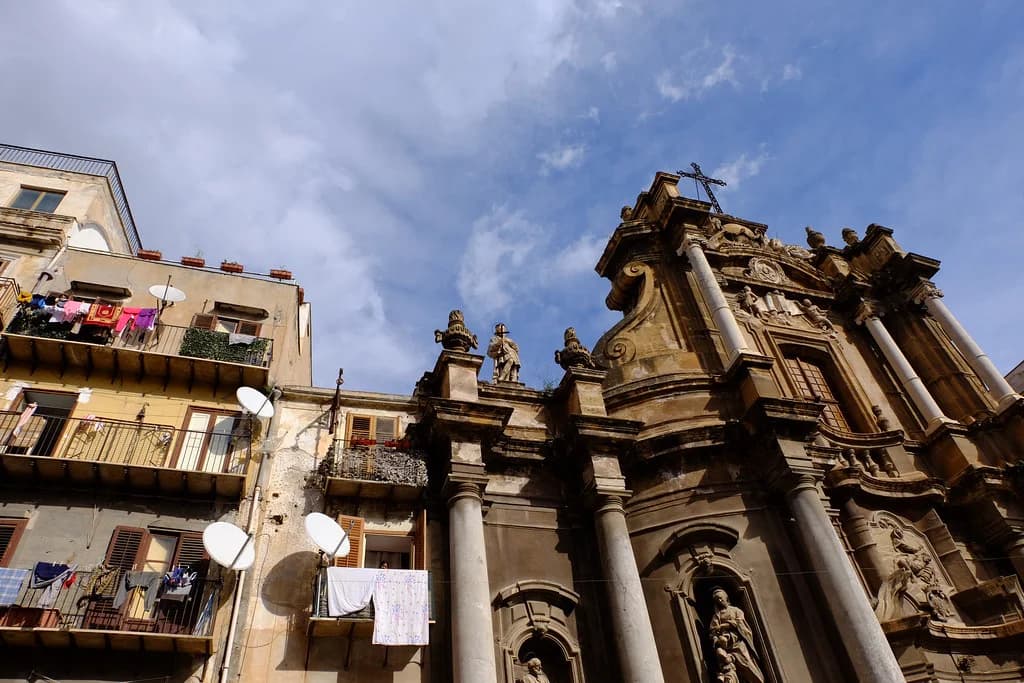
The Quattro Canti serves as the symbolic center of Palermo's historic heart. This Baroque intersection divides the old town into four distinct neighborhoods. Four ornate facades feature statues representing the seasons and Spanish kings. Morning light hits the fountains beautifully for those seeking early photos before the tour groups arrive.
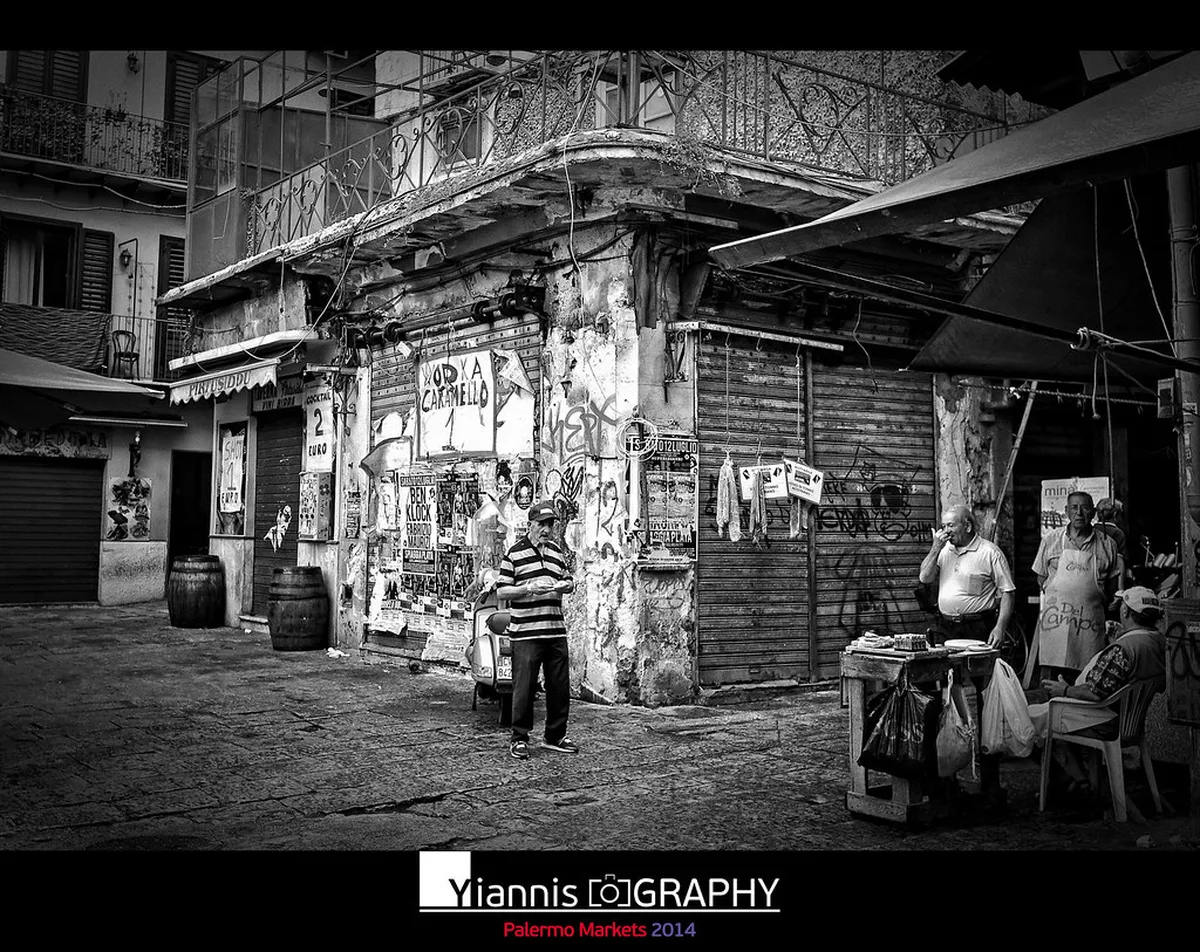
Each corner of the square opens into a different historic district. You can follow a Palermo 3-day itinerary to explore these areas in depth. The Albergheria and Capo districts offer gritty, authentic Sicilian charm. La Loggia and Kalsa provide a mix of grand palaces and seaside views. All four quarters can be explored comfortably on foot in a single day. For broader regional context, Italy's diverse cultural heritage spans countless historic centers across every region.
Pedestrians dominate this area during the busy afternoon hours. Street performers often fill the square with traditional Sicilian music. Look up to see the intricate balconies overlooking the busy streets below. This spot is the perfect starting point for any walking tour of the old town.
Nearby shops sell colorful ceramics and traditional Sicilian marionette puppets for visitors. Expect crowds during the peak summer months of July and August. Visiting in the early evening offers a cooler, more relaxed atmosphere. The carved stone facades look particularly dramatic when the city lights turn on at dusk and the gold-tinted stonework glows warmly.
Entry to the Quattro Canti square itself is free — it is an open public intersection. From here, the Ballarò market is a 10-minute walk southwest and the Cattedrale is just five minutes west along Corso Vittorio Emanuele. The Palazzo dei Normanni sits a further five minutes beyond the cathedral; combined admission to the palace and Cappella Palatina is €12 in 2026. Arriving at Quattro Canti early on weekday mornings — before 9:00 AM — gives you the best chance of quiet photos before the tourist coaches arrive from the port and the cruise ship terminal.
The surrounding streets are lined with ornate baroque churches that are free to enter, including San Giuseppe dei Teatini and the Church of the Gesù (Casa Professa), which features an astonishing interior of polychrome marble inlaid with floral patterns. Neither requires a ticket and neither should be missed by anyone with an interest in Sicily's 17th-century church architecture.
Must-Visit Markets in Palermo's Ancient Core
Palermo's markets are the soul of the city's daily life and among the oldest in Sicily. Ballarò is the largest and most energetic market in the historic center, operating since the Arab period. Vendors shout their prices in a melodic dialect known as the 'abbanniata'. Fresh produce, local cheeses, olives, and cheap street food fill the stalls from dawn until early afternoon — arrive before 10:00 AM for the freshest stock and the most vibrant atmosphere.
The Capo market winds through narrow streets behind the grand Teatro Massimo opera house. It is the best daytime spot to try famous Sicilian street foods at local prices: arancine cost €2–3 each, pane e panelle (chickpea fritters on a bread roll) run €2, and sfincione (thick Sicilian pizza with tomato and breadcrumbs) goes for around €2–2.50 a slice. Carry small cash denominations as most vendors do not accept cards.
Vucciria, near Piazza San Domenico, changes character completely as the sun goes down. What starts as a fish and produce market in the morning becomes one of Palermo's liveliest nightlife hubs by evening. Plastic tables fill the square for cheap drinks and grilled meats from around 8:00 PM. The atmosphere is raw, loud, and undeniably exciting for adventurous travelers. A cold Birra Messina at one of the folding-table bars costs around €2–3, making this one of the most affordable evening spots in the city.
All three markets are free to wander and represent the best no-cost activity in Palermo's old town. Be prepared for large crowds and very narrow walking paths. The markets offer a sensory overload that defines the Palermo experience. Pickpockets are active in busy stalls — keep bags in front of you and avoid wearing loose-strap shoulder bags in tightly packed alley sections.
- Ballarò Street Market
- Type: Produce, cheese, and street food
- Best for: Authentic local energy; arancine, sfincione, fried vegetables
- Where: Via Ballarò, Albergheria district, near the central station
- Cost: Free to explore; street food €2–4 per item
- Hours: Daily 7:00 AM – 2:00 PM
- Capo Market
- Type: Fish, vegetables, and fried snacks
- Best for: Pane e panelle (€2), fresh fish, chickpea fritters
- Where: Via Sant'Agostino, behind Teatro Massimo
- Cost: Budget-friendly; most snacks under €3
- Hours: Mon–Sat 7:00 AM – 2:00 PM
- Vucciria Market
- Type: Daytime produce / evening nightlife hub
- Best for: Evening drinks from €2, grilled sausages, local atmosphere
- Where: Piazza San Domenico, La Loggia quarter
- Cost: Affordable drinks from €2–4
- Hours: Morning market from 7:00 AM; nightlife scene from 8:00 PM onwards
Palermo's Street Food Scene
Palermo is widely considered one of the street food capitals of Europe, and the old town's markets are the best place to experience this in 2026. The city's dishes are deeply rooted in its Arab-Norman past, using ingredients like chickpeas, saffron, pine nuts, and spleen that are rare elsewhere in Italy. Eating your way through the markets is a must-do activity that costs very little and can fill an entire morning.
The most iconic Palermo street food dishes and their approximate 2026 prices:
- Arancine (fried rice balls, filled with ragù or butter and cheese) — €2–3 each. Available at almost every bar and market stall from morning. Ballarò and Capo markets have the best selection. The Antico Caffè Spinnato on Via Principe di Belmonte also serves a refined version for €2.50 each.
- Pane con la milza (spleen sandwich with ricotta or caciocavallo cheese) — €3–4. A polarizing but authentic Palermo classic found at dedicated focaccerie near Vucciria. Try it at Antica Focacceria San Francesco in Piazza San Francesco d'Assisi, which has served this sandwich since 1834. Order it schietta (plain) or maritata (with cheese).
- Pane e panelle (chickpea fritter sandwich) — €2. The vegan street food of Palermo, sold everywhere in the Capo market from early morning. Look for the vendor carts near Via Sant'Agostino for the freshest fritters, fried to order.
- Sfincione (thick spongy pizza topped with tomato sauce, onions, anchovies, and toasted breadcrumbs) — €2–2.50 per slice. Street vendors sell it from mobile carts and fixed stalls throughout the old town. The version at Ballarò is particularly good warm from the tray.
- Cannolo (crispy pastry shell filled with sweetened ricotta) — €2–3. Best eaten fresh from a pasticceria, where the shell is filled to order. Pasticceria Cappello on Via Colonna Rotta is widely considered the finest in Palermo. Do not buy pre-filled cannoli that have gone soft — the soggy shell ruins the texture.
- Stigghiole (grilled lamb intestines on skewers, seasoned with parsley and lemon) — €3–5. An acquired taste for adventurous eaters. Street vendors fire up their charcoal grills at Ballarò from late morning. This is as close to ancient street food as Sicily gets.
The best time to visit Ballarò and Capo markets for street food is in the morning (7:00–11:00 AM), when stock is freshest and prices are sharpest. Vucciria transitions into an evening food and drinks scene after 8:00 PM, making it ideal for a late-night snack of grilled sausages or a cold Birra Messina poured from a street cooler.
Exploring the Majestic Palermo Cathedral
The Palermo Cathedral stands as a testament to Sicily's complex history. Its architecture blends Norman, Moorish, Gothic, and Neoclassical styles across nearly a thousand years of construction and modification. The exterior features intricate stone carvings, palm-tree columns repurposed from an earlier mosque, and an impressive 18th-century dome added by architect Ferdinando Fuga. Entry to the main nave is free for all visitors in 2026.
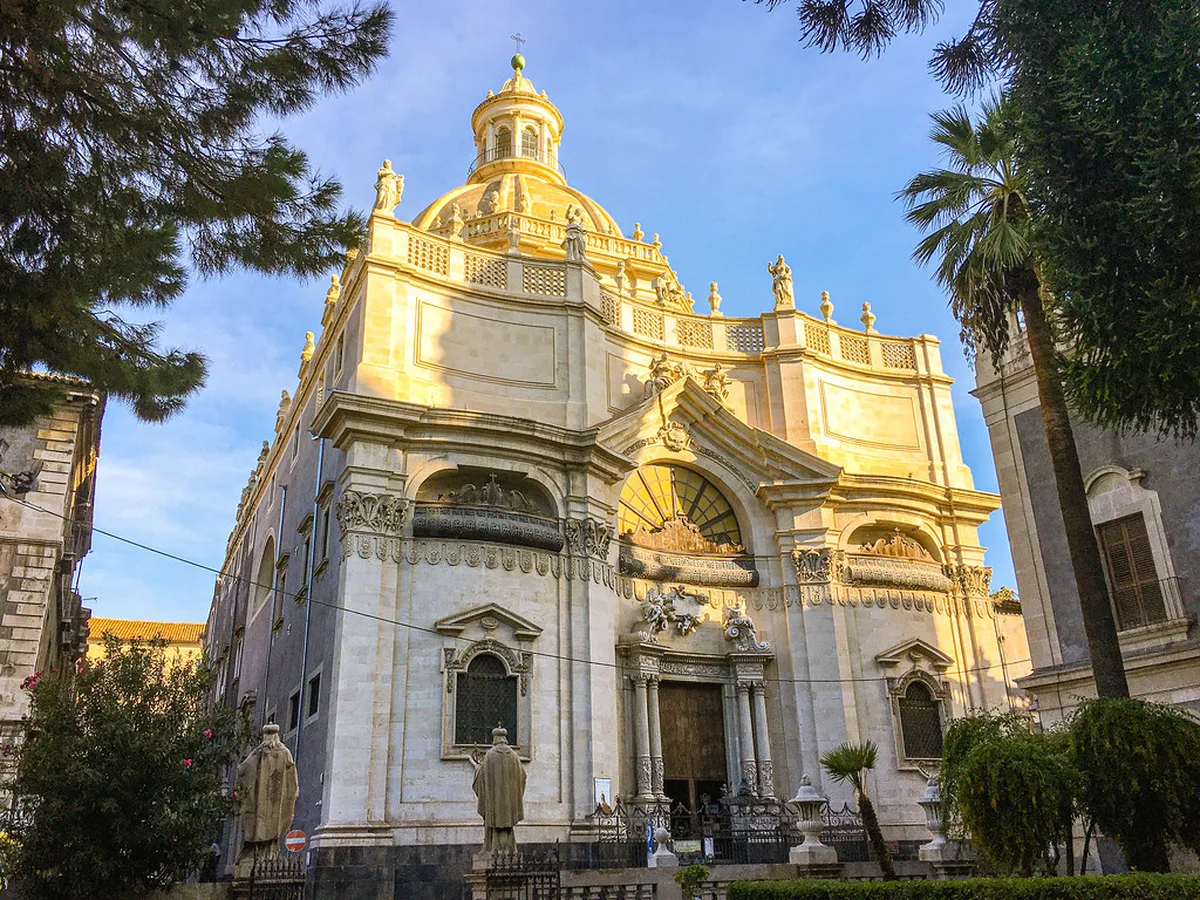
Paying a fee unlocks additional areas of the cathedral complex. Roof access and the royal tombs cost €5, the treasury is €3, and a combined ticket covering all areas is €8. The roof walk offers the best panoramic views of the old town rooftops, the Conca d'Oro plain, and the mountains beyond the city. Climbing the narrow stairs to the roof requires a moderate level of physical fitness and is not suitable for young children or those with limited mobility.
The treasury holds the magnificent crown of Empress Constance of Aragon, studded with over 200 precious stones. Look for the solar meridian line built into the cathedral floor — a bronze strip tracks the zodiac signs as sunlight shifts across the seasons throughout the year. This astronomical feature remains a favourite highlight for history enthusiasts visiting in 2026. The royal tombs contain the remains of Norman kings including Roger II and Holy Roman Emperor Frederick II of Sicily.
Dress codes are strictly enforced for those entering the sacred interior areas. Ensure your shoulders and knees are covered before approaching the entrance — a scarf or shawl kept in your bag will solve the problem in seconds. The cathedral is generally open Monday to Saturday from 9:00 AM to 5:30 PM and Sunday from 9:00 AM to 1:00 PM. Sundays may have restricted access to paid areas due to religious services — check the posted schedule on arrival or visit the cathedral website before your trip.
For visitors combining the cathedral with nearby sights, the Palazzo Arcivescovile (Archbishop's Palace) next door is worth a quick look at its exterior. The Piazza della Cattedrale itself is a pleasant square with orange trees and benches where you can rest before continuing west toward the Palazzo dei Normanni, a five-minute walk along Corso Vittorio Emanuele. See our day trips from Palermo guide if you want to combine your cathedral visit with a half-day excursion to Monreale, whose cathedral contains the most extensive Byzantine mosaics in the world and sits just 8 km from the city center.
Palazzo dei Normanni and Cappella Palatina
The Palazzo dei Normanni — also known as the Royal Palace — is one of the oldest royal residences in Europe and the single most impressive historic sight in Palermo's old town. Built on the foundations of a Phoenician fortress, expanded by the Arab emirs, and perfected by the Norman kings in the 12th century, it is now the seat of the Sicilian Regional Assembly. The combined entrance fee in 2026 is €12, which includes access to the royal apartments and the extraordinary Cappella Palatina. Students under 18 and EU citizens under 25 qualify for a reduced rate of €8 — bring valid ID.
The Cappella Palatina is the undisputed highlight of the palace complex. This private royal chapel is entirely covered in Byzantine gold mosaics depicting scenes from the Old and New Testaments. The craftsmanship rivals the great basilicas of Ravenna and surpasses anything else in Sicily for sheer brilliance and completeness. The golden light inside the chapel is unlike anything else in Italian religious art — golden tesserae cover almost every surface of the ceiling, walls, and apse. Allow at least 45 minutes here before moving to the royal apartments on the upper floors.
The royal apartments feature the Sala di Ruggero (King Roger's Hall), decorated with mosaics of hunting scenes including leopards, peacocks, and palm trees — a vivid snapshot of Norman royal taste blending Islamic, Byzantine, and Latin traditions into a unique Sicilian style. This room is one of the few secular 12th-century mosaic interiors surviving anywhere in the world.
The palace is open Monday to Saturday 8:15 AM – 5:45 PM and Sunday 8:15 AM – 1:00 PM. Book tickets online in advance during peak summer months (July–August) to avoid long queues, which can stretch to 45 minutes on busy mornings. The palace is a 10-minute walk from Quattro Canti along Corso Vittorio Emanuele and is an easy addition to any half-day walking tour of the historic center. Audio guides are available at the ticket desk for an additional €3 and are well worth the cost for context on the mosaic iconography.
Teatro Massimo: Palermo's Grand Opera House
Teatro Massimo is the largest opera house in Italy and the third largest in Europe, after the Paris Opéra and the Vienna State Opera. Completed in 1897 after 22 years of construction, its neoclassical facade dominates Piazza Verdi in the heart of Palermo's old town. The exterior can be admired for free at any time — the broad ceremonial staircase flanked by bronze lions is a favourite gathering spot for locals in the evenings and one of the most-photographed locations in all of Sicily.
Guided tours of the interior run daily and cost €8 per person in 2026, with concessions available for students and seniors at €5. Tours last approximately 30 minutes and cover the grand foyer with its gilded ceiling, the five-tiered horseshoe auditorium, the royal box, and behind-the-scenes corridor areas that give you a sense of the backstage scale. The gold and red interior is breathtaking and was famously featured in the closing scene of The Godfather: Part III, directed by Francis Ford Coppola — a detail tour guides invariably mention.
Opera and ballet performances run from October through June. Ticket prices vary widely by production and seat tier, from around €25 for upper gallery seats to €150+ for premium stalls seats. Seeing a performance here is one of the most memorable cultural experiences in all of southern Italy, and the acoustics of the main auditorium are considered world-class. Check the official Teatro Massimo website for the 2026 season programme and book early for popular productions, which typically sell out months in advance.
The Capo market, just behind the theater along Via Sant'Agostino, makes a perfect pre-show lunch stop. A quick meal of pane e panelle and a slice of sfincione costs under €5 and takes less than 20 minutes, leaving plenty of time to change clothes at your accommodation before the curtain rises.
Hidden Gems and Narrow Streets of La Kalsa
La Kalsa was the fortified Arab quarter of ancient Palermo, and today it is the city's most atmospheric and artistic neighborhood. Its name comes from the Arabic word for "the elect" — it was originally built as the private residential district of the Fatimid Emirs in the 10th century. The area suffered heavy Allied bombing in 1943 and many of its historic palaces remain beautifully ruined, giving it a haunting, romantic quality unlike anywhere else in Sicily.
Piazza Pretoria, just a few minutes' walk from Quattro Canti, features a massive late-Renaissance fountain with intricate marble statues of gods, nymphs, and monsters. Locals once called it the 'Square of Shame' due to the nudity of the marble figures. The fountain was originally commissioned for a Florentine nobleman's garden but was later sold to Palermo in the 16th century and has stood in the piazza ever since. Entry to the piazza itself is free.
Modern street art now decorates the crumbling walls of old palaces throughout La Kalsa. The Church of Santa Maria dello Spasimo has no roof — it was never completed because funds ran out in the 16th century — creating a unique open-air ruin now used for summer concerts and cultural events. Hidden courtyards and crumbling fountain gardens offer quiet escapes from the city's hectic pace throughout the neighborhood. This district perfectly balances ancient ruins with modern Sicilian creative life.
Visit the Palazzo Butera for a look at restored aristocratic luxury — entry to the contemporary art collection inside is around €10. The terrace overlooking the Gulf of Palermo is a hidden gem offering wide panoramic views across the harbor and toward Monte Pellegrino. Most galleries and palaces close for a few hours during the mid-afternoon siesta (typically 1:30–4:00 PM). Combining La Kalsa with an evening visit to Vucciria market, just 10 minutes north on foot along Via Alloro, makes for an ideal half-day itinerary in the southeastern quarter of the old town. For a deeper look at Palermo's nightlife scene that centres around this area, read our Palermo nightlife guide.
Churches and Baroque Architecture Beyond the Main Sights
Palermo's old town contains more than 300 historic churches, many of them free to enter and extraordinary in their interiors — yet they attract far fewer visitors than the headline sights. Exploring these lesser-known religious buildings is one of the most rewarding and cost-effective activities in the historic center in 2026.
The Church of the Gesù (Casa Professa), on Piazza Casa Professa near the Ballarò market, is widely regarded as the finest Baroque interior in Sicily. Every surface of the walls and ceiling is covered in intricate polychrome marble inlay — red, green, grey, and gold geometric patterns competing with sculptural figures of saints and angels. Entry is free and the church is open daily 7:00 AM – 12:30 PM and 5:30 PM – 8:00 PM. No photographs are permitted inside during services.
The Oratorio di San Lorenzo, tucked into a narrow lane behind the Church of San Francesco, once held Caravaggio's lost masterpiece "Nativity with Saints Francis and Lawrence" before it was stolen in 1969. Today the oratorio is famous for the extraordinary stucco reliefs by Giacomo Serpotta, which cover the walls in a riot of angels, allegorical figures, and battle scenes. Entry costs €6 and includes access to two other oratories decorated by Serpotta: the Oratorio del Rosario di San Domenico and the Oratorio del Rosario di Santa Cita. This €6 circuit ticket is excellent value for anyone interested in Baroque decorative arts.
The Church of San Cataldo, next to La Martorana on Piazza Bellini, is a perfectly preserved Norman Arab church from 1154. Its three small red domes and crenellated roofline look more like a North African ksar than a Christian church. Entry costs €2.50. The adjacent La Martorana (Santa Maria dell'Ammiraglio) features stunning 12th-century Byzantine mosaics and entry costs €2. Together they represent the Arab-Norman architectural heritage of Palermo in its most concentrated and accessible form.
The Oratorio dei Bianchi near Kalsa is occasionally used as a concert venue and art exhibition space. Check local listings for events during your visit — tickets vary by event but most cost between €5 and €15. Walking the area between Piazza Bellini and Piazza Marina in the early evening, when the churches are lit from within and locals fill the outdoor cafés, is one of the most pleasurable free experiences the old town offers. For visitors wishing to explore more of Sicily after their time in the capital, our Sicily travel guide covers the best cities and towns across the island.
Essential Safety Tips for Old Town Explorers
Navigating Palermo's old town requires awareness of local traffic rules. The historic center is a ZTL (Zona Traffico Limitato) zone with restricted vehicle access for private cars. Driving inside these boundaries without a permit can result in fines of €80–€160 that are often sent to your home address weeks after your visit. If you are renting a car, park outside the ZTL and walk or take public transport into the historic center. Read our dedicated guide on is Palermo safe for tourists for a comprehensive safety breakdown covering all neighborhoods.
Pickpockets operate in crowded markets like Ballarò and Vucciria. Keep your bag zipped and in front of you and avoid flashing expensive jewelry or phones at market stalls. The vast majority of the old town is very safe in 2026 for tourists, but staying alert is always wise. Stick to well-lit main streets when walking late at night, and be extra cautious in the quieter backstreets of La Kalsa after midnight. The areas immediately around the Ballarò market and the train station attract the most petty theft incidents.
Pedestrians should be careful when crossing busy streets like Via Roma and Corso Vittorio Emanuele. Drivers in Palermo often treat traffic lights as suggestions — wait for a clear gap or follow a local across the street. Comfortable walking shoes with ankle support are strongly recommended for the uneven cobblestone paths throughout the historic center, particularly in the backstreets of La Kalsa and Albergheria where pavements are narrow and irregular.
Carry a physical map or download an offline map before entering the narrowest medieval alleys. GPS signals can drop in deep canyon-like streets. Most locals are genuinely happy to help if you look lost. Learning a few basic Italian phrases — buongiorno, grazie, dov'è (where is)? — will significantly improve your daily interactions throughout the city and is always appreciated by residents.
Frequently Asked Questions
Is the Palermo old town walkable for tourists?
Yes, Palermo's historic center is very walkable and mostly flat. The Quattro Canti, Ballarò market, Cattedrale, and Palazzo dei Normanni are all within a 20-minute walk of each other. Wear comfortable shoes with ankle support for the uneven cobblestones in the narrower backstreets. You can cover the main sights of the old town in a single full day on foot — two days allows a more relaxed pace with time to explore La Kalsa and attend a Teatro Massimo tour.
How many days should I spend in Palermo's historic center?
Plan for at least two full days to see the main sights comfortably. Two days allows time for the Cattedrale (free nave entry; €8 combined ticket for roof and treasury), Palazzo dei Normanni and Cappella Palatina (€12), a Teatro Massimo tour (€8), and several market visits. Three days is ideal if you want to include a day trip to Monreale, Cefalù, or one of the nearby beaches. A slower pace lets you truly enjoy the street food scene at Ballarò and Capo markets without rushing between sights.
What is the best time of year to visit Palermo?
Spring and fall offer the most pleasant weather for walking tours of the old town. April, May, September, and October provide mild temperatures of 18–25°C and fewer crowds than peak summer. July and August can be extremely hot with temperatures exceeding 35°C, and popular sites like the Cappella Palatina (€12) can have queues of 45 minutes or more. Winter is mild and typically quiet, with most sights open on reduced hours from November through February — a good time to visit if you want peaceful market mornings at Ballarò.
What is Palermo's best street food and how much does it cost?
Palermo's must-try street foods in 2026 are arancine (fried rice balls, €2–3 each at Ballarò market), sfincione (thick Sicilian pizza, €2–2.50 a slice from market carts), and pane con la milza (spleen sandwich with cheese, €3–4 at Antica Focacceria San Francesco). For something sweet, finish with a fresh cannolo (€2–3) filled to order at Pasticceria Cappello. The Ballarò and Capo markets are the best places to sample all of these in a single morning. Budget around €10–15 for a satisfying street food breakfast and lunch combined.
What is the entry fee for Palazzo dei Normanni and Cappella Palatina?
The combined ticket for the Palazzo dei Normanni (Royal Palace) and the Cappella Palatina costs €12 in 2026. This includes access to the royal apartments — including the mosaic-covered Sala di Ruggero — and the stunning 12th-century gold mosaic chapel. A reduced ticket costs €8 for students under 25 with valid ID. The palace is open Monday to Saturday 8:15 AM – 5:45 PM and Sunday 8:15 AM – 1:00 PM. Book tickets online in advance during July and August to avoid queues that can reach 45 minutes on busy days.
How much does a Teatro Massimo guided tour cost in 2026?
A guided tour of Teatro Massimo, the largest opera house in Italy, costs €8 per person in 2026, with student and senior concessions at €5. Tours run daily and last approximately 30 minutes, covering the grand foyer, five-tiered auditorium, and royal box. The exterior and grand staircase with bronze lions can be admired for free at any time. Opera season runs from October through June, with performance tickets priced from around €25 for upper gallery seats to €150 or more for premium stalls.
Are there free things to do in Palermo's old town?
Yes — many of Palermo's best experiences cost nothing. The Quattro Canti baroque intersection is free to visit at any time. The main nave of the Cattedrale is free to enter. The three historic markets — Ballarò, Capo, and Vucciria — are free to wander (street food costs €2–4 per item). The Church of the Gesù (Casa Professa) with its extraordinary polychrome marble Baroque interior is free. La Kalsa neighborhood and Piazza Pretoria with its Renaissance fountain are both free. Wandering the narrow streets of the Arab-Norman old town costs nothing and rewards curious walkers with constant architectural surprises.
Is parking available near Palermo's old town?
The historic center is a ZTL (restricted traffic zone), so private cars cannot enter without a permit. The nearest paid parking areas to the old town are on the perimeter of the ZTL, including Parcheggio Basile near Via Agrigento and street parking along Via Crispi near the port. Daily rates in paid car parks average €10–15. For full details on where to park and how to avoid ZTL fines, see our dedicated parking in Palermo guide.
Palermo's old town in 2026 offers an unforgettable mix of grit and grandeur that few European cities can match. The layers of Arab, Norman, and Baroque history are visible on every street and building facade. From the golden mosaics of the Cappella Palatina (€12) to a €2 arancina eaten standing at a Ballarò market stall, the historic center rewards every type of traveler with experiences at every price point.
Take your time to explore the hidden corners beyond the main plazas — the Oratorio di San Lorenzo (€6 circuit ticket), the roofless church of Santa Maria dello Spasimo, and the polychrome marvel of the Church of the Gesù are just as extraordinary as the headline sights but far less crowded. Savor the street food, wander the markets in the morning, and catch an evening performance at Teatro Massimo. Palermo rewards those who embrace its beautiful and chaotic nature. Enjoy your journey through the heart of this ancient Mediterranean capital.