Normandy Travel Guide: Planning Your Perfect Day Trip From Paris in 2026
Take a direct SNCF train from Paris Montparnasse to Caen in 2 hours; advance return tickets cost €30–60 in 2026, with early-morning departures at 7:05 AM recommended to maximise sightseeing time.
D-Day beach entry fees in 2026: Mémorial de Caen Museum €17 adults, Utah Beach Museum €8 adults, Mont Saint-Michel Abbey €13 adults — Omaha Beach, Pointe du Hoc, and the American Cemetery remain free.
Exploring the rugged coastline and historic towns of northern France is a highlight for many visitors staying in the capital. Using a comprehensive Normandy travel guide day trip from Paris helps you navigate the logistics of this vast, storied region. Travelers can reach iconic landmarks like the D-Day beaches or medieval cathedrals in just a few hours of travel, and this guide provides the essential details needed to maximize your time while avoiding common tourist pitfalls.
Best Ways to Reach Normandy from Paris
Trains depart frequently from Paris Montparnasse toward major regional hubs like Caen and Bayeux in Normandy. In 2026, a direct SNCF Nomade regional train from Paris Montparnasse to Caen takes roughly two hours and costs between €30 and €60 return when booked at least two weeks in advance through the SNCF Connect app. Last-minute tickets can climb to €70–80 return, so booking ahead is strongly recommended for morning departures on weekends and public holidays when demand is highest. The 7:05 AM and 8:05 AM departures give you the most sightseeing time if you plan to visit multiple sites.
Once in Caen, a connecting train to Bayeux runs hourly and costs around €6–8. Bayeux is the ideal launchpad for the D-Day beaches, with guided minivan tours departing from outside the train station. These tours typically run four to five hours and cost €45–60 per person, covering Omaha Beach, the Normandy American Cemetery, and Pointe du Hoc in a single circuit. Tour operators including Normandy Tours and D-Day Lines operate daily services from Bayeux station forecourt between April and October.
Families or groups of four or more often find that renting a car from Paris is cost-competitive at €80–120 per day (fuel not included), particularly when you factor in the flexibility to visit multiple beach sectors at your own pace. The A13 autoroute connects Paris to Caen in around two hours without traffic, though tolls add roughly €20 each way. Budget-conscious travelers should compare the per-person train fare against the total car rental and toll cost before committing. Car hire desks at Caen train station (Europcar, Hertz, Enterprise) offer compact vehicles from €40–55 per day booked in advance.
Coach tours departing from central Paris (near the Eiffel Tower or Opéra) offer a fully guided round-trip option for €110–140 per person, including transportation, a bilingual guide, and select museum entries. These are the most hands-off option and suit first-time visitors who prefer not to navigate French train connections or drive on unfamiliar roads. Operators include Paris Normandy Tours and GetYourGuide-partnered companies, with pickup points at Opéra and Trocadéro. Most depart at 6:30 AM and return to Paris by 9:30 PM.
- Direct Regional Train — SNCF from Paris Montparnasse
- Type: Public Transit
- Best for: Solo travelers and couples
- Where: Paris Montparnasse station
- Cost: €30–60 return advance, €70–80 last-minute
- Rental Car via A13 Highway
- Type: Private Drive
- Best for: Families and groups
- Where: Paris or Caen car rental desks
- Cost: €40–120/day plus ~€40 round-trip tolls
- Guided Coach Tour
- Type: Fully escorted
- Best for: First-time visitors
- Where: Central Paris pickup points (Opéra, Trocadéro)
- Cost: €110–140 per person, all-inclusive
Top Destinations for a Normandy Day Trip
Bayeux stands out as an ideal base for a single day because it combines medieval architecture with WWII history in a compact, walkable town center. The town is home to the world-famous Bayeux Tapestry, which depicts the Norman Conquest of England in 1066 in extraordinary 11th-century needlework across 70 meters of embroidered linen. In 2026, admission to the Bayeux Tapestry museum (Centre Guillaume le Conquérant, Rue de Nesmond) costs €10 for adults and €5 for children under 10. Visitors can walk from the train station to the historic center in under fifteen minutes, and the adjacent Notre-Dame de Bayeux Cathedral is free to enter and dates to the 11th century.
Caen is the regional capital and home to the Mémorial de Caen (Esplanade Général Eisenhower), one of Europe's most respected WWII peace museums. The museum traces the road to war, the D-Day landings, and the Cold War across several floors of exhibits, archival footage, and personal testimonies. In 2026, adult admission costs €17, with concession rates of €15 for students and free entry for children under 10 and EU residents under 26. The museum runs its own shuttle service to Omaha Beach and the American Cemetery on select days in peak season, departing at 9:30 AM — a convenient option if you arrive in Caen by the 8:05 AM train from Paris Montparnasse.
Honfleur, a picturesque harbor town at the mouth of the Seine, is popular for its half-timbered buildings reflected in the still water of the Vieux Bassin (Old Harbour). It is roughly a 90-minute drive from Paris via the A13 and the Pont de Normandie toll bridge (€6 one way). Walking the harbor is free, and the nearby Église Sainte-Catherine — a remarkable 15th-century church built entirely from oak timber — charges no entry fee. Several waterfront bistros on Quai Sainte-Catherine offer moules-frites (mussels and chips) for around €14–18, making it a pleasant lunch stop before heading back to Paris.
For those interested in more recent history, the small town of Arromanches-les-Bains is where the prefabricated Mulberry Harbour was assembled in 1944 to supply Allied forces after D-Day. Concrete caissons still dot the bay. The Musée du Débarquement (Place du 6 Juin) costs €8 in 2026 and features a remarkable scale model of the original harbour operation. Standing on the cliff above the bay while the tide moves around the rusting remains of this engineering feat is one of the more moving experiences in the region. The clifftop viewpoint is free and accessible year-round.
- Bayeux Tapestry Museum (Centre Guillaume le Conquérant)
- Type: Historic Artifact and Museum
- Best for: History and medieval art lovers
- Where: Rue de Nesmond, Bayeux
- Cost: €10 adults / €5 children
- Mémorial de Caen
- Type: WWII Peace Museum
- Best for: In-depth D-Day history
- Where: Esplanade Général Eisenhower, Caen
- Cost: €17 adults / €15 students / free under 10
- Honfleur Old Harbor (Vieux Bassin)
- Type: Coastal port town
- Best for: Photography and seafood lunch
- Where: Quai Sainte-Catherine, Honfleur
- Cost: Free entry to harbour and cathedral
- Arromanches Mulberry Harbour
- Type: D-Day engineering landmark
- Best for: Outdoor exploration and museum
- Where: Place du 6 Juin, Arromanches-les-Bains
- Cost: €8 museum / free cliff viewpoint
Visiting the D-Day Landing Beaches Efficiently
Reaching the coast from the Bayeux train station requires either a local bus or a pre-booked shuttle service. The Bus Verts network (Line 70) connects Bayeux to Omaha Beach and Arromanches with departures roughly every two hours in summer 2026, at a cost of €2.50 per journey. However, for maximum efficiency on a day trip, a guided half-day minivan tour from Bayeux station remains the most time-effective option at €45–60 per person, as guides handle all driving and provide bilingual historical narration at each stop.
Omaha Beach remains the most visited site and features the Normandy American Cemetery on the overlooking bluffs at Colleville-sur-Mer. Entry to the cemetery and visitor centre is entirely free, and the facility is open year-round (closed Christmas Day and New Year's Day). The visitor centre, managed by the American Battle Monuments Commission, contains moving personal testimonies, detailed maps of the June 6 assault, and a film presentation. Allow at least 90 minutes to walk the beach, climb to the cemetery, and take in the immensity of the 9,388 white marble crosses and Stars of David arranged on the bluff overlooking the English Channel.
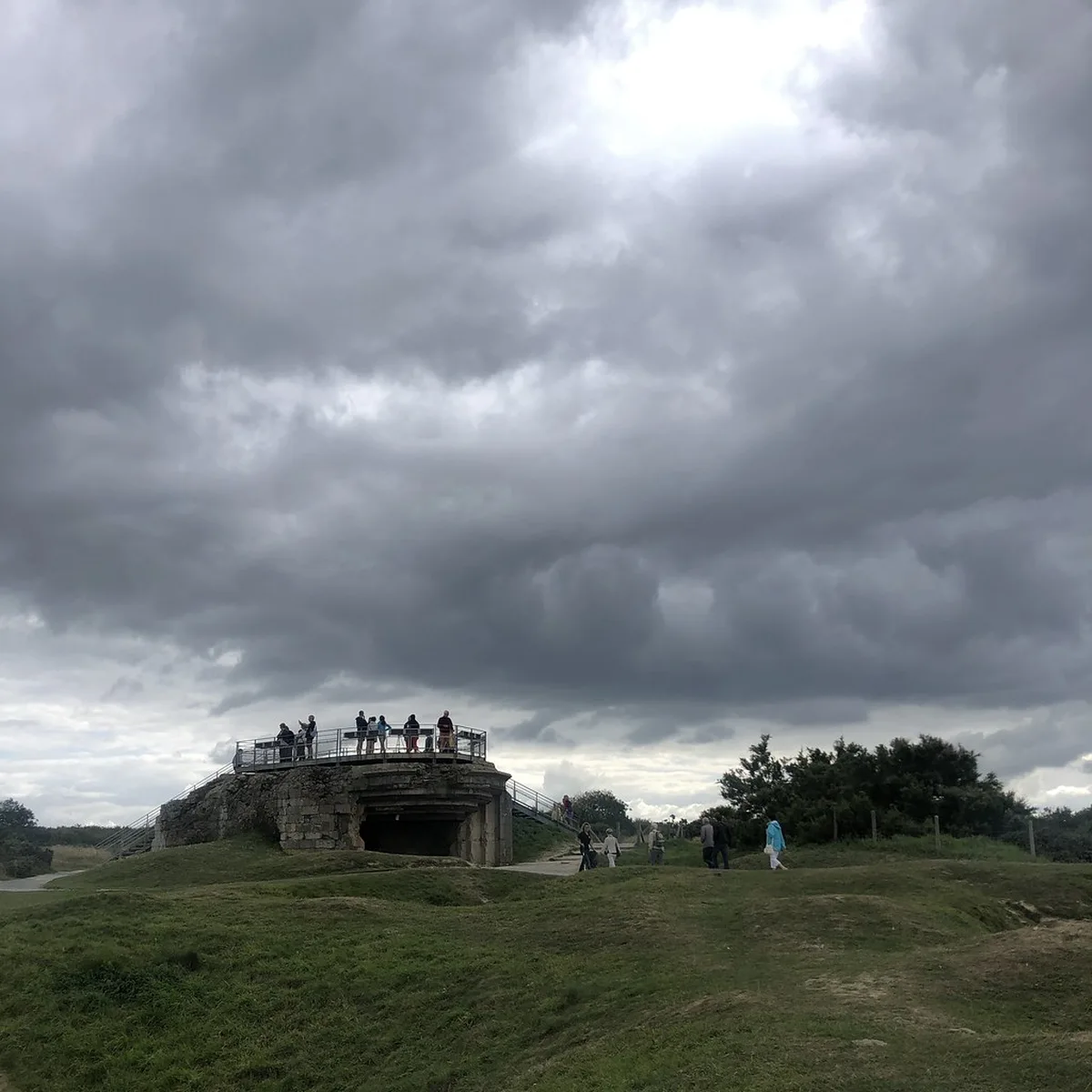
Pointe du Hoc, just 14 kilometres west of Omaha Beach, is where US Army Rangers from the 2nd Ranger Battalion scaled 30-metre cliffs under fire to destroy German artillery positions on June 6, 1944. The site is free to visit and the preserved crater field and German bunkers remain largely intact — a visceral reminder of the battle's intensity. Allow 45–60 minutes here. The cliff-top lookout and information panels were renovated in 2023 and provide striking views toward Omaha Beach to the east.
The Utah Beach Museum (Musée du Débarquement Utah Beach) at Sainte-Marie-du-Mont covers the westernmost Allied landing zone and is one of the most rewarding museums on the D-Day circuit. In 2026 admission costs €8 for adults, €4.50 for children aged 6–16, and free for children under 6. The outdoor exhibit includes an original P-47 Thunderbolt aircraft, a Sherman M4 tank, and preserved LCVP landing craft. The museum is significantly less crowded than Omaha-area sites and offers a quieter, more personal experience with detailed displays covering the 101st and 82nd Airborne divisions' night drops that preceded the seaborne landings.
A practical half-day itinerary from Bayeux (for independent travelers with a hire car): depart Bayeux at 9:00 AM, Pointe du Hoc (9:30–10:30 AM), Omaha Beach and Cemetery (10:50 AM–12:30 PM), lunch at Crêperie du Moulin in Colleville-sur-Mer (12:30–1:30 PM, crêpes €9–13), Arromanches Mulberry Harbour viewpoint and museum (1:45–2:45 PM), return to Bayeux by 3:15 PM for the 3:20 PM train back to Paris, arriving Paris Montparnasse around 5:30 PM.
- Normandy American Cemetery and Memorial
- Type: Memorial / Visitor Centre
- Best for: Reflection and history
- Where: Colleville-sur-Mer (above Omaha Beach)
- Cost: Free
- Pointe du Hoc
- Type: Preserved WWII battlefield
- Best for: Cliff views and bunker exploration
- Where: Cricqueville-en-Bessin
- Cost: Free
- Utah Beach Museum
- Type: D-Day Museum with outdoor exhibits
- Best for: Airborne history and outdoor exhibits
- Where: Sainte-Marie-du-Mont
- Cost: €8 adults / €4.50 children 6–16 / free under 6
D-Day Beach Self-Drive Circuit: Distances, Timing, and 2026 Costs
Renting a car in Bayeux or Caen and driving the D-Day coast yourself gives you the freedom to stop at every roadside memorial, isolated cemetery, and clifftop viewpoint that guided tours skip. The following circuit covers the five Allied landing sectors from west to east and can be completed in five to six hours of active sightseeing plus driving, making it viable as a standalone day itinerary when arriving in Caen by the 8:05 AM train from Paris Montparnasse.
The total driving distance for the full five-beach circuit from Caen and back is approximately 180 kilometres. Fuel at 2026 French pump prices (around €1.75 per litre for diesel, €1.90 for unleaded SP95) adds roughly €20–25 in fuel costs for a typical family car. Car rental from Caen train station (Gare de Caen) starts at €40–55 per day for a compact vehicle booked in advance via Europcar, Hertz, or Enterprise — all of which have desks inside the station building. Book at least a week ahead during June and July to guarantee availability.
Circuit itinerary (west to east):
- Utah Beach (Sainte-Marie-du-Mont) — Start point: 45 minutes from Caen via the D-971 road. Utah Beach Museum entry €8 adults. Allow 75 minutes for the museum and outdoor exhibits including the P-47 Thunderbolt aircraft on display. The beach itself extends for several kilometres of flat sand — a striking contrast to the bluffs at Omaha.
- Pointe du Hoc — 15 km east of Utah Beach: Free entry, allow 45–60 minutes. The intact crater field and German casemates are preserved exactly as they were left after the battle. Renovated visitor panels (2023) explain the Ranger assault in detail.
- Omaha Beach and American Cemetery — 14 km east of Pointe du Hoc: Free entry, allow 90 minutes minimum. The D514 coast road runs directly past the main beach access parking area at Vierville-sur-Mer. The cemetery visitor centre closes at 18:00 (17:00 November–April).
- Arromanches-les-Bains — 10 km east of Omaha: Free cliff viewpoint, Musée du Débarquement (Place du 6 Juin) €8. The concrete caissons of the Mulberry Harbour are visible from the clifftop even without entering the museum.
- Juno Beach Centre (Courseulles-sur-Mer) — 8 km east of Arromanches: Canadian D-Day museum, €9 adults, €5 children. Open April to November. The museum is run by the Juno Beach Centre Association and focuses on the Canadian role in the Normandy campaign.
- Return to Caen — 20 km from Courseulles: Allow 30 minutes without traffic. Catching the 17:05 or 18:05 train from Caen returns you to Paris Montparnasse by approximately 19:15 or 20:15.
Total self-drive circuit budget (per person, two sharing a rental car): €30–60 train fare return + €25–28 car rental share + €20 fuel share + €25 museum entries (Utah €8 + Arromanches €8 + Juno €9 — Omaha and Pointe du Hoc are free) = approximately €100–130 per person, comparable to a guided coach tour but with far greater flexibility and depth.
The Reality of Visiting Mont Saint-Michel as a Day Trip from Paris
Many tourists dream of seeing the abbey on a tidal rock, but the distance from Paris makes it one of France's more demanding day trips. Mont Saint-Michel sits roughly 340 kilometres from central Paris — approximately a four-hour drive each way via the A11 and A84 autoroutes, with tolls of around €30 each way. By train, the fastest option is a TGV from Paris Montparnasse to Rennes (about 1 hour 30 minutes, from €25 advance) followed by a connecting intercity train to Pontorson-Mont-Saint-Michel, then a shuttle bus to the island causeway. Total door-to-door journey time from central Paris is typically 3 hours 30 minutes to 4 hours, meaning you must leave by 7:00 AM to have any meaningful time at the site before reversing the journey.
In 2026 the Mont Saint-Michel abbey (Abbaye du Mont-Saint-Michel) admission is €13 for adults and free for EU residents under 26 and all visitors under 18. The island village and rampart walks are free to access. Crowds peak sharply between 11:00 AM and 3:00 PM throughout spring and summer, so an early arrival is essential — aim for the island by 9:30 AM to explore the abbey before tour groups arrive. The free shuttle buses from the mainland car park at La Caserne run every few minutes; the scenic walk across the causeway takes approximately 35 minutes at low tide.
A guided day trip coach from Paris to Mont Saint-Michel costs €95–130 per person and includes a bilingual guide, though the coach journey itself takes around 4 hours each way, leaving only 2–3 hours on the island. These tours depart as early as 6:30 AM from Paris Opéra. For most visitors, an overnight stay in one of the island village hotels (Hôtel La Mère Poulard, doubles from €180) or in nearby Avranches is a far more rewarding option than a pure day trip, allowing a sunset and sunrise visit when the famous tidal shifts are most dramatic. The tidal range at Mont Saint-Michel reaches up to 14 metres — among the largest in Europe — and the incoming tide visibly encircles the island on spring tides.
- Mont Saint-Michel Abbey (Abbaye du Mont-Saint-Michel)
- Type: UNESCO World Heritage religious site
- Best for: Architecture, tidal phenomenon, medieval history
- Where: Couesnon Estuary, Normandy-Brittany border
- Cost: €13 adults / free under 18 and EU residents under 26
- Mont Saint-Michel Village and Ramparts
- Type: Medieval fortified island village
- Best for: Atmospheric walking and photography
- Where: Within the island walls
- Cost: Free access
Rouen: Normandy's Cathedral City as a Half-Day from Paris
Rouen is one of Normandy's most rewarding and underappreciated destinations, yet it is only 70 minutes from Paris Saint-Lazare by direct SNCF Intercités train, with advance return tickets as low as €24–40 in 2026. This makes it the most accessible Normandy city for a true half-day trip — you can leave Paris at 8:00 AM and be walking Rouen's medieval streets by 9:15 AM, returning comfortably by mid-afternoon. The city sits on the north bank of the Seine and served as the capital of the Duchy of Normandy in the Middle Ages.
The centerpiece of any Rouen visit is the Cathédrale Notre-Dame de Rouen, whose soaring Gothic façade was painted more than 30 times by Claude Monet in changing light conditions. Entry to the cathedral is free, and the interior's 15th-century astronomical clock and ornate choir chapels can be explored at leisure. Directly opposite stands the Gros-Horloge, a 14th-century astronomical clock mounted on a Renaissance arch spanning the Rue du Gros-Horloge pedestrian street. Admission to the Gros-Horloge belfry and clock museum costs €5 adults, €3 reduced, and includes views over the medieval half-timbered streetscape.
Joan of Arc's connection to Rouen is inescapable: she was tried and burned at the stake here in 1431. The modern Historial Jeanne d'Arc (7 Rue Saint-Romain) occupies the Archbishop's Palace where the trial took place and uses immersive theatre technology to recreate the trial. In 2026 admission costs €10 adults, €7 children aged 6–18, free under 6. The Place du Vieux-Marché, where Joan was executed, features a striking 1979 concrete and glass church (Église Sainte-Jeanne-d'Arc) built on the exact spot and worth visiting for its architecture and 16th-century stained glass panels salvaged from a destroyed church.
Rouen's restaurant scene clusters around the Rue Martainville and Rue Damiette, where half-timbered Norman buildings house bistros serving dishes like canard à la Rouennaise (pressed duck with red wine sauce, a local specialty) for €18–25. The covered Marché du Vieux-Marché near the execution square offers regional cheeses (Neufchâtel, Camembert, Livarot) and charcuterie at market prices. A practical itinerary: arrive Rouen 9:15 AM, Cathédrale Notre-Dame (9:30–10:30 AM, free), Gros-Horloge belfry (10:45–11:30 AM, €5), Historial Jeanne d'Arc (11:45 AM–12:45 PM, €10), lunch in Vieux-Marché (1:00–2:00 PM, €15–20), return train Paris 2:30 PM, arrive Saint-Lazare 3:45 PM.
- Cathédrale Notre-Dame de Rouen
- Type: Gothic Cathedral (Monet subject)
- Best for: Architecture, art history, free entry
- Where: Place de la Cathédrale, Rouen
- Cost: Free
- Gros-Horloge Belfry and Clock Museum
- Type: Historic monument and museum
- Best for: City views and medieval horology
- Where: Rue du Gros-Horloge, Rouen
- Cost: €5 adults / €3 reduced
- Historial Jeanne d'Arc
- Type: Immersive history museum
- Best for: Joan of Arc's trial and medieval justice
- Where: 7 Rue Saint-Romain, Rouen
- Cost: €10 adults / €7 children 6–18 / free under 6
Essential Planning Tips for Your 2026 Normandy Journey
Normandy is famous for its apple-based products, including refreshing pear cider (poiré), tangy dry apple cider (cidre brut), and potent Calvados apple brandy that has been produced in the region for centuries. Most local restaurants and farm shops sell cidre brut from €3–5 per bottle and Calvados from €15–30 for a 350ml bottle of AOC Calvados Pays d'Auge — far cheaper than Paris or airport prices. Look for farm shop signs reading "Ferme Cidricole" on the D-Day coast road (D514) for the best prices and authentic regional varieties.
Traditional Norman cuisine deserves more than a passing mention. Moules marinières (mussels steamed in dry Norman cider and cream) served with frites typically costs €14–17 at a beachfront bistro in Arromanches or Grandcamp-Maisy, while a hearty sole normande (sole in cream, mussels, and mushrooms) at a sit-down restaurant runs €20–26 as a main course. Teurgoule (a slow-cooked rice pudding with cinnamon, a Norman specialty) costs €5–7 for dessert. The region's rich dairy tradition means every meal comes with excellent butter and aged Camembert de Normandie, Livarot AOC, or Pont-l'Évêque AOC cheese.
Weather along the coast changes rapidly even in summer, so bringing a compact waterproof jacket is wise year-round. June is historically the best month to visit, with average temperatures of 17–20°C and the D-Day anniversary commemorations adding historical depth to any visit (June 6, 2026 marks the 82nd anniversary). July and August are the busiest months — beach parking lots at Omaha and Arromanches fill by 10:00 AM. September is a rewarding alternative: crowds thin noticeably, admission prices stay unchanged, and the late-afternoon light turns golden along the coast.
Book the Mémorial de Caen (€17) and Bayeux Tapestry (€10) tickets online at least 48 hours in advance during summer. Both museums now offer timed entry slots to manage crowd flow, and popular Saturday morning slots can sell out a week ahead. The American Cemetery at Omaha remains free with no advance booking required, though its visitor centre may have timed entry for the film screenings in peak season. For museum tickets and train reservations, purchasing through the official SNCF Connect app and individual museum websites (memorial-caen.fr, bayeuxmuseum.com) avoids third-party booking fees of €2–4 per ticket.
- Regional Cider and Calvados Tasting
- Type: Culinary experience
- Best for: Local flavour and gift shopping
- Where: Village bistros and roadside farm shops (Ferme Cidricole signs on D514)
- Cost: Cider €3–5/bottle; Calvados €15–30/bottle
- Museum Ticket Pre-Booking
- Type: Logistics and planning
- Best for: Avoiding peak-season queues
- Where: Official websites (memorial-caen.fr, bayeuxmuseum.com)
- Cost: No additional booking fee on official sites
- Coastal Weather Layering
- Type: Packing tip
- Best for: All visitors, all seasons
- Where: N/A
- Cost: N/A
Frequently Asked Questions
Is a day trip to Normandy from Paris worth it in 2026?
Yes, a day trip is highly rewarding if you focus on one specific area — either Bayeux and the D-Day beaches, or Caen and the Mémorial. The 2026 SNCF advance return fare from Paris Montparnasse to Caen is €30–60, making the trip cost-effective for solo travelers. Plan for at least four hours of total travel time and book the 7:05 AM or 8:05 AM departure to maximise your sightseeing window. A focused six-to-seven-hour day on-site is enough to visit two or three major landmarks without feeling rushed. The Mémorial de Caen (€17) or a guided beach tour from Bayeux (€45–60) makes the most of a single day.
What is the best way to see the D-Day beaches without a car?
The most efficient method is taking a train to Bayeux (via Caen, total fare from Paris Montparnasse around €35–65 return) and joining a half-day guided minivan tour that departs from the train station forecourt. In 2026 these tours cost €45–60 per person and cover Omaha Beach, the Normandy American Cemetery (free entry), and Pointe du Hoc (free entry) in a four-to-five-hour circuit. Operators including Normandy Tours and D-Day Lines depart daily in season. Bus Verts public Line 70 buses also connect Bayeux to the coast for €2.50 per journey but run infrequently and require careful timetable planning.
How much does a Normandy day trip from Paris cost in 2026?
Budget approximately €100–150 per person for a solo traveler on the train-and-guided-tour route. This covers a return SNCF train ticket from Paris Montparnasse (€30–60 advance return), a beach van tour from Bayeux (€45–60), and a modest lunch (€14–18). Omaha Beach, the American Cemetery, and Pointe du Hoc are free. The Mémorial de Caen costs €17, the Bayeux Tapestry €10, and Utah Beach Museum €8 — factor these in if your itinerary includes museums. Families driving from Paris should budget €40–55 for compact car rental from Caen station plus €40 in tolls plus fuel (€20–25 for the beach circuit).
Can I see both Mont Saint-Michel and Omaha Beach in one day from Paris?
Attempting both sites in a single day trip from Paris is not recommended. Mont Saint-Michel is 185 kilometres west of Caen, and driving between the two sites adds three to four hours of additional travel time. You would spend over nine hours in transit and have less than two hours at each site — insufficient to do either justice. Mont Saint-Michel abbey alone (€13 entry) warrants at least three hours. Choose one destination and explore it properly. If you want to see both, plan a two-day trip with an overnight in Bayeux or Avranches, which sits 24 kilometres south of Mont Saint-Michel.
Which D-Day museum is most worth the entrance fee in Normandy?
The Mémorial de Caen (€17 adults in 2026) offers the most comprehensive overview of WWII from the pre-war period through the Cold War, covering multiple floors of exhibits, archival film, and personal testimonies. It also runs shuttle services to Omaha Beach on selected days in peak season. For those focused purely on D-Day operations, the Utah Beach Museum (€8 adults) delivers excellent value with its outdoor exhibits including an original P-47 Thunderbolt aircraft and preserved landing craft. Pointe du Hoc and the Normandy American Cemetery are both free and should not be missed regardless of your museum budget. The Arromanches Musée du Débarquement (€8) is ideal for understanding the logistics of the harbour operation.
What is the best time of year to visit Normandy for a day trip?
June is the optimal month for a Normandy day trip from Paris. Temperatures average 17–20°C, SNCF train services run at full frequency, all museums are open with extended hours, and the June 6 D-Day anniversary (June 6, 2026 marks the 82nd anniversary) adds ceremonial significance to a beach visit. September is the second-best choice: summer crowds drop sharply after the first week, prices for the Mémorial de Caen (€17), Utah Beach Museum (€8), and Bayeux Tapestry (€10) remain unchanged, and coastal light is particularly beautiful in the late afternoon. Avoid August weekends when Omaha Beach parking lots fill before 10:00 AM and queues at the Bayeux Tapestry museum exceed 45 minutes without a pre-booked timed ticket.
Is Rouen worth visiting on a Normandy day trip from Paris?
Rouen is excellent value for a half-day trip from Paris and is the closest major Normandy city — only 70 minutes from Paris Saint-Lazare by direct SNCF train, with advance return tickets from €24–40 in 2026. The medieval cathedral (free entry) painted by Monet, the Gros-Horloge astronomical clock (€5), and the Historial Jeanne d'Arc immersive museum (€10) can all be covered in a single morning. Rouen is best combined with an afternoon in the Seine Valley or as a standalone half-day, rather than pairing it with the D-Day beaches in a single visit — the beaches add another 90-minute drive each way beyond Rouen.
A well-planned Normandy travel guide day trip from Paris offers a profound look into French history, coastal beauty, and the human cost of the 20th century's defining conflict. By choosing the right transport — an advance SNCF train from Paris Montparnasse for €30–60 return and a van tour from Bayeux for €45–60 — and focusing on a specific cluster of sites rather than trying to see everything, you can return to Paris with powerful memories rather than exhausted legs.
Whether you are standing silently at the Normandy American Cemetery, tracing the Bayeux Tapestry's embroidered panels from the Norman Conquest, or tasting a glass of ice-cold cidre brut at a farm stand on the D514 coast road, Normandy leaves a lasting impression on every visitor. Book your SNCF tickets and any timed-entry museum tickets as early as possible in 2026, and allow the region the depth of attention it deserves.
For related French travel planning, see our guides to day trips from Bordeaux, the Alsace travel guide: Strasbourg and Colmar, and our overview of Colmar's old town. For inspiration on other French regional itineraries, see the Bordeaux 3-day itinerary.