Your Ultimate Guide to a Perfect Ghent Walking Tour
Free tip-based walking tours of Ghent depart from Sint-Baafsplein daily at 10:00 AM and 2:00 PM — tip €10–15 per person. The 2–3 hour self-guided loop covers St. Bavo's Cathedral, Gravensteen Castle (€14), Graslei/Korenlei, Ghent City Hall, and Graffiti Street.
The self-guided Ghent walking circuit is approximately 3.5 km and takes 2–3 hours at a sightseeing pace. Key paid stops: Gravensteen Castle €14, Mystic Lamb altarpiece at St. Bavo's €12.50. All street-level landmarks are free to walk and photograph.
Ghent offers a stunning mix of medieval architecture and modern Belgian culture. Walking through the city allows you to see intricate details that car travelers often miss. Most visitors start their journey at the iconic Korenmarkt square near the river, though the full self-guided circuit described below begins at Sint-Pietersstation to capture every highlight in logical geographical order.
This historic city remains one of the most walkable destinations in all of Europe. You can easily navigate the pedestrian-friendly streets while following our Ghent old town guide for deeper context on the architecture and neighborhoods. Every corner reveals a story from the Middle Ages or the industrial revolution that shaped Flanders.
A well-planned route ensures you see the major landmarks without feeling rushed. Preparing for your adventure involves choosing the right time of day and the best starting point. This guide provides everything you need to enjoy a memorable self-guided experience with exact distances, logistics, and 2026 prices throughout.
Complete 3-Hour Self-Guided Ghent Walking Tour Route
This numbered route links every essential Ghent landmark in logical geographic order, minimising backtracking and maximising your time. The full loop covers approximately 3.5 km and is designed to be completed in 3 hours at a relaxed sightseeing pace, with paid attraction visits adding 90 minutes. Start at Korenmarkt for the most convenient tram connections.
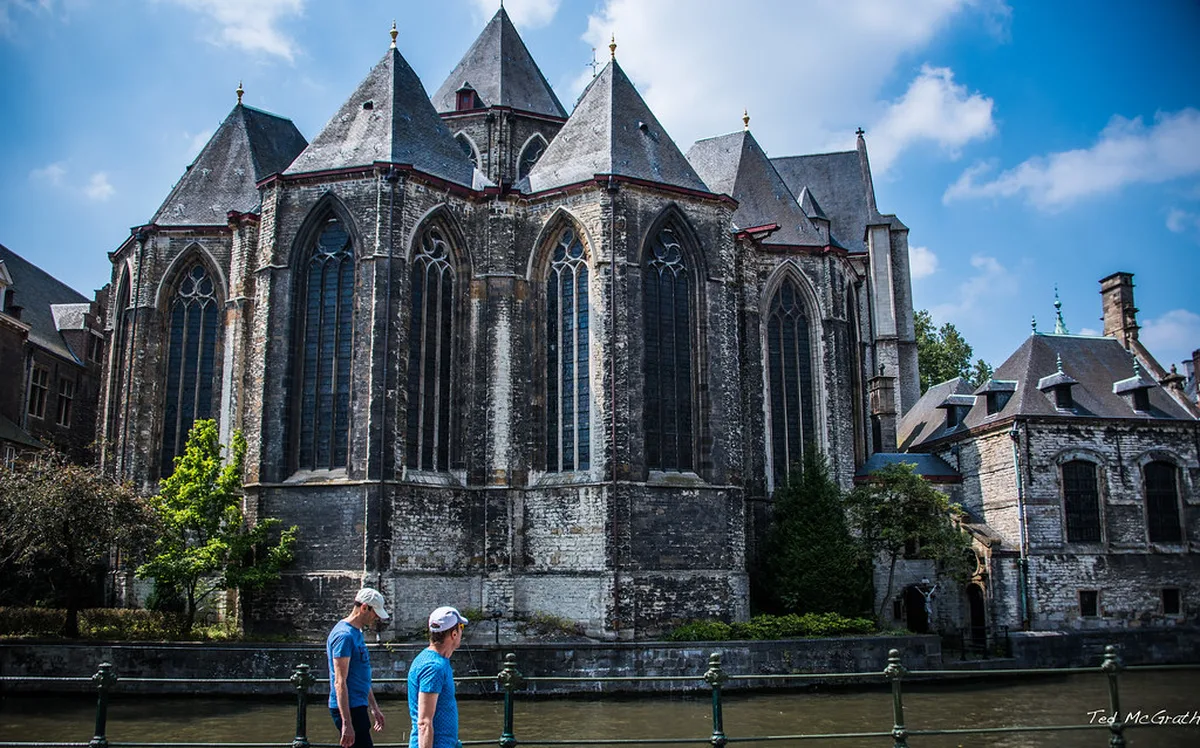
- Korenmarkt Square (Start) — 0 min
Begin at Korenmarkt, Ghent's central square on the west bank of the River Leie. This is served by trams 1, 4, and night buses and is the logical hub of the old town. The square is flanked by the baroque St. Nicholas Church (free entry, 09:00–17:00) and the brick guild houses on the northern edge. Allow 15 minutes to orientate and photograph the square before moving on. No entry fee — all exterior. - St. Michael's Bridge — 5 min walk (250 m)
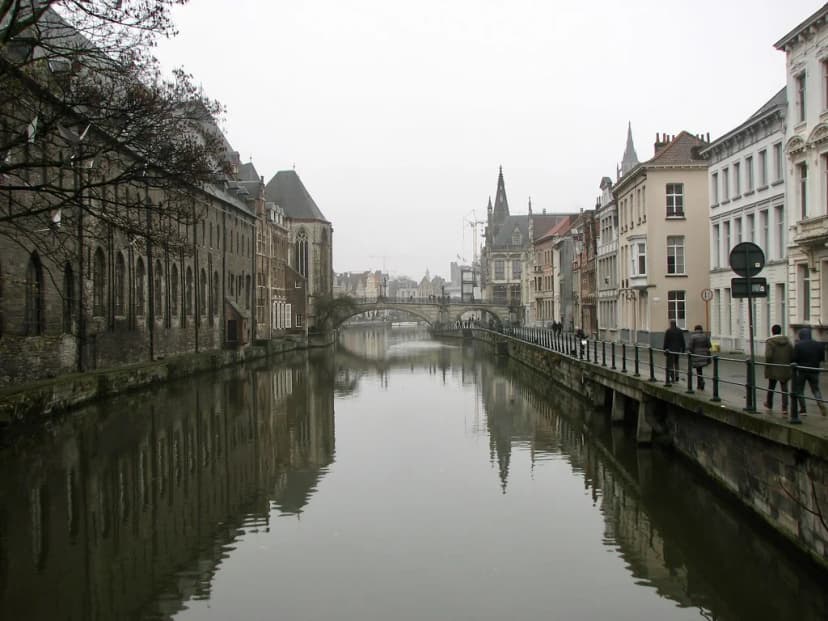
Walk south from Korenmarkt along the river to St. Michael's Bridge, the single best panoramic viewpoint in Ghent. From the centre of the bridge you can frame all three of the city's famous medieval towers — the Belfry, St. Bavo's Cathedral, and St. Nicholas Church — simultaneously. Professional photographers gather here around 19:00 in summer for golden-hour light. Allow 15–20 minutes. Entirely free. - Graslei and Korenlei — 5 min walk (200 m)
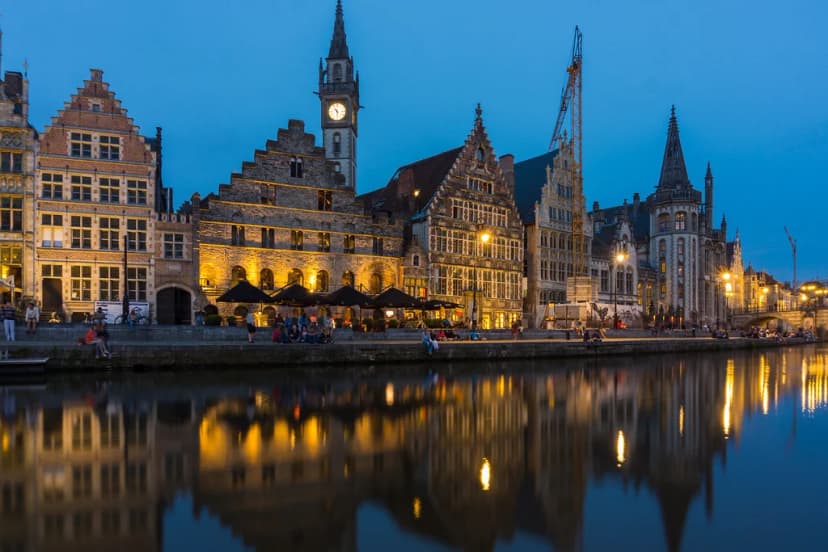
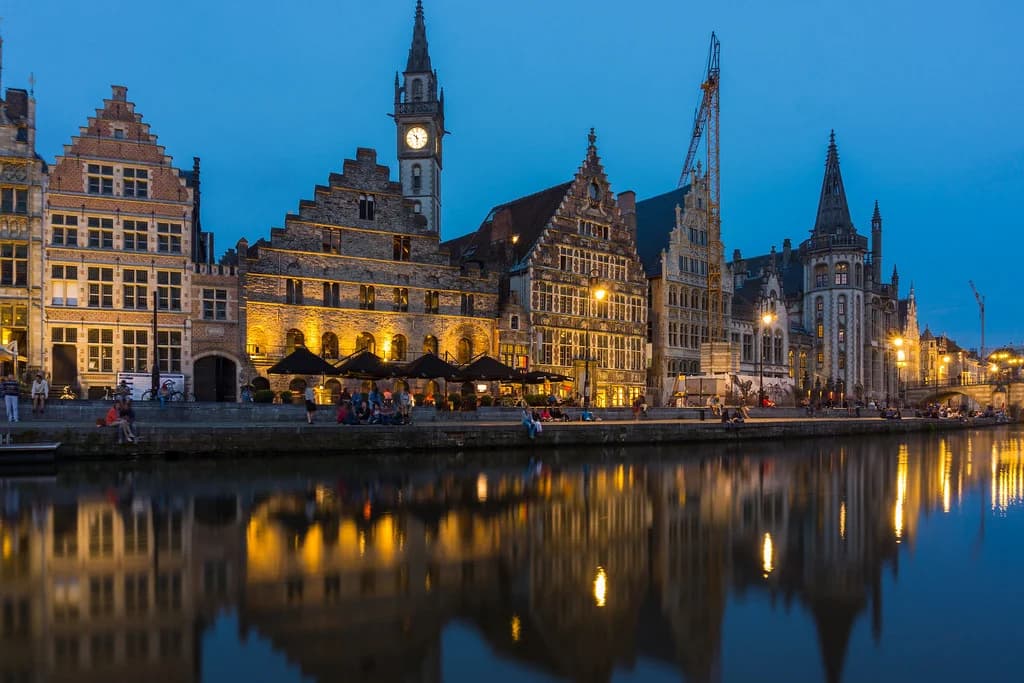
Cross back to the Graslei embankment, the medieval grain-trade quay lined with Romanesque and Gothic guild houses dating from 1200 to 1698. Key buildings include the Spijker (free grain warehouse), the Tolhuisje (toll house), and the Korenmetershuis (grain measurers' house). Canalside café terraces open April–September; a local Gruut Blond beer costs €4–5. Boat tours depart from the northern jetty (35 min, €8–10 per adult). Allow 20–30 minutes here. - Ghent City Hall (Stadhuis) — 8 min walk (400 m)
Walk northeast from Graslei along Botermarkt to the Ghent City Hall, a striking building whose façade spans multiple centuries — Gothic on the north side, Renaissance on the south. Guided interior tours run on weekday mornings (€5 per person, book at the Visit Gent office). The exterior is always accessible and worth 10 minutes for architectural photography. From City Hall it is a 3-minute walk south to Sint-Baafsplein and the cathedral. - St. Bavo's Cathedral and Belfry — 3 min walk (150 m)
St. Bavo's Cathedral dominates Sint-Baafsplein with its 82 m Gothic tower. Cathedral entry is free (08:30–17:30 Mon–Sat, 13:00–17:30 Sun). The Adoration of the Mystic Lamb altarpiece (Jan and Hubert Van Eyck, 1432) requires a separate timed ticket: €12.50 adults, €2 ages 6–17 — pre-book online as slots sell out weeks ahead in summer. The adjacent Belfry charges €10 adults for lift access to 91 m. Allow 60–90 minutes total for both. - Graffiti Street (Werregarenstraat) — 5 min walk (300 m)
Head north from Sint-Baafsplein through the pedestrian shopping lanes to Werregarenstraat — Ghent's official graffiti street, where the city authorises street artists to cover every surface. New murals appear daily, making it one of the most dynamic open-air art galleries in Belgium. The alley is short (roughly 80 m) but densely covered; allow 10–15 minutes to photograph and explore. Entirely free. - Vrijdagmarkt Square — 5 min walk (350 m)
Continue north to Vrijdagmarkt, the 1.3-hectare civic square that has been the heart of Ghent since the 13th century. Pick up cuberdons (Neuzekes) from the candy vendor on the eastern edge — a cone of six costs €2. The square hosts a general market Friday mornings (07:00–13:00) and an organic and antiques market Sunday mornings. The ornate Ons Huis labor hall façade and the bronze statue of Jacob van Artevelde are both worth a closer look. Allow 15–20 minutes. - Gravensteen Castle — 8 min walk (350 m)
Walk west from Vrijdagmarkt along Geldmunt to Gravensteen, the most complete medieval castle in Belgium. Built in 1180 by Count Philip of Alsace after the Crusades. In 2026, adult admission is €14; ages 6–17 pay €4; under 6 free. Open daily 10:00–18:00 (last entry 17:30). Buy tickets online to skip queues of 20–30 minutes on peak weekends. Audio guide included. Allow 75–90 minutes to see the great hall, torture chamber, and battlements with panoramic city views. - Patershol District — 5 min walk (300 m)
From Gravensteen, turn south into the cobblestone lanes of Patershol, Ghent's oldest residential neighbourhood dating to the 11th century. Browse the small bronze plaques on house walls and the 16th-century stone Mariabeeldjes (Madonna niches) set into corner brickwork. The district hosts more restaurants per square metre than anywhere else in Ghent — a main serving of Gentse Waterzooi (the city's signature chicken stew) costs €18–22. Allow 20 minutes to walk through and return to Korenmarkt via Kraanlei (400 m back to the start).
The full circuit back to Korenmarkt is approximately 3.5 km. At a sightseeing pace with photo stops and 15–20 minutes at each free landmark, the walking-only time is about 3 hours. Add 90 minutes for Gravensteen and St. Bavo's altarpiece if entering both. Total: a full half-day of 4–5 hours for the complete experience.
The Complete Self-Guided Route: Sint-Pietersstation to Patershol
The most rewarding way to see Ghent is to follow a logical geographic circuit that links all major landmarks without unnecessary backtracking. The recommended self-guided route starts at Sint-Pietersstation, Ghent's main railway station, and winds approximately 3.5 km through the historic core before ending in the restaurant-lined lanes of Patershol. At a comfortable sightseeing pace with photo stops, allow 2.5 to 3 hours of walking time, plus additional time inside attractions.
From Sint-Pietersstation, walk or take tram 1 or 4 (€2.50 single, three stops) north toward the city center. This drops you near Vrijdagmarkt, one of Ghent's largest and most historically significant squares. The distance from the station to Vrijdagmarkt on foot is roughly 700 m. At the square, look for the colorful candy stall selling cuberdons — the purple, conical, raspberry-filled Ghent sweets known locally as Neuzekes. The vendor on the eastern edge of the square has been a fixture for decades and is an unmissable local food stop. A cone of six cuberdons costs around €2.
From Vrijdagmarkt, it is a short 350 m walk west to Gravensteen Castle, following signs through a web of narrow lanes. After exploring the castle (€14 adult admission in 2026), walk 250 m south along the canal to reach Graslei and Korenlei, the twin medieval quays flanking the River Leie. Continue 400 m southeast along the water to St. Michael's Bridge and then on to St. Bavo's Cathedral, a further 300 m. The final leg loops 600 m northwest through the cobblestone alleys of Patershol, bringing you back toward Gravensteen where tram lines can return you to the station or your hotel.
The entire circuit passes all six major landmarks with no dead-end detours. Wear comfortable, flat-soled shoes — cobblestone surfaces are historic but uneven. The route is almost entirely flat with a brief incline near the Belfry. Mornings before 10:00 AM and evenings after 17:00 offer the thinnest crowds and the best natural light for photography. Weekday visits in spring or autumn are ideal: mild temperatures (12–18°C) and far fewer tour groups than July or August.
If you prefer a guided experience, tip-based free walking tours depart from Sint-Baafsplein daily at 10:00 AM and 14:00 (expect to tip €10–15). The official Visit Gent guided tour costs €18 per person and covers most of the same route with a local expert. Both options can be booked via the Visit Gent Tourism Office near Gravensteen. For solo travelers who want GPS narration, the Questo app offers a self-guided audio tour of central Ghent from €6.99 per person.
Discovering the Scenic Graslei and Korenlei
The Graslei and Korenlei represent the most beautiful riverfront areas in the entire city. These historic quays were once the heart of the medieval grain trade in Flanders, and the guild houses that line them have been remarkably preserved since the 12th century. Walking along the water at a slow pace gives you time to read the carved symbols above each doorway — a wheat sheaf, a ship's wheel, a scale — each one the emblem of a different medieval trade guild that once operated here.

St. Michael's Bridge is the single best photo spot in all of Ghent, and arguably one of the most photogenic viewpoints in Belgium. From the centre of the bridge you can frame all three of the city's famous medieval towers — the Belfry, St. Bavo's Cathedral tower, and the tower of St. Nicholas Church — in a single shot. Professional photographers and serious amateurs gather here from around 19:00 in summer for the golden-hour light that floods the Graslei façades in warm amber. Set up on the western railing for the classic view; the eastern side looks toward Gravensteen. Plan to spend at least 30 minutes here, longer if you want to wait out the crowds and capture the scene without tourist heads in frame.
The Graslei embankment runs roughly 200 m along the western bank and is lined with outdoor café terraces that open from April through September. A local Ghent beer such as Gruut Blond at one of these canalside bars typically costs €4–5; a standard espresso runs €3. The cafés are pleasant for a mid-morning break after Gravensteen and before the cathedral. Boat tours of the inner waterways depart from the jetty at the northern end of Graslei, with 35-minute tours costing approximately €8–10 per adult in 2026 — a worthwhile detour if your legs need a rest.
On the Korenlei side, note the Baroque façade of the old post office building, now repurposed as a shopping gallery. The guild houses on Graslei itself include the Spijker (free grain warehouse, circa 1200), the Tolhuisje (toll house), and the Korenmetershuis (grain measurers' house, 1698). Arriving before 09:30 lets you photograph these façades without the river boat traffic and selfie crowds that build through mid-morning. Boat tour ticket offices open at 10:00 AM, which is a useful time marker for planning your visit to this section of the route.
Conquering the Fortress at Gravensteen Castle
The Gravensteen castle stands as one of the most complete and imposing medieval fortresses in the whole of the Low Countries. Built in 1180 by Count Philip of Alsace after his return from the Crusades, it was modelled on the crusader castles he had seen in Syria — an unusual origin story that the audio guide explains with genuine enthusiasm. The castle was used successively as a court of justice, a prison, and a cotton mill before the city reclaimed it as a heritage monument in the late 19th century.
In 2026, adult admission to Gravensteen costs €14. Tickets for visitors aged 6–17 are €4, and children under 6 enter free. Students with valid ID pay €4. The castle is open daily from 10:00 to 18:00 (last entry 17:30), with evening openings during the winter festive period in December. Buying tickets online via the Visit Gent website saves you from queuing at the box office, which can run 20–30 minutes on weekend mornings in high season. Arriving at 10:00 AM when the doors open is the best strategy for a crowd-free experience.
The self-guided audio tour (included with admission) runs approximately 60 minutes and strikes an entertainingly dark tone, describing the torture instruments on display with dry humor rather than breathless horror. The route climbs narrow spiral staircases to the battlements, where the view over the Patershol district and the canal network is excellent. Wear layers — the stone interior stays cool even in summer, and the rooftop can be breezy. The moat walk around the castle exterior is entirely free and provides strong angle shots of the towers from water level, particularly effective in morning light when the reflections are calm.
The old fish market (Vrijdagmarkt side) immediately east of the castle now houses the Visit Gent tourism information office, where you can pick up free city maps and book guided tours. Guided walking tours from here cost €18 per person and depart at set times. The castle sits 350 m from Graslei and 250 m from Vrijdagmarkt, making it the natural centrepiece of the self-guided route. Allow 75–90 minutes inside to see everything without rushing, including the panoramic rooftop. If you are on a tight schedule, 45 minutes covers the highlights: the great hall, the torture chamber, and the battlements view.
Viewing Masterpieces Inside St. Bavo's Cathedral
St. Bavo's Cathedral is the dominant Gothic landmark of central Ghent, its tower rising to 82 m above the Sint-Baafsplein. Construction began in the 10th century on a Romanesque foundation and continued through successive styles — Romanesque, Gothic, and Renaissance — as different eras left their mark. The result is a layered interior where every bay holds a different surprise, from Baroque side altars to a Rubens painting of St. Bavo entering the monastery hanging in the nave.
Entrance to the main cathedral is free during regular visiting hours (08:30–17:30 Monday–Saturday, 13:00–17:30 Sunday). The unmissable highlight is the Adoration of the Mystic Lamb, the 24-panel altarpiece completed by Jan and Hubert Van Eyck in 1432 and widely considered the most important painting in Belgium. To see the altarpiece, you need a separate timed entry ticket, which in 2026 costs €12.50 for adults and €2 for visitors aged 6–17. Slots book out weeks in advance during summer; purchase via the cathedral website or the Visit Gent platform as soon as your dates are confirmed. The altarpiece is displayed in a specially designed, climate-controlled chapel with a high-definition display panel that explains the iconography panel by panel.
The cathedral's crypt rewards those who venture below the main floor: the original Romanesque church foundations, several medieval tomb slabs, and a small collection of ecclesiastical treasures including a Gothic monstrance. The crypt entry is included in the Mystic Lamb ticket. Most visitors spend 20–30 minutes in the altarpiece chapel plus another 20 minutes exploring the nave and crypt, for a total of about one hour. If you skip the altarpiece and simply tour the free cathedral interior, 30 minutes is sufficient.
The Belfry of Ghent stands directly adjacent to the cathedral on Sint-Baafsplein and is open independently. The Belfry admission costs €10 for adults in 2026 and provides the highest publicly accessible viewpoint in the city — 91 m — reached via a lift. Together, the cathedral and Belfry form a 90-minute combined stop. The square in front of both buildings frequently hosts seasonal markets: a flower market on Fridays, and the celebrated Ghent Light Festival installations in January during even-numbered years. Several chocolate and lace shops line the alleys leading off Sint-Baafsplein, with Belgian pralines starting at about €8 for a 100 g box.
Wandering Through the Hidden Patershol District
Patershol is the oldest surviving residential neighborhood in Ghent, a dense grid of lanes barely wide enough for two people to pass comfortably that date to the 11th and 12th centuries. The name derives from the Carmelite friars — paters — who established a monastery here in 1287. In the 1970s and 1980s, the district fell into disrepair and was nearly demolished for social housing. A local heritage campaign saved it, and today it is the most gastronomically rich neighborhood in the city, hosting more restaurants per square meter than anywhere else in Ghent.
The cobblestone alleys are almost entirely traffic-free, which makes Patershol ideal for slow, distracted exploration. Small bronze plaques on the house walls describe the occupations of former residents — a leather curer, a rope maker, a Dominican preacher. Look for the carved stone shrines set into the corner bricks of buildings at eye level: these Mariabeeldjes (Mary figurines) were placed there in the 16th and 17th centuries and remain largely intact. The atmosphere after dark, when gas-style street lamps cast a warm glow over the wet cobblestones, is genuinely atmospheric — this is exactly the kind of evening walk described in our Ghent nightlife guide as the ideal prelude to dinner.
For food, the neighborhood specialty is Gentse Waterzooi, a thick Flemish stew traditionally made with chicken (the fish version is also available) and root vegetables in a cream broth. Expect to pay €18–22 for a main portion at a traditional eatery in Patershol; a two-course dinner with a glass of local beer typically runs €35–45 per person. Reservations are strongly advised for weekend evenings. The House of Alijn museum, located on Kraanlei on the northeastern edge of the district, documents everyday Ghent life from the 19th century to the present through interiors, toys, and personal objects. Admission costs €8 for adults (€4 for children) and the courtyard is free to enter — a pleasant quiet spot to pause in the middle of the afternoon.
Patershol is best visited in two modes: a short daytime loop of about 20 minutes to absorb the streetscape and visit the House of Alijn, and a return evening visit for dinner. The loop can be walked as the final segment of the self-guided route before catching a tram back from the nearby Gravensteen stop. The main lane through the district, Kraanlei, connects directly back to the canal and Gravensteen in about 400 m, closing the walking circuit neatly. Street-level cafés in the outer lanes serve afternoon coffee for €3–4; a quick waffle met slagroom (waffle with cream) from a street vendor costs around €4.50.
Vrijdagmarkt Square and the Cuberdon Candy Stop
Vrijdagmarkt — literally "Friday Market" — has been the civic and commercial heart of Ghent since the 13th century. At 1.3 hectares, it is one of the largest squares in Belgium and has seen its share of history: workers' revolts, public executions, and the proclamation of Jacob van Artevelde as Regent of Flanders in the 14th century, commemorated by his bronze statue at the square's center. Today the square is surrounded by guild houses, a Flemish Renaissance town hall annex, and the socialist workers' hall "Ons Huis," its ornate 1900 façade a reminder of the city's labor movement.
The can't-miss stop here is the Neuzekes candy vendor on the eastern edge of the square. Neuzekes — the Ghent dialect word for "little noses" — are the local name for cuberdons, the purple, cone-shaped, raspberry-jelly-filled sweets that have been a Ghent street food tradition since the 1870s. The vendor on Vrijdagmarkt is one of two competing stalls (the other is a short walk away on Kraanlei) and has operated at this location for generations. A cone of six cuberdons costs approximately €2 in 2026; a box of twelve for gifting runs €5–7. They are eaten by biting off the tip and sucking out the soft jelly center before chewing the firmer outer shell. Buy them and eat them on the spot — they do not travel well and soften within hours.
The square also hosts a general market on Friday mornings (07:00–13:00) and an organic produce and antiques market on Sunday mornings, both free to browse. The market stalls sell local Ghent mustard (Tierenteyn), artisan cheeses, and fresh bread alongside clothing and household goods. Surrounding cafés and brown pubs offer a gentse tripel beer for €4–5; the city's oldest brown café, Dulle Griet on the northern edge, serves over 250 Belgian beers in an atmospherically worn interior. A visit to Vrijdagmarkt at the start of the walking route (after arriving from Sint-Pietersstation) sets the local tone before you continue to Gravensteen.
The square is an 8-minute walk from Gravensteen and a 5-minute walk from the tram stop at Korenmarkt, making it easy to insert into any version of the self-guided route. If you arrive on a non-market day, the square is still worthwhile for the architecture alone. The ornate red-brick guild house on the western side (now a bank) and the Ons Huis labor hall on the east are both worth a few minutes of study before you move on. Vrijdagmarkt to Gravensteen is a pleasant 350 m stroll along Geldmunt street, passing small antique shops and local bakeries.
Essential Planning Tips for Your Ghent Walking Tour
Planning your logistics ahead of time will make your visit much more enjoyable. The city center is largely car-free which makes walking the most efficient way to travel. Wear comfortable shoes with a low profile sole — the historic cobblestones are uneven and tightly packed, and heel-heavy footwear becomes painful quickly. A small umbrella or compact rain jacket is essential; Belgian weather in all seasons can shift from bright sun to driving rain within 30 minutes with no warning. Pack a reusable water bottle as drinking-water fountains are sparse in the old town.
The CityCard Ghent offers strong value if you plan to enter multiple paid attractions. A 48-hour card costs €38 in 2026 and covers public transport (all De Lijn trams and buses within Ghent), a free canal boat tour, and free or discounted entry to STAM City Museum, the House of Alijn, the Design Museum Ghent, and the Museum of Fine Arts (MSK). It provides a significant discount on the Mystic Lamb timed entry (reducing adult admission to approximately €8.50). The card does not cover Gravensteen entry, which must be paid separately at €14. Purchase the CityCard online before arrival, at the tourism office near Gravensteen, or at Sint-Pietersstation. For a single-day visitor who only walks and enters Gravensteen and the cathedral, buying individual tickets is more cost-effective.
For parking, if you are driving to the city you should consult our guide on parking in Ghent before you travel. The low-emission zone (LEZ) covers the entire historic centre and requires registration for most non-Belgian vehicles at least 24 hours before arrival. Central parking garages such as P-Center charge approximately €25 for a full day. The park-and-ride facilities at Sint-Pietersstation and on the Ring road are significantly cheaper (around €3–5 all day) and connect to the centre by tram in 10–12 minutes — almost always faster than driving in, given road closures and tram priority lanes.
Ghent tram costs: a single ticket costs €2.50 when bought via the De Lijn app or at a ticket machine (€3 on-board). A day pass costs €7 and covers unlimited travel on all De Lijn urban lines for the calendar day. Tram lines 1 and 4 are the most useful for walking tour logistics, stopping at Sint-Pietersstation, Korenmarkt, and Gravensteen. If you are staying in the Patershol area, the tram stop at Gravensteen on line 1 is the most convenient connection back to the station at the end of the day.
- Essential Walking Tour Gear
- Shoes: low-profile, flat-soled comfortable sneakers
- Storage: small daypack or crossbody bag
- Hydration: reusable water bottle
- Tech: portable charger, offline map downloaded
- Clothing: light rain layer (Belgian weather is unpredictable)
- Best Times to Explore
- Morning: before 10:00 AM for Graslei and Gravensteen
- Golden hour: 19:00–20:00 for St. Michael's Bridge photos
- Weekdays: noticeably lower crowd levels than weekends
- April–May and September–October: mild weather, manageable crowds
If you are combining Ghent with a wider Belgium itinerary, consider reading our Bruges vs Ghent comparison to decide how many days to allocate to each city. Ghent rewards a full day; two days allows you to explore the southern neighborhoods and the contemporary art scene at SMAK without feeling rushed.
Frequently Asked Questions
How long does a Ghent walking tour take?
The self-guided circuit from Korenmarkt through Graslei, Gravensteen, Graffiti Street, Vrijdagmarkt, St. Bavo's Cathedral, and Patershol covers approximately 3.5 km and takes 2 to 3 hours of walking time. Budget a full day if you plan to enter Gravensteen Castle (€14, allow 90 minutes) and the Mystic Lamb altarpiece at St. Bavo's (€12.50, pre-book a timed slot). A highlights-only stroll skipping paid interiors can be completed in under 2 hours.
Is Ghent walkable for people with limited mobility?
The city centre is mostly flat but its historic cobblestone streets can be challenging for wheelchairs and pushchairs. Most major museums and public buildings — including St. Bavo's Cathedral and the House of Alijn — have modern accessible entrances. Gravensteen's internal spiral staircases are not accessible, but the exterior moat walk is wheelchair-friendly. Ghent trams are low-floor and wheelchair accessible, which helps cover larger distances between stops comfortably.
Are there free walking tours available in Ghent?
Yes. Tip-based free walking tours depart from Sint-Baafsplein daily at 10:00 AM and 2:00 PM, typically lasting around 2 hours and covering Graslei, Gravensteen, and St. Bavo's Cathedral. The customary tip is €10–15 per person. The official Visit Gent guided tour, departing from the tourism office near Gravensteen, costs €18 per person and includes a local expert guide. The Questo app offers a GPS self-guided audio tour from €6.99 per person with no booking required.
What is the best starting point for a Ghent walking tour?
Korenmarkt is the best starting point for most visitors — it sits at the heart of the old town on the Leie riverfront, with tram connections from Sint-Pietersstation (take tram 1 or 4, €2.50, three stops). If you are arriving by train, ride to Korenmarkt and begin on foot at St. Michael's Bridge immediately to the south. Both options connect all major landmarks — Graslei, Gravensteen, St. Bavo's, Graffiti Street, and Vrijdagmarkt — in a logical walking sequence without backtracking.
What are cuberdons and where do I try them in Ghent?
Cuberdons — called Neuzekes (little noses) in Ghent dialect — are purple, cone-shaped Belgian sweets with a raspberry jelly center encased in a firmer sugar shell. They are a Ghent food tradition dating to the 1870s. The most famous vendor is the Neuzekes stall on the eastern edge of Vrijdagmarkt square; a cone of six cuberdons costs approximately €2 in 2026. Eat them immediately — they soften and lose texture within a few hours of purchase.
How much does it cost to travel around Ghent by tram?
In 2026, a single De Lijn tram ticket in Ghent costs €2.50 when purchased via the De Lijn app or ticket machines (€3 on-board). A day pass valid for unlimited travel on all urban De Lijn lines costs €7. Tram lines 1 and 4 are the most useful for tourists, running between Sint-Pietersstation and the old town stops at Korenmarkt and Gravensteen. The CityCard Ghent (€38 for 48 hours) includes unlimited public transport plus free entry to several museums.
How much does Gravensteen Castle cost to enter in 2026?
In 2026, adult admission to Gravensteen Castle is €14. Children aged 6–17 pay €4, and those under 6 enter free. Students with valid ID also pay €4. The castle is open daily from 10:00 to 18:00 (last entry 17:30). Book tickets online via the Visit Gent website to avoid queues of 20–30 minutes on peak weekend mornings. The audio guide is included with admission and covers the great hall, torture instruments, and battlements with panoramic city views.
Ghent is a city that rewards those who take the time to explore on foot. The combination of medieval history and vibrant local life creates a unique atmosphere that few cities in Western Europe can match. Following the self-guided circuit from Korenmarkt through Graslei, Gravensteen, Graffiti Street, Vrijdagmarkt, St. Bavo's, and Patershol gives you the clearest possible picture of what makes this city so compelling — and at 3.5 km, it never feels like a forced march.
Book your Gravensteen (€14) and Mystic Lamb (€12.50) tickets online as soon as you know your travel dates. Grab a cone of cuberdons at Vrijdagmarkt in the morning, time your Graslei visit for golden hour, and end the day with a bowl of Gentse Waterzooi in Patershol. That combination covers the best of Ghent in a single day. Remember to book your museum tickets in advance to avoid long queues during peak summer hours.
If you have extra time, consider some day trips from Ghent to nearby cities. Bruges is 30 minutes by train and Antwerp is 50 minutes — both are straightforward additions to a Ghent-centred Belgium itinerary. You might also find our Bruges vs Ghent guide useful for deciding how to split your time across both cities. Enjoy your journey through one of the most enchanting and underrated cities in Belgium.