Finding the Best Parking in Ghent: A Complete 2026 Guide
Ghent's historic centre operates a Low Emission Zone (LEZ) — diesel Euro 4 or older vehicles are banned. Best budget parking in 2026: P+R Bourgoyen (€4/day, free tram included), P+R Gentbrugge (€3/day), Reep underground garage (€2.20/hr), and Ramen garage near Sint-Pietersstation (€1.80/hr).
Foreign drivers must register their vehicle free at anpr.be before entering the Ghent LEZ — non-compliance carries an automatic €150 fine. Central underground garages such as P1 Vrijdagmarkt cost €2.50/hr (max €26/day); P+R lots on the outskirts offer the most affordable full-day parking in 2026.
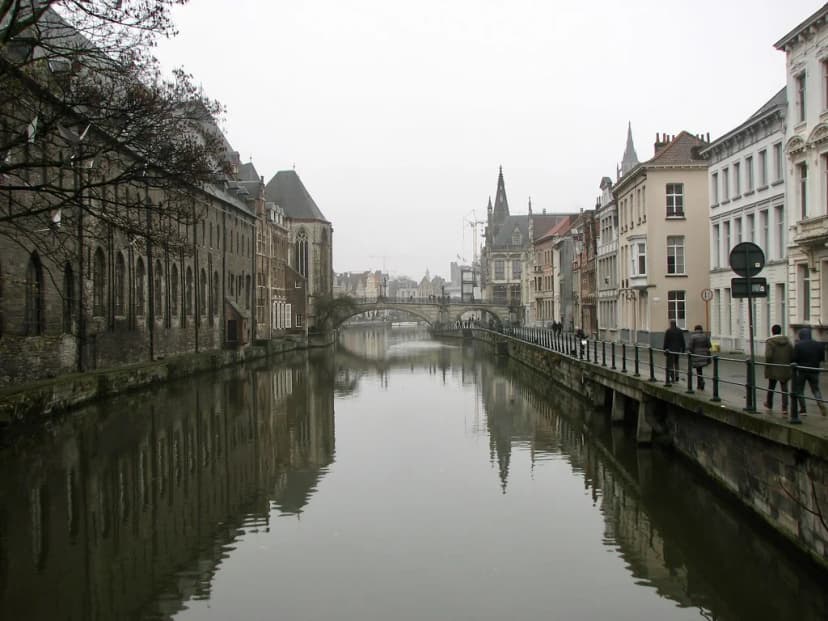
Ghent is a stunning medieval city that prioritises pedestrians and cyclists over heavy car traffic. Navigating the narrow streets requires a bit of planning before you arrive at the city gates. Most visitors find that understanding the local traffic rules saves both time and expensive fines. This guide covers everything you need to know about finding reliable parking in Ghent in 2026.
While the city centre is largely car-free, several large underground garages sit just outside the pedestrian zone. Travellers can easily reach the most popular Ghent Old Town landmarks and shopping streets from these central hubs. Choosing the right spot depends on your budget and how long you plan to stay. Modern digital signs throughout the city display real-time space availability for every major garage, removing the guesswork from your arrival.
Parking rates in the heart of the city can reach €26 for a full day. Budget-conscious travellers often prefer the peripheral lots that offer free shuttles or cheap tram connections into the historic core. We break down the costs and locations for every type of traveller in the sections below. Prepare your GPS and registration details to ensure a smooth entry into this Belgian gem.
Understanding the Ghent Circulation Plan
The Ghent Circulation Plan divides the city into six distinct sectors surrounding a central car-free zone. Drivers cannot cross directly from one sector to another using the inner city streets — you must return to the R40 ring road to move between different parts of the city. Cameras monitor these sector boundaries and will issue automatic fines to anyone who ignores the restricted signs. In 2026, the fine for violating sector boundaries is €58 per occurrence, processed automatically and mailed to your home address.
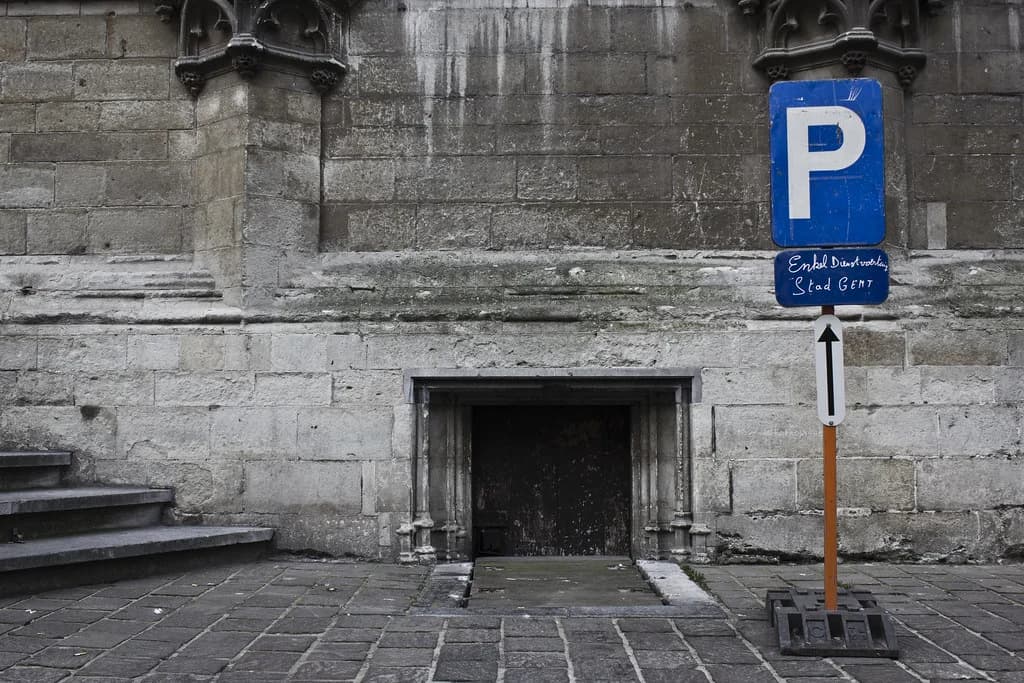
The pedestrian zone is strictly off-limits to cars without a special permit issued to residents or delivery vehicles. Smart signage clearly marks the entrance to each sector to help visitors stay on the correct path. Always follow the official green parking route signs rather than relying solely on older navigation apps such as Google Maps, which may not reflect the most recent road configuration. The Waze app has generally up-to-date Ghent sector routing as of 2026, but always verify before your trip.
Local authorities designed this system to keep through-traffic out of the historic and residential areas. Pedestrians and cyclists enjoy much safer streets because of these strict driving regulations. Tourists should aim for the parking garage located within the specific sector they wish to visit. Planning your entry point from the R40 ring road is the most efficient way to reach your destination with minimum backtracking.
Access to hotels within the pedestrian zone usually requires a temporary digital permit arranged by your accommodation. Make sure to provide your licence plate number to your hotel at least 48 hours before arrival so they can activate the permit in the city system. Unauthorised entry into the car-free streets is one of the most common and costly mistakes for international drivers in Ghent. Checking the official Gent.be circulation plan map before departure takes just a few minutes and can save you a substantial fine.
If you are driving a rental car, confirm the licence plate with the rental agency before departure, as some online check-in systems pre-fill a different plate. Cameras in Ghent are linked to a Europe-wide database that will trace the fine to the rental company, which will in turn charge you an administrative fee on top of the penalty. The smartest approach is to arrive directly at your chosen garage sector without deviating through residential streets, even if GPS insists on a shortcut.
The six sectors are labeled A through F on city maps. Sector A covers the historic centre near Vrijdagmarkt and Graslei. Sector B covers the university district and Overpoort. Sectors C through F extend outward toward the ring road and the main train station area at Sint-Pietersstation. Each sector has at least one dedicated parking facility matched to local attractions, ensuring visitors rarely need to walk more than ten minutes from their car to their destination.
Best Underground Parking in Ghent Centre
Underground garages offer the most convenient access to the historic city centre's landmarks and shopping streets. P1 Vrijdagmarkt is arguably the most popular choice due to its central location directly beneath one of Ghent's most famous historic squares. In 2026, the standard tariff is approximately €2.50 per hour, rising to a daily maximum of €26 for a 24-hour stay. Most garages remain open 24 hours a day and accept credit cards, contactless payment, and mobile payment via the Payconiq or ParkMobile apps.
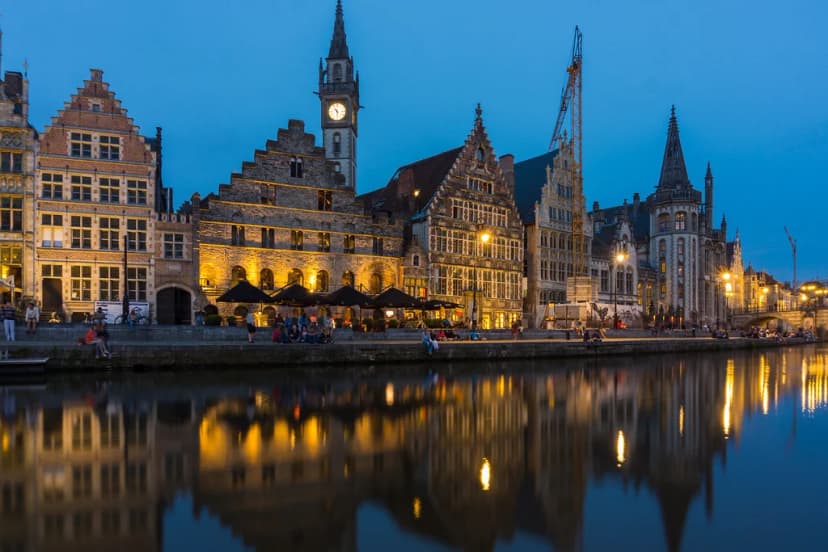
P7 Sint-Michiels is another excellent option located right next to the famous Graslei and Korenlei quays, which are the postcard-perfect canalside streets that define Ghent's image. This garage is often the first to fill up during sunny weekends and local festivals, so arriving before 10:00 AM usually guarantees a spot even during the busiest summer months. The facility features wide parking bays and bright LED lighting for a comfortable experience. From the exit on Sint-Michielsplein, the Gravensteen castle is less than a five-minute walk north along the canal.
For those visiting the southern part of the city or the university district, P10 Sint-Pietersplein is the best choice, offering more than 700 parking spaces directly beneath the grand square. It serves as an excellent base for exploring the local museums, the nearby STAM city museum, or the beautiful Saint Peter's Abbey adjacent to the square. The daily maximum rate here is slightly lower than the absolute centre — approximately €23 for a full day in 2026 — making it a sensible option for longer stays. Walking from this garage to the main Belfry takes approximately fifteen minutes through charming residential neighbourhoods.
A lesser-known but very convenient option is the 't Stad/Overdam garage, located near Woodrow Wilsonplein at the edge of the pedestrian zone. It charges €2.50 per hour with a day cap of around €25, and is ideally positioned for visitors arriving from the E40 motorway direction. The garage connects directly to the covered Overdam shopping area, making it a practical choice on rainy days when street-level walks between sites are less appealing.
One of Ghent's most affordable central options is the Ramen Garage near Sint-Pietersstation, which charges just €1.80 per hour in 2026 — the lowest hourly tariff among the main city-centre facilities. It is particularly convenient for visitors arriving by train who also need to store a rental car, or for budget travellers who want central access without the €26/day price tag of the premium garages. The surrounding neighbourhood near the station also provides quick access to the P+R tram network, giving visitors the flexibility to park here and switch to public transport.
Real-time data for all city garages is available on the official Ghent parking website (stad.gent/parking) and on the P-route digital displays along the R40 ring road. Large electronic signs show exactly how many spaces remain in each facility, updated every two minutes. Following these signs prevents you from driving into a full garage and wasting precious holiday time. Always keep your parking ticket — you will need to pay at the machines before returning to your vehicle, or validate digitally via the app if your garage supports it.
- P1 Vrijdagmarkt Garage
- Location: Vrijdagmarkt (historic centre)
- Capacity: 648 spaces
- Rate: €2.50/hr, max €26/day (2026)
- Best for: Gravensteen, Graslei, city shopping
- P7 Sint-Michiels Garage
- Location: Sint-Michielsplein
- Capacity: 472 spaces
- Rate: €2.50/hr, max €26/day (2026)
- Best for: Graslei/Korenlei quays, SMAK museum
- P8 Reep Garage
- Location: Seminariestraat
- Capacity: 484 spaces
- Rate: ~€2.20/hr, max €23/day (2026)
- Best for: Sint-Baafs Cathedral, Design Museum
- 't Stad/Overdam Garage
- Location: Woodrow Wilsonplein
- Capacity: ~400 spaces
- Rate: €2.50/hr, max ~€25/day (2026)
- Best for: E40 arrivals, Overdam shopping
- P10 Sint-Pietersplein Garage
- Location: Sint-Pietersplein
- Capacity: 700+ spaces
- Rate: ~€1.90/hr, max €23/day (2026)
- Best for: STAM museum, Saint Peter's Abbey, university area
- Ramen Garage (Sint-Pietersstation)
- Location: Near Sint-Pietersstation, Ramen street
- Capacity: ~350 spaces
- Rate: €1.80/hr (2026) — lowest hourly rate among central garages
- Best for: Train arrivals, budget-conscious visitors, university area
Free Park and Ride (P+R) Options
Budget-conscious travellers should look first at the Park and Ride (P+R) locations positioned on the city outskirts. These lots are free to park in all day and connect directly to the city centre via tram or bus. A tram single ticket into the centre costs €2.50 in 2026; a full day pass for all trams and buses within Ghent costs €7.00. Children under six travel free on all public transport in the Ghent zone, and the De Lijn mobile app allows you to buy and validate tickets without needing cash or a physical card.

P+R Bourgoyen, located near the western ring road, charges €4 per day for car parking — and that fee includes a free tram return ticket into the city centre, making it outstanding value for a full-day visit. It is connected to the centre by a regular tram service and is a particularly good option for visitors arriving from Bruges or the E40 motorway from the west. The nature reserve adjacent to the lot makes it a pleasant spot to leave your car for a full day. Tram journey time to Sint-Pietersplein is approximately 18 minutes with stops.
P+R Gentbrugge is one of the most convenient options for drivers arriving from the E17 motorway from the south or east. Parking costs €3 per day, and tram line 2 runs regularly from this lot to the city centre in about 15 minutes. The lot has over 500 spaces and is well signposted from the E17 exit at Gentbrugge. It fills up quickly on market days and during major events, so an early arrival — before 9:00 AM — is advisable on busy Saturdays.
P+R The Loop is a massive facility near the Flanders Expo complex on the northern edge of the city. Parking is free, and tram line 1 connects it to the historic centre in approximately 20 minutes. This lot is ideal for visitors arriving from the R4 outer ring road or from the direction of Ghent-Dampoort station. During the Flanders Expo trade fair calendar, this lot can be at capacity by 8:00 AM, so check the event schedule before committing to it.
P+R Watersportbaan on the southern edge of the city offers free car parking and a direct bus 11 connection to the centre in approximately 10 minutes. It is the smallest of the main P+R facilities but is rarely full outside major event days. EV charging points are available at both P+R Bourgoyen and P+R Gentbrugge in 2026, with two Type 2 fast-charge bays at each location — no reservation needed, first come first served.
Using a P+R lot is also a smart way to begin a Ghent walking tour without worrying about city traffic or inflated garage fees. Leaving your car at a P+R facility is generally safer than hunting for street parking in unfamiliar neighbourhoods. Most lots are well-lit and monitored by cameras. You can leave your vehicle for the entire day while you explore the local sights, cafes, and waterways, then collect it comfortably in the evening.
- P+R Bourgoyen
- Parking cost: €4/day (includes free tram ticket) (2026)
- Connection: Tram (western ring)
- Location: Western ring road, near E40
- EV charging: Yes (2 Type 2 bays)
- Travel time to centre: ~18 min
- P+R Gentbrugge
- Parking cost: €3/day (2026)
- Connection: Tram 2
- Location: Near E17 motorway exit
- EV charging: Yes (2 Type 2 bays)
- Travel time to centre: ~15 min
- P+R The Loop
- Parking cost: Free
- Connection: Tram 1
- Location: Flanders Expo, northern ring
- Travel time to centre: ~20 min
- P+R Watersportbaan
- Parking cost: Free
- Connection: Bus 11
- Location: Zuiderlaan, southern edge
- Travel time to centre: ~10 min
Low Emission Zone, GentSingelRing Rules, and Street Parking
Ghent operates a Low Emission Zone (LEZ) to improve air quality within the city centre. Most diesel vehicles must meet at least Euro 6 standards to enter the zone in 2026, while petrol vehicles need to meet Euro 4 or better. Foreign vehicles — including those from France, Germany, the Netherlands, and the UK — must register online at anpr.be before their first entry, even if the vehicle meets the required emission standards. The registration is free, takes about five minutes, and remains valid for three years. Failure to register or entering with a non-compliant vehicle triggers an automatic €150 fine, mailed to the registered keeper within two weeks.
The GentSingelRing is an important 2026 update to the LEZ framework. Ghent has aligned its zone with the broader Crit'Air sticker system concept used in French cities: vehicles without adequate emission documentation face stricter controls at the inner ring boundary sensors. For foreign drivers, this means that a Crit'Air sticker (as issued in France) or an equivalent national registration is advisable if your vehicle is a diesel older than 2015 or a petrol older than 2006. Check the current compliance rules on anpr.be or the Ghent city mobility portal before your trip, as the thresholds are reviewed annually.
Street parking in Ghent is divided into colour-coded zones with different time limits and prices. The orange zone is the most expensive, usually limiting parking to a maximum of three hours at around €3.00 per hour in 2026. Yellow and green zones are further from the centre and offer cheaper rates — typically €1.00–€1.50 per hour — for durations up to four hours. Always check the nearest parking meter for the specific rules of the street where you park, as local exceptions exist near schools and hospitals.
Paying for street parking is easy via the official 4411 app or at the physical ticket machines. You must enter your licence plate number into the machine to validate your parking session — paper tickets are no longer required to be displayed on the dashboard in most areas. Enforcement officers use scan-cars that check licence plates against the digital payment database in real time, so a missed payment is almost certainly detected. Sunday parking on the street is free in many zones between 9:00 AM and midnight, but underground garages still charge their usual rates seven days a week.
If you are staying overnight, verify whether your accommodation offers a resident permit for the blue zone streets or whether a private lot is available. Loading and unloading for ten minutes is usually permitted at the kerbside if you do not obstruct traffic or tram lines. The central car-free pedestrian zone — bounded roughly by the Graslei, Korenmarkt, and Vrijdagmarkt — is enforced by bollards and cameras at all entry points. Do not attempt to drive into this area without a confirmed permit, as the bollards are not retractable for general visitors.
Ghent LEZ and Clean Air Zones: What Drivers Need to Know in 2026
Ghent's Low Emission Zone (LEZ) is one of the most strictly enforced clean-air zones in Belgium, and understanding it before you arrive is essential to avoiding a surprise fine. The zone covers the entire historic inner ring — broadly the area inside the R40 ring road — and applies 24 hours a day, seven days a week. Cameras at all entry points read every licence plate using Automatic Number Plate Recognition (ANPR) technology and cross-reference it against the national vehicle emissions database in real time.
In 2026, diesel vehicles must meet Euro 5 standards or better to enter the Ghent LEZ without any additional action for Belgian-registered vehicles. However, older diesel vehicles classified as Euro 4 or below are completely banned from the zone — there is no daily permit or temporary exemption you can purchase at the border. If your vehicle is a diesel registered before approximately 2011 (Euro 4) or earlier (Euro 3, Euro 2), you should assume it is not eligible to enter the historic centre by car in 2026. Check your vehicle's Euro emission classification on your registration document or via the official carsandco.be tool before making travel plans.
Petrol (gasoline) vehicles fare better under Ghent's 2026 LEZ rules. Petrol cars meeting Euro 4 or better — broadly any petrol car built from 2006 onward — are compliant and may enter the zone freely. LPG vehicles follow the same threshold as petrol. Hybrid vehicles (petrol-hybrid) are treated as petrol cars for LEZ purposes and typically pass without issue. Full battery electric vehicles (BEV) and hydrogen fuel cell vehicles (FCEV) are always exempt and may enter every part of the city without LEZ restrictions.
Foreign-registered vehicles must take one additional step regardless of their emission level: all non-Belgian licence plates must be registered online at anpr.be before the first entry into the zone. Registration is free, requires only your vehicle's licence plate number and emission standard documentation, and takes approximately five minutes. The registration remains valid for three years. Failing to register — even in a fully compliant vehicle — triggers a €150 automatic fine because the ANPR system cannot verify compliance for unregistered foreign plates.
The GentSingelRing is the 2026 evolution of the LEZ framework, extending compliance monitoring to the broader inner ring boundary rather than only the historic pedestrian zone. Vehicles approaching via the R40 ring road now pass camera checkpoints at each sector entry. This means that the LEZ effectively begins at the ring road entry points, not just at the central bollards. Visitors should treat the entire area within the R40 as the LEZ enforcement zone when planning their route.
Practical advice for different vehicle types in 2026: if you drive a modern petrol car (post-2006) or an EV, simply register at anpr.be if you have foreign plates and proceed normally. If you drive a diesel car, check your Euro rating — Euro 5 or Euro 6 diesels are fine after registration; Euro 4 diesel or older should consider leaving the car at a P+R lot outside the zone entirely and taking the tram. Diesel campers and motorhomes older than Euro 5 are particularly likely to be non-compliant; check before booking accommodation inside the ring.
For real-time compliance information and to register your vehicle, visit anpr.be or the Ghent city mobility portal at stad.gent/mobiliteit. The thresholds are reviewed annually by the city council, so confirm the current standards for your vehicle type and model year before your trip. Fines are processed automatically and issued within two weeks of the infringement, so there is no checkpoint to appeal at on the spot. The smartest approach is always to check compliance before departure rather than hoping for the best at the city limits in 2026.
Cycling and Bike Parking: The Smart Alternative in Ghent
Ghent is one of Belgium's most cycle-friendly cities, and for visitors who are flexible, combining a P+R lot with a rented bicycle is genuinely the fastest way to navigate the historic centre in 2026. The city operates an extensive network of bike lanes that connect all major attractions, running alongside the canals and through the medieval quarters. During busy periods, a bicycle is often faster than a car or even a tram for distances under two kilometres in the city core.
The main cycle parking hub at Sint-Pietersstation is the largest in Ghent, with space for over 2,000 bicycles in a supervised, covered facility directly beneath the main train station. Day use costs €1.00 in 2026; overnight secure parking is €2.50 per night. The station is also a major tram interchange, so combining a P+R arrival by tram with a bicycle rental at the station is a practical itinerary for visitors who want maximum flexibility without the cost of a city-centre garage.
Bike rental is widely available near Sint-Pietersstation and at Blue-bike hire points dotted around the city. A Blue-bike day rental costs approximately €4.50 in 2026 for Blue-bike members, or €9.00 for non-members on a daily rate. Electric bike options are available through private operators near the Graslei and at the main station, typically priced at €20–€28 per day including helmet and lock. If you are planning a comparison trip between Bruges and Ghent, note that Ghent's cycling infrastructure is generally considered superior for confident urban cyclists.
Covered bike parks are also located at Korenmarkt, Vrijdagmarkt, and outside the STAM museum at Sint-Pietersplein. These are free to use for up to 24 hours and include U-bar racks suitable for standard and cargo bikes. For longer stays or high-value bicycles, the paid supervised facility at Sint-Pietersstation is the recommended choice. During the Gentse Feesten in July, street-level bike racks near the festival stages fill up completely by early afternoon — plan to use a supervised facility or a P+R bike park on festival days.
Visitors arriving by car who want to explore beyond the historic centre — for example reaching the Bourgoyen-Ossemeersen nature reserve or the Dampoort district — will find that a bike covers these distances in 15–20 minutes with ease, avoiding the complexity of driving between sectors. Several P+R sites have bike rental nearby, making the car-plus-bike combination the single most cost-effective and stress-free approach for a full day in Ghent.
Parking for Ghent Nightlife, Gentse Feesten, and Special Events
Enjoying the Ghent nightlife scene is easier when you know the evening parking rules. Many city-owned garages offer a flat evening rate for those arriving after 7:00 PM. P4 Savoert and P5 Zuid are convenient choices for reaching the popular bars and concert halls near the Overpoort strip and the canal district. Walking between nightlife spots is safe and very much part of the Ghent evening culture, so parking once and exploring on foot is the recommended approach.
The Overpoort area is the heart of student nightlife and has very limited street parking availability at weekends. Visitors should use the nearby P10 Sint-Pietersplein garage to avoid driving through crowded student streets. This facility is large enough to handle the crowds even during the busiest Thursday and Friday nights. Keep in mind that some streets in the Overpoort zone may be closed to traffic during major student events such as the academic opening celebrations in September.
During the Gentse Feesten in July — Ghent's massive ten-day free street festival that draws roughly one million visitors — parking in and around the city becomes extremely difficult. Authorities close additional streets and convert several parking areas into performance stages and pedestrian zones. In 2026, all P+R lots are expected to be at full capacity by 9:00 AM on peak festival days. The city's strong advice is to arrive before 9:00 AM if you must drive, or to travel by train to Ghent-Sint-Pieters station and walk in. Check the official Gentse Feesten website for 2026 road closure maps, which are published approximately four weeks before the festival opens.
For evening events at the Flanders Expo or the Bijloke concert hall, the dedicated on-site parking at each venue is usually the most practical choice, though it sells out for major shows. Pre-booking a spot via the ParkBee or Q-Park apps can save both time and a last-minute premium. Always remove any valuables from your car when parking overnight in public areas or garages. While Ghent is generally a safe city, visible bags or electronics in car windows can attract opportunist theft. Lock your doors and double-check that all windows are fully closed before heading out for the evening.
Frequently Asked Questions
Is there free parking in Ghent city centre?
Free parking is not available in the historic city centre during daytime hours in 2026. You must use a paid underground garage (from €1.80/hr at Ramen, or €2.20/hr at Reep) or a street-level paid zone. The most affordable options are the P+R lots: P+R Gentbrugge costs €3/day, P+R Bourgoyen costs €4/day (with a free tram ticket included), and P+R The Loop is completely free. Take a tram or bus from any P+R into the centre.
How much does parking in Ghent cost per day in 2026?
In 2026, underground garages range from €1.80/hr (Ramen, near Sint-Pietersstation) and €2.20/hr (P8 Reep) to €2.50/hr (P1 Vrijdagmarkt, P7 Sint-Michiels, max €26/day). P10 Sint-Pietersplein charges roughly €23/day. Street parking in the orange zone costs around €3/hr. P+R lots are cheapest for full-day parking: P+R The Loop is free, P+R Gentbrugge is €3/day, and P+R Bourgoyen is €4/day (includes a free tram return).
Do I need to register my foreign car for the Ghent LEZ?
Yes, all vehicles with a non-Belgian licence plate must register online at anpr.be before entering the Low Emission Zone. Registration is free and takes about five minutes; it remains valid for three years. In 2026, the GentSingelRing update also means older diesel vehicles (pre-Euro 6) should check compliance carefully. Driving in unregistered carries a €150 automatic fine.
Can I park on the street overnight in Ghent?
Street parking is possible overnight in Ghent, and many zones offer free parking between 7:00 PM and 9:00 AM in 2026. However, always check the local blue-zone signage — resident-permit-only restrictions apply on many streets within 500 metres of the city centre. Underground garages such as P1 Vrijdagmarkt and P10 Sint-Pietersplein operate 24 hours and are a more secure option for overnight stays at standard hourly rates.
What is the best way to park during the Gentse Feesten in July?
During the Gentse Feesten festival in July 2026, all P+R lots fill up by 9:00 AM on peak days and many central streets close entirely. The city strongly recommends arriving by train to Ghent-Sint-Pieters station. If you must drive, use a P+R lot and arrive before 9:00 AM. Check the official Gentse Feesten website for 2026 road closure and parking maps, published about four weeks before the festival.
Are there EV charging points at Ghent P+R lots?
Yes. In 2026, P+R Bourgoyen and P+R Gentbrugge each have two Type 2 fast-charge bays available on a first-come, first-served basis at no extra charge beyond the parking fee. Several central underground garages — including P10 Sint-Pietersplein — also have EV charging bays. Check the stad.gent/parking portal for the current list of EV-equipped locations before your visit.
Parking in Ghent in 2026 requires awareness of three key systems: the Circulation Plan sectors, the Low Emission Zone registration requirement, and the P+R network on the ring road. Choosing an underground garage provides the most comfort for those who want to be right beside the action — the P1 Vrijdagmarkt and P7 Sint-Michiels garages place you within a five-minute walk of the main canal sights. The city's commitment to a car-free historic centre makes the cobblestone streets much more enjoyable for every visitor once you have parked and set off on foot.
If you are planning day trips from Ghent, the P+R lots are an excellent base — they offer free or very cheap parking with easy tram access, and the Belgian rail network connects Ghent to Bruges, Antwerp, and Brussels in under an hour from Sint-Pieters station. Always keep a digital copy of your LEZ registration confirmation on your phone to show authorities if requested. The small investment of fifteen minutes of pre-trip planning will lead to a far more relaxed Belgian experience.
For the most seamless visit, combine a P+R arrival with a day tram pass at €7 and explore Ghent entirely on foot and by tram after that. If you are visiting during the Gentse Feesten in July, book train travel in advance and skip the car entirely — the festival is best enjoyed when you are not worrying about where you parked. Ghent remains one of Europe's most rewarding medieval cities when you follow the official parking and mobility guidelines. Enjoy the beautiful waterways and historic architecture, and safe travels in 2026.