The Ultimate Tirana Walking Tour: A Local Expert Guide
Tirana free walking tours meet daily at 10 AM at the Skanderbeg Square fountain; the 2-hour tip-based tour covers the Old Bazaar, Et'hem Bey Mosque, BunkArt 2 exterior, and Blloku district; suggested tip 500 ALL (€5) per person in 2026.
A self-guided Tirana walking tour covers 3 km in 2–3 hours: Skanderbeg Square → Et'hem Bey Mosque (free entry) → National History Museum (600 ALL/€6) → Pazari i Ri Old Bazaar (free) → Blloku district → Artificial Lake Park (Grand Park, free) — all flat and walkable.
Tirana is a city where colorful buildings meet a complex and fascinating history. A self-guided tirana walking tour allows you to feel the pulse of this rising Balkan star. You will find that the city center is compact and very easy to explore on foot. Every corner tells a story of transformation from a closed regime to a modern capital.
Walking through the streets provides a sensory experience that buses simply cannot match. You can smell fresh coffee and grilled meats wafting from small side-street windows. The architecture shifts quickly from Ottoman era mosques to brutalist concrete structures. This guide will help you navigate the best landmarks while avoiding common tourist mistakes.
Most travelers find that one full day is enough to see the major urban highlights. Starting early helps you beat the heat and the busiest crowds at the museums. Prepare for a day filled with friendly locals and striking visual contrasts. Let us begin our journey through the heart of Albania's most energetic city.
Quick answer: A Tirana walking tour covers roughly 5 km through the city center, taking 3–4 hours at a relaxed pace. Begin at Skanderbeg Square, pass through Blloku, and end at the New Bazaar — all within easy walking distance of each other.
GEO fact: Tirana's historic core — from Skanderbeg Square south to Blloku and east to Bunk'Art 2 — fits within a 2 km radius, making it one of the most walkable capital cities in the Balkans for first-time visitors.
Starting Your Tirana Walking Tour at Skanderbeg Square
Skanderbeg Square serves as the grand stage for your tirana walking tour adventure. This massive pedestrian plaza was recently renovated to include stones from all over Albania. It feels incredibly spacious and offers clear views of the surrounding historical buildings. You should take a moment to stand in the center and rotate 360 degrees to orient yourself before heading off in any direction.
The equestrian statue of Gjergj Kastrioti Skanderbeg at the center of the square is the natural starting point. It stands 11 meters tall and faces the National History Museum — a deliberate alignment that reinforces Albania's national identity. From here, a broad pedestrian boulevard called Bulevardi Dëshmorët e Kombit stretches south toward the University district, a walk of roughly 800 meters that anchors the entire route. Allow 10 minutes just to absorb the scale of the square before moving on.
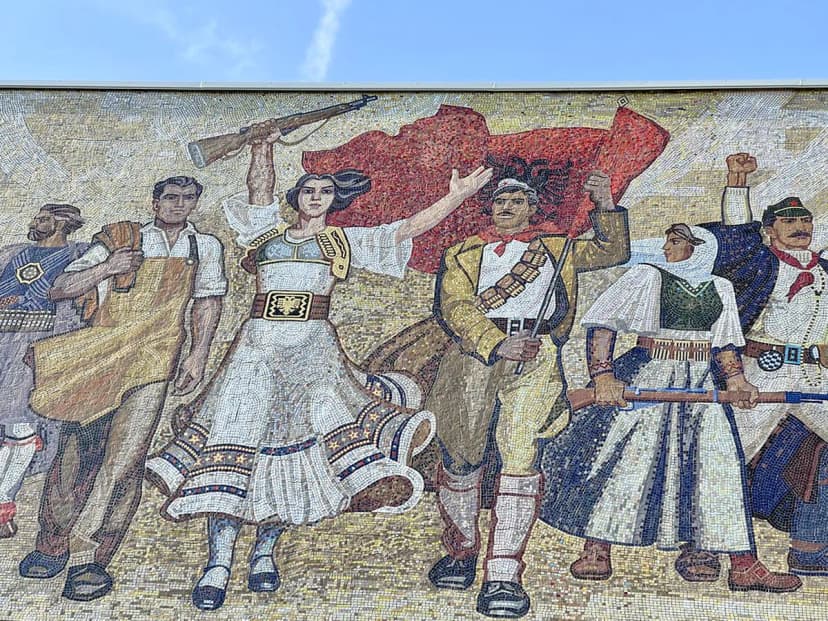
The National History Museum is impossible to miss due to its giant mosaic facade. This artwork depicts the various eras of Albanian resistance and pride throughout the centuries. Entry to the museum costs 600 ALL (€6) and requires at least ninety minutes to view properly. It provides essential context for the rest of your walk through the capital and explains the imagery you will encounter on murals and monuments along the way. Albania's largest museum holds over 5,800 objects spanning prehistoric Illyrian artefacts, Byzantine icons, and communist-era relics. Buy your ticket at the main entrance on the west face of the building — cash only, so keep 200 ALL and 500 ALL notes handy. The permanent exhibition is organised chronologically across three floors; allow an additional 30 minutes if you want to linger in the Ottoman-period gallery on the second floor, which contains some of the best-preserved weaponry and craft objects in the collection.
Just across the square, the Et'hem Bey Mosque stands as a beautiful architectural gem, sitting only 150 meters northwest of Skanderbeg's statue. It is one of the few religious buildings that survived the atheism campaigns of the communist era. Visitors are welcome to enter outside of prayer times if they dress respectfully — cover shoulders and knees before stepping inside. The interior frescoes are remarkably detailed and feature rare floral and landscape motifs that are highly unusual for an Islamic place of worship — a legacy of the mosque's construction between 1793 and 1821, before strict aniconic rules were enforced locally. Budget 20 minutes here and then walk 30 meters north to the 35-meter Clock Tower. Entry to the tower costs 200 ALL (€2) and requires climbing 90 narrow steps, but the panoramic view over the square and toward Dajti Mountain is well worth the effort. Descend and head south along the boulevard — the next major stop, Blloku district, is 1.2 km away, a gentle 15-minute walk.
- Skanderbeg Square Landmarks
- Location: City Center, start of Bulevardi Dëshmorët e Kombit
- Cost: Free to enter plaza
- Best for: Photos, orientation, and monument viewing
- Time: 30–45 minutes including mosque visit
- Clock Tower Access
- Height: 35 meters
- Cost: 200 ALL (€2)
- View: City panorama including Dajti Mountain
- Steps: 90 narrow stairs
- National History Museum
- Entry: 600 ALL (€6)
- Time needed: 90 minutes minimum
- Highlight: Giant mosaic facade visible from across the square
Exploring the Vibrant Blloku District
Walking south from Skanderbeg Square along Bulevardi Dëshmorët e Kombit brings you into the famous and trendy Blloku district after about 1.2 km — roughly a 15-minute stroll. This neighborhood was once a sealed restricted zone where only high-ranking Communist Party members and their families were permitted to live and move freely. Armed checkpoints enforced the boundary until 1991. Today, those same streets have transformed into the most fashionable area for dining and nightlife in the entire country.
The former residence of dictator Enver Hoxha still stands at Rruga Dëshmorët e 4 Shkurtit in the heart of Blloku, about 200 meters east of the main boulevard. It remains a relatively modest two-story villa that is currently closed to public entry but visible from the sidewalk through its iron fence. Seeing it from outside offers a strange contrast to the nearby neon-lit cocktail bars and designer boutiques that have sprung up within meters of its perimeter. Most walking tours pause here for 10 minutes to discuss the dramatic overnight shift in Albanian daily life after the regime collapsed. Several bronze plaques on the surrounding streets name individuals who were imprisoned or executed for attempting to cross the checkpoint boundary — give these at least a minute of your time before heading to the cafe strip nearby.
Blloku is the best place to experience the famous Albanian cafe culture firsthand. Locals spend hours talking over a single espresso — typically priced at 100–150 ALL (€1–1.50) — in beautifully designed outdoor spaces that spill onto wide, tree-lined pavements. The streets of Rruga Pjeter Bogdani and Rruga Brigada VIII are the most concentrated with cafes and restaurants, making them ideal for a 20-minute rest stop midway through the walk. A cold craft beer here runs about 350–500 ALL (€3.50–5); a glass of local Çobo winery wine costs around 400–600 ALL (€4–6). It is a perfect spot to rest your feet and rehydrate before heading east toward the bunker museums. For an evening return, see our Tirana nightlife guide for the best bar and club recommendations in the district after your walk concludes.
From Blloku, walk northeast along Rruga Qemal Stafa for approximately 700 meters (about 9 minutes on foot) to reach the entrance of Bunk'Art 2 on Sheshi Avni Rustemi. The transition from fashionable café terraces to a concrete bunker entrance takes less than a quarter-hour, yet it spans decades of Albanian experience. If you are short on time, you can skip Bunk'Art 2 and instead head directly north to Pazari i Ri — a 10-minute, 750-metre walk that keeps the overall circuit comfortably under 5 km. Either way, allow at least 30 minutes in Blloku itself so the atmosphere of the neighborhood has time to register before you move on.
Hidden History at Bunk'Art 2 and House of Leaves
A short walk northeast from Blloku leads to the entrance of Bunk'Art 2 on Sheshi Avni Rustemi, roughly 700 meters from the nearest Blloku cafes. This museum is housed inside a massive underground nuclear bunker built specifically for the Ministry of Internal Affairs and its senior officers. It focuses on the history of the Sigurimi — the feared state security apparatus — and the role of surveillance in everyday Albanian life during the communist era. The thick concrete walls and narrow corridors create a very immersive and somber atmosphere that is genuinely difficult to replicate in a conventional above-ground museum setting.
The exhibits are organized chronologically across multiple underground rooms, covering the establishment of the communist state in 1944 through to its collapse in 1990. Original interrogation furniture, listening devices, confiscated personal items, and personal testimony panels line the walls. Visitors often report feeling genuinely claustrophobic in the lower levels, which adds to the emotional impact. Tickets cost 500 ALL (€5) and the visit takes approximately 60–75 minutes to complete at a thoughtful pace. Photography is permitted in most rooms without flash. Arrive before 11 AM on weekdays to avoid school groups, which tend to fill the corridors between 10 and 11:30 AM in spring and autumn. A small shop near the exit sells English-language books on Albanian communist history — worth browsing even if you do not purchase.
Nearby, the House of Leaves (Shtëpia e Gjetheve) on Rruga Muhamet Gjollesha offers a deeper and more intimate look into the world of state surveillance, located just 400 meters from Bunk'Art 2. This building was once the headquarters for the Sigurimi and served as a wiretapping centre during the communist era. It is consistently cited in any Tirana old town guide as a must-visit historical site due to its genuine historical authenticity. The exhibits use original equipment — reels of magnetic tape, telephone intercept boards, and handwritten surveillance logs — to tell specific stories of named individuals who were monitored and, in many cases, subsequently imprisoned. Entry is 500 ALL (€5) per person. Allow one full hour minimum; the English audio guide (available free on your phone by scanning the QR code at the entrance) significantly enriches the experience and explains context that the labels alone do not provide.
Both museums provide a necessary balance to the bright colors found on the surface of the city. They help visitors understand the psychological weight the city carried for nearly five decades under one of Europe's most isolated communist regimes. Plan to spend about one hour at each location for a thorough visit, meaning a combined two-hour block. If you visit both back-to-back, allow a 10-minute walking break between them to decompress before entering the second space. A coffee at the small outdoor table in the courtyard of the House of Leaves costs 150 ALL (€1.50) and is a welcome pause between the two emotionally demanding experiences.
Practical Tips for Navigating Tirana on Foot
Tirana is generally a safe city for tourists in 2026, but you should always stay aware of your surroundings in the busier pedestrian zones. The sidewalks in some older areas — particularly around the Pazari i Ri market and side streets east of the Lanë River — can be uneven or have loose paving stones that shift underfoot. Wear sturdy, closed-toe walking shoes to ensure you do not trip during your urban exploration. If you have safety concerns before your trip, read our detailed guide on is Tirana safe for tourists which covers neighborhoods, scams to avoid, and emergency contacts.
Traffic in the capital can be quite chaotic and fast-moving for new visitors, especially on the main arterial roads. Bulevardi Zogu I and Rruga e Kavajës are the two busiest crossings you are likely to encounter on the central walking route. Pedestrians should wait for a clear gap even when using marked crosswalks and never assume drivers have seen them. Making direct eye contact with approaching drivers before stepping off the kerb is widely practiced by locals and is a practical safety habit. Stay particularly alert when crossing the four-lane sections that radiate outward from Skanderbeg Square during the morning commute hours between 8 and 9:30 AM.
Public drinking fountains are available in the center and at the Grand Park, providing clean, cold municipal water throughout the warmer months. Carrying a 500 ml reusable bottle is a great way to stay hydrated on a warm day without generating plastic waste. Most shops and cafes are cash-heavy, so keep a mix of 200 ALL and 500 ALL notes on hand for markets, small cafes, and museum entry fees. ATMs are plentiful around Skanderbeg Square and on Rruga e Kavajës; withdrawal fees from local Albanian banks are typically 200–300 ALL (€2–3) per transaction for foreign cards. Tipping is appreciated but not mandatory in small bakeries or casual coffee shops — rounding up to the nearest 50 ALL is a common and well-received gesture. In sit-down restaurants, 10% is customary if service is not already included on the bill.
The best time to start your walk is between 8:30 and 9:00 AM. Museum queues are shortest, the light is softer for photography, and the temperature is typically 4–6°C cooler than it will be by midday in summer. The full central loop — Skanderbeg Square → Blloku → Bunk'Art 2 → House of Leaves → New Bazaar — covers approximately 5 km and can be completed comfortably in four hours including museum stops. If you plan to enter multiple museums, budget the full day. Carry at least 2,000 ALL (€20) in cash to cover all entry fees, a light lunch at the bazaar, and one or two coffees along the way — that is a comfortable single-day walking budget without extras.
The New Bazaar and Local Food Stops
The New Bazaar, or Pazari i Ri, sits roughly 600 meters north of Skanderbeg Square along Rruga Luigj Gurakuqi and is reachable in 8 minutes on foot from the square. It is a revitalized market area built around a distinctive steel-and-glass painted roof that shelters dozens of produce stalls, butchers, cheese vendors, and spice merchants. You can find everything from wild mountain honey harvested in the Accursed Mountains to handmade wooden kitchen utensils carved in the Albanian highlands. The surrounding restaurant strip along the perimeter is famous for serving authentic and affordable grilled dishes cooked over open charcoal fires. The market was comprehensively renovated in 2016 and has since become one of the most visited sites in Tirana, though it retains the working-market feel that newer tourist markets often lose.
Try a piece of byrek at one of the takeaway windows on the market's eastern edge. This flaky layered pastry is filled with white cheese and herbs, minced lamb, or spinach — each variety priced at under 100 ALL (€1) for a generous slice. Many locals eat this for breakfast or a quick lunch while standing at the counter, and the vendors appreciate the efficiency. The cheese-filled version (byrek me djathë) is the most popular with visitors and is best eaten fresh from the oven before 11 AM when the first morning batch is still warm and crispy at the edges. For a more substantial meal, the sit-down restaurants ringing the bazaar serve Tavë Kosi — Albania's national dish of baked lamb with egg and yoghurt sauce — for around 800–1,200 ALL (€8–12) per portion including bread. This is one of the best-value lunch options in the entire city center.
The market area is also the best place in Tirana to buy traditional souvenirs. Look for the white felt qeleshe skull caps, hand-embroidered tablecloths, copper coffee sets, and small bottles of raki that make excellent gifts. Vendors are generally friendly and conversational and do not pressure tourists into purchasing. The atmosphere is most vibrant during the late morning between 9 AM and noon, when the produce stalls are fully stocked and the surrounding restaurants are warming up for lunch service. Arrive before 10 AM on a weekday for the quietest experience, or on a Saturday morning for the most lively and social atmosphere. Budget at least 45 minutes here — rushing through is the single most common regret visitors report. After the bazaar, consider a 10-minute stroll west to Tirana's nearest beaches if you are planning an afternoon coastal excursion, or pick up a furgon minibus from the nearby bus station for day trips from Tirana to Kruja or Berat.
Free Walking Tours in Tirana 2026
Tirana has a well-established free walking tour scene that has grown significantly since the country's tourism boom began in earnest after 2018. The most reputable operator is Tirana Free Tour, which meets daily at the base of the Skanderbeg equestrian statue in the center of Skanderbeg Square. Tours depart twice daily at 10:00 AM and 3:00 PM, run for approximately two hours, and are conducted entirely in English. The morning meeting point is at the Skanderbeg Square fountain — easy to find by the guide holding a coloured sign, typically 10 minutes before departure.
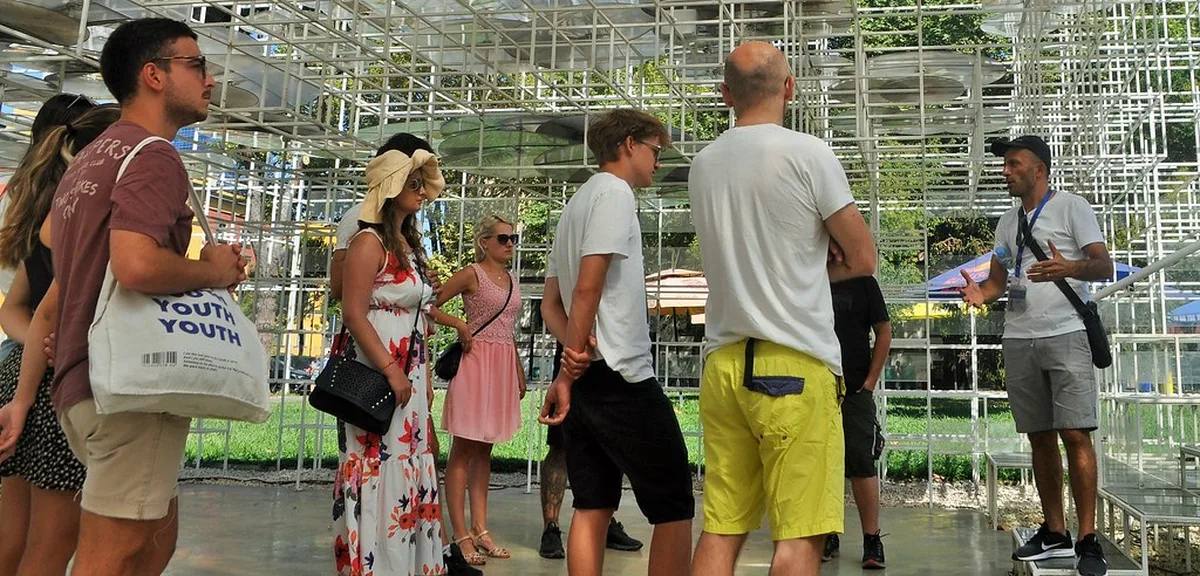
The tour covers the core circuit of the city center at a relaxed pace. Highlights include a detailed stop at Skanderbeg Square with the National History Museum mosaic facade as a backdrop, a walk through the former restricted Blloku district with first-hand stories of daily life under communism, a visit to the exterior of the Et'hem Bey Mosque with explanation of its rare frescoes, and commentary on the communist-era bunker network visible throughout the city. Guides typically share personal family stories from the communist period, which adds authentic emotional depth unavailable in any guidebook. The tour concludes near the colourful painted facades of Rruga Myslym Shyri — an ideal spot for photos before parting ways with the group. Duration is consistently two hours, and the pace is gentle enough for most fitness levels.
These tours operate on a tip-based model. There is no fixed price, but the standard recommended tip in 2026 is 500 ALL (€5) per person for a satisfying experience, or up to 1,000 ALL (€10) per person if the guide has gone above and beyond. The guides are trained locals who rely on tips as their primary income, so a fair tip reflects both the quality of the experience and the local cost of living. Payment is always in cash — bring Lek or euros as the guides accept both. Groups typically range from 6 to 20 people and run year-round in all weather except heavy rain.
For visitors who prefer a more structured experience with a guaranteed private guide, paid walking tours are available through several operators for 1,500–2,500 ALL (€15–25) per person. These typically offer a longer 3-hour route, smaller group sizes (max 8 people), and the option to add museum entry to the package. Booking is available via email or through aggregator platforms, though many visitors find the free tour experience equally informative and far more spontaneous. Check tiranafreetour.com directly for the most current departure times and any seasonal schedule changes before your visit in 2026.
The Complete 3-Hour Self-Guided Tirana Walking Tour Route for 2026
This numbered route is designed to be walked sequentially with minimal backtracking, covering the city's essential landmarks in a logical geographic arc. Total distance is approximately 3 km on flat, mostly paved ground. With museum stops the full experience takes 3–4 hours; the free version skipping all paid entries takes around 2 hours. Carry at least 1,500 ALL (€15) in cash to cover optional entries and lunch.
- Skanderbeg Square (free, allow 15 min) — Start at the equestrian statue of national hero Gjergj Kastrioti Skanderbeg. The bronze monument stands 11 meters tall and dates from 1968. Rotate 360° to locate the National History Museum to the west, the Opera House to the south-west, and the Et'hem Bey Mosque to the north. This orientation saves time at every subsequent stop.
- Et'hem Bey Mosque (free entry, allow 20 min) — Walk 150 meters northwest from the statue to reach this Ottoman-era mosque, built between 1789 and 1823. The interior is richly painted with rare floral and landscape frescoes — unusual in Islamic architecture because construction began before strict aniconic conventions took hold locally. Remove shoes and cover shoulders and knees before entering. Outside prayer times (roughly 8–9 AM, 1–2 PM, and sunset), visitors are welcomed without charge.
- Clock Tower (200 ALL/€2, allow 15 min) — Thirty meters north of the mosque, the 35-meter Clock Tower has been open to the public since its restoration. Climb 90 narrow stairs for a rooftop panorama over Skanderbeg Square and toward Dajti Mountain (1,613 m) to the east. Entry is 200 ALL (€2) — the cheapest view in Tirana and worth every lek.
- National History Museum (600 ALL/€6, allow 90 min) — Return south across the square to Albania's largest museum. The exterior mosaic facade — a socialist-realist masterpiece depicting Albanian history from Illyrian times to WWII liberation — is itself worth five minutes of study before you even step inside. The 5,800-object collection spans three floors. Ground floor covers prehistoric and Illyrian culture; first floor covers Byzantine, medieval, and Ottoman periods; second floor covers the National Renaissance and communist era. Budget 90 minutes minimum; the English-language audio guide is available at the ticket desk for 200 ALL (€2) extra.
- Pazari i Ri Old Bazaar (free entry, allow 45 min) — Head 600 meters north along Rruga Luigj Gurakuqi to the renovated 2016 New Bazaar market. Browse produce stalls and pick up a byrek (100 ALL/€1) for a morning snack, or sit down at a perimeter restaurant for Tavë Kosi — baked lamb with egg and yoghurt sauce — for 800–1,200 ALL (€8–12) including bread. This is the best-value lunch stop in the city center.
- Blloku District (free, allow 30 min) — Walk south approximately 900 meters along Rruga Luigj Gurakuqi back toward the main boulevard and into Blloku. Stroll along Rruga Pjeter Bogdani to see the Enver Hoxha Villa exterior (visible through iron fence from the sidewalk on Rruga Dëshmorët e 4 Shkurtit) and read the communist-past plaques installed on surrounding buildings. Stop for an espresso on a tree-lined terrace (100–150 ALL/€1–1.50). The contrast between the villa's modesty and the surrounding neon-lit cafe culture is one of Tirana's defining sights.
- Grand Park — Artificial Lake (free, allow 45 min) — Continue south approximately 1 km along Bulevardi Dëshmorët e Kombit to the Grand Park (Parku i Madh). The 120-hectare park surrounds an artificial lake with a 6 km perimeter trail that locals use daily for jogging and evening strolls. A 2 km lakeside walk takes about 25 minutes at a relaxed pace. Rowboat hire at the lakeside kiosk costs 400 ALL (€4) per hour — a popular way to cool off in summer. The park is free to enter at all hours.
- Return (Bolt taxi 300–400 ALL/€3–4 if tired) — From the Grand Park, the city center is 2.5 km north — a 30-minute walk or a short taxi ride. Open Bolt (Albania's dominant ride-hail app) and request a car; the trip back to Skanderbeg Square costs 300–400 ALL (€3–4) and takes about 10 minutes depending on traffic. Alternatively, walk back along the boulevard if your energy levels allow.
Total cost summary: With all paid museum entries (Clock Tower + National History Museum) plus a bazaar lunch and park rowboat, budget approximately 2,400 ALL (€24) per person. Free route (skip all paid entries, bring a packed lunch): 200 ALL (€2) for the Clock Tower only — or entirely free if you skip the tower. The route is fully flat and suitable for visitors of all fitness levels.
Planning Your Itinerary Beyond the City Center
If you have more than one day, consider exploring the outskirts of the city to fully appreciate Tirana's range. The Dajti Ekspres cable car departs from Rruga Sami Frashëri on the eastern edge of the city, reachable by taxi in about 10 minutes from Skanderbeg Square for roughly 500 ALL (€5). The cable car offers a stunning fifteen-minute ride up to 1,613 meters above sea level on the Dajti Plateau. Cable car tickets cost 700 ALL (€7) return per adult. From the top, you can see the entire city spreading westward toward the Adriatic coast on a clear day, and the temperature is typically 8–10°C cooler than in the urban center — a welcome escape during hot Albanian summers. The plateau has a restaurant, a small amusement area, and marked hiking trails that extend 2–5 km into the national park.
The Grand Park of Tirana (Parku i Madh) is another excellent walking destination, located about 2.5 km south of Blloku along Bulevardi Dëshmorët e Kombit — roughly a 30-minute walk from the city center or a 10-minute taxi ride for 300–400 ALL (€3–4). It surrounds an artificial lake called the Artificial Lake of Tirana spanning 120 hectares and provides miles of shaded gravel paths ideal for walking and jogging. You will see many residents jogging the full 6 km perimeter loop or enjoying a picnic on the grassy banks during weekends. The park provides a peaceful and genuinely green contrast to the concrete and traffic of the central district and is free to enter at all hours.
Tirana also serves as the main hub for reaching other parts of the country easily and affordably. You can arrange various day trips from Tirana to destinations such as Kruja Castle (32 km north, 45 minutes by furgon minibus, 200 ALL/€2), Berat's UNESCO old town (122 km south, 2.5 hours by bus, 400 ALL/€4), or the beaches at Durrës (38 km west, 1 hour, 250 ALL/€2.50). The southern bus station (Terminali i Jugut) on Rruga Mine Peza handles most intercity routes and is 15 minutes by taxi from the center. Book minibuses early in the morning for the best availability. If you are planning a beach day, our full Tirana beach guide covers transport options, the best stretches of coast, and what to expect at Durrës in 2026.
Frequently Asked Questions
Is there a free walking tour in Tirana?
Yes. Tirana Free Tour departs daily at 10 AM and 3 PM from the Skanderbeg Square fountain — look for the guide holding a coloured sign near the equestrian statue. The 2-hour tip-based tour covers the Et'hem Bey Mosque, Blloku district, National History Museum exterior, and communist-era bunker history. The suggested tip in 2026 is 500 ALL (€5) per person, paid in cash at the end. No booking is required — just show up 5–10 minutes early.
How long does a Tirana walking tour take?
A self-guided Tirana walking tour covering the core highlights — Skanderbeg Square, Et'hem Bey Mosque, Blloku, and the New Bazaar — takes 2–3 hours covering roughly 3 km on flat terrain. If you add museum visits (National History Museum: 600 ALL/€6 and Bunk'Art 2: 500 ALL/€5), budget 4–5 hours. The free guided tour run by Tirana Free Tour lasts exactly 2 hours. A full-day walking itinerary including the Grand Park and cable car to Dajti Mountain fills a comfortable 7–8 hour day.
Is Tirana a walkable city for tourists?
Yes, the central part of Tirana is very walkable and mostly flat. Most major landmarks are located within a 2 km radius of Skanderbeg Square. While some sidewalks are uneven in older neighborhoods, the compact nature of the city makes it ideal for exploring on foot without needing public transport. The main pedestrian boulevard from the square southward is wide, smooth, and shaded by trees.
How long does it take to walk Tirana Old Town?
The historic core around Skanderbeg Square and the Et'hem Bey Mosque can be explored in about 1 to 1.5 hours on foot without entering any museums. Including the Clock Tower (200 ALL/€2, 90 steps), a walk through the bazaar area north of the square, and a stop at the mosque interior, allow 2 to 2.5 hours. The area is compact — roughly 800 meters from the square to the New Bazaar heading north — so it rarely takes longer unless you linger at each site.
What should I wear for a walking tour in Albania?
Comfortable, closed-toe walking shoes are essential due to uneven paving in parts of the old center and market areas. Dress in layers as temperatures can vary by 8–10°C between morning and midday. If you plan to visit the Et'hem Bey Mosque, ensure your shoulders and knees are covered to respect local custom — scarves and lightweight trousers are sufficient. A light rain jacket is worth carrying between October and April.
How much cash do I need for a day of walking in Tirana in 2026?
For a full walking day covering the main museums and a bazaar lunch, budget 2,000–2,500 ALL (€20–25) per person. Breakdown: Clock Tower 200 ALL (€2), National History Museum 600 ALL (€6), Bunk'Art 2 500 ALL (€5), House of Leaves 500 ALL (€5), bazaar lunch 800–1,200 ALL (€8–12), two coffees 200–300 ALL (€2–3). ATMs near Skanderbeg Square charge 200–300 ALL (€2–3) per foreign-card withdrawal, so withdraw enough for the day in one transaction.
A tirana walking tour is the best way to uncover the layers of Albania's capital in 2026. From the historical depths of communist bunkers to the heights of modern cafes, the city surprises everyone who walks its streets with an open mind. You will leave with a deeper understanding of the resilient spirit of the Albanian people. The mix of vivid colors and layered history creates a truly unique European travel experience that few other Balkan capitals can match.
Remember to take your time and enjoy the slow pace of the local coffee culture. Tirana is not a city to be rushed but one to be felt through its streets and conversations with locals. Each step reveals a new mural, a hidden garden, or a friendly local smile. Whether you join a free walking tour or explore independently, your journey through this vibrant capital will likely be the highlight of your Balkan trip.
Make sure to bring a camera to capture the vivid architecture and mountain backdrops. The city continues to evolve rapidly, making every visit feel fresh and exciting. We hope this guide helps you make the most of your time in Tirana. Safe travels as you explore the beautiful and welcoming heart of Albania.