Exploring History: The Ultimate Tirana Old Town Guide for 2026
Tirana Old Town centers on Skanderbeg Square (free) and the Et'hem Bey Mosque (free entry, built 1789); the BunkArt museums (BunkArt 1 costs 800 ALL/€8, BunkArt 2 costs 300 ALL/€3) document Albania's communist dictatorship; the Old Bazaar (Pazari i Ri) is free to browse in 2026.
Tirana's daily budget for tourists is very affordable — café coffee costs 150–200 ALL (€1.50–2), a restaurant meal costs €4–8, and a hostel starts from 1,500 ALL (€15)/night; the Albanian Lek exchange rate is approximately 100 ALL to 1 EUR in 2026.
Tirana offers a unique blend of Ottoman history and modern energy.
Visitors often search for a traditional old town but find a vibrant, evolving city center instead.
This guide helps you navigate the historic layers hidden within Albania's capital.
You will discover where the past meets the present in this colorful Balkan destination.
Understanding Tirana's Historic Center and Layout
Tirana's Old Town is concentrated around Skanderbeg Square, the Et'hem Bey Mosque (1789, free entry), the National History Museum (600 ALL/€6), and the renovated Pazari i Ri Old Bazaar; the colorful communist-era building facades (painted by mayor Edi Rama from 2000) line Rruga e Durrësit; most Old Town sights are walkable in 2–3 hours.
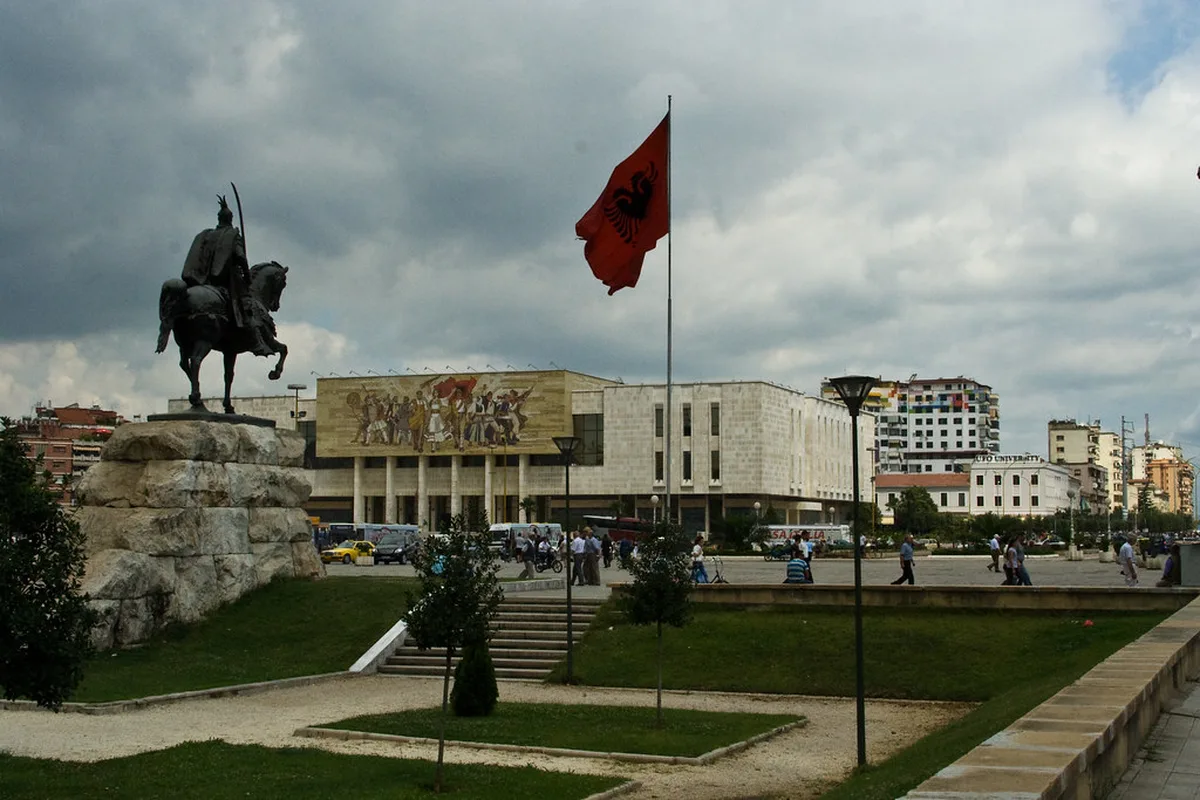
Tirana's historic center clusters around Skanderbeg Square, the Et'hem Bey Mosque, the National History Museum, Pazari i Ri, and BunkArt 2 — all within a 15-minute walk of each other. Unlike Gjirokastër or Berat, there is no single walled medieval district; instead, centuries of Ottoman, Italian fascist, communist, and post-communist architecture overlap on the same streets. A half-day covers the highlights; a full day lets you linger.
Skanderbeg Square serves as the heart of the city and the starting point for most tours. This massive plaza spans over 40,000 square meters and houses several iconic landmarks including the National History Museum, the Et'hem Bey Mosque, and the imposing equestrian statue of Albania's national hero George Castriot Skanderbeg. Walking through this area reveals the transition from Italian Fascist-era architecture built in the 1930s under Mussolini's influence to communist-era brutalist structures that dominated the post-1944 landscape. Most major sites are reachable within a ten-minute walk from this central hub.
Travelers often expect a walled medieval district like those in Gjirokastër or Berat, both designated UNESCO World Heritage Sites. However, Tirana's history is spread across different pockets of the urban landscape. You will find Ottoman-era relics standing right next to brutalist buildings from the late 20th century. This architectural contrast provides a fascinating look into Albania's complex political history, shaped by five centuries of Ottoman rule followed by one of Europe's most isolationist communist regimes.
One of the most striking visual features of modern Tirana is the legacy of former mayor Edi Rama, who in 2000 launched a campaign to paint the city's drab communist-era apartment blocks in vivid geometric patterns. Buildings along Rruga e Durrësit and across the city center were transformed with oranges, yellows, greens, and pinks — an act of urban defiance against the greyness of the communist period. Today these painted facades are a hallmark of Tirana's identity, photographed by every visitor and preserved as an informal public gallery. Walking south from Skanderbeg Square along Rruga e Durrësit takes you past some of the finest examples, all free to admire.
Walking is the best way to see these diverse styles. Many visitors start with a Tirana walking tour to get their bearings. Guided walks usually begin at the National History Museum and end near the Blloku district. Expect these tours to last three hours and cost approximately 1,500 ALL (€15) in 2026. Self-guided walks cost nothing beyond entry fees and reward curious walkers with unexpected doorways, murals, and Soviet-era mosaics not covered in most itineraries. Pick up a free printed map at the national tourist office on Skanderbeg Square or at most hotel receptions; the map identifies all major landmarks with both Albanian and English labels. For deeper context on Albania's recent history, Wikipedia's Tirana article provides comprehensive historical background.
The compact layout means you can cover the essential historic core — Skanderbeg Square to Pazari i Ri to BunkArt 2 and back — in a continuous loop without retracing any steps. Budget roughly 2–3 hours for a relaxed walk through this circuit, and add another 1–2 hours for each museum you choose to enter. From Skanderbeg Square, the furthest point of interest (BunkArt 1 via cable car) is about 3 kilometres by taxi or Bolt for approximately 500 ALL (€5) each way; everything else is within 1.5 kilometres on foot.
Top Landmarks Near the Historic Core
Tirana's historic core packs its most significant landmarks — the Et'hem Bey Mosque, Clock Tower, National History Museum, and Toptani Castle — within a 500-metre radius of Skanderbeg Square, all reachable on foot with no transport needed.
The Et'hem Bey Mosque stands as one of the most beautiful examples of Ottoman art in the city. Construction began in 1791 and was completed in 1821 by Mulla Bey, son of the original patron Haxhi Et'hem Bey. The mosque is renowned for its extraordinary interior frescoes depicting trees, waterfalls, and bridges — a remarkable departure from the traditional Islamic prohibition on figurative art. Entry is free for visitors outside of prayer times (approximately 12:30–13:00 and 16:30–17:00), though modest dress covering shoulders and knees is required. The mosque is open to visitors from 9:00 AM to 6:00 PM daily in 2026, with longer hours in summer. Photography is permitted in the courtyard; ask permission before shooting indoors.
Right next to the mosque, the Clock Tower (Kulla e Sahatit) offers panoramic views across the city's contrasting skyline. Climbing the narrow 74-step staircase costs 200 ALL (approximately €2) and rewards you with a bird's-eye view of Skanderbeg Square and the surrounding hills. The tower was built in 1822, just one year after the mosque was completed, and stands 35 metres tall. It is open Monday to Friday 9:00 AM–5:00 PM and Saturday 9:00 AM–1:00 PM; it is typically closed on Sundays. Arrive before 10:00 AM to beat tour groups.
Toptani Castle provides a glimpse into the city's medieval past within a surprisingly modern shopping environment. The castle dates to the 15th century and was fortified by the Toptani noble family; while much of the interior is now the Tirana East Gate pedestrian mall, the original stone walls and arched gateway still stand prominently at the eastern edge of Murat Toptani Street. Entry to view the castle walls is free. Several traditional restaurants inside serve local dishes like tavë kosi (slow-baked lamb with egg and yoghurt) for around 800–1,000 ALL (€8–€10). This area is perfect for a relaxing afternoon coffee or lunch away from the main traffic and tourist crowds.
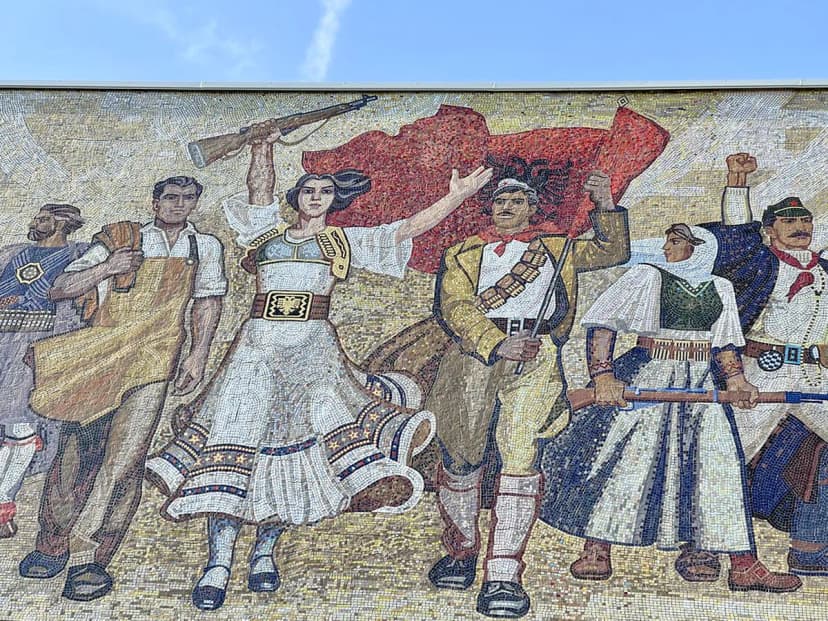
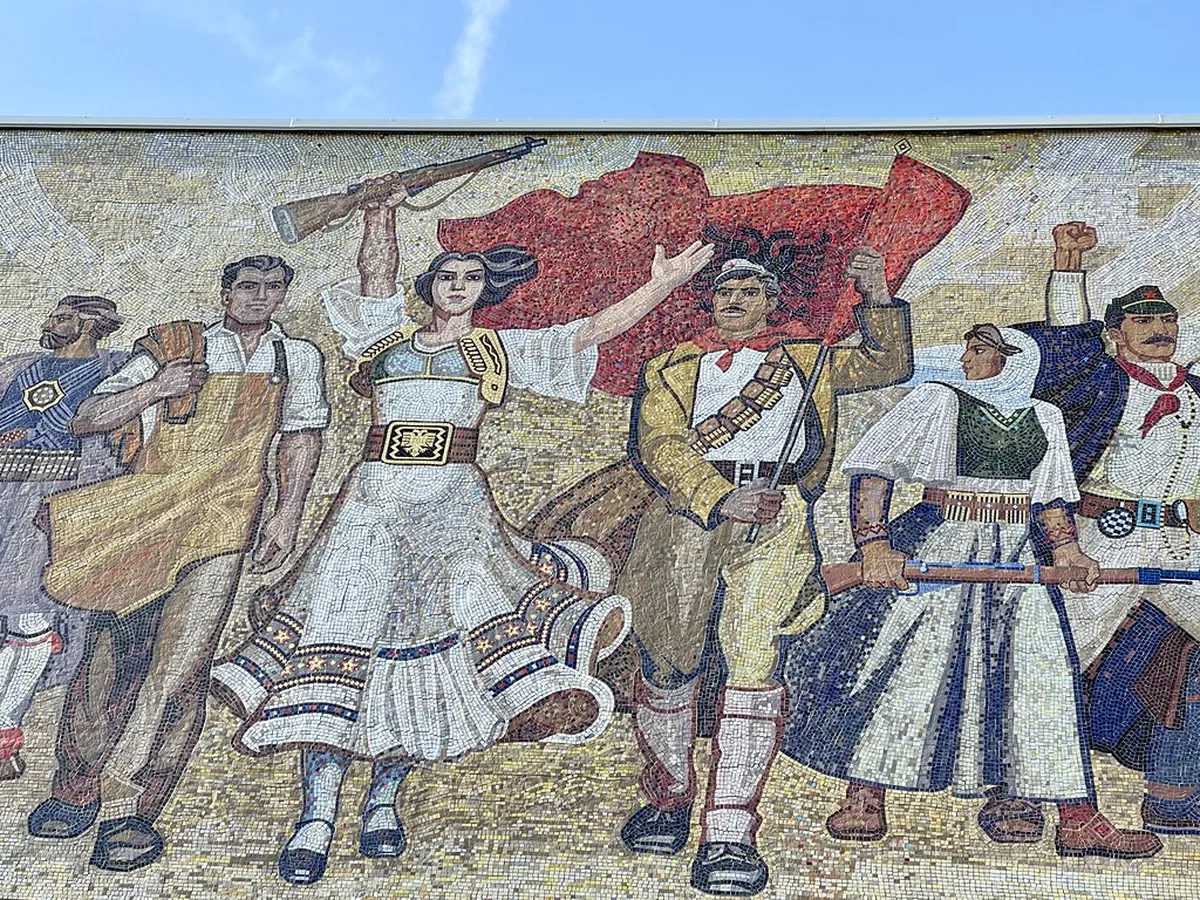
The National History Museum on the north side of Skanderbeg Square is the largest museum in Albania, covering prehistoric findings through to the communist era. Entry costs 600 ALL (about €6) in 2026, and the museum is open Tuesday to Sunday 9:00 AM–5:00 PM (closed Mondays). The monumental socialist-realist mosaic covering the façade is itself a landmark worth photographing and spans the full width of the building's frontage — one of the largest mosaics in the Balkans at 12 metres high and 30 metres wide. Inside, six floors of exhibits trace Albanian civilization from the Bronze Age through the Illyrian kingdoms, the Ottoman period, the National Renaissance, World War Two, and the communist era through to 1991. Audio guides are available at the ticket desk for an additional 300 ALL (€3).
The equestrian statue of Gjergj Kastrioti Skanderbeg at the centre of the square was erected in 1968 as a communist-era tribute to Albania's 15th-century national hero. The bronze figure — 11 metres tall including the plinth — depicts Skanderbeg in full armour astride a rearing horse. Entry to view the statue is free, and it serves as the natural orientation point for any walk through the historic centre. The surrounding square itself was redesigned in 2017 and is now a pedestrian-only space, making it safe and pleasant to cross at any time of day.
- Et'hem Bey Mosque
- Location: Skanderbeg Square (northwest corner)
- Cost: Free entry for visitors
- Hours: 9:00 AM – 6:00 PM daily (closed during prayer times)
- Highlight: Rare nature frescoes; exceptional Ottoman craftsmanship
- Clock Tower (Kulla e Sahatit)
- Height: 35 metres, 74 steps
- Cost: 200 ALL (~€2) per person
- Hours: Mon–Fri 9:00 AM–5:00 PM; Sat 9:00 AM–1:00 PM
- View: Panoramic view of Skanderbeg Square and city skyline
- Toptani Castle Walls
- Type: 15th-century medieval fortress ruins
- Entry: Free for all visitors
- Location: Eastern end of Murat Toptani Street
- Best for: Architecture, history, traditional restaurants
- National History Museum
- Cost: 600 ALL (~€6) in 2026
- Hours: Tue–Sun 9:00 AM–5:00 PM (closed Mondays)
- Highlight: Largest museum in Albania; iconic façade mosaic; six floors of exhibits
Navigating the Pazari i Ri Neighborhood
Pazari i Ri (New Bazaar) is Tirana's most characterful neighborhood for food, crafts, and local life. Rebuilt and reopened in 2016, the covered market sits roughly 800 metres northeast of Skanderbeg Square — about a 10-minute walk along Rruga Luigj Gurakuqi. Entry to browse the market is completely free in 2026, and vendors welcome casual visitors who want to soak up the atmosphere without buying anything.
Pazari i Ri, or the New Bazaar, is the closest experience to a traditional marketplace in Tirana. This renovated district features a striking large glass-and-steel roof canopy sheltering rows of colorful fruit stalls, olive vendors, spice merchants, and craft sellers. Locals gather here daily to buy fresh olives from Berat, mountain honey from the Albanian Alps, dried herbs, raki (Albanian grape brandy), and handmade wool souvenirs. Visiting early in the morning around 8:00 AM allows you to avoid the midday heat, watch wholesalers in action, and get the best selection of seasonal produce. The market operates daily from 7:00 AM to 7:00 PM, seven days a week throughout the year.
Food lovers will appreciate the variety of small eateries and wine bars surrounding the market stalls. Diners often try fresh grilled fish, fërgesë (a baked pepper and cheese dish), or slow-cooked lamb at a fraction of the price found in Blloku. A portion of fërgesë with bread typically costs 400–500 ALL (€4–5), while a full grilled fish plate runs 700–900 ALL (€7–9). Many restaurants here offer outdoor seating under the market's extended canopy where you can watch the bustle of traders and shoppers. A full lunch with a glass of local wine or a beer typically costs between 1,000 and 1,500 ALL (€10–€15). Vegetarian options are plentiful, with stuffed peppers, grilled aubergine, and byrek (filo pastry pie) widely available for under 400 ALL (€4).
Artisan craft stalls in the northern section of the market sell hand-embroidered textiles, copper plates, carved wood, and traditional Albanian filigree jewellery at prices that are substantially lower than equivalent items in Western Europe. A hand-embroidered tablecloth costs 2,000–4,000 ALL (€20–€40); a small copper plate starts at 500 ALL (€5). Bargaining is accepted but not aggressive — vendors quote fair starting prices and expect a modest counter-offer at most. Most stalls accept cash only in Albanian Lek; bring small denomination notes as vendors rarely have change for 5,000 ALL bills.
The area also hosts seasonal festivals, street art events, and evening concerts throughout the year. Evening visits between 7:00 PM and 10:00 PM provide a completely different atmosphere: illuminated stalls, live folk music, and a relaxed social scene as Tiranans gather for their traditional evening xhiro (social stroll). Most market vendors open daily from 7:00 AM to 7:00 PM; the surrounding restaurants stay open until 11:00 PM or midnight. The nearest ATM is on Rruga Luigj Gurakuqi, 100 metres from the market entrance, and it reliably dispenses 1,000 ALL and 2,000 ALL notes suitable for market shopping.
Blloku District: Tirana's Trendy Neighbourhood
Blloku ("The Block") is a 15-minute walk south from Skanderbeg Square and offers the sharpest illustration of Albania's post-communist transformation. Until 1991, this entire residential district was sealed off to ordinary Albanians — a forbidden enclave reserved exclusively for the Communist Party elite and senior government officials under Enver Hoxha's totalitarian regime. Entry to the district is entirely free in 2026; simply walk in from Skanderbeg Square via Rruga Dëshmorët e 4 Shkurtit heading south.
Today, the same leafy streets where party apparatchiks once lived in guarded villas are lined with independent cafés, cocktail bars, international restaurants, designer boutiques, and outdoor terraces buzzing with young Tiranans. Coffee in Blloku typically costs 150–200 ALL (€1.50–2), making it one of the most affordable café cultures in Europe. Cocktails at the evening bars run 600–900 ALL (€6–9). The contrast between the neighbourhood's history and its current energy is striking and, for many visitors, more affecting than any museum exhibit.
The centrepiece of any Blloku visit is Enver Hoxha's former private villa at the intersection of Rruga Dëshmorët e 4 Shkurtit and Rruga Ismail Qemali. The villa's exterior — a two-storey white-rendered building set back from the street behind a low wall — is freely viewable from the pavement at any hour. The interior is not open to the public, but the exterior alone carries considerable historical weight. A small explanatory plaque identifies the building for visitors. The villa is roughly a 12-minute walk from Skanderbeg Square and can be incorporated into any Blloku stroll without adding meaningful detour time.
Walking through Blloku takes about 45–60 minutes at a relaxed pace. Start at the roundabout on Rruga Ismail Qemali, wander south along Rruga Pjetër Bogdani for the densest cluster of cafés and bars, then loop back via Rruga Dëshmorët e 4 Shkurtit past Hoxha's villa. The neighbourhood has no entry fee — simply walk in from Skanderbeg Square via Rruga Dëshmorët e 4 Shkurtit heading south. Most venues open around 8:00 AM and the bar scene peaks between 9:00 PM and 1:00 AM; on Fridays and Saturdays many bars stay open until 3:00 AM.
For anyone wanting to understand how rapidly Albania has changed since 1991, Blloku is the single most vivid place in Tirana. No entrance ticket, no guided tour required — the streets themselves tell the story. Pair it with a visit to BunkArt 2 (a 10-minute walk northeast) for the full arc of Albania's communist and post-communist experience. If you want to extend your evening, our Tirana nightlife guide covers the best bars and clubs in Blloku and the wider historic centre in detail.
BunkArt 1 and BunkArt 2: Exploring Albania's Communist Bunker History
Between the 1950s and 1980s, Albanian dictator Enver Hoxha ordered the construction of over 700,000 concrete bunkers across the country — one for every three Albanian citizens — as part of a paranoid defense strategy that drained the national budget and warped daily life for an entire generation. Today, two repurposed bunkers in and near Tirana offer the most powerful museum experiences in the city, and together they tell the full story of Hoxha's isolation regime, the feared Sigurimi secret police, and Albania's painstaking emergence from 45 years of dictatorship.
BunkArt 1 occupies a vast five-floor former nuclear shelter built into Mount Dajti on the eastern edge of Tirana. The bunker was constructed in the 1970s as a refuge for the Hoxha government in the event of nuclear attack and was never used for its intended purpose. To reach it, take the Dajti Ekspres cable car from the lower station on Rruga Elbasanit — a 15-minute ride that costs 700 ALL (€7) return and provides sweeping views over Tirana's rooftops as you ascend. Entry to BunkArt 1 itself costs 800 ALL (€8) and opens Tuesday to Sunday from 10:00 AM to 6:00 PM (last entry 5:30 PM, closed Mondays). The five floors contain over 100 rooms of exhibits covering Albanian communist-era art, propaganda, military history, and the personal effects of senior party officials. Allow at least two hours for a thorough visit; audio guides are available in English for 300 ALL (€3). The combination of the cable car journey and the underground museum makes BunkArt 1 one of the most memorable half-day excursions available from Tirana's city centre.
BunkArt 2 is the more accessible of the two sites, located in the city centre beneath the former Ministry of Interior on Rruga Abdi Toptani — a five-minute walk from Skanderbeg Square. Entry costs 300 ALL (€3) and the museum is open daily from 9:00 AM to 5:00 PM (last entry 4:30 PM), seven days a week. The 24 rooms spread across a single underground level focus specifically on the history of the Sigurimi, Albania's feared secret police, including interrogation cells, surveillance equipment, and personal testimonies from survivors. Although smaller than BunkArt 1, the intimate scale and central subject matter make BunkArt 2 the more emotionally affecting of the two. Allow 60–90 minutes for a full visit.
A third site that complements both bunker museums is the House of Leaves (Shtëpia e Gjetheve) on Rruga Dedë Gjoni, a 10-minute walk northwest of Skanderbeg Square. This former surveillance headquarters of the Sigurimi operated throughout the communist period and now serves as a museum of secret police technology and methodology. Entry costs 300 ALL (€3) and the museum is open Tuesday to Sunday 9:00 AM–5:00 PM. The exhibits include original wiretapping equipment, hidden cameras disguised as everyday objects, and documents detailing how the regime monitored its own citizens.
A suggested walking route from Skanderbeg Square links all three sites with minimal backtracking. Start at BunkArt 2 on Rruga Abdi Toptani (5 minutes from the square), then walk 10 minutes northwest to the House of Leaves on Rruga Dedë Gjoni. The total walking time between the two city-centre sites is under 30 minutes. BunkArt 1 on Mount Dajti requires a separate half-day excursion due to the cable car journey; combine it with the Dajti mountain park for a full day out. All three sites together cost 1,400 ALL (€14) in 2026 — excellent value for the depth of history covered.
Hidden Gems and Local Insights
Beyond the major museums and squares, Tirana rewards explorers who wander off the main tourist circuit. Murat Toptani Street is a pedestrian-only boulevard lined with mature trees, historic buildings, and outdoor café tables. It connects the National Gallery of Arts (Galeria Kombëtare e Arteve, admission 300 ALL/€3, open Tue–Sun 9:00 AM–5:00 PM) with the Toptani Castle ruins, making it a natural east–west axis through the historic core. The Gallery's permanent collection spans Albanian visual art from the 19th century through the communist realist period to contemporary works — entry is among the best-value cultural experiences in the city. This shaded path is ideal for a quiet stroll during the golden hour before sunset, and many locals use this route for their evening xhiro, the Albanian tradition of socialising on foot that transforms the streets into an open-air salon each evening around 7:00–9:00 PM.
The Sky Tower observation platform on Rruga Dëshmorët e 4 Shkurtit offers views across the entire city from the 35th-floor open-air terrace. Entry costs 500 ALL (€5) in 2026 and the tower is open daily 10:00 AM–10:00 PM. On a clear day you can see the Dajti Mountain massif to the east and the suburban sprawl stretching west toward the Adriatic coast. The Sky Tower is about an 8-minute walk south from Skanderbeg Square and pairs naturally with a Blloku stroll — enter from the north side of the building on Rruga Dëshmorët e 4 Shkurtit and take the lift to the observation level.
The Pyramid of Tirana on Bulevardi Dëshmorët e Kombit, a 5-minute walk southwest of Skanderbeg Square, is one of the most unusual landmarks in the Balkans. Built in 1988 as a museum dedicated to Enver Hoxha himself, the brutalist concrete structure fell into disuse after the regime collapsed. After years of debate, it is currently being converted into a youth and technology centre; the exterior scaffolding and evolving facade make it worth a photograph even in its transitional state. Viewing the exterior is free at any hour.
For anyone wanting to see more of the country beyond the capital, our guide to day trips from Tirana covers the best options within an hour of the city, including the mountain town of Kruja — where Skanderbeg famously held off Ottoman forces — reachable by bus for 150 ALL (€1.50) each way. Safety around the historic centre is not a concern for most visitors; for a full assessment read our article on is Tirana safe for tourists before you travel.
Your Practical Tirana Old Town Guide for 2026
Safety is rarely a concern for tourists exploring the central historic districts. Most areas are well-lit, heavily populated, and patrolled; locals are generally friendly and happy to assist with directions. Standard travel precautions still apply: keep bags zipped in crowded market areas and use licensed taxis or the Bolt/Uber apps rather than unmarked cabs. For a full safety briefing, read our dedicated guide on is Tirana safe for tourists before your trip.
Public transportation in the centre is limited to buses and occasional minibuses, but walking covers most historic sites faster than any vehicle. Visitors will find all major landmarks clustered within a two-kilometre radius of Skanderbeg Square. If you need to travel to BunkArt 1 or outlying sites, use the "Tirana Ime" app to track bus routes in real time, or hail a Bolt ride — a city-centre trip costs 300–500 ALL (€3–€5). Licensed taxis charge a flat rate of 300 ALL (€3) for short rides within the centre; always confirm the price before boarding or insist on the meter.
Currency and costs: Albania uses the Albanian Lek (ALL). In 2026, €1 ≈ 100 ALL. Most mid-range restaurants and hotels accept Visa and Mastercard, but market vendors and small cafés are cash-only. ATMs are plentiful on Rruga Luigj Gurakuqi, near Skanderbeg Square, and throughout Blloku. Budget travellers can comfortably see the main sites for 1,500–2,000 ALL (€15–20) per day including entry fees, lunch, and coffee. A mid-range day with museum visits, a restaurant lunch, and an evening drink runs 3,500–5,000 ALL (€35–50).
If you are visiting in summer, Tirana gets hot (often 35°C+ in July and August), so plan outdoor walks for the morning or evening and take refuge in air-conditioned museums or cafés during midday. Spring (April–May) and autumn (September–October) offer the most comfortable temperatures for walking between landmarks. If you want to combine your city visit with a beach day, our Tirana beach guide covers the closest options on the Albanian Adriatic coast, accessible by bus or shared taxi from the main bus station near Pazari i Ri.
If you want to see more of the country, consider booking day trips from Tirana to nearby Kruja — the mountain town where Skanderbeg famously held off Ottoman forces — reachable by bus in under an hour for 150 ALL (€1.50) each way. Many travellers also combine Tirana with Berat or Gjirokastër on a 4–5 day Albania itinerary; both UNESCO cities are reachable by bus from Tirana's Autostacioni i Jugut (South Bus Station) for 400–700 ALL (€4–7) depending on the destination.
Key Facts About Tirana's Historic Center
What is the best area to stay near Tirana's historic sites? Staying within 500 metres of Skanderbeg Square puts every major landmark — the Et'hem Bey Mosque, Clock Tower, National History Museum, and Pazari i Ri — within a 10-minute walk, with no transport needed. Budget hotels and hostels in this radius start from 1,500 ALL (€15)/night for a dormitory bed, rising to 4,000–7,000 ALL (€40–70) for a private room in a mid-range hotel.
Is Tirana's old town easy to navigate without a guide? Yes. All key landmarks are signposted in Albanian and English, clustered within a compact 2 km² area, and a free self-guided walking map is available at most hotel receptions and the national tourist office on Skanderbeg Square. The streets around Skanderbeg Square are pedestrianized and safe to walk at any hour, making independent navigation straightforward even for first-time visitors.
Frequently Asked Questions
Is there a medieval old town in Tirana?
Tirana does not have a single walled medieval old town like Gjirokastër or Berat. Instead, it features historic layers including the 1821 Et'hem Bey Mosque (free entry), the 1822 Clock Tower (200 ALL/€2), Ottoman-era markets, Italian Fascist-period architecture, and communist brutalist blocks. Most historic sites are concentrated around Skanderbeg Square and the Pazari i Ri district within a 15-minute walk of each other, and the entire circuit is walkable without any transport.
How much time do I need for Tirana's historic center?
You can cover the main landmarks — Skanderbeg Square, Et'hem Bey Mosque, Clock Tower, and Pazari i Ri — in four to five hours on foot. A full day allows for a thorough visit to BunkArt 2 (90 minutes, 300 ALL/€3), a relaxed lunch at the New Bazaar (1,000–1,500 ALL/€10–15), and an evening stroll through Blloku. Many travellers spend two days in the city to also explore the National Gallery of Arts (300 ALL/€3) and the Sky Tower (500 ALL/€5).
Is Tirana Old Town free to visit?
Yes — the core of Tirana's historic area is free to explore. Skanderbeg Square, the exterior of the Et'hem Bey Mosque (interior also free), Toptani Castle walls, Murat Toptani Street, Pazari i Ri Old Bazaar, and the Blloku district all have no entry charge. Paid attractions nearby are affordable: Clock Tower 200 ALL (€2), BunkArt 2 300 ALL (€3), House of Leaves 300 ALL (€3), National Gallery 300 ALL (€3), National History Museum 600 ALL (€6), BunkArt 1 800 ALL (€8). A day visiting every paid site costs under 1,400–2,500 ALL (€14–25) in total.
How long do I need to explore Tirana Old Town?
A half-day (3–4 hours) is enough to walk the essential circuit: Skanderbeg Square to the Et'hem Bey Mosque, Clock Tower, and Pazari i Ri Old Bazaar. A full day (7–8 hours) adds BunkArt 2, the House of Leaves, Murat Toptani Street, and a Blloku evening stroll. Two days let you add BunkArt 1 on Mount Dajti (half-day excursion via cable car) and the National History Museum for a thorough picture of Tirana's communist-era history.
Are the museums in Tirana expensive?
Tirana's museums are very affordable by European standards in 2026. Entry fees range from 200 ALL (Clock Tower, €2) to 800 ALL (BunkArt 1, €8). BunkArt 2 and the House of Leaves each cost 300 ALL (€3), the National Gallery of Arts charges 300 ALL (€3), and the National History Museum costs 600 ALL (€6). Visiting all five paid museums in one day totals 2,300 ALL (€23) — less than the price of a single museum ticket in many Western European capitals. Always carry Albanian Lek as smaller ticket offices typically do not accept credit cards.
What is the best way to see the landmarks?
Walking is the most efficient way to explore the central historic district. All main sites lie within a compact 2 km radius of Skanderbeg Square, making it easy to navigate without public transport. Joining a guided walking tour (approximately 1,500 ALL/€15, 3 hours) provides expert context on the city's Ottoman, Fascist, and communist layers. Self-guided walks are equally rewarding and completely free; most hotels provide printed maps and the national tourist office on Skanderbeg Square offers free maps with English-language landmark descriptions.
Tirana's historic centre offers a fascinating journey through different eras and architectural styles, from Ottoman mosques to communist bunkers to thriving post-1991 neighbourhoods like Blloku.
Exploring the landmarks, markets, and streets provides a deeper understanding of Albania's complex history and its remarkably fast transformation into one of Europe's most underrated city-break destinations.
Remember to wear comfortable shoes, carry Albanian Lek for cash-only vendors, and budget plenty of time for spontaneous café stops — at 150–200 ALL (€1.50–2) for a coffee, Tirana is one of Europe's most affordable cities to linger in.
Your adventure in the heart of Albania in 2026 will be a memorable highlight of any Balkan trip. For those ready to explore beyond the capital, our guides on day trips from Tirana and the Tirana walking tour will help you plan your next move.