The Ultimate Girona Old Town Guide for Travelers in 2026
Girona Cathedral charges €7 entry in 2026 (includes the cloister and museum), Arab Baths cost €4.50, and the Museum of Jewish History costs €4 — all three fit into a half-day walking loop through the Barri Vell, Girona's walled medieval core.
The city walls (Passeig de la Muralla) are free to walk every day, the Jewish Quarter (El Call) is free to explore, and the Colorful Houses (Cases de l'Onyar) are free to view — making Girona one of Spain's most rewarding old towns for budget travelers in 2026.
Girona sits in the heart of Catalonia and offers a rich history that spans over two thousand years. The Barri Vell, or old town, remains the most enchanting part of the city for visitors. You will find narrow stone streets, massive cathedrals, and ancient walls that tell stories of the past.
Walking through these alleys feels like stepping back into a medieval world. Many travelers use a Girona old town guide to navigate the labyrinth of stairs and hidden plazas. This area serves as a perfect hub for exploring the wider region of northeastern Spain.
Planning your visit for 2026 allows you to see the city during a time of renewed local energy. A well-planned morning ensures you beat the crowds and see the best sights comfortably. Pair your old town exploration with a Girona walking tour for the most complete experience of the Barri Vell.
Iconic Landmarks of the Barri Vell
The Cathedral of Santa Maria de Girona dominates the Plaça de la Catedral skyline with its massive Baroque façade and Gothic nave. Reached by climbing 86 monumental stone steps — the very steps used as a Game of Thrones filming location — it commands the highest point of the old town and can be spotted from almost anywhere in the city. The cathedral holds the record for the widest Gothic nave in the world, measuring 23 metres across, surpassing even the nave of Saint Peter's Basilica in Rome.
In 2026, entry to the Cathedral of Santa Maria costs €7 for adults, which includes access to the cathedral museum and the magnificent Romanesque cloister. The museum's centrepiece is the Tapestry of Creation, an 11th-century embroidered textile considered one of the finest surviving examples of Romanesque art in Europe. Visitors should budget at least 60 to 90 minutes to absorb the cloisters, the treasury, and the Gothic nave in full. Audio guides are included in the admission price and are available in English, Spanish, French, and Catalan.
The Basilica of Sant Feliu stands at the foot of the cathedral steps on Pujada de Sant Feliu and is often overshadowed by its larger neighbour, but it deserves equal attention. As the city's original cathedral before the larger structure was built, Sant Feliu houses the tomb of Saint Narcissus, Girona's patron saint. Entry is included with the Cathedral ticket. Inside you will find eight ancient Roman and early Christian sarcophagi set into the lower walls, representing some of the finest late-antique funerary art in Catalonia. The bell tower's slender silhouette serves as a primary navigation landmark when walking the lower streets of the old town.
Beyond these two giants, look for the Romanesque church of Sant Pere de Galligants on Carrer Santa Llúcia, which houses the Archaeological Museum of Catalonia's Girona branch. Entry costs €4.50 in 2026. The 12th-century cloister here is arguably the most beautifully proportioned in the city, with carved capitals depicting biblical scenes, animals, and geometric patterns. Many visitors walk right past the entrance without realising it exists, so it remains wonderfully uncrowded even during the summer peak.
- Girona Cathedral (Santa Maria)
- Cost: €7 adults (2026) | Under-16 free
- Hours: Mon–Sat 10:00–18:30, Sun 10:00–14:00 (seasonal variations apply)
- Time: 60–90 minutes
- Highlight: World's widest Gothic nave (23 m) + Tapestry of Creation
- Basilica of Sant Feliu
- Cost: Included with Cathedral ticket
- Hours: Mon–Sat 10:00–17:30
- Time: 30–45 minutes
- Highlight: Roman sarcophagi + tomb of Sant Narcís
- Sant Pere de Galligants (Archaeological Museum)
- Cost: €4.50 adults (2026)
- Hours: Tue–Sat 10:00–18:00, Sun 10:00–14:00
- Time: 45 minutes
- Highlight: 12th-century Romanesque cloister + Iberian artefacts
Walking the Medieval City Walls
The Passeig de la Muralla is a walkway built along Girona's ancient Roman and medieval fortifications, offering a bird's-eye route above the rooftops of the Barri Vell. The walls stretch for roughly 1.9 kilometres and date back, in parts, to the Roman period, with substantial additions and reinforcements built during the Carolingian era in the 9th century and again during the 14th and 15th centuries as the city defended itself against French incursions.
Access to the walls is entirely free and there are multiple entry points scattered throughout the old town. The most popular starting point is the garden terrace behind the university on Carrer de la Força, which deposits you directly onto the upper walkway within five minutes of leaving the Cathedral area. You can also enter via the Portal de Sobreportes, the old Roman gate at the top of the Carrer dels Alemanys, which retains its original archway and flanking towers. The path remains open during daylight hours — typically from 8:00 until 21:00 in summer and until dusk in winter — and is free of charge every day of the year.
The full circuit takes between 45 minutes and 90 minutes depending on how often you stop to take photographs. On a clear day the views extend north to the Sierra de les Salines and east toward the coastal hills of the Costa Brava. Stone towers punctuate the route, most notably the Torre Gironella at the southern end, where you can climb to a 360-degree viewpoint above the wall itself. The path narrows in several sections and the stone surface becomes slick after rain, so proper walking shoes with grip are strongly recommended.
Late afternoon is the best time to walk the walls. Between 17:00 and 19:00 the light falls at an angle that turns the honey-coloured stone a deep amber, and the Cathedral's west façade is illuminated by the setting sun. Photographers regularly arrive at this hour specifically for the quality of light on the upper city. Bring water, as there are no vendors or fountains once you are on the elevated path. The walk pairs naturally with a visit to the Jardins de la Francesa below, a small terraced garden near the Torre de la Reina that provides a quieter place to rest after the circuit.
For a complete route that combines the walls with the city's other highlights, the Girona walking tour guide maps out a logical sequence that avoids backtracking and maximises time in the best viewpoints.
Exploring the Historic Jewish Quarter (El Call)
El Call is Girona's medieval Jewish quarter and one of the best-preserved in all of Europe. Jewish families first settled in Girona in the 9th century and the community flourished here for nearly six hundred years before the expulsion of Jews from Spain in 1492. At its peak the community numbered around a thousand people living within an area of just a few narrow city blocks, and the spatial density of the quarter is immediately apparent when you enter it today.
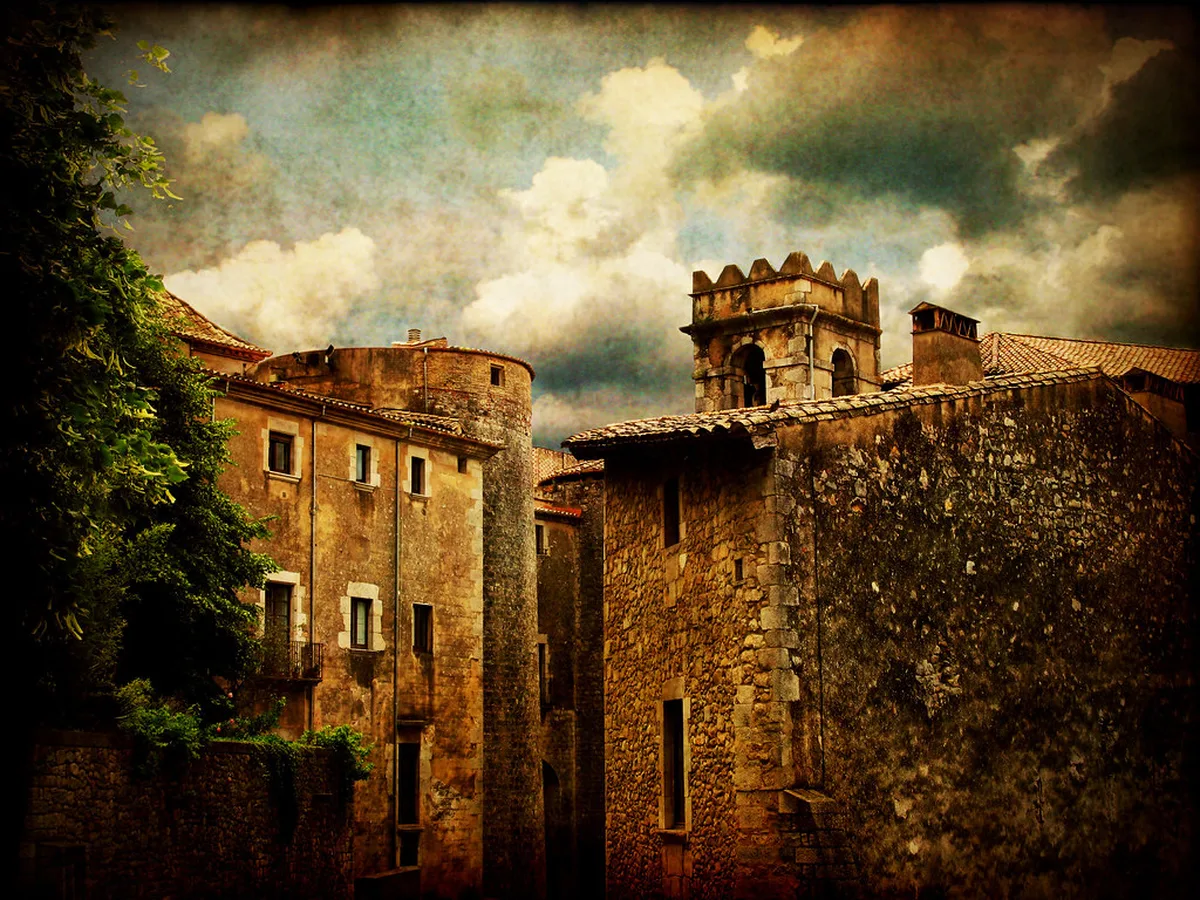
The main artery of El Call is the Carrer de la Força, which runs from the Portal de Sobreportes down toward the river. Several smaller lanes branch off it — Carrer de les Quatre Cantonades and the tiny Carrer del Portal Nou are worth exploring for their original stonework and medieval door surrounds. The quarter's tight layout was deliberate: narrow streets blocked the summer sun, kept rain off the passersby, and provided natural defensive depth. Even today the alleys feel cool and shadowed even on a warm afternoon.
The Museum of Jewish History (Museu d'Història dels Jueus de Girona), located on Carrer de la Força 8 inside a building that served as the medieval synagogue, is the quarter's centrepiece. Entry costs €4 in 2026. The museum is open Tuesday to Saturday from 10:00 to 18:00 and Sunday from 10:00 to 14:00. Exhibits trace the history of the Girona Jewish community through artefacts, documents, inscriptions, and reconstructions of medieval life, with captions in Catalan, Spanish, and English. A particular highlight is the carved stone menorah relief discovered during renovation work on a nearby building.
A common mistake is staying only on the main stretch of Carrer de la Força. Turn into the smaller side alleys to find quiet patios, small galleries, and artisan workshops that are rarely crowded. Look for the plaque marking the site of the mikveh — the ritual bath — on Carrer de les Escoles Pies. The Nahmanides Institute for Jewish Studies, named after the great 13th-century Girona rabbi Moses ben Nachman (Bonastruc ça Porta), is also based in the quarter and occasionally hosts public lectures and cultural events. Budget two hours to really absorb the atmosphere and do the museum justice.
- Museum of Jewish History (Museu d'Història dels Jueus)
- Cost: €4 adults (2026)
- Hours: Tue–Sat 10:00–18:00, Sun 10:00–14:00, closed Mon
- Address: Carrer de la Força 8
- Time: 45–60 minutes
The Arab Baths and Romanesque Heritage
The Arab Baths (Banys Àrabs) on Carrer Ferran el Catòlic are one of Girona's most photographed interiors and among the finest medieval bath complexes surviving in Spain. Despite their popular name, the baths were not built by Arabs — they were constructed by Christian craftsmen in the late 12th century, around 1194, following the Moorish architectural tradition that had spread across the Iberian Peninsula. The result is a building that blends Romanesque arches with Islamic spatial logic, producing an atmosphere that feels distinctly different from anything else in the old town.
In 2026, entry to the Arab Baths costs €4.50 for adults. They are open Monday to Saturday from 10:00 to 18:00 and Sunday from 10:00 to 14:00. The complex consists of four interconnected rooms — the apodyterium (changing room), frigidarium (cold room), tepidarium (warm room), and caldarium (hot room) — each with its own architectural character. The frigidarium is the showpiece: a perfectly proportioned octagonal pool surrounded by slender columns topped with decorative capitals, all lit by a lantern skylight that pours soft, diffuse light across the water. Photographs of this room appear in virtually every guide to Catalonia.
The Arab Baths appeared as a filming location during Game of Thrones Season 6, adding an extra dimension for fans visiting the city. The Plaça dels Jurats, a stone plaza just outside the baths complex, was used for outdoor scenes that stood in for the city of Braavos in the same season. Arriving before 10:00 when the baths first open guarantees you will have the frigidarium to yourself for a few minutes — a genuinely memorable experience in complete silence.
After visiting the baths, follow Carrer Ferran el Catòlic uphill toward the monastery of Sant Pere de Galligants. This Benedictine monastery, built between the 11th and 12th centuries, sits beside the Galligants stream and can be combined with the baths into a single 90-minute heritage loop. The monastery's cloister and nave are included in the Archaeological Museum entry of €4.50. The combination of the Arab Baths and Sant Pere de Galligants gives you a thorough immersion in Girona's Romanesque architectural legacy in a single morning.
Game of Thrones Filming Locations
Girona gained global fame as a primary filming location for Season 6 of Game of Thrones, broadcast in 2016. The production team chose the Barri Vell to represent multiple cities within the show's fictional world: the Cathedral steps stood in for King's Landing, while several other locations doubled for the Free City of Braavos where Arya Stark's storyline was set. The natural medieval character of the streets required almost no digital enhancement, which is a testament to how well-preserved the old town remains today.
The Cathedral staircase — those 86 stone steps on the Plaça de la Catedral — featured in one of the season's most dramatic scenes when Cersei Lannister walked the steps as part of a key plot moment. The steps are accessible year-round at no charge from the outside, so even without buying a Cathedral ticket you can stand on the exact location of the filming. Game of Thrones-themed walking tours depart from near the steps most mornings at 10:00 and 11:30, costing approximately €15–18 per person.
The Plaça dels Jurats, a stone plaza located between the Arab Baths and the Carrer de la Força, served as the outdoor theatre where Arya Stark observed a theatrical performance in the show. Today this small square hosts local markets and occasional summer concerts. It is easy to miss on a casual walk, so keep your map app active when navigating from the baths toward the Jewish Quarter. The square retains its medieval paving and the same blank stone walls that appeared on screen.
The Carrer de les Ballesteries, running parallel to the Onyar River, also appeared in Season 6 filming. This street is beautiful in its own right, lined with 14th and 15th-century merchant houses that now contain independent shops, ceramics studios, and small cafés. Visit before 10:00 AM to photograph it without crowds. Self-guided Game of Thrones fans can download the official Girona film map from the city's tourism office website, which pinpoints every camera angle and episode reference across the Barri Vell.
Girona's Jewish Quarter (El Call): Medieval History and the Hidden Synagogue
El Call stands as one of the best-preserved Jewish quarters in all of Europe, and understanding its layered history transforms a casual stroll through narrow lanes into one of the most moving experiences the Barri Vell has to offer. Jewish families first arrived in Girona in the 9th century, drawn by the relative security of Carolingian Catalonia, and for nearly six hundred years they built a thriving intellectual and commercial community within this tight cluster of streets. At its height the community numbered close to a thousand people occupying just a handful of city blocks — a density that shaped the very architecture of the quarter in ways that remain visible today.
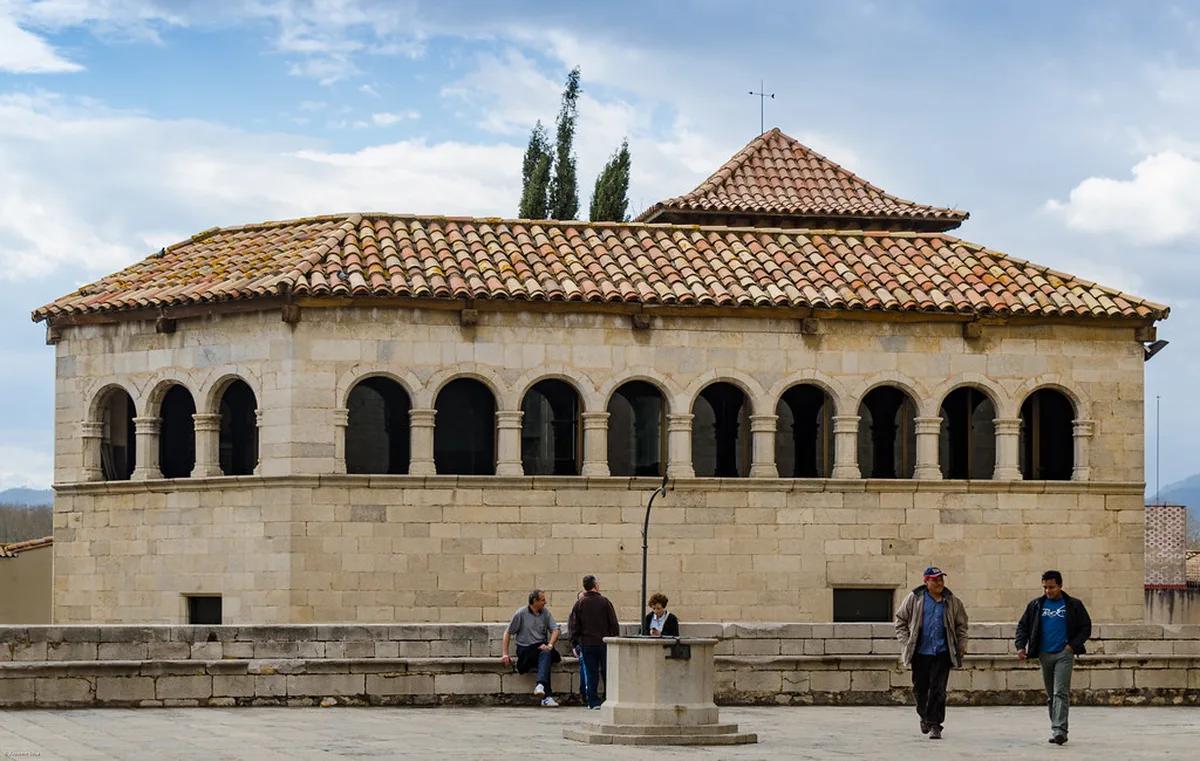
The streets of El Call are deliberately narrow, barely wide enough for two people to pass comfortably. This was not poverty but purposeful design: tight lanes kept out the summer sun, channelled cool air from the river, and created a natural defensive labyrinth. The main artery is Carrer de la Força, which runs from the Portal de Sobreportes gate south toward the river, but the most rewarding exploration happens when you turn into the side alleys — Carrer de Sant Llorenç, Carrer de les Quatre Cantonades, and the nearly hidden Carrer del Portal Nou, where medieval door surrounds and worn stone thresholds speak of centuries of daily life.
The hidden synagogue is the quarter's most significant discovery. In the 1990s, renovation work on a building at Carrer de la Força 8 revealed the remains of a medieval synagogue beneath layers of later construction. The building now houses the Museum of Jewish History (Museu d'Història dels Jueus de Girona), open Tuesday to Saturday from 10:00 to 18:00 and Sunday from 10:00 to 14:00. Entry costs €4 for adults in 2026. Inside, you will find the excavated synagogue chamber, a carved stone menorah relief found during the dig, and exhibits tracing the community's intellectual golden age — which produced scholars of the calibre of the 13th-century rabbi and philosopher Nahmanides (Moses ben Nachman), who debated Christian theology before the King of Aragon in the Barcelona Disputation of 1263.
A plaque on Carrer de les Escoles Pies marks the site of the mikveh, the ritual bath essential to Jewish religious life. The Nahmanides Institute for Jewish Studies, named for the quarter's most famous son, operates nearby and occasionally hosts public lectures open to visitors. Look also for the Bonastruc ça Porta Centre, named after Nahmanides' Catalan name, which serves as the quarter's cultural hub and displays reproductions of medieval Hebrew manuscripts connected to the Girona school of Kabbalah — one of the most influential mystical traditions in Jewish intellectual history. Budget at least 90 minutes to absorb both the museum and the surrounding lanes at a pace that does justice to the atmosphere. The entry fee of €4 for the museum and free access to the streets themselves make El Call the best value heritage experience in Girona's old town.
- Museum of Jewish History (Museu d'Història dels Jueus)
- Cost: €4 adults (2026) | Under-16 free
- Hours: Tue–Sat 10:00–18:00, Sun 10:00–14:00, closed Mon
- Address: Carrer de la Força 8
- Time: 60–90 minutes for museum + quarter exploration
- Highlight: Hidden medieval synagogue remains + stone menorah relief
- El Call Streets (free to explore)
- Key lanes: Carrer de la Força, Carrer de Sant Llorenç, Carrer de les Quatre Cantonades
- Look for: mikveh plaque on Carrer de les Escoles Pies; Bonastruc ça Porta Centre
Crossing the Bridges of the Onyar River
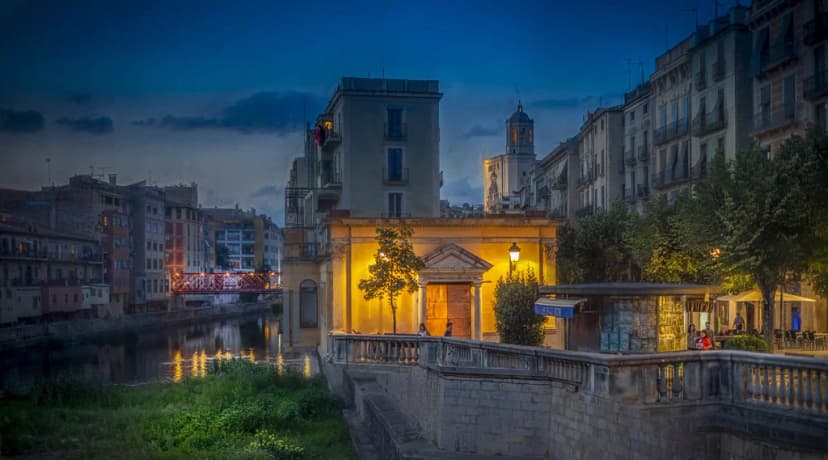
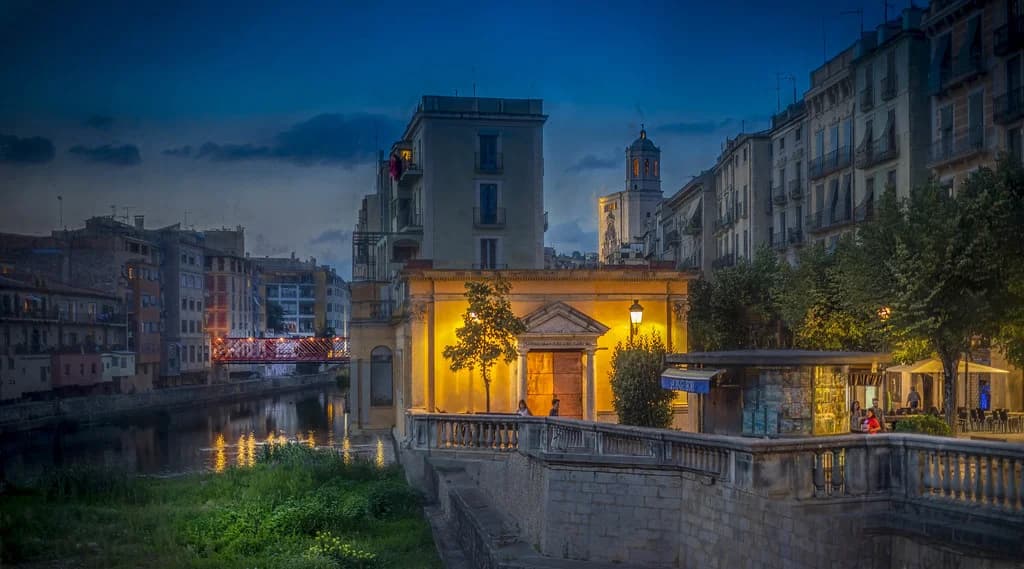
The Onyar River creates a vivid natural boundary between Girona's medieval old town and the 19th-century Eixample district to the west. What makes the riverfront exceptional is the row of densely packed houses that line the eastern bank, painted in intense shades of yellow ochre, terracotta red, and warm orange. These are the Case de l'Onyar — the Onyar houses — and their reflection in the water below has become the single most reproduced image of Girona. The effect is strongest in the early morning when the river runs calm and the sky provides a blue contrast to the warm palette of the façades.
The Pont de les Peixateries Velles is the most iconic of Girona's bridges, widely known as the Eiffel Bridge. Gustave Eiffel's engineering company designed and built this red iron bridge in 1877, using a lattice structure technique that Eiffel would later apply to his famous Paris tower in 1889. The bridge was originally named after the fishmongers (peixateries) who once sold their catch nearby. It offers the most direct and photogenic view of the coloured houses from its mid-span vantage point and is free to cross at all hours. No ticket, no queue — simply walk to the middle and you have one of the finest urban views in Catalonia.
The Pont de Pedra, or Stone Bridge, stands a short distance downstream and was built in the 1850s as a main pedestrian connection between the train station and the historic centre. On market mornings — typically Saturday — local artisans and food producers set up stalls near the bridge's western end, selling ceramics, cured meats, local cheeses, and seasonal produce from the Empordà plain. The Mercat del Lleó, Girona's main covered market, is a three-minute walk from the Stone Bridge and opens Tuesday to Saturday from 07:00 to 14:00, providing an excellent place to buy Catalan cheeses, xuixo pastries, and fresh olives.
Walking the bridges at night transforms the experience entirely. The city lights up the Onyar façades with warm floodlighting that makes the riverfront even more theatrical than it is by day. The reflections shimmer and shift with any breeze, producing a constantly changing composition. Between 21:00 and 23:00 in spring and summer, locals use the bridges as informal gathering points, and the cafés on the Eixample side of the river spill onto the pavement with aperitivo crowds. It is a thoroughly romantic setting that many visitors cite as a highlight of their time in Girona. For coastal scenery near the city, the Girona beach guide covers the Costa Brava beaches within easy reach.
Girona Gastronomy: Local Food and Drink in 2026
Girona sits in the Empordà region, one of the most celebrated gastronomic territories in Spain, and eating well here is not difficult or expensive if you know where to look. The city has long been home to Catalan culinary tradition blending Mediterranean ingredients — olive oil, anchovies, salt cod, seasonal vegetables — with French-influenced technique and Pyrenean produce from the nearby mountains. In 2026 the Girona food scene continues to punch well above the city's modest size.
Two local specialities deserve a place on every visitor's itinerary. The first is xuixo (pronounced shoo-sho), a fried pastry cylinder filled with custard cream that was invented in Girona in the early 20th century — legend credits a pastry chef on Carrer de les Hortes who developed the recipe in the 1920s. Every bakery and café in the old town sells them for around €1.50–2.00 each, and they are best eaten warm, straight from the fryer. The best xuixo in the Barri Vell are widely agreed to come from Pastisseria Llobet on Carrer dels Mercaders.
The second essential dish is rociola, a slow-cooked stew of salt cod (bacallà) with tomato, peppers, onions, and olives that represents Empordà's coastal cooking at its most direct. It appears on menus throughout the city at a typical price of €12–16 per portion. Pair it with a glass of Empordà DO white wine, made from Garnacha Blanca or Macabeu grapes grown in the hills between Girona and the French border, for a thoroughly regional meal.
For a more budget-conscious lunch, the Mercat del Lleó (Plaça Calvet i Rubalcaba, open Tue–Sat 07:00–14:00) has several standing bars and small counters where locals eat pintxos and bocadillos for €2–4 each. The market sits just across the Stone Bridge from the old town and makes an ideal mid-morning stop after a walk along the city walls. On the old town side, the Carrer de la Cort Reial holds several independent restaurants with €10–13 set lunch menus (menú del día) including a starter, main, dessert, bread, and a glass of house wine or water.
For dinner, the Plaça del Vi and the surrounding streets on the western fringe of the Barri Vell offer the highest concentration of restaurants. Prices at most mid-range establishments run €15–25 per person for a full evening meal. If your budget allows for a special occasion, El Celler de Can Roca on Carrer Can Sunyer 48 — three-time holder of three Michelin stars and regularly rated among the world's top restaurants — sits just fifteen minutes on foot from the Cathedral. Book well in advance: reservations for 2026 fill months ahead. For dinner without a reservation, the numerous tapas bars lining the Rambla de la Llibertat, just across the Eiffel Bridge, are lively from 20:00 onward.
Frequently Asked Questions
How much time should I spend in Girona's old town?
Most visitors find that one full day covers the main sights in the Barri Vell comfortably. Start with the Cathedral (€7, 90 min), walk the city walls (free, 60 min), then visit the Jewish Quarter and its museum (€4, 60 min). Add the Arab Baths (€4.50, 30 min) and the riverfront bridges and you have a complete day. If you enjoy museums in depth or want to explore the gastronomy scene in the evening, two days is a more relaxed pace.
Is Girona old town accessible for people with mobility issues?
The Barri Vell is built on a hill and features many uneven stone stairs and steep cobbled lanes. The city walls walkway, the Cathedral's 86 steps, and the Jewish Quarter alleys are not accessible for wheelchair users or those with significant mobility limitations. The riverfront promenade, the Rambla de la Llibertat, the Eiffel Bridge, and the Stone Bridge are flat and fully accessible. Travelers with limited mobility can still enjoy the best views and the bridge architecture without entering the steeper historic zone.
What is the best time of year to visit Girona?
Spring (April–June) and early autumn (September–October) offer the best conditions: mild temperatures of 18–24°C, lower hotel prices than peak summer, and manageable crowd levels. May is especially vibrant during the Temps de Flors flower festival, when the stairways and courtyards of the old town are filled with elaborate floral displays. July and August are hot (often above 30°C) and busier, but the evening atmosphere on the riverfront is excellent. Winter (December–February) sees very few tourists and prices drop significantly, though some smaller museums reduce their hours.
Are there good day trips from Girona?
Girona is an excellent base for day trips in northeast Spain. The Dalí Theatre-Museum in Figueres is 37 km north and reachable by train in 30 minutes (€5–7 return). The Costa Brava coastal villages — Begur, Palafrugell, Cadaqués — are 40–60 km east by car or bus. The day trips from Girona guide covers these and other options in detail. Barcelona is only 38 minutes by high-speed AVE train, making Girona a realistic base for visiting both cities. The train station is a ten-minute walk from the Cathedral.
What did Game of Thrones film in Girona and can visitors see the locations?
Season 6 of Game of Thrones filmed extensively in Girona during 2015. The Cathedral staircase (86 steps on the Plaça de la Catedral) appeared as King's Landing steps. The Plaça dels Jurats near the Arab Baths served as an outdoor theatre in Braavos. The Arab Baths themselves and the Carrer de les Ballesteries also featured in production. All locations are free to visit externally with no ticket required. Guided Game of Thrones walking tours depart near the Cathedral most mornings and cost approximately €15–18 per person in 2026.
What local foods should I try in Girona's old town?
Girona has two foods every visitor should try. The xuixo is a fried custard-filled pastry invented in the city in the 1920s, sold for €1.50–2.00 each in almost every bakery in the Barri Vell. The rociola is a slow-cooked salt cod stew with tomato, peppers, and olives that represents the Empordà coastal kitchen at its most traditional, typically priced at €12–16 in local restaurants. For the best xuixo, head to Pastisseria Llobet on Carrer dels Mercaders. For a budget lunch, the Mercat del Lleó market bar counters serve pintxos and bocadillos from €2–4 each on weekday mornings.
Is the Jewish Quarter (El Call) in Girona free to enter?
Yes, walking the streets of El Call is completely free. The narrow lanes of Carrer de la Força, Carrer de les Quatre Cantonades, and the surrounding alleys are open to all visitors at no charge. The Museum of Jewish History (Museu d'Història dels Jueus) at Carrer de la Força 8 charges €4 for adults in 2026, but entry is free for visitors under 16. The museum is open Tuesday to Saturday from 10:00 to 18:00 and Sunday from 10:00 to 14:00 and contains the remains of the hidden medieval synagogue discovered during 1990s renovation work, making it excellent value for the admission price. The Bonastruc ça Porta Centre nearby is also free to enter.
Girona's old town rewards visitors who approach it slowly. From the heights of the Passeig de la Muralla to the shadowed lanes of El Call, every corner holds a genuine piece of Catalan history that has survived more than two millennia. With Cathedral entry at €7, Arab Baths at €4.50, and the Museum of Jewish History at €4, the full circuit of major sites costs under €16 in 2026 — excellent value for a half-day of world-class heritage.
Whether you are a history enthusiast, a Game of Thrones fan, a gastronome chasing xuixo and rociola, or simply a traveller looking for a medieval city that has retained its soul, the Barri Vell delivers on every front. The blend of Catalan identity and layered architectural history — Roman, Romanesque, Gothic, Jewish, Baroque — creates an atmosphere that is rare to find anywhere in Europe.
Begin your broader exploration of the region with the Girona walking tour to get your bearings, then use the day trips from Girona guide to plan excursions to the Costa Brava coast and Dalí's Figueres. And when you need a break from stone streets, the Girona beach guide covers the best stretches of Costa Brava coastline within easy reach of the city.