Your Ultimate Verona 3-Day Itinerary: A Complete Guide
Verona's top 3-day route covers Arena di Verona (€10), Juliet's House (€6), Castelvecchio Museum (€6), and Lamberti Tower (€8), with a day trip to Lake Garda or Vicenza rounding out the stay.
The Verona Card costs €25 for 48 hours or €32 for 72 hours in 2026, covering free entry to 17 museums plus unlimited city bus rides — making it essential for any visitor spending two or more days exploring the city.
Verona captures the heart of every traveler with its romantic atmosphere and ancient Roman architecture. This Verona 3-day itinerary helps you navigate the winding streets and historic squares of this UNESCO World Heritage site. You will discover the perfect balance between famous landmarks and quiet local corners during your stay.
Most visitors arrive by train at the Porta Nuova station before heading toward the city center. Walking into the historic district feels like stepping back into a Shakespearean play or a Roman epic. Planning your route ahead of time ensures you see the best sites without feeling rushed or overwhelmed.
Day 1: Starting Your Verona 3-Day Itinerary in Old Town
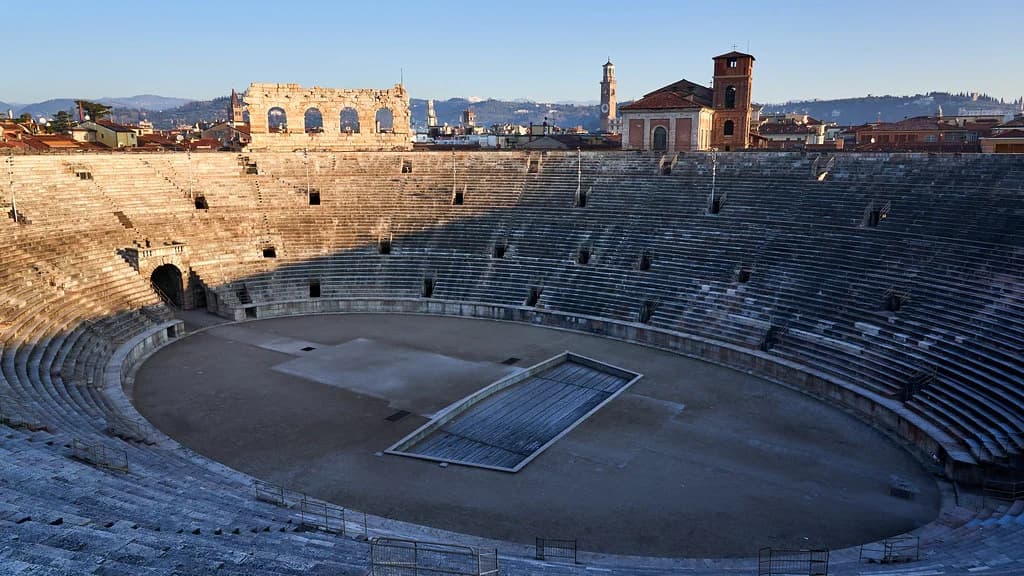
Begin your journey at the Arena di Verona, a massive Roman amphitheater that still hosts world-class opera performances in 2026. Admission for a morning self-guided tour costs €10 per adult (children under 8 enter free), and the site opens at 9:00 AM on most days — arriving early lets you beat the tour groups that flood in from 10:30 AM onward. The elliptical seating bowl holds approximately 15,000 spectators, and the stone tiers date back to roughly 30 AD, making it one of the best-preserved Roman amphitheaters in the world. Allow at least 45 minutes to walk the interior levels and read the interpretive panels, which were updated in 2025 with bilingual English and Italian signage. Opera season runs June through September; standing-room tickets start from €25 and full-seated performances from €45.
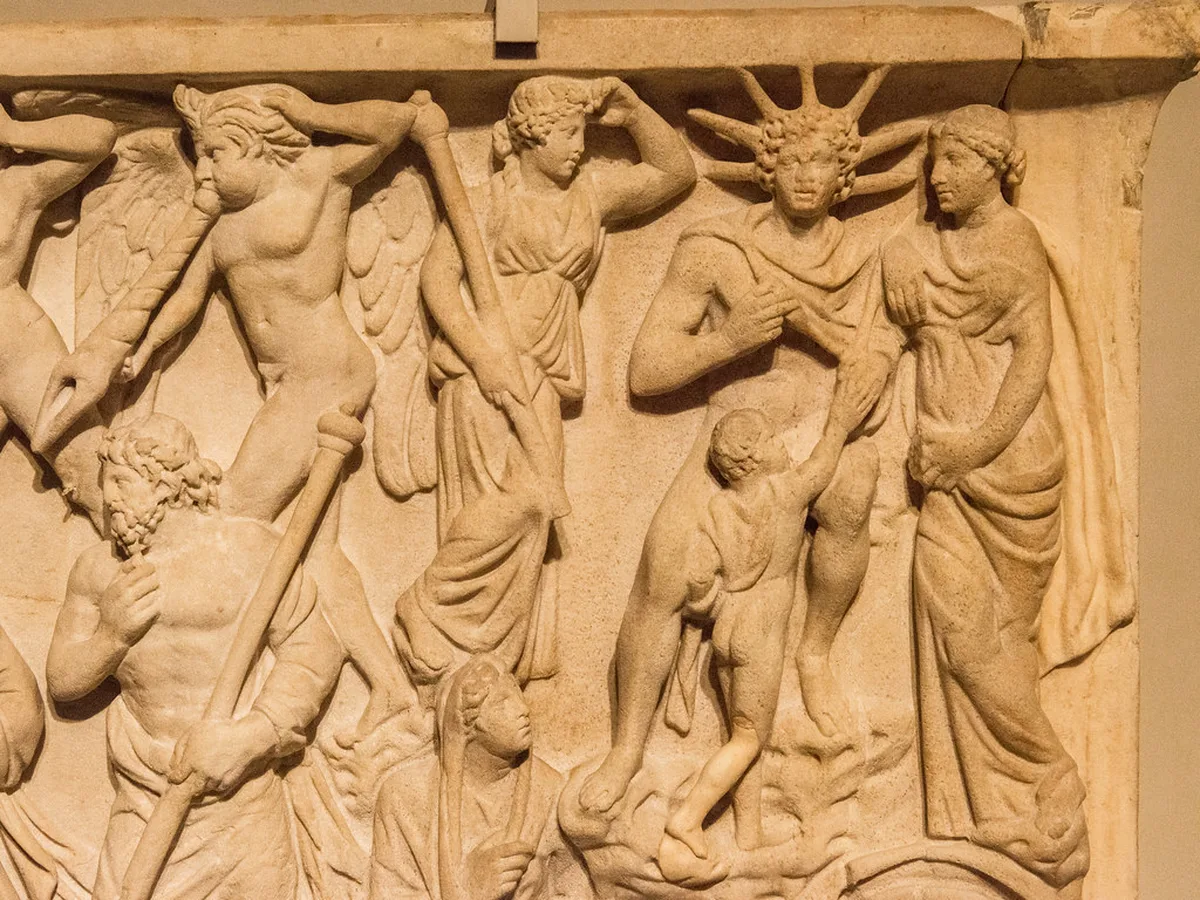
Walk five minutes northeast toward Piazza delle Erbe to experience the vibrant market stalls and stunning frescoed buildings surrounding the square. This area serves as the social heart of the Verona old town guide and features excellent people-watching opportunities from any of the surrounding café terraces. Grab a quick espresso (€1.30 standing at the bar) while admiring the 14th-century Berlina fountain in the center, topped by the Roman marble statue known as the Madonna Verona. The market sells fresh produce, flowers, and local Bardolino wine bottles — haggling is not customary, but prices are fair by Italian standards. The adjacent Piazza dei Signori, separated by the Arco della Costa arch, is quieter and lined with Renaissance palaces belonging to the Scaliger and Venetian periods.
No visit is complete without stopping by Juliet's House (Casa di Giulietta) to see the famous balcony and the bronze statue. Entry to the courtyard is free, but access to the interior museum and the balcony itself costs €6 per adult in 2026. The museum holds period furnishings, costumes from Franco Zeffirelli's 1968 film, and a small exhibition on the literary history of the Romeo and Juliet legend. While the courtyard gets very crowded between 11:00 AM and 2:00 PM, arriving before 10:00 AM or after 4:00 PM gives a more relaxed experience. Juliet's House is located at Via Cappello 23, just a three-minute walk from Piazza delle Erbe.
End your first afternoon by ascending the Lamberti Tower in Piazza delle Erbe. The climb via elevator costs €8 (stairs-only access is €6), and the tower is open until 7:30 PM in summer months, giving plenty of time for golden-hour photography. At 84 meters, it is the tallest medieval tower in the Veneto region, and the 360-degree panorama takes in the Arena, the Adige River bends, and the hills of Valpolicella on clear days. Budget 30 minutes total for this stop. Round out the evening with dinner at a trattoria near Piazza delle Erbe — expect to pay €18–30 per person for pasta, a main course, and house wine.
Day 2: Roman History and Panoramic City Views
Cross the historic Ponte Pietra bridge — Verona's oldest, first built in 100 BC and restored after World War II using original stones recovered from the Adige riverbed — to reach the Roman Theater and the Archaeological Museum on the hill. The theater complex dates back to the 1st century BC and still hosts outdoor performances during the Estate Teatrale Veronese season each summer. In 2026, combined admission to the theater and museum costs €6 (free with the Verona Card), and the site opens at 9:00 AM Tuesday through Sunday. The museum upstairs houses Roman glass, mosaics, and bronze figurines uncovered during 19th-century excavations. Allow 60–75 minutes to walk both levels without rushing; the terrace above the museum offers a useful mid-morning view across the river before crowds thicken.
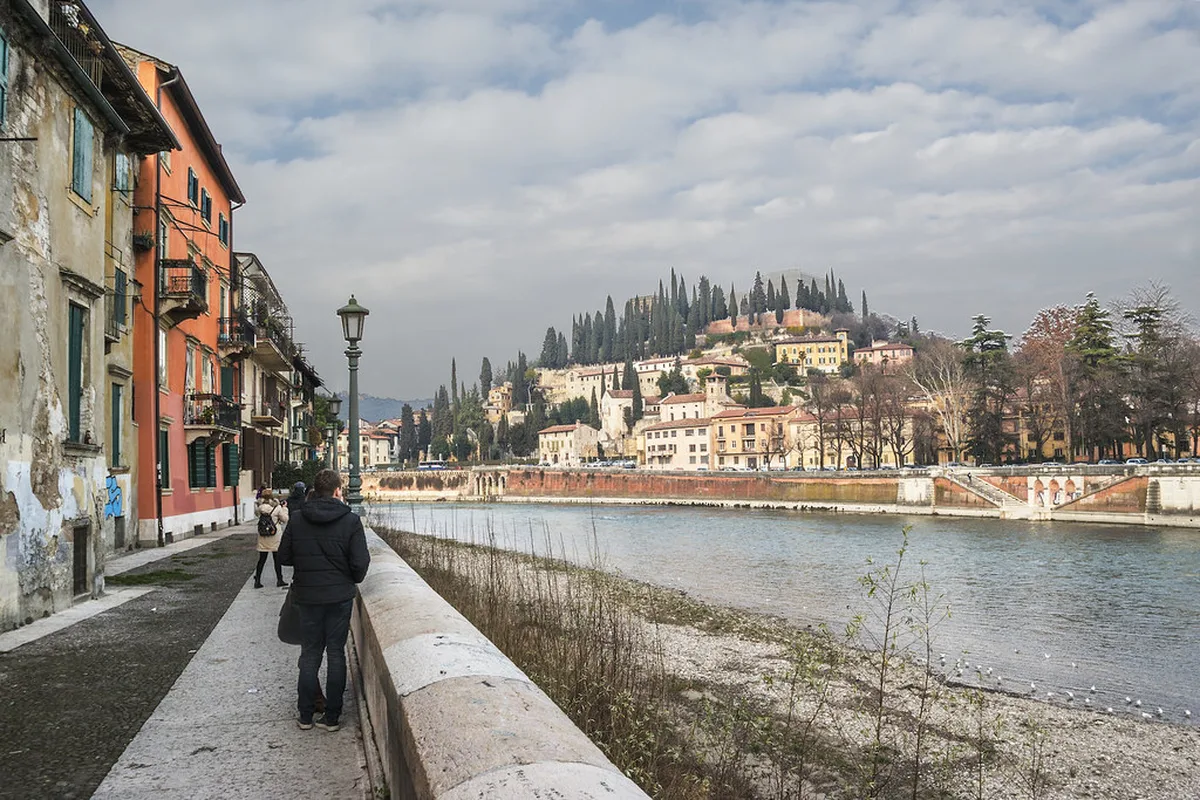
Take the short uphill path — about 10 minutes on foot from the theater — to reach Castel San Pietro, a 19th-century Austrian barracks built on the foundations of a Visconti castle. An alternative is the Verona funicular, which in 2026 runs 8:00 AM to 8:00 PM at a cost of €2 each way (€3.50 return). The terrace at the top is completely free to access and delivers what is widely regarded as the best panoramic view of Verona: the red-roofed old town curled inside a tight loop of the Adige River, with the Arena visible in the background. Watching the sunset from here, typically around 7:50 PM in late April, is a favourite ritual among locals. Pack a bottle of Lugana white wine purchased from a nearby enoteca for under €10 to make the moment complete.
Descend back toward the Duomo di Verona (Cattedrale di Santa Maria Matricolare) to admire its Romanesque façade and Titian's Assumption of the Virgin painting housed in the first chapel on the left. In 2026, entry to the cathedral complex — which includes the Baptistery and the Cloister of Sant'Elena — costs €4 per adult. Opening hours are 10:00 AM to 5:30 PM Monday through Saturday and 1:30 PM to 5:30 PM on Sundays. The cloister is especially peaceful in the early afternoon when tour groups have moved on to other sites. Spending 45–60 minutes here allows you to appreciate the intricate carved portal columns depicting scenes from the Old and New Testaments.
Spend your evening exploring the vibrant nightlife scene near the university district or along the river. You can find detailed recommendations in our Verona nightlife guide for the best wine bars and lounges. The aperitivo hour typically runs 6:00 PM to 8:00 PM, and most bars offer complimentary snack boards — a spritz con Aperol costs around €5–7. The streets around Via Sottoriva and Piazza Bra fill up with students and professionals after 8:00 PM, and a full dinner at a traditional osteria in this area will run €25–40 per person including a half-litre of local Valpolicella Classico. Booking a table in advance for Friday and Saturday evenings is strongly recommended.
Day 3: Local Culture and Hidden Riverside Gems
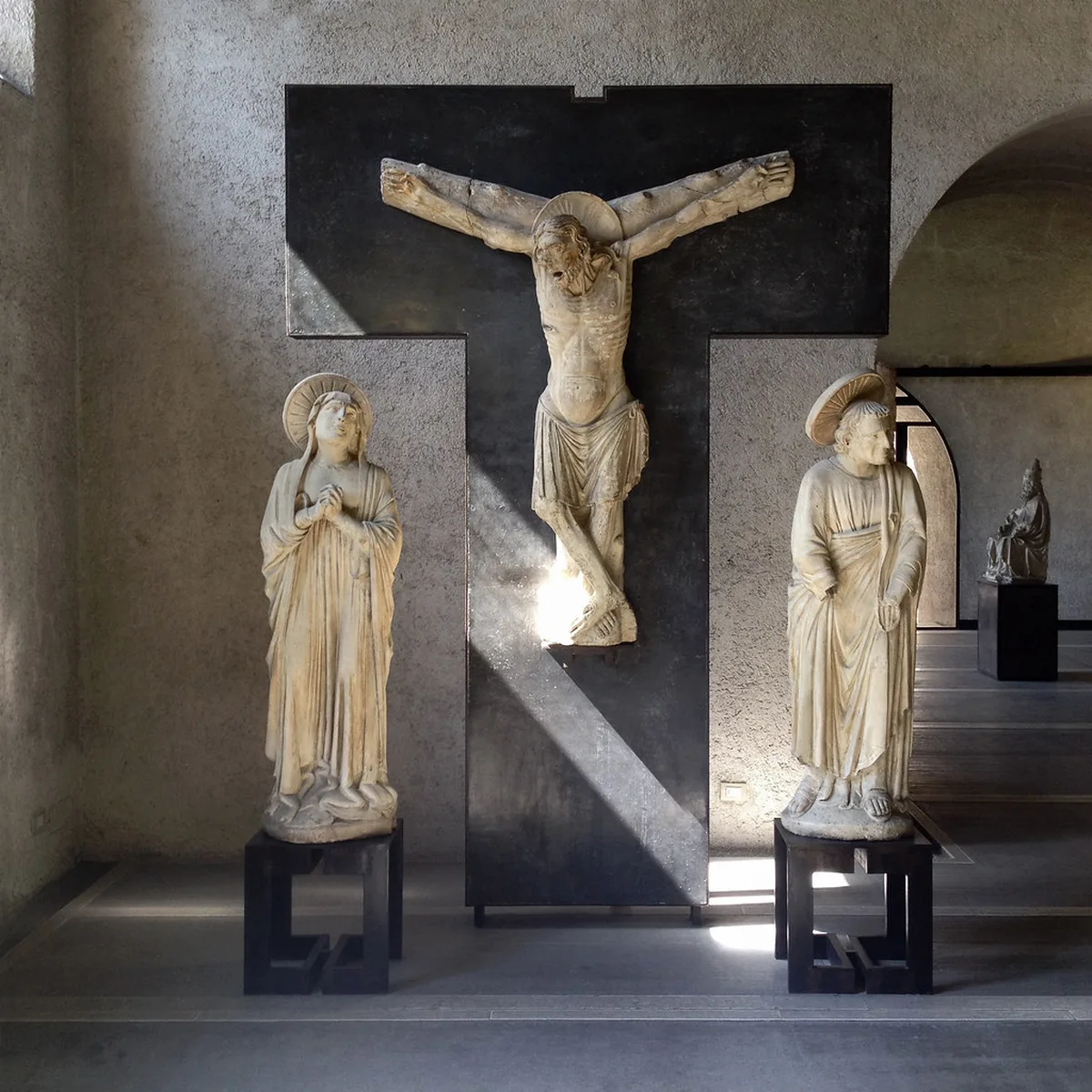
Start your final morning at the Castelvecchio Museum, housed inside the medieval red-brick fortress completed by Cangrande II della Scala in 1376. The museum reopened its permanent collection galleries in late 2024 after partial restoration, and admission in 2026 costs €6 per adult (free with the Verona Card; last entry 6:15 PM, closed Mondays). The collection spans Gothic and Renaissance painting, Scaliger armoury, and medieval sculpture — the equestrian statue of Cangrande I di Scaligero, originally mounted on his tomb, is the centrepiece. The Carlo Scarpa-designed interior from 1964 is itself considered a landmark of museum architecture. Budget 60–90 minutes for a thorough visit. Afterward, walk across the Castelvecchio Bridge (Ponte Scaligero), a 14th-century fortified walkway that survived World War II bombing and offers close views of the Adige's turquoise water running below.
Walk 20 minutes west along the Adige to the Basilica di San Zeno Maggiore, widely considered one of Italy's finest examples of Romanesque architecture. The bronze doors — cast in the 11th and 12th centuries and depicting scenes from the Old Testament and the life of San Zeno — are a UNESCO-recognised masterwork. Inside, Andrea Mantegna's San Zeno Altarpiece (1457–60) dominates the main apse; the original panels remain in Verona while the predella sections reside in the Louvre and the Musée des Beaux-Arts de Tours. Entry costs €3 in 2026 (free with the Verona Card), and the church is open 8:30 AM to 6:00 PM Monday through Saturday. This neighbourhood, the Borgo San Zeno, feels far more authentic than the immediate Arena area and its bakeries sell traditional Veronese Nadalin cake slices for around €2 each.
Return to the city center for a final stroll through the quiet backstreets of the Jewish Ghetto (Via del Portone, Via delle Fogge), where the 16th-century synagogue still stands. This area features charming artisan shops and small bakeries that sell traditional Veronese pastries like Baci di Giulietta (almond-and-chocolate kisses, around €8 per 200 g box) and Mandorlato nougat. Ending your trip with a quiet moment in a hidden courtyard captures the true spirit of the city — look for the Arco dei Gavi fragment (a Roman arch relocated here in 1932) near the Castelvecchio grounds for one final piece of ancient masonry before departure. For travellers interested in extending their stay across northern Italy, the day trips from Verona guide covers additional excursions to Lake Garda, Vicenza, and beyond.
Day 3 Alternative: Lake Garda Day Trip or Vicenza
If you prefer an excursion on your third day rather than staying inside Verona, you have two outstanding options within easy reach: Lake Garda to the west and Vicenza to the east. Both are reachable by train in under 35 minutes from Verona Porta Nuova station, making either a comfortable full-day trip with time to return for a final dinner in the city.
Lake Garda option — Peschiera del Garda and Sirmione: The regional train from Verona to Peschiera del Garda runs every 30 minutes, takes approximately 20 minutes, and costs €4.30 each way in 2026. Peschiera itself is a charming Venetian fortress town right on the southern lake shore — the star-shaped 16th-century walls are a UNESCO World Heritage Site component and free to walk. From Peschiera, take the boat ferry onward to Sirmione Peninsula (ferries run April–October, approximately every 30–60 minutes; return ticket €18–35 depending on the operator and season). Sirmione's main draw is the Scaligero Castle (Rocca Scaligera), a remarkably intact 13th-century water fortress jutting into the lake — entry costs €6 in 2026, open 8:30 AM to 7:30 PM Tuesday through Sunday. Beyond the castle, a 20-minute walk along the narrow peninsula leads to the Grotte di Catullo, the largest Roman villa ruins in Northern Italy, perched on the lake's southern tip with sweeping views of Monte Baldo across the water — admission €10 (€5 reduced). Budget three to four hours total in Sirmione.
Vicenza option — Palladio's city: Vicenza is a UNESCO World Heritage Site devoted almost entirely to the Renaissance architecture of Andrea Palladio. The train from Verona Porta Nuova takes 30 minutes and costs €5.50 each way. The city's headline attraction is the Teatro Olimpico, the world's oldest surviving indoor theatre (1585), with its permanent trompe l'oeil stage set depicting a classical cityscape — admission €11 in 2026, open Tuesday through Sunday 9:00 AM to 5:00 PM. A 20-minute walk south brings you to Villa La Rotonda (Villa Almerico Capra), Palladio's most iconic private villa and the direct inspiration for Thomas Jefferson's Monticello: exterior viewing costs €10, while interior access is available only Tuesday and Thursday for €5 additional. Allow five to six hours in Vicenza to also walk the Corso Palladio boulevard and visit the Basilica Palladiana, whose loggia facade you can admire from Piazza dei Signori for free.
How to choose: Pick Lake Garda if you want natural scenery, lakeside walking, and Roman history in an open-air setting — it is also the better choice for families with children. Choose Vicenza if you are drawn to Renaissance architecture, would rather avoid ferry timetables, and prefer a compact walkable city where every street corner holds a Palladio building. Weather matters too: on overcast days, Vicenza's interiors are more rewarding, while sunny weather transforms Lake Garda's turquoise waters into something spectacular.
Essential Logistics for Your Verona Trip
Navigating Verona is relatively straightforward since the main historic center is compact and largely pedestrian-friendly. The ZTL (Zona a Traffico Limitato) covers most of the old town, so if you are arriving by car, reviewing the parking in Verona rules before you arrive is essential to avoid fines of €80–160. The nearest public car parks to the historic center are Parking Arena (Via Città di Nimes, €2/hour) and the Cittadella Garage (Via Città di Nimes 2, €1.50/hour after the first hour). Both are a five-minute walk from the Arena. Most tourists find that walking is the most efficient way to see all the major landmarks once the car is parked.
The Verona Card offers compelling value in 2026: a 48-hour pass costs €25 and a 72-hour pass costs €32. Both versions include free entry to 17 museums and monuments — covering the Arena, Castelvecchio, Roman Theater, Juliet's House, Lamberti Tower, and more — plus unlimited rides on the AMT city bus network. For a visitor following this three-day itinerary, the 72-hour card pays for itself after just three or four museum entries and saves meaningful time by bypassing ticket queues. Buy the card online in advance via the official Verona Tourism portal or at the Arena box office on arrival. Note that the Arena opera-night ticket is a separate purchase not included in the card.
Traveling during the shoulder seasons of April through early June and mid-September through October provides the best balance of warm weather and manageable crowds. Accommodation prices drop roughly 20–30% outside the peak July–August opera festival months. The Verona Opera Festival runs 21 June to 30 August 2026, during which hotel rooms near the Arena book out weeks in advance. Planning a mid-week check-in (Tuesday or Wednesday) can also help avoid the short-break weekend rush arriving from Milan, Venice, and Munich by Eurostar.
- Navigating with the Verona Card
- Type: All-access pass
- Cost: €25 (48h) / €32 (72h) in 2026
- Best for: Main attractions + free buses
- Using the Local Bus Network
- Type: Public transit (AMT Verona)
- Cost: €1.50 single / €3.50 day pass
- Best for: Longer distances, train station transfer
- Exploring the Historic Center on Foot
- Type: Walking
- Cost: Free of charge
- Best for: Old town streets, all Day 1 and Day 2 sites
Where to Eat and Drink Like a Local
Veronese cuisine is famous for hearty dishes like Amarone risotto — made with the concentrated local red wine that costs upward of €30 a bottle in shops — and pastissada de caval, a slow-cooked horse-meat stew served with polenta that dates to a medieval battle in 489 AD. Look for osteria signs (not ristorante) to find authentic family-run eateries serving these recipes at reasonable prices: expect €12–16 for a pasta course and €16–24 for a secondi. Many of these spots require reservations on Friday and Saturday evenings because they seat only 25–40 covers and fill quickly with local regulars who return weekly. The area around Via Sottoriva along the Adige River is the best concentration of traditional osterias, all within a five-minute walk of Ponte Pietra.
Wine lovers should dedicate at least one evening to tasting the local Valpolicella, Amarone, Bardolino, and Lugana varieties at a specialist enoteca. Many wine bars offer tasting flights of five glasses for €18–25, often paired with a board of Monte Veronese cheese (a DOP product from the Lessini mountains north of the city) and Sopressa Vicentina salami. The Cantina della Valpolicella cooperative in nearby San Pietro in Cariano (15 minutes by bus) offers guided cellar tastings from €15 per person and is worth the short trip if wine is a priority. Back in the city, Piazza Bra's bar terraces sell Bardolino Chiaretto rosé by the glass from €4–6 — a refreshing option during warm afternoons.
Dessert in Verona year-round centres on two local classics: Pandoro, the star-shaped yeasted cake originating here in 1894 (Pasticceria Cordioli on Corso Porta Borsari is the best known source, €8–12 per loaf), and the almond-and-honey Nadalin, which predates Pandoro by several centuries. For a lighter option, gelato from a quality artisan gelateria using Veneto-sourced fruit costs €2.50–3.50 per scoop. Taking your gelato for a walk along the Adige embankment paths between Ponte Pietra and the Castel San Pietro steps is a classic local ritual that requires no reservation and costs almost nothing.
Giardino Giusti and Verona's Hidden Green Spaces
Most visitors to Verona focus entirely on the stone-and-brick grandeur of the Arena, Castelvecchio, and the Roman theater, but the city's gardens offer an entirely different side of this UNESCO World Heritage destination — and one that is far less crowded even at peak summer. The Giardino Giusti, located at Via Giardino Giusti 2 on the east bank of the Adige, is the outstanding example. Laid out in the 15th century by the noble Giusti family, the formal Renaissance garden climbs a terraced hillside behind the family palazzo and has been open to the public since the 17th century. In 2026, admission costs €10 per adult (no reduction for the Verona Card), and the garden is open daily 9:00 AM to 8:00 PM in summer (closing at 5:00 PM November through February). Allow at least 60 minutes to explore both the lower formal parterre — with its geometrically clipped box hedges, lemon trees in terracotta pots, and 16th-century cypress avenue — and the wilder upper section, which culminates in a belvedere with outstanding rooftop views over the city comparable to those from Castel San Pietro.
The garden has attracted famous visitors for centuries: Goethe wrote about it enthusiastically in Italian Journey (1786–1788), Mozart visited in 1769 at the age of 13, and the landscape historian Georgina Masson described it as one of the finest Italian Renaissance gardens still in private hands. A natural grotto carved into the hillside — historically used as a cool retreat in summer — adds a theatrical flourish at the garden's upper level. Photography conditions are excellent from 9:00 AM to 11:00 AM when the angled morning light catches the cypress shadows across the gravel pathways; by noon in July and August, the stone surfaces bleach white in direct sun.
Beyond Giardino Giusti, Verona rewards those who simply wander the riverside embankments. The Lungadige Rubele path on the east bank connects the garden to Ponte Pietra in under 10 minutes on foot and passes a series of small public benches overlooking the Adige's clear green water. The stretch of embankment below Castel San Pietro on the west bank is lined with plane trees offering shade, and local students gather here on warm evenings. Parco delle Mura (the park following the old 16th-century Venetian city walls north of the historic center) is free to enter and offers a 3-km walking circuit with intermittent views across the vineyards of the Valpolicella DOC zone — a peaceful contrast to the busier old town streets. Bring a picnic assembled from the Piazza delle Erbe market stalls: a bottle of Bardolino Chiaretto (€6–8), a wedge of Monte Veronese cheese (€4), and a focaccia from the adjacent bread shop (€2) provide a relaxed lunch that costs far less than any café terrace in the tourist zone.
For families travelling with children, the Parco delle Colombare on the southern edge of the old town has a small playground and an open lawn, while the riverbanks near Castelvecchio offer safe, flat cycling along a shared path that stretches several kilometres west toward San Zeno. Bike rental from Noleggio Bici Verona near Piazza Bra costs approximately €10 for 2 hours or €18 for a full day in 2026, making the riverside route an accessible and inexpensive alternative to the museum circuit on a rest day.
Frequently Asked Questions
Is 3 days enough for Verona?
Yes, three days is the ideal amount of time to see the major historic sites and enjoy the local culture in 2026. Day 1 covers the Arena di Verona (€10), Juliet's House (€6), and Lamberti Tower (€8). Day 2 handles the Roman Theater, Castel San Pietro panorama, and the Duomo (€4). Day 3 can be spent at Castelvecchio (€6) and San Zeno Maggiore (€3), or on a day trip to Lake Garda or Vicenza. This timeframe allows a relaxed pace without missing any key landmarks.
What is the best month to visit Verona?
May and September are generally the best months to visit Verona because the weather is pleasant — typically 18–24°C — and the crowds are manageable compared to the opera-festival peak in July and August. Visiting in May means spring flowers in Giardino Giusti (€10 entry) and comfortable walking temperatures. September brings grape harvest activity in the surrounding Valpolicella vineyards, and many wineries offer open-cellar weekends during the Vendemmia festival in mid-September. Both months also see accommodation prices 20–30% lower than the summer peak.
Is Verona safe for tourists?
Verona is considered very safe for travelers, even when walking through the historic center after dark. The main piazzas — Bra and delle Erbe — remain well-lit and populated until midnight in summer. As with any popular European destination, keep your belongings secure in crowded squares during the day, particularly around Juliet's House where pickpockets occasionally operate. Solo travelers and couples regularly walk the riverside paths and old-town backstreets at night without incident. The full is Verona safe for tourists guide covers detailed neighbourhood-by-neighbourhood safety notes and advice on transport after dark.
Can you walk everywhere in Verona?
The historic center of Verona is very compact and mostly pedestrianized, making it easy to navigate on foot. The Arena, Piazza delle Erbe, Juliet's House, Castelvecchio, and the Roman Theater are all within a 20-minute walk of each other. The furthest point on this itinerary — Basilica di San Zeno Maggiore — is about 1.2 km from the Arena, a comfortable 15-minute walk along the river. You only need public transport (bus €1.50) to reach the Porta Nuova train station from the old town, a 25-minute walk or 10-minute bus ride.
How much does a 3-day trip to Verona cost in 2026?
A realistic mid-range budget for three days in Verona in 2026 runs approximately €180–250 per person, excluding accommodation and transport to the city. The 72-hour Verona Card (€32) covers most museum entries. Add €6 for Juliet's House (not included in the card), €8–12 per day for lunches, €25–40 per evening for dinner, and €15–20 for incidental café stops and gelato. A day trip to Lake Garda adds roughly €30–50 (trains + ferries + Sirmione entry fees); a Vicenza day trip costs around €25–35 total. Budget travellers eating at supermarket delis and standing at café bars can bring the daily spend closer to €40.
Is the Verona Card worth buying in 2026?
Yes, the Verona Card is worth buying in 2026 for most visitors following a full itinerary. The 72-hour card costs €32 and includes free entry to 17 sites: the Arena (€10 standalone), Castelvecchio Museum (€6), Roman Theater (€6), Lamberti Tower (€8), Duomo complex (€4), and more — plus unlimited city bus rides. Visiting just four of those sites already exceeds the card's cost. The 48-hour card at €25 works for visitors spending only two full days. Buy online in advance to skip queues at the Arena box office, especially during summer when lines can run 30–45 minutes.
What are the best day trips from Verona?
Verona is exceptionally well-positioned for day trips across the Veneto and Lake District. Lake Garda is the most popular excursion: the regional train to Peschiera del Garda takes 20 minutes and costs €4.30 each way, and boats connect onward to Sirmione and its Scaligero Castle (€6). Vicenza, Andrea Palladio's masterpiece city, is 30 minutes by train (€5.50 each way) and home to the Teatro Olimpico (€11). Bologna is reachable in under 2 hours and offers a completely different food culture. The full day trips from Verona guide details timetables, costs, and what to prioritise at each destination.
Following this Verona 3-day itinerary ensures you experience the very best of this romantic Italian destination in 2026. From the ancient stones of the Arena (€10) to the riverside paths beside Castelvecchio (€6), the city offers endless charm whether you prefer Roman history, Renaissance art, or simply the pleasure of eating and drinking well. You will leave with a deep appreciation for the history and culinary traditions of the Veneto region.
Remember to book tickets for popular sites in advance — Juliet's House (€6) and the Arena can sell out timed-entry slots on peak summer mornings. Exploring the lesser-known neighbourhoods, particularly Borgo San Zeno and the Jewish Ghetto, will provide a more authentic look at daily life in this historic city. Safe travels as you discover the magic and romance of Verona during your next Italian adventure.