7 Best Day Trips From Hvar for Your 2026 Vacation
The Krilo catamaran from Hvar to Split costs €15–18 return (2026) and takes approximately 1 hour each way, making Split the most convenient mainland day trip from Hvar. Brač island (Zlatni Rat beach) is reached via a 30-minute ferry for around €12 return, with a local bus connecting the Supetar port to Bol.
Vis Island is reachable from Hvar on a group speedboat day tour for €15–20 per person (excluding Blue Cave entry of €12–18), with the journey taking roughly 1.5 hours. To reach Zlatni Rat on Brač independently, take the Jadrolinija ferry from Stari Grad to Supetar (€12 return, 50 min) then a local bus to Bol (50–60 min, €4).
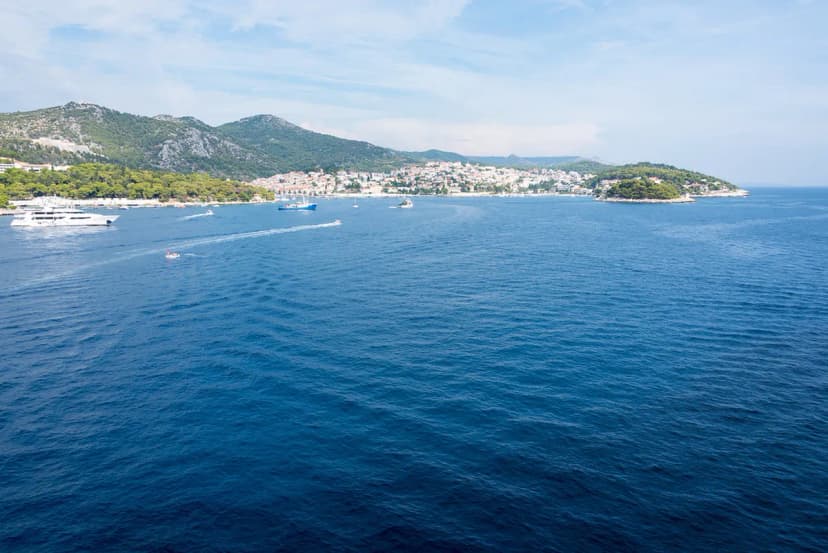
Hvar serves as the perfect central hub for exploring the stunning islands of the central Adriatic. Many visitors find that the best part of their stay involves leaving the main harbour for a day. These excursions allow you to discover hidden coves and ancient towns that feel worlds away from the busy Hvar Town promenade.
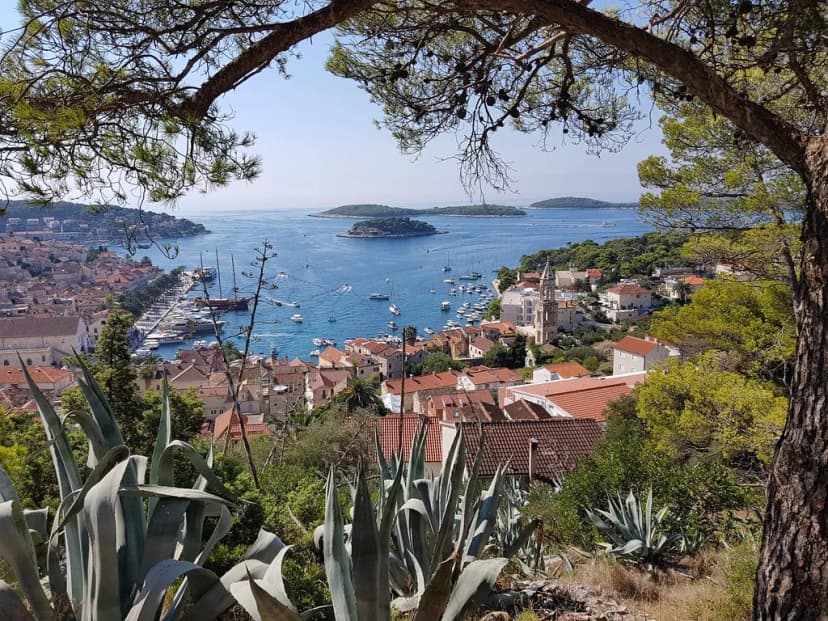
While there are many things to see in Hvar Old Town, venturing out onto the water provides a completely different perspective. You can choose from organised group tours, private speedboats, or public catamarans to reach nearby gems. Each option offers a unique way to experience the turquoise waters and rugged coastline of Croatia.
Croatia joined the Eurozone on 1 January 2023, so all prices below are quoted in EUR. Planning your day trips from Hvar requires knowledge of boat schedules and sea conditions. Most tours depart between 09:00 and 10:30 to maximise your time in the sun. This guide will help you navigate the best routes and hidden spots for an unforgettable 2026 summer getaway.
Exploring the Pakleni Islands Near Hvar
The Pakleni Islands are a chain of emerald islets located just a few minutes from Hvar Town. This small archipelago of about a dozen islands stretches west along the coast, offering a mix of lively beach clubs and quiet, pine-scented bays perfect for swimming and snorkelling. Reaching them is incredibly easy and affordable for any traveller — no tour booking is needed.
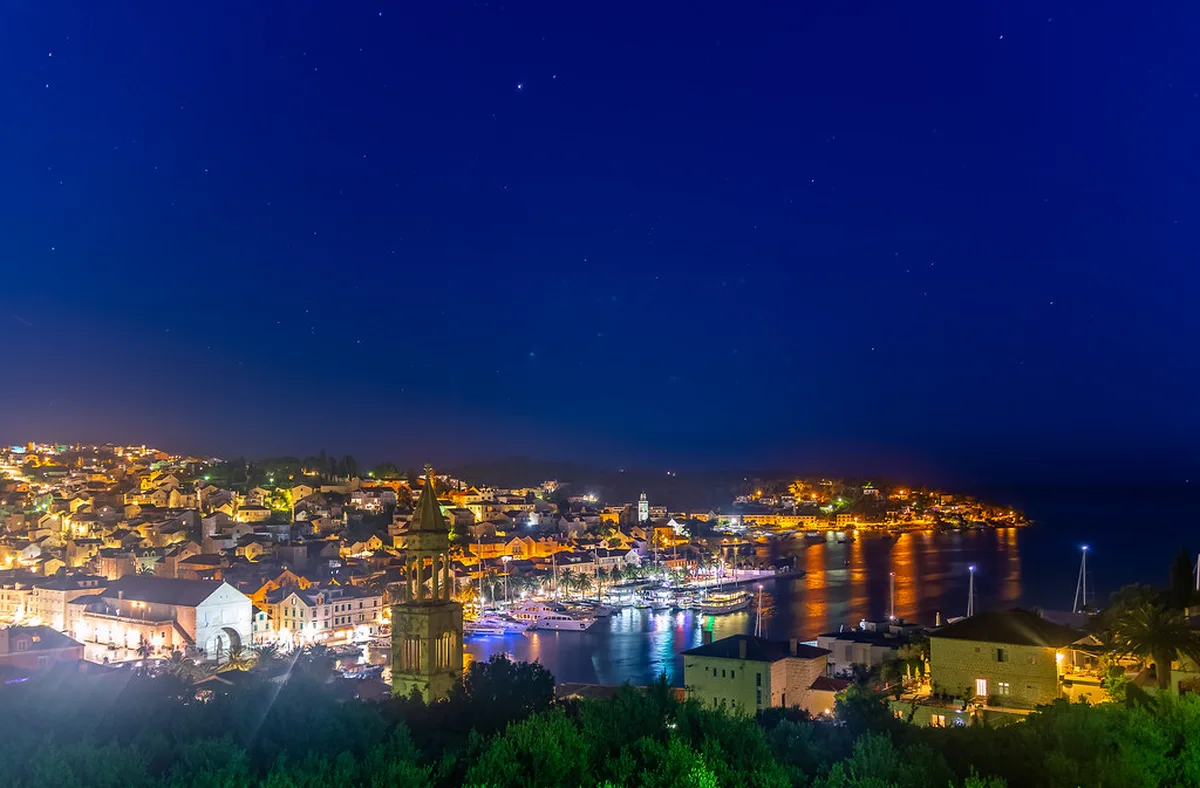
Water taxis depart regularly from the Hvar Riva throughout the day in July and August, leaving roughly every 30 minutes from 08:00 until 21:00. Prices in 2026 are approximately €5–8 one-way or €10–15 for a return trip, depending on your destination island. Boats typically drop passengers at popular spots including Jerolim (5 min, €5), Stipanska (10 min, €6), and Palmižana (20 min, €8–10). Always confirm return times with the boat operator before heading ashore, as the last taxi can leave early in shoulder season.
Palmižana on Sveti Klement island is the most famous stop because it combines excellent dining with natural beauty. The sheltered bay is ringed by a botanical garden planted by the Meneghello family in the early 20th century, and several highly-rated restaurants serve fresh seafood, grilled fish, and cold local wine. Budget around €25–40 for a sit-down lunch at Dionis or Laganini restaurants. The surrounding waters are clear and shallow, ideal for swimming and kayaking. Refer to our Hvar beach guide to compare these remote shores with the town beaches.
Families with young children often prefer the sandy seabed of Perna beach on Marinkovac island, which is gentler underfoot than the rocky coves elsewhere. The water is calm and shallow close to shore, making it one of the safest spots for paddling. You can rent inflatable SUPs and snorkelling gear on the beach for €10–15 per hour.
Travellers looking for a party atmosphere should head to Carpe Diem Beach on Stipanska island. This venue operates as a relaxed chill-out lounge during the day — sun beds cost €15–20 — and transforms into an open-air club after 18:00, with DJs playing until midnight. Entrance to evening events typically runs €20–30. Most water taxis run late into the evening to accommodate those staying for the music, but do confirm the last departure with your boat captain.
Jerolim, the closest island, is best known as Croatia's first official nudist beach, established in the 1930s. The rocky shore is accessible for free and the water is among the clearest in the archipelago. A small beach bar serves cold drinks and light snacks. Given the short crossing of just five minutes, many visitors make a spontaneous half-day trip here before lunch.
- Palmižana Bay on Sveti Klement
- Travel Time: 20 minutes
- Best For: Fine dining and botanical gardens
- Access: Water taxi from Hvar Riva
- 2026 Cost: €8–10 one-way
- Jerolim Island Nudist Beach
- Travel Time: 5 minutes
- Best For: Naturalist swimming and snorkelling
- Access: Small taxi boat
- 2026 Cost: €5 one-way
- Carpe Diem Beach on Stipanska
- Travel Time: 10 minutes
- Best For: Daytime lounging and evening parties
- Access: Water taxi or private boat
- 2026 Cost: €6 one-way, sun beds €15–20
The Blue Cave and Vis Island Adventure
A visit to the Blue Cave on Biševo Island is the most iconic of all day trips from Hvar. This natural phenomenon occurs when sunlight enters through a submerged opening at certain angles — typically between 11:00 and 12:00 — and reflects off the white limestone floor to fill the cave with an ethereal blue glow. The cave is only accessible by small official wooden boats that enter through a narrow opening barely a metre and a half high, meaning passengers must duck as they glide inside.
Most group speedboat tours depart Hvar harbour around 09:30–10:00 and take approximately 75–90 minutes to reach Biševo. In 2026, standard group tours cost €100–130 per person and include the boat, fuel, guide, and snorkelling equipment. The official cave entry fee is an additional €12–18 paid in cash at the cave — bring exact change as change is not always available. Expect queues of 30–90 minutes during peak July and August afternoons; the best strategy is to join a tour that departs before 09:30 so you arrive before the midday rush.
Vis Island is the most remote of Croatia's inhabited central Dalmatian islands and was closed to foreign visitors until 1989 due to its strategic military role. This isolation has preserved an authenticity that other islands have lost. After the Blue Cave, most tours stop at Stiniva Cove for swimming — a narrow beach enclosed by towering cliffs that won the title of Europe's best beach in 2016. The water is crystal clear and excellent for snorkelling among the rocky outcrops, though the path down from the cliff top is steep and requires sturdy footwear.
The island's two main settlements each have a distinct character. Komiža, a former fishing village on the western shore, is the traditional base for Blue Cave excursions and has a beautiful Venetian tower and a clutch of excellent seafood taverns along the waterfront. Expect to pay €15–25 for a main course of fresh grilled fish. Vis Town on the northeastern coast has wider streets, a Roman-era cemetery, and a growing reputation for natural wine produced from the indigenous Vugava grape, bottles of which sell for €12–20 at local cellars.
For travellers who prefer independence, it is possible to reach Vis on the regular Jadrolinija car ferry from Split (50 min by fast catamaran, €8–12) and then arrange local transport to the Blue Cave area, but the logistics are complex. The organised speedboat tour from Hvar is more efficient and usually more enjoyable.
- Blue Cave Entry
- 2026 Price: €12–18 (cash, paid at the cave)
- Best Time: Before 11:00 for shortest queues
- Visit Duration: 10–15 minutes inside the cave
- Access: Official wooden boat only (no swimming)
- Stiniva Cove Swim Stop
- Duration: 45–60 minutes
- Access: Short descent from cliff path or direct by boat
- Feature: Vertical limestone walls, voted Europe's best beach
- Tip: Wear water shoes on the rocky entry
- Komiža Lunch Stop
- Duration: 60–90 minutes
- Best For: Fresh seafood taverns along the harbour
- Budget: €15–25 per main course
Day Trips From Hvar to Brač Island and Zlatni Rat
Brač is the largest island in central Dalmatia and home to Zlatni Rat, one of the most photographed beaches in Europe. This distinctive golden horn of white pebbles juts 500 metres into the Hvar Channel and slowly changes its shape depending on local winds and sea currents — a quirk that makes it different every time you visit. It is a must-see destination for photography enthusiasts, windsurfers, and sun seekers alike.
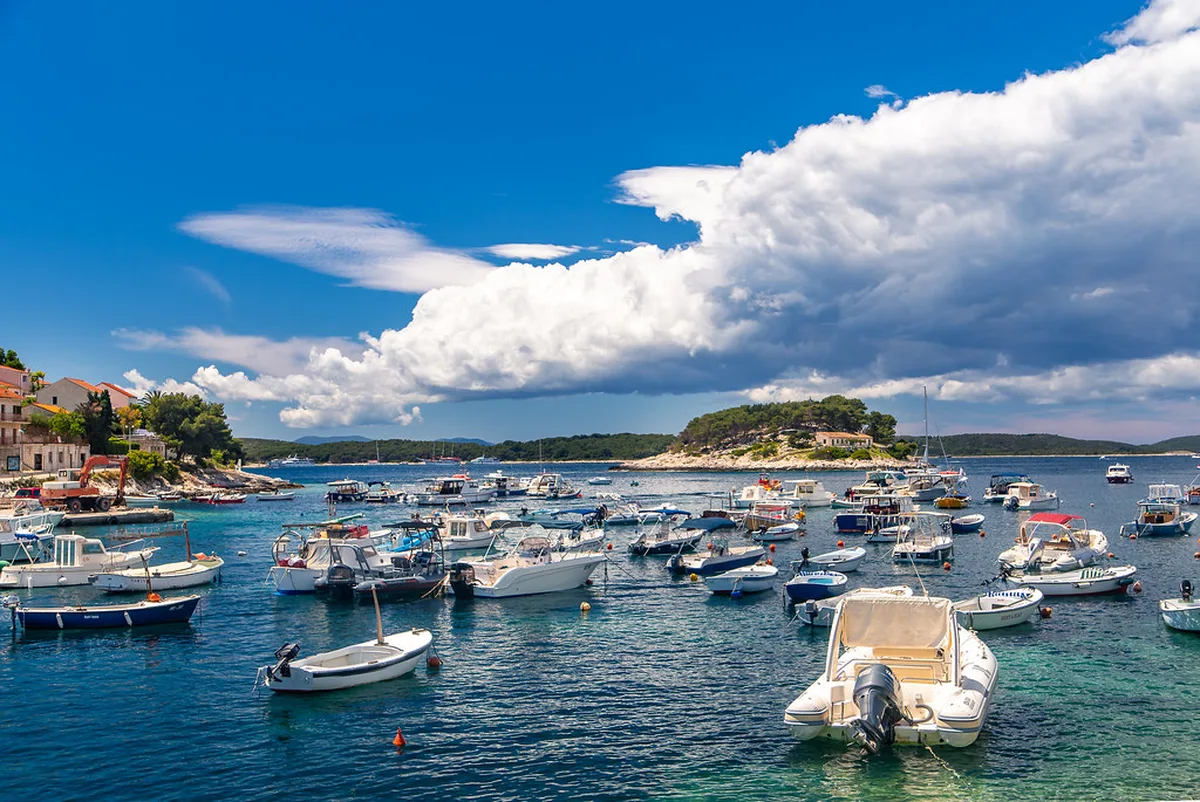
The most efficient way to reach Brač from Hvar is the Krilo fast catamaran to Bol. In the 2026 timetable, this service runs twice daily in summer and the crossing takes approximately 50–60 minutes. Tickets cost around €7–10 per person and can be booked online at Krilo's website or purchased at the quay in Hvar. An alternative is the passenger ferry from Hvar Town to Stari Grad on Brač, followed by a local bus to Bol (combined journey around 90 minutes total, €8–12).
From Bol harbour a pleasant 20-minute walk along a shaded pine promenade leads you to the tip of Zlatni Rat. Windsurfing is extremely popular here due to the reliable afternoon Maestral breeze, and several operators on the beach offer board rental (€25–35 per hour) and beginner lessons (€50–80 for two hours). You can also hire kayaks (€15 per hour) to paddle around the tip of the cape. Sun beds and parasols are available for rental at €15–20 per set per day — arrive before 10:00 to secure a spot in peak season.
The town of Bol itself rewards an hour of wandering before or after the beach. Stone houses with terracotta roofs line narrow alleys leading to a medieval Dominican Monastery perched on the western edge of the harbour. The monastery museum holds an important collection of Greek amphorae recovered from the seabed. Several good restaurants around the harbour serve local specialities including grilled Brač lamb and homemade pasta; budget €12–20 for a main course.
Hikers and panorama seekers should note that Vidova Gora, at 778 metres the highest peak on any Croatian Adriatic island, rises directly above Bol. A marked trail from Bol village climbs to the summit in two to three hours and rewards walkers with a spectacular bird's-eye view of Zlatni Rat, Hvar Island, and the open sea beyond. A mountain hut at the top sells cold drinks and sandwiches.
- Zlatni Rat Beach
- Feature: Shifting pebble cape, changes shape with wind
- Activity: Windsurfing, kayaking, swimming
- Crowd Level: Very high in July–August
- Tip: Arrive before 10:00 for sun beds
- Catamaran Hvar–Bol (Krilo)
- 2026 Price: €7–10 per person
- Journey Time: 50–60 minutes
- Frequency: 2 departures daily (summer)
Cultural Discovery in Korčula Town
Korčula is often called 'Little Dubrovnik' because of its remarkable medieval walls and tight grid of herringbone-pattern streets designed to channel sea breezes in summer and block winter winds. This island is steeped in Venetian-era history and is the reputed birthplace of the explorer Marco Polo, whose family home still stands in the old town. The atmosphere is quieter and more refined compared to the high-energy scene of Hvar, making it ideal for travellers who prefer culture over beach clubs.
Direct catamarans operated by Krilo run daily between Hvar and Korčula Town in the summer season, making it one of the easiest half-day or full-day trips from Hvar. The ride takes approximately 60–75 minutes across the beautiful Pelješac Channel. In 2026, one-way tickets cost €15–20. Jadrolinija also offers a car ferry from Drvenik (reachable by bus from Split) to Korčula, but for day trippers from Hvar, Krilo's catamaran is the more practical option. Booking tickets online at least 24–48 hours in advance is strongly recommended during July and August.
Walking through the narrow stone streets of the old town reveals hidden art galleries, boutique jewellery shops selling coral pieces, and small family-run wine bars. St. Mark's Cathedral dominates the main square with its intricate Romanesque-Gothic stonework and a collection of paintings attributed to Tintoretto. Entrance to the cathedral costs €3–5. You can also climb the bell tower for a panoramic view of the harbour and the Pelješac vineyards across the water.
Wine lovers will find Korčula to be a genuine highlight of any Croatian island-hopping trip. The island produces two distinctive white wines — Grk from the sandy soils of Lumbarda in the east, and Pošip from the limestone-rich interior — both of which are gaining international recognition. Several konobas (family wine bars) in the old town offer tasting flights of three wines paired with local goat cheese and prosciutto for €15–20 per person. Ask specifically for a tasting at Bire Wine Bar or Konoba Mate for an authentic experience.
If you arrive in summer on a Thursday evening, you may witness the Moreška — a traditional sword dance performed in Korčula since the 15th century, depicting a battle between two rival kings. Tickets cost €15–20 and the performance lasts about 45 minutes. It is one of the most unique cultural spectacles in Croatia and worth timing your visit around if possible.
- Catamaran Hvar–Korčula (Krilo)
- 2026 Price: €15–20 one-way
- Journey Time: 60–75 minutes
- Frequency: 1–3 sailings daily in summer
- Tip: Book online 48 hours ahead
- St. Mark's Cathedral
- Entry: €3–5
- Highlight: Romanesque-Gothic stonework
- Bell Tower: Extra €2, panoramic views
A Day Trip to Stari Grad — Hvar's Hidden Historic Capital
Most visitors focus entirely on Hvar Town and never discover that Stari Grad, just 25 kilometres along the island's northern coast, is one of the best-preserved Greco-Roman towns in the entire Mediterranean. Founded by Greek colonists from Paros around 385 BC under the name Pharos, Stari Grad is a UNESCO World Heritage Site — the Stari Grad Plain surrounding the town has been farmed using the same ancient land-division system for 2,400 years without interruption.
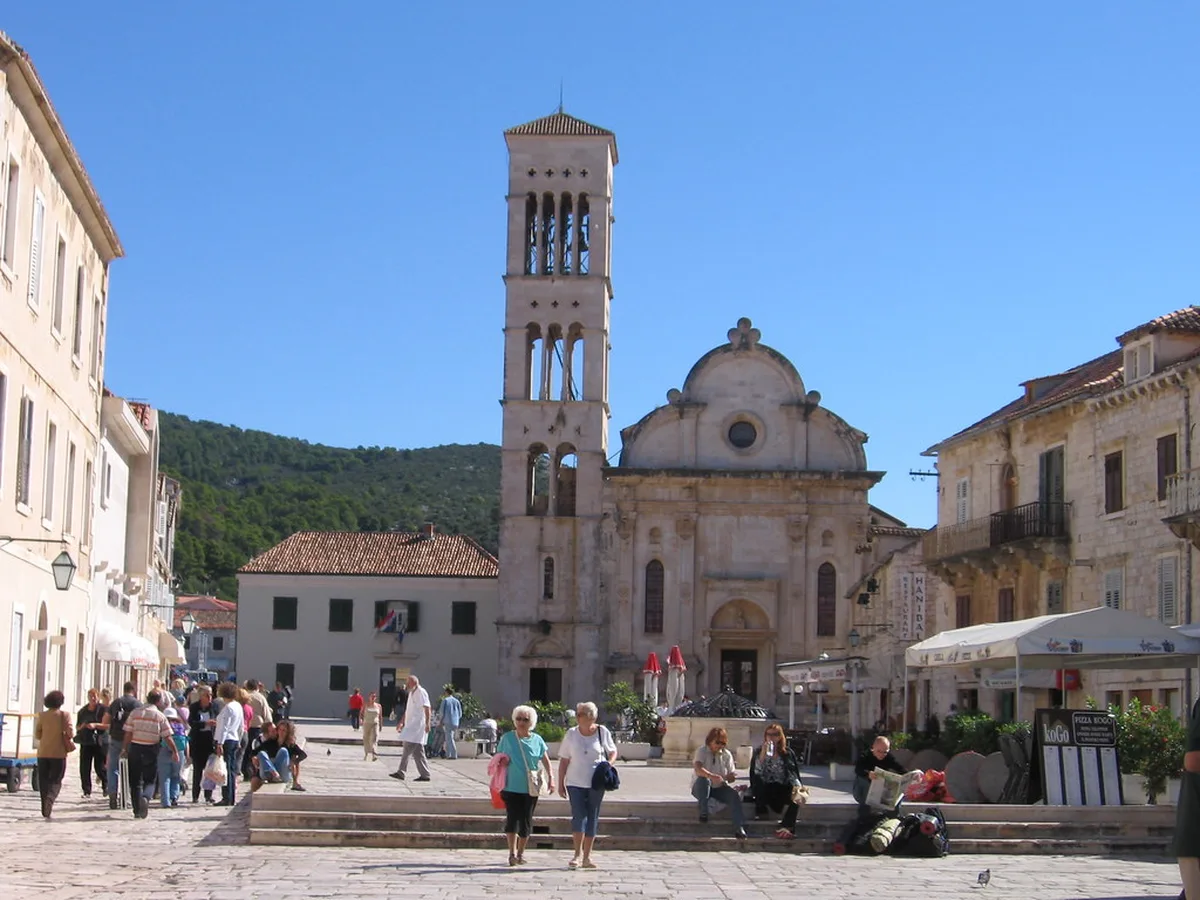
Getting there from Hvar Town is simple and cheap. Local buses operated by Autotrans depart from the main bus stop near the harbour roughly every 1–2 hours throughout the day in summer; the journey takes 25–30 minutes and costs just €3–4 each way. Alternatively, the car ferry from Split to Stari Grad runs several times daily and costs €5–8 for foot passengers — useful if you are combining this day trip with an arrival or departure from Split airport. Taxis are available for around €25–30 each way.
The old town itself is free to explore on foot. The narrow limestone streets and squares of the Dominican Monastery quarter reward slow wandering. The Tvrdalj Castle, built by the Renaissance poet Petar Hektorović in the early 16th century, is the highlight — a fortified manor with a fish pond stocked with live grey mullet, symbolic of Hektorović's philosophy of equality between peasant and nobleman. Entry costs €5 and includes access to the upper terrace with views over the rooftops.
The waterfront promenade is lined with cafés and family konobas where lunch costs far less than in Hvar Town — expect to pay €10–15 for a main course of fresh fish or lamb stew. After lunch, hire a bicycle (€10–15 per day) to cycle into the Stari Grad Plain along marked trails past vineyards and drystone walls. Several local wine producers open their cellars for informal tastings; try the indigenous Bogdanuša white grape variety unique to Hvar island.
This day trip pairs naturally with the Hvar Old Town guide for travellers who want to contrast Hvar Town's Venetian Renaissance architecture with the quieter, older Greek and Roman layers visible in Stari Grad. It is also a gap that few competing blogs highlight: most focus only on boat tours, while the island itself contains one of Croatia's richest cultural sites accessible entirely by land.
Vis Island: Hvar's Best Remote Day Trip
Vis Island is the most remote of Croatia's inhabited central Dalmatian islands and arguably the most rewarding day trip from Hvar for travellers who want to escape the summer tourist circuit. The island was closed to foreign visitors until 1989 due to its Yugoslav military role, and that enforced isolation has preserved an authenticity rarely found on busier Adriatic islands. Vineyards grow across gentle hillsides, fishing boats still outnumber pleasure craft in Komiža harbour, and the pace of island life feels genuinely slow.
From Hvar, the most practical way to reach Vis is on a group speedboat day tour that combines the island with a Blue Cave visit on Biševo. These tours cost €100–130 per person (Blue Cave entry is an additional €12–18 in cash) and depart Hvar Harbour by 09:30. The journey to Vis takes approximately 1.5 hours depending on sea conditions. Travellers who prefer independent exploration can take the Jadrolinija car ferry from Split to Vis Town (2.5 hours, €8–12 per person), then hire a local taxi or rent a scooter (€35–50 per day) to reach Komiža and the Blue Cave area — though this approach requires an overnight stay to make the logistics worthwhile.
Stiniva Cove is the island's defining natural attraction: a beach enclosed by towering vertical limestone cliffs with just a narrow opening to the sea, named Europe's best beach in 2016 by European Best Destinations. Most tours include a 45–60 minute swim stop here. The path down from the cliff top is steep and requires sturdy footwear. Snorkelling in the crystal-clear water reveals underwater rock formations and fish rarely seen near busier island beaches.
Komiža, on the western shore, is the traditional base for Blue Cave excursions. The waterfront is lined with Venetian-era stone houses, a 16th-century fortress-tower, and a string of excellent seafood taverns. A main course of grilled fish or Komiža-style fish stew (gregada) costs €15–25. Wine lovers should seek out a bottle of Vugava — an indigenous white grape grown only on Vis — which sells for €12–20 in local cellars and pairs beautifully with fresh seafood. Vis Town on the northeastern coast has wider streets, a Roman-era cemetery, and a tranquil waterfront promenade ideal for an afternoon coffee before the return boat to Hvar.
If you are staying in Hvar for a week, Vis deserves a dedicated full day rather than a rushed tour stop. The island's two settlements are different in character and worth exploring separately. The military tunnels and underground submarine pens from the Yugoslav era, located near Komiža, can be visited on a guided jeep safari tour (€45–65 per person) that also takes in Stiniva from the cliff top — a dramatically different perspective from the beach-level view that boat tour passengers get.
- Stiniva Cove
- Access: Tour boat or steep footpath from cliff road
- Best For: Swimming, cliff scenery, photography
- Tip: Wear water shoes on the rocky beach entry
- Komiža Village
- Highlight: Venetian fortress, waterfront taverns, Vugava wine
- Lunch Budget: €15–25 for fresh fish
- Distance from Vis Town: 10 km (20 min by taxi)
- Speedboat Tour Cost (from Hvar)
- Group Tour: €100–130 per person (Blue Cave + Vis combo)
- Vis-only transfer: €15–20 per person (speedboat, no cave)
- Cave Entry: €12–18 extra, cash only
How to Choose the Best Hvar Boat Tour
Choosing the right tour type can make a significant difference to your day on the water. Group speedboat tours are the most popular choice for solo travellers and couples because they are budget-friendly, socially enjoyable, and include a well-tested multi-stop itinerary. In 2026, standard group tours to the Blue Cave, Vis, and Pakleni Islands typically cost €100–130 per person and depart from Hvar Harbour. Most operators include snorkelling gear and a guide; some include lunch or a seafood snack stop, so read the tour description carefully before booking.
Private boat hire offers the ultimate flexibility and is often excellent value for groups of four or more. A private speedboat rental in 2026 starts at around €350–500 per day excluding fuel, which typically adds €50–100 depending on the route. With a private boat you can linger longer at Stiniva Cove, skip the Blue Cave queue by timing your arrival at the quieter early-morning window (before 10:30), and detour to secluded bays not on any standard itinerary. A licensed skipper can be added for €100–150 per day if you are not comfortable navigating alone.
Self-drive boats are available in Hvar Town for those who want to explore the Pakleni Islands independently on a relaxed schedule. Small 5–8 horsepower dinghies do not require a boat licence and rent for €60–90 per half day. These have limited range and speed, making them suitable only for the Pakleni Islands group — do not attempt to reach Brač or Vis on a self-drive dinghy. Always check the maritime weather forecast (hr.windy.com is widely used) before setting out, as the afternoon Maestral wind can build quickly and make the return crossing choppy.
A third option worth considering is the scheduled catamaran network. Krilo and Jadrolinija both operate passenger catamarans connecting Hvar, Split, Bol (Brač), Korčula, Vis, and beyond. For day trips to Brač or Korčula, the catamaran is often the most cost-effective choice, with tickets at €7–20 per person versus €100+ for a tour. The trade-off is that you are responsible for your own time management and activity bookings at the destination. Our Split 3-day itinerary includes further notes on ferry connections across the region.
Frequently Asked Questions
What is the best month for day trips from Hvar?
June and September are the best months for island hopping from Hvar because the weather is warm (24–27°C), the sea is calm, and summer crowds have not yet peaked or have already thinned. Boat tours run on full schedules from late May through early October. July and August have the most frequent ferry connections but also the longest queues at the Blue Cave and the highest prices — catamaran tickets cost around 20–30% more in peak season than in shoulder months.
How much does a Blue Cave tour from Hvar cost in 2026?
A standard group speedboat tour to the Blue Cave from Hvar costs €100–130 per person in 2026. This price includes the boat ride, fuel, guide, and snorkelling gear. The cave entry ticket is an additional €12–18 paid in cash at Biševo Island — bring exact change. Private speedboat hire for the same route starts at €350–500 per boat per day, making it cost-effective for groups of four or more.
Can I visit the Blue Cave and Vis Island in one day from Hvar?
Yes, most organised tours combine the Blue Cave on Biševo with several stops on Vis Island in a single day. A typical itinerary visits the Blue Cave (10–15 min inside), Stiniva Cove for swimming (45–60 min), and the fishing village of Komiža for lunch and sightseeing (60–90 min). Tours depart Hvar around 09:30 and return by 18:00–19:00, giving approximately eight hours of travel and exploration.
How do I get from Hvar to Brač Island for a day trip?
The easiest route is the Krilo fast catamaran from Hvar Town directly to Bol on Brač, which takes 50–60 minutes and costs €7–10 per person one-way in 2026. Two departures run daily in summer. Alternatively, take a local bus from Hvar Town to Stari Grad (25–30 min, €3–4) and then the Jadrolinija car ferry from Stari Grad across to Supetar on Brač (50 min, €4–6), followed by a bus to Bol (50–60 min, €4). The direct catamaran is far simpler for a day trip.
Is it possible to take a ferry from Hvar to Dubrovnik for a day?
A day trip from Hvar to Dubrovnik is not recommended. The catamaran journey takes over three hours each way, leaving fewer than four hours of sightseeing time in Dubrovnik — not enough to do the walled city justice. Travel costs for the round trip run €40–60 per person. Dubrovnik is far better experienced as a separate multi-day visit. See our Dubrovnik Old Town guide for planning a dedicated stay.
What is the best budget day trip from Hvar?
The Pakleni Islands are the best value day trip from Hvar. A water taxi to Jerolim costs just €5 one-way, the nudist beach is free, and you can bring your own food and drink. For a slightly longer excursion on a budget, the bus to Stari Grad costs €3–4 each way and the UNESCO-listed old town is free to walk around. The Tvrdalj Castle charges just €5 entry. Both options keep your total spend well under €20 for the day.
Taking day trips from Hvar is the best way to experience the full breadth of the Dalmatian coast. Whether you prefer the social vibe of the Pakleni Islands, the wonder of the Blue Cave, the world-famous sands of Zlatni Rat, the culture of Korčula, or the quiet UNESCO heritage of Stari Grad, there is an excursion for every type of traveller and budget.
Remember to book your boat tours or catamaran tickets at least a few days in advance during July and August — popular tours sell out quickly and catamaran seats are limited. Pack essentials including water, a light waterproof layer for the boat ride, and reef-safe sun cream. Croatia's Adriatic waters are ecologically sensitive, so choose mineral-based sunscreen rather than chemical formulas.
Always listen to local skippers regarding sea conditions — afternoon winds on the Hvar Channel can build to 25 knots or more, making the return crossing rougher than expected. For the latest ferry timetables and live booking, visit the Krilo and Jadrolinija websites directly. Start planning your 2026 island-hopping adventure today for the best availability and prices, and pair your excursions with our Split 3-day itinerary for a complete Central Dalmatia experience.