The Complete Hvar Old Town Guide for Travelers
Hvar Old Town centers on St. Stephen's Square (Pjaca), the largest square in Dalmatia — entry to the Cathedral is free, the Spanish Fortress (Španjola) costs €6 in 2026, and the Franciscan Monastery charges €4.
The fastest way to reach Hvar Old Town from Split is the high-speed catamaran (€15–18 return, 1 hour each way); the historic center is fully car-free, so all sightseeing is on foot from the harbor.
Welcome to the sunniest spot in Hvar where ancient stone walls meet the turquoise Adriatic Sea. Hvar Town blends centuries of history with a vibrant modern energy that attracts travelers from across the globe. This Hvar old town guide helps you navigate the marble streets and discover the most enchanting hidden courtyards.
Walking through the historic center feels like stepping back into the era of Venetian rule. You will find grand palaces sitting alongside humble stone houses that have stood for hundreds of years. The scent of lavender often fills the air as you wander past local markets and artisan stalls.
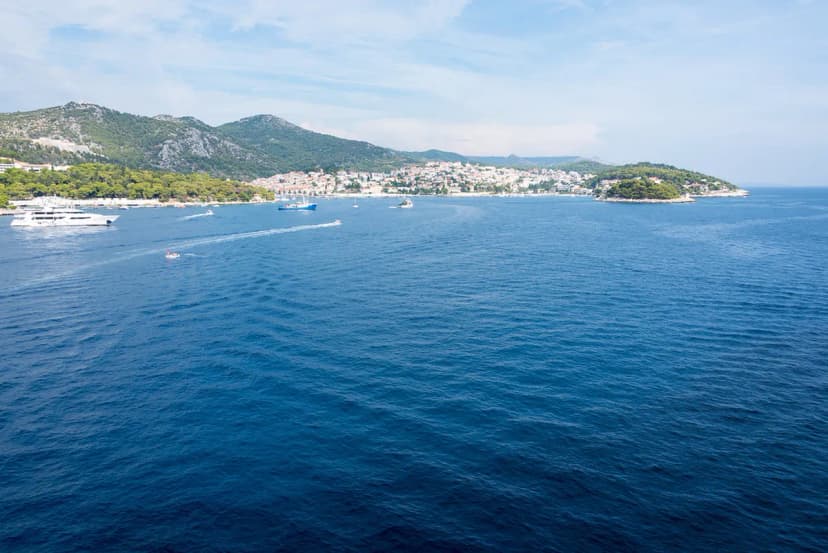
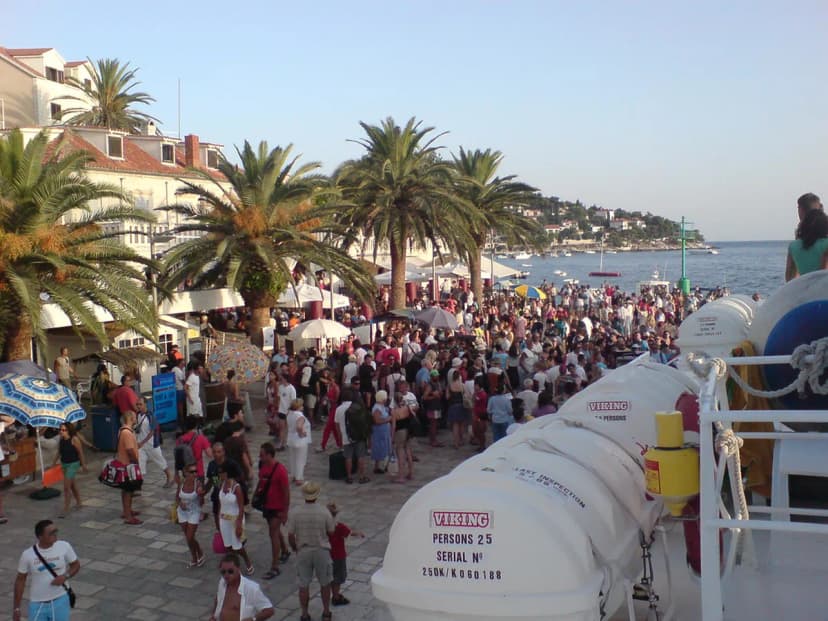
Planning your visit requires a bit of local knowledge to avoid the busiest crowds and highest prices. Most visitors arrive by ferry and are immediately struck by the beauty of the harbor and the fortress above. This guide provides the practical details you need for a seamless and memorable Mediterranean escape in 2026.
St. Stephen's Square and Cathedral: The Social Heart of Hvar
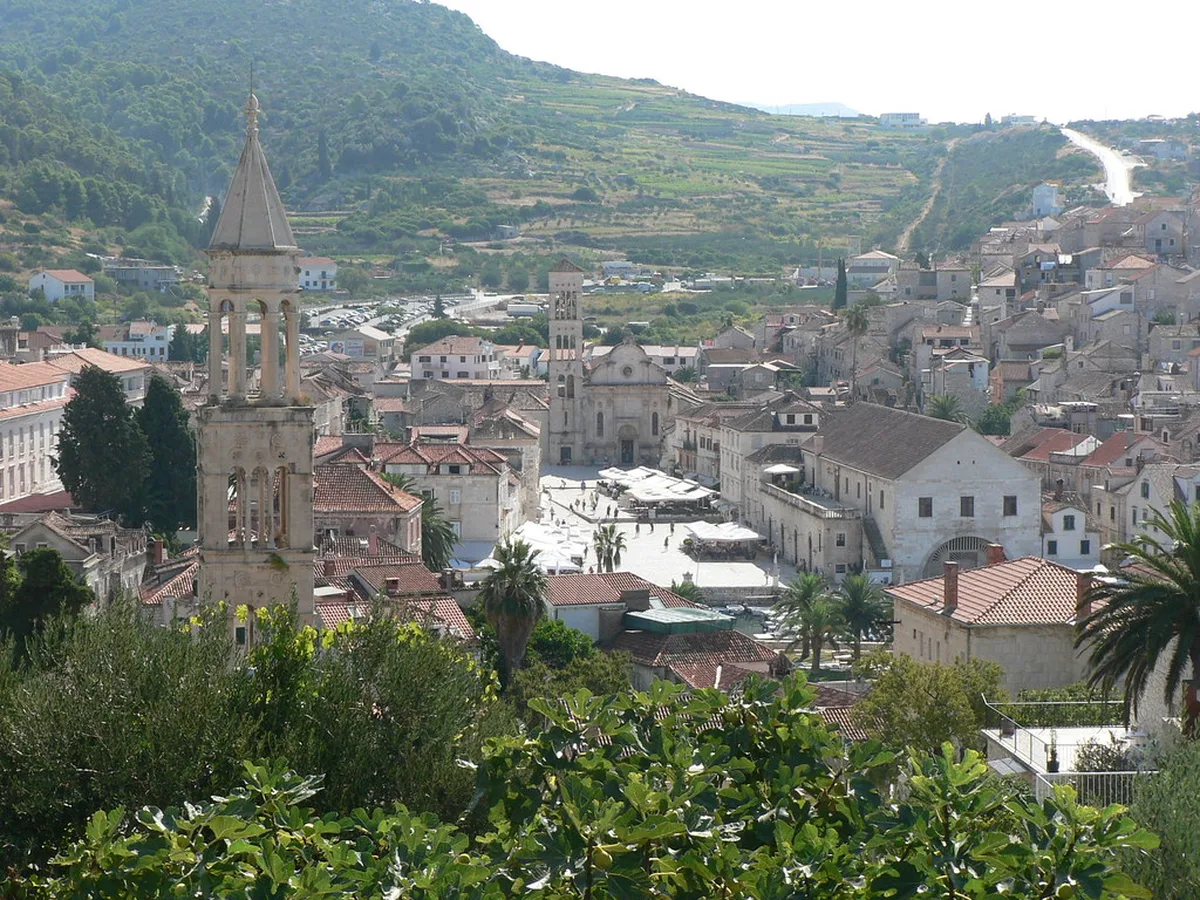
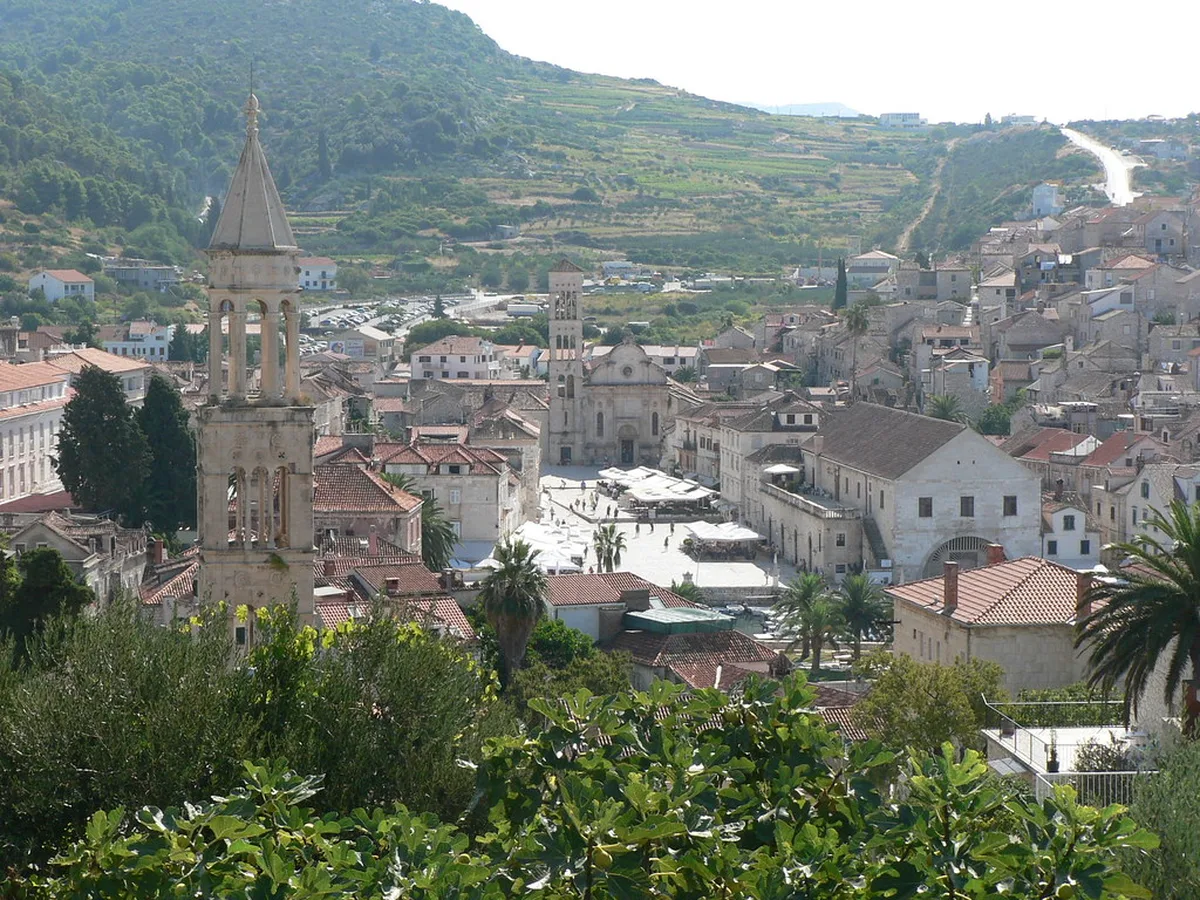
St. Stephen's Square — locally called Pjaca — is the largest town square in all of Dalmatia, stretching roughly 4,500 square meters from the 16th-century Arsenal at the western end to the Cathedral of St. Stephen at the eastern end. Its smooth limestone paving stones have been worn to a high polish by centuries of foot traffic, and on a sunny morning in 2026 they seem to glow white against the deep blue harbor behind you. This is the natural starting point for any visit to Hvar Old Town: every major sight either faces the square or lies within a five-minute walk of it.
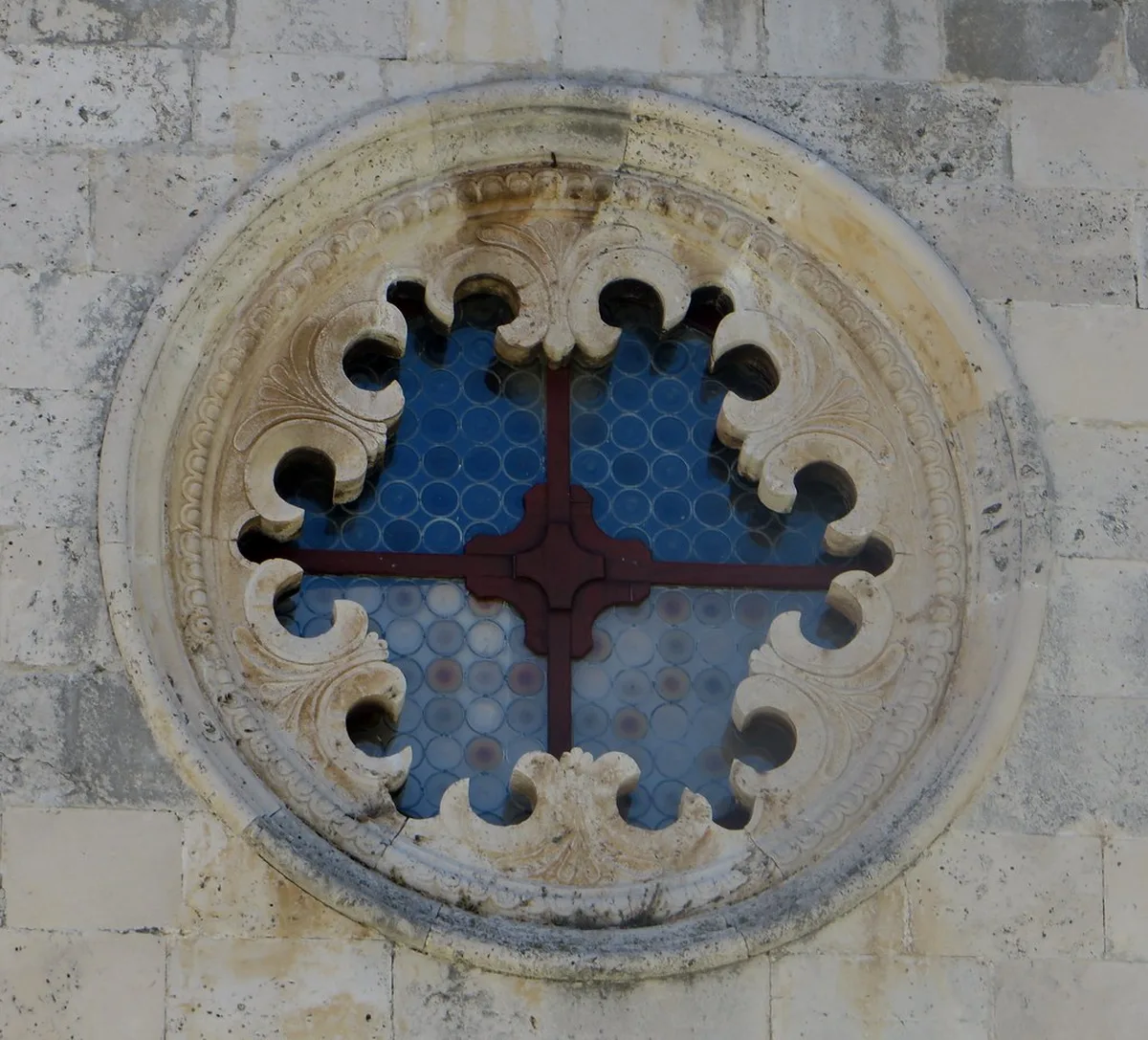
The Cathedral of St. Stephen itself is free to enter and open daily, though opening hours narrow in winter to roughly 8 AM–12 PM. The interior holds Renaissance-era religious paintings, a Baroque choir loft, and a polyptych altarpiece attributed to Francesco da Santacroce. The four-story Venetian bell tower beside the cathedral was added in stages between the 13th and 17th centuries and remains the most photographed structure in Hvar. Dress modestly — covered shoulders and knees — as a sign of respect, and leave bags at the door rack.
Adjacent to the square stands the Arsenal, one of the most historically significant civic buildings in the eastern Adriatic. Built in the early 17th century to house the Venetian war galley, it was later converted into a communal theatre in 1612 — making it one of the oldest municipal theatres in Europe and the first public theatre on Dalmatian soil, predating many famous venues on the mainland. The exterior walls with their distinctive Renaissance arched openings are free to photograph from the square; guided interior visits are sometimes available through the local tourist board for €3–5.
Morning — before 9 AM — is the best time to experience the square without tour groups. Grab a coffee at one of the cafe tables ringing the perimeter and watch the town wake up as the sun creeps over the ridge behind the fortress. A standard latte or espresso costs €3–4 at backstreet cafes and €4–6 at square-facing venues in 2026. The premium is real but the front-row seat to Venetian architecture makes it worthwhile for one morning.
As evening approaches, the Pjaca undergoes a transformation from history lesson to open-air lounge. Street performers often appear after 8 PM, families promenade in the Croatian tradition of the korzo, and the ambient light from surrounding restaurants creates a warm atmosphere that feels quintessentially Mediterranean. It is the perfect place to sit and absorb the rhythm of the town before deciding where to have dinner.
Climbing to the Spanish Fortress for Scenic Views
Hvar Fortress — widely called the Spanish Fort or Fortica — is a 16th-century defensive citadel perched 100 meters above the old town on a limestone ridge. Built between 1278 and 1551 under Venetian supervision and reinforced by Spanish engineers during conflicts with Ottoman forces, it remains in excellent preservation and commands the most spectacular panoramic view on the island. Entry costs €6 per adult in 2026, making it one of the best-value attractions on the Croatian coast for the experience it delivers.
The hike from St. Stephen's Square takes approximately 30 minutes via the well-signed stone stairway that winds upward through fragrant Mediterranean scrub. The path passes through the Groda residential quarter and alongside terraced gardens planted with agave, rosemary, and wild lavender. The ascent is steady but not technically challenging; bring water because there is no shade on the upper section and summer temperatures frequently exceed 32°C by mid-morning. Wear closed-toe shoes — the limestone can be sharp underfoot in places.
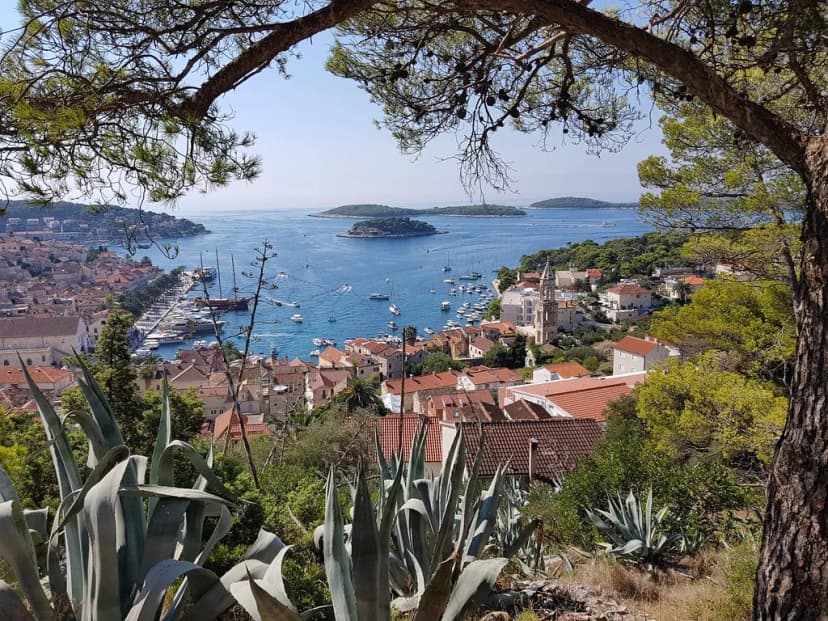
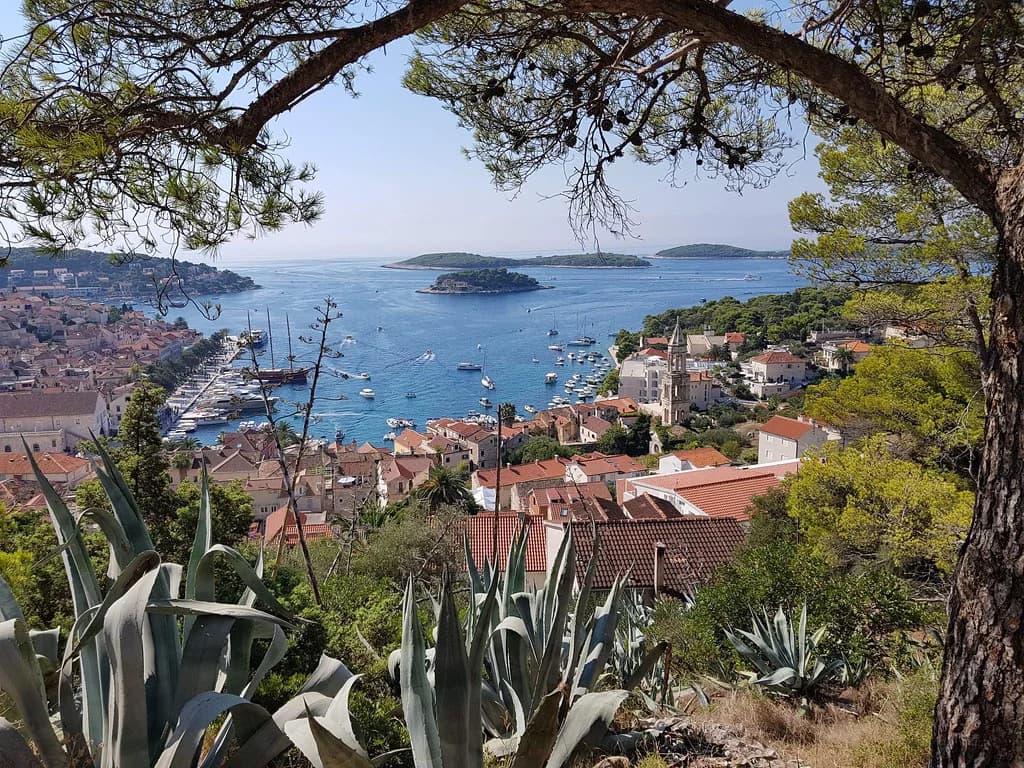
Once inside the fortress walls you can explore the old dungeons, where a rotating exhibition of ancient Greek and Roman amphorae recovered from underwater sites near the Pakleni Islands is displayed. The bastions above offer 360-degree views: to the south the Pakleni Islands scatter across the Adriatic like stepping stones, to the north the Stari Grad Plain stretches inland (itself a UNESCO World Heritage Site), and directly below the red-roofed medieval town unfolds in perfect miniature. This is the definitive sunset vantage point for Hvar — arrive 45 minutes before dusk to claim a spot on the western rampart.
A small cafe inside the fortress serves cold drinks, local beer (€4–5), and light snacks. Prices are higher than in town, as is to be expected at altitude, but stopping for a cold water or lemonade before the descent is genuinely necessary in July and August. Most visitors spend between 45 minutes and 90 minutes exploring the various levels, depending on how long they linger on the view terraces.
Descending from the fortress is considerably easier and offers different angles on the city below. Follow signs toward the Groda district to pass through some of the oldest residential lanes in the old town. This route takes you past quiet Baroque chapels, hidden garden walls draped in bougainvillea, and small artisan workshops that many visitors overlook. Combining the fortress with a walk through Groda makes for a cohesive two-to-three hour morning itinerary before the afternoon heat sets in.
Navigating the Hidden Backstreets of Groda
Stepping away from the harbor reveals a maze of narrow stone corridors and steep stairways in the Groda quarter — the oldest residential district of Hvar Old Town, settled since at least the 13th century. This is where the city's Venetian aristocracy built their palaces, where fishermen stored their nets behind low stone doors, and where, quietly today, local families still hang laundry between windows just as they have for centuries. Walking here is a deliberate act of getting slightly lost, and the reward is an authenticity that the waterfront's polished restaurants cannot replicate.
One of the most remarkable stops in Groda is the Benedictine Convent, tucked behind an unassuming door on a narrow lane. The nuns who live here maintain a centuries-old tradition of weaving intricate lace from the fibers of the agave plant — a craft unique to Hvar that UNESCO inscribed on its list of Intangible Cultural Heritage in 2009. Visiting the small exhibition room is free; donations are welcomed. The lace pieces for sale — bookmarks, small wall hangings, and decorative edgings — range from €15 to €80 and make genuinely meaningful souvenirs crafted by hand over dozens of hours.
A short walk from the convent brings you to the Franciscan Monastery, founded in 1461 at the eastern edge of the old town on a small promontory above the harbor. Entry costs €4 in 2026 and includes access to the Gothic cloister, a small museum of liturgical objects, and — most impressively — a monumental Last Supper painting attributed to Matteo Ingoli, measuring approximately four meters across and displayed in the refectory. Art historians consider it one of the finest Renaissance works on the Dalmatian coast. The cypress garden beside the cloister offers another quiet panorama of the harbor below.
The architecture throughout Groda shows heavy Venetian influence: ornate balcony brackets, carved window moldings with Venetian Gothic arched tops, and coats of arms belonging to noble families embedded above doorways. Many of these buildings retain their original Renaissance fabric and have never been formally restored, which gives the district a raw, unvarnished character. You will also find small galleries in unexpected corners showcasing the work of contemporary Croatian artists, with original paintings starting around €50–150.
Finding your way through Groda can be disorienting in the best possible sense. Most alleys eventually descend back to the main square or the harbor front. If you want a quieter photograph, these streets offer atmospheric light filtering through narrow building gaps that the main tourist areas simply cannot match. The key rule: be mindful of noise levels. Local residents live in these ancient houses and appreciate visitors who treat the neighborhood as a living community rather than an outdoor museum.
After exploring the backstreets, consider pairing the experience with day trips from Hvar to the Pakleni Islands or Stari Grad. Boats depart from the harbor just minutes from Groda, and many travelers combine a morning in the old town with an afternoon snorkeling or visiting a konoba on one of the nearby islands.
Dining and Nightlife in the Historic Center
Food lovers will find many konobas — traditional Dalmatian taverns — tucked into the stone walls of the historic center. These family-run restaurants serve fresh seafood caught by local fishermen that morning, and the quality difference between the harbor-front tourist traps and a genuinely local konoba two streets back is significant. Prices at quality local spots in 2026 run €12–20 for a fish main course in the backstreets and €25–45 at waterfront restaurants with views of the square. Both are justifiable depending on what you are prioritizing.
Signature dishes to order include Hvarska Gregada — a traditional white fish stew slow-cooked with potatoes, onions, olive oil, and local white wine in a clay pot. This dish represents the soul of Dalmatian coastal cooking and is almost impossible to find well-prepared outside the island. Pair it with a glass of Bogdanuša or Pošip, two indigenous white grape varieties grown on the Stari Grad Plain just 20 kilometers away. A glass of local wine costs €4–7 at most konobas; a half-liter carafe runs €10–15. Reservations are strongly recommended from June through September; most restaurants open for dinner from 6 PM onward and fill completely by 8 PM.
Hvar's nightlife is among the most famous on the Adriatic, and the old town is its epicenter after 10 PM. The crowd that descended on the beaches in the afternoon reconvenes on the waterfront promenade and gradually migrates to the bars tucked into the alleys behind. The long-running Carpe Diem Bar on the harbor is the best-known name and operates both a harbor-front terrace and a beach club on a nearby Pakleni island. Entry to the bar itself is free before midnight; a cocktail costs €10–15 in 2026. Their island beach club charges €10 for the boat transfer and entry, which includes a welcome drink on busy weekends.
For a more relaxed evening, the restaurants and wine bars in the upper Groda district stay quieter than the waterfront until well past midnight. Cocktail lounges along the main promenade open around 8 PM and serve until 2–3 AM during summer. If you prefer a peaceful dinner over the party scene, eating early (6–7 PM) before the nightlife crowd arrives gives you access to outdoor tables and attentive service. Some smaller spots still accept cash only, so keep €20–30 in coins and small notes as backup even though Croatia joined the Eurozone in January 2023 and card acceptance has improved significantly.
Benedictine Lace, the Franciscan Monastery, and Cultural Highlights
Beyond the fortress and the square, Hvar Old Town holds a remarkable concentration of cultural heritage that many visitors miss because it is quieter and less photogenic than the harbor views. Two sites in particular stand out as genuine highlights with real historical weight: the Benedictine Convent and the Franciscan Monastery. Both are within a ten-minute walk of St. Stephen's Square and together represent a morning of extraordinary cultural density for a combined entry cost of just €4 (Franciscan Monastery only; the Benedictine Convent is free to visit).
The Benedictine Convent on the upper lanes of Groda has been continuously inhabited by a small community of cloistered Benedictine nuns for centuries. Their primary occupation — the reason the convent draws visitors from across Europe — is the production of agave lace, known locally as čipka od agave. Unlike conventional lace made from thread, this technique uses the fibers drawn from the leaves of the agave plant, dried and worked into intricate geometric patterns that are then stitched into finished pieces. The process is extraordinarily time-consuming: a single bookmark can take 20–30 hours of work. UNESCO recognized this tradition in 2009 as an element of the Intangible Cultural Heritage of Humanity, and it is unique to the island of Hvar. Visiting costs nothing; there is a small room where finished pieces are displayed and sold, with prices ranging from €15 for small bookmarks to €80 for larger decorative panels. Photography is not permitted inside the convent itself out of respect for the community.
The Franciscan Monastery, founded in 1461 by the Franciscan friar Bartolomej Tustić on a promontory east of the main harbor, is one of the best-preserved monastic complexes on the Adriatic. The €4 entry in 2026 covers the Gothic cloister with its ancient cypress tree — said to be over 300 years old — the small museum of Graeco-Roman archaeology, and the refectory, which houses the centerpiece of the collection: the Last Supper, a monumental oil painting approximately 4 meters wide attributed to the Venetian painter Matteo Ingoli (c. 1590–1631). The painting fills an entire wall of the old refectory and depicts the Biblical scene with a dramatic use of chiaroscuro that reflects the influence of Veronese. Art historians consider it one of the finest Venetian-influenced Renaissance works on the entire Dalmatian coast. The monastery garden also offers a serene view of the harbor and a rare moment of quiet in a town that gets very loud by midday in summer.
Other smaller cultural highlights worth noting: the Church of the Holy Spirit near the main square has a free exterior courtyard with carved Gothic relief work worth five minutes of attention. The Hvar Heritage Museum (Muzej hvarske baštine) on the ground floor of the Arsenal building charges a small entry fee of around €3–4 and holds Greek artifacts from the island's ancient settlement at Pharos, 4th-century BC pottery, and coins that contextualize just how long this island has been inhabited and fought over. Combined with the Franciscan monastery, these two museum stops give you a complete arc from ancient Greek colonization through Venetian Renaissance rule — all within the old town's compact perimeter.
Essential Logistics for Your Hvar Old Town Visit
The historic center of Hvar is an entirely pedestrian zone, which is both its charm and its logistical reality. Every sight requires walking on limestone and marble streets that become slippery when wet or worn smooth. If you have mobility concerns, the flat area around St. Stephen's Square and the harbor promenade is accessible; the fortress hike, Groda backstreets, and Franciscan Monastery promontory all involve significant stairs or inclines. Plan accordingly and wear rubber-soled closed-toe shoes regardless of the season.
The two main ferry options in 2026 are the high-speed Jadrolinija catamaran from Split (€15–18 return, 1 hour) and the slower car ferry from Drvenik to Sućuraj on the eastern tip of the island (€10–14, 35 minutes), which requires a car or bus to reach Hvar Town. For most travelers without a car, the Split catamaran is the correct choice. It deposits you directly at the town harbor, 200 meters from the main square. For the beach guide and information on coastal spots near the town center, see the Hvar beach guide.
Luggage storage is available near the ferry terminal for €5–8 per bag per day, making Hvar practical as a day trip from Split for those who do not want to carry bags all day. Public restrooms are located near the bus station and ferry terminal for a small coin fee (€0.50–1.00). ATMs are clustered around the main square; Croatia has used the Euro (€) since joining the Eurozone in January 2023, so there is no currency exchange needed for EU travelers. Card acceptance is now widespread even in smaller konobas, though it is worth keeping €20 in cash for market stalls and public facilities.
The peak season runs from mid-June through August, with July and August bringing the highest temperatures (often 34–38°C) and the largest crowds. Visiting in May, early June, or September provides a significantly better experience: restaurant reservations are easier, accommodation prices drop by 20–40%, and the old town's narrow streets are actually navigable without shuffling through crowds. Many shops and restaurants close or reduce hours from November through March, though the town is genuinely beautiful in winter for those who enjoy seeing a historic center without any tourists.
- Arriving by High-Speed Catamaran
- Type: public transport
- Best for: quick access from Split
- Where: main harbor, 200m from Pjaca
- Cost: €15–20 one-way (2026)
- Luggage Storage Near the Port
- Type: storage service
- Best for: day trippers from Split
- Where: ferry terminal building
- Cost: €5–8 per bag per day
- Visiting During the Shoulder Season
- Type: travel timing
- Best for: avoiding crowds and high prices
- Where: entire old town
- Cost: 20–40% lower accommodation rates
- Footwear for Limestone Streets
- Type: packing tip
- Best for: safety on slippery marble
- Where: all of the old town
- Cost: free advice, important at fortress
Frequently Asked Questions
Is Hvar Old Town expensive for a day trip?
Hvar is one of Croatia's most expensive destinations. In 2026, expect to pay €15–25 for lunch at a mid-range konoba and €25–45 for dinner at a waterfront restaurant. Drinks on St. Stephen's Square cost €4–6 for coffee and €12–18 for cocktails at the most popular bars. You can reduce costs significantly by eating at backstreet konobas (€10–15 for a fish main course) and buying groceries at the small supermarket two streets behind the harbor.
How much time do I need in Hvar Old Town?
One full day covers the main sights: St. Stephen's Square and Cathedral (free, 45 min), the Spanish Fortress (€6, 30-min hike + 1 hr inside), the Franciscan Monastery (€4, 45 min), and a walk through the Groda backstreets (1 hr). Two or three nights lets you add boat trips to the Pakleni Islands and experience the famous evening nightlife on the waterfront.
Are cars allowed inside the Hvar historic center?
No. Hvar Old Town is a car-free pedestrian zone. Visitors arriving by car must park in designated lots on the edge of town (€5–10 per day) or leave their car in Split and take the catamaran. The historic center's narrow marble streets and steep stairways make vehicle access impossible in the central lanes regardless of official rules.
What is the best month to visit Hvar Town?
June and September offer the best balance of warm weather (24–27°C), manageable crowds, and reasonable accommodation prices. May is quieter still and beautiful for seeing the island's lavender in bloom. July and August bring peak heat (34–38°C), intense crowds on the square, and restaurants booked solid weeks in advance — manageable but requiring more planning and higher budgets.
Does Croatia use euros? How should I handle money in Hvar?
Yes. Croatia joined the Eurozone on 1 January 2023 and the official currency is the Euro (€). Card payments are widely accepted in Hvar restaurants, hotels, and most shops. Keep €20–30 in cash for market stalls, the Benedictine Convent donation box, public restroom fees (€0.50–1.00), and any small vendors without card readers. No currency exchange is needed for travelers from Eurozone countries.
What is the Benedictine Convent lace in Hvar and is it worth visiting?
The Benedictine Convent in Groda is home to nuns who weave agave-fiber lace — a UNESCO-recognized craft unique to Hvar island. The visit is free and takes about 20 minutes. A small room displays and sells finished lace pieces ranging from €15 (bookmarks) to €80 (decorative panels). It is one of the most genuinely distinctive cultural experiences in the old town and almost entirely overlooked by mass tourism, making it a highlight for travelers who seek depth over crowds.
Hvar Old Town's Lavender and Local Food Scene
Hvar island has been synonymous with lavender since at least the 19th century, when farmers on the Stari Grad Plain began cultivating the herb commercially after phylloxera devastated the island's vineyards. Today lavender remains woven into the identity of Hvar Old Town in ways both practical and sensory: you will smell it before you see it, drifting from small market stalls on the harbor promenade and from the perfume shops tucked into arched Venetian doorways along Groda. The best lavender products — essential oil, dried sachets, soaps, and honey — come directly from island farmers. Look for vendors selling from small crates without professional packaging; a 10ml bottle of pure lavender essential oil pressed from local fields costs €8–15 at these stalls versus €20–30 at the polished tourist boutiques fronting the square.
The connection between lavender and food in Hvar is real and deeply local. Several konobas incorporate lavender into desserts: lavender-infused panna cotta, honey drizzled with a sprig of dried lavender, and in a few places a lavender-scented rakija (a grape-based spirit) served as a digestif. The lavender honey produced on the island carries a distinctly floral quality that is unlike any you will find on the mainland. A 250g jar costs €10–15 at market stalls and makes an excellent lightweight gift that travels well.
Beyond lavender, the food scene of Hvar Old Town in 2026 rewards explorers willing to walk two or three streets back from the harbor. Konoba Menego on Groda hill is consistently recommended by residents for its cold plate of traditional Dalmatian appetizers — prsut (air-dried ham), sheep's cheese, olives, and capers — at €12–18 per person. Konoba Luviji and the cluster of small restaurants around the Arsenal offer similar price ranges for grilled fish of the day, typically served whole with blitva (Swiss chard sautéed in garlic and olive oil) for €16–24 per plate. These are full-service traditional meals, not tourist set menus.
Wine is serious business on Hvar. The Stari Grad Plain — just 20 kilometers from the old town — is one of the few continuously cultivated agricultural landscapes in the world and a UNESCO World Heritage Site. The wine grown there, primarily Bogdanuša and Plavac Mali, is rarely exported and must be drunk on the island to experience it at its best. A tasting at a family winery on the plain costs €10–20 per person and is easily combined with a day trip from Hvar Town; taxis to Stari Grad run €20–30 each way. Several wine shops in the old town stock local bottlings for €10–20 per bottle — far more interesting and reasonably priced than the imported wines on restaurant lists.
For travelers who want to explore the broader culinary culture of the Croatian coast alongside Hvar, the Split Old Town guide covers the city's market culture at Pazar — the open-air daily market beside Diocletian's Palace where producers from Hvar's Stari Grad Plain sell directly to Split residents every morning. Pairing a day in Hvar with a morning at Split's market creates a full picture of Dalmatian food culture in a single trip. Day trippers from Split can reach Hvar by the morning catamaran, spend the day exploring the old town and its food stalls, and return by the early evening sailing.
The local food scene peaks in June and early September when the heat is manageable and produce is at its best. August brings the highest prices and limited reservation availability at the most popular konobas — always book a full day in advance for the better-known spots. Traveling in May offers the additional bonus of seeing the lavender in early bloom, with the fields on the Stari Grad Plain just beginning to show color before the main tourist influx arrives. This combination of cultural richness, genuine local flavors, and the landscape of lavender makes Hvar's food scene one of the most distinctive on the entire Adriatic.
Hvar Old Town remains one of the Adriatic's finest historic destinations, combining Venetian architecture, UNESCO-recognized crafts, world-class dining, and legendary nightlife within a compact, walkable perimeter. Whether you spend one morning here or three full days, the marble streets and limestone hills leave an impression that is genuinely hard to find elsewhere on the Croatian coast.
The key to a rewarding visit in 2026 is to go beyond the main square. The Spanish Fortress at €6 delivers views worth ten times the entry fee. The Franciscan Monastery's monumental Last Supper painting is one of the finest Renaissance works in Croatia. The Benedictine nuns weaving agave lace in Groda represent a living tradition that has survived wars, empires, and tourism. These are the experiences that stay with you after the sunburn fades.
For planning your wider island itinerary, the day trips from Hvar guide covers boat trips to the Pakleni Islands, Stari Grad Plain, and mainland excursions back to Split. Pack comfortable shoes, book your ferry in advance for July and August, and give yourself at least one full day — ideally two — to let the old town reveal itself at its own pace.