The Ultimate Gothenburg Old Town Guide for History Lovers (2026)
Gothenburg's historic Haga district has cobblestone streets, Swedish cinnamon buns (kanelbullar) at Haga Bakery for SEK 45–60, and 19th-century wooden buildings; the Gothenburg Museum of Art is free on Thursdays 5–9 PM in 2026.
Liseberg amusement park (open May–September) costs SEK 195 entry plus ride passes from SEK 385; the Gothenburg Botanical Garden is free year-round; city trams run every 6–10 minutes and cost SEK 30 per journey with the Västtrafik app.
Gothenburg offers a unique blend of coastal charm and deep-rooted history. This Gothenburg old town guide focuses on the cobblestone streets of Haga and the grand architecture of Indre Staden. Exploring these districts allows you to see the city as it existed centuries ago. Travelers often find that the historic center provides a peaceful escape from modern urban life.
Visitors can wander through narrow lanes lined with 19th-century wooden buildings and quiet courtyards. These areas house some of the best cafes and independent boutiques in Western Sweden. Planning your route carefully ensures you do not miss the hidden gems tucked away from main roads. The city is easy to navigate on foot if you know where to look.
Exploring Haga: The Heart of the Historic District
Haga remains the most iconic part of the city for travelers seeking a traditional Swedish atmosphere. Its main street, Haga Nygata, features original landshövdingehus houses with stone ground floors and wooden upper stories. Walking through this neighborhood feels like stepping back into the mid-1800s. You will find a wide variety of day trips from Gothenburg that depart from nearby Järntorget square, making Haga a natural starting point for any visit.

Most shops in Haga open around 10:00 AM and close early in the evening, typically by 6:00 PM on weekdays and earlier on Sundays. The district was once a working-class suburb but now serves as a hub for local artisans, independent boutiques, and specialty food purveyors. Many visitors enjoy browsing for handmade clogs, soaps, and vintage clothing in the small storefronts that line Haga Nygata. Crowds tend to peak on Saturday afternoons when locals head out for their weekend strolls and fika rituals.
Quiet side streets offer a more authentic look at residential life in the old town. Look for the Skansen Kronan fortress, which sits on a hill overlooking the Haga district at Risåsberget. Built in 1697 as part of the city's coastal defense system, the fortress has remarkably thick stone walls and a commanding position above the rooftops. The climb involves several steep steps but rewards you with panoramic views of the red-tiled roofs and the harbor beyond. Entry to the outdoor grounds is free and provides excellent photo opportunities, especially in the golden light of early morning.
The Rosenlund neighborhood borders Haga to the southeast and connects the historic district to the canal network. Here you will find the Haga Church (Hagakyrkan), a red-brick Neo-Romanesque building completed in 1859 that is still an active parish. The church is open to visitors on weekday mornings and admission is free. Just east of the church, Haga Kyrkoplan square hosts a small weekend market from April through October where local producers sell honey, jams, and handmade leather goods. Prices at the market are typically SEK 50–150 per item, making it a good spot for affordable souvenirs compared to the tourist-facing shops on Haga Nygata.
- Haga Nygata Pedestrian Street
- Type: Shopping street
- Best for: Local crafts, hagabulle stops, and street photography
- Where: Central Haga
- Cost: Free access
- Skansen Kronan Fortress
- Type: Historic site
- Best for: City views and fortress architecture
- Where: Risåsberget hill above Haga
- Cost: Free grounds access year-round
- Feskekörka Fish Church
- Type: Indoor fish market
- Best for: Fresh seafood and local atmosphere (open Tue–Sat)
- Where: Rosenlundskanalen, 10 min walk from Haga
- Cost: Free to enter; seafood purchases from SEK 80
The Feskekörka — literally "fish church" — is one of Gothenburg's most distinctive institutions. Built in 1874 and shaped like a Gothic chapel, this indoor fish market has served locals for over 150 years. It opens Tuesday through Saturday, with morning hours roughly 9:00 AM to 5:00 PM (check current hours at the official website as they vary seasonally). Vendors sell freshly caught North Sea fish, prawns, smoked salmon, and pickled herring from open stalls. A cone of North Sea prawns costs around SEK 120–160 depending on the stall. Entry is free, making it a worthwhile cultural stop before continuing toward Haga Nygata.
Historical Landmarks of Indre Staden
The inner city area, known as Indre Staden, contains the oldest standing structures in Gothenburg. Kronhuset is the city's oldest secular building and dates back to the mid-17th century, completed around 1654. It originally served as a military warehouse for uniforms and artillery equipment, and the Dutch-influenced brick architecture is still intact. Today, the surrounding Kronhusbodarna courtyards host small workshops for glassblowers, chocolatiers, and silversmiths. You can watch craftspeople at work Monday through Saturday from around 10:00 AM to 5:00 PM, and entry to the courtyard is free.
Nearby stands the Gothenburg Cathedral (Domkyrkan), which has been rebuilt three times due to historic fires. The current neoclassical structure, consecrated in 1815, offers a serene environment for a quiet moment of reflection beneath its pale blue vaulted ceiling. Visitors can enter the cathedral daily between 10:00 AM and 6:00 PM without paying an entrance fee. Seasonal organ concerts are held here on Friday evenings throughout the spring and summer — check the cathedral's official website for the 2026 schedule as concerts fill up quickly.
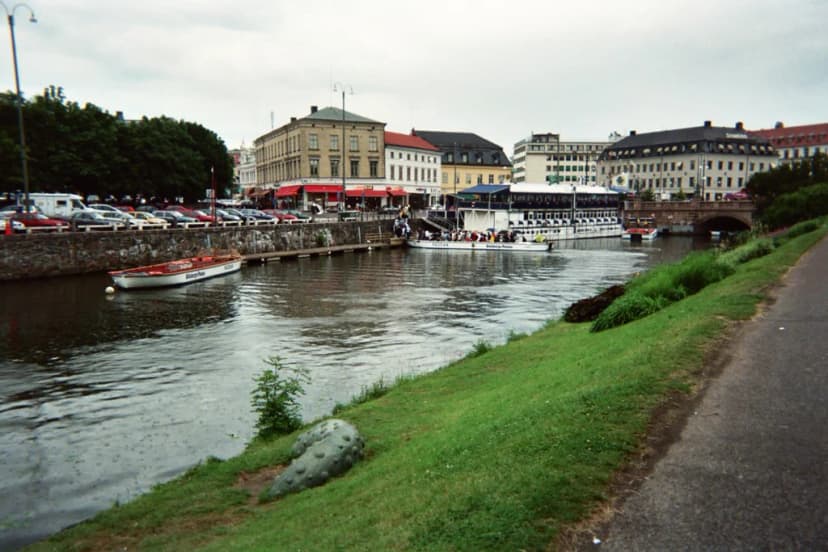
The district is bordered by a zigzagging canal that once formed the city's defensive moat. Walking along the water provides a clear view of the Dutch-inspired urban planning from the 1600s, with straight canal banks, stone bridges, and orderly grid streets behind them. Many historic bridges still connect the inner city to the newer neighborhoods across the water. Take a moment to admire the statues at Gustav Adolfs Torg near the City Hall, where an equestrian statue of King Gustav II Adolf (the city's founder) stands in the center of the square. The City Hall (Rådhuset) that frames the square dates to 1672 and houses municipal administration — the facade facing the square is a good example of the city's original Dutch Baroque style.
The Gothenburg Museum of Art (Göteborgs Konstmuseum) sits at the top of Avenyn boulevard and is one of the finest art collections in Scandinavia. The permanent collection spans Nordic masters including Carl Larsson and Bruno Liljefors, French Impressionists, and contemporary art across five floors of gallery space. In 2026, admission is free every Thursday between 5:00 PM and 9:00 PM, making it an ideal budget-friendly stop for visitors in the city midweek. On other days, adult entry costs SEK 100/€9 and includes access to all permanent galleries. Temporary exhibitions may carry an additional charge of SEK 50–80. The rooftop café offers views across Götaplatsen plaza and is open to non-museum visitors during regular hours.
Gothenburg City Museum (Göteborgs Stadsmuseum), located in the historic East India Company building on Norra Hamngatan, is a companion landmark worth adding to any history-focused itinerary. The building dates from 1762 and is itself one of the finest Baroque civic structures in Sweden. Inside, the permanent exhibition covers the city's founding, its Viking-age predecessors at Gamla Lödöse, and the booming East India trade era of the 18th century. Admission in 2026 is SEK 80/€7 for adults, with free entry on the first Sunday of each month. Opening hours are 10:00 AM to 5:00 PM Tuesday through Sunday.
Gothenburg's Fika Culture and the Haga District
Fika is more than a coffee break in Sweden — it is a social institution that shapes the rhythm of daily life. The practice of pausing to share coffee and a pastry with friends or colleagues is deeply embedded in Swedish culture. In Gothenburg, the Haga district has become the city's unofficial fika capital, where the tradition is taken to a spectacular extreme with oversized pastries, historic café interiors, and a pace of life that actively resists hurrying.

The cobblestone lanes of Haga are lined with independent cafes that have perfected the art of the cinnamon bun. But in Haga, the standard bun has been supersized into the legendary hagabulle — a giant cinnamon roll roughly the size of a dinner plate. At Café Husaren on Haga Nygata, the hagabulle costs SEK 50/€4.50 in 2026 and is a satisfying meal in itself. The café occupies a beautifully preserved 19th-century building with original ceiling frescoes and carved wooden counters. Haga Bageri, a few doors down, offers a slightly crispier version with pearl sugar topping priced at SEK 45–60 that locals often prefer for texture and freshness.
Haga Bakery (Haga Bageri) also produces excellent cardamom rolls (kardemummabullar) from 8:00 AM daily. These are baked in smaller batches than the main hagabulle and sell out by 10:30 AM on busy mornings, so an early arrival is recommended if this is your target. The Konditori tradition — a specialty pastry shop serving coffee and elaborate layered cakes — is also alive and well in Haga. Look for Konditori Husaren's prinsesstårta (princess cake) layered with vanilla cream, raspberry jam, and a dome of marzipan tinted pale green, priced at SEK 75–95 per slice in 2026.
The best time to visit Haga for fika is weekday mornings between 8:30 AM and 10:00 AM. Arriving early means you can claim a window seat, watch the street wake up, and enjoy your pastry before the tourist crowds arrive. By 11:00 AM on weekends, tables at the most popular cafes fill up quickly and queues form outside the door, sometimes stretching back along the cobblestones. If you visit on a rainy afternoon, the basement-level café at Café Husaren provides a cozier, quieter atmosphere away from the street-level rush. Beyond the cinnamon bun, Haga cafes serve mazarin tarts (almond pastry), kladdkaka (sticky Swedish chocolate cake), and the cardamom roll. Most establishments in 2026 offer oat milk as a standard option. A fika set — one coffee and one pastry — typically costs between SEK 75 and SEK 110/€7–€10 depending on the café.
- Café Husaren
- Famous for: Hagabulle giant cinnamon bun, original 19th-century interior
- Price: SEK 50/€4.50 per bun (2026)
- Best time: Weekday mornings before 10:00 AM
- Haga Bageri
- Famous for: Pearl sugar cinnamon buns, cardamom rolls, sourdough
- Price: SEK 45–60/€4–€5.50
- Best time: Early morning; cardamom buns freshest from 8:00 AM
Gothenburg's Dutch Canal Legacy: Exploring the Old Waterway District
Gothenburg was founded in 1621 by King Gustav II Adolf, and the city's urban layout was designed from the outset by Dutch engineers who brought with them the grid-canal planning principles they had refined in Amsterdam and Leiden. The result is a city that, even today, feels unmistakably Dutch in its bones — orderly grids, wide straight canals, brick civic buildings, and a harbor-facing orientation that shaped every commercial decision for two centuries. Understanding this Dutch heritage unlocks a completely different way of reading the old town.
The central boulevard Kungsportsavenyn — universally known simply as "Avenyn" — stretches 700 metres from Kungsportsbron bridge to Götaplatsen plaza and is the grand axis of the 17th-century Dutch plan. Today it is lined with restaurants, bars, and retail shops, but the scale and symmetry of the street reflect the Dutch model of a planned commercial boulevard. A stroll from the bridge to Götaplatsen takes about 15 minutes at a leisurely pace. At the far end of Avenyn stands the Poseidon fountain at Götaplatsen, a monumental bronze sculpture by Carl Milles unveiled in 1931 and entirely free to view. The plaza around it also features the entrance to the Gothenburg Museum of Art and the City Theatre (Göteborgs Stadsteater), making it one of the most culturally dense squares in Scandinavia.
The Saluhallen indoor food market on Kungstorget is one of the best-preserved examples of 19th-century market hall architecture in Sweden, though its spirit connects directly to the Dutch marketplace tradition. Open Monday through Saturday (roughly 9:00 AM to 6:00 PM on weekdays, closing at 4:00 PM on Saturdays), the market houses around 20 vendors selling Swedish cheeses, charcuterie, freshly baked bread, and hot lunch plates. A traditional smörgåsbord lunch at one of the deli counters costs SEK 120–200 per person in 2026 and typically includes open sandwiches, pickled herring, a warm protein dish, and coffee. The building itself — with its wrought-iron pillars and vaulted glass roof — is worth visiting even if you only want a coffee and a pastry at one of the counter seats.
Feskekörka (the Fish Church) on Rosenlundskanalen sits at the southwestern corner of the canal network and illustrates the Dutch influence on civic market architecture most directly. Built in 1874 in a deliberate Gothic chapel style to echo the great market halls of Antwerp and Ghent, it has operated as an indoor fish market for 150 years. It opens Tuesday through Saturday, and a visit pairs naturally with a walk along the southern canal bank from Järntorget. North Sea prawns, whole-smoked whitefish, and marinated herring are the staples; budget SEK 100–180 for a portion to eat at the small tables inside.
Canal boat tours offer the best vantage point for understanding how the Dutch waterway network still shapes the city. Boats depart from Kungsportsplatsen and run a 50-minute loop through the moat canal system, passing under 20 bridges and alongside the facades of Kronhuset, the City Hall, and the East India Company building. Tickets in 2026 cost SEK 200–250 per adult depending on the operator, with the main providers being Paddan Sightseeing and Göteborgs Älvsnabbare. Boats run May through September with departures roughly every 30 minutes on peak summer days. Booking online saves SEK 20–30 compared to walk-up prices. The tour is narrated in Swedish and English and gives a clear picture of how the canals connected the old city's warehouses, markets, and defensive walls into a single coherent system. You can find more ideas for exploring beyond the city in our day trips from Gothenburg guide, including the southern archipelago islands accessible by ferry.
Common Tourist Mistakes to Avoid in Old Town
Many tourists mistake the modern shopping malls near the central station for the true historic center. While Nordstan is convenient for big brands and covered from the rain, it lacks the architectural character of the older districts entirely. Make sure to cross the canal to find the authentic atmosphere of the 17th-century city. Walking just ten minutes further south will lead you to much more charming surroundings where the buildings have not changed in 150 years.

Choosing the wrong footwear is a frequent error for first-time visitors to Haga. The original cobblestones on Haga Nygata and the side streets of Indre Staden are notoriously uneven and can be difficult to navigate in thin sandals or flat-soled city shoes after a few hours. Wear sturdy walking shoes or ankle boots to ensure you can walk comfortably for the four to six hours that a thorough old-town visit typically takes. If your feet tire, wooden benches are placed along Haga Nygata at regular intervals, and every café visit doubles as a rest break.
Relying solely on trams within the old town can actually make your journey longer. The historic streets are mostly pedestrianized and very compact for walking — the distance from Järntorget to Kronhuset is under 20 minutes on foot. Save the tram for day trips to the outer archipelago, Gothenburg's beaches, or nearby towns. In 2026, a single tram ticket costs SEK 30/€2.70 via the Västtrafik app (slightly higher at SEK 45/€4 when bought by contactless card at the validator) and is valid for 90 minutes of travel; a day pass at SEK 95/€9 offers unlimited rides across the entire network and is the best value for visitors covering multiple districts in one day.
Many visitors also overlook Liseberg amusement park, assuming it is only for families with young children. In reality, Liseberg is one of Scandinavia's most acclaimed theme parks and includes Gothenburg's premier outdoor concert venue (Liseberg Concert Garden) and the city's most popular Christmas market from mid-November to December. General admission in 2026 costs SEK 195/€18 at the gate; an all-inclusive wristband covering unlimited rides costs from SEK 385/€35 per person. The park opens in early May and runs through mid-September for the main season, with a separate Halloween season in October. It sits just 10 minutes from the old town by tram (line 5 or 6) and makes for an excellent half-day addition to any itinerary. For evening entertainment across the city, see our Gothenburg nightlife guide.
A common planning error is trying to see both the old town and the Västra Hamnen waterfront district in a single morning. These two areas — each requiring two to three hours to do properly — are separated by a 25-minute tram ride. Build at least two half-days into your itinerary for the historic center alone. The Botanical Garden in Slottsskogen, which is free year-round, is a natural add-on for an afternoon and reachable by tram from Haga in under 10 minutes. The garden covers 175 hectares with Japanese cherry trees, a rock garden, and a tropical greenhouse — all free of charge.
Practical Travel Tips for Your Historic Visit
Navigating the historic quarters is easiest if you start your journey at Järntorget square. This transport hub connects the old town with the trendy bars of Linnégatan and the southern harbor quays. Tram lines 1, 2, and 9 all stop at Järntorget, making it a reliable anchor point throughout the day. Most major sites in Haga and Indre Staden are within a 15-minute walk of each other from this square, and the flat terrain makes it manageable for most visitors.
Early morning visits offer the best light for photography before the shops open and crowds arrive. The sun hits the wooden facades of Haga beautifully around 8:30 AM during the summer months, casting long shadows across the cobblestones. Winter visits (November through February) require more planning: many smaller boutiques operate on reduced seasonal hours, closing as early as 4:00 PM, and some independent shops close entirely on Mondays. Always verify closing times on official business websites or Google Maps before heading to a specific shop or attraction.
Public restrooms are available in major squares including Järntorget and Kungsportsplatsen, but usually require a small fee of SEK 5–10 paid via card. Most cafes reserve their facilities for paying customers only, which makes your fika stops functionally useful as well as enjoyable. Plan your pastry breaks strategically to make use of the amenities while you enjoy your coffee. Carrying a small amount of local currency is rarely necessary as Sweden is almost entirely cashless — even market vendors and church donation boxes accept card or Swish mobile payment.
The Västtrafik app is the easiest way to buy tram and bus tickets in Gothenburg in 2026. Fares via the app are SEK 30 per journey (versus SEK 45 at the validator), and you can load a day pass for SEK 95/€9 before you arrive and activate it when you first board. For those preferring a card, contactless payment is accepted at all tram validators at the higher walk-up rate. The app also shows real-time departures from every stop, which is essential when navigating between the old town and the Västra Hamnen waterfront district, or when timing a connection for day trips to nearby islands and towns. If you are also planning to visit Malmö, our Malmö old town guide covers another beautifully preserved Swedish medieval city reachable in under two hours by train.
Frequently Asked Questions
Is Gothenburg old town walkable for seniors?
Yes, Gothenburg's historic districts are mostly flat and pedestrian-friendly for seniors. The main challenge is the uneven cobblestones on Haga Nygata and the side streets of the old town, which can be tiring on joints after extended walking. Sturdy shoes with good ankle support are strongly recommended. Benches are positioned along the main pedestrian streets for rest breaks, and the many café stops provide natural pauses. Tram stops are positioned at the edges of the historic districts so you can ride rather than walk between areas if needed.
When do shops in Haga typically open?
Most independent boutiques in Haga open between 10:00 AM and 11:00 AM and close by 6:00 PM on weekdays. On Saturdays they often close earlier, around 4:00 PM to 5:00 PM, and Sunday hours are shortest — typically 12:00 PM to 4:00 PM where shops open at all. Cafés keep earlier hours, with most opening by 8:00 AM for morning fika. Planning your shopping visit for late morning on a weekday ensures you see the neighborhood at its liveliest and have the widest selection of open shops.
Can I visit the old town and the coast in one day?
You can comfortably combine a morning in the old town with an afternoon trip to the coast. Spend 9:00 AM to 1:00 PM in Haga and Indre Staden, then take the tram from Järntorget toward the southern archipelago — the ferry docks at Saltholmen are reachable in about 30 minutes. From Saltholmen, short ferries run to the car-free islands of Styrsö and Vrångö throughout the day. Check our Gothenburg beach guide for the best coastal spots, swimming conditions, and ferry timetables for the 2026 season.
What is the best way to pay for things in Gothenburg?
Sweden is a global leader in cashless payments and almost all vendors in Gothenburg — including market stalls, bakeries, and street food vendors — prefer card or mobile payment. Contactless Visa and Mastercard are universally accepted. Many Swedish residents pay via Swish (a mobile payment app linked to Swedish bank accounts), but as a visitor your contactless card works everywhere. You will rarely if ever need physical Swedish kronor (SEK) during your visit. Ensure your card has no foreign transaction fees before traveling to avoid unexpected charges on every small purchase.
Is Gothenburg's Haga district worth visiting?
Yes, Haga is absolutely worth visiting and is widely considered the most charming neighborhood in Gothenburg. The district preserves 19th-century landshövdingehus architecture — buildings with stone ground floors and timber upper stories — that has been demolished in most other Swedish cities. Haga Nygata is the main pedestrian street and lined with independent cafés, boutiques, and craft shops. The highlight for most visitors is the hagabulle giant cinnamon bun at Café Husaren (SEK 50/€4.50 in 2026) — a local specialty that genuinely lives up to its reputation. Allow two to three hours to walk the district properly, including a 30-minute fika stop.
How do I get around Gothenburg's old town?
Walking is by far the best way to get around Gothenburg's old town. The historic districts of Haga and Indre Staden cover a compact area where most attractions are within 15 minutes' walk of each other. For travel between the old town and outer neighborhoods, Gothenburg's tram network is reliable and frequent. In 2026, trams run every 6–10 minutes on main lines and cost SEK 30 per journey via the Västtrafik app (SEK 45 at the validator). A day pass costs SEK 95/€9 and covers unlimited tram and bus travel across the whole city. Download the Västtrafik app before you arrive to buy tickets at the lower app rate and check real-time departures.
Gothenburg's historic districts offer a fascinating look into the maritime and industrial past of Sweden. From the wooden houses of Haga to the stone walls of Kronhuset, from the giant hagabulle at Café Husaren (SEK 50/€4.50) to the free Feskekörka fish market (open Tue–Sat), there is much to discover in 2026. The Dutch canal legacy that shaped the city's streets and waterways adds a layer of European history that most visitors do not expect to find in Scandinavia. Using this Gothenburg old town guide will help you find the best spots for history, fika, and local culture.
Make sure to pack comfortable shoes and a hearty appetite for local pastries. The mix of grand landmarks, covered market halls, and cozy cobblestone corners creates a genuinely memorable travel experience. If you want to extend your journey, our Malmö old town guide and our overview of safety in Malmö are useful reads for continuing south through Sweden. Enjoy your journey through the winding streets and historic canals of this beautiful coastal city.