The Ultimate Zakynthos Old Town Guide for 2026
Zakynthos Town's Byzantine Museum on Solomos Square charges €4 entry in 2026 (Tue–Sun 8AM–4PM) and displays icons salvaged from the devastating 1953 earthquake. The Solomos Museum on San Marco Square costs €4 (daily 9AM–2PM) and holds the tombs of two national poets.
The Church of Dionysios in Zakynthos Town is free to enter and houses authentic Byzantine relics of the island's patron saint. The Bohali viewpoint above the rebuilt neoclassical capital is also free, open daily, and offers the finest panoramic view over the Ionian Sea.
Zakynthos Town serves as the vibrant heart of the island and offers a unique blend of history and modern Greek life. This capital city was largely rebuilt after a massive earthquake in 1953 but still retains its Venetian charm. Walking through the narrow alleys reveals hidden squares and beautiful churches that tell stories of the past. Our Zakynthos old town guide helps you navigate the best landmarks while avoiding the usual tourist crowds.
Most visitors arrive at the port and immediately feel the energy of the bustling waterfront promenade. Colorful buildings and arched walkways line the streets, creating a scenic backdrop for your morning coffee. This guide covers everything from historical museums to the best sunset viewpoints overlooking the Ionian Sea. Use our Zakynthos beach guide to plan a full day combining culture in the morning with sand and sea in the afternoon.
Exploring Solomos Square and the Waterfront
Solomos Square is the largest open public space in Zakynthos Town and the natural starting point for any walking tour of the capital. The square is named after Dionysios Solomos, the celebrated national poet who wrote the lyrics for the Greek national anthem, and his marble statue presides over the centre of the plaza. Grand neoclassical buildings flank the square on three sides — the Public Library, the Byzantine Museum, and the covered arcades — while the open fourth side gives an unobstructed view of the harbour. The paved expanse is popular with locals at all hours and fills with visitors throughout the summer season of 2026.
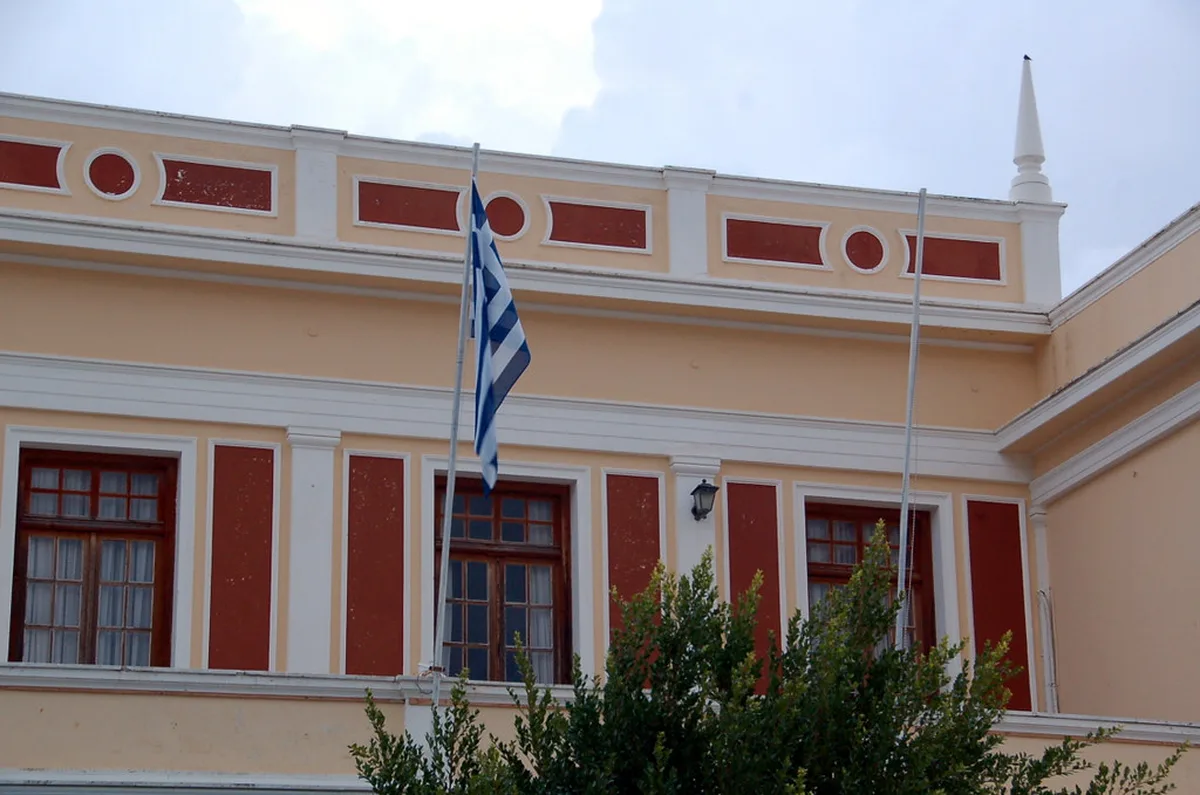
The Byzantine Museum dominates the eastern end of Solomos Square and is one of the most important repositories of religious art in the Ionian Islands. Entry in 2026 costs €4 per adult, and the museum is open Tuesday through Sunday from 08:00 to 16:00. The two-floor collection spans the 15th to the 19th century and includes wood-carved iconostases, gilded icons, and frescoes that were painstakingly rescued from churches destroyed in the catastrophic 1953 earthquake. Allow at least 75 minutes to absorb the ground floor ecclesiastical treasures before climbing to the upper gallery of post-Byzantine paintings. Photography without flash is generally permitted inside.
The waterfront road known as Strata Marina runs along the harbour edge and connects Solomos Square to the southern end of town. In summer 2026 it becomes a pedestrian-only zone from early evening, filling quickly with families doing the traditional volta stroll. Cafes and fish tavernas spill tables onto the pavement, making it the perfect place for a leisurely coffee with a harbour view. Small kiosks along the pier sell local treats such as pasteli sesame bars and mandolato nougat for €2–3, ideal for a quick energy boost between sightseeing stops.
Walking toward the ferry terminal at the northern end gives a photogenic view of the town skyline backed by the dark green hills of Bochali. As the sun drops toward the Peloponnese on the horizon, the reflection of warm building lights shimmers on the calm Ionian water. This is one of the most photographed moments in any Zakynthos old town guide. Arrive at the waterfront around 20:00 in summer to watch the display at its most vivid before settling at a taverna for dinner. Combine your visit with a look at our day trips from Zakynthos page for ideas on how to explore the wider island from this central base.
Walking Through San Marco Square and Pedestrian Streets
San Marco Square sits directly behind Solomos Square and offers a more intimate, shaded atmosphere compared to its larger neighbour. The plaza takes its name from the Venetian period that shaped so much of Zakynthos's identity, and the Catholic Church of Saint Mark on its northern edge is a direct architectural echo of that era. Flower sellers and cafe owners set up tables in the square each morning, and the whole space buzzes with social activity by late afternoon. It is the kind of square where you linger over a cold frappe rather than rush through on your way to the next site.
Alexandrou Roma is the main pedestrian commercial street and runs south from San Marco Square under a series of traditional arches known locally as kamares. These covered colonnades protect shoppers from the midday sun and give the street a distinctive Venetian character that survived the post-earthquake rebuilding. The street is lined with boutiques selling jewellery, lace, leather goods, and locally made ceramics, alongside gelato bars and pastry shops. Most stores open from around 09:00 to 14:00, close for the afternoon siesta, then reopen from 17:30 until 22:00. It is also the main restaurant strip for evening dining in 2026, with taverna mains priced at €12–18 per dish and house wine from €5 per carafe.
The Museum of Solomos and Eminent Zakynthians stands on the edge of San Marco Square and is an essential stop for anyone interested in Greek literary history. Entry in 2026 is €4 per adult, and the museum opens daily from 09:00 to 14:00. The basement crypt contains the tombs of the national poet Dionysios Solomos and his contemporary Andreas Kalvos, both of whom were born on Zakynthos. Upper rooms house manuscripts, portraits, personal belongings, and period furniture that bring the Heptanese literary tradition to life in vivid detail. The museum's quiet atmosphere provides a welcome contrast to the busy street outside.
The side streets branching off from Alexandrou Roma are worth exploring slowly. Potted geraniums hang from iron balconies and cats sleep on warm steps in the narrow lanes between the main commercial thoroughfares. Small family-run bakeries tucked into these backstreets sell fresh tiropita cheese pastry and spanakopita spinach pie for under €3. Wandering off the tourist trail here reveals the everyday rhythm of life in the capital and often leads to small neighbourhood platias where elderly residents sit in the shade of orange trees. These micro-discoveries are what elevate a good Zakynthos old town guide to a great one.
Cultural Highlights of the Zakynthos Old Town Guide
The Church of St Dionysios is the most significant religious landmark in Zakynthos Town and one of the most important pilgrimage sites in the Ionian Islands. The patron saint of the island, St Dionysios, was an archbishop in the 16th century renowned for his acts of mercy and charity, and his remains are kept inside an ornate silver reliquary casket. The church's tall bell tower, modelled loosely on the campanile of St Mark's Basilica in Venice, is visible from almost anywhere in the harbour area and serves as a natural navigation point for visitors exploring the town on foot. Entry is free, though a small donation or a €1 candle is customary.
The interior of the Church of St Dionysios is breathtaking even by the standards of Greek Orthodox architecture. Gold leaf, elaborate frescoes, and a gilded iconostasis cover virtually every surface of the nave, and the effect is one of concentrated sacred grandeur. The casket of the saint is paraded through the streets in grand procession on 24 August and 17 December, when the whole town joins the celebration and the waterfront fills with crowds. Visitors should dress modestly — shoulders and knees covered — before entering, and should keep voices low as the church remains an active place of worship throughout the year.
The Public Library of Zakynthos occupies a prime position on Solomos Square, just a few steps from the Byzantine Museum. Beyond its role as a working library, the building houses a remarkable archive of Venetian-era documents and a small permanent gallery of local art and photography spanning the 19th and 20th centuries. The collection of Ionian manuscripts and rare maps is of particular interest to researchers and history enthusiasts. The library is typically open weekday mornings and provides a cool, air-conditioned refuge from the summer heat — a practical bonus for visitors who arrive in July or August 2026.
Architecture enthusiasts will find the rebuilt town centre itself a subject worth studying. Following the 1953 earthquake, strict planning regulations required new buildings to replicate the proportions and external appearance of the structures they replaced. The result is a remarkably consistent streetscape of ochre and terracotta facades, arched ground floors, and red-tiled roofs that recreate the Venetian aesthetic at larger, earthquake-resistant scale. The coherence of this post-reconstruction design is unusual in Greece and gives Zakynthos Town a period-film quality that sets it apart from most rebuilt Mediterranean towns. Look up at the upper floors of buildings along the main squares to appreciate the careful detailing of capitals and cornices.
Zakynthos Town After the 1953 Earthquake: Understanding the Rebuilt Capital
On 12 August 1953, one of the most powerful earthquakes ever recorded in European history struck the Ionian Islands with devastating force. Zakynthos Town was almost entirely destroyed — around 90 percent of its buildings collapsed within minutes, and subsequent fires burned through the ruins for days. Hundreds of lives were lost across the island, and the centuries of accumulated Venetian and Byzantine architecture that had defined the capital were reduced almost entirely to rubble. The scale of the catastrophe shocked the world and triggered one of the largest reconstruction efforts in postwar Greek history.
What makes Zakynthos Town's story remarkable is not simply the destruction but the extraordinary decision made by its citizens in the aftermath. Rather than rebuild in a modern utilitarian style, as happened in many earthquake-damaged European cities, the people of Zakynthos chose to recreate their capital in the neoclassical and Venetian-influenced aesthetic that the old town had embodied. Strict urban planning regulations governed every new building permit, requiring facades, proportions, arched colonnades, and rooflines to echo the architectural language of what had stood before 1953. The result is the consistent, handsome streetscape of ochre and terracotta buildings you walk through today.
Visiting Zakynthos Town with this history in mind transforms the experience. The Byzantine Museum on Solomos Square (€4, Tue–Sun 8AM–4PM) owes its entire collection to the earthquake: virtually every icon, fresco fragment, and carved iconostasis on display was salvaged from collapsed churches across the island and brought here for preservation. The museum is therefore not merely a gallery — it is a memorial to the religious art that survived against the odds, curated and displayed with care so that the spiritual heritage of pre-earthquake Zakynthos remains accessible to all visitors in 2026.
Solomos Square itself is the most powerful place to absorb the earthquake's legacy. The wide, open plaza was deliberately designed to be broader than the original square it replaced, partly as a practical safety measure and partly to create a civic heart worthy of the rebuilt capital. The Public Library building on the square's edge preserves rare Venetian-era manuscripts and maps that were recovered from the rubble, many singed at the edges but still legible. Standing at the centre of the square and looking at the uniform neoclassical facades surrounding you, it is both humbling and inspiring to know that every building you can see was constructed within a decade of absolute destruction and designed deliberately to honour the past. Few other Mediterranean towns have rebuilt themselves with such intentional architectural memory, and this makes Zakynthos an important and moving destination that goes far beyond beaches and nightlife.
For visitors who want to trace the earthquake's impact more deliberately, the Church of St Dionysios (free, open daily) survived because it stood slightly apart from the densest zone of the town centre and was reinforced before the quake. Its bell tower and interior treasures — including the ornate silver reliquary of the patron saint — thus represent a genuine piece of pre-1953 Zakynthos, unlike the reconstructed buildings around Solomos and San Marco squares. Pairing a visit to the church with the Byzantine Museum and a reflective walk along the rebuilt waterfront gives you a complete picture of how this capital lost everything and then chose to remember itself through architecture.
Bochali Hill: The Best View Over Zante Town
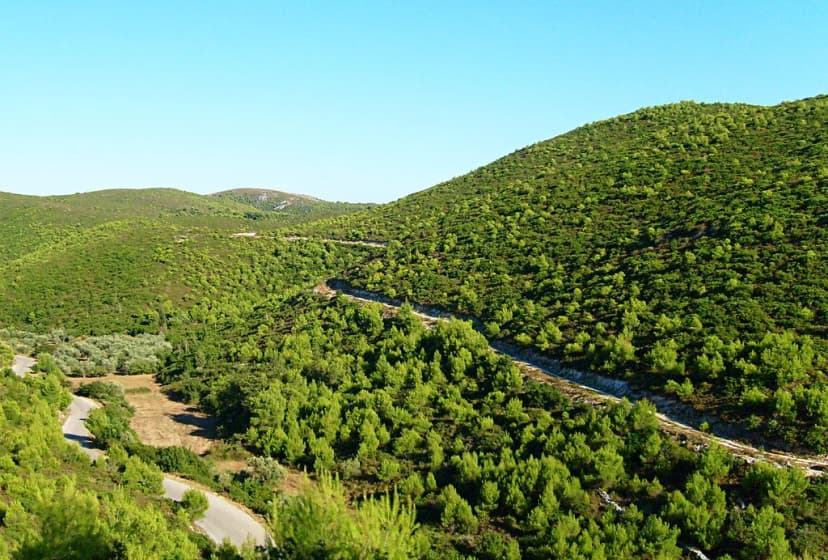
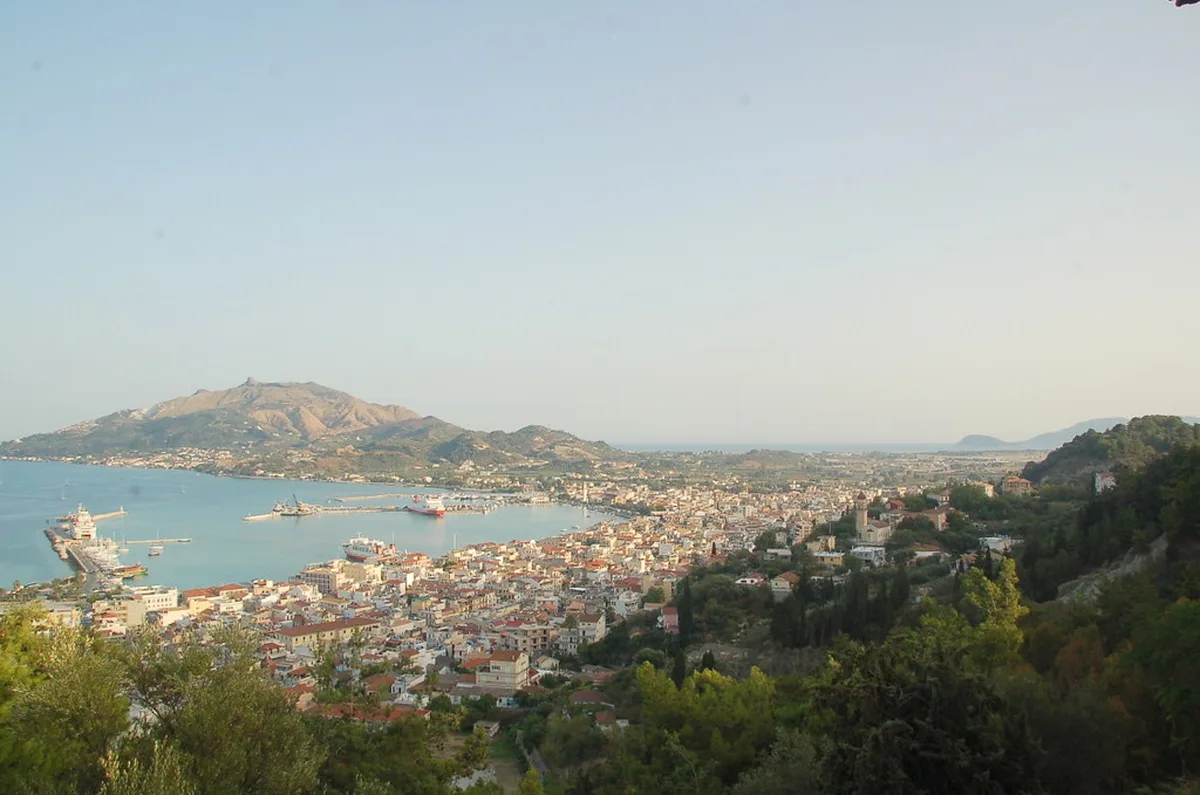
Bochali Hill rises directly above the town centre and rewards every visitor who makes the effort to reach the top with a panoramic view that is simply unmatchable anywhere else on Zakynthos. The summit viewpoint — known locally as the Bochali viewpoint — looks out over the entire sweep of the harbour, the town rooftops, the Ionian Sea stretching to the west, and on clear days the distant ridgeline of the Peloponnese peninsula across the water. Entry to the main viewpoint area is free and it is accessible every day of the year. Sunrise and sunset are equally spectacular from this vantage point, though sunset draws larger crowds throughout the summer season.
The Venetian Castle, locally called Kastro, crowns the very top of Bochali Hill inside a dense pine forest that provides welcome shade in the summer heat. Admission in 2026 is €4 per adult, and the site is typically open from 08:00 to 14:30 daily, though hours may vary in shoulder season — confirm locally before making the journey up. Inside the substantial stone walls are the well-preserved remains of gunpowder stores, cisterns, prison cells, and three small Byzantine churches whose frescoes have partially survived the centuries. The castle served as the island's primary fortification and administrative centre during the centuries of Venetian rule from 1484 until 1797, and the scale of the ruins gives a sense of how significant this hilltop settlement was. Allow 45 to 60 minutes to walk the full perimeter of the walls and visit the interior ruins without rushing.
The walk from the town centre to Bochali takes 20 to 30 minutes along a steep but well-marked path. In the midday heat of a Greek summer, this climb is best undertaken early in the morning or after 17:00. A taxi from the waterfront to the top of the hill costs approximately €10–12 one way in 2026. Bochali village itself, clustered around a small square near the castle entrance, has several upscale tavernas and traditional dessert cafes. The local speciality frygania — a layered dessert of toasted rusks, fresh cream, and cinnamon — is worth ordering at one of the shaded terrace tables while the evening panorama unfolds below.
- Visit the Venetian Castle Ruins
- Cost: €4 per adult (2026)
- Opening hours: 08:00–14:30 daily
- Best for: History lovers and architecture fans
- Location: Top of Bochali Hill
- Time needed: 45–60 minutes
- Watch the Sunset from the Viewpoint
- Cost: Free
- Best for: Photographers and couples
- Location: Main Bochali viewpoint, free access
- Tip: Arrive 30 minutes before sunset for the best spot
- Try Frygania at a Bochali Cafe
- Cost: €5–7 per serving
- Best for: Dessert lovers
- Where: Tavernas around Bochali Square
- Tip: Pair with a Greek mountain tea for a local combination
Zakynthos Town Food Scene and Evening Promenade
The food culture of Zakynthos Town is deeply rooted in Ionian traditions that blend Greek, Venetian, and Levantine influences — quite different from the taverna fare you find in the Cyclades or Crete. Dining here in 2026 means encountering dishes prepared with local olive oil, island-grown vegetables, fresh Ionian seafood, and the wines produced from the Verdea and Avgoustiatis grape varieties unique to Zakynthos. The restaurant street on Alexandrou Roma is the heart of the evening dining scene, and by 20:00 its terraces are full with a mix of locals and visitors sharing pitchers of house wine under string lights. Expect to pay €12–18 for main courses and €20–35 per person for a full meal including wine and dessert at a mid-range taverna in the town centre.
Mandolato nougat is the island's most famous sweet and the product most visitors take home as a gift. Made from honey, egg whites, almonds, and sometimes rose water, it has been produced on Zakynthos for centuries and bears a Protected Geographical Indication status. Several specialist confectionery shops along the pedestrian streets sell mandolato by weight, typically €10–15 per kilogram, and the best versions are soft and fragrant rather than the hard industrial variety found in tourist shops. Pair a slice with a shot of local Verdea wine — a straw-coloured wine with a slightly oxidised character unique to the island — at any traditional kafeneio in the old town.
The evening waterfront promenade along Strata Marina is as much a social institution as a sightseeing activity in Zakynthos Town. From around 19:30 in summer 2026, the pedestrianised section of the harbour road fills with multi-generational families, young couples, and groups of friends participating in the daily volta. Street musicians occasionally perform at the Solomos Square end, and the harbour lights reflected in the calm water create a cinematic backdrop. Most visitors eventually settle at one of the seafront restaurants for grilled octopus or freshly caught sea bream, priced at €14–20 per portion. A plate of local tzatziki and a basket of village bread while watching the boats is a perfectly complete ending to a day following this Zakynthos old town guide.
For a more local breakfast experience, skip the hotel buffet and walk to one of the small kafeneio cafes tucked into the streets behind Solomos Square. A strong Greek coffee, a bougatsa custard pastry, and a glass of fresh orange juice together costs around €5–7 and sets you up better for a morning of sightseeing than any packaged breakfast could. The morning kafeneio crowd — retirees reading newspapers, delivery drivers taking a break, shopkeepers before opening — gives an authentic glimpse of daily life in the capital. This early-morning ritual is one of the lasting memories that a thoughtful Zakynthos old town guide should always include.
Practical Tips for Navigating Zakynthos Town
Parking in the town centre is challenging throughout the peak summer months of 2026 and becomes nearly impossible on weekends in July and August. The most reliable strategy is to leave your car at the large free lot near the northern ferry terminal or at your hotel and use taxis to reach the town. Driving into the pedestrian zones on Alexandrou Roma or around Solomos Square risks a fine and almost certain gridlock. Taxis in Zakynthos Town operate on a fixed-rate meter and a short journey within the centre costs €4–6 in 2026.
Timing your visit makes a significant difference to comfort. The town is at its most pleasant in the early morning before 11:00, when temperatures are cooler and the cruise ship crowds have not yet arrived. After midday the heat intensifies and most museums and shops observe a siesta break between 14:00 and 17:30. This is an ideal window to head to the coast — our Zakynthos beach guide covers the closest good swimming beaches to the town, including Tsilivi just 5 km north. The town revives emphatically from 18:00 onward and the waterfront promenade remains lively until well past midnight in high season.
Public transport on the island is centred at the KTEL bus station on the eastern edge of the town centre. Buses connect the capital to popular resort areas including Tsilivi, Laganas, and Argassi for approximately €2 per single journey. The station operates a clear timetable display and a small cafe, making it a practical base for budget travellers. Always check the latest schedules on the official KTEL website or at the station office as summer timetables differ substantially from off-season services. Some rural services run only two or three times daily, so missing a bus can mean a €15–20 taxi ride back to town.
Dining in the town proper consistently delivers better value and more authentic cooking than the tourist-oriented beach restaurants. The backstreet tavernas away from the main squares use fresh local produce, cook traditional Zakynthian recipes, and charge honest prices. A generous shared meal for two people — starters, mains, local wine, and dessert — typically runs €40–55 at a neighbourhood taverna versus €60–80 at a prime waterfront location. Tipping is not compulsory but rounding up to the nearest €5 or leaving 10 percent is appreciated and is standard practice among locals. Keep a mix of cash and card as smaller establishments may not always have functioning card terminals.
Frequently Asked Questions
Is Zakynthos Town worth visiting for a day?
Yes, Zakynthos Town is absolutely worth a full day visit in 2026. In four to six hours you can walk Solomos Square, tour the Byzantine Museum (€4), visit the Church of St Dionysios (free), browse the Alexandrou Roma pedestrian street, and reach the Bochali viewpoint. End the day with dinner at a waterfront taverna for €20–35 per person.
How do I get from the port to the town centre?
The main ferry port in Zakynthos is directly adjacent to Solomos Square, the centre of the old town. Most passengers walk off the ferry and reach the Byzantine Museum or the waterfront cafes within five to ten minutes on foot. Taxis queue at the pier exit for those with heavy luggage, and a ride to any point in the town centre costs €4–6 in 2026.
What does it cost to visit the Venetian Castle at Bochali?
The Venetian Castle on Bochali Hill charges €4 per adult in 2026 and is open from 08:00 to 14:30 daily. The site includes ruins of gunpowder stores, cisterns, prisons, and three Byzantine chapels set inside a pine forest. A taxi from the waterfront costs approximately €10–12 each way, or you can walk the steep path in 20–30 minutes.
Are there beaches near Zakynthos Town?
There is a small narrow town beach called EOT at the northern end of the waterfront, mostly used by local residents. Better beaches begin just a few kilometres from the centre: Tsilivi is 5 km north and Argassi is 3 km south, both reachable by KTEL bus for €2 or by taxi for €6–8 in 2026. For a full overview of the island's best swimming spots, visit our Zakynthos beach guide.
What local food should I try in Zakynthos Town?
In 2026, the essential local foods in Zakynthos Town are mandolato nougat (sold by weight at confectionery shops, €10–15 per kg), fresh grilled octopus on the waterfront (€14–18), and frygania dessert at Bochali village (€5–7). Local Verdea white wine is unique to Zakynthos and available at most tavernas. Taverna mains along Alexandrou Roma pedestrian street cost €12–18 per dish.
Why was Zakynthos Town rebuilt in a neoclassical style after the 1953 earthquake?
The catastrophic earthquake of 12 August 1953 destroyed roughly 90 percent of Zakynthos Town's buildings. Rather than modernise, residents and planners chose to reconstruct the capital in a deliberate echo of its Venetian and neoclassical architectural heritage. Strict regulations required new facades, arched colonnades, and rooflines to match the pre-earthquake style. Today the consistent ochre streetscape around Solomos Square is a direct result of that collective decision to rebuild with memory and pride.
What day trips can I take from Zakynthos Town?
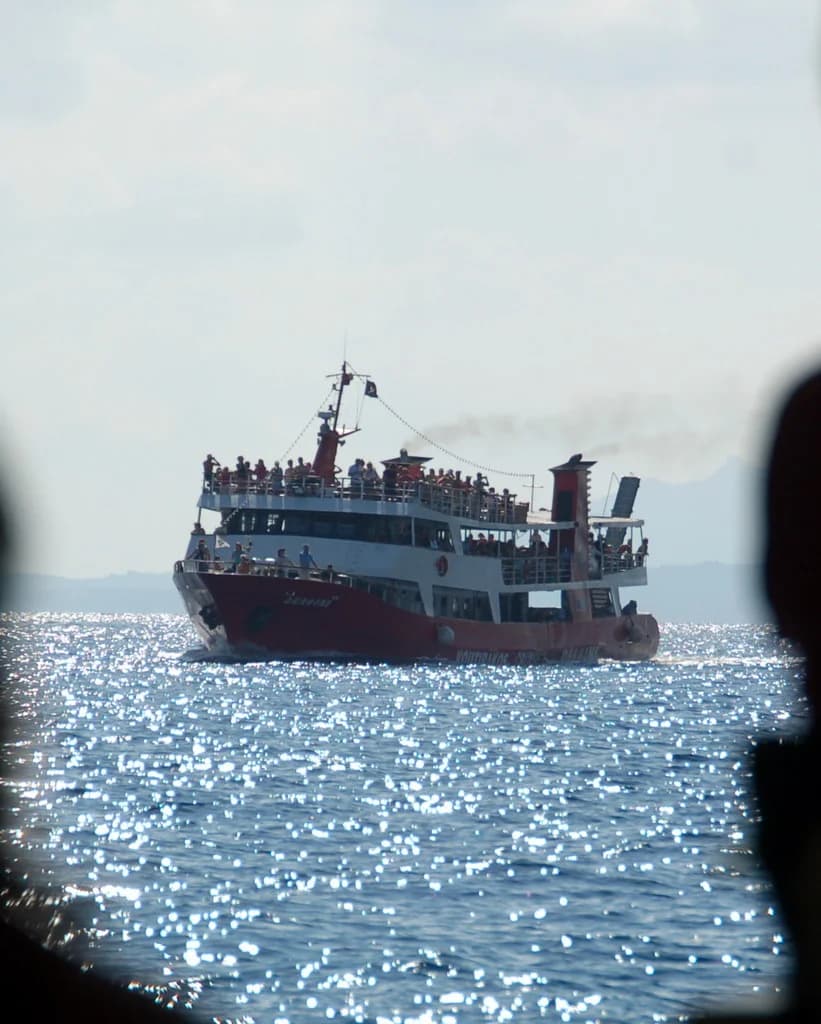
Several excellent day trips are possible from Zakynthos Town in 2026. The most popular are a boat tour to the famous Shipwreck Beach (Navagio) and the Blue Caves on the north coast, typically costing €25–35 per person by organised excursion. You can also rent a car or scooter and reach the Keri Caves viewpoint, Marathonisi turtle island, or the inland village of Machairado in under an hour. Full details are in our day trips from Zakynthos guide.
Zakynthos Town offers a rich tapestry of history and culture that every traveller should experience at least once. From the grand museums on Solomos Square to the quiet alleys behind Alexandrou Roma, the city reveals the resilient spirit of the Ionian people who rebuilt their capital from the rubble of a catastrophic earthquake and made it beautiful again. Plan your 2026 visit to include both the high-energy waterfront promenade and the peaceful ruins at Bochali Hill, with the mandatory stop at the Church of St Dionysios in between.
Whether you are a history enthusiast, a food lover, or simply a traveller who prefers genuine Greek life to beach-resort routine, Zante Town has something lasting to offer. Remember to carry cash for smaller museums and street snacks, time your museum visits to avoid the midday siesta closures, and save your evenings for the waterfront volta and a long taverna dinner. Combining the old town with the natural scenery covered in our Zakynthos beach guide and our day trips from Zakynthos guide will give you a complete picture of one of the most rewarding islands in the Ionian. If you enjoy exploring Greek old towns shaped by Venetian history, our Heraklion old town guide and Corfu old town guide make excellent companion reads for planning a wider Ionian and Aegean itinerary.