Exploring Corfu Old Town: A Complete Local Guide for 2026
Corfu Old Town is a UNESCO World Heritage Site free to explore at street level; the Old Fortress charges €6 per adult (daily 8AM–8PM summer) and the Palace of St. Michael and St. George charges €6 (Tue–Sun 8AM–4PM).
The Liston promenade and Spianada Square — the largest public square in Greece — are both free to enter and form the social heart of Corfu Town in 2026.
Welcome to the heart of the Ionian Islands where history meets modern Greek charm. This UNESCO World Heritage site blends Venetian, French, and British history into a stunning maze of sun-drenched squares and narrow alleys around every corner of Corfu.
Walking through these streets feels like stepping back into a different era. The architecture reflects centuries of diverse influence and timeless Mediterranean charm for all visitors. Many spend hours getting lost in the winding kantounia passageways during their stay. Plan at least a full day, wear comfortable shoes, and come hungry — the local food scene alone justifies the trip.
Must-See Landmarks in Corfu Old Town
The Old Fortress of Corfu (Palaio Frourio) stands as a massive Venetian sentinel over the eastern edge of the city, separated from the rest of the town by an artificial moat carved in the 16th century. Admission in 2026 is €6 for adults, with discounts available for EU students and seniors. Opening hours are 8:00 AM to 8:00 PM daily during the summer season (April–October), and 8:30 AM to 3:30 PM in winter. Inside the fortress, visitors can climb to the lighthouse positioned at the highest point for a sweeping panoramic view that takes in the Albanian coast, the Ionian Sea, and the city rooftops below. The site also contains a Venetian church, a British-era clock tower, and a small beach accessible through a lower gate — a perfect swimming spot after sightseeing. Dedicated audio guides in English are available at the ticket kiosk for an additional €3.
Spianada Square serves as the largest public plaza in Greece and arguably the social nucleus of all of Corfu Town. Flanked by the Liston promenade on one side and the Old Fortress on the other, the square has hosted cricket matches since the British colonial period — a quirky tradition that continues on summer weekends. The grassy esplanade in the southern half is perfect for a midday rest, while the northern section hosts seasonal festivals and open-air film screenings throughout the summer. Entry to the square is completely free, making it the natural starting point for any walking itinerary through the Old Town.
The New Fortress (Neo Frourio) was built by the Venetians between 1576 and 1645 to reinforce the western defenses of the city. Entry costs €3 in 2026, and the complex opens from 9:00 AM to 5:00 PM. Its elevated position offers excellent views over the Old Town rooftops and the ferry port below. A small permanent exhibition inside traces Corfu's military history, and the rooftop terraces are a favourite spot for sunset photography. The fortress is a five-minute walk from the central market, making it easy to combine with a morning market visit.
The Church of Saint Spyridon is the most revered site in all of Corfu and entry is free for all visitors. Dedicated to the island's patron saint, whose silver reliquary casket is paraded through the streets four times a year, the church is located on a tight alley in the heart of the Old Town just off the Liston. Modest dress is required — shoulders and knees must be covered. The interior glows with hundreds of silver oil lamps donated by grateful worshippers, and the ceiling is decorated with painted panels depicting miracles attributed to the saint. Visit on a weekday morning before 11:00 AM to avoid crowds.
- Old Fortress (Palaio Frourio)
- Cost: €6 adults, concessions available
- Hours: 8:00 AM–8:00 PM (summer), 8:30 AM–3:30 PM (winter)
- Highlight: Lighthouse summit view, Venetian moat
- New Fortress (Neo Frourio)
- Cost: €3 adults
- Hours: 9:00 AM–5:00 PM daily
- Highlight: Rooftop city views, military history exhibition
- Church of Saint Spyridon
- Entry: Free for all visitors
- Dress code: Shoulders and knees covered
- Best visit: Weekday mornings before 11:00 AM
- Spianada Square
- Entry: Free public space
- Highlight: Largest square in Greece, cricket heritage
- Best time: Late afternoon into early evening
Essential Tips for Your Corfu Walking Tour
Navigating Corfu Old Town requires comfortable, closed-toe shoes because the Venetian stone paths and cobblestones are often quite uneven. Many of the most beautiful alleys — locally known as kantounia — are too narrow for cars or large groups. A self-guided Corfu walking tour allows you to discover hidden courtyards, Byzantine churches, and photogenic archways well away from the crowds that cluster around the Liston.
Morning visits between 8:00 and 11:00 AM are ideal for two reasons: you beat the Mediterranean summer heat and avoid the surge of cruise ship passengers who typically arrive mid-morning and depart by late afternoon. Corfu Town is a major cruise port, and on busy days the historic streets can feel overwhelmed. Most local shops open around 9:00 AM and stay active until 10:00 PM or later in high summer. Planning your fortress visit for first thing in the morning means cooler temperatures and shorter queues at the ticket booths.
Public restrooms are scarce within the historic center. The most reliable facilities are inside the main fortress complexes (included in admission) and at cafes along the Liston, where you are expected to buy something. Carrying a reusable water bottle is essential during the humid summer months — you can refill at various public taps near Spianada Square. A lightweight sun hat and sunscreen are equally important as shade is limited on the open esplanades.
Navigation can be tricky in the tighter parts of the Old Town because GPS signals bounce off the tall Venetian buildings. Download an offline map before you arrive and use the distinctive church bell towers as landmarks to re-orient yourself. The Venetian bell tower of Saint Spyridon is visible from many streets and serves as the most reliable central reference point in the historic core.
Budget approximately €25–35 per person for a half-day in the Old Town, covering fortress admission (€6), a coffee at the Liston, and a light lunch at a backstreet taverna. For a full day including the Palace of St. Michael and St. George (€6) and dinner in the Campiello, budget €50–65. ATMs are plentiful along the main commercial streets near Spianada Square.
Navigating the Historic Campiello District
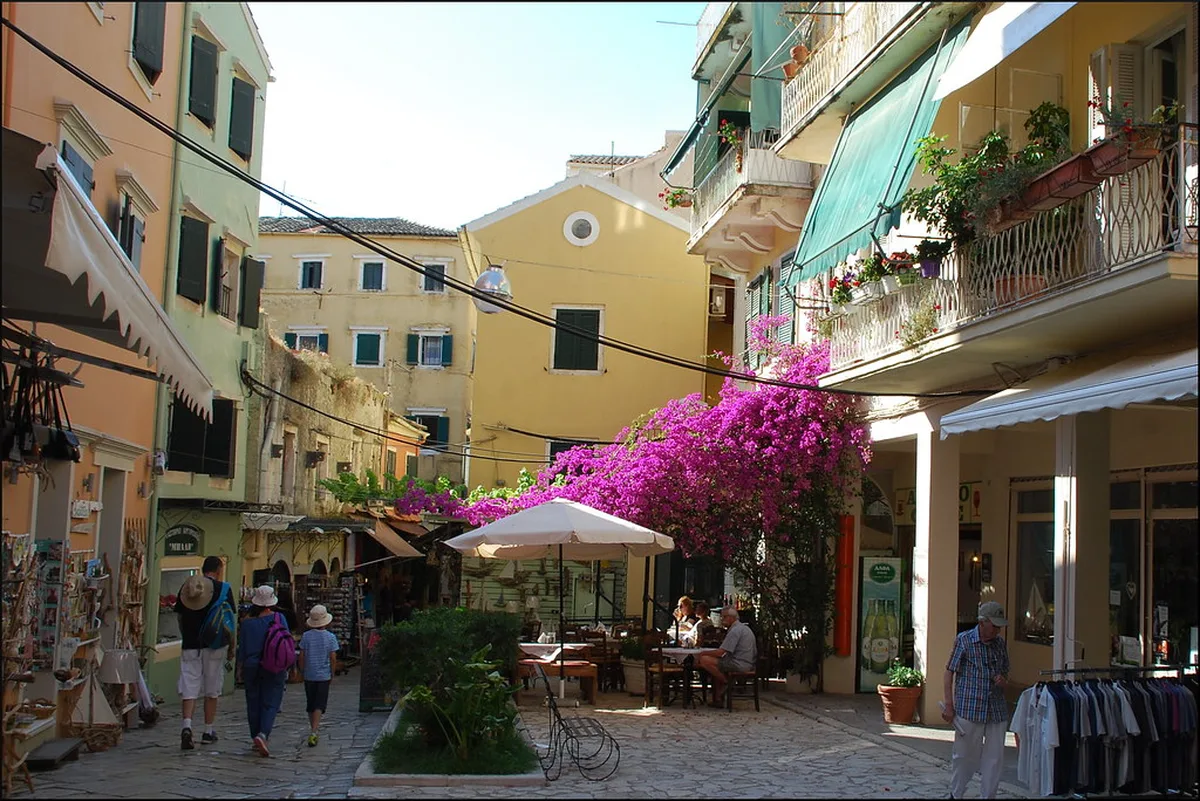
Campiello is the oldest and most atmospheric neighborhood in the entire historic center of Corfu Town, and many locals argue it captures the true soul of the city far better than the tourist-facing Liston. Its tall, narrow Venetian buildings — some dating to the 14th century — rise so close together that they block out the midday sun, keeping the air surprisingly cool even in July and August. Look up between the balconies and you will see laundry drying in the breeze above your head, one of the most authentically local sights in all of Corfu.
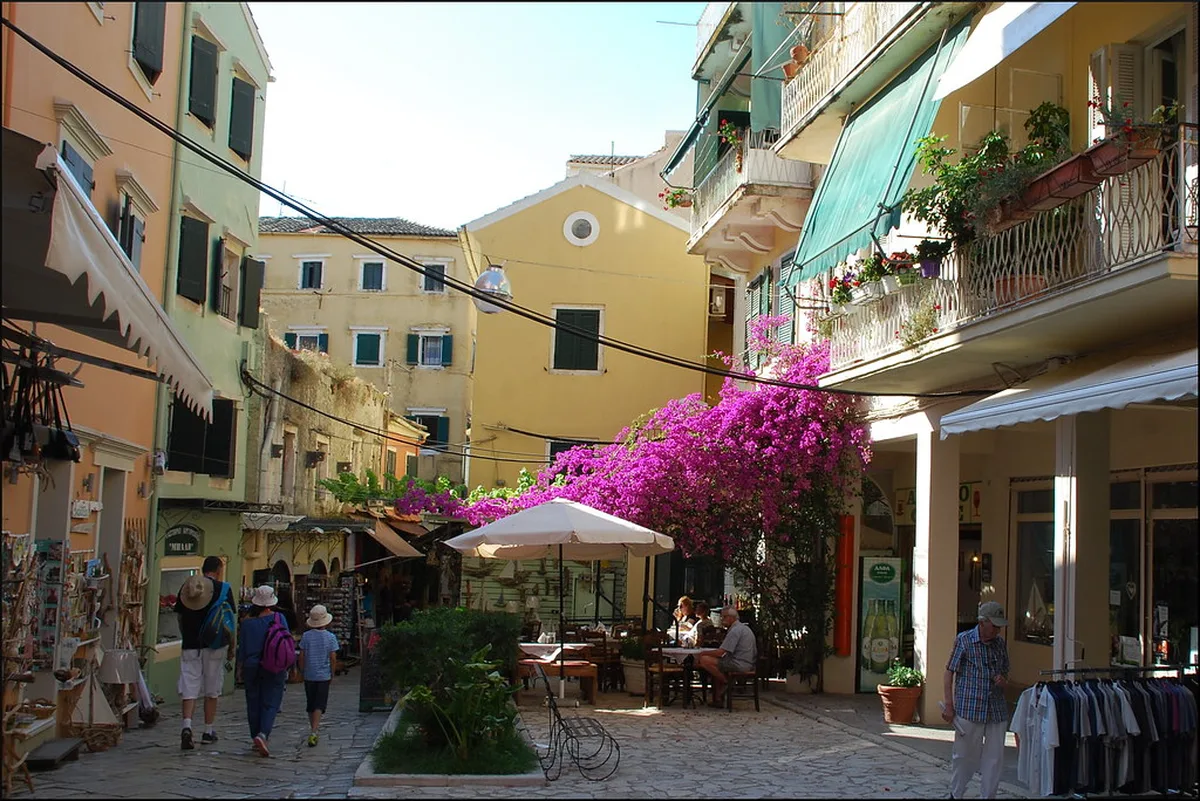
The district lacks conventional major landmarks but offers something rarer: an unfiltered sense of daily island life. Small workshops sell handmade leather sandals and hand-carved olive wood items at prices significantly lower than the main tourist strips around Spianada Square. Artisans in Campiello are generally happy to chat, and many products are made on-site rather than imported from the mainland. Look for the family-run ceramics studios tucked into ground-floor archways, where you can watch potters at work and buy direct from the maker.
The neighborhood is also home to several of the Old Town's best-value restaurants. Family-run tavernas in Campiello offer traditional Corfiot cuisine — Pastitsada, Sofrito, and fresh grilled fish — at mains ranging from €14 to €22, considerably less than the tourist-facing restaurants on the Liston. Ask locals for their favourite spot rather than following review platforms, as the best places have no online presence whatsoever. Reservations are rarely needed for lunch but are advisable for dinner in high summer.
Photographers will find Campiello endlessly rewarding. The weathered terracotta shutters, peeling pastel facades, and worn stone steps create compositions unavailable anywhere else in the Ionian Islands. The golden hour just before sunset — roughly 7:30 to 8:30 PM in summer — bathes the alleyways in warm amber light that transforms even a mundane backstreet into something extraordinary. Avoid bringing large rolling suitcases through Campiello; the steps and narrow passages make them impractical and disruptive for residents.
Venetian Architecture in Corfu: A Walking Trail Through 400 Years of History
Corfu Old Town holds the densest concentration of Venetian-era architecture outside of Venice itself, and a dedicated architectural walk reveals layers of history invisible to visitors who simply follow the tourist crowd. The Venetian Republic controlled Corfu from 1386 to 1797 — four centuries that shaped every major building, fortification, and street pattern you see today. Begin your trail at the Old Fortress (Palaio Frourio, admission €6, daily 8:00 AM–8:00 PM summer), where the original Venetian land gate still stands with its carved lion of Saint Mark, the symbol of the Venetian state, prominently displayed above the arch. This motif appears dozens of times across the Old Town if you know where to look.
From the Old Fortress, walk west along the Kontokali promenade and turn into the Campiello quarter to find the finest surviving examples of Venetian residential architecture on the island. The buildings here follow a strict Venetian urban typology: narrow street-facing facades, deep interior courtyards, loggia-style ground floors, and tall piano nobile windows with distinctive flat-arch frames. Several facades still bear carved stone medallions indicating the noble family that originally commissioned the building — look for these above the main doorways, typically at eye level or just above. The oldest surviving residential structures in Campiello date to the late 14th century, though most visible facades were remodelled during the 16th and 17th centuries at the peak of Venetian investment in island defenses.
Continue north along the outer wall toward the New Fortress (Neo Frourio, admission €3, daily 9:00 AM–5:00 PM), the second great Venetian fortification built between 1576 and 1645. The New Fortress represents a later phase of military architecture — its design incorporates the angular bastions and earthwork slopes that were developed specifically to resist cannon fire, a significant evolution from the medieval towers of the Old Fortress. From the rooftop terraces you can trace the entire outline of the old Venetian city walls, most of which were demolished by the French and British in the 19th century but whose line is still legible in the pattern of streets below.
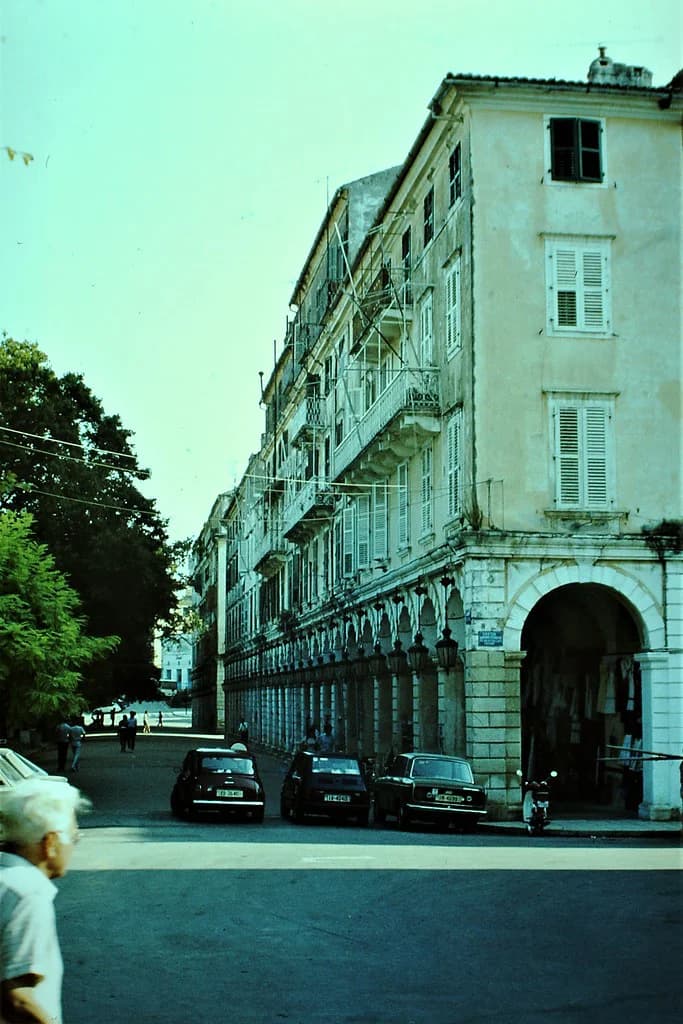
The walking trail concludes at the Liston promenade, built by the French between 1807 and 1814 on the ruins of a Venetian noble quarter. The arcaded design was directly inspired by the Rue de Rivoli in Paris, commissioned by Napoleon's administration as a statement of French civic ambition. The contrast with the Venetian Campiello just metres away — one ordered and monumental, the other organic and labyrinthine — captures in miniature the full 400-year architectural history of Corfu Old Town. Admission to the Liston is free; the cost of the espresso you will inevitably order while sitting beneath the arches is €2.50–3.50 at a standing bar or €4.50–5.50 at a seated table. Allow three to four hours for the full architectural trail at a comfortable pace.
Top Dining and Shopping Experiences
Corfu's culinary identity is distinct from the rest of Greece, shaped heavily by centuries of Venetian rule and subsequent British and French influence. The island's signature dishes reflect this layered history in ways that make dining here more interesting than on most Greek islands. Pastitsada — a slow-braised rooster or veal in spiced tomato sauce served over pasta — is the dish most associated with Corfiot identity, and its roots are clearly Venetian. Sofrito is the other essential: thin beef slices in a white wine and parsley sauce that pairs perfectly with local bread. Both dishes appear on the menus of virtually every traditional taverna in town, with portions typically running €14–18.
Kumquat products deserve special attention. Corfu is the only place in Europe where kumquats grow commercially, and the local industry produces an impressive range of goods: sweet liqueur (42% ABV), candied whole fruits, marmalade, chocolates, and cosmetics. The golden liqueur is the most famous and makes an excellent, compact gift. Specialty shops near the main market sell 200ml bottles from around €7 and 500ml bottles from €14. Avoid buying from the large souvenir shops near the cruise ship docks, where quality is lower and prices significantly higher.
The central market area near the New Fortress sells fresh fish, local honey, olive oil, and seasonal vegetables from early morning until midday. Arrive before 10:00 AM to see the stalls at their most active. This is also the best place to buy the small orange-blossom-scented biscuits called tsitsibira, a local ginger beer flavoured treat that dates to the British occupation. The covered arcade adjacent to the market contains several olive oil producers offering free tastings.
Shopping for handmade goods in Campiello consistently yields better quality and lower prices than the main tourist streets. Budget footwear shops along the Liston charge a premium for essentially the same leather sandals that artisans in Campiello sell direct. For wine and spirits, the shop inside the Palace of St. Michael and St. George gift section stocks an excellent selection of Ionian wines alongside museum publications.
Planning Your Logistics and Visit
Parking near the Old Town is extremely difficult during the peak summer months of July and August. The most practical solution is to use the large public parking area near the ferry port (New Port) and walk approximately fifteen minutes along the waterfront promenade into the historic center. This approach also avoids the stress of navigating one-way streets and the narrow passages around the Old Fortress. If driving from a villa or hotel outside town, aim to arrive before 9:00 AM when spaces are still available.
Local buses connect the island airport and the main ferry terminal to the Old Town center regularly throughout the day. A single ticket costs €1.20 when purchased from a blue ticket kiosk and €1.80 when bought on board — always carry small change. The main bus station (KTEL) on Avramiou Street handles intercity routes to villages across the island, with tickets starting at €2.50. Taxis from the airport to the Old Town run approximately €12–15 in 2026 and take around ten minutes.
If you have extra days in the area, consider taking day trips from Corfu to nearby islands and villages. Boats depart regularly from the Old Port for scenic half-day excursions to Paxos and Antipaxos, with turquoise water that rivals the Caribbean. Ferry schedules for 2026 are published by major operators in April each year. The village of Paleokastritsa, with its dramatic monastery perched above multiple coves, is the most popular day trip from town by road and takes around 45 minutes by bus.
For beach lovers, the island's best stretches of sand are easily accessible from the Old Town. Read our Corfu beach guide for a full rundown of the best beaches by travel style, including family-friendly and quiet alternatives to the busiest resort strips.
Corfu Old Town at Night: The Liston and Kampielo After Dark
As the sun drops below the New Fortress battlements, Corfu Old Town undergoes a transformation that is one of the most pleasant surprises in all of Greece. The scorching heat of the afternoon gives way to a warm evening breeze off the Ionian Sea, and locals — who have been indoors during the hottest hours — pour back out onto the streets. This evening ritual is best experienced along the Liston promenade, where the French-era arched arcades frame a scene of leisurely coffee and conversation that begins around 7:00 PM and runs past midnight. Entry to the Liston and Spianada Square is free at all hours.
The Liston's cafes are unabashedly touristy in pricing — a freddo espresso runs €4.50–5.50 and a cocktail €10–14 — but the setting is undeniably theatrical. The promenade faces directly onto Spianada Square, and on summer evenings you can watch a mix of cricket players, street musicians, and evening strollers while seated under the arches. Go once for the atmosphere; then head into the backstreets of Campiello (locally spelled Kampielo) for the second round at a fraction of the price.
Kampielo after dark is an entirely different experience from the daytime version. The narrow kantounia alleys are lit by a combination of lanterns and spill light from apartment windows, creating a warm, amber-tinged ambiance that feels genuinely lived-in rather than staged. Small wine bars and music tavernas open their doors from around 8:00 PM, and the sound of Greek music drifting through the stone passages is one of the defining sensory memories of a Corfu evening. A carafe of house wine at a Kampielo bar typically costs €6–9, compared to €12–18 for a similar quantity at a Liston terrace table.
Kumquat liqueur deserves its own paragraph in any discussion of Corfiot food culture. The bright golden spirit is produced from the tiny citrus fruits grown on the island's northern plains, and Corfu is the only region in all of Europe where kumquats are cultivated commercially — a legacy of the British colonial administration, which imported plants from China in the 19th century. The liqueur has a bittersweet, marmalade-like character with a clean finish quite different from other citrus liqueurs. The standard serving is a small chilled glass (€3–4) accompanied by a piece of candied kumquat on the side — the perfect nightcap before returning to your accommodation.
For a proper Corfiot dinner in 2026, budget €14–22 for mains at a backstreet taverna in Kampielo or the streets between the two fortresses. The best value meal is a fixed-price taverna menu (usually €18–22 per person) that includes mezedes, a main dish, house wine by the carafe, and dessert. Steer toward restaurants displaying their licences prominently and menus in both Greek and English — a sign of a genuine local establishment rather than a tourist trap. Dinner reservations are strongly recommended for Friday and Saturday evenings in July and August; book at least 24 hours in advance for tables with a fortress or square view.
Palace of St. Michael and St. George: Museum of Asian Art and Cultural Highlights
The Museum of Asian Art in Corfu occupies the elegant neoclassical Palace of St. Michael and St. George, built by the British during their protectorate between 1819 and 1824 and one of the finest examples of British colonial architecture in the Mediterranean. The museum's collection — over 11,000 objects spanning Chinese, Japanese, Indian, and Southeast Asian art — is extraordinary for a small Greek island and was assembled largely by diplomat Gregorios Manos in the early 20th century. Admission is €6 for adults in 2026, with free entry on the first Sunday of each month. Opening hours are Tuesday through Sunday, 8:00 AM to 4:00 PM; the museum is closed Mondays.
The palace's main hall has been restored to its original Regency splendor and hosts rotating temporary exhibitions alongside the permanent collection. The courtyard — visible from Spianada Square through iron gates — contains a statue of Sir Frederick Adam, the British Lord High Commissioner who oversaw the island during the 1820s and is credited with building the island's road network. The courtyard is open to the public at no charge and provides a pleasant shaded rest stop in the middle of a walking day.
Beyond the museum, the cultural calendar in Corfu Town is surprisingly rich for a city of its size. The Ionian Academy, founded in 1824 and the first university in modern Greece, has shaped the city's intellectual identity for two centuries. The Municipal Theatre stages productions through spring and autumn, and the annual Corfu Festival of Arts in September brings theatre, music, and visual arts into the historic venues of the Old Town. For visitors with an interest in Greek Orthodox religious culture, the four annual processions of Saint Spyridon's reliquary casket — on Palm Sunday, Holy Saturday, August 11th, and the first Sunday of November — draw enormous crowds and are one of the most moving public religious events in all of Greece.
Frequently Asked Questions
Is Corfu Old Town worth visiting for a day?
Yes. Corfu Old Town is a UNESCO World Heritage Site with over 3,000 years of layered Venetian, French, and British history. In a single day you can explore the Old Fortress (€6), walk the Liston promenade for free, visit the Church of Saint Spyridon (free), and have dinner in the Campiello quarter (mains €14–22). It is one of the most historically rich old towns in Greece and well worth a full day. Combine it with a Corfu walking tour to maximise your time.
How much does it cost to visit Corfu Old Town in 2026?
Walking the streets of the Old Town is free. Key paid attractions in 2026: Old Fortress (Palaio Frourio) €6 per adult (daily 8AM–8PM summer), New Fortress €3 per adult (daily 9AM–5PM), Palace of St. Michael and St. George (Museum of Asian Art) €6 per adult (Tue–Sun 8AM–4PM; free first Sunday of each month). The Church of Saint Spyridon and Spianada Square are free. Taverna mains in Campiello run €14–22, a coffee at the Liston costs €4.50–5.50. Budget approximately €30–40 per person for a half-day covering one fortress, a coffee, and lunch.
How much time do I need in Corfu Old Town?
Plan for at least four to six hours to see the main landmarks comfortably, including the Old Fortress (€6), Spianada Square, and the Church of Saint Spyridon. A full day (eight hours) allows for a relaxed lunch in Campiello, time at the Palace of St. Michael and St. George (€6), and an evening drink at the Liston. Staying overnight is the best option if you want to experience the town after the cruise ship crowds leave in the late afternoon.
Is Corfu Old Town accessible for travelers with mobility issues?
The historic center has significant accessibility challenges. Spianada Square and the Liston promenade are flat and paved, making them manageable for most mobility aids — and both are free to enter. However, the Campiello district and the Old Fortress involve steep steps and uneven cobblestones that are difficult for wheelchairs and strollers. The New Fortress has some accessible pathways to the lower levels. Visitors with limited mobility should focus on the esplanade, Spianada Square, and the ground floor of the Palace of St. Michael and St. George.
What is the best time to visit Corfu Old Town?
May, June, and September are the best months to visit Corfu Old Town in 2026. The weather is warm and sunny, prices are lower than peak July–August, and the streets are noticeably less crowded. If visiting in July or August, arrive at the main sights before 11:00 AM to beat both the heat and the cruise ship crowds, which typically peak between 11:00 AM and 4:00 PM. October is also pleasant for those who prefer a quieter, cooler experience, though some seasonal businesses close from late October onwards.
What day trips can you do from Corfu Old Town?
Corfu Old Town is an excellent base for day excursions. Boat trips from the Old Port reach Paxos and Antipaxos (famous for turquoise water and sea caves) in under an hour. The village of Paleokastritsa with its clifftop monastery is 45 minutes by bus and one of the most scenic spots in the Ionian Islands. The fortified village of Angelokastro and the hilltop Kaiser's Throne viewpoint are popular half-day drives. For a full overview of options, see our guide to day trips from Corfu.
What is the Liston promenade in Corfu Old Town?
The Liston is a French-era arcaded promenade built between 1807 and 1814, modelled on the Rue de Rivoli in Paris. It runs along the western edge of Spianada Square and is free to walk at all hours. The arched cafes beneath it serve coffee (€2.50–5.50), cocktails (€10–14), and light snacks. In the evenings the Liston is the social centre of Corfu Town, with locals and visitors filling the terrace seats from around 7:00 PM until midnight in summer.
Corfu Old Town is a destination that rewards travelers who take the time to explore slowly. You will leave with memories of marble streets, salty sea air, the golden glow of kumquat liqueur, and warm Greek hospitality. For the best beaches within easy reach, read our Corfu beach guide and plan a full coastal day after your Old Town exploration. If you want a structured route through the UNESCO streets, our Corfu walking tour guide covers the best self-guided and guided options for 2026.