Explore History With the Best Corfu Walking Tour
A free self-guided walking tour of Corfu Old Town takes 2–3 hours covering Spianada square, the Liston, Old Fortress (€6), Palace of St Michael (€6), Church of St Spyridon (free), and the Campiello medieval quarter — all within a 2.5 km loop.
Guided free walking tours depart daily from Spianada Square at 10 am on a tip-only basis (€10–15 per person); private guided tours cost €20–35 per person for a 2–3 hour session with a licensed local expert in 2026.
Corfu Town offers a unique blend of Venetian, French, and British influences that are best explored on foot. A dedicated Corfu walking tour allows you to uncover hidden alleys and historic monuments at your own pace. Most visitors start their journey at the Spianada, which is one of the largest squares in all of Greece. Planning your route ahead of time ensures you see the most important landmarks without feeling overwhelmed. Whether you book a guide or strike out alone, this UNESCO-listed Old Town rewards curiosity at every cobbled corner. The 2026 season brings extended site opening hours and a newly restored section of the Venetian walls near the Old Fortress moat.
Complete 3-Hour Self-Guided Corfu Old Town Walking Tour Route
This numbered route links every essential landmark in the UNESCO-listed Old Town in a logical sequence that minimises backtracking. The total walking distance is approximately 2.8 km; allow 3 hours at a comfortable pace without museum interiors, or up to 5 hours if you enter the Old Fortress and the Palace of St Michael. Start at 8:30 am to beat the cruise-ship crowds that arrive from 10 am onward. Wear shoes with anti-slip rubber soles — the polished limestone paving (selce) is deceptively slippery in the shaded alleys even in dry weather.
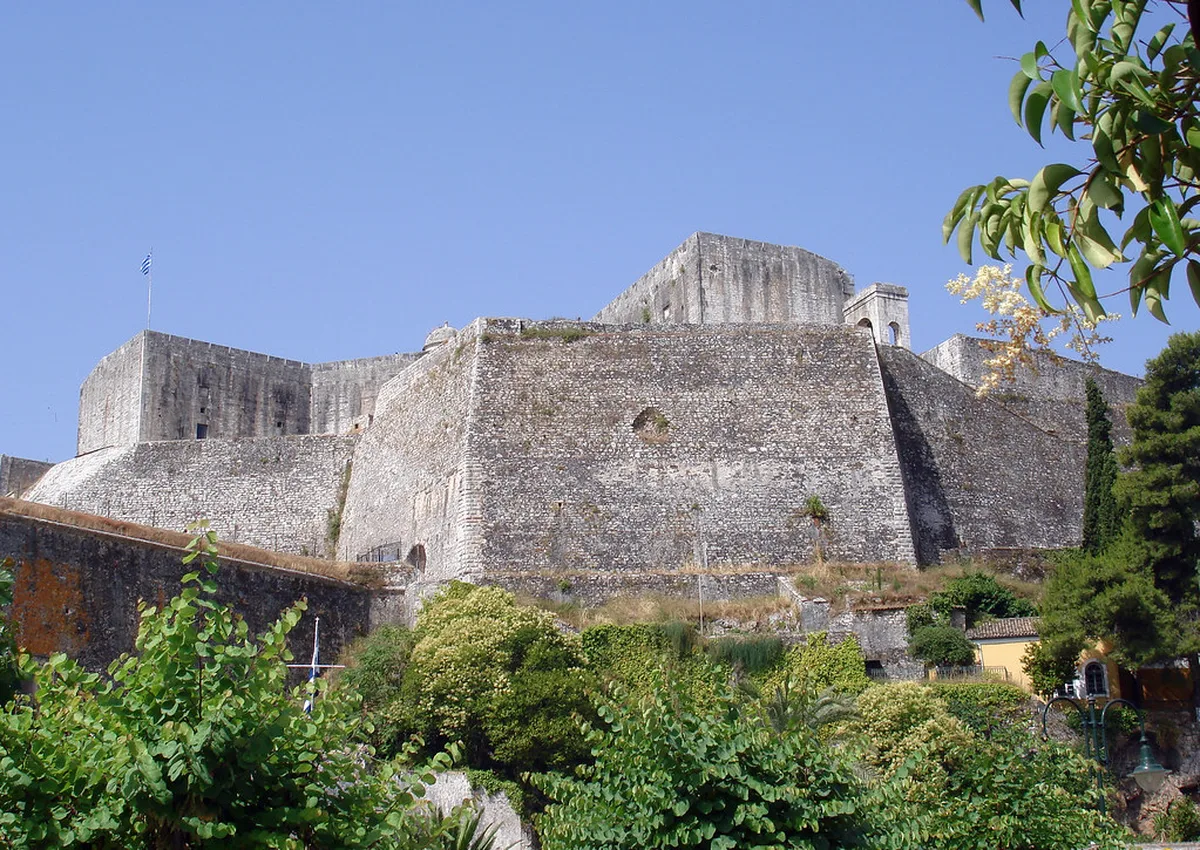
Stop 1 — Maitland Rotunda and Spianada Square (0 min, 0 km)
Begin at the Maitland Rotunda monument on the northwest corner of Spianada Square. At roughly 40,000 square metres, Spianada is one of the largest open squares in southern Europe. Walk the full perimeter — from the Rotunda south along the cricket ground to the fortress gate — in about 15 minutes. The square was shaped by four centuries of Venetian, French, and British administration, and each architectural layer is still visible in the surrounding buildings. Local cricket matches, a legacy of British rule from 1814 to 1864, take place most Saturday mornings from May to September and are free to watch from the grassy perimeter.
Stop 2 — The Liston Promenade (15 min, 0.3 km from start)
Walk west from the Rotunda to the Liston arcade. This elegant covered promenade, 200 metres long, was built during French rule in the early nineteenth century and modelled on the Rue de Rivoli in Paris. Its arched colonnade houses a row of traditional cafés where a Greek coffee costs €3–4 and a freddo espresso costs €4–5. Take 10 minutes to walk the full length north to south, then double back to the central fountain. This is the social heartbeat of Corfu Town and sees its liveliest crowds during the evening volta promenade after 7 pm.
Stop 3 — Old Fortress / Paleo Frourio (30 min, 0.7 km from start)
Head east from the Liston along the road that skirts Spianada to reach the Old Fortress gate in about 10 minutes. Entry in 2026 costs €6 for adults and €3 for EU students; children under 18 enter free. The Venetians built this citadel on a Byzantine promontory in the fifteenth century; it contains the Byzantine Collection, the Church of Saint George, and a lighthouse tower. Allow a minimum of 60 minutes inside: walk the outer battlements, descend into the moat-side tunnels, and climb to the lighthouse for panoramic views of the Albanian coastline on clear days. Exit back through the main gate and turn left (north) along the seafront promenade.
Stop 4 — Palace of St Michael and St George / Museum of Asian Art (1 hr 45 min, 1.3 km from start)
Walk north along the seafront for roughly 8 minutes to the colonnaded Palace of St Michael and St George at the northern tip of Spianada. The palace was built by the British between 1819 and 1824 and served as the residence of the Lord High Commissioner. It now houses the Museum of Asian Art — one of the finest collections of its kind in Europe with over 10,000 objects from China, Japan, and India. Entry in 2026 costs €6 for adults and €3 for students. Allow 45–60 minutes inside; the view from the colonnaded entrance back across Spianada is itself worth the stop.
Stop 5 — Church of St Spyridon (2 hr 30 min, 1.7 km from start)
From the palace exit, walk 300 metres northwest along Agios Spyridonos Street to reach the Church of St Spyridon — the island's most important religious site. Its distinctive red-domed bell tower, the tallest in the Ionian Islands, is visible from almost everywhere in the Old Town and acts as a reliable navigation landmark. The church houses the silver reliquary of Saint Spyridon, Corfu's patron saint, carried in four annual processions (Palm Sunday, Holy Saturday, 11 August, and the first Sunday in November). Entry is free; a €1–2 donation is customary. Dress modestly with covered shoulders and knees.
Stop 6 — Campiello Medieval Quarter (2 hr 45 min, 2.0 km from start)
From the church, enter the Campiello district by heading east into the Kremasti quarter via Kapodistriou Alley. This is the oldest neighbourhood in the Old Town — a dense maze of covered passageways, unexpected courtyards, and dead-end alleys that evolved over six centuries of Venetian, Ottoman, and French occupation. Look for the carved stone well-heads (puteali) that once served each neighbourhood cluster; these sixteenth-century Venetian cisterns are among the best-preserved in the Mediterranean. At the small plateia of Kremasti, a Byzantine-era stone archway survives as one of the few pre-Venetian structural elements in the Old Town. From here, continue south along the alley behind the church apse and emerge on Evgeniou Voulgareos Street — a short five-minute walk returns you to Spianada via Nikiforou Theotoki Street, completing the loop at approximately 2.8 km total.
Essential Highlights of a Corfu Walking Tour
The Liston promenade serves as the heart of the city and features elegant arches inspired by Rue de Rivoli in Paris, built during French rule in the early nineteenth century. The covered arcade runs for roughly 200 metres along the western edge of Spianada Square and houses a row of traditional cafés where a Greek coffee costs around €3–4 and a freddo espresso costs €4–5. Local cricket matches on the Spianada green — a legacy of British rule from 1814 to 1864 — take place most Saturday mornings from May to September and are free to watch from the promenade benches.
Just a five-minute walk east of the Liston, the Old Fortress (Paleo Frourio) dominates the promontory above the sea. Entry in 2026 costs €6 for adults and €3 for EU students; children under 18 enter free. The fortress was constructed by the Venetians in the fifteenth century on a Byzantine citadel, and it contains the Byzantine Collection, the Church of Saint George, and a lighthouse tower accessible via a stepped path. Visitors should allow at least 90 minutes to walk the outer battlements, descend into the moat-side tunnels, and climb to the lighthouse for panoramic views of the Albanian coastline on clear days.
Spianada Square, at approximately 40,000 square metres, is one of the largest open squares in southern Europe and connects the Liston to the fortress gate. It often hosts open-air concerts, Easter processions, and the famous Corfu Philharmonic parades that draw thousands of spectators each year. Walking the full perimeter — from the Maitland Rotunda monument in the northwest corner to the fortress gate in the east — takes around 15 minutes and gives a strong sense of the civic grandeur the British Protectorate left behind.
Between the fortress and Spianada, look for the Mon Repos Palace grounds to the south, about a 20-minute walk along the coastal path. Entry to the grounds is free; the museum inside costs €4. The palace was the birthplace of Prince Philip, Duke of Edinburgh, in 1921 and now houses artefacts from the ancient city of Korkyra. This detour adds roughly 45 minutes to your route but provides a quieter, more relaxed contrast to the busy town centre.
Navigating the Venetian Architecture of Corfu Town
Wandering through the narrow streets, known locally as kantounia, reveals the deep history of Corfu Old Town and its residents. These winding paths — some barely wide enough for two people to pass — were deliberately designed to confuse attackers advancing from the sea and to channel cooling breezes through the densely packed buildings during summer. Many structures date from the sixteenth and seventeenth centuries and still feature original iron balconies, pastel-rendered façades in ochre, terracotta, and dusty yellow, and heavy wooden shutters that glow in the soft morning light.
The Museum of Asian Art, housed in the Palace of St Michael and St George at the northern end of Spianada, is one of the finest collections of its kind in Europe with over 10,000 objects from China, Japan, and India. Entry in 2026 costs €6 for adults and €3 for students. Allow 45–60 minutes inside; the view from the colonnaded entrance back across Spianada is itself worth the stop. The palace was built by the British between 1819 and 1824 and served as the residence of the Lord High Commissioner.
The Saint Spyridon Church, roughly 300 metres northwest of the Liston along Agios Spyridonos Street, is the island's most important religious site. Its distinctive red-domed bell tower — the tallest in the Ionian Islands — is visible from almost everywhere in the Old Town and acts as a reliable navigation landmark. The church houses the silver reliquary of Saint Spyridon, Corfu's patron saint, which is carried through the town in four annual processions: Palm Sunday, Holy Saturday, 11 August, and the first Sunday in November. Entry is free but a €1–2 donation is customary; dress modestly with covered shoulders and knees.
The New Fortress (Neo Frourio), about 400 metres northwest of Saint Spyridon Church, offers a more rugged experience with far fewer visitors than the Old Fortress. Entry costs €4 in 2026. The star-shaped bastion was built by the Venetians between 1576 and 1645 to defend the northern approach to the harbour, and its stone tunnels and vaulted casemates are remarkably well-preserved. Climbing from the main gate to the highest terrace takes around 15 minutes along a worn stone ramp; the view over the ferry port and the Albanian hills beyond is excellent. A small café near the entrance sells cold drinks and local pastries.
The Campiello Quarter: A Self-Guided Labyrinth Walk
The Campiello district occupies the oldest settled area of the Old Town, wedged between Saint Spyridon Church and the Old Fortress promontory. Its street grid — if it can even be called that — evolved organically over six centuries of Venetian, Ottoman, and French occupation, resulting in a dense maze of covered passageways, unexpected courtyards, and dead-end alleys that regularly disorient even locals. This makes it the most rewarding neighbourhood to deliberately get lost in, and the most intimate 30–45 minutes you will spend in Corfu Town.
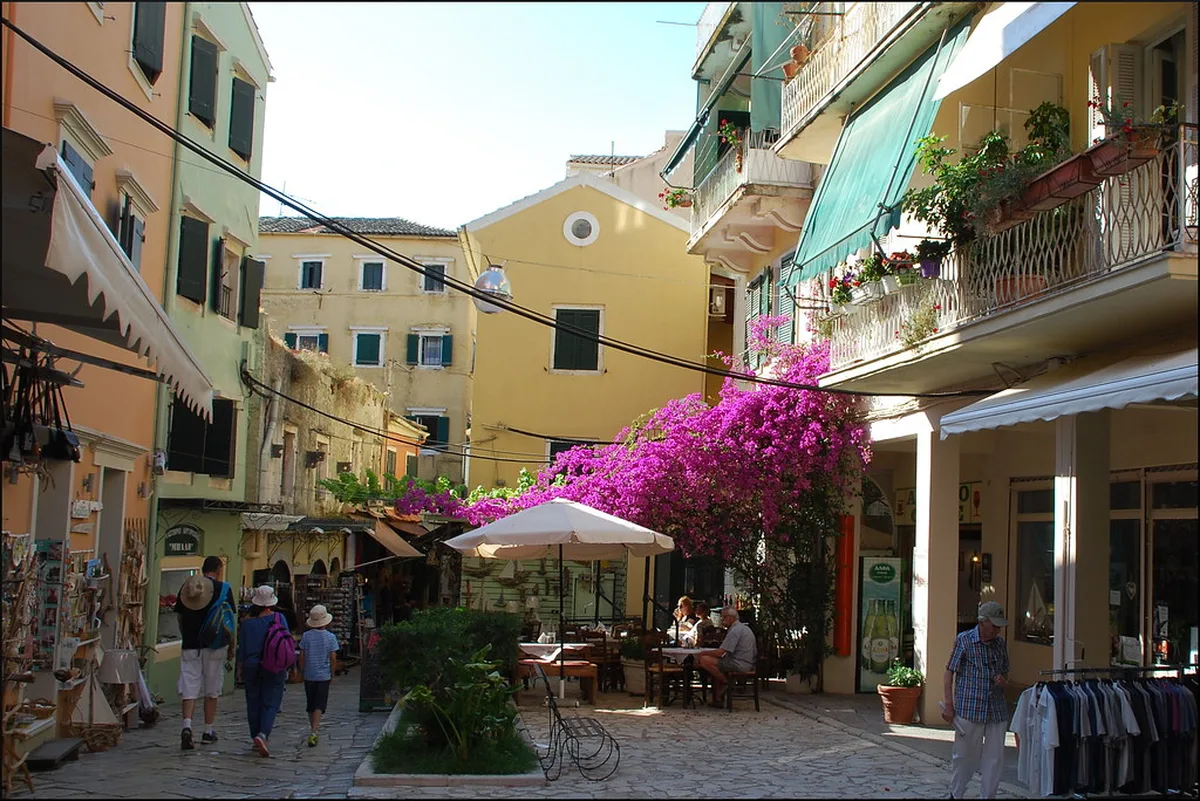
A practical self-guided loop starts at the corner of Agios Spyridonos Street and Filarmonikis Street, just north of the church. Head east into the Kremasti quarter via Kapodistriou Alley — look for the carved stone well-heads (puteali) that once served each neighbourhood cluster. These Venetian cisterns, dating from the sixteenth century, are some of the best-preserved examples in the Mediterranean and are easy to miss if you stay on the main tourist drag. From Kremasti, turn south along the narrow lane called Solomou, which passes several neoclassical doorways with original iron boot-scrapers still mounted beside the steps.
At the small plateia (square) of Kremasti you will find a Byzantine-era stone archway, one of the few surviving pre-Venetian structural elements in the Old Town. The square itself, roughly 15 metres across, is surrounded by ochre-plastered buildings with washing lines strung between the upper windows — the kind of scene that fills every Corfu photograph album. Children play football here in the late afternoon and elderly residents occupy the stone benches from about 6 pm onward.
Continue south through the alley behind the church apse, passing the small chapel of Agia Paraskevi (entry free, open mornings only), and emerge on Evgeniou Voulgareos Street near the Ionian Parliament building. This grand neoclassical structure, built in 1855 during British rule, now houses the administrative offices of the Corfu municipality and is not open to the public, but its colonnaded exterior is worth photographing from street level. From here it is a short five-minute walk back to Spianada via Nikiforou Theotoki Street, the main commercial artery of the Old Town lined with jewellery shops, icon galleries, and delis selling kumquat products.
The Campiello loop adds roughly 1.5 km to your total route and is best walked between 9 am and 11 am before the heat builds. Wear shoes with good grip as the paving stones in the shaded alleys can be damp and slippery even in summer. No entry fees apply anywhere in the Campiello itself; all the charm is free.
Practical Tips for Your Self-Guided Walking Route
Wearing comfortable shoes with rubber or anti-slip soles is the single most important piece of preparation for anyone planning a long walk on Corfu's ancient cobblestones. The local limestone paving, known as selce, has been polished over centuries of foot traffic to a mirror-like smoothness that becomes dangerously slick when wet or even when lightly damp from early-morning humidity. Avoid flat-soled sandals, flip-flops, or any footwear with a hard leather sole. Lightweight trail shoes or cushioned walking trainers are ideal for a 2.5–4 km day in the Old Town.
Bring a reusable 750 ml water bottle and fill it at one of the five public drinking fountains marked on the Corfu municipality map available free at the tourist office near the Old Fortress gate. Staying hydrated is critical in July and August when midday temperatures regularly exceed 32°C in the stone-walled alleys where airflow is minimal. Small kiosks (periptera) on Spianada Square sell 500 ml water for €1 and chilled coconut water for €2.50; both are cheaper than the café prices on the Liston.
For those wishing to combine the walking tour with coastal time, the Corfu beach guide covers the best nearby beaches reachable by scooter or bus. Most major Old Town sites are within a 20-minute walk of each other. A digital map downloaded offline in Google Maps or Maps.me is more reliable than cellular data in the deep alleyways of the Campiello, where signal drops frequently. Public toilets are available near the Spianada bandstand (free), inside the Old Fortress visitor centre (free with entry), and at the New Fortress entrance (free with entry).
Budget roughly €20–35 per person for a single walking day if you enter both the Old Fortress (€6) and the Museum of Asian Art (€6), buy two coffees (€8 total), lunch at a taverna (€12–16 main course), and a scoop of kumquat sorbet at one of the gelaterie on Nikiforou Theotoki Street (€3). Free walking tour tips (€10–15) are additional if you choose a guided option. Carrying a light scarf is advised for church visits where bare shoulders are not permitted.
- Recommended footwear for walking
- Type: Lightweight trail shoes or cushioned trainers
- Avoid: Flat leather soles, high heels, flip-flops
- Surface: Polished limestone selce paving
- Tip: Anti-slip rubber soles are essential in shaded alleys
- Essential items for your bag
- Item: Reusable 750 ml water bottle
- Item: Sunscreen SPF 50+ (pharmacies on Theotoki Street stock it for €8–12)
- Item: Offline digital map (Google Maps or Maps.me)
- Item: Light scarf for church visits
Hidden Gems and Local Stops Along the Way
The Campiello district is the oldest neighbourhood in the city and offers a quieter atmosphere away from the cruise-ship crowds that concentrate on Spianada and the Liston between 10 am and 3 pm. The labyrinthine alleyways are described in detail in the dedicated Campiello section above, but even a 20-minute detour from the main route into this neighbourhood — following the signs to the Byzantine Museum on Arseniou Street — rewards you with doorways carved from local sandstone, iron lanterns, and the sound of a community living its daily life above the tourist layer.
For those interested in local flavours, stopping at one of the specialist kumquat shops on Nikiforou Theotoki Street is a distinctly Corfiot experience. Kumquats — small oval citrus fruits — were introduced to the island from China in the nineteenth century and now grow exclusively on Corfu in the EU. The fruit is used in liqueurs (€8–14 per 200 ml bottle), candied sweets (€5 per 100 g), and marmalades (€4 per jar). Tasting is usually free; the Mavromatis family shop near the New Fortress gate is particularly well-regarded by locals for its aged kumquat spirit.
Looking out toward Vidos Island from the northern sea walls near the New Fortress provides a peaceful five-minute detour away from the busy shopping streets. Small motorboat ferries depart from the Old Port (Limani) every 30–40 minutes from May to October, with the crossing taking around 10 minutes. Return tickets cost €5 per adult in 2026. Vidos is car-free, has a small beach, a Serbian military cemetery, and a café; many visitors spend 1–2 hours there before returning to the Old Town.
The Byzantine Museum on Arseniou Street, housed in the fifteenth-century church of Antivouniotissa, contains one of the finest collections of Byzantine and post-Byzantine icons in Greece — over 90 works from the thirteenth to the seventeenth centuries. Entry costs €4 in 2026. The church itself is a rare surviving example of a single-aisle basilica with an ornate timber iconostasis, and it is usually calm and uncrowded even in peak season. Allow 30–40 minutes and note it is closed on Mondays.
For a relaxed lunch stop, the small tavernas on Solomou Street in the Campiello serve grilled octopus (€14–18), sofrito (veal in white wine sauce, €13–16), and pastitsada (slow-cooked beef with spiced tomato sauce on pasta, €12–15) — all quintessentially Corfiot dishes you are unlikely to find at this quality level on the more tourist-facing Liston side. Reservations are not usually required before 1 pm on weekdays.
Evening Walking Route: The Liston at Dusk and Kumquat Tasting Stops
Corfu Town transforms after 7 pm in a way that daytime visitors completely miss. The cruise ships have departed, the light turns golden over the Spianada, and the evening volta — the traditional Greek promenade — fills the Liston with three generations of Corfiots strolling at an unhurried pace. The air cools to around 22–25°C by 8 pm in July and August, making an evening walk significantly more comfortable than the midday equivalent, and the limestone buildings glow a warm amber in the low sun.
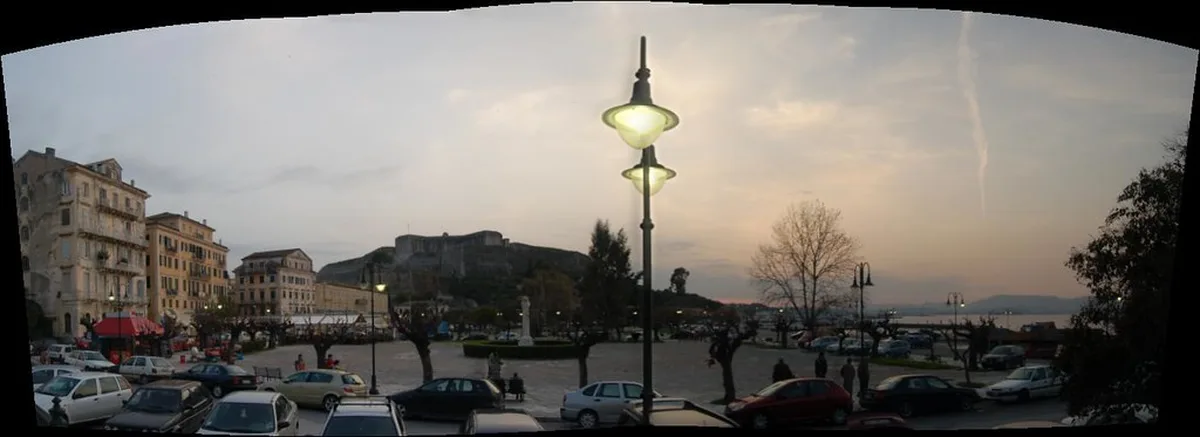
A recommended evening route begins at the Maitland Rotunda monument at the northwest corner of Spianada at 7:30 pm. Walk south along the edge of the cricket ground — local matches occasionally continue into the early evening on weekdays — and reach the Liston arcade by 7:45 pm. Take a table at one of the cafés (Liston Café or Rex are both reliable; expect to pay €5–7 for a Mythos beer or €6–8 for a glass of local white wine from the Robola grape). The Spianada green looks spectacular from this vantage point as the floodlights on the Old Fortress come on after 8 pm.
From the Liston, walk north along Kapodistriou Street toward the Palace of St Michael and St George, which is illuminated in the evenings and makes an excellent photography subject from the steps of the Corfu Reading Society building opposite. Continue northwest past the New Fortress viewpoint on Solomou Street — the harbour lights reflect off the water here and the Albanian mountains across the channel are visible as a dark silhouette on clear evenings. This 1 km stretch from Liston to the New Fortress gate takes about 20 minutes at a leisurely pace.
For the kumquat tasting stop, the best evening option is the Mavromatis shop, which stays open until 9 pm in high season (May to October). Staff pour small tasting measures of both the aged spirit (45% ABV, rich and slightly bitter) and the sweeter liqueur (20% ABV) at no charge. From there, continue east along Evgeniou Voulgareos Street to reach the small gelaterie cluster at the top of Nikiforou Theotoki Street, where kumquat sorbet (€3 per scoop) is served alongside pistacchio and mastiha flavours. This is a fitting end to the evening loop before returning to Spianada for a final drink under the arcade lights.
The full evening route — Maitland Rotunda to kumquat gelato and back to Spianada — covers approximately 2 km and takes 90–120 minutes with stops. It is entirely flat and well-lit, making it suitable for all ages and mobility levels. No entry fees apply in the evening; all attractions along this route are viewable from the street at no cost.
Best Times to Walk Corfu Town in 2026
Starting your walk before 9 am helps you avoid both the heat and the large cruise ship groups that disembark from approximately 10 am and dominate the Liston and Old Fortress until mid-afternoon. The soft morning light between 7 am and 9 am is ideal for photography as the sun is low enough to illuminate the kantounia alleys without harsh shadows, and the shopkeepers are setting out their displays — a photogenic ritual in itself. Several bakeries on Agios Spyridonos Street open at 7 am and sell tiropita (cheese pie) for €1.50 and loukoumades (honey doughnuts) for €2 per portion, making them excellent pre-walk breakfast stops.
The midday hours from 12 pm to 3 pm are the least comfortable for walking in July and August, when the old stone streets retain heat and temperatures in the shadeless sections near Spianada can reach 35°C. If you are visiting in peak summer, use this time for lunch, the Museum of Asian Art (air-conditioned), or a rest at your accommodation, then resume your walk from 4 pm onward as the heat begins to ease.
Evening walks offer a completely different atmosphere as the city lights up and locals emerge for the traditional volta. After finishing your daytime city tour, you might consider checking out a Corfu beach guide for context on combining a beach afternoon with an evening Old Town walk — many visitors hire a scooter (€20–25/day) to reach Paleokastritsa or Glyfada beach after the morning walk and return for the evening promenade. The temperature drops to around 22°C after sunset, making the walk back to your hotel through the Campiello particularly pleasant.
Visiting in 2026 means you will see the ongoing restoration projects preserving the Venetian walls near the New Fortress moat — some sections are temporarily fenced but the main walking path is unaffected. The shoulder seasons of April to May and September to October offer the best balance of pleasant temperatures (18–26°C), manageable crowds, and fully operational site hours. The Old Fortress and Museum of Asian Art are both open from 8 am to 8 pm daily in high season (April to October); hours reduce to 8 am to 3 pm in winter. Check the Greek Culture Ministry website before visiting for any temporary closures.
Choosing Between Guided and Self-Guided Tours
Selecting a professional guide provides deep historical context that is difficult to replicate from a guidebook alone. Local experts — many of whom are trained archaeologists or art historians — share stories about specific families who lived in the kantounia, explain the layers of Venetian, French, and British architectural influence visible in a single building façade, and know which courtyards are unlocked on which days. The best-regarded licensed guides in 2026 include those affiliated with the Corfu Tourism Association; expect to pay €20–35 per person for a 2–3 hour private tour, or €15–20 per person for a group walking tour of up to 10 people.
Free walking tours operate daily at 10 am from the Maitland Rotunda on Spianada Square. These are tip-based: the standard expectation is €10–15 per person at the end, paid only if you are satisfied. The tours cover the main circuit — Liston, Old Fortress exterior, Saint Spyridon Church, Campiello alleyways — in approximately 2.5 hours and are conducted in English. Booking is not required but arriving 10 minutes early is recommended as groups are capped at 15 participants in peak season.
A self-guided walk offers ultimate flexibility to linger at sites that capture your personal interest. You can spend an extra 30 minutes in the Byzantine Museum without a guide tapping their watch, or skip the New Fortress entirely if you are running low on energy. This approach is typically more budget-friendly since you pay only for the specific entry fees you choose (€6 Old Fortress, €6 Museum of Asian Art, €4 New Fortress, €4 Byzantine Museum). Using this guide plus an offline map gives you a structured route without sacrificing spontaneity.
If you have more than one day, you might explore day trips from Corfu to see the wider island — Paleokastritsa Monastery, Achillion Palace, Kaiser's Throne viewpoint, and the villages of Pelekas and Doukades are all reachable by bus or hired scooter. A day trip to Paxos by ferry (€25–35 return) is another popular option from the Old Port. These excursions complement the urban walking tour by adding natural and rural contrast to the architectural intensity of the Old Town. For visitors combining Old Town exploration with coastal time, the Corfu beach guide and Corfu Old Town guide provide useful companion reading for planning both halves of the trip.
Frequently Asked Questions
How long does a Corfu walking tour take?
A standard self-guided walking tour of Corfu Old Town covers approximately 2.5–2.8 km and takes 2–3 hours at a comfortable pace with brief stops at each landmark. Adding entry to the Old Fortress (allow 60–90 minutes inside) and the Museum of Asian Art (allow 45–60 minutes) extends the day to 5–6 hours total. Guided group tours, which depart at 10 am from Spianada Square, typically last 2.5 hours and cover the main highlights without museum entry.
How much does a Corfu walking tour cost in 2026?
Free walking tours operate daily from Spianada Square on a tip-based model; the standard tip is €10–15 per person. Private guided tours cost €20–35 per person for a 2–3 hour session. If you walk independently, budget for entry fees: Old Fortress €6, Museum of Asian Art (Palace of St Michael) €6, New Fortress €4, Byzantine Museum €4. A full self-guided day including two museum entries, two coffees, and a sit-down lunch costs roughly €30–45 per person.
Is Corfu Town walkable for all ages?
Corfu Town is generally walkable, but the historic centre features many uneven cobblestones, steep alleys, and narrow staircases, particularly in the Campiello district. Travelers with limited mobility will find the main Spianada Square and Liston promenade route largely flat and accessible. The Old Fortress involves a moderate climb on stone paths; those using wheelchairs or pushchairs should be aware that ramps are limited inside the fortress itself. Children of all ages enjoy the main route, especially the fortress and Vidos Island ferry trip (€5 return).
Are there public restrooms along the walking route?
Public restrooms in Corfu Old Town are limited but available at three key points along the main walking route: near the Spianada bandstand (free, open 8 am to 9 pm), inside the Old Fortress visitor centre (free with €6 entry), and at the New Fortress entrance (free with €4 entry). Most visitors supplement these by stopping at a Liston café for a drink — a €3–4 coffee is cheaper than most paid toilet facilities elsewhere in Greece. Carry a small packet of tissues as some facilities run out of paper in peak season.
What is the best starting point for a Corfu Old Town walking tour?
The best starting point is Spianada Square, specifically the Maitland Rotunda monument at its northwest corner. From here you have immediate access to the Liston promenade to the west, the Old Fortress gate 400 metres to the east, and the main commercial street (Nikiforou Theotoki) heading north into the Campiello. Free walking tours also depart from this exact spot at 10 am daily. Arriving from the New Port by bus (lines 1 and 3), the square is a 10-minute walk along the seafront; from the Old Port it is a 5-minute walk north.
What is there to see in the Campiello district of Corfu?
The Campiello is Corfu Town's oldest neighbourhood, located between Saint Spyridon Church and the Old Fortress promontory. Key sights include sixteenth-century Venetian stone well-heads (puteali), the small plateia of Kremasti with its Byzantine archway, the chapel of Agia Paraskevi (free, mornings only), and the Byzantine Museum on Arseniou Street (€4 entry, closed Mondays). The entire Campiello loop covers roughly 1.5 km and takes 30–45 minutes; it is best walked before 11 am to avoid heat in the shaded alleys.
Can I combine a Corfu walking tour with a beach day?
Yes — combining the Old Town walking tour with a beach afternoon is a popular itinerary in 2026. Complete the morning walk by 12:30 pm, then hire a scooter (€20–25/day) or take a local bus to Glyfada or Paleokastritsa beach (both within 20–30 minutes). Return by 6:30 pm for the evening volta on the Liston. The Corfu beach guide covers all the main beaches, entry costs, and transport options to help you plan the coastal half of your day efficiently.
Taking a Corfu walking tour is the best way to immerse yourself in the rich layered history of this Ionian gem. Whether you tip a free walking tour guide at the end of a 2.5-hour circuit or design your own five-hour loop taking in the Old Fortress (€6), the Museum of Asian Art / Palace of St Michael (€6), and the labyrinthine Campiello quarter (free), the Venetian architecture and local charm will leave a lasting impression. Pair your Old Town exploration with the Corfu Old Town guide for neighbourhood-by-neighbourhood detail, and the Corfu beach guide if you plan to combine history with a coastal afternoon. For wider island adventures, the day trips from Corfu page covers ferry routes, scooter hire, and the top villages worth visiting in 2026. Prepare your walking shoes, charge your camera, and allow at least a full day to do justice to everything this historic capital has to offer.