Discover the Ultimate Corfu Beach Guide for Your Next Escape
Corfu's top beaches in 2026: Paleokastritsa (30km NW, bus €3, dramatic cliffs), Glyfada (13km SW, sunbeds €10–15/pair), Canal d'Amour at Sidari (38km N, unique sandstone formations), Agios Gordis (16km SW, sunbeds €8–12), and Nisaki (20km NE, pebble cove, taverna meals €15–25).
All Corfu beaches are free to enter by Greek law. Sunbed-and-umbrella sets cost €8–15/pair at organised beaches in 2026. Bus fares from Corfu Town range €1.80–€3.20 single. Boat hire for sea cave exploration starts at €80/day from Paleokastritsa harbour.
Corfu offers some of the most stunning coastlines in the Ionian Sea. This comprehensive corfu beach guide helps you navigate turquoise waters and golden sands across the island's three distinct coastal zones. You will find hidden coves and bustling resorts that suit every style of traveller.
Each shore provides a unique Greek experience. Some visitors prefer the dramatic cliffs of the west coast, where waves roll in from the open sea. Others look for the shallow and warm waters found in the sheltered east. Understanding these differences is key to planning a great trip in 2026.
Planning your coastal adventure requires a bit of local knowledge. Many people stick to the popular spots near their hotels. However, exploring further afield reveals the true beauty of this emerald island. Let us dive into the best coastal gems available.
The Iconic Shores of Paleokastritsa
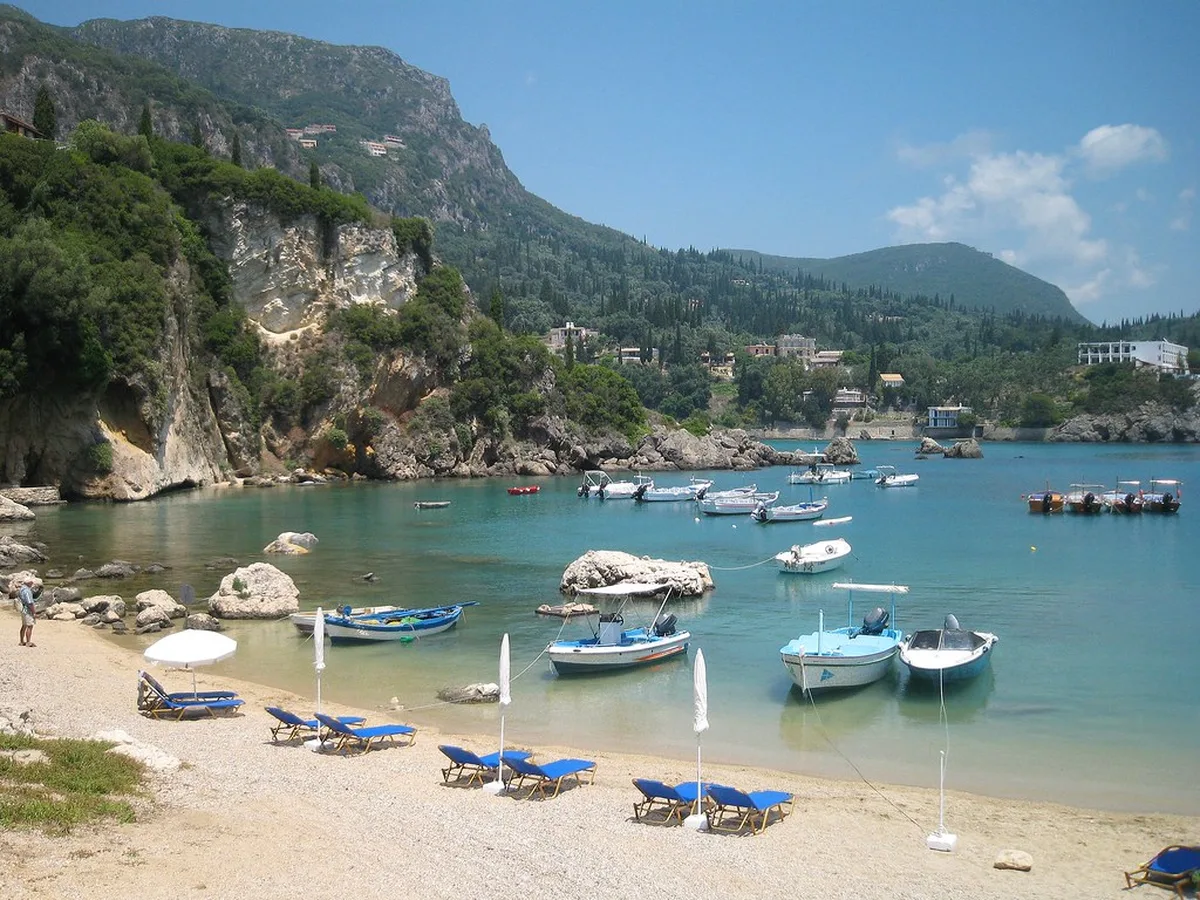
Paleokastritsa remains the single most photographed stretch of coastline in Corfu and one of the most dramatic in the entire Ionian. Set roughly 30 km northwest of Corfu Town, it takes about 40 minutes by car or 55 minutes by the public bus (line 5, €3.00 each way in 2026). The resort wraps around six distinct bays carved into lush green hills that tumble straight into deep blue water. Each bay has a slightly different character: Agios Spiridon Bay is broad and family-friendly, while the two northern inlets are quieter and better for snorkelling.
Small boat rentals from the main jetty cost around €80 to €150 per day depending on engine size, and no licence is required for vessels under 15 hp. These private vessels allow you to reach secret grottos and sea caves that are completely inaccessible from land. The Blue Grotto of Paleokastritsa is the most celebrated, with bioluminescent reflections best seen before 10 AM. Always check the fuel policy before leaving the harbour; most operators include half a tank and charge €1.50 per litre for any shortfall.
Snorkelling is excellent throughout the bay complex due to the rocky seabed and exceptional water clarity. Visibility regularly exceeds 15 metres, and schools of bream, sea bass, and octopus congregate near the underwater cave entrances. The water temperature here sits around 22–24 °C in July and August, slightly cooler than the calmer east coast. Bring a light 3 mm wetsuit if you plan extended dives.
The hilltop Byzantine monastery of Theotokos is worth climbing to for its panoramic views over all six bays and, on clear days, the coastline of Albania. Entry is free but modest dress is required. Below, the small beach museum displays ancient anchors and amphorae recovered from local waters. Parking fills completely by 10 AM in July and August; arrive before 9 AM or use the overflow lot 300 m back up the hill. Local cafes and tavernas serve freshly caught kalamari, grilled fish, and cold Mythos beer with shaded terrace seating. Water quality at Paleokastritsa consistently earns Blue Flag certification — the rocky substrate keeps the seabed clean and visibility superb throughout summer 2026.
- Agios Spiridon Bay
- Type: Sand and pebble
- Sunbeds: €10–15/pair
- Best for: Families and swimmers
- Facilities: Tavernas, showers, toilets
- La Grotta Beach
- Type: Rocky cove
- Best for: Cliff jumping and snorkelling
- Vibe: Lively bar atmosphere
- Access: Steep concrete stairs, 3 min walk
Northern Wonders and the Canal d'Amour at Sidari
Sidari is a lively resort town 38 km north of Corfu Town, about 50 minutes by car or 80 minutes by the Green Bus (line 10, €3.20 single in 2026). It hosts the island's most famous geological curiosity: the Canal d'Amour, a narrow channel carved by centuries of erosion through amber-coloured sandstone cliffs. Legend says couples who swim through the full length of the 70-metre channel will stay together forever. The water stays shallow — rarely deeper than 1.5 m — making it perfectly safe for children and non-swimmers. The channel faces west, so the best light for photography falls in the late afternoon.
The surrounding cliffs offer several marked coastal paths suitable for short walks of 20–40 minutes. On a clear morning you can see the Diapontia Islands — Othoni, Erikoussa, and Mathraki — rising from the sea about 15 km offshore. Natural clay deposits are exposed at a few points along the cliff base; visitors traditionally apply the clay as a skin treatment and rinse off in the sea, a free and entertaining ritual for all ages. Exercise caution on the soft sandstone ledges: the rock erodes continuously and edges can crumble without warning. Water quality along the Canal d'Amour channel is excellent — the narrow passage channels clean open-sea water with no stagnation, and the pale sandstone bottom reflects a brilliant turquoise glow in morning light.
Loggas Beach, also known as Peroulades Beach, sits 4 km west of Sidari at the base of 50-metre golden-orange cliffs. It is widely regarded as the finest sunset viewpoint on the island, with the last light igniting the cliff faces in deep amber. The beach itself is a narrow strip of fine sand and pebble accessible via 78 steep steps cut into the rock face. A single beach bar operates at the top of the steps, serving cocktails and light snacks; sunbeds on the sand below cost €12/pair in 2026. High winter swells occasionally strip the sand entirely, but the summer strip is wide enough for comfortable lounging.
Roda and Acharavi stretch for nearly 4 km along the north coast, providing some of the longest uninterrupted sandy shores on the island. Both villages have calmer water than the west-facing Sidari bays, making them excellent choices for families with toddlers or visitors who prefer flatwater swimming. Sunbeds are available from €10/pair, and numerous beachfront bars offer complimentary loungers if you spend €10 or more on food or drinks. The shallows extend 50–80 m offshore before the seabed drops away, meaning children can wade safely to impressive distances. Nisaki Beach, 20 km northeast of Corfu Town, is a smaller pebble cove worth the detour — the resident taverna serves fresh grilled fish and calamari with mains averaging €15–25, and the swimming quality is excellent thanks to the pebble base keeping the water remarkably clear.
Golden Sands of the Central West Coast: Glyfada and Agios Gordis
Glyfada Beach is the signature sandy shore of central-west Corfu, located 13 km from Corfu Town via a winding mountain road that drops dramatically through pine-covered hills. The beach stretches for nearly 1 km and is backed by a wall of green mountains that create an amphitheatre effect, sheltering the bay from the prevailing northwest wind on most summer days. The sand is fine and pale gold, consistently rated among the softest on the island. You can reach Glyfada on the Green Bus (line 6, €2.50 single) or by taxi for around €25 from town.

Sunbed sets at Glyfada cost €10–15/pair in 2026, with the most desirable front-row positions reaching €18/pair in peak July and August. The main beach bar operates a waiter service directly to your umbrella. Waves here can reach 0.5–1 m on afternoons when the Maistro northwest wind is active, which makes the beach popular with older children and adult swimmers but requires more caution with toddlers. Lifeguards are on duty from 10 AM to 6 PM throughout June to September. Water quality at Glyfada earns Blue Flag status most years; the fine sandy bottom does reduce visibility compared to pebble beaches, but the swimming conditions are safe and welcoming for all abilities.
Agios Gordis (also written Agios Georgios) sits 16 km southwest of Corfu Town on a sheltered bay backed by steep green hills. Sunbed sets here are among the most affordable on the west coast at €8–12/pair in 2026, making it a favourite for independent travellers and Greek families. The beach is approximately 800 m long with a mix of fine sand and a few scattered pebbles. Several tavernas line the beachfront, serving gyros, fresh salads, and grilled fish at honest prices. The bus from Corfu Town (line 6A, €2.50 single) operates several times daily in summer, making Agios Gordis one of the most accessible beaches on the west coast without a car.
Nearby Pelekas Beach (also called Kontogialos) is tucked 3 km north of Glyfada down a vertiginously steep and narrow road. The shore shares Glyfada's sand quality but carries a noticeably more local and relaxed atmosphere — fewer package-holiday crowds, more Greek families. Small boutiques and traditional tavernas line the hillside above the waterline, serving grilled meat and fresh salads at honest prices. Sunbeds are available from €10/pair. The road requires care: hire cars with low ground clearance occasionally scrape the steepest bends.
Mirtiotissa Beach sits between Glyfada and Pelekas and was once described by Lawrence Durrell as perhaps the loveliest beach in the world. Access is via a steep unpaved track of about 1.5 km, passable by 4WD or on foot in 20 minutes from the nearest parking area. The southern end of the beach is traditionally clothing-optional. There are no facilities whatsoever — no sunbed rental, no bar, no toilets — so bring all supplies including at least 2 litres of water per person. The payoff is seclusion and some of the clearest water on this side of the island.
Wild Dunes and Nature in South Corfu
Issos Beach offers a dramatically different landscape compared to the northern resort strips. Massive sand dunes up to 10 m high separate the Ionian Sea from the protected Korission Lagoon, a 5 km freshwater lake that serves as a Natura 2000 nature reserve. The beach itself runs for 3 km without a single concrete building in sight — a rare thing in Corfu during the height of summer. The dunes stabilise a fragile ecosystem of wild orchids, juniper scrub, and resting migratory birds; yellow roped-off corridors mark protected nesting zones for Caretta sea turtles, so avoid disturbing the sand above the high-tide line.
The wind conditions at Issos are the strongest and most consistent on the island, funnelled by the lagoon topography. This makes it the top spot in Corfu for kitesurfing and windsurfing. Two schools operate at the northern end of the beach: kite lessons cost €60–80 for a 2-hour beginner session in 2026, and equipment hire for experienced riders runs €40–60 per day. The afternoon Maistro wind typically builds from noon to 5 PM, reaching 15–25 knots, perfect for intermediate kiters.
Marathias and Santa Barbara beaches are located 4 km further south near the village of Marathias. These twin shores feature wide stretches of fine pale sand and some of the warmest water in south Corfu, sheltered from the northwest by the island's southern headland. Development is minimal: a couple of family-run tavernas, a small car park, and a handful of sunbed operators charging €8–10/pair. The water is shallow for 40–60 m offshore, ideal for children. Both beaches are connected by a short sandy path walkable in five minutes.
Halikounas Beach runs along the seaward edge of Korission Lagoon for 2 km and is perhaps the most remote organised beach in south Corfu. The access track from Agios Mattheos village is unpaved for the final 2 km and requires a reasonably capable vehicle or a 25-minute walk. Facilities are limited to a single seasonal bar open July and August only. There are no sunbed rentals; the beach is entirely natural. Bring a full day's worth of food, water, and sunscreen. The reward is almost guaranteed space, pristine sand, and the eerie beauty of the lagoon's flamingos visible across the narrow strip of dunes. For visitors combining south Corfu's wild beaches with island excursions, see our day trips from Corfu guide for ideas on reaching Paxos and the Diapontia Islands.
Corfu's Hidden Beaches: Secret Coves Away from the Crowds
Beyond the well-trodden resorts, Corfu hides a network of secluded coves that reward those willing to venture off the main tourist trail. Limni Beach near Roda in the north is one of the island's best-kept secrets — a narrow strip of sand tucked between two rock outcrops, accessible only via a 15-minute forest path from the main road. There are no facilities and no sunbed operators; just clear water, pine shade, and rarely more than a handful of visitors even in August. Pack your own supplies and arrive before 11 AM for the best chance of solitude.
Porto Timoni is arguably the most dramatic hidden cove on the island. A double bay connected by a narrow sand isthmus, it is accessible only on foot via a 40-minute hike from Afionas village on the northwest coast, or by hired boat from Agios Georgios Pagon. The path descends steeply through wild olive groves and requires good walking shoes. The swimming in the enclosed bays is exceptional — the cliffs on three sides block both wind and swell, producing mirror-flat water ideal for snorkelling among the rocks. Boat taxi services from Agios Georgios Pagon run from June through August for approximately €10–15 per person return.
Avlaki Beach on the northeast coast near Kassiopi is another under-the-radar gem. This small pebble cove sits 36 km northeast of Corfu Town and is reached by a narrow lane from the main coast road. The water here is consistently rated among the clearest on the island due to the pebble and rock seabed. A single beach taverna operates in summer serving simple Greek dishes for €10–18 per main. Windsurfers favour Avlaki for its reliable afternoon breeze, and rental boards are available for €20–30/hour. The nearby Kassiopi village — a 2 km walk along the coastal path — has excellent evening dining options and a ruined Byzantine castle perched above the harbour.
Kerasia Beach in the northeast is accessible only by sea — there is no road or path, making it genuinely off-limits to the crowds. Water taxis run from Kassiopi harbour for approximately €8–12 per person each way. The beach is a small crescent of pale sand and fine pebble, with a single family-run taverna that has operated here for three generations. The menu changes daily based on the morning's catch; expect to pay €15–22 for a main course. Arrive early in the day as the boat service stops by early afternoon. On the Corfu Old Town guide page you will find tips on car hire agencies near the port that can help you reach northeast trailheads more easily.
Agios Stefanos Sinion on the northeast coast is a quieter alternative to the busy northern resorts, located 37 km from Corfu Town via the coastal road. The beach is a gently curving strip of mixed sand and fine pebble, backed by a relaxed village with genuine local character rather than resort development. Sunbed sets cost €8–10/pair in 2026. The calm, sheltered conditions are ideal for families — the bay faces northeast and is protected from the afternoon Maistro wind that churns the west coast. Several water taxis depart daily in summer for the small islands of Erikoussa, Mathraki, and Othoni, making Agios Stefanos Sinion an ideal base for day trip exploration.
North Corfu vs South Corfu Beaches: Which Side Suits You?
Corfu's geography creates two fundamentally different beach experiences, and choosing the right side of the island for your base can dramatically change your holiday. The north coast — anchored by Sidari, Roda, and Acharavi — offers gentler water, a longer beach season (the shallows warm up earlier in June), and excellent infrastructure with supermarkets, pharmacies, and frequent bus links. The south — centred on Agios Gordis, Issos, and Marathias — rewards visitors who value space and nature over convenience.
Water temperature is measurably different between the coasts. The north coast's sheltered bays typically reach 24–26 °C by late June, while the west-facing beaches like Glyfada and the south-coast open shores average 22–24 °C in the same period. For families with young children, the north's calm and warm shallows at Roda and Acharavi are usually the most comfortable choice through June and early July before the peak crowds arrive.
Crowd levels also diverge sharply. The north coast's resorts of Sidari and Kassiopi fill with package-holiday visitors from late June through August, with sunbed rows stretching the full length of the beach. South Corfu's major beaches — Agios Gordis, Marathias, and Issos — draw a mix of independent travellers, kitesurfers, and Greek families. Even in August, finding an uncrowded patch on a 5 km dune beach like Issos is straightforward if you arrive before 11 AM or after 4 PM.
Scenery follows a similar split. The north is flat and agricultural behind the shoreline, with long unbroken sightlines across to Albania. The south and central-west are dominated by high green mountains that create the theatrical backdrop behind Paleokastritsa and Glyfada. If dramatic landscape photography is a priority, the west coast wins without contest. For water sports, kitesurfers should head directly to Issos and windsurfers to Agios Gordis, where consistent afternoon winds are all but guaranteed from June through August.
In terms of accommodation costs, the north typically runs 10–15% cheaper per night for comparable villa or hotel options, partly because the beaches there are less photogenic. The central-west resorts around Glyfada and Pelekas command a premium for the view, with holiday villas starting around €120/night in June and €200+/night in August. South Corfu remains the best-value coastal zone on the island for those willing to hire a car. Without private transport, the south is impractical — bus services thin out significantly south of Corfu Town. Complement your beach research with the Corfu walking tour for a full picture of what the island offers beyond the shoreline.
Strategic Choice: How to Pick Your Beach
Many travellers ignore the impact of the Maistro wind on beach selection. This northwest wind typically picks up between noon and 3 PM during summer, building throughout the afternoon. West coast shores including Paleokastritsa and Glyfada become wavy and exciting for swimmers and surfers but challenging for toddlers or paddleboarders. Check local wind forecasts on Windy.com the evening before to decide which side of the island to visit. A simple rule: if the forecast shows more than 15 knots from the northwest, choose the east coast or north coast for the day.
The eastern coast offers much calmer and warmer water for swimming. Places like Dassia (10 km north of town) and Ipsos are ideal for those who prefer flat conditions. You can easily rent paddleboards or pedalos at these sheltered bays for €10–15 per hour. These areas are also closer to the Corfu walking tour routes in the main town, making a morning town walk followed by an afternoon beach visit a logical and easy day plan.
Consider the shore material when packing your bag. Pebble beaches like the coves within Paleokastritsa and Nisaki have the clearest water for snorkelling — no sand particles are stirred up by wave action. Sandy beaches like Glyfada and Sidari are more comfortable for lounging but can retain heat and burn bare feet by midday. Water shoes (available in Corfu Town from €8–12) are a smart investment for rocky entries and pebbly shorelines. A light mesh bag for snorkelling gear and a micro-fibre towel keeps your kit compact for beach-hopping days.
Accessibility varies greatly across the island. Some hidden coves require a 20–30 minute hike down steep mountain paths with no handrail. Others allow you to park within 50 m of the waterline. Always research the path difficulty before visiting if you have limited mobility or young children. The tourist office in Corfu Town at 1 Rizospaston Voulefton distributes a free printed map that rates each beach access route. Combine your coastal research with the Corfu Old Town guide for a full picture of what the island offers beyond the beach.
Essential Logistics for Corfu Beach Hopping
Renting a car provides the most freedom to explore remote coastal stretches at your own pace. Local agencies in Corfu Town — clustered along Xenofontos Stratigou street near the New Port — often offer better rates than large international brands. Expect to pay around €40–60 per day for a small manual vehicle in June and €60–90 per day in July and August 2026. Booking at least two weeks in advance is essential during peak season; same-day walk-in availability is nearly non-existent in high summer. An automatic transmission costs roughly €15/day extra and is worth it on the steep and winding mountain roads leading to west-coast beaches.
The Green Bus network connects Corfu Town's central terminal (near the New Fortress) to the most popular seaside villages at affordable prices. Key routes and 2026 fares: bus 5 to Paleokastritsa (€3.00 single, 55 min), bus 6 to Glyfada (€2.50, 45 min), bus 6A to Agios Gordis (€2.50, 40 min), bus 10 to Sidari (€3.20, 80 min), and bus 1 to Dassia/Ipsos (€1.80, 25 min). Check the latest schedules at the terminal office, as summer timetables run more frequently than the published off-season timetable. Buses can become very crowded between 9 AM and noon; arrive at the terminal 15 minutes before departure to secure a seat. The last buses back to town typically depart by 8 PM, so plan accordingly if you want to watch the sunset.
Always carry cash for small purchases at remote beach tavernas and car parks. While most larger beachfront bars now accept Visa and Mastercard, isolated kiosks and parking attendants at spots like Loggas and Halikounas still prefer physical currency. ATMs are readily available in Corfu Town, Sidari, and Kassiopi but scarce in the south. Withdraw at least €50–100 in small denominations before heading to less-developed coastal areas. Bring a full day's water supply — at least 2 litres per person — for undeveloped beaches where there are no facilities. Most pharmacies in Corfu Town stock high-SPF sunscreen (factor 50) at standard Greek prices (€8–12 for 200 ml).
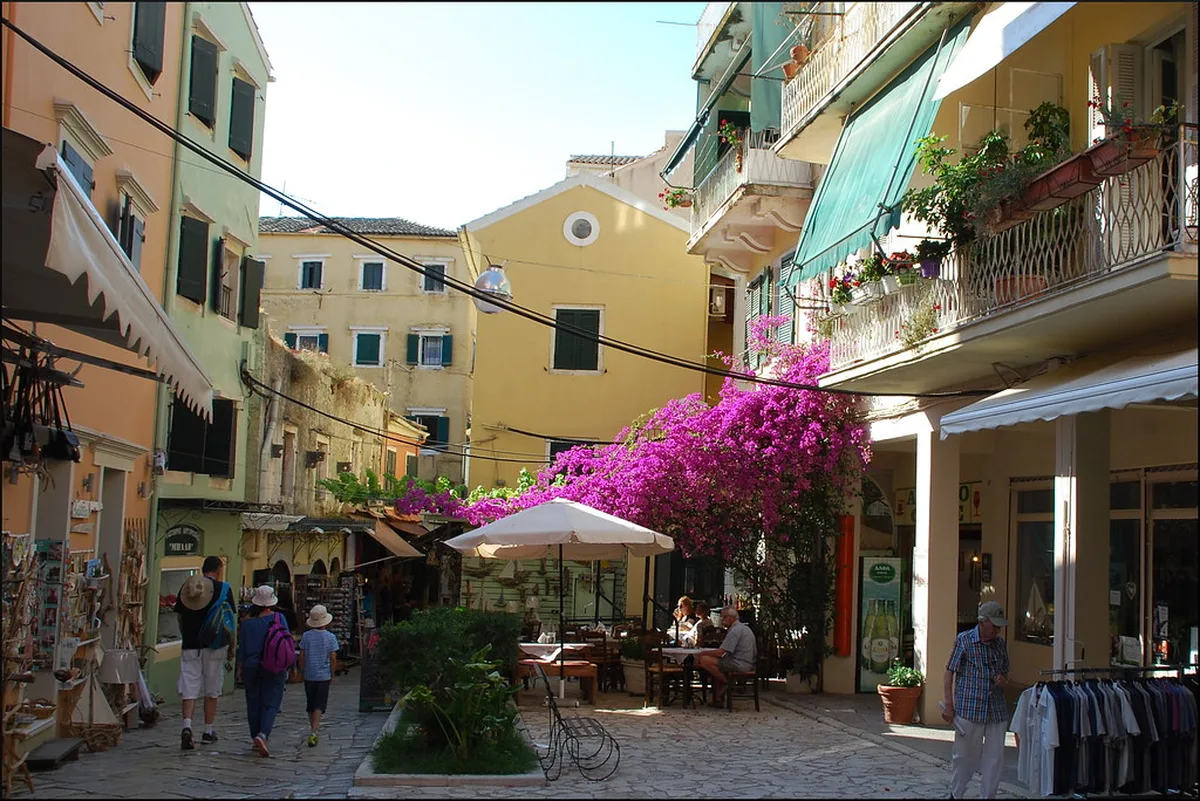
Combine your coastal trip with a visit to the Corfu Old Town for a perfectly balanced holiday day. The UNESCO-listed historic centre offers shade, history, and excellent dining after a long day in the sun. You can find superb dinner options in the narrow Venetian alleys of the Campiello quarter, with grilled fish mains averaging €14–20. Explore Liston square in the early evening for a before-dinner Aperol Spritz at the famous arcaded cafes. See our day trips from Corfu page for ideas on combining beach visits with excursions to the Diapontia Islands, Paxos, and mainland Epirus.
Frequently Asked Questions
What is the best time of year to visit Corfu for beaches?
The best time for Corfu beaches is June through September, when sea temperatures reach 22–26 °C and rainfall is minimal. June offers warm weather with smaller crowds and lower accommodation prices than July and August. July and August are the busiest and most expensive months, with sunbed rows fully occupied by 10 AM at popular beaches. Early September brings calmer seas, emptier beaches, and shoulder-season rates while the water remains warm.
Are there sandy beaches in Corfu?
Yes, Corfu has many beautiful sandy beaches, particularly on the west and north coasts. Glyfada, Issos, Sidari, and the Canal d'Amour strip are famous for their fine, pale-gold sand. The eastern coast tends to have more pebble and shingle shores, which offer clearer water for snorkelling. Both types provide crystal-clear conditions across the island.
Do I need a car to visit the best beaches in Corfu?
A car gives the most flexibility but is not strictly necessary for the main beaches. The Green Bus network covers Paleokastritsa (€3.00), Glyfada (€2.50), Agios Gordis (€2.50), and Sidari (€3.20) from Corfu Town. Remote beaches like Halikounas, Mirtiotissa, and Marathias require a private vehicle or a long walk on unpaved tracks. Car rental costs €40–90/day in 2026 depending on the season.
Are beaches in Corfu free to enter?
All beaches in Corfu offer free public access to the water by Greek law. You only pay if you choose to rent sunbeds and umbrellas from private operators. Prices for a set of two loungers with umbrella range from €8 to €15/pair in 2026 depending on the beach and row position. Unorganised beaches like Issos and Halikounas have no sunbed rental at all — bring your own towel and umbrella.
Can you reach Corfu's sea caves and grottos without a diving licence?
Yes. The famous Blue Grotto of Paleokastritsa and several smaller sea caves along the northwest coast are accessible by small motorboat, which in Greece does not require a licence for engines under 15 hp. Boat hire from Paleokastritsa harbour costs €80–150/day in 2026. Many operators also run guided boat tours of the caves for €15–25/person, which is the easiest option if you have no boating experience.
Which Corfu beach is best for water sports in 2026?
Issos Beach in south Corfu is the top spot for kitesurfing, with consistent afternoon Maistro winds of 15–25 knots from June through August. Kite lessons cost €60–80 for a 2-hour session and equipment hire is €40–60/day. Agios Gordis is the best location for windsurfing. For paddleboarding and pedalos in calm water, the sheltered east-coast bays of Dassia and Ipsos are ideal, with hire rates around €10–15/hour.
What are the hidden beaches in Corfu worth visiting in 2026?
Corfu's top secret coves for 2026 include Porto Timoni (40-min hike from Afionas, double bay, mirror-flat water), Kerasia Beach (boat-access only from Kassiopi, ~€10–12 return), Limni Beach near Roda (15-min forest path, no facilities), and Avlaki near Kassiopi (36km NE, pebble, clear water, single taverna). All offer solitude even in peak season but require planning ahead — bring food, water, and cash as facilities are minimal or absent.
Corfu is a paradise for beach lovers with its diverse and stunning coastline stretching across three distinct zones. From the dramatic cliff-fringed bays of Paleokastritsa to the wild dunes of Issos and the golden sands of Glyfada, there is a perfect shore for every type of traveller in 2026. This corfu beach guide provides the foundation for an unforgettable Greek island adventure.
Remember to plan your visits based on wind patterns and your personal priorities. The Maistro northwest wind shapes the west-coast experience each afternoon, while the east and north coasts offer calm water regardless of conditions. Whether you seek a vibrant beach bar at Sidari's Canal d'Amour or a completely empty cove accessible only by hired motorboat, Corfu delivers both with equal ease. Discover more of the island's history and culture in our Corfu Old Town guide, and plan island excursions with our day trips from Corfu page.
Start packing your sunscreen, water shoes, and a full day's water supply. Each day on the island offers a new opportunity to discover a shore you will remember for years. Enjoy the sun, the sea, and the incredible atmosphere of this extraordinary Ionian destination.